Ancient Egypt
A civilisation on a desert river that lasted for about 3,000 years.
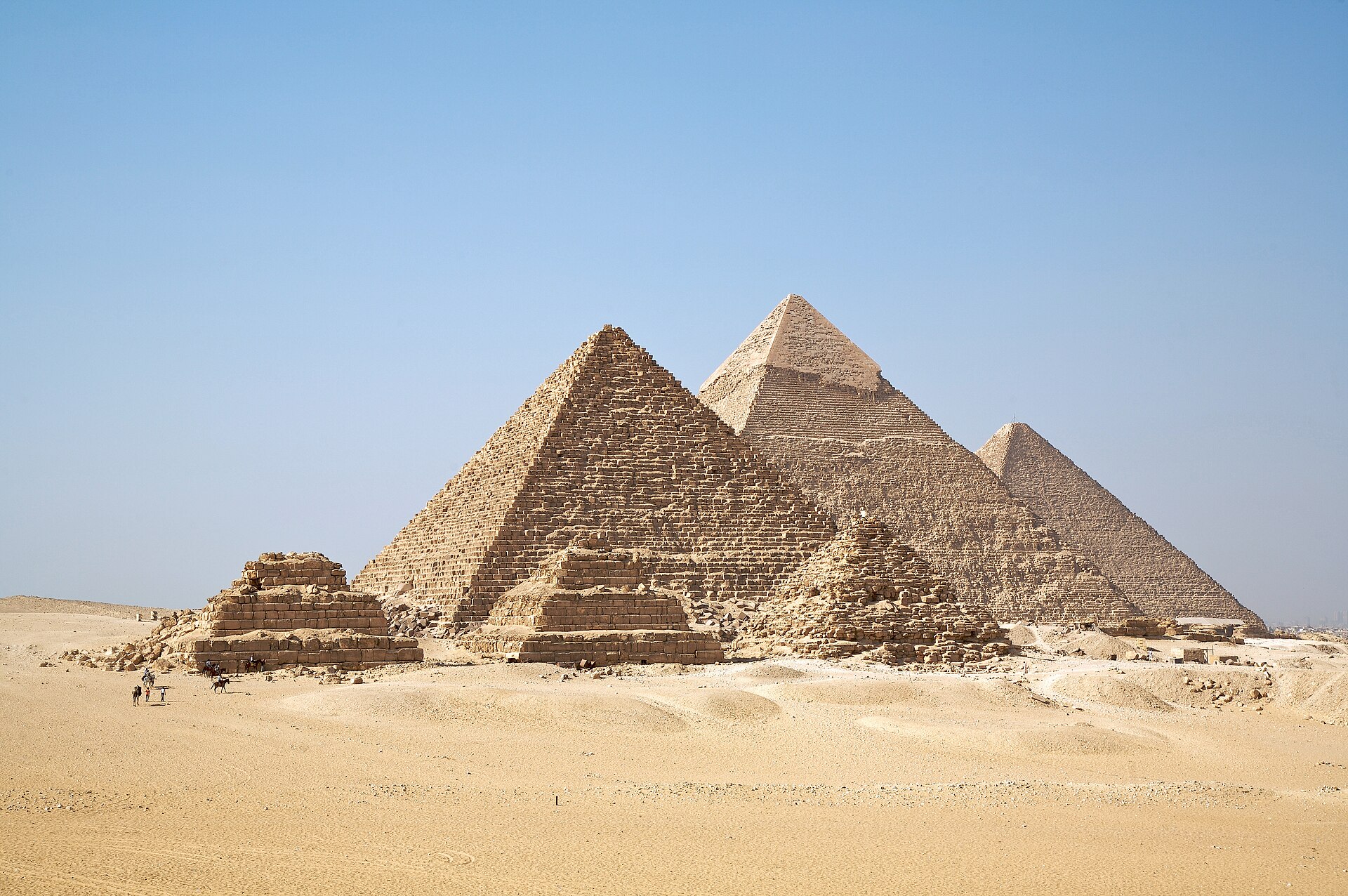
Ancient Egypt grew along the Nile in north-east Africa, in one of the driest places on Earth. For about 3,000 years its kings, called pharaohs, ruled a country that built stone pyramids, invented one of the first writing systems and traded from Afghanistan to Greece. The Egyptians believed life continued after death, so they preserved bodies and filled tombs with treasure. Those tombs, and thousands of papyrus scrolls, are why we know so much about them. This page follows the whole story. It explains how a river made farming possible and how two kingdoms became one. Then it covers how pharaohs ruled, what people believed, how pyramids went up and how it all ended.
Why did a great civilisation grow in the desert?
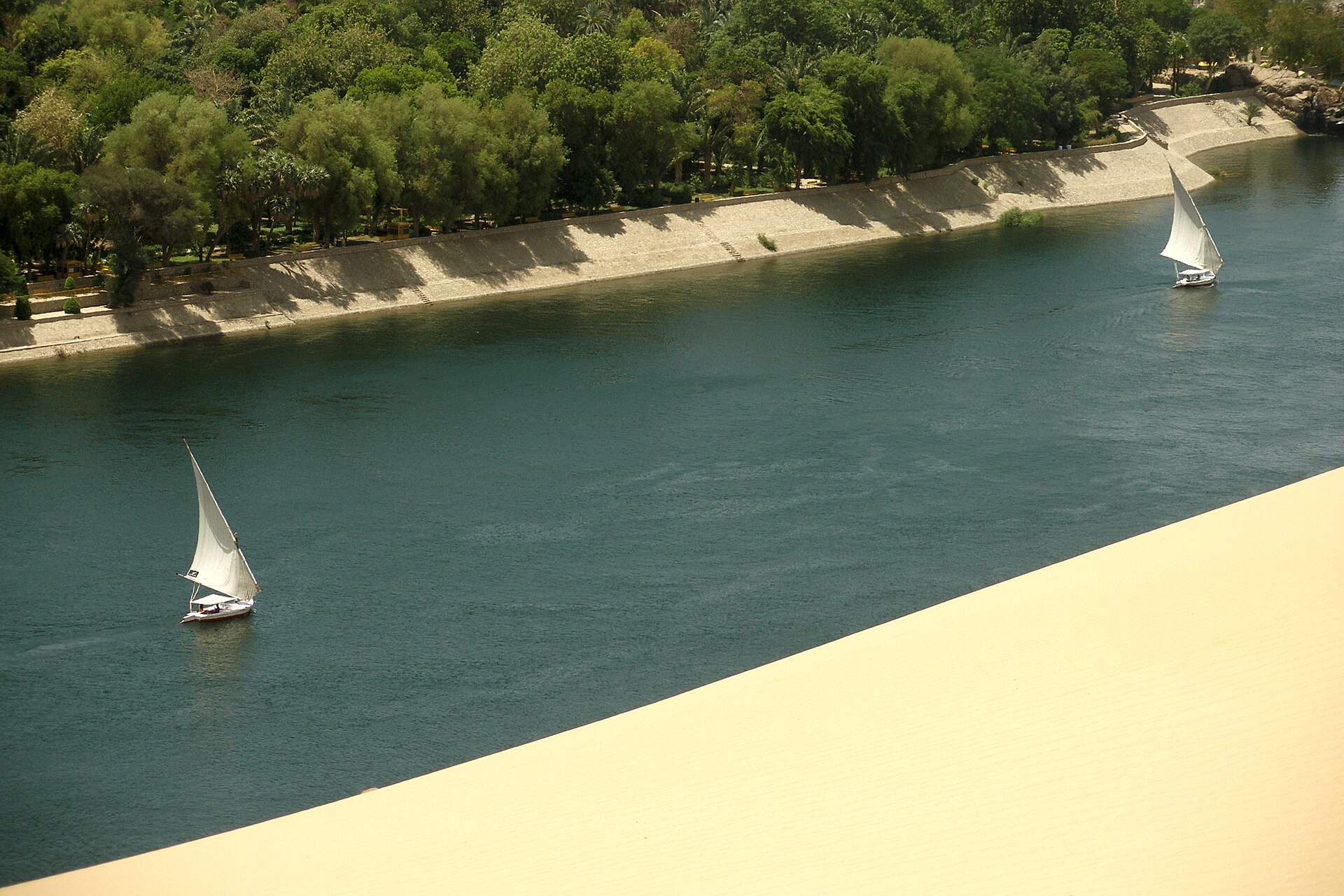
Almost no rain falls in Egypt. The country survived because of the Nile, which flows north from the heart of Africa to the Mediterranean Sea. Every summer the river flooded its banks. When the water drained away, it left a layer of dark, mineral-rich mud called . Crops grew very well in it.
The Egyptians knew this pattern so well that they built their calendar around it. They had three seasons. Akhet, from about June to September, was the flood. Peret, from October to February, was planting. Shemu, from March to May, was harvest. Farmers dug ditches and canals to carry water to their fields, then cut the grain with sickles. They beat it with flails and tossed it in the air so that the wind blew away the light husks.
Their main crops were emmer wheat and barley, which became the two staple foods, bread and beer. Gardens grew leeks, garlic, melons, lettuce and grapes. Farmers also grew flax, a plant whose stem fibres were spun into thread and woven into linen. The reeds called , which grew by the river, were pressed into paper.
Why did this matter? Farmers produced more food than they needed. That surplus fed people who did not farm: , priests, builders, craftsmen and soldiers. Officials could store grain, plan big projects and pay workers. A reliable river is the main reason Egypt grew rich and stable early, and stayed that way for so long.
How did Egypt become one country, and how did it rise and fall?
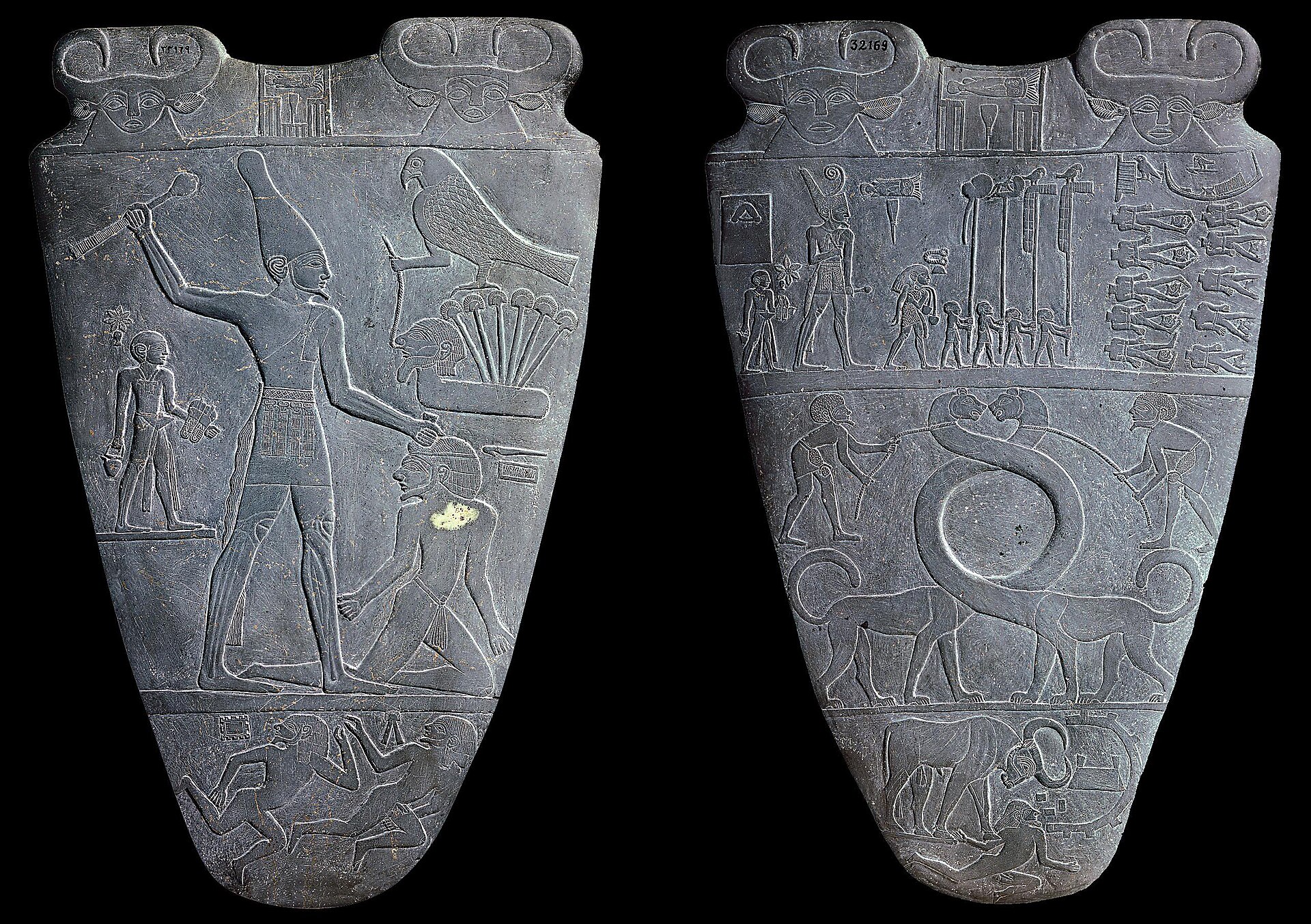
By about 5500 BC, villages in the Nile valley were farming and keeping animals. Later groups, such as the Naqada culture, made fine pottery, stone vases and jewellery, and traded with Nubia to the south and the Levant to the east. Over about 1,000 years their leaders gained control of much of the valley. Around 3150 BC the country of Upper Egypt, in the south, and Lower Egypt, in the Delta in the north, joined into one. Tradition credits a king called Menes. Many experts think he was Narmer, who appears on a carved stone slab wearing a royal crown.
The Egyptian priest Manetho, who lived about 2,300 years ago, sorted the kings into 30 dynasties. We still use his system. The first kings ruled from Memphis, which controlled the Delta farmland and the trade routes.
The Old Kingdom (2686 to 2181 BC) was the age of the great pyramids. A strong government collected taxes and drafted workers. Over five centuries, however, kings gave land to temples and officials, and the treasury weakened. Regional governors called nomarchs grew powerful. Severe droughts between 2200 and 2150 BC then cut harvests. The central government collapsed and famine and small wars followed. This was the First Intermediate Period.
Around 2055 BC a king from Thebes, Mentuhotep II, defeated his northern rivals and reunited the country. This began the Middle Kingdom. Its kings repaired irrigation, reclaimed farmland in the Faiyum, won back Nubian gold mines and built forts. Then, around 1785 BC, a western Asian people called the took the north. Theban kings fought them for decades. Ahmose I finally drove them out around 1550 BC.
How did Egypt become an empire, and who were its famous pharaohs?

Ahmose I began the New Kingdom (about 1549 to 1069 BC). The had brought horses and new weapons, and the now kept a strong army. Tuthmosis I and his grandson Tuthmosis III pushed Egypt's power north into Syria and south into Nubia. When Tuthmosis III died in 1425 BC, the empire reached from north-west Syria to the Fourth Cataract of the Nile. It brought in bronze, wood and gold.
Between those two kings came Hatshepsut, a queen who made herself pharaoh. She rebuilt temples that the Hyksos had damaged and sent ships to the land of Punt, which brought back incense trees, gold and ebony. Her expedition was carved on her temple wall.
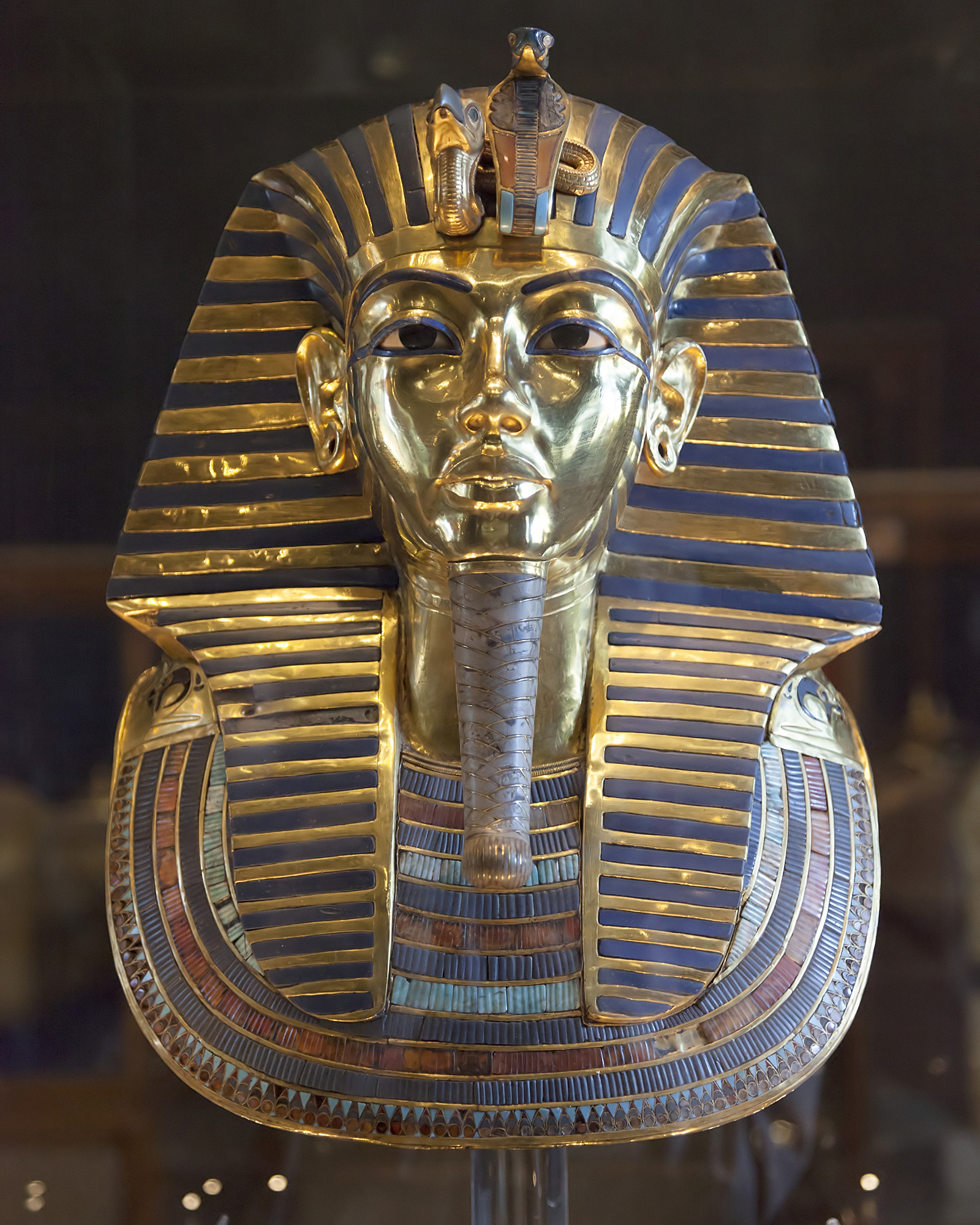
Around 1350 BC the pharaoh Amenhotep IV changed his name to Akhenaten. He declared that the sun disc, the Aten, was the chief god, closed many other temples and moved the capital to a new city, now called Amarna. After he died, the old gods returned. His successors, including Tutankhamun, tried to wipe his name from the records. Tutankhamun became king as a boy and died young. His tomb was found almost untouched in 1922, which is why his gold mask is so famous.
Ramesses II, called the Great, took the throne around 1279 BC. He built more temples and statues than any other pharaoh and fought the Hittites at the Battle of Kadesh in Syria. Neither side won. Around 1258 BC the two empires signed the earliest peace treaty we know of.
Egypt's wealth then drew attackers, including Libyans and the Sea Peoples, who were seafarers from the Aegean. Corruption, tomb robbery and powerful priests weakened the pharaohs further.
Who ruled Egypt, and who did the work?
The was both king and chief priest, and in theory he owned all of Egypt. He commanded the army and was responsible for , the Egyptian idea of order, truth and justice. In practice officials ran the country. His second in command was the , who oversaw land surveys, the treasury, building work, the courts and the archives. Egypt was divided into up to 42 regions called , each governed by a nomarch who answered to the vizier.
The economy was organised from the centre. Temples were the backbone of it. They collected and stored grain and goods in granaries and treasuries, and then shared them out. There was no coined money until the Late Period. People used barter, with sacks of grain and a copper weight called the deben as standard measures. Workers were paid in grain, and prices were fixed on lists. A shirt cost five deben and a cow cost 140.
Society had clear levels. Most people were farmers who worked land owned by the state, a temple or a noble. They also owed labour to the king, building canals and monuments. and officials, nicknamed the white kilt class after their bleached linen clothing, ranked above them. Historians disagree about whether true slavery existed.
Women had real legal rights. They could own and sell property, make contracts, divorce and take cases to court. Some, such as Hatshepsut and Cleopatra VII, became pharaohs. Courts judged cases by common sense and agreement, and even a poor farmer could petition the vizier. Serious crimes such as tomb robbery went to the Great Kenbet, a court led by the vizier or the pharaoh.
What did the Egyptians believe about gods and life after death?

The Egyptians worshipped many gods, and each had a role. Ra was the sun god. Amun, whose temple at Karnak grew into the largest Egyptian temple ever built, became the king of the gods in the New Kingdom. Osiris ruled the dead, Isis was his wife, and Anubis, shown with a jackal's head, guided souls. Many gods took animal forms. People kept and honoured sacred animals such as cats for Bastet and ibises for Thoth. Priests looked after statues of gods inside temples, and ordinary people prayed at home and at small shrines.
The Egyptians believed that a person had several parts, including a body, a name and a spirit called the ka. To live on, a person needed an intact body. This is why they developed . Embalmers removed the organs that rot first, such as the liver and lungs, and kept them in jars. They packed the body in , a natural salt from the Wadi Natrun, which dried it out. After about 40 days they rubbed it with oils and wrapped it in linen. The whole process took about 70 days. They left the heart inside, because they believed it recorded a person's deeds.
Egyptian texts describe a judgement in the underworld. The heart was weighed against a feather, the symbol of . If the heart was light, the person passed into a happy afterlife. Wealthy people were buried with food, furniture, jewellery and spells, such as the Book of the Dead, to help them on the way. Kings and queens were buried with the most treasure, so tomb robbers were a constant problem.
How did people build the pyramids, and why?
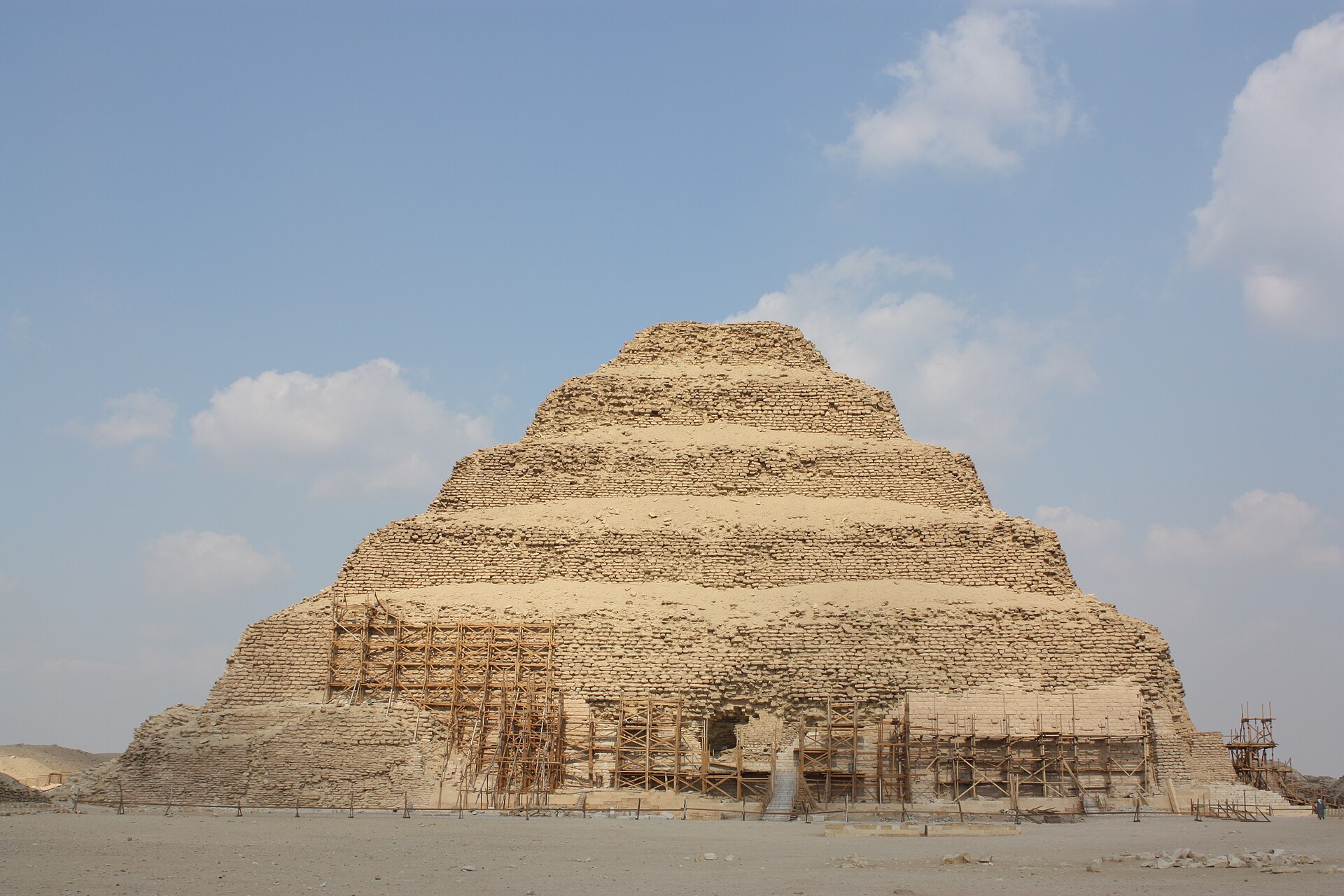
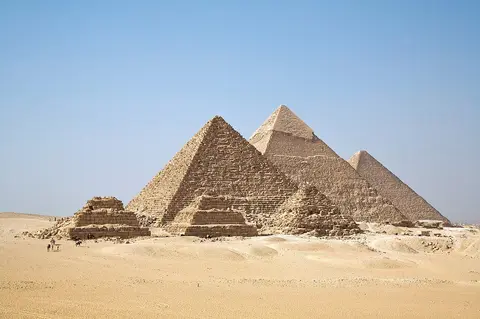
A pyramid was a royal tomb and a machine for the afterlife. The Egyptians believed the king would rise to the sky and join the gods, so they built him a giant stone stairway to heaven. The first was the Step Pyramid at Saqqara, built for King Djoser around 2650 BC. Its architect was probably Imhotep, who later was remembered as a wise man. Builders stacked six smaller platforms on top of each other. Soon after, kings built smooth-sided pyramids.
The most famous is the Great Pyramid at Giza, built for King Khufu around 2560 BC. It was about 146 metres tall, roughly the height of a 45-storey building, and made of about 2.3 million blocks. Two more pyramids stand beside it, with the Great Sphinx, a lion with a human head, nearby.
How was it built? Surveyors levelled the site and lined it up with the compass points. Workers cut most of the limestone nearby. Granite for inner rooms came from Aswan, about 800 kilometres away, and was floated down the Nile on boats during the flood. Teams dragged blocks on wooden sledges and used ramps and levers. Experts still argue about exactly how the ramps were arranged.
Who built them? Not mysterious outsiders. Evidence from workers' towns and tombs near Giza shows they were Egyptian labourers. Farmers took turns working for the king, especially while the flood covered their fields. They were fed with bread, beer and meat and given medical care. Skilled stonemasons and overseers worked there all year. Pyramid building was a huge organised project, which shows how strong Egypt's government had become.
How did hieroglyphs work, and how did we learn to read them?
Egyptian is one of the oldest written languages and was spoken and written for thousands of years. Writing began around 3200 BC, first on labels for goods in royal tombs. The best known script is , from Greek words meaning sacred carvings. It uses hundreds of small pictures. A picture can stand for a whole word, for a sound, or for a silent sign that tells you what kind of word it is. Hieroglyphs were used on temples and tombs, and some are as detailed as small paintings.
For daily writing, used hieratic, a quicker, joined-up form written in rows from right to left. Later came demotic, a fast script used for letters, contracts and stories. In the first centuries AD, Egyptians began writing with the Coptic alphabet, based on Greek letters plus a few demotic signs. Coptic is still used in the Egyptian Orthodox Church.
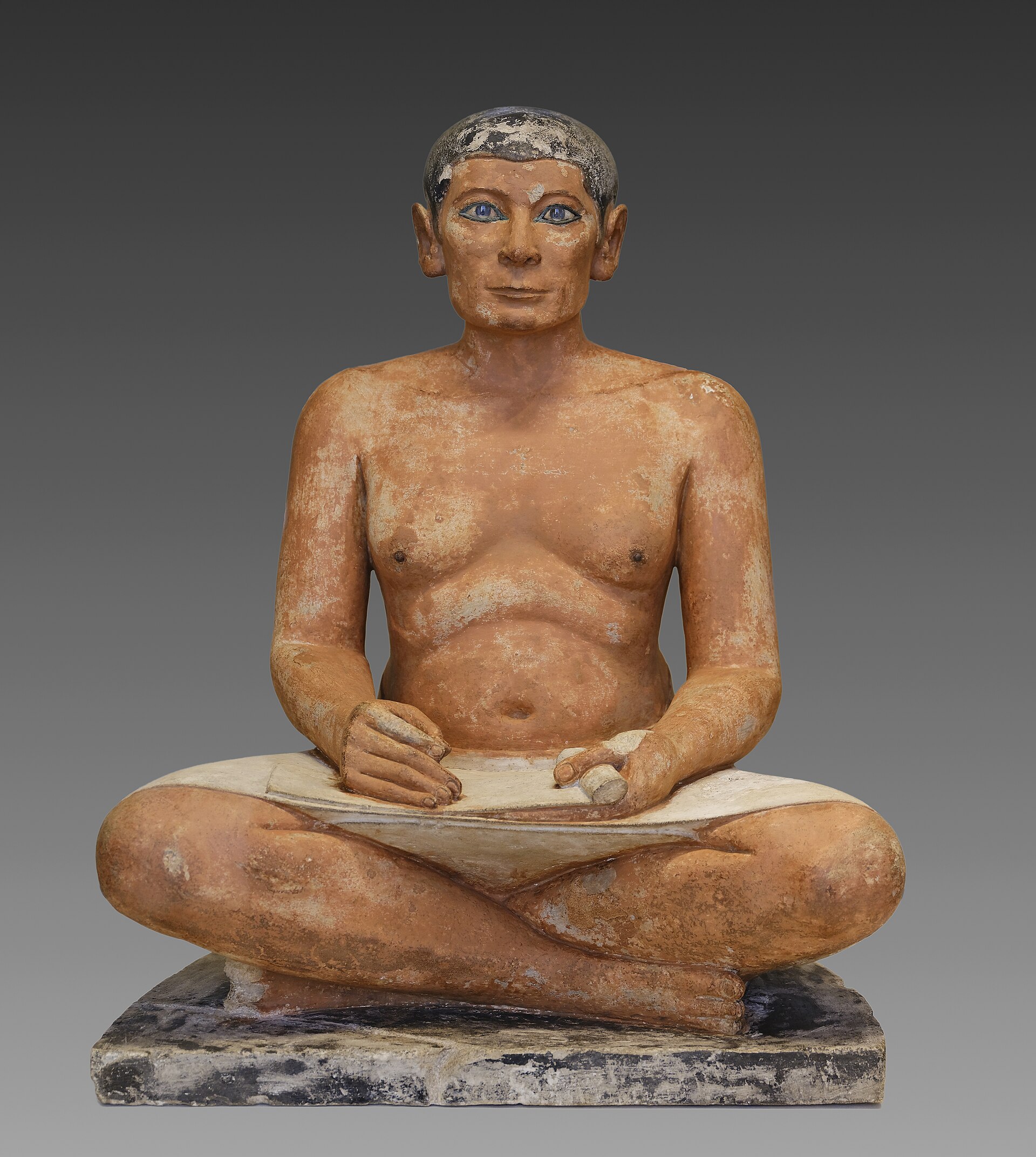
Scribes trained for years and worked in offices attached to temples, called Houses of Life, with libraries and workshops. They recorded taxes, wrote letters and copied books. Egyptians wrote stories, poems, advice, such as the Instruction of Amenemope, and tales like the Story of Sinuhe.
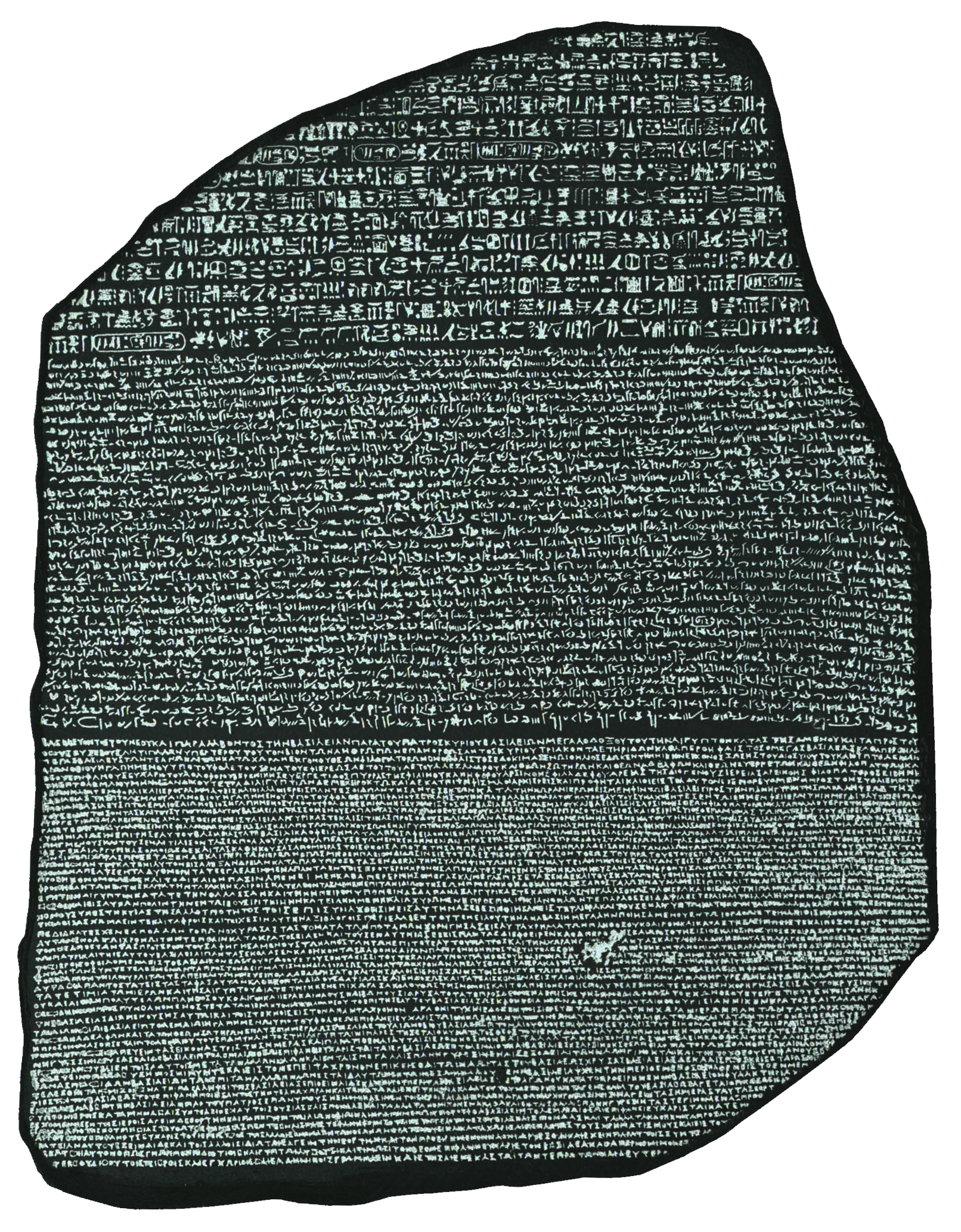
After the temples closed in the fourth century AD, nobody could read hieroglyphs any more. They stayed a mystery for about 1,400 years. In 1799 French soldiers found the Rosetta Stone. It carries the same decree in Greek, demotic and hieroglyphs. Scholars could read the Greek, and compared it with the other two. In the 1820s Thomas Young and then Jean-François Champollion showed that hieroglyphs record sounds as well as ideas. The key worked, and Egypt's own voice could be heard again.
What was everyday life like?
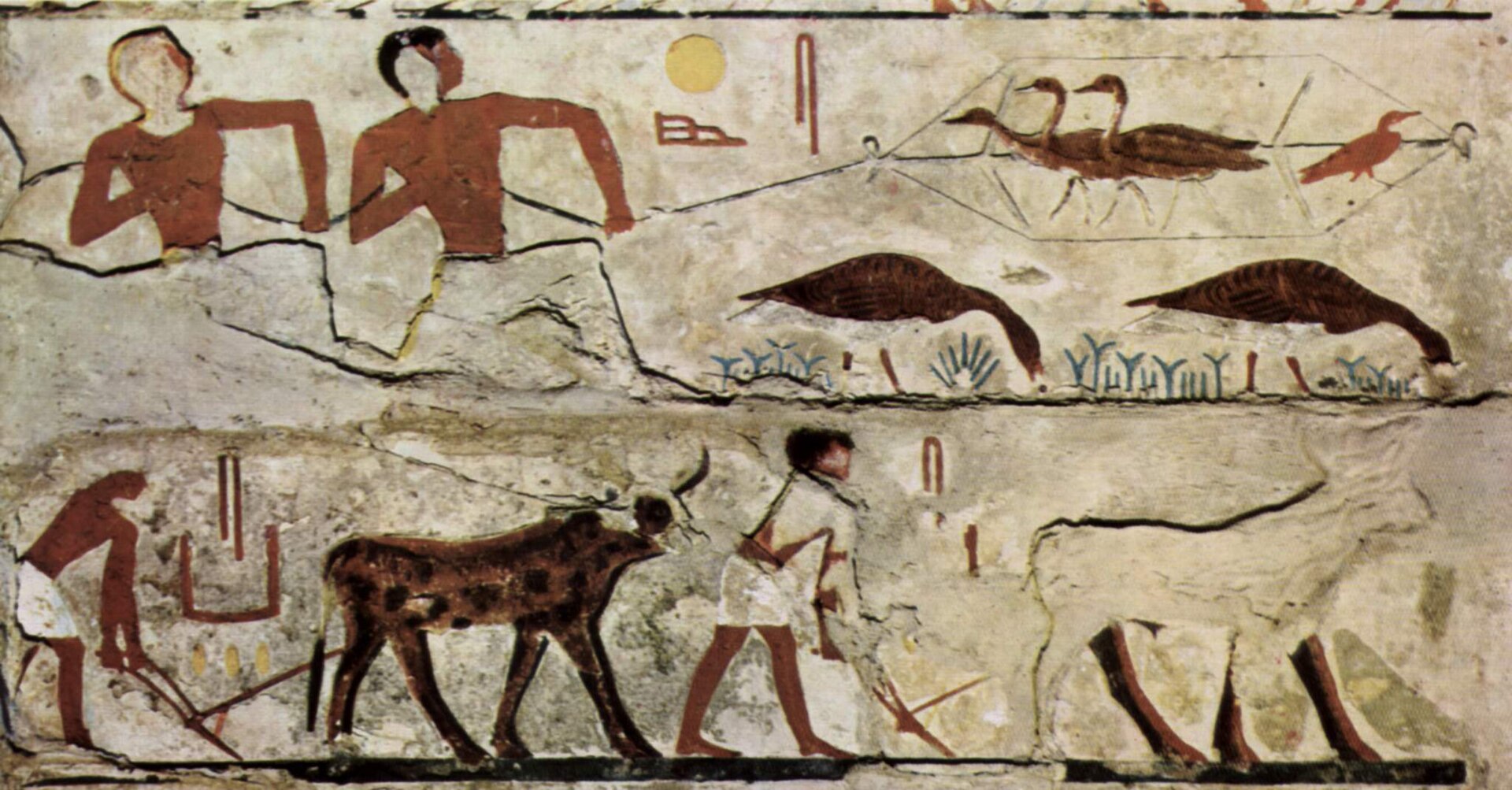
Most Egyptians were farmers living in villages. Their houses were made of mudbrick, which stays cool in the heat. Each home had a roofless kitchen with a grindstone for milling grain and a small oven for baking bread. Walls were painted white. People slept on raised beds, sat on stools and kept food and water in clay pots.
Egyptians cared about cleanliness and looks. Most bathed in the Nile and used a paste of animal fat and chalk as soap. Men often shaved their bodies, and people rubbed scented oils into their skin to protect it from the sun. Clothes were made of bleached linen. Wealthier men and women wore wigs, jewellery and eye make-up. Children usually wore no clothes until their teens.
Meals centred on bread, beer, vegetables, fish and fruit. Meat was less common and more often eaten by the rich. Beer was thick and nourishing, and drunk by everyone. Honey, from bees kept since the Old Kingdom, sweetened food.
Animals were part of the household. Cats, dogs and monkeys were pets. The Greek writer Herodotus noticed that Egyptians kept animals inside their homes. Lions from the heart of Africa were kept only by kings. Horses arrived with the , and camels came into use for carrying loads only in the Late Period.
For fun, people enjoyed music and dance. Early instruments included flutes and harps. Later came trumpets, oboes, pipes, bells and cymbals. Parents handled the household. Mothers cared for children, while fathers earned the family's income.
How did ancient Egypt end, and how do we know about it?
After the New Kingdom, Egypt split. The high priests of Amun grew rich and ruled the south from Thebes, while kings ruled the north from Tanis. Libyan chiefs took over the Delta around 945 BC. Around 727 BC the Kushite king Piye marched north from Nubia and founded the 25th . These kings built temples and pyramids, many in modern Sudan. The Assyrians then invaded between 671 and 667 BC and pushed them back.
Psamtik I drove the Assyrians out by 653 BC with Greek soldiers. In 525 BC the Persians, led by Cambyses II, conquered Egypt. The last native dynasty ended with Nectanebo II. In 332 BC Persia's governor handed Egypt to Alexander the Great without a fight.
After Alexander, a Macedonian Greek family, the Ptolemies, ruled from the new city of Alexandria, home of a famous library and lighthouse. They built Egyptian-style temples and called themselves . The last, Cleopatra VII, lost to Octavian at the Battle of Actium in 30 BC. Egypt became a Roman province and a main source of grain for Rome.
Christianity spread in Egypt from the first century AD. In 391 the emperor Theodosius banned pagan rites and closed temples. were forgotten, and in AD 642 Arab armies conquered Egypt.
How do we know all this? Dry sand preserved tombs, mummies, wall paintings and scrolls. Temple carvings record kings' deeds. Court and tax papers show daily life. Since the 1800s archaeologists have dug, measured and compared these finds, and the work continues.
Explore Next
Your audio story keeps playing while you look around.
Words to Know
- dynasty
- A line of rulers from the same family.
- hieroglyphs
- Egyptian picture writing used on temples and tombs.
- Hyksos
- Western Asian rulers who held northern Egypt for many years.
- Ma'at
- The Egyptian idea of truth, justice and balanced order.
- mummification
- Drying and wrapping a body so that it lasts after death.
- natron
- A natural salt used to dry bodies during mummification.
- nome
- One of the regions Egypt was divided into for government.
- papyrus
- A reed that grew by the Nile, pressed into paper.
- pharaoh
- The king of ancient Egypt, who was also its chief priest.
- scribe
- A trained writer who kept records for the king and temples.
- silt
- Fertile mud left on the land after the Nile flooded.
- vizier
- The pharaoh's second in command, who ran the government.