Ocean current
The rivers inside the sea that carry heat, food and ships around the world.

An ocean current is a steady, directed flow of seawater. Some currents are narrow ribbons at the surface and others are slow, deep streams that take a thousand years to complete a journey. Together they form a vast moving system that links every ocean. Wind pushes the surface water, and differences in temperature and saltiness make deep water sink and rise. These flows carry heat from the tropics towards the poles, bring food up from the deep and help to decide where it is warm, cold, wet or dry. They guided sailors for centuries, and today satellites and floating robots track them.
What is a river inside the sea?
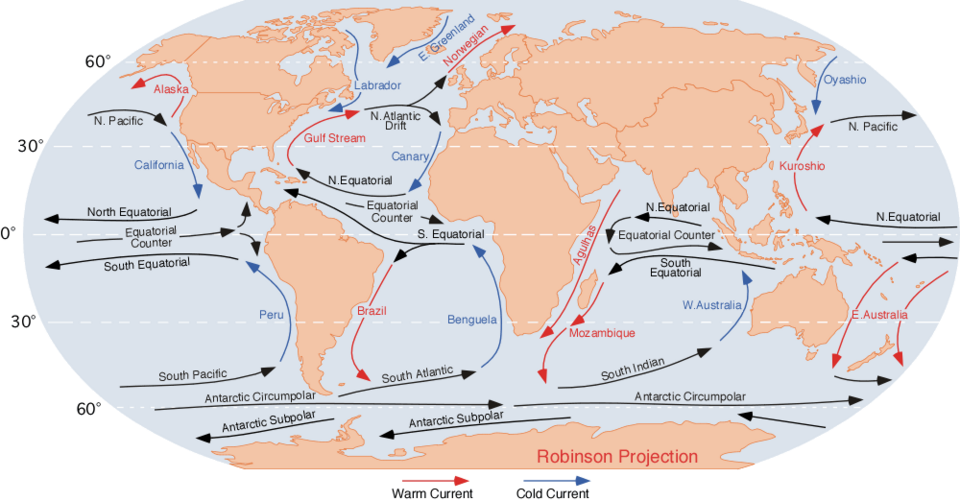
If you could colour a patch of the ocean and watch it for a year, you would see it travel. Some seawater is always on the move in broad, organised streams called ocean currents. They flow sideways across whole oceans. They also flow up and down. A rising current is called and a sinking one is called . Both move nutrients and gases, such as carbon dioxide, between the surface and the deep ocean.
Scientists measure the flow of a current in . One sverdrup is a million cubic metres of water every second. A swimming pool at the Olympic Games holds about 2,500 cubic metres, so one sverdrup would fill about 400 of them each second.
Currents can be sorted in several ways. By temperature they are warm or cold. By speed and size they are drifts, currents or streams. A drift, such as the North Atlantic Drift, is surface water moving along with the wind. A current, such as the Labrador Current, flows faster and in a more definite direction. A stream, such as the Gulf Stream, carries the biggest mass of water at the greatest speed.
The shape of the seabed, the coastline and other currents all push and steer the flow.
What pushes the surface of the ocean around?
Mostly, the wind. The big, steady winds that blow around the planet drag the top layer of water along with them. Seasonal winds and occasional storms can drive currents too, though these last only as long as the winds do.
But the water does not simply follow the wind. Earth spins, and this bends moving things off a straight path in a way called the . As a result the water flows at an angle to the wind. Scientists describe a pattern called the . The surface layer moves at an angle to the wind. Deeper layers turn further and move more slowly, until at a certain depth the water flows in the opposite direction to the wind.
The overall effect is that water circles round the big ocean basins. In the northern hemisphere the circles are clockwise, and in the southern hemisphere they are anticlockwise. These giant circles are called . They also make the currents uneven. On the western side of an ocean the current is narrow and fast. On the eastern side the water returns in a broad, slow, spread-out flow.
The Gulf Stream is a famous narrow current of this kind. Satellite pictures of sea temperature show it as a warm ribbon sweeping north-east along the coast of the United States.
What drives the deep ocean's slow conveyor belt?
Below the reach of the wind, water moves for a different reason. Its changes. Cold water is denser than warm water, and salty water is denser than fresh water. So the density of seawater depends on its temperature and saltiness. Scientists call flows driven this way . The word comes from thermo, for heat, and haline, for salt.
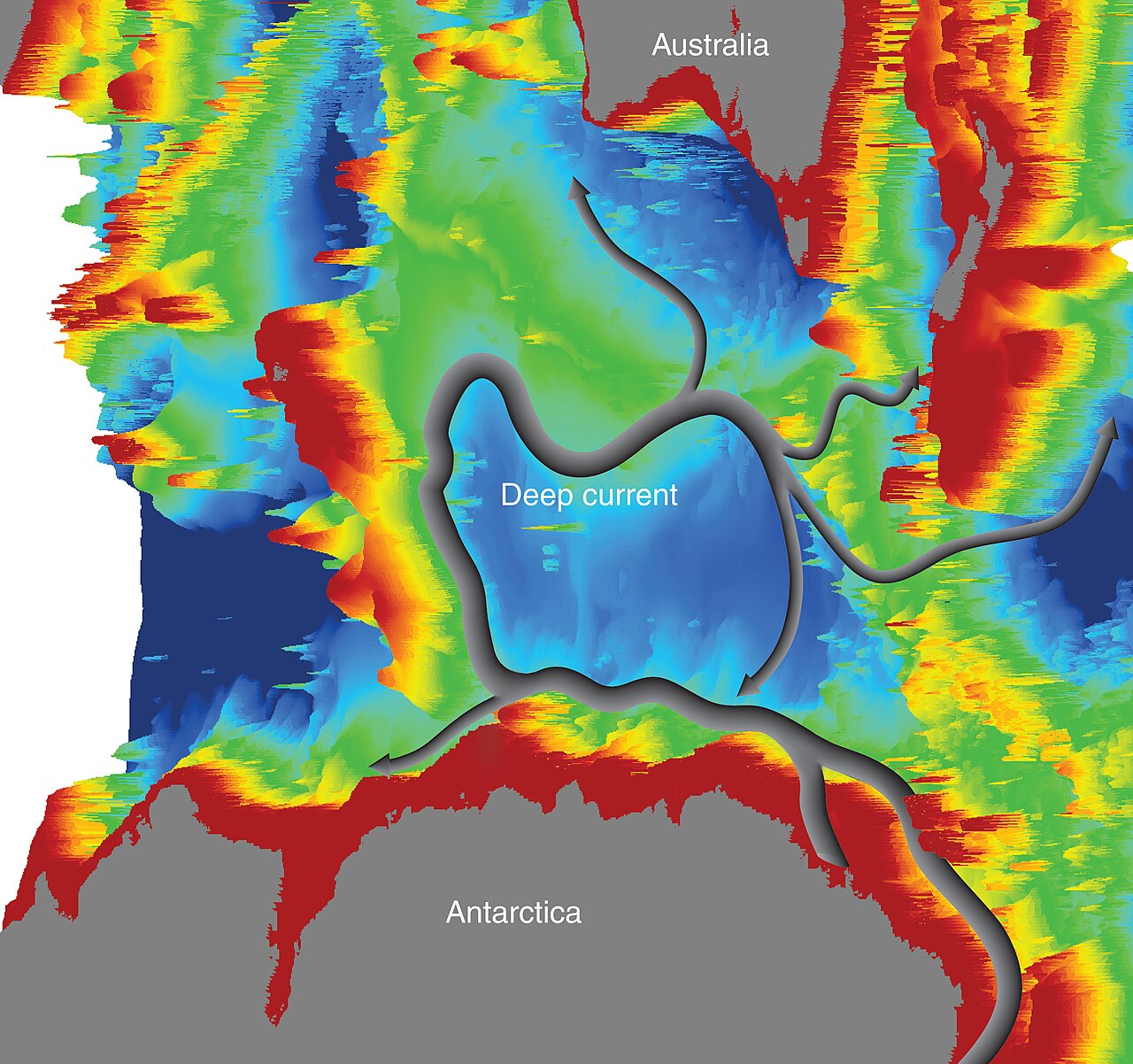
Take the Atlantic part of the loop. Warm surface water travels towards the poles and cools on the way. In the far north it becomes cold and dense enough to sink, forming a mass called North Atlantic Deep Water. This dense water then spreads through the ocean basins. Most of it rises again in the Southern Ocean. The oldest water, with a journey time of around 1,000 years, rises in the North Pacific.
This circuit is sometimes called the global conveyor belt. Along the way it carries heat, dissolved gases and tiny particles from one ocean to another. Its slow pace explains why the deepest layers are so cold. Water at the very bottom can stay cut off from the air for hundreds or even a few thousand years.
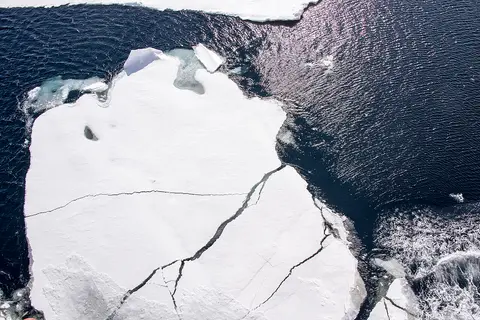
Sea ice helps too. When ice forms, it leaves most of its salt in the water below. That water becomes saltier and denser and sinks.
The biggest current of all, the Antarctic Circumpolar Current, circles Antarctica and joins all the oceans together.
Why is north-west Europe warmer than it should be?
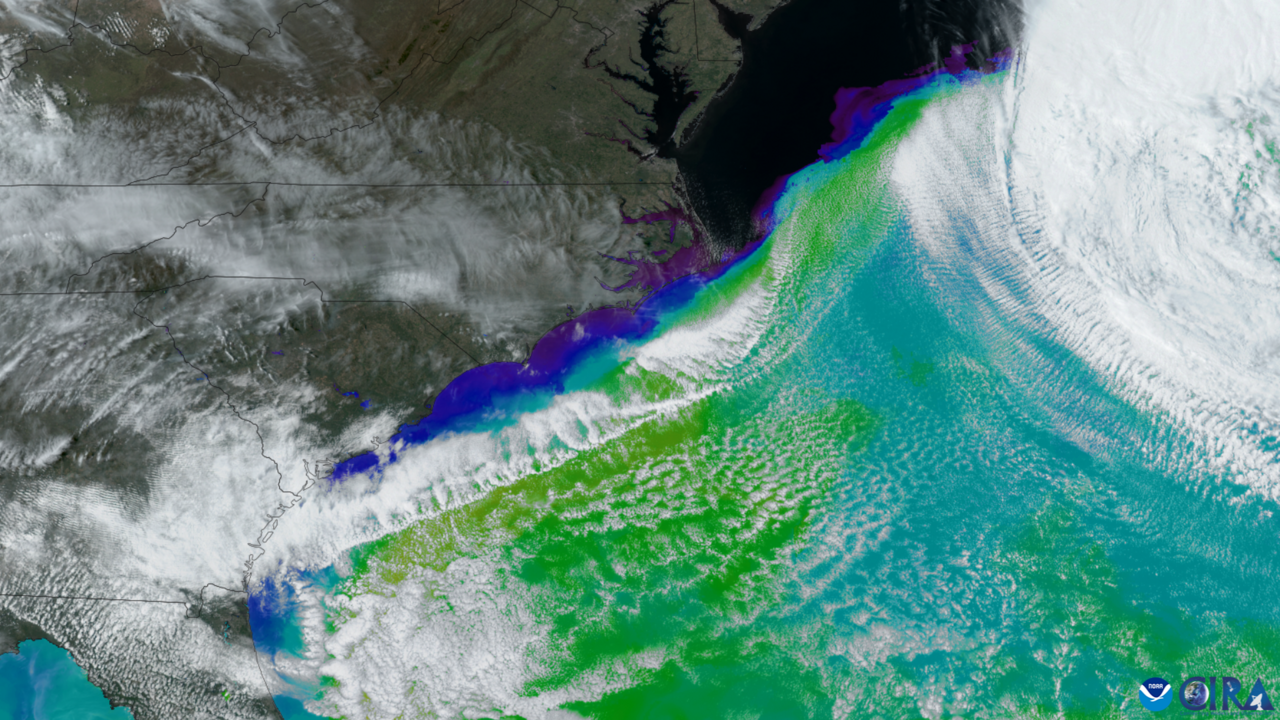
Look at a map. London sits at about the same latitude as parts of Canada where winters are far colder and the sea freezes. The reason is the Gulf Stream and its extension, the North Atlantic Drift. They carry warm water from the tropics towards north-west Europe. The warm sea warms the breezes that blow over it, which then heat the land. The warm water also keeps ice from building up along the coast, so ships can enter and leave harbours.
Cold currents do the opposite. The Humboldt Current brings cool water northwards along the coast of South America. Lima in Peru lies in the tropics, but its climate is cooler than you might expect, because of this current.
In general, a place influenced by a warm current has a warmer climate overall, and a place influenced by a cold current has a cooler one. Together, currents move enormous amounts of water and heat around the planet. They carry warmth from the tropics towards the poles and so shape air temperature and rainfall in coastal regions and further inland. How much of Europe's warmth comes from the Gulf Stream itself is debated. Scientists now think that the westerly winds blowing off the whole Atlantic matter at least as much as the current does.
The ocean also holds heat. Where winds blow in from the ocean, the climate is milder than at the same latitude deep inland.
How do currents feed and move living things?
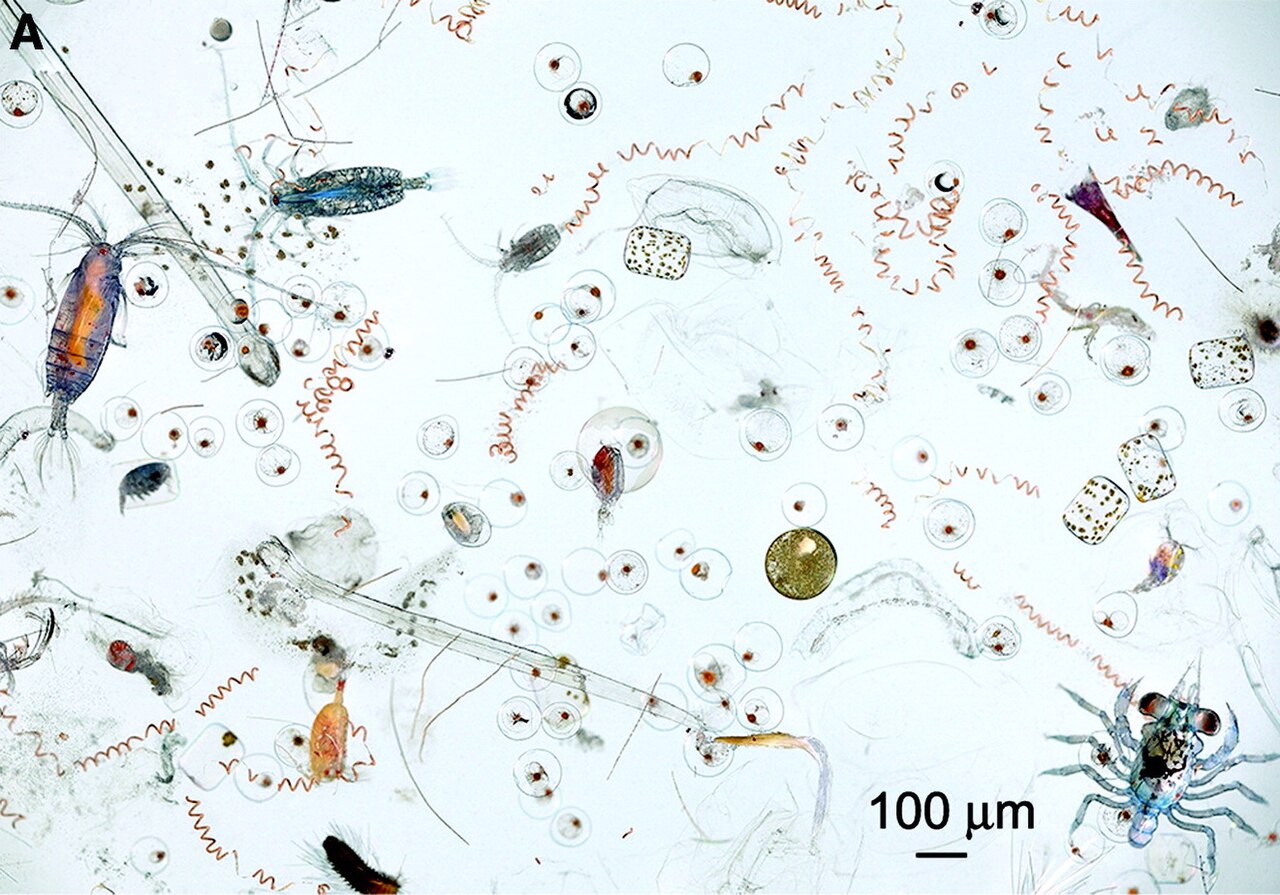
Currents decide where ocean life gathers. In many places, wind pushes surface water away from the coast. Cold, deep water then rises to take its place. This brings up nutrients that have sunk from above. Cold currents flowing from the polar regions also carry nutrients. With these nutrients, can grow. Plankton are tiny living things that drift in the water. They are food for many key animals in the sea.
Currents also move animals and plants. Many sea creatures start life as eggs or larvae that drift with the current, and this is how they spread to new places. The European eel is a famous example, since its young are carried across the Atlantic on currents. Even land animals have travelled this way. Tortoises and lizards have been carried on floating debris to reach new islands.
Currents carry rubbish as well. Marine debris, including plastic, is swept into the great , and that is why scientists studying ocean pollution need to understand currents.
The flow of water can also let invasive species spread. When currents change, some animals and plants may be carried to new regions, where they could harm the local wildlife.
How have people used the currents?
For sailors, a current can be a free ride or a stiff barrier. In the age of sailing ships, captains who understood winds and currents used them to enter harbours and to sail home. The Gulf Stream, for example, helped ships return from the Americas to Europe. The Agulhas Current, which runs along the south-east coast of Africa, long made it hard for sailors to reach India. Poor understanding of currents is also thought to be one of the reasons some voyages of exploration failed.
Today, ships still save fuel and money by travelling with a current. That also cuts the emissions they make. Racing yachts that sail round the world pick routes to take advantage of currents and keep up their speed.
Some places are testing ways to generate electricity from currents. Areas of Japan, Florida and Hawaii are being considered for trial projects.
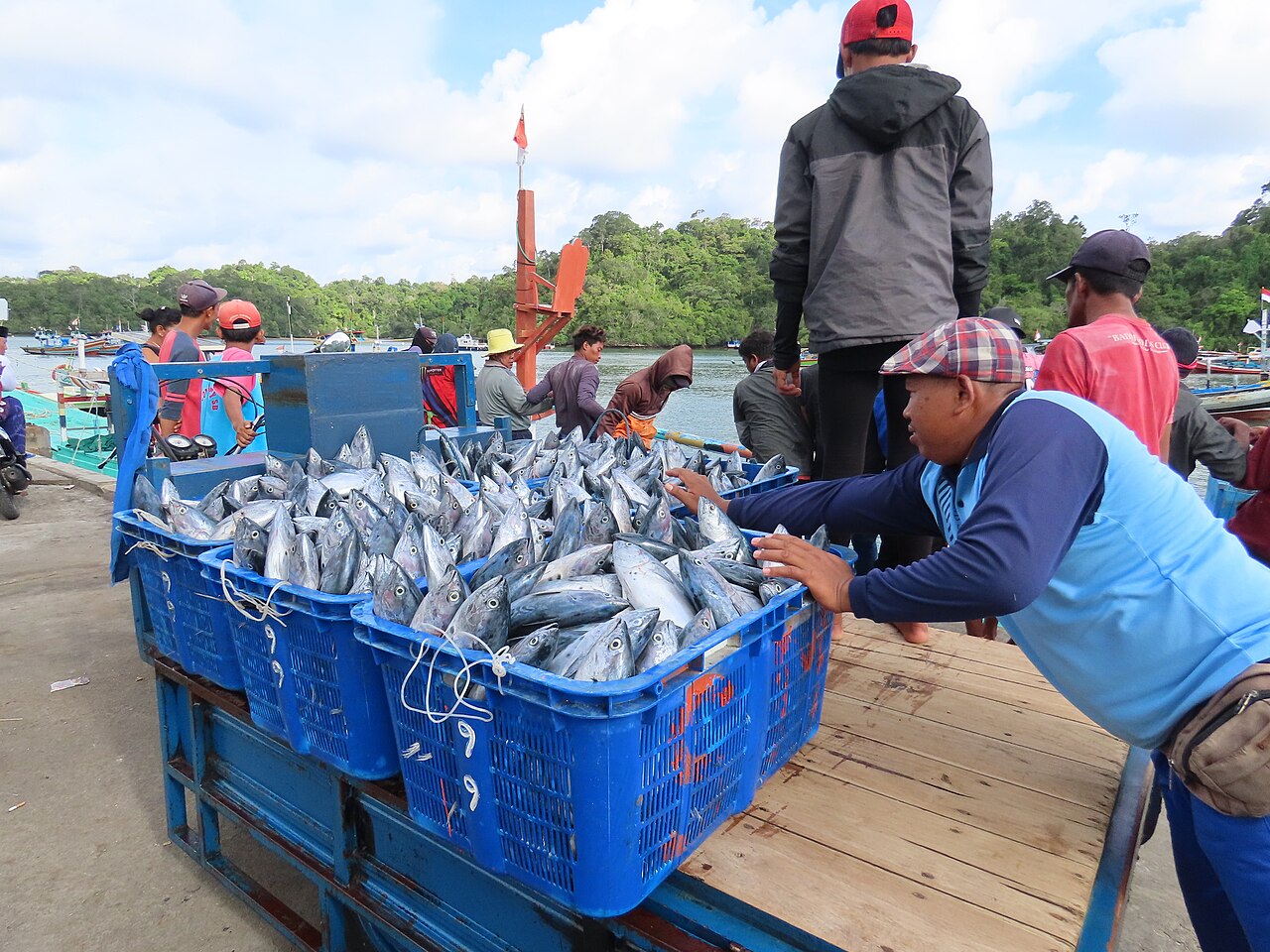
Currents matter to fishing, too. The Tsugaru, Oyashio and Kuroshio currents all affect the temperature of the western North Pacific. That temperature helps predict where skipjack tuna live, and so where fishing boats should go. Currents just offshore can even affect the fishing industry of a neighbouring country.
How did people find the currents?
Sailors knew about currents long before scientists did. In 1513 the Spanish explorer Juan Ponce de León was sailing past Florida when his ships could not make headway. A strong current was carrying them backwards. His pilots had found the Gulf Stream, and within a few years Spanish ships were using it to speed home to Europe.
The first chart of it came from an unlikely place. Benjamin Franklin ran the post office for the British colonies in America. He wondered why mail ships took about two weeks longer to cross the Atlantic than merchant ships. A Nantucket whaling captain, Timothy Folger, knew the current well, because whalers hunted along its edge. Together they drew a chart, which was printed in 1770 and labelled the Gulf Stream.
The Norwegian explorer Fridtjof Nansen added a clue. His ship Fram drifted in the Arctic ice from 1893 to 1896. He saw that the ice moved at an angle to the wind, to the right of it. The Swedish scientist Vagn Walfrid Ekman worked out why in 1905, and his answer is the .
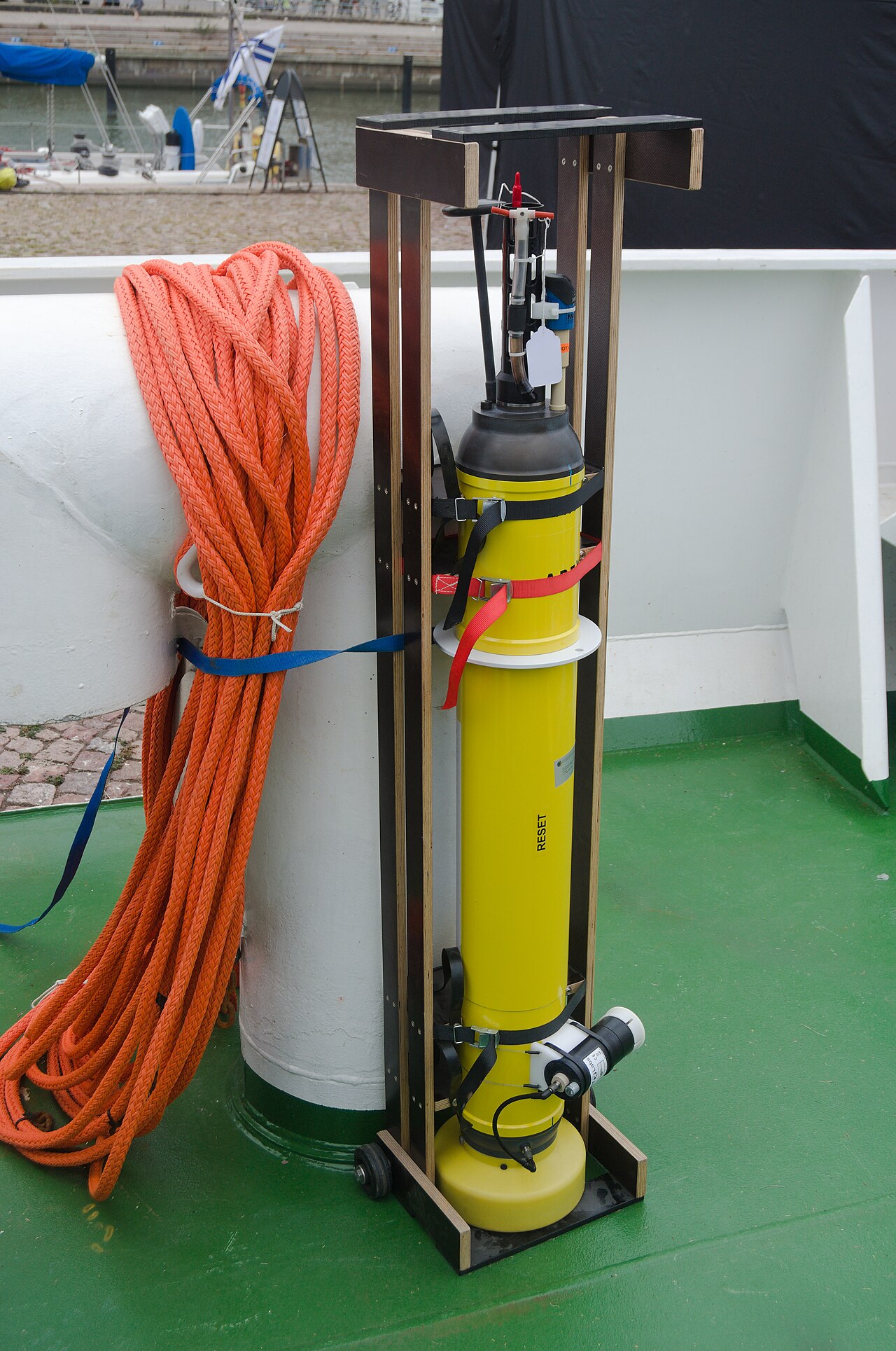
Some of the best data came by accident. In January 1992 a ship crossing the North Pacific lost a container holding 28,800 plastic bath toys, many of them yellow ducks. Over the next years they washed up in Alaska and Hawaii. The oceanographers Curtis Ebbesmeyer and James Ingraham collected the sightings and used them to test their models of the currents. Today the robotic Argo floats collect this kind of data on purpose.
What are El Niño and La Niña?
Currents can change from year to year. Normally the trade winds blow from east to west across the tropical Pacific. They push warm surface water towards Asia and Australia, and along the coast of Peru cold water wells up from the deep to replace it. That feeds huge shoals of anchovies.
Every two to seven years the trade winds weaken. Warm water flows back east across the Pacific, and the upwelling off Peru fades. This is , a name Peruvian fishermen gave it because it often arrives around Christmas. Fish catches fall, heavy rain hits Peru and Ecuador, and drought can strike Indonesia and Australia. Its effects on the weather reach much of the world.
The opposite phase, with stronger trade winds and unusually cool water in the east, is called La Niña. Together the swings are known as the El Niño-Southern Oscillation, or ENSO.
What happens to the currents as the climate changes?
Currents shape the climate, and climate now changes the currents. As the world warms, the surface of the ocean warms with it. Over the last century, records suggest that western boundary currents have warmed at about twice the global average rate. These are the fast, narrow currents on the western sides of the oceans, like the Gulf Stream. One study found that warming has speeded up upper-ocean currents across 77 per cent of the global ocean.
The big question is the Atlantic meridional overturning circulation, usually shortened to AMOC. It is the Atlantic part of the conveyor belt. Observations and models suggest it has weakened since before the industrial era and may weaken further during this century. Some scientists warn that it could collapse because of melting ice and warming water. That would have severe effects on the climate of northern Europe. This is controversial and is still being researched. Studies published in 2025 disagreed about how much the circulation has weakened and how likely a collapse is. Meltwater from Greenland and Antarctica could be slowing important currents at both poles.
The Antarctic Circumpolar Current is also slowing down. One report expects it to lose about 20 per cent of its power by 2050.
Changing currents will change where sea creatures can live. Some species may be pushed towards the poles and into deeper water, while invasive species could spread.
Explore Next
Your audio story keeps playing while you look around.

Words to Know
- Coriolis effect
- The way Earth's spin bends moving air and water off a straight path.
- density
- How much mass something has for its size. Dense water sinks.
- downwelling
- Surface water sinking towards the deep ocean.
- Ekman spiral
- The turning of water at deeper layers because of Earth's spin.
- El Niño
- A change every few years in which Pacific trade winds weaken and warm water flows east.
- gyre
- A huge circle of ocean currents.
- plankton
- Tiny living things that drift in the water.
- salinity
- How much salt is dissolved in water.
- sverdrup
- A unit of ocean flow equal to 1 million cubic metres of water per second.
- thermohaline circulation
- Deep ocean flow driven by differences in temperature and saltiness.
- upwelling
- Deep, cold water rising to the surface, often bringing nutrients.