Ocean
One vast, salty, moving world that covers most of our planet.
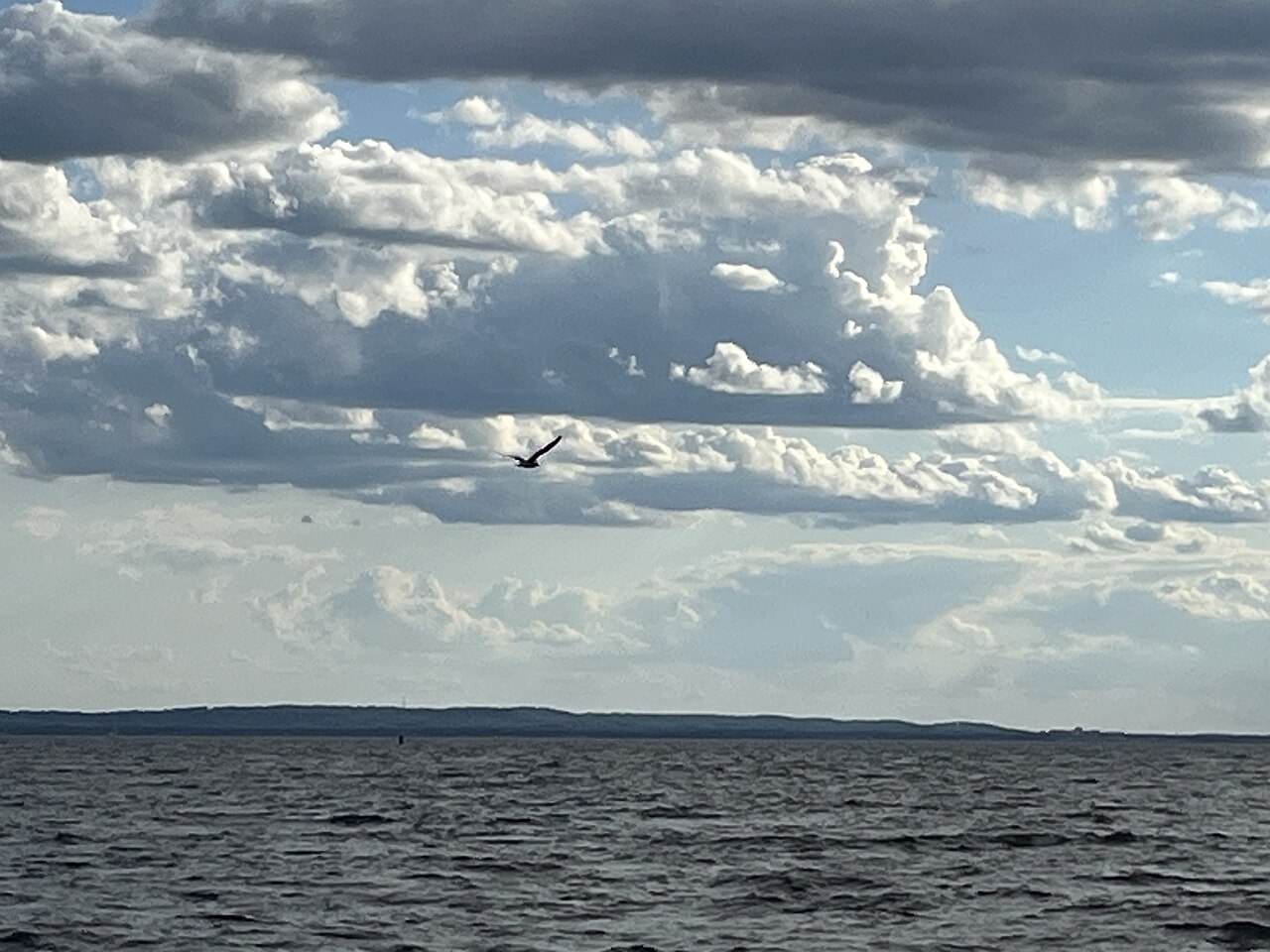
Seen from space, Earth is blue, because about 70.8 per cent of its surface is covered by salt water. We call this the ocean, and it holds 97 per cent of all the water on Earth. It stores heat, shapes the weather, soaks up carbon dioxide and gives us about half of the oxygen we breathe. It is home to creatures from tiny drifting algae to the biggest animals that have ever lived. People usually divide it into five oceans, but they all join into one connected body of water. We have mapped less than a third of its floor in fine detail, so much of this world is still unexplored.
Is there one ocean or five?
Both answers are right. Geographers split the water into five named oceans for convenience. They are the Pacific, the Atlantic, the Indian, the Arctic and the Southern Ocean, which circles Antarctica. The Pacific is the biggest and the deepest. But the oceans are not separate. They join up, and water, heat and living things move between them all the time. In the early 1900s the Russian scientist Yuly Shokalsky gave this single connected ocean a name, the World Ocean.
The Southern Ocean is the newest member of the five. Its edge is set by the Antarctic Circumpolar , and governments and international bodies only began to recognise it around 1999 and 2000.
So what is a sea? A sea is a smaller part of the ocean that is partly or fully surrounded by land, such as the North Sea or the Red Sea. There is no sharp line between a sea and an ocean, and in everyday speech we use the words for the same thing.
The word itself is ancient. It comes from Oceanus, a Titan in Greek myth. The ancient Greeks and Romans pictured him as a huge river that ran around the whole world.
Where did the oceans come from?
Nobody knows exactly. Scientists think a lot of Earth's water was already in the rocky material that built the planet. Early Earth may have had oceans of molten rock. Volcanoes, gas escaping from inside, and meteorite impacts produced a thick early atmosphere of carbon dioxide, nitrogen and water vapour. When the surface cooled enough, the vapour condensed and fell as rain, and the first oceans began to fill. They may have been hotter than today and green, because of the iron dissolved in them.
How do we know water was there so early? Rocks give clues. A sample of pillow basalt from the Isua Greenstone Belt in Greenland formed when lava erupted underwater, and it shows that liquid water existed 3.8 billion years ago. Some rocks in Quebec, in Canada, may be even older, at 4.28 billion years by one study. Earlier oceans could have left no evidence, because Earth's moving crust destroys old rock.
The ocean has never stayed the same size. When more water was frozen in glaciers during the last ice age, sea level was about 122 metres lower than today. Around 125,000 years ago, in a warm spell, it was about 5.5 metres higher. Plate tectonics also keeps changing the shape of the ocean basins and the coastlines.
What does the ocean floor look like?
The ocean floor is not a flat bowl. It has mountains, plains and canyons. On average the ocean is about 3,700 metres deep, and nearly half of its water is more than 3,000 metres down. Around the edges of the continents the seabed is shallower. These gently sloping areas are called continental shelves.
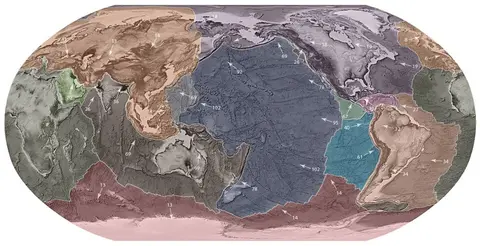
The floor is shaped by plate tectonics, the slow movement of the huge plates that make up Earth's crust. In the middle of each ocean, molten rock rises between two plates that are moving apart. It cools and forms a mid-ocean ridge. All the ridges join to make a mountain chain about 65,000 kilometres long, the longest on Earth and many times longer than the Andes.
Elsewhere one plate slides beneath another in a process called . This makes deep . It also causes earthquakes and pushes magma upwards, building underwater volcanoes and chains of volcanic islands.
Most of the floor is still a mystery. By April 2026 only about 28.7 per cent had been mapped in fine detail, and the Seabed 2030 project is trying to map the rest.
Who has been to the bottom of the ocean?
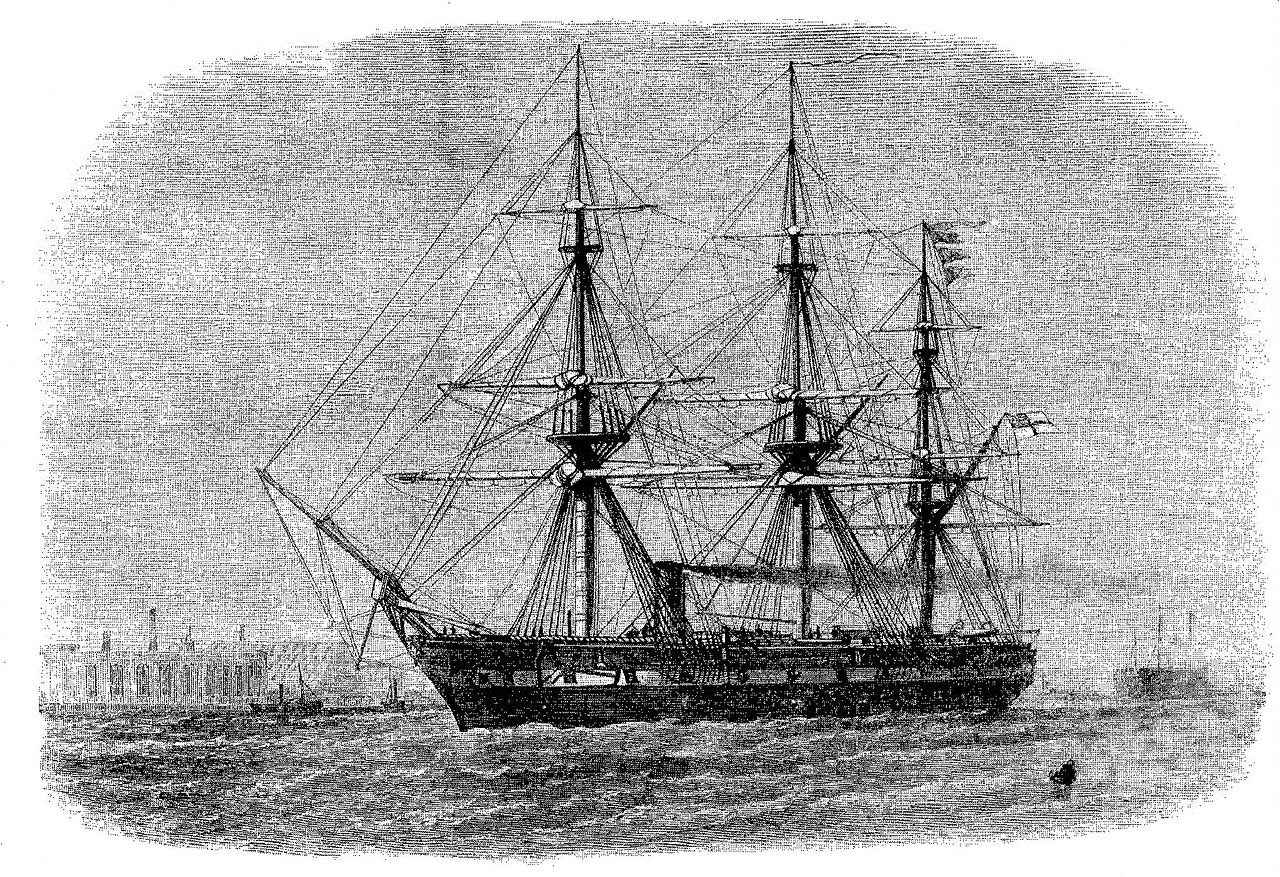
The deepest place is the Challenger Deep in the Mariana in the Pacific Ocean, almost 11,000 metres down. The first people to measure the deep ocean were the crew of HMS Challenger. From 1872 to 1876 this British ship sailed around the world on the first great scientific voyage to study the sea. Its crew lowered weighted lines to find the depth and dredged up animals from the bottom. Its measurements showed that the Pacific held far deeper water than anyone had expected. In 1951 a second ship with the same name surveyed the trench, and the Challenger Deep is named after it.
Reaching the bottom took another century. In 1960 the Trieste, a deep-diving vessel built in Italy, reached the floor of the trench. It carried the Swiss engineer Jacques Piccard and the American naval officer Don Walsh. The pressure there is more than 1,000 times the pressure at the surface. In 2012 the film director James Cameron made the first solo dive to the bottom. In 2019 the American explorer Victor Vescovo reached it in a submersible built to make many dives. Today robots explore the deep far more often than people do.
Why is seawater salty, and how cold is it?
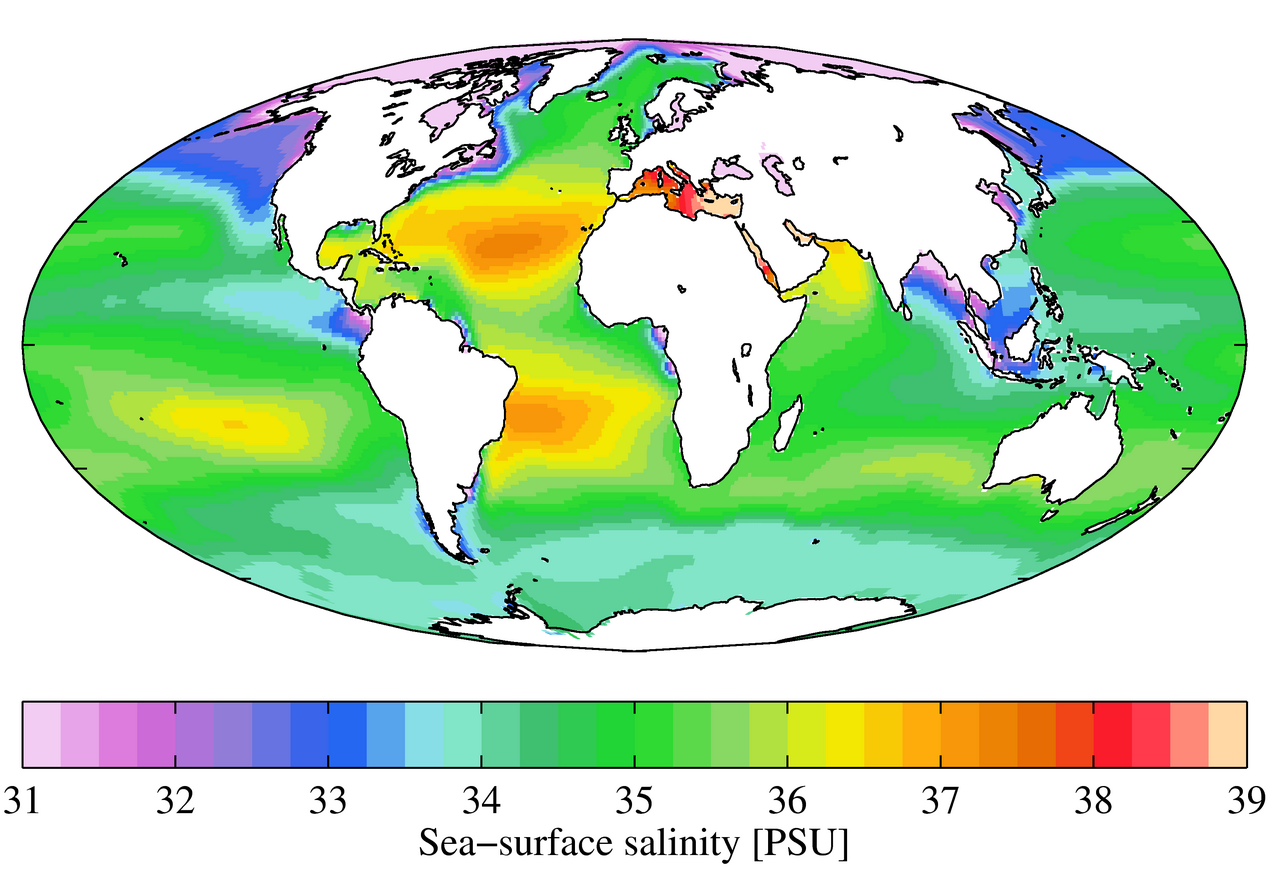
Seawater is a mixture. On average about 3.5 per cent of it is dissolved salt, which scientists call . If you could evaporate a kilogram of ocean water, you would be left with roughly 35 grams of salt. Rain washes small amounts of salt out of rocks on land, and rivers carry it to the sea. Water evaporates, but the salt stays behind. Over a very long time the ocean has become salty.
Salinity is not the same everywhere. It is higher where evaporation beats rainfall, as in the Mediterranean Sea, which averages 38 grams per kilogram. It is lower where a lot of rain falls or rivers pour in fresh water. When sea ice forms, most of the salt is left behind in the water below, making it saltier and heavier.
Temperature varies too. In the tropics, where the Sun is nearly overhead, the surface can rise above 30 degrees Celsius. Near the poles it is about minus 2 degrees. Sea water freezes at about minus 1.8 degrees, which is colder than fresh water because of the salt. Sea ice floats, and covers about 12 per cent of the ocean.
Below a layer called the , the water is cold everywhere, between minus 1 and 3 degrees. Since this cold layer holds most of the ocean, the average temperature of the whole thing is only about 3.9 degrees Celsius.
What lives in the ocean, and where?
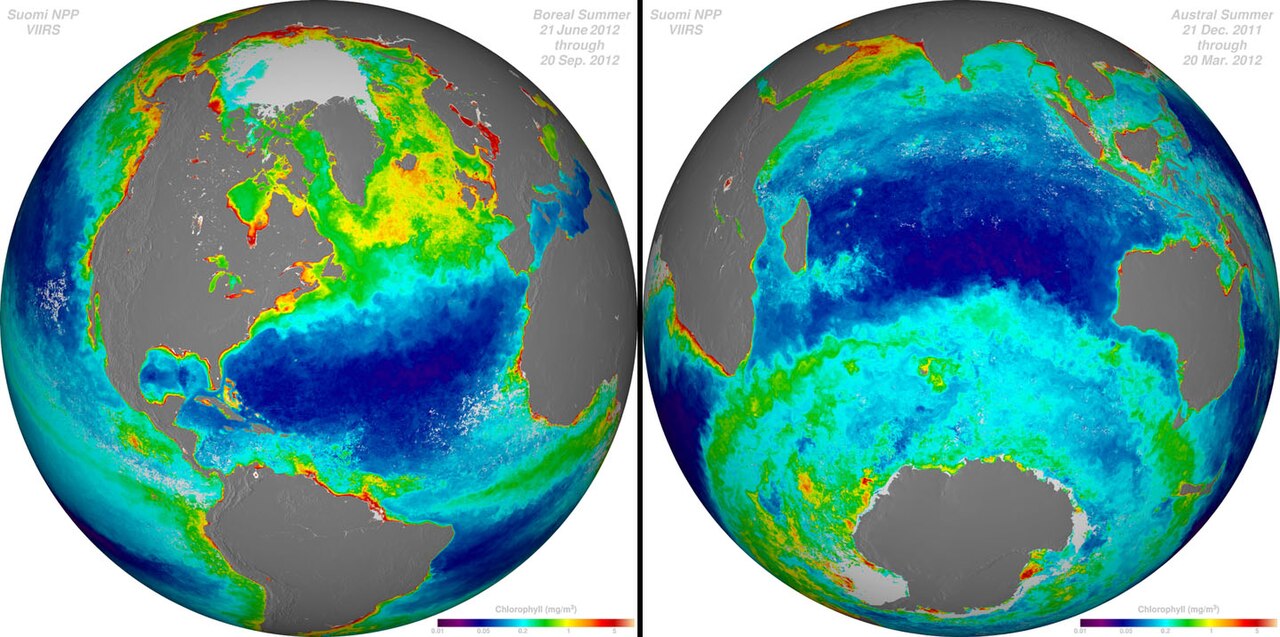
Ocean scientists divide the water into layers by how much light reaches them. At the top is the photic or sunlit zone, which reaches down to about 200 metres in the open ocean. Light is needed for photosynthesis, the way plants and algae make food. In the sunlit zone, tiny floating algae called use light, water and carbon dioxide to make food and release oxygen. This zone is the most full of life, and its algae feed most of the ocean's food web. Phytoplankton produce about half of the oxygen in our air.
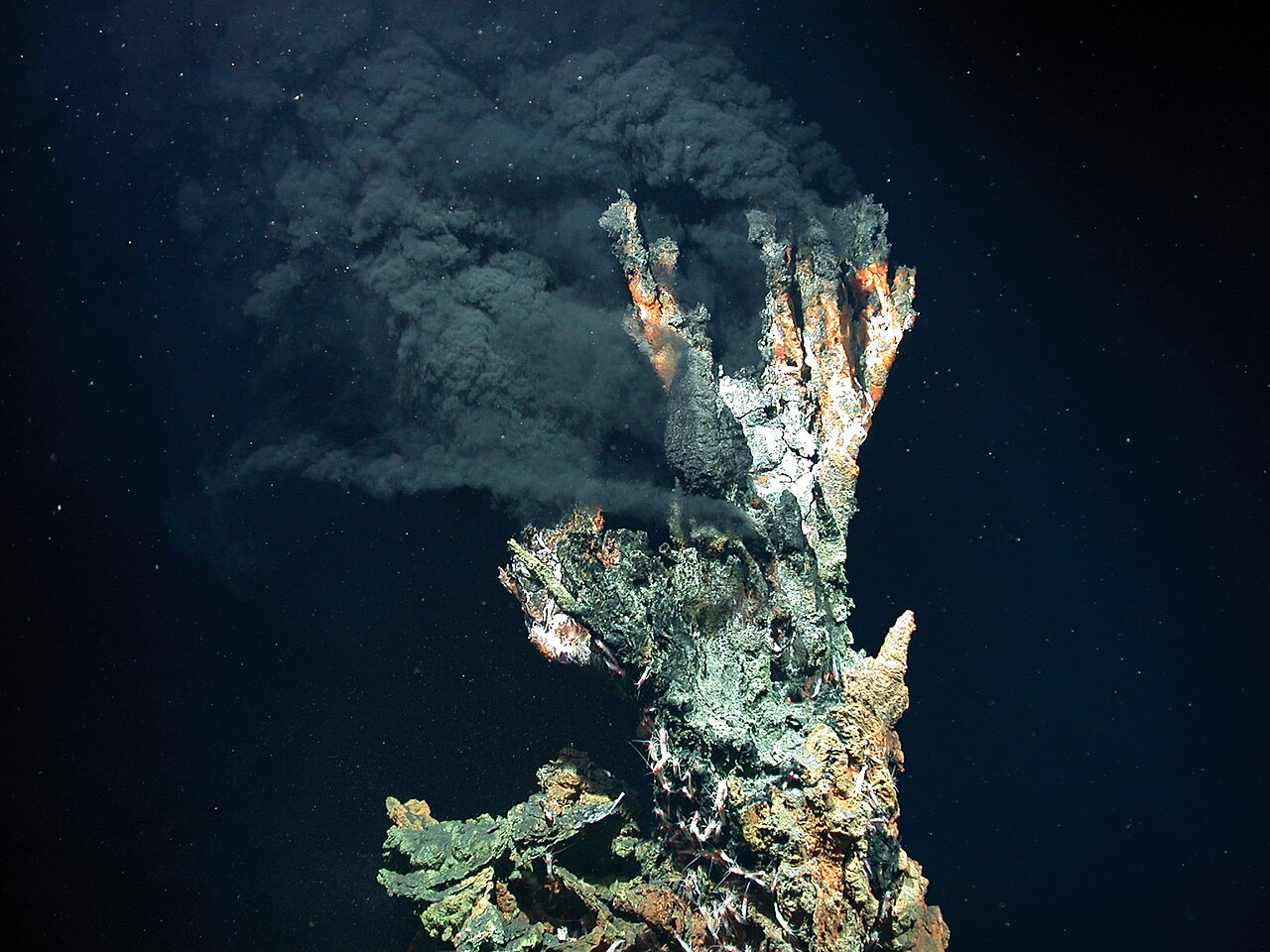
Below is the mesopelagic or twilight zone, where a little light remains but not enough for growth. Deeper still is the aphotic zone, with no sunlight at all. It is cold and dark. Animals there depend on food that sinks from above, called marine snow. Others rely on energy from hydrothermal vents, which are cracks in the seabed that release hot water.
Scientists have found more than 230,000 species in the ocean, and there may be over 2 million. Most of the planet's animal life is thought to live there. Life gathers where nutrients are plentiful, in coastal waters and wherever upwelling brings food to the surface. Satellite pictures of ocean colour show this, because the green of chlorophyll marks where algae are thick.
Mangroves and saltmarshes also store large amounts of carbon, in what is called blue carbon.
What makes waves and tides?

Waves are made mostly by wind. Wind blowing across the water drags it into ripples and, if it blows strongly for long enough, into larger waves. How big they get depends on the wind's speed, how long it blows and the distance it blows over, called the fetch. Waves that travel out of the storm that made them are called , and they can cross a whole ocean. Most waves are lower than 3 metres. Storms double or triple that. Rogue waves, made when waves combine, have been recorded above 25 metres.
A wave moves energy, not water. A floating bottle bobs up and down while the wave passes beneath it. Near the shore the bottom of the wave drags on the seabed. It slows, the crests bunch together and the wave grows taller until it topples. We call that breaking.
are the regular rise and fall of the sea. They are mainly caused by the Moon's gravity, which pulls the ocean into bulges, with some influence from the Sun. When the Sun and Moon line up at new and full moon, the pull adds together and we get higher spring tides. In the open ocean the tide rises less than a metre. Coasts shape it more. The Bay of Fundy in Canada has a tidal range of up to 16 metres.
Over time, waves and tides wear coasts away and build beaches.
How does ocean water travel around the world?
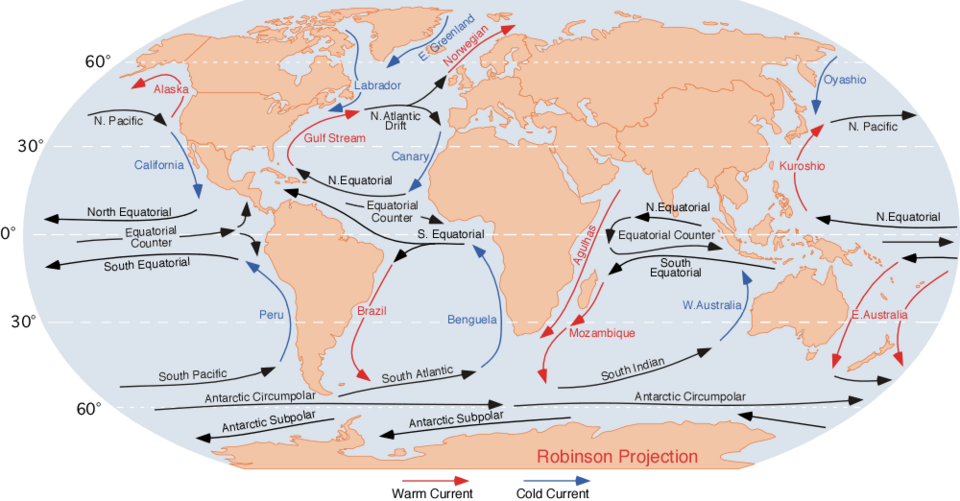
The ocean is always moving in great streams called . Surface currents are driven mostly by wind. The big, steady winds push water along, and because Earth spins, the water curves. This turning is called the Coriolis effect. It makes currents swing clockwise in the northern half of the world and anticlockwise in the southern half, producing giant circles of water called .
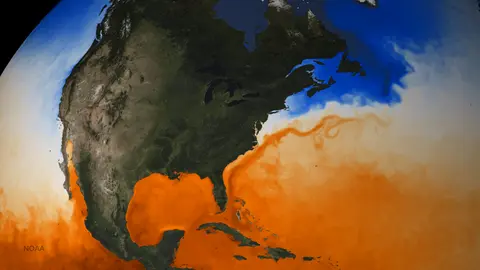
The Gulf Stream, the Kuroshio Current and the Agulhas Current are all major currents. The Antarctic Circumpolar Current is the largest. It flows around Antarctica and links the Atlantic, Pacific and Indian oceans together.
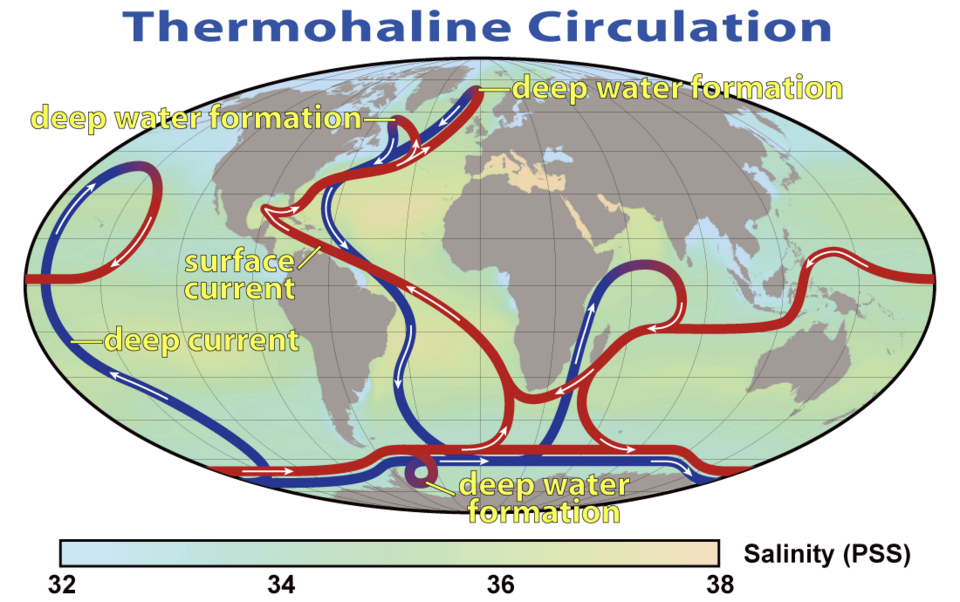
Deep water moves for a different reason. Cold, salty water is dense and sinks. Warm, fresher water is lighter and stays on top. These differences in temperature and saltiness drive the thermohaline circulation, which is also called the global conveyor belt. Water sinks in the polar north Atlantic, spreads slowly along the bottom and rises again elsewhere. One journey can take up to about 1,000 years. This slow loop mixes the oceans together and carries heat, gases and nutrients around the globe.
To track all this, an international programme called Argo has used a fleet of floating robots since the 2000s. They drift with the currents and measure temperature and . Their data helps scientists understand how the ocean works.
How does the ocean control our weather?
The ocean is Earth's biggest store of heat. Water takes a long time to warm up and a long time to cool down, so the ocean soaks up the Sun's heat and releases it slowly. This is why places near the sea have milder weather. San Francisco and New York are at similar latitudes. But San Francisco gets winds from the Pacific, while New York gets winds from over the land. So New York has colder winters and hotter summers.
Ocean carry heat from the tropics towards the poles. The warm Gulf Stream and its extension, the North Atlantic Drift, make north-western Europe much milder than other places at the same latitude. In the other direction, the cold Humboldt Current keeps the coast near Lima in Peru cooler than the tropics around it.
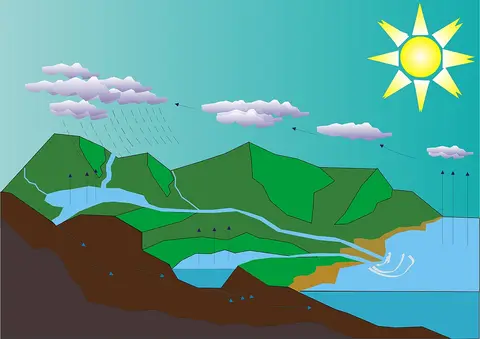
The ocean also feeds the water cycle. About 90 per cent of the world's rainfall begins as water evaporated from the ocean. Warm tropical seas also power tropical cyclones, which are called hurricanes or typhoons in different places.
Scientists have observed that the Atlantic overturning circulation has weakened since before the industrial era and may weaken further this century. How big a change this might bring is still being studied, so the details remain uncertain.
What is happening to the ocean today?
People depend on the ocean for food, trade, energy and enjoyment. It supplies seafood and other resources, and ships carry most of the world's goods across it. But human activity is putting it under pressure, especially the coastal waters and continental shelves, where most of the harm falls.
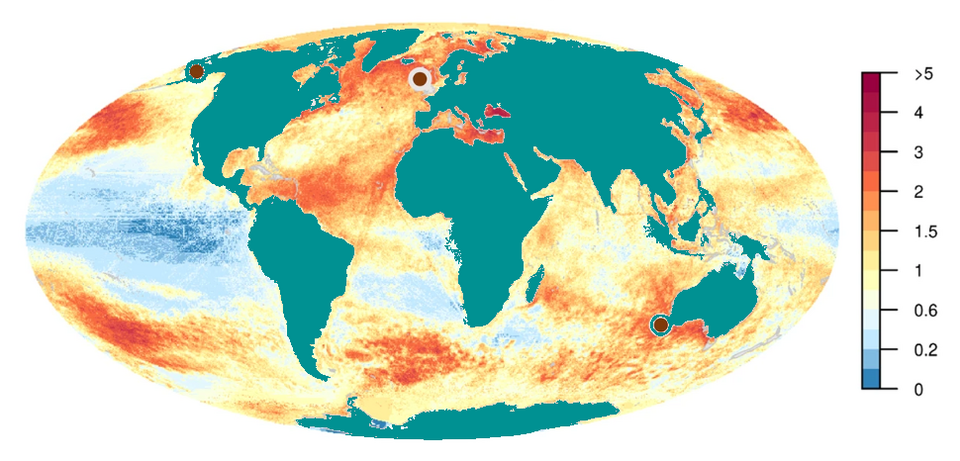
The main threats are marine pollution, overfishing and climate change. The ocean takes up carbon dioxide from the air. When the gas dissolves it forms a weak acid, and this lowers the water's pH. This is called . For about 300 million years the average surface pH was around 8.2, but it fell from about 8.15 to 8.05 between 1950 and 2020. That sounds small, but it makes it harder for shellfish and corals to build their hard shells and skeletons.
The ocean is also warming. Warm water holds less oxygen, and some regions already have areas with very little oxygen, called oxygen minimum zones. Melting ice and the warming of seawater make the sea level rise, which threatens coastal cities.
How do plastic and heat harm marine life?
Plastic is a threat you can see. Rubbish from land and ships collects in the great circles of water called . The best-known patch, the Great Pacific Garbage Patch between Hawaii and California, is mostly small fragments of plastic, not an island you could walk on. Animals swallow plastic or become tangled in it, and as it breaks into tiny pieces it spreads through the whole food web.
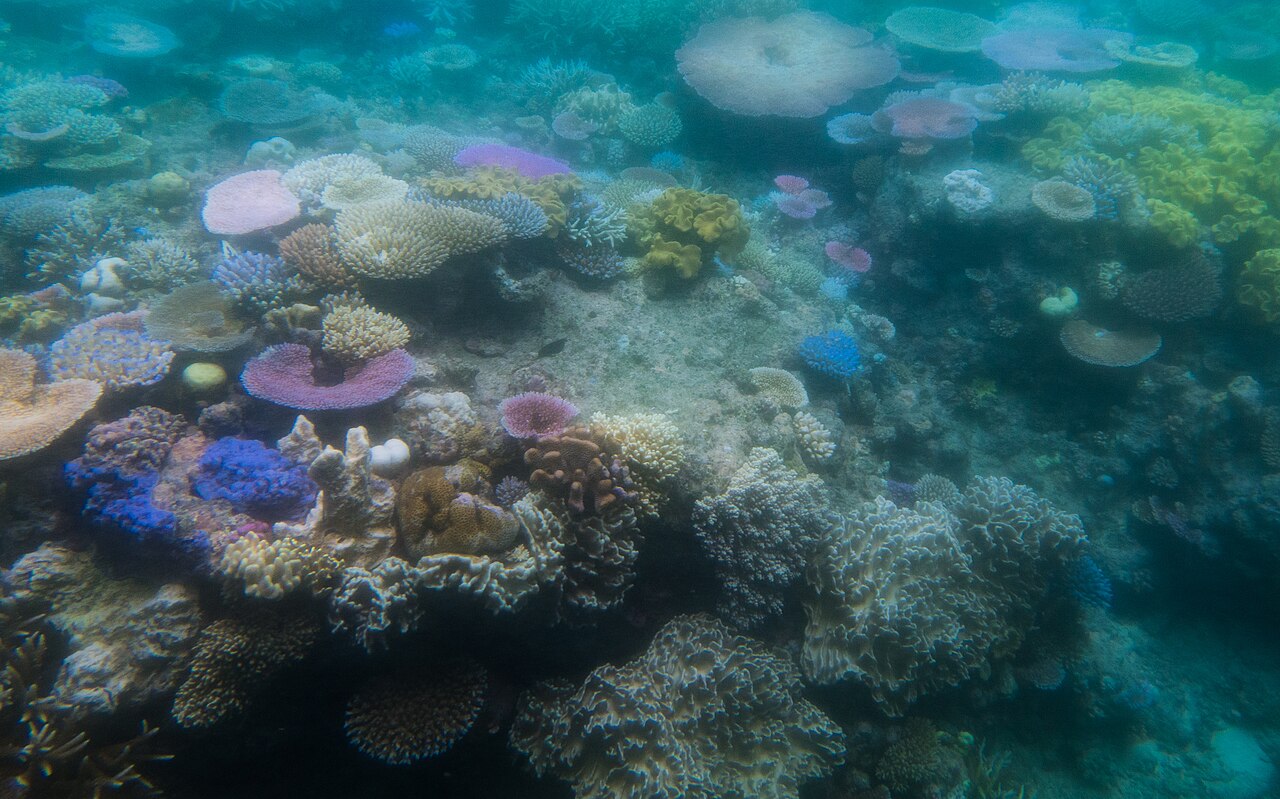
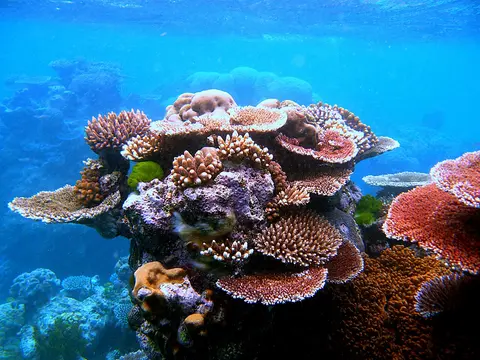
Hot water also bleaches corals. When the sea stays too warm, corals expel the algae that live in them and give them their colour, and many starve. A fourth global bleaching event began in 2023, and by 2025 it had hit about 84 per cent of the world's reef area. The Thames Barrier protects London from storm surges, and many other places build seawalls and dykes.
People are working to protect the ocean. Scientists track the changes, and many countries have set up marine protected areas.
Explore Next
Your audio story keeps playing while you look around.
Words to Know
- continental shelf
- The shallow, gently sloping seabed around the edges of the continents.
- coral bleaching
- The loss of colour when stressed corals expel the algae that live inside them.
- current
- A steady flow of water through the ocean.
- gyre
- A huge circle of ocean currents.
- ocean acidification
- The slow drop in the ocean's pH as it absorbs carbon dioxide.
- phytoplankton
- Tiny floating algae that make food from sunlight and produce oxygen.
- salinity
- A measure of how much salt is dissolved in water.
- subduction
- When one tectonic plate slides beneath another.
- swell
- Long waves that have travelled away from the storm that made them.
- thermocline
- A layer where the water temperature drops quickly with depth.
- tide
- The regular rise and fall of the sea, mainly caused by the Moon.
- trench
- A very deep, narrow valley in the ocean floor.