World War II
The deadliest war in history reshaped every continent and the world that followed.
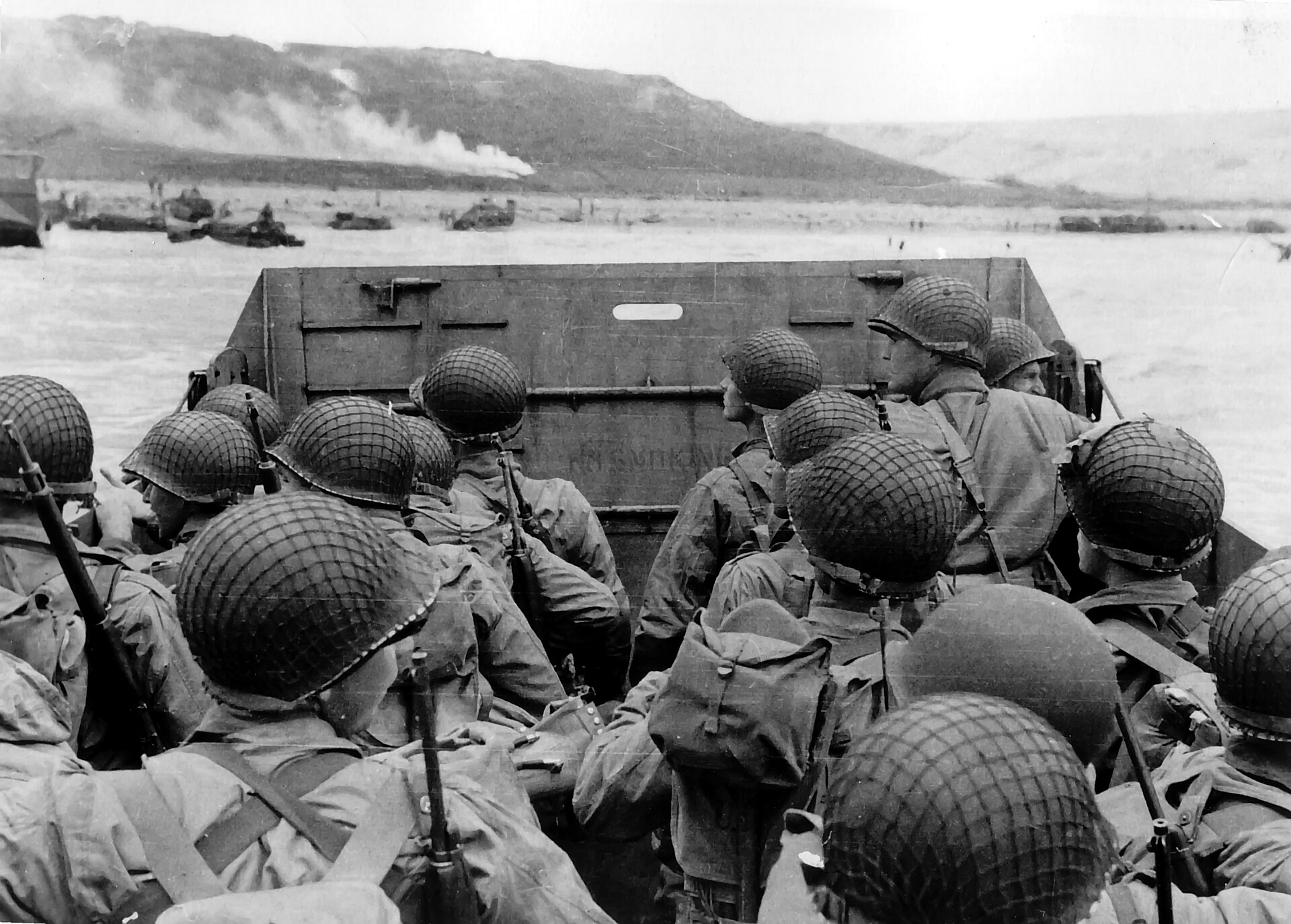
World War II was fought between 1939 and 1945 and drew in almost every country on Earth. On one side were the Axis powers, led by Germany, Italy and Japan. On the other were the Allies, led by Britain, the Soviet Union, the United States and China. Between 70 and 85 million people died, more than in any other war. It saw tanks, aircraft carriers and bombers used on a huge scale, and the first atomic bombs. It also included the Holocaust, the murder of about 6 million Jewish people. To understand it, we need to ask how a peace treaty, an economic crash and a dictator's ambitions led to war. We also need to ask how the world changed afterwards.
Why did another world war happen?
World War I ended in 1918, and many people hoped it would be the last great war. Instead, the peace left problems that helped start a second one only 21 years later.
The main problem was the Treaty of Versailles, signed in 1919. It made Germany accept the blame for the war. Germany also had to pay huge sums called . It lost about 13 percent of its land and all its colonies. It could keep only a small army. Many Germans felt humiliated and angry.
Then came the Great Depression. The American stock market crashed in 1929. Banks failed and factories closed all over the world. By 1932, about 6 million Germans had no job. Desperate voters turned to extreme parties that promised quick answers.
The most successful was the Nazi Party, led by Adolf Hitler. He blamed Germany's troubles on the treaty, on democracy and on Jewish people, which was false. He promised work, pride and new land. In January 1933 he was made chancellor, the head of the government. Within two years he had banned other parties and ended free elections. He called himself Führer, or leader, and held total power.
Hitler began building a huge army, first in secret and then openly. He wanted to take back lost land and win more territory in Eastern Europe. The League of Nations had been set up after World War I to keep the peace. It had no army and little power to stop him.
How did dictators and appeasement lead to war?
Germany was not the only country in the 1930s that wanted to grow by force. In Italy, the dictator Benito Mussolini had ruled since the 1920s and dreamed of a new Roman Empire. In 1935 his army invaded Ethiopia, one of the few African countries still free. The League of Nations used weak sanctions. Italy won in 1936. The League had shown it could not protect a country under attack.
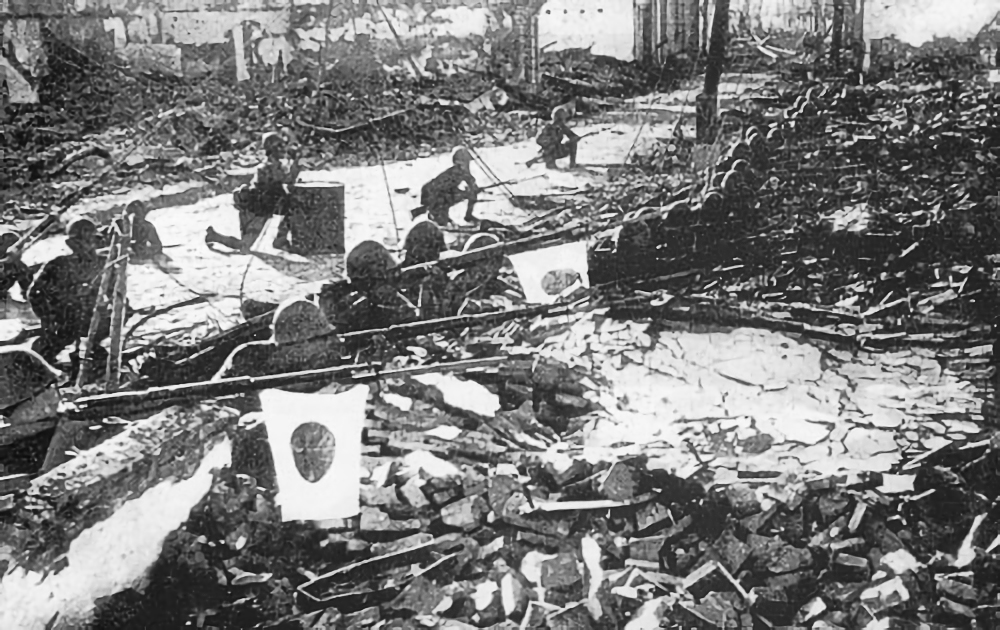
In Asia, Japan had crowded islands and few raw materials, such as oil, iron and rubber. Its generals wanted an empire that could supply them. In 1931 Japan seized Manchuria, a region of north-east China. In July 1937 it began a full-scale war on China. By the end of the year its armies had taken Shanghai and the capital, Nanjing. China kept fighting from the inland city of Chongqing.
Hitler tested his neighbours step by step. He marched troops into the Rhineland in 1936. In March 1938 he joined Austria to Germany. Then he demanded the Sudetenland, a part of Czechoslovakia where many German speakers lived.
Britain and France gave in. Their leaders, such as the British prime minister Neville Chamberlain, feared another terrible war. This policy was called . At Munich in September 1938 they handed over the Sudetenland. Hitler promised to ask for no more, but in March 1939 his army took the rest of Czechoslovakia.
Why and how did Germany invade Poland?

After Czechoslovakia, Hitler turned to Poland. He wanted the port city of Danzig and land taken from Germany in 1919. He also wanted Poland's farmland as living space for Germans. Britain and France were alarmed. In spring 1939 they promised to help Poland if it was attacked.
Hitler then made a surprise deal. On 23 August 1939, Germany and the Soviet Union signed a non-aggression pact. Each promised not to attack the other. In a secret part of the deal, they agreed to split Poland and other lands between them. Now Hitler would not have to fight on two fronts at once. Germany had done that in World War I.
The attack began on 1 September 1939. German officers faked border incidents to make it look as if Poland had started the fight. Then the army used a new way of fighting that journalists called , or lightning war. Bombers wrecked airfields and railways first. Fast tanks then broke through weak points in the Polish line and raced ahead. Lorries carried soldiers close behind. The Polish army was surrounded before it could regroup.
Britain and France gave Germany an ultimatum to stop. Hitler ignored it, so both declared war on 3 September. They had promised to defend Poland. They also believed that letting Hitler continue would only bring more demands. On 17 September the Soviet army invaded Poland from the east. Warsaw surrendered on 27 September, and Poland was divided.
How did France fall and why did Britain hold on?
For months after Poland, little fighting happened in the west. Then, in April 1940, Germany invaded Denmark and Norway. On 10 May it attacked Belgium, the Netherlands and France. Winston Churchill became British prime minister the same day.
France had built the Maginot Line, a chain of strong forts along its German border. The Germans went around it. Their best tanks crossed the wooded Ardennes. The thought this was too difficult for armour. The tanks reached the English Channel in about 10 days. They trapped the British and French armies in the north.
The trapped soldiers were pushed back to the beach at Dunkirk. Between 26 May and 4 June, about 340,000 men were taken to Britain. Warships carried many, and so did hundreds of small boats, including fishing boats. The men left almost all their guns and vehicles behind. Italy joined Germany on 10 June. Paris fell on 14 June, and France signed an armistice on 22 June.
Britain now stood almost alone with its empire. Hitler planned an invasion. First, though, the German air force, the Luftwaffe, had to beat the Royal Air Force. The Battle of Britain was fought in the skies in the summer of 1940. British pilots flew Spitfires and Hurricanes, helped by radar that spotted raiders early. The Luftwaffe lost the battle, and the invasion was put off. It then bombed British cities at night in the Blitz until May 1941. Britain did not give in.
Why did Hitler attack the Soviet Union?
Hitler had always planned to conquer the Soviet Union. He wanted its farmland, oil and mines. He also believed, wrongly, that Germans were a superior people who should rule over Slavs. Beating the Soviets would also leave Britain without a possible ally.
On 22 June 1941, more than 3 million German and allied soldiers crossed the border in Operation Barbarossa. It was the biggest invasion in history. Stalin had been warned but did not fully believe an attack would come. The Soviet air force lost hundreds of planes on the ground. Whole armies were surrounded in the first weeks.
German forces advanced hundreds of kilometres by the autumn. They besieged Leningrad, which was cut off for almost 900 days, and reached the edge of Moscow in December. Then the Soviet winter hit. German soldiers had no winter clothing, their supply lines were stretched, and fresh Soviet troops counter-attacked. The Germans were driven back from Moscow.
Hitler's plan for a quick victory had failed. The war on the became a long struggle between huge armies. It was by far the largest part of the war on land. Most German soldiers who died in the war died there. The Soviet Union lost about 27 million people, more than any other country.
Britain sent the Soviets supplies, and the United States sent lorries, food and weapons under a scheme called Lend-Lease.
What happened at Pearl Harbor?
By 1941 Japan was still fighting in China, but it was running short of oil. Because of Japan's war in China, the United States, Britain and the Dutch stopped selling it oil. Japan's leaders decided to seize the oil-rich Dutch East Indies and Malaya, which had rubber and tin. They knew the American fleet in Hawaii could stop them, so they planned to destroy it first.
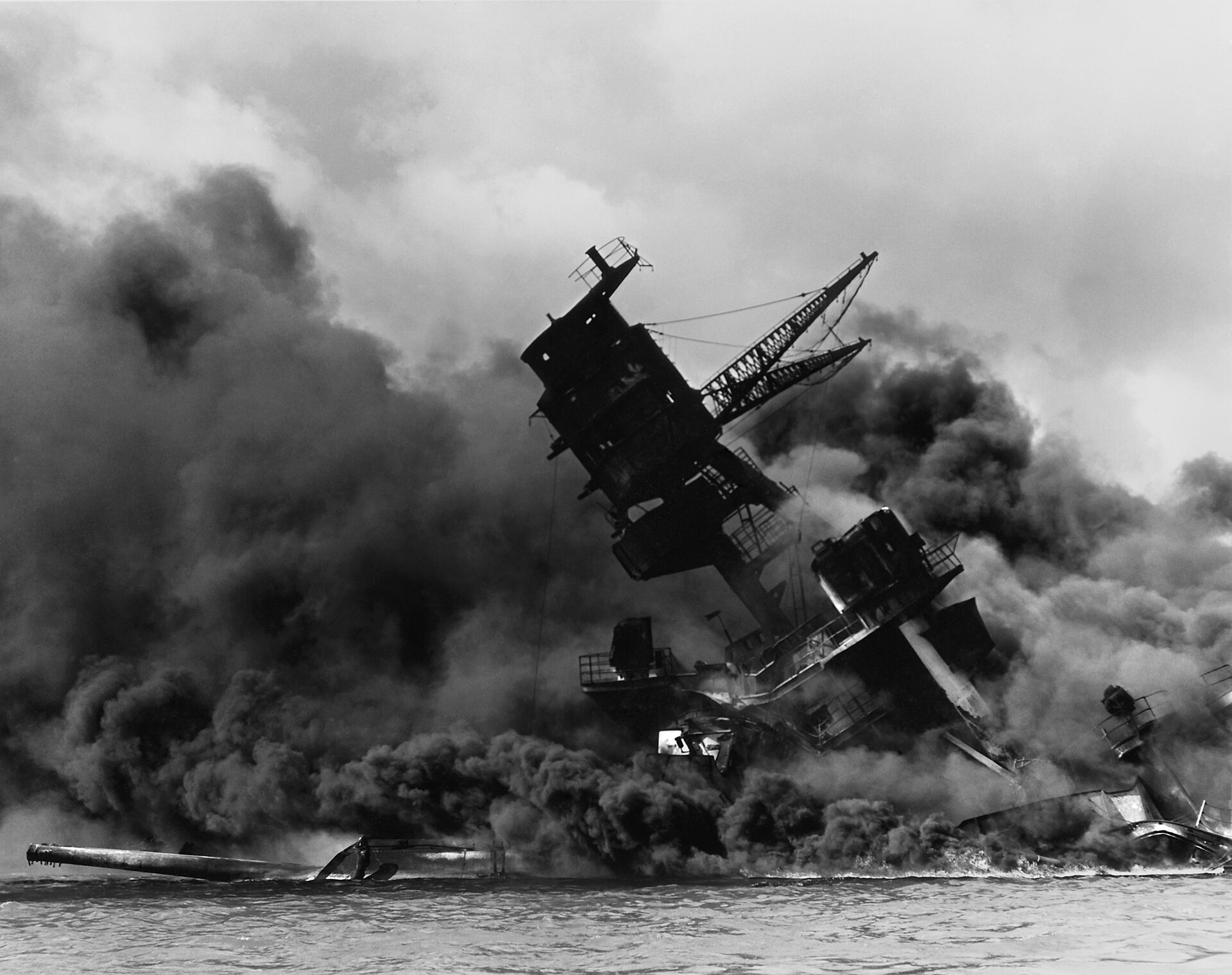
On Sunday 7 December 1941, aircraft from six Japanese carriers attacked Pearl Harbor. This was the main American naval base in Hawaii. They sank or damaged 8 battleships and killed more than 2,400 Americans. The attack came before any declaration of war. The next day the United States declared war on Japan. Germany and Italy then declared war on the United States.
The war was now worldwide. In about 6 months Japan captured Hong Kong, Malaya, Singapore, the Philippines, the Dutch East Indies and Burma. Many people there were forced to work for the Japanese, and resistance movements grew.
The American carriers were at sea on 7 December, so they escaped. That mattered a great deal. Aircraft carriers, not battleships, would decide the war in the Pacific.
What turned the war against the Axis?
In 1942 and 1943 the powers lost their chance to win. Several battles show why.
In the Pacific, Japan tried to destroy the American carriers at Midway in June 1942. American code-breakers had read Japanese messages. They knew where the attack would come. American planes sank four of Japan's six large carriers. Japan could not replace them or their trained pilots. From then on it was mostly on the defensive.
On the , the Germans reached the city of Stalingrad on the Volga river in August 1942. After months of street fighting, Soviet armies closed around the city. In February 1943 about 90,000 hungry German soldiers surrendered. In May 1943 British and American forces won in North Africa, then invaded Sicily and Italy. Italy changed sides in September. In July the Soviet army also won the huge tank battle of Kursk. After that, it kept moving west.
The also had far more factories. American industry built tens of thousands of aircraft each year.
On 6 June 1944, D-Day, the Allies landed on the beaches of Normandy in France. It was the biggest invasion from the sea ever, with about 7,000 ships and thousands of aircraft. Soldiers from the United States, Britain, Canada and other countries pushed inland. Paris was freed in August.
What was life like away from the battlefield?
World War II was a total war. Governments turned whole countries into war machines. Ordinary people were part of the fight.
Factories stopped making cars and toys and built tanks and planes. Millions of women took jobs in them, because so many men were in the army. In Britain, food, petrol and clothes were rationed, so each family could buy only a fixed amount. People dug up gardens to grow vegetables.
Cities themselves became targets. Bombers were used to destroy factories and wear down the enemy's will to fight. London, Coventry, Warsaw, Rotterdam and Leningrad were bombed. Later, British and American bombers hit German cities such as Hamburg and Dresden. American bombers attacked Japanese cities such as Tokyo. Hundreds of thousands of civilians died in these raids. Families sheltered in cellars and underground stations. Many British children were sent to the countryside to be safe.
In occupied countries, people lived under foreign rule. Many were forced to work for the occupiers. Some joined resistance groups, which spied, damaged railways and hid people in danger.
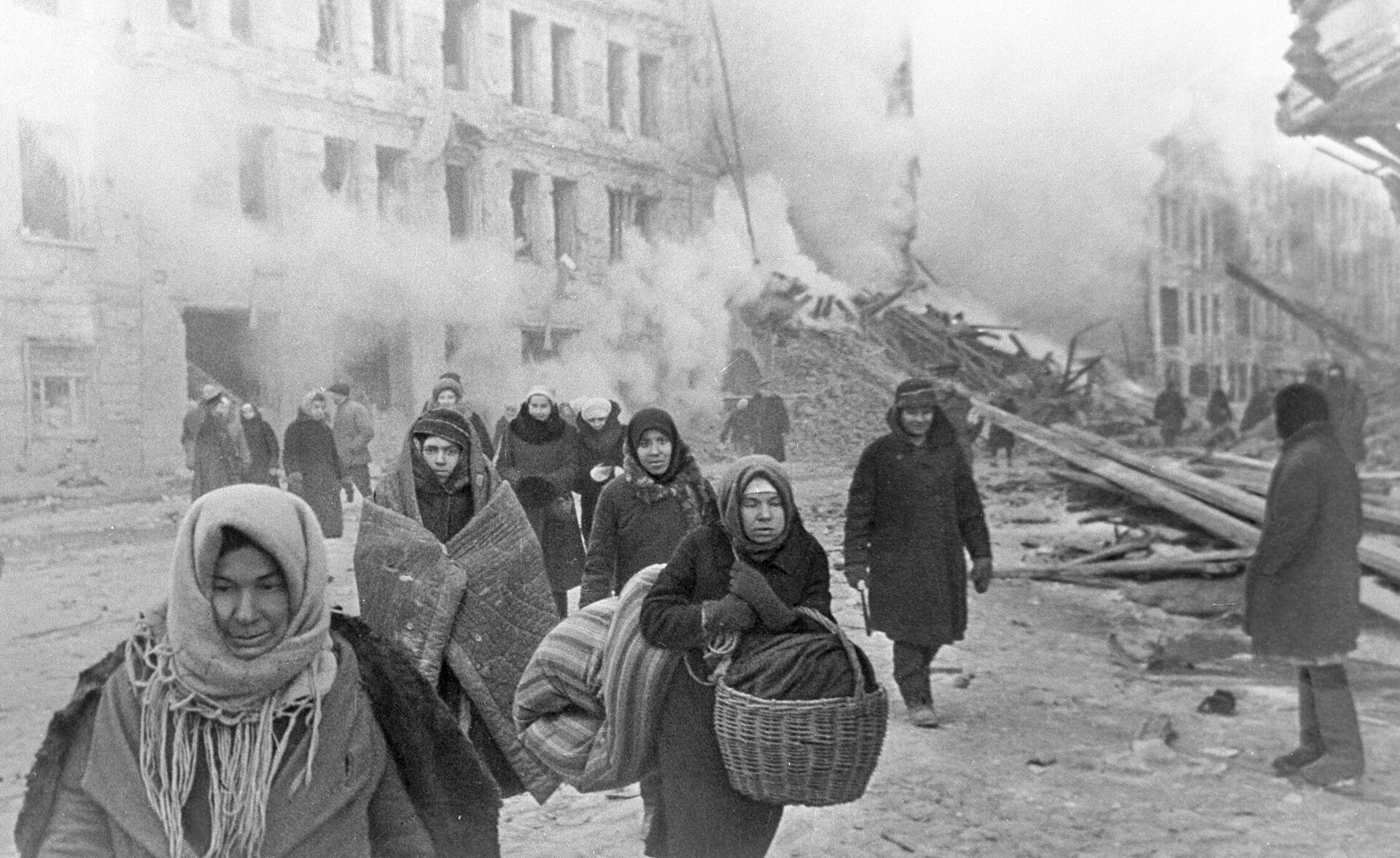
Leningrad shows how hard it was. German forces cut off the city from September 1941. About 800,000 people died during the siege, mostly from hunger and cold. It ended in January 1944.
What was the Holocaust?
The was the murder of about 6 million Jewish people by Nazi Germany and its . It is the most terrible crime of the war.
Hitler's Nazi Party was antisemitic. This means it hated and persecuted Jewish people. The Nazis falsely claimed that Jews were a separate race that had harmed Germany. They blamed Jews for the defeat in World War I and for the Depression. After 1933 new laws took away Jewish people's jobs, rights and citizenship. In November 1938 mobs attacked Jewish homes, shops and synagogues across Germany in an event called Kristallnacht. Many Jews fled, but other countries often limited how many refugees they accepted.
When Germany conquered much of Europe, millions more Jewish people came under its rule. Jews were forced into crowded areas called ghettos. From 1941 the Nazi leaders planned to murder all the Jews of Europe. They called it the Final Solution. Victims were taken by train to camps, many of them in occupied Poland, such as Auschwitz. Soldiers, police and officials in many countries took part.
The Nazis also persecuted and killed other groups. These included Roma people, disabled people, Polish and Soviet civilians and prisoners of war. Millions died in all.
Soviet, American and British soldiers freed the camps in 1944 and 1945. The records and evidence they found show us what happened. After the war, Nazi leaders were put on trial at Nuremberg.
How did the war end?
By early 1945, Germany was being squeezed from both sides. The Soviet army fought its way across Poland towards Berlin. The Western crossed the Rhine from the west. Soviet troops reached Berlin in April. Hitler took his own life on 30 April. Germany surrendered unconditionally on 8 May 1945. Britain celebrated it as VE Day, for Victory in Europe.
The war in Asia went on. The United States had been moving across the Pacific island by island. In October 1944 its forces landed in the Philippines, which Japan had held since 1942. By 1945, American bombers were attacking Japanese cities. Japan's leaders still refused to surrender. The Allies expected an invasion of the Japanese home islands to cost huge numbers of lives.
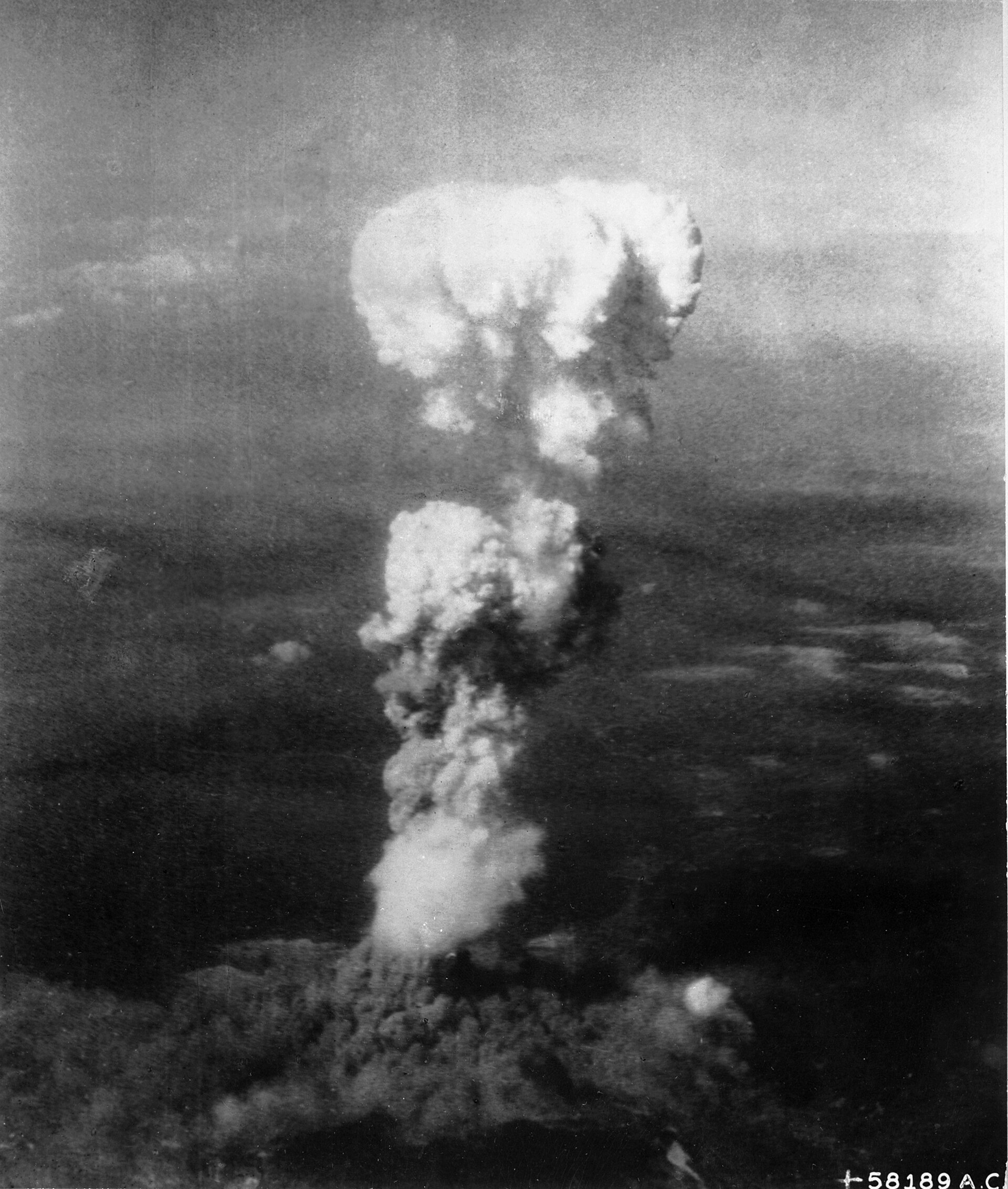
The United States had also built a new weapon in a secret project called the Manhattan Project. This gets its huge power from splitting atoms. On 6 August 1945 an American aircraft dropped one on the city of Hiroshima. Three days later a second hit Nagasaki. Together the bombs killed well over 100,000 people, most of them civilians. More died later from injuries and radiation.
On 8 August the Soviet Union also declared war on Japan and invaded Manchuria. On 15 August Emperor Hirohito announced Japan's surrender. It was signed on 2 September 1945. Historians still debate how much each of these events mattered.
How did World War II change the world?
World War II was the deadliest conflict in history. Between 70 and 85 million people died, about 3 percent of everyone alive then. More than half were civilians. Cities from Warsaw to Tokyo lay in ruins, and millions of people had lost their homes.
Germany was divided into four zones run by the United States, Britain, France and the Soviet Union. German and Japanese leaders were put on trial for war crimes. Some German land went to Poland, and millions of Germans were moved out of Eastern Europe.
In 1945 the set up the to settle disputes and stop another world war. Five of the winners became permanent members of its Security Council. They were China, France, the Soviet Union, Britain and the United States. In 1948 the UN also agreed the Universal Declaration of Human Rights.
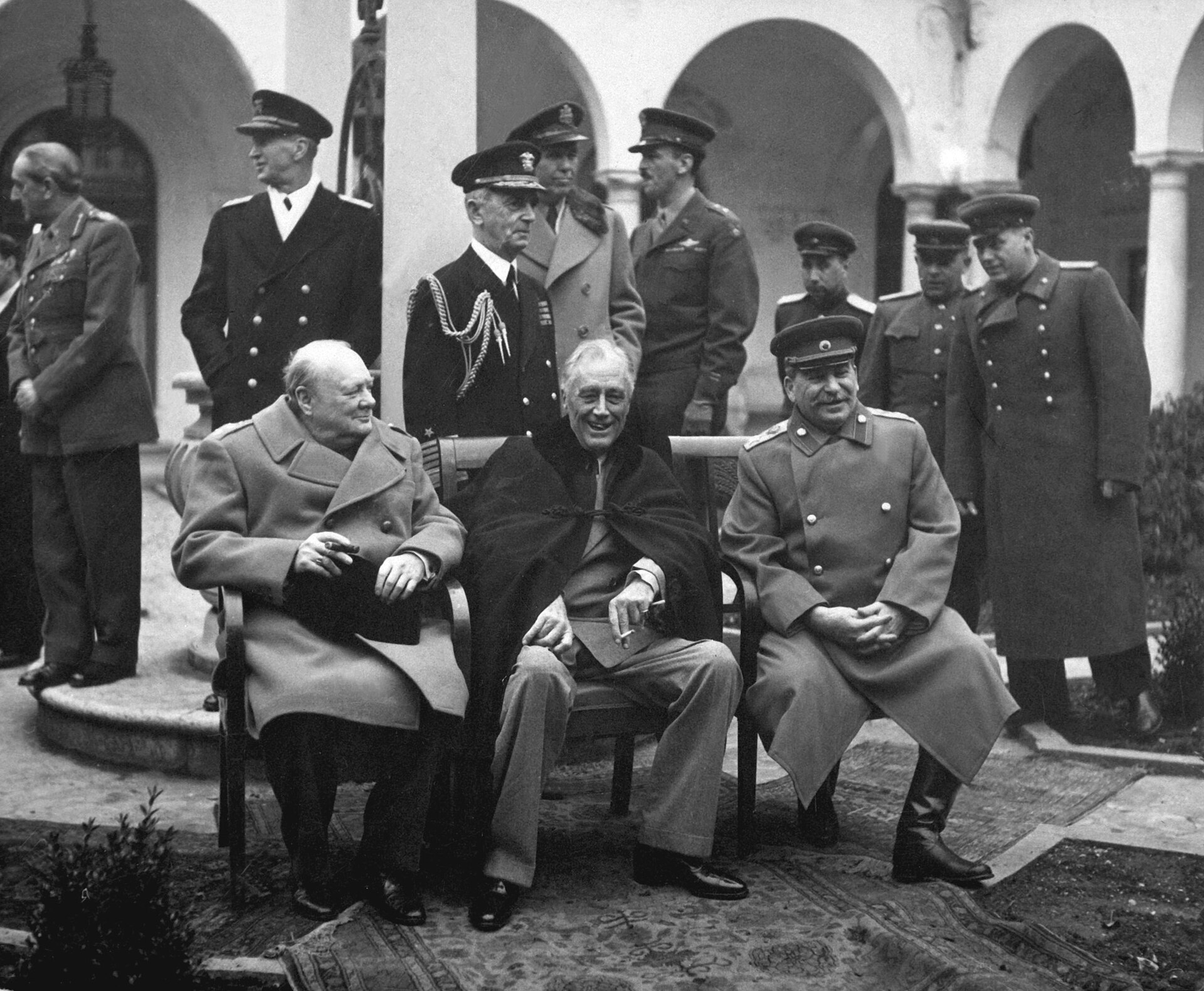
The United States and the Soviet Union ended the war as the two superpowers. Their systems were very different. The United States was a democracy with free business, and the Soviet Union was a communist one-party state. At Yalta in February 1945, Churchill, Roosevelt and Stalin planned the peace. Their trust soon broke down. Their rivalry became the . It lasted until 1991.
Britain and France were weak and could no longer afford to rule their colonies. In the years after 1945, India, Indonesia and many African countries won independence. Vietnam began its fight for it.
Explore Next
Your audio story keeps playing while you look around.

Words to Know
- Allies
- The countries that fought against Germany, Italy and Japan, led by Britain, the Soviet Union, the United States and China.
- appeasement
- Giving way to a country's demands in the hope of avoiding war.
- atomic bomb
- A bomb that releases enormous energy by splitting atoms.
- Axis
- The alliance of Germany, Italy and Japan, which was joined by smaller countries.
- Blitzkrieg
- German for lightning war, a fast attack using tanks, aircraft and infantry together.
- Cold War
- The long rivalry between the United States and the Soviet Union after 1945, fought without direct war between them.
- Eastern Front
- The huge battle area between Germany and the Soviet Union.
- Holocaust
- The murder of about 6 million Jewish people by Nazi Germany and its allies.
- rationing
- Limiting how much food, fuel or clothing each person can buy during shortages.
- reparations
- Money a defeated country is made to pay for the damage of a war.
- United Nations
- An organisation of countries founded in 1945 to keep peace and encourage cooperation.