Space exploration
How people and robots left Earth to explore the Moon, planets and beyond.
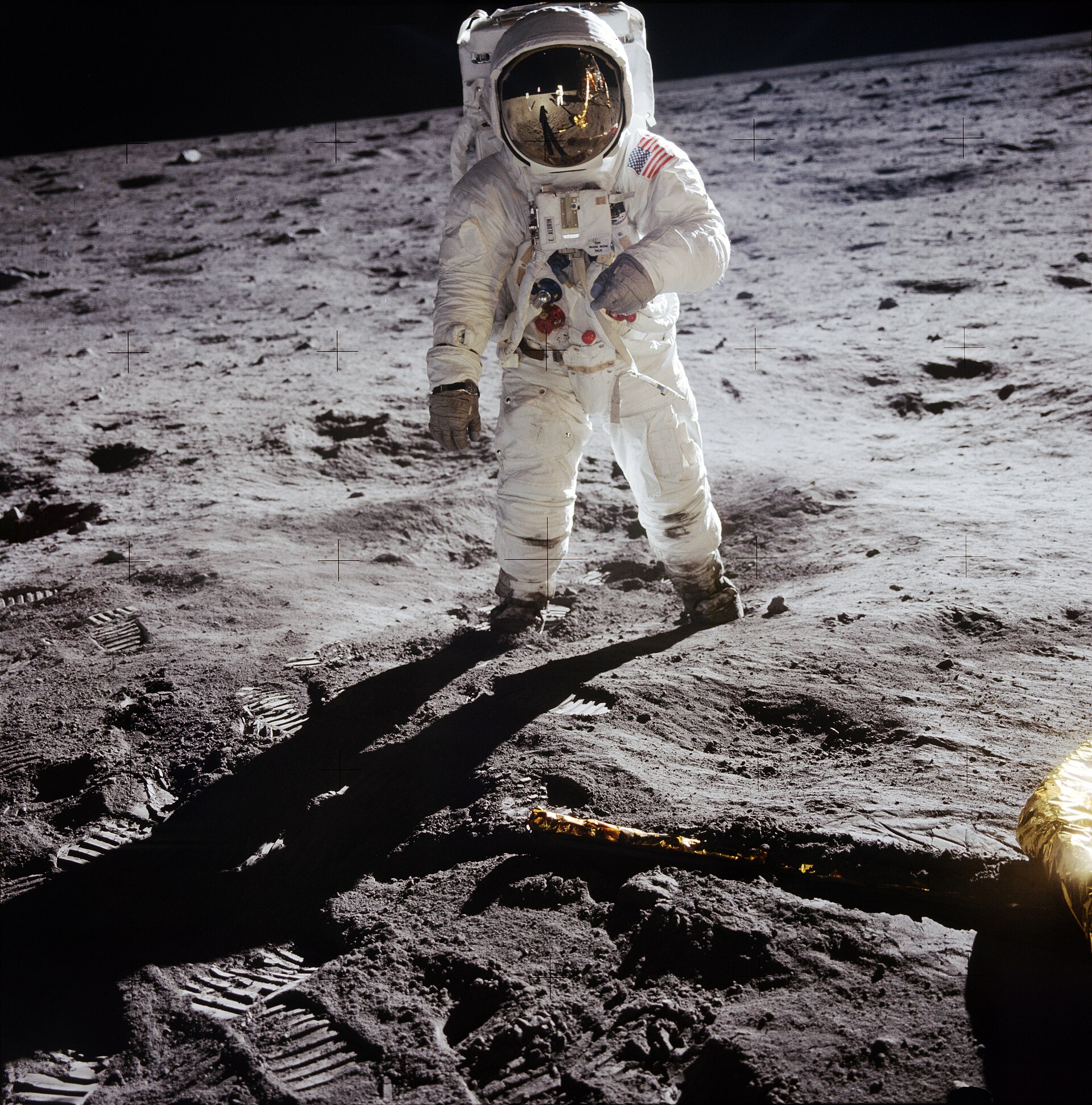
Space exploration means studying outer space by sending machines and people out into it. People have watched the sky for thousands of years, but only in the 1900s did rockets become strong enough to lift anything above the air. Since then we have put a satellite in orbit, walked on the Moon and landed robots on Venus and Mars. We have flown past every planet in the Solar System. One probe, Voyager 1, has even left the Sun's bubble of particles and entered the space between the stars. How did we get from Galileo's first telescope to journeys around the Moon?
Why do we leave Earth at all?
Space is cold, empty and dangerous, and getting there costs billions. So why go? People give several reasons. The first is science. Above the air, instruments see light and particles that never reach the ground, and spacecraft can visit worlds that telescopes show only as tiny discs.
The second is practical. carry phone calls, television, internet signals and weather pictures. They also help us find our way with satellite navigation. Many inventions made for space programmes have found uses on Earth too.
The third is rivalry. In the middle of the 1900s the Soviet Union and the United States each wanted to show that its technology was better. This contest was called the , and it drove the first great leaps forward.
There are bigger hopes as well. Some people want nations to work together, as they do on the International . Others, including the scientist Stephen Hawking, have argued that humans will be safer in the long run if we do not live on one planet only. A rock from space, a war or a disease could affect a single world badly.
Not everyone agrees on how much money space should get. Even so, the wish to find out what is out there has pushed people to build some of the most amazing machines ever made.
What did telescopes show us before rockets?
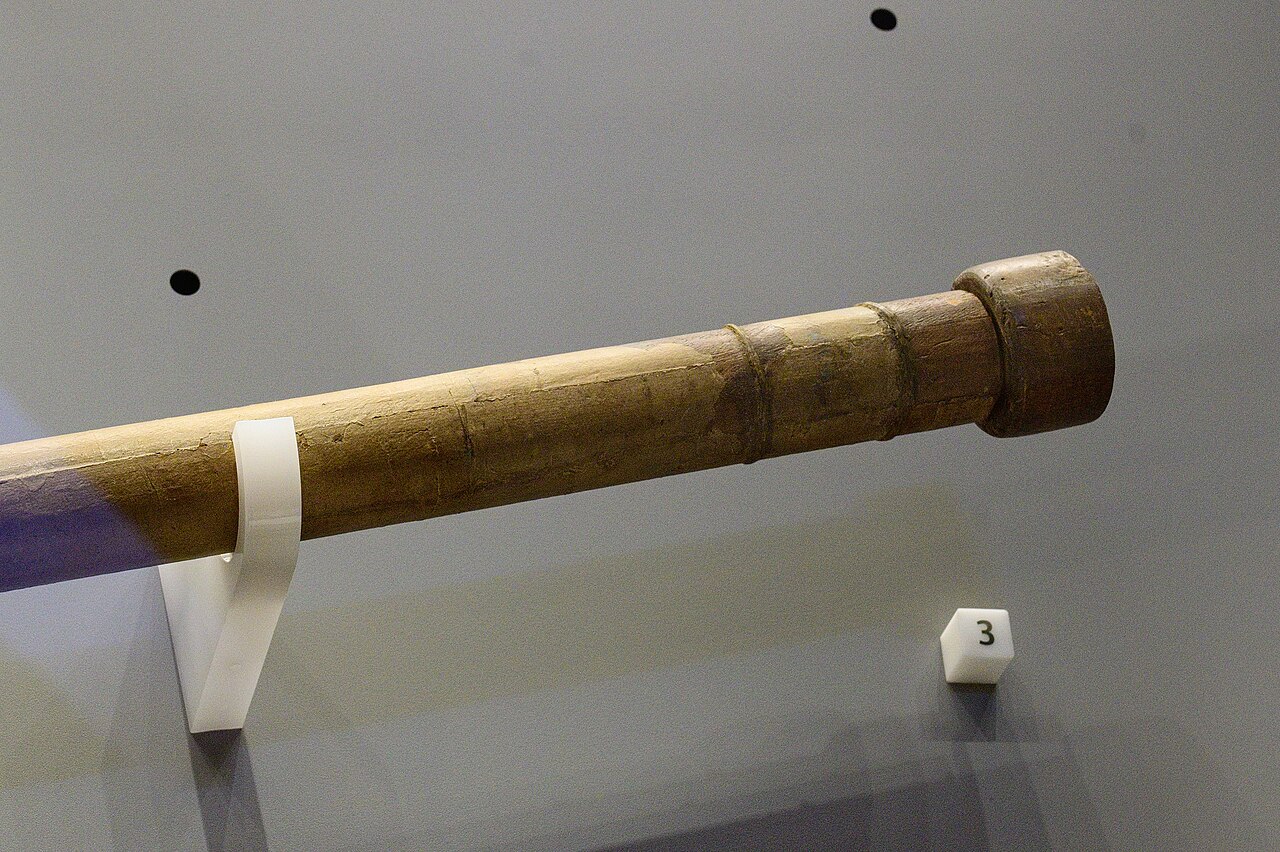
, the study of objects in the sky, is far older than writing. But for most of history people could only use their eyes. That changed in the early 1600s. A spectacle maker in the Netherlands, Hans Lipperhey, is said to have invented the telescope in 1608. In 1609 the Italian scientist Galileo Galilei became the first person recorded using one to study the sky.
He saw mountains on the Moon. He saw that Venus has phases, like the Moon. He saw the four biggest moons circling Jupiter. These sights showed that other worlds were real places with their own features, not only points of light.
In 1668 Isaac Newton built a new kind of telescope. It used a curved mirror instead of a glass lens to collect light, and it worked better than Galileo's design. Over the next centuries astronomers found the rings of Saturn, many comets, the asteroids, and two new planets, Uranus and Neptune.
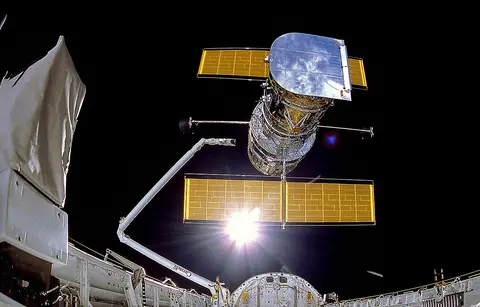
The air above us blurs and blocks some light. So astronomers later moved telescopes above it. The first space telescope went up in 1968, and the Hubble Space Telescope followed in 1990. Telescopes in space and on the ground have now found more than 6,000 planets circling other stars. They suggest that the universe holds hundreds of billions of galaxies, perhaps up to 2 trillion.
How did rockets finally reach space?
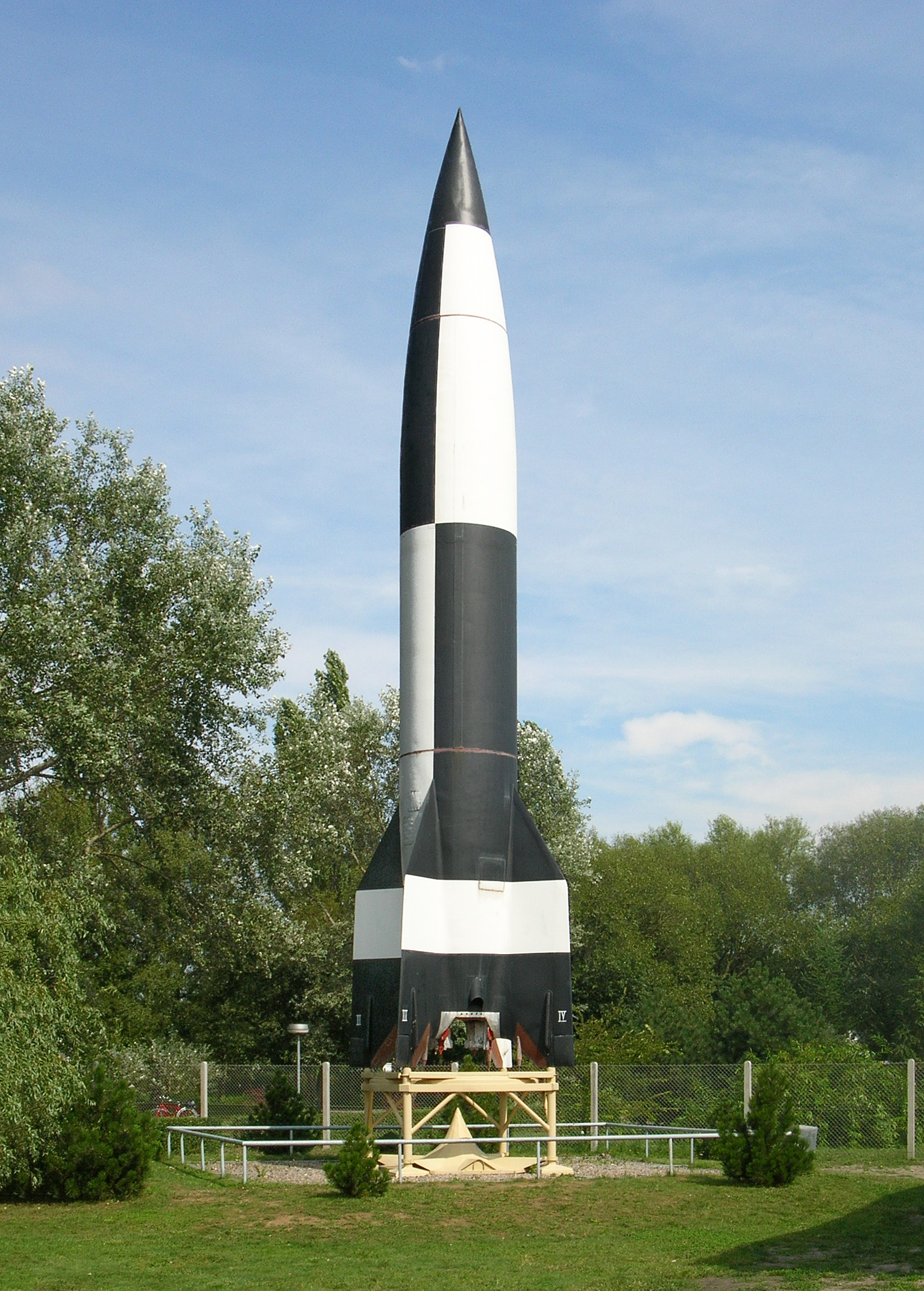
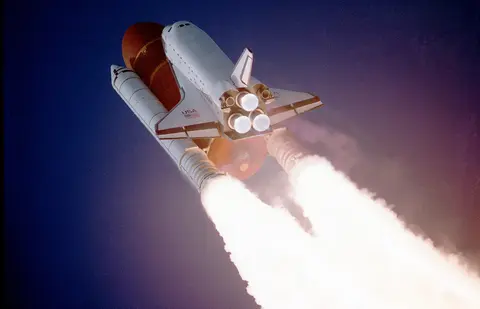
To reach space, a machine must climb above the thick air, which starts to run out about 100 kilometres up. This height is called the Kármán line. It also has to fight gravity, which keeps pulling it back. Only a very powerful rocket can do that. A rocket works by throwing hot gas backwards at high speed, which pushes the rocket forward.
The first object to reach space was a German V-2 rocket, launched on 20 June 1944 during the Second World War. It climbed to 176 kilometres, then fell back to Earth. It was built as a weapon, and its engineers later helped to build rockets for the United States and the Soviet Union.
Going up is not enough. To stay in space, an object must also move sideways fast enough that it keeps missing the ground as it falls. This path is an . The speed needed is about 8 kilometres every second.
The Soviet Union managed this on 4 October 1957. Its Sputnik 1 was a metal ball with radio transmitters, and it was carried up by an R-7 rocket. People all over the world could pick up its beeps on their radios. The signals taught scientists about the thin upper air. Sputnik burned up on its way back down in January 1958. A month later the United States launched its own first , Explorer 1. It found belts of fast particles trapped around Earth, now called the Van Allen belts.
Who was first in space, and what came next?
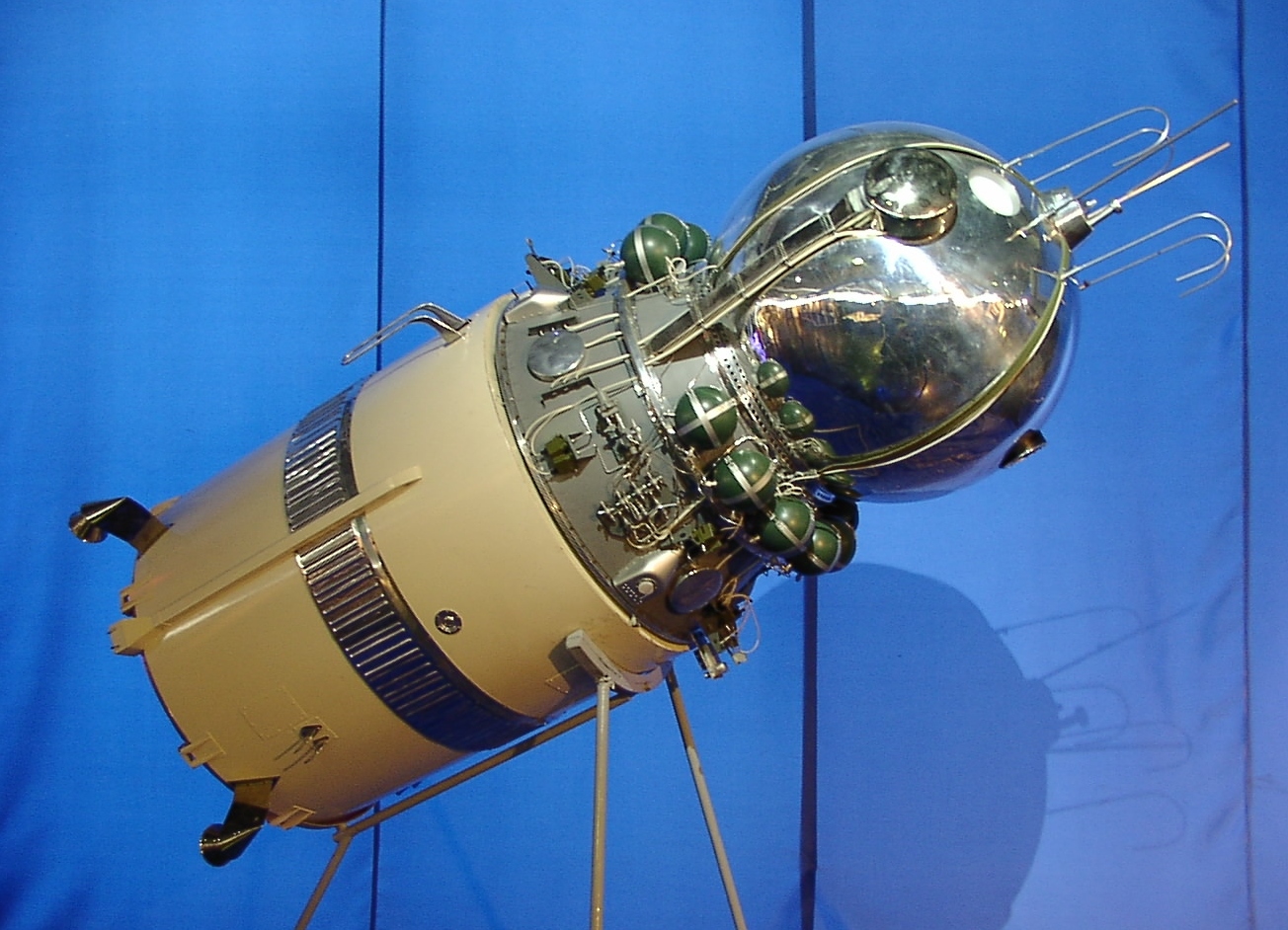
The Soviet Union won most of the early firsts. A dog named Laika was the first living being in , in 1957. Then, on 12 April 1961, Yuri Gagarin flew aboard Vostok 1. He circled Earth once in about 1 hour 48 minutes and became the first human in space. The news amazed the world and worried the United States, which had not yet sent anyone into orbit.
More firsts followed. In 1963 Valentina Tereshkova became the first woman in space. In 1965 Alexei Leonov made the first spacewalk, floating outside his spacecraft on 18 March. In 1971 the Soviet Union launched Salyut 1, the first . A space station is a spacecraft that people can live in for weeks or months.
Spacecraft also reached other worlds. Luna 2 hit the Moon in 1959. Luna 9 made the first soft landing there in 1966, which means it touched down gently and kept working. Luna 10 became the first artificial of the Moon.
The United States answered with its own programmes. In 1961 its president, John F. Kennedy, set the goal of landing people on the Moon. The now had a clear finish line, and both nations raced towards it.
How did people walk on the Moon?
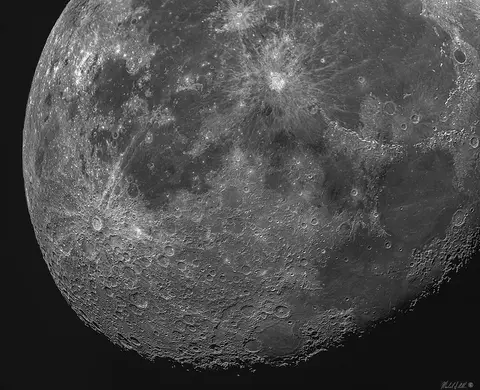
The Moon was the first world explored by spacecraft, and it is still the only one people have visited. It is about 384,000 kilometres away, around 30 times the width of Earth.
The United States built the huge Saturn V rocket for the job. The Apollo programme tested everything step by step. In December 1968 Apollo 8 became the first crewed mission to the Moon. On 20 July 1969 Apollo 11 landed there. Neil Armstrong and Buzz Aldrin climbed down to the surface in a lander named Eagle. Michael Collins stayed in orbit in the main spacecraft. Armstrong was the first to step out.
The astronauts collected rocks, set up experiments and took photographs. Later missions brought a car called the lunar so that crews could travel farther. Six crewed landings took place, ending with Apollo 17 in December 1972. Twelve people have walked on the Moon. All of them were American men.
Apollo 13 in 1970 did not land. An oxygen tank failed on the way out, but the crew looped around the Moon and returned safely. Their path took them about 400,000 kilometres from Earth. That distance record stood for 56 years, until the Artemis II crew flew around the Moon in April 2026.
Rocks from the Moon are still studied today. Soviet robots also brought back small soil samples in the 1970s.
What have robots found on Venus and Mars?
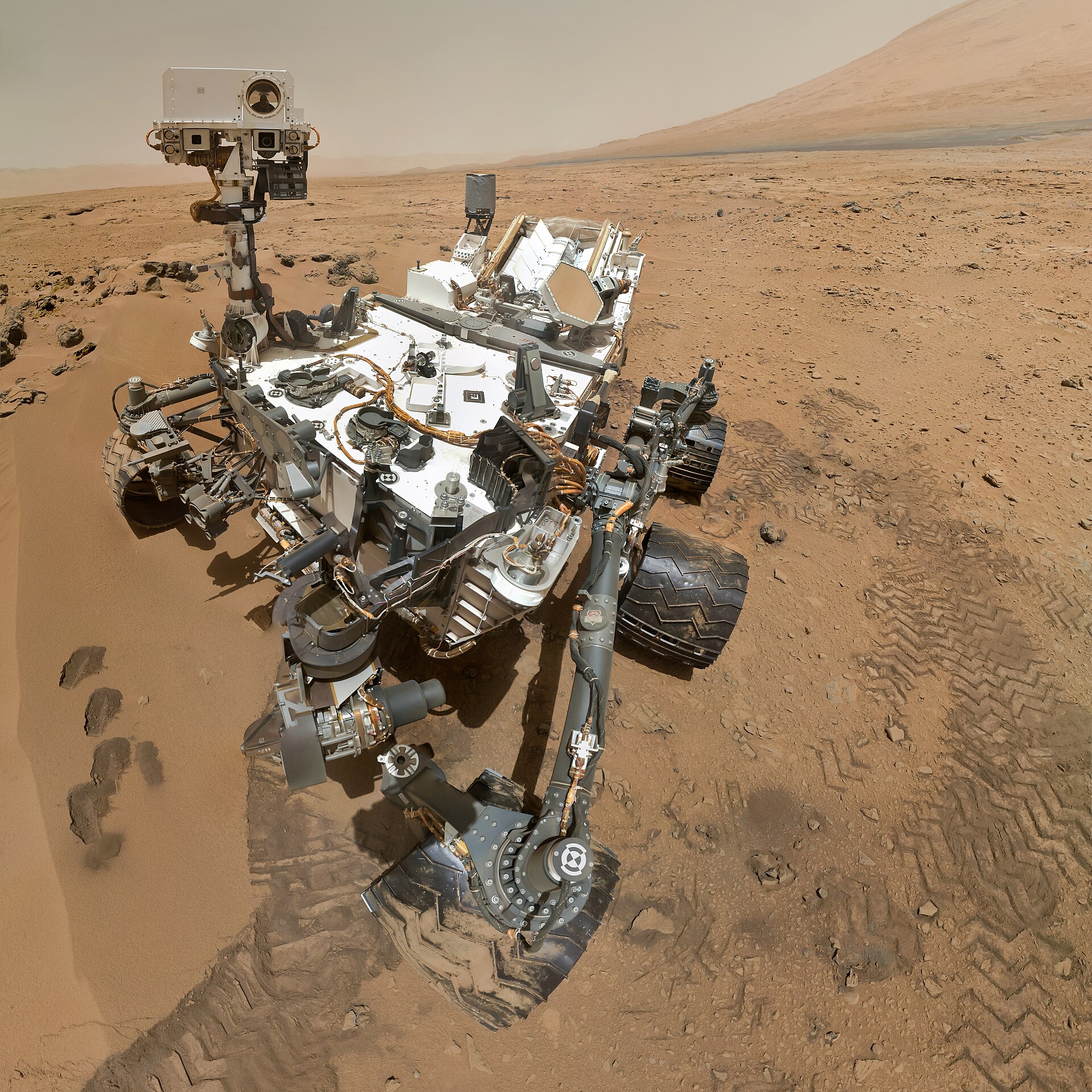
Robot can go where people cannot yet follow. Venus was the first planet to be targeted. In 1962 the American probe Mariner 2 flew past it and sent back data. In 1970 the Soviet probe Venera 7 landed on its surface, and Venera 9 sent the first pictures from another planet's surface in 1975. Venus is one of the most hostile places in the Solar System. Its thick air is crushingly heavy, and the surface is hot enough to melt lead. Even so, the Soviet Union sent more landers there than anyone has sent anywhere else. The longest lasted a little over two hours. Later orbiters used radar, which can see through clouds, to map the surface.
Mars has drawn even more attention, because it once had water and may once have been a place where life could live. Dozens of orbiters, landers and have been sent there since the 1960s. Mariner 4 made the first flyby in 1965. Viking 1 landed in 1976 and worked for more than 6 years. Rovers such as Spirit and Curiosity have driven across the surface, drilling into rocks and studying what they are made of.
Mars is a hard target. In the early decades about two out of every three spacecraft sent there failed. Today the success rate is far higher. Some people joke about a space monster, the Great Galactic Ghoul, that eats Mars probes. In 2014 India became the first country to succeed on its first try, with a low-cost orbiter.
How do probes reach the far planets?
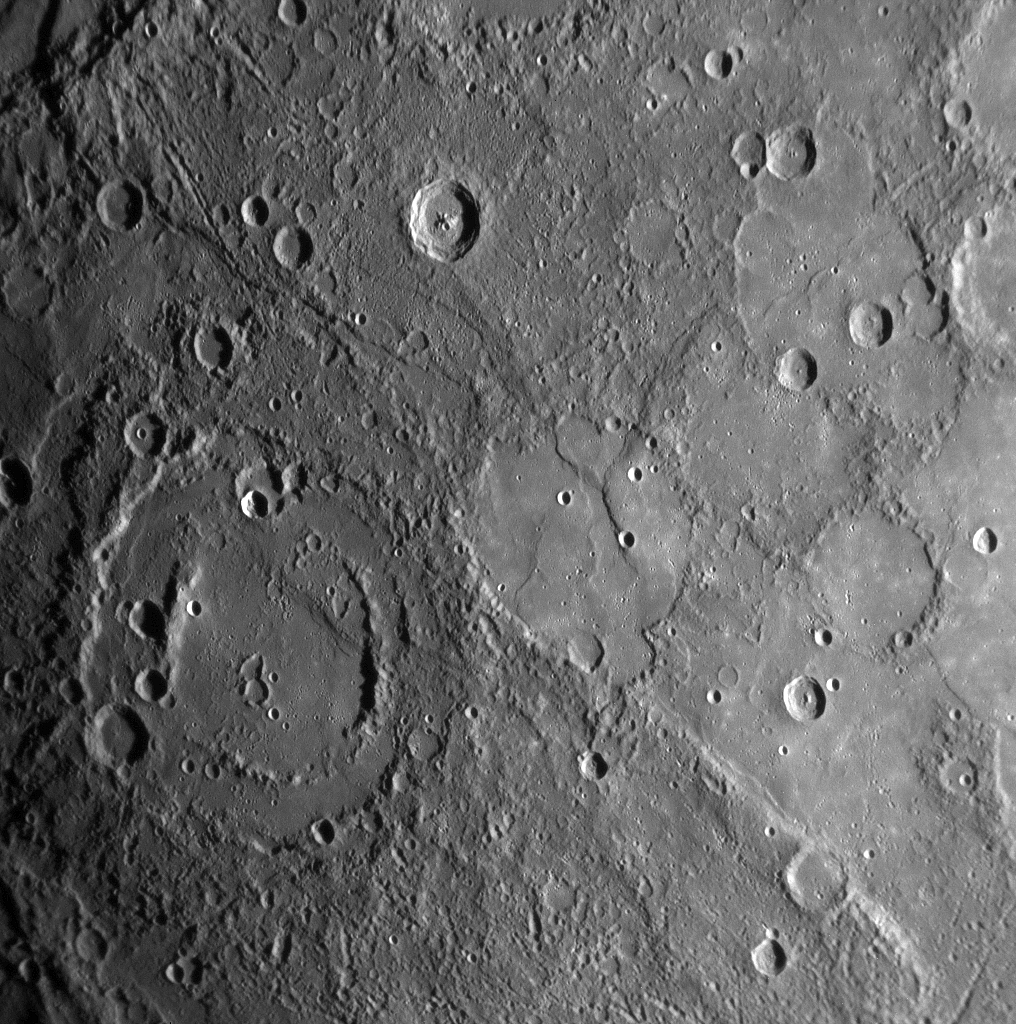
Getting to another planet takes energy. Space scientists measure it as , the total change in speed a spacecraft needs. Some places are harder than they look. Mercury is quite close to the Sun, but the Sun's pull is so strong that a must slow down a great deal to enter . Two missions have studied it closely, Mariner 10 and MESSENGER. A third, Europe and Japan's BepiColombo, flew past six times and is due to enter orbit around Mercury in November 2026.
For distant planets, engineers use a trick called a . A probe passes close to a planet, and that planet's gravity swings it onwards at higher speed, like a skateboarder grabbing a passing bus. The trip takes longer, but the rocket needs less fuel.
The American Voyager probes used this trick, as did others. Pioneer 10 reached Jupiter in 1973. Voyager 2 flew past Uranus in 1986 and Neptune in 1989. It is still the only craft to visit either. At Neptune it found the fastest winds of any planet, up to 2,100 kilometres an hour. Cassini orbited Saturn from 2004 to 2017, and its lander Huygens touched down on Titan, a moon with a thick atmosphere.
New Horizons flew past Pluto on 14 July 2015. Other probes have visited asteroids and comets. Japan's Hayabusa brought back asteroid dust in 2010. Europe's Rosetta mission put the Philae lander on a comet in 2014.
Voyager 1 passed the edge of the Sun's particle bubble on 25 August 2012. It is the first human-made object in .
What is it like to live in space?
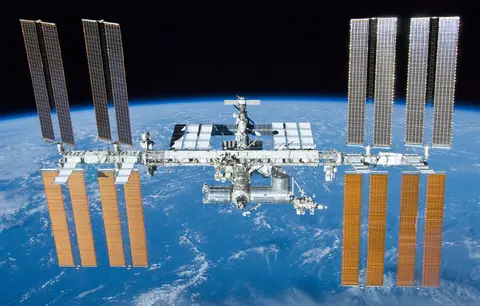
Since 2000 people have lived on the International , or ISS, without a break. It was built piece by piece between 1998 and 2011 by many nations working together. It circles Earth in low , and its crews do experiments that cannot be done on the ground. China also runs a space station, Tiangong.
Space changes the body. Because everything floats, bones and muscles get weaker, so astronauts exercise on treadmills for a long time each day. Fluids in the body shift towards the head, which can cause eyesight problems. Almost everyone feels sick for the first days, a condition called space motion sickness. Sleep patterns get disturbed as well, because the Sun rises many times a day.
Beyond Earth's magnetic field there is also radiation, which can harm the body and cannot be seen. Spacecraft use shielding and warning systems to reduce the danger.
On long trips, crews will need to solve problems alone. Messages from deep space can take many minutes to arrive, so a doctor on Earth cannot always help straight away. The longest single flight so far was by Valeri Polyakov, who spent nearly 438 days on the Mir station.
Firsts for women have come slowly. Sally Ride flew for the United States in 1983. The first spacewalk by an all-female team took place in 2019.
Where will we go next?

The next big goal is the Moon again. NASA's Artemis programme plans to land the first woman and the next man near the Moon's south pole, with help from other countries. An uncrewed test flight launched in 2022. In April 2026 four astronauts on Artemis II flew around the Moon and back, the first people to go there since 1972. The plan includes a small called Gateway, which would circle the Moon. China leads a rival effort, the International Lunar Research Station. China and India have already landed robots on the Moon's far side and south pole region.
The long-term aim is to reach Mars. Nobody has gone there yet. Crews would face months of travel, strong radiation and no quick rescue. Some scientists suggest using asteroids as stepping stones.
Private companies now play a big part too. Firms such as SpaceX and Blue Origin build rockets, some of which can be used more than once. This lowers costs, and it has made space tourism and private space stations possible.
Scientists also hunt for life. Places worth checking include Mars and the moons Europa, Enceladus and Titan.
The stars are much farther. The nearest star system, Alpha Centauri, is 4.37 light-years away. A project called Breakthrough Starshot hopes to send tiny there on light sails, pushed by beams of light. It is still only a plan, but it shows how far the story of exploration may go.
Explore Next
Your audio story keeps playing while you look around.
Words to Know
- astronomy
- The study of the Sun, Moon, planets, stars and everything beyond Earth.
- cosmonaut
- A Russian or Soviet space traveller. Astronaut is the American word.
- delta-v
- The total change in speed a spacecraft needs to make a trip.
- exoplanet
- A planet that circles a star other than our Sun.
- gravity assist
- A trick that uses a planet's pull to speed up or steer a passing spacecraft.
- interstellar space
- The space between the stars, outside the Sun's bubble of particles.
- orbit
- The curved path an object takes around a planet, moon or star.
- probe
- A robot spacecraft sent to study places in space without a crew.
- rover
- A wheeled robot or vehicle that drives across the surface of another world.
- satellite
- Any object that circles a larger one, either a natural moon or a human-made machine.
- Space Race
- The contest between the Soviet Union and the United States to reach space milestones first.
- space station
- A large spacecraft in orbit where crews live and work for long periods.