Rocket
Machines that carry their own push, and the only way to reach space.
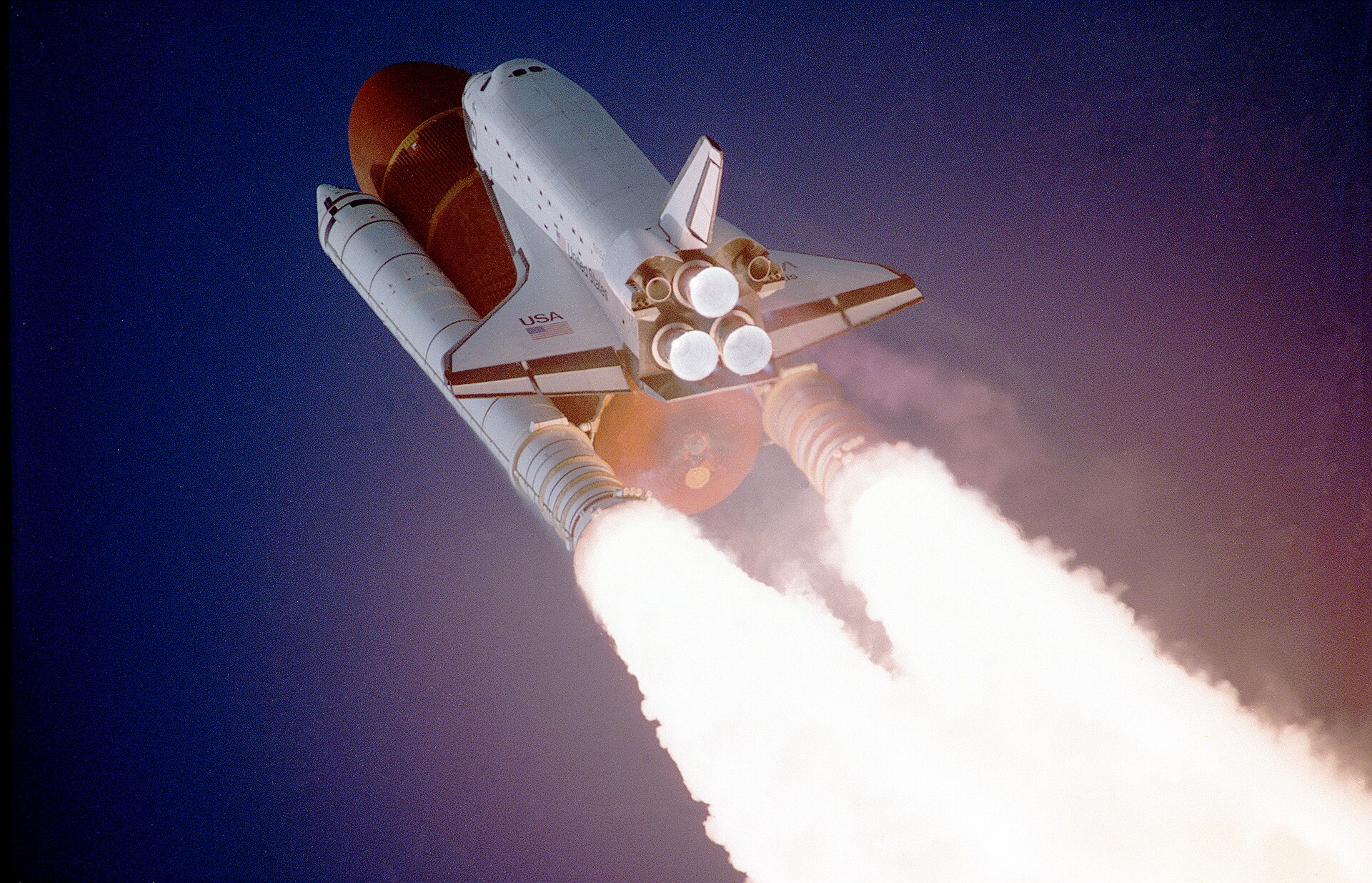
A rocket is a vehicle that pushes itself forward by throwing hot gas out of the back. Because it carries everything it needs, it can work where there is no air at all, which makes it the only machine that can reach orbit. Rockets began as fire arrows in medieval China. They became weapons, then fireworks, and then, in the 20th century, the machines that launched satellites, space stations and the astronauts who walked on the Moon. Behind every launch is one simple rule of physics, discovered by Isaac Newton, and some very clever engineering. How do they work, and where did the idea begin?
How can a rocket move with nothing to push against?
A car pushes against the road. A boat pushes against water. A plane pushes against air. A rocket needs none of these. It carries everything it needs to move, so it can work in the empty vacuum of space where there is no air at all.
The secret is a rule discovered by Isaac Newton. For every action there is an equal and opposite reaction. Inside a rocket engine, fuel burns and makes very hot gas. The gas pushes in every direction against the walls of the chamber. At the bottom there is an opening called a , so the gas can escape there. The pushes on the other walls are no longer balanced, and the rocket is shoved the other way. Gas goes out of the back and the rocket goes forward.
You can see this with a balloon. Blow it up and let go, and the air rushes out while the balloon zooms the opposite way. The balloon does not need the air outside to push against. A rocket does the same thing with far more force.
The shape of the nozzle matters a great deal. A narrow throat followed by a wide bell squeezes the gas and then lets it spread out, so it leaves at huge speed. This design can roughly double the push. The faster the gas leaves, the more speed the rocket gains from each kilogram of . A good rocket engine fires its exhaust out at several kilometres every second.
What is inside a rocket?
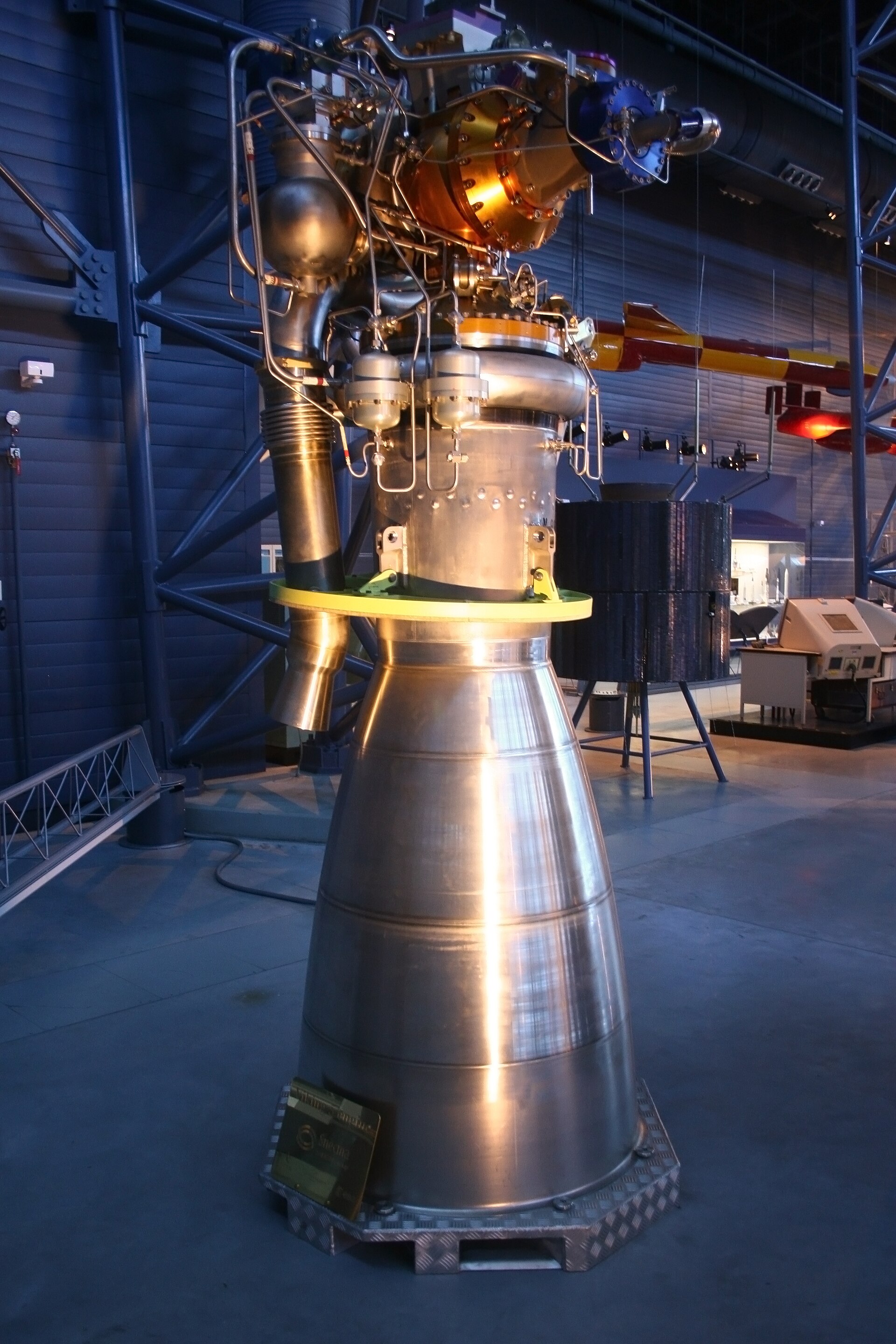
Almost all of a rocket is fuel. A big space rocket at lift-off is mostly tanks, and the rest is engines, controls and the cargo it carries, called the . Every rocket needs three basic things. It needs , which is the material thrown out of the back. It needs somewhere to store that propellant. And it needs a to aim the exhaust.
Most rockets are chemical rockets. They burn a fuel together with an . An oxidiser is a substance that supplies the oxygen needed for burning. This matters because a rocket cannot breathe air in space, so it carries its own oxygen. Common fuels include kerosene and liquid hydrogen. A common oxidiser is liquid oxygen, which is oxygen gas cooled until it becomes a liquid.
There are two main kinds of chemical rocket. A liquid rocket pumps fuel and oxidiser from separate tanks into a combustion chamber, where they burn. A solid rocket has fuel and oxidiser mixed together in a solid block, a bit like a very powerful firework. Solid rockets are simpler and give a big push, but they are hard to switch off once lit. Liquid rockets can be throttled up and down.
Some engines work differently. A water rocket uses compressed air to push water out of a plastic bottle. Other designs heat a gas with the Sun or with a nuclear reactor. Rockets also need steering. Many swivel their engines, which is called gimballing, and gyroscopes help keep them pointing the right way.
Who built the first rockets?
The first rockets were not built for space. They were built for war and for celebration. Gunpowder was invented in China, and by the 13th century Chinese rockets were burning gunpowder to fly. They were fired as fire arrows and used in battles. A Chinese military book of the mid-14th century, the Huolongjing, even describes a rocket in two parts, which is the first known multistage rocket.
The Mongols learned the technology and carried it west, and rockets reached the Middle East and Europe in the mid-13th century. In the 1270s a Syrian writer called Hasan al-Rammah wrote down 22 recipes for rockets. The word rocket itself comes from the Italian rocchetta, meaning a little spindle or bobbin, because early rockets looked like the spool used to hold thread.
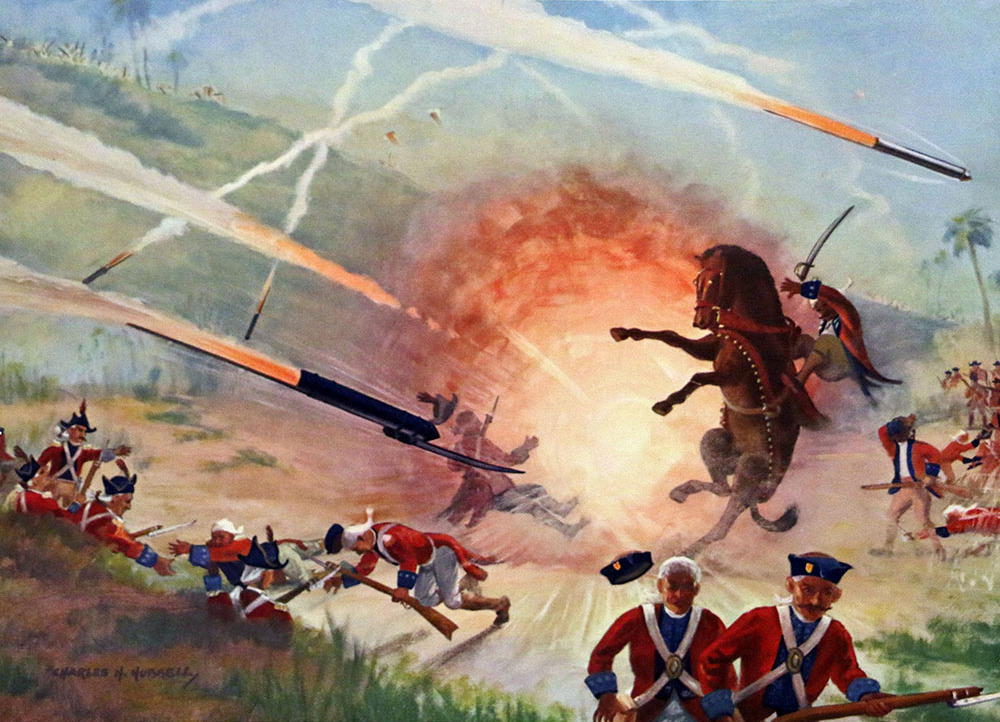
Early rockets had paper or wooden cases that burned or broke. In the late 18th century the Kingdom of Mysore in southern India, ruled by Hyder Ali, built the first successful rockets with iron cases. Iron could hold more pressure, so these rockets flew further and hit harder. They frightened British troops in battles in India.
Britain copied the idea. Sir William Congreve designed a British rocket in 1804, and it was used in the Napoleonic Wars. In 1814 British ships fired Congreve rockets at Fort McHenry in America. An American watching, Francis Scott Key, wrote about the "rockets' red glare" in a poem that became the American national anthem.
Who first dreamed of rockets in space?
For centuries rockets were weapons. Then a few thinkers asked a bigger question. Could a rocket carry people off the Earth? In 1861 a Scottish writer, William Leitch, was the first to suggest rockets for spaceflight. His essay was called A Journey Through Space.
The real foundation came from a Russian teacher, Konstantin Tsiolkovsky. In 1903 he worked out the mathematics of how a rocket could reach space. His work showed why rockets must be built in and why liquid fuels are the best choice. Today his name is on the main equation of rocketry.
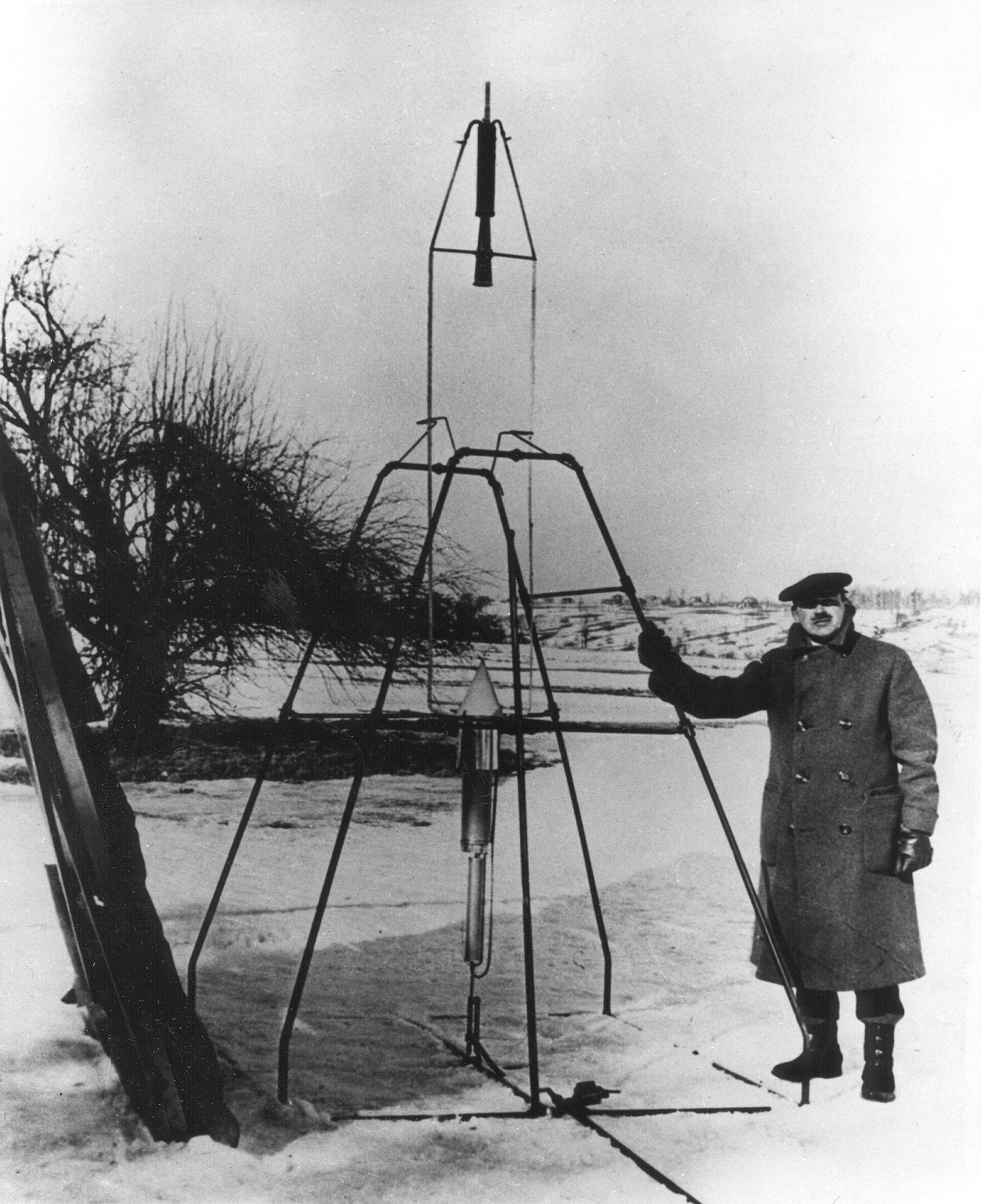
The next step was building one. An American professor, Robert Goddard, wrote in 1920 about reaching extreme heights with rockets. In 1926 he launched the first liquid-fuel rocket in a field in Massachusetts. It used liquid oxygen and petrol. Goddard also added a special , shaped to speed up the exhaust, which greatly raised the engine's efficiency. His first rocket looked odd, because the engine was at the top and the tank at the bottom. Goddard thought it would hang steady like a pendulum. It did not, and later rockets put the engine at the base.
In Germany, Hermann Oberth published a book about rockets in 1923. In 1929 the film Woman in the Moon, with Oberth as adviser, showed a multistage rocket, a launch pad and the countdown. The countdown before a launch started in a film.
How did war lead to the Moon?
Rocket science took its biggest leap during the Second World War. In Germany, a team at Peenemünde led by Wernher von Braun built the V-2. It was a long-range guided , and production began in 1943. On 20 June 1944 a V-2 became the first human-made object to cross the Kármán line, the edge of space, about 100 kilometres up. The V-2 was built by forced labour, and many thousands of workers died making it. It was also used as a weapon against cities.
Other countries used simpler rockets. The Soviet Union fired Katyusha launchers, which sent salvos of unguided rockets at enemy troops. The United States used the bazooka, a rocket that could destroy tanks.
After the war, the United States took German rocket scientists, including von Braun, to America in a plan called Operation Paperclip. In the Soviet Union, a chief designer named Sergei Korolev led rocket research. The two countries became rivals in the Cold War, and both built rockets that could carry nuclear warheads across the world. These are called intercontinental ballistic missiles.
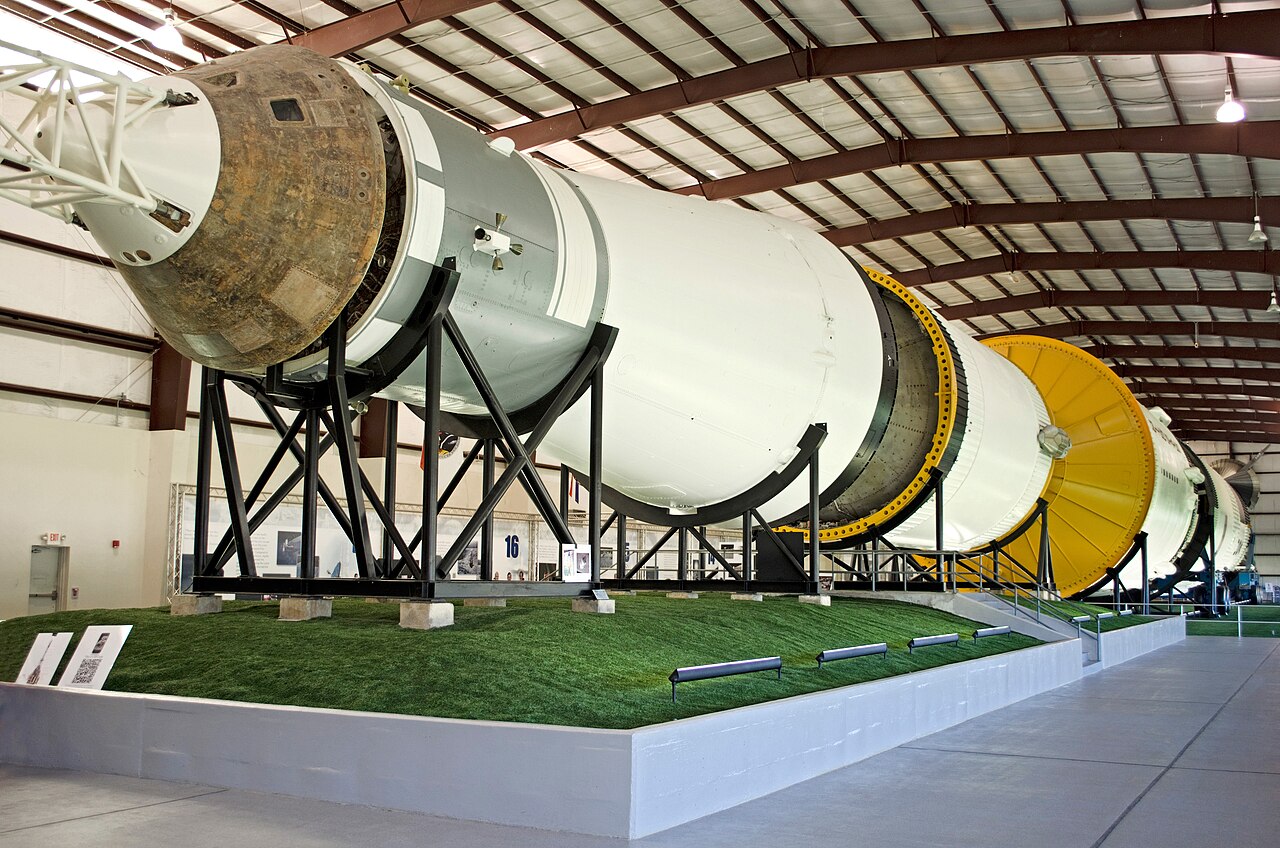
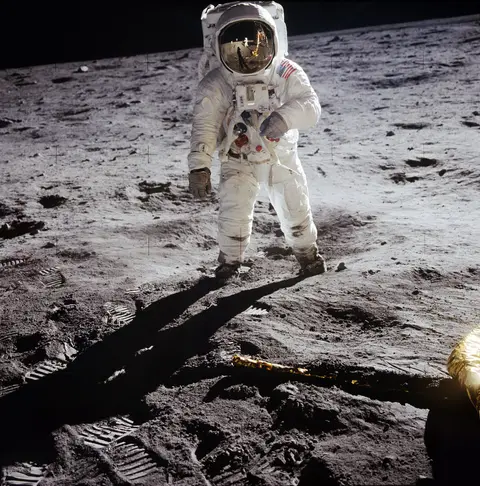
The same rockets could also carry satellites and people. The Soviet Union launched Vostok and Soyuz rockets. The United States built Mercury, Gemini and then Apollo. In 1969 the giant Saturn V rocket launched the equipment that put people on the Moon for the first time.
Why do rockets drop pieces on the way up?
To reach around the Earth, a rocket must go very fast. It needs to gain a speed of about 9.4 kilometres per second once all the losses are counted. Losses come from air drag and from fighting gravity. That is roughly 28 times the speed of sound.
A single rocket with a single set of tanks cannot do it. The tanks, engines and pipes all have weight. As the fuel burns away, the rocket is still hauling empty tanks and heavy engines. So all real orbital rockets use . A stage is a section with its own engines and tanks. When its fuel is used up, the stage falls away and the rest of the rocket carries on, much lighter.
The Saturn V shows why this matters. Its first stage, carrying the weight of everything above it, could add only about 5.9 kilometres per second. That was far short of what was needed. The upper stages did the rest.
There are two ways to arrange stages. In serial staging, one stage fires after the one below has fallen away. In parallel staging, engines burn together and the extra boosters drop off when they are empty. Most large rockets use a mix.
The price of staging is size. Every extra stage means a much bigger rocket for the same . Most rockets throw their used stages into the sea. Some newer rockets now bring stages back to land with parachutes or by firing engines to land upright, so they can be flown again.
What happens during a launch?
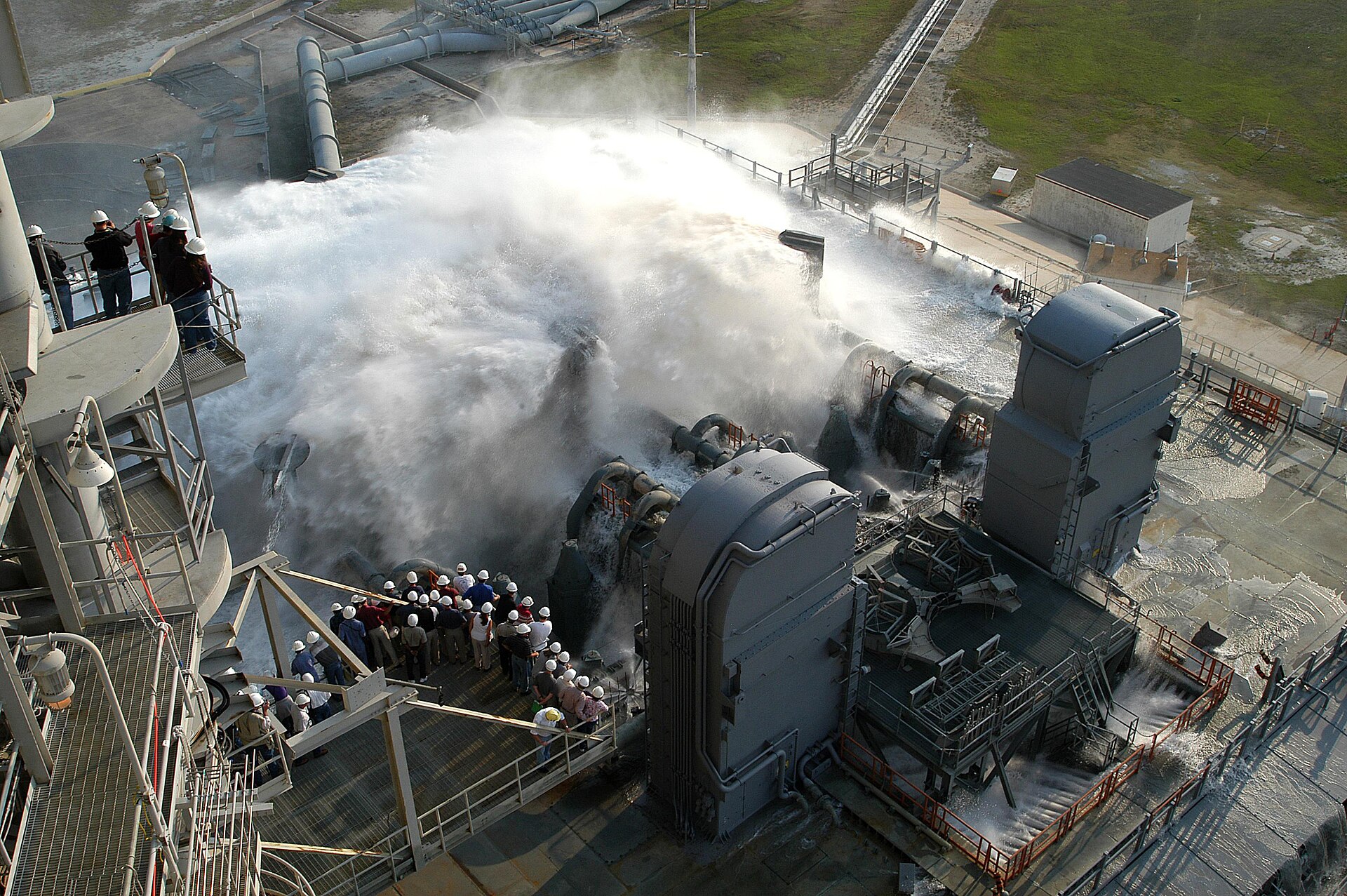
A big rocket stands upright on a launch pad, which holds it steady for the first seconds after ignition. Around the pad is a whole network of systems called the ground segment. It includes the control centre, tracking stations and firing controls.
At lift-off, the engines roar. The noise can be huge. A Space Shuttle made about 180 decibels at its base, loud enough to hurt people and even damage the rocket itself. Sound waves bounce off the pad and shake the vehicle. To stop this, NASA floods the pad with water, up to 57 cubic metres every second, and the noise falls to about 142 decibels.
The rocket rises straight up at first, then leans over. This curved path is called a . It lets gravity help to bend the flight path so the rocket has less stress on its body. As it climbs, the air thins and the rocket gets faster. Somewhere on the way comes a moment called , when air resistance is strongest and the rocket's structure is under the greatest strain.
Above most of the air, the rocket tips nearly sideways. It is not mainly trying to go up. It is trying to go sideways fast enough to stay in . Orbital speed is about 7.8 kilometres per second. At that speed the rocket falls around the Earth without ever hitting it, and the engines switch off.
What are rockets used for today?
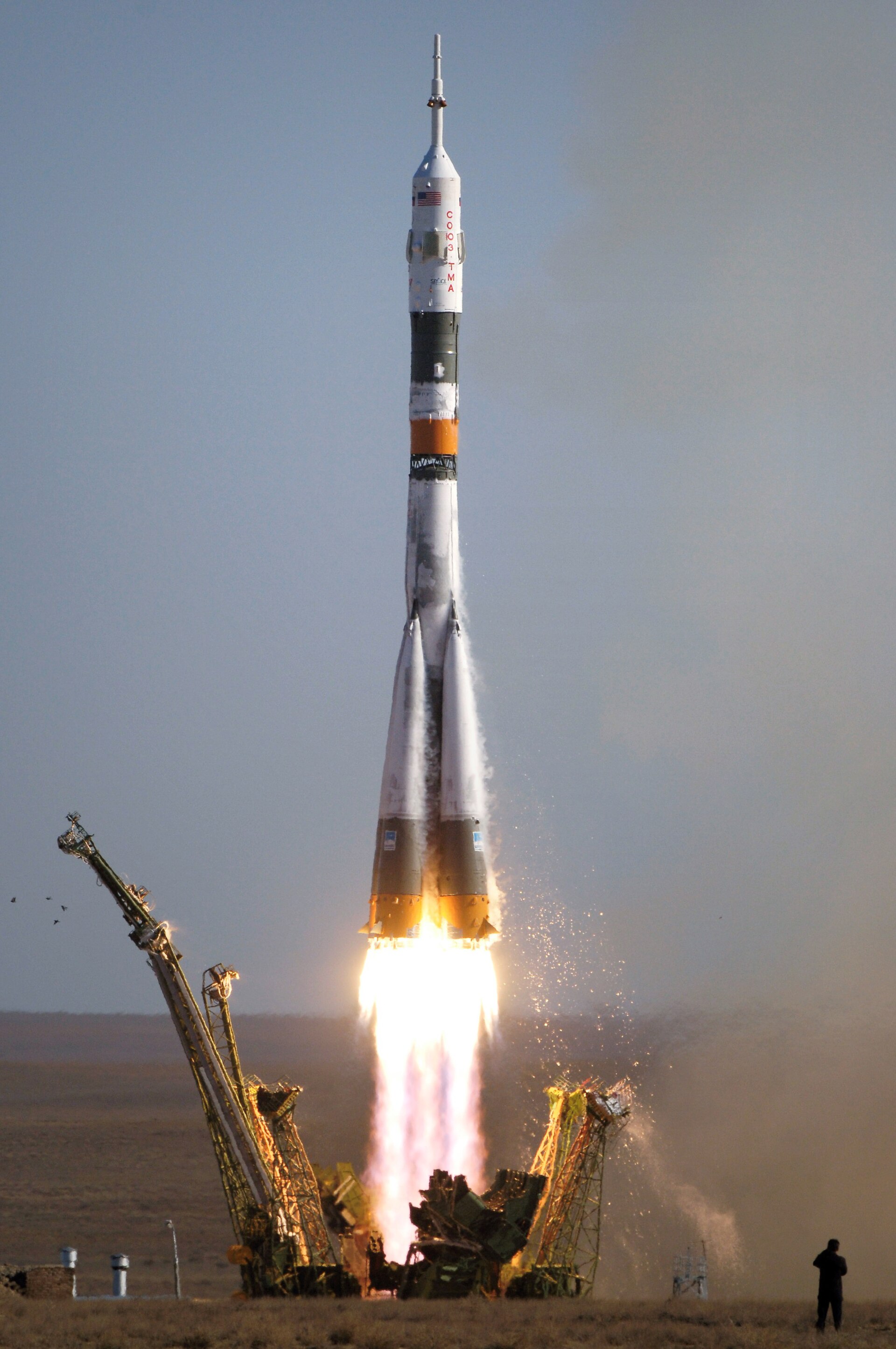
Rockets are the only way we have to reach and travel beyond it. Every satellite, every space station crew and every probe sent to another planet has left the ground on a rocket. A Soyuz rocket, for example, carries astronauts to the International Space Station from Baikonur in Kazakhstan. The Space Shuttle flew from 1981 to 2011 and used rockets to lift astronauts and cargo.
Science also uses smaller rockets. Sounding rockets carry instruments up to measure the upper air and take readings from high above the ground. In 1946 a V-2 rocket took the first pictures of Earth from space. Rocket engines are also used on sleds that run along rails at extreme speed.
Armies use rockets as weapons. A rocket with a guidance system is usually called a . Some missiles destroy tanks and aircraft. Others, such as the Trident II launched from a submarine, can travel thousands of kilometres.
Rockets also save lives. Some crewed rockets have a launch escape system, a small solid rocket that can pull the crew capsule away from a failing launch in a moment. In 1983 this saved the crew of Soyuz T-10 when their rocket caught fire on the pad. Ejection seats in military aircraft use small rockets too, and so do flares on ships.
Many people also enjoy rockets as a hobby. Model rockets and water rockets show how Newton's rule works, and fireworks are rockets too.
Why are rockets so hard to get right?
A rocket stores a huge amount of energy in a small space and releases it on purpose. That is why it can fly, and also why it is dangerous. Rocket engineers must solve hard problems. They must cool a combustion chamber that burns at extreme heat. They must pump fuel at enormous pressure. And they must steer a vehicle that is travelling faster than a bullet.
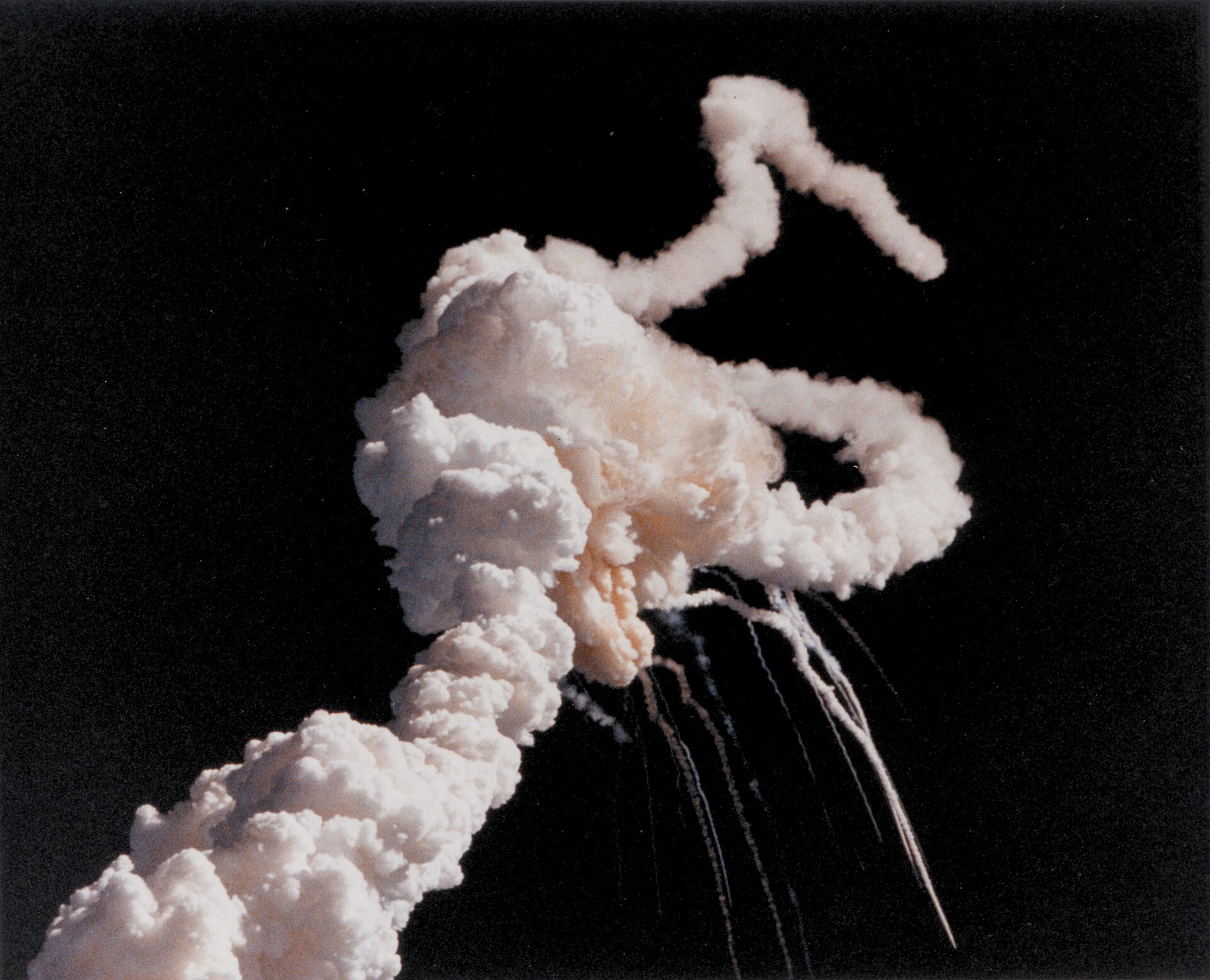
Because of this, rockets are tested again and again, and still they sometimes fail. Early Soviet Moon rocket tests of the N1 failed several times, and the launch escape system pulled the uncrewed capsule clear in three of those failures. On 28 January 1986 the Space Shuttle Challenger broke apart soon after launch and all seven crew were lost. The cause was a seal called an O-ring in one of the solid rocket boosters. It let hot gas leak out. The disaster led to a long pause in shuttle flights and many changes in how NASA checks risks.
Each failure teaches engineers something. Rockets are far more reliable today than in the early days because every fault found is studied and fixed.
What comes next? Reusable rockets are one answer, as bringing back should cut the cost of reaching space. Engineers are also studying nuclear heat engines for long journeys. Whatever comes next, the basic idea stays the same. Throw mass backwards, and the rocket moves forward.
Explore Next
Your audio story keeps playing while you look around.
Words to Know
- gravity turn
- The curved path a rocket follows as it leans over after lift-off.
- max Q
- The moment in a launch when air pushes back on the rocket most strongly.
- missile
- A rocket-powered weapon with a guidance system.
- nozzle
- The bell-shaped opening that aims the hot exhaust out of the engine.
- orbit
- The curved path an object takes around a planet.
- oxidiser
- A substance that supplies the oxygen needed to burn fuel.
- payload
- The cargo a rocket carries, such as a satellite or a crew capsule.
- propellant
- The material a rocket stores and throws out of its back to make thrust.
- stage
- A section of a rocket with its own engines and tanks that drops away when empty.
- thrust
- The pushing force that makes a rocket move.