DNA
The twisted molecule that holds the instructions for building a living thing.
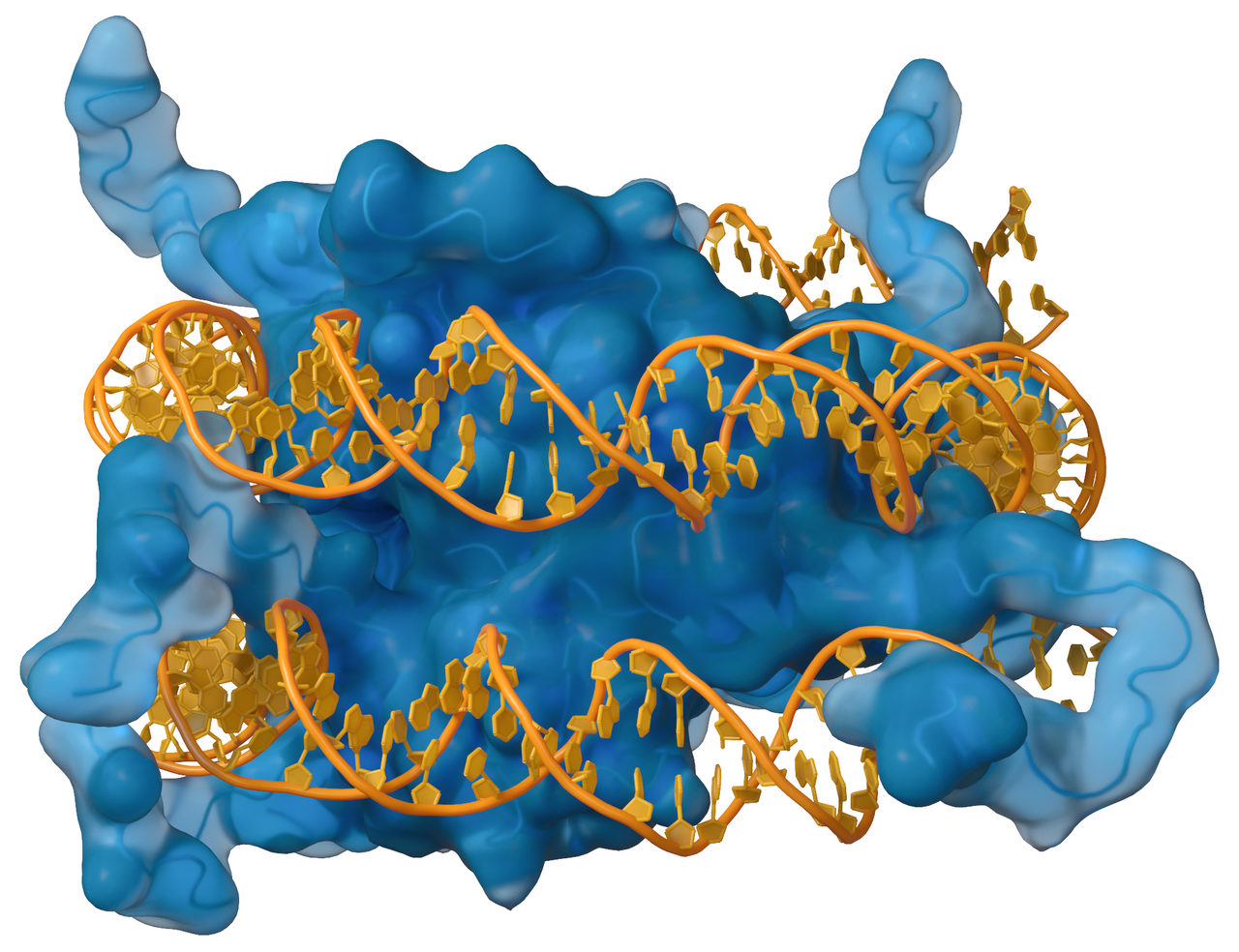
DNA is a long, thin molecule that stores the instructions for building and running a living thing. It is written in a code of only four chemical letters, and a cell reads those letters to make proteins, the tiny machines that do most of the work in a body. Almost every living thing on Earth uses DNA, from bacteria to blue whales, and so do many viruses. Each of your cells holds about 2 metres of it, folded up inside a space far too small to see. Scientists worked out its twisted-ladder shape in 1953, and that discovery changed medicine, farming and the study of the past.
Who found DNA, and how did we learn what it does?
In 1869 a Swiss doctor named Friedrich Miescher collected a stringy white substance from the nuclei of cells. He called it nuclein. For decades nobody knew what it was for. Many scientists thought that proteins carried inheritance, because proteins seemed far more complicated.
The answer came in steps. In 1944 Oswald Avery, Colin MacLeod and Maclyn McCarty showed that DNA could change one type of bacterium into another. In 1952 Alfred Hershey and Martha Chase studied viruses that attack bacteria. They found that the viruses pass their DNA into a bacterium to take it over, and that the protein stays outside.
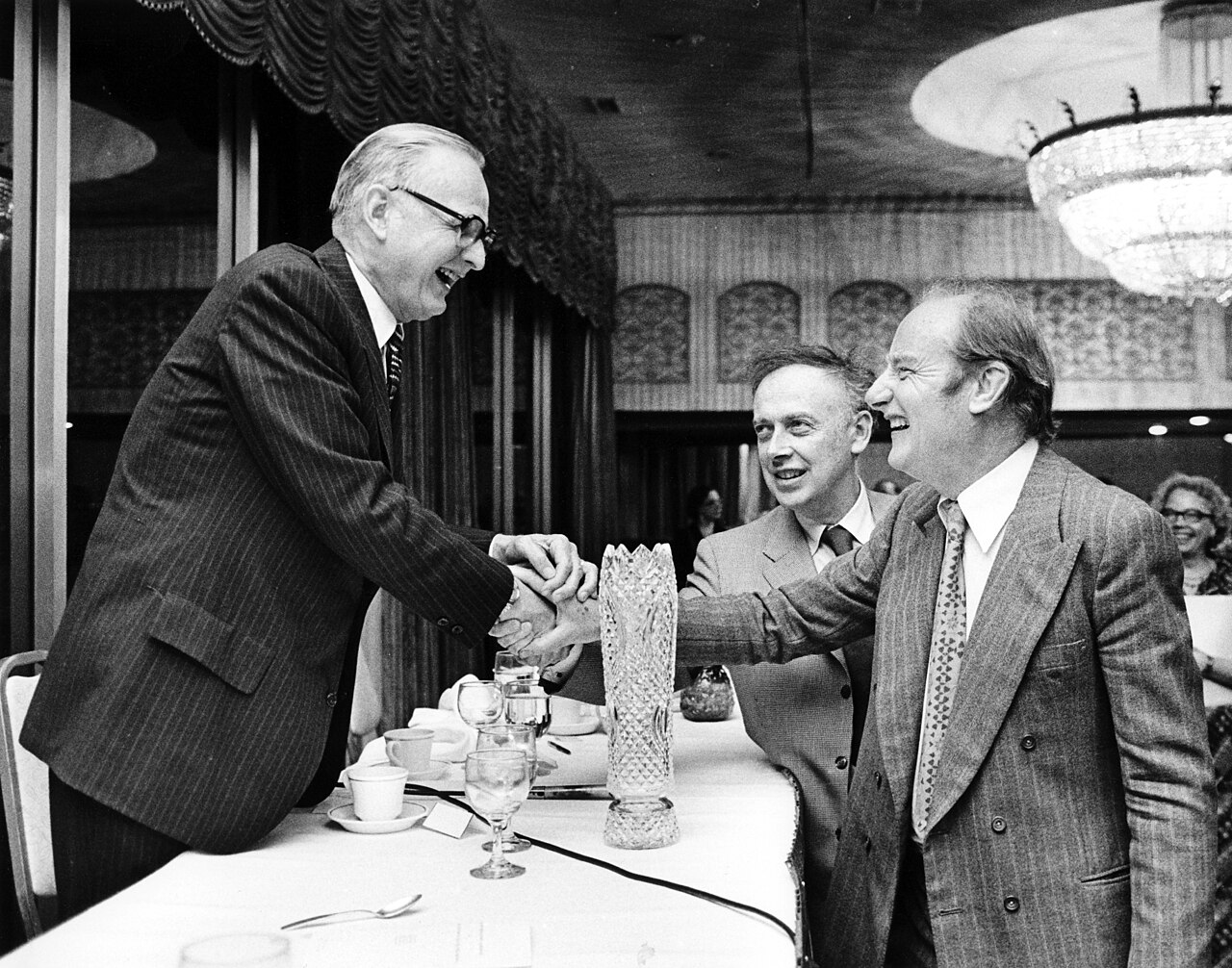
Then came the question of shape. Rosalind Franklin and Maurice Wilkins fired X-rays at DNA fibres and recorded the patterns that the rays made. Franklin's sharp images showed that DNA was a helix. The sharpest, known as Photo 51, was taken in 1952 by Raymond Gosling, a student in Franklin's laboratory. In early 1953 Wilkins showed it to Watson without Franklin's knowledge. In 1953 James Watson and Francis Crick built a model that fitted these patterns. Their model also explained how DNA could be copied, which is the heart of heredity.
Watson, Crick and Wilkins shared a Nobel Prize in 1962. Franklin had died in 1958, aged 37.
Why is DNA shaped like a twisted ladder?
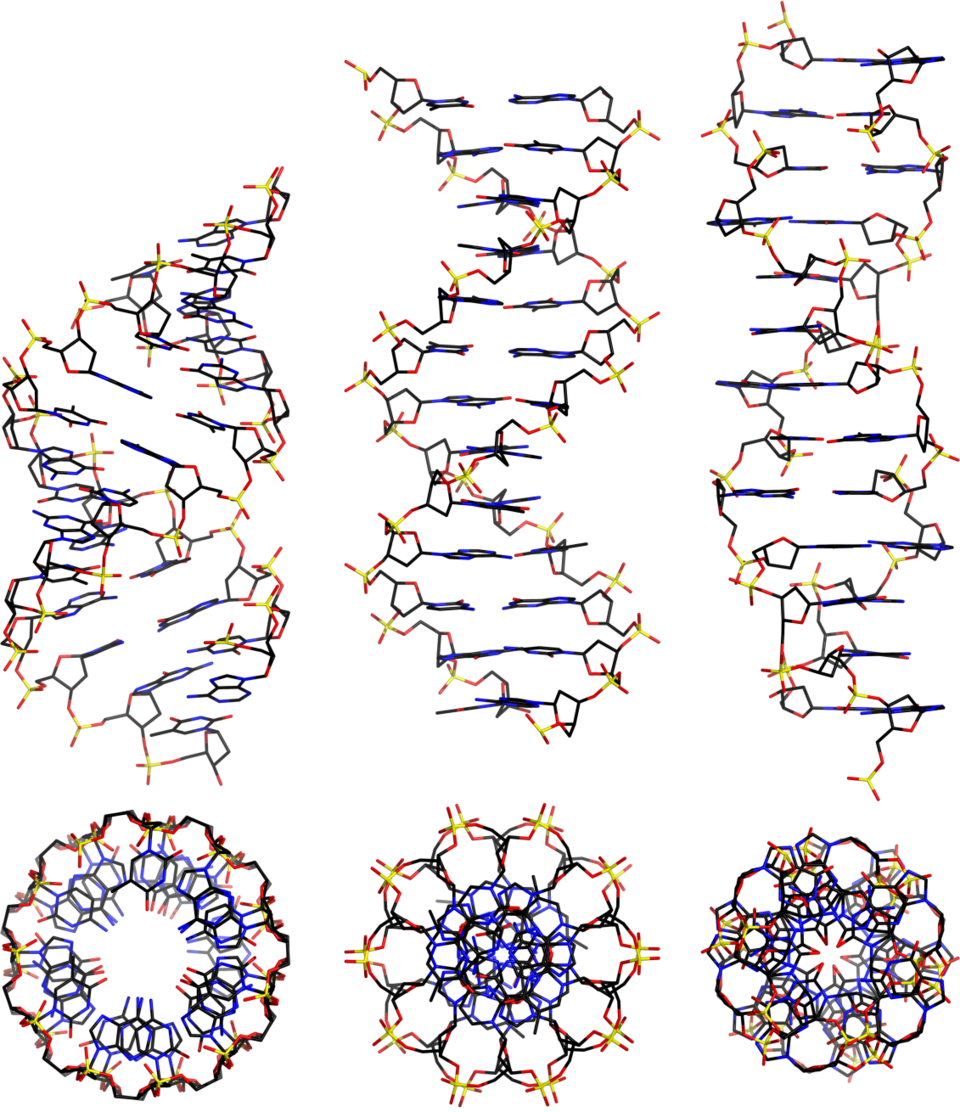
DNA is made of two long strands that wind around each other. This shape is called a . Picture a rope ladder twisted into a spiral. The sides of the ladder are a backbone made of sugar and phosphate units linked in a chain. The rungs are made of pairs of chemical units called .
There are four bases: adenine, thymine, cytosine and guanine. Scientists write them as A, T, C and G. Each base can pair with only one partner. A always pairs with T, and C always pairs with G. Weak links called hydrogen bonds hold each pair together. An A and T pair has two of these links, and a C and G pair has three.
Hydrogen bonds are easy to break and mend, so the two strands can be pulled apart like a zip. That matters, because a cell must open the ladder to read it or copy it. The pairing rule also means that each strand holds the whole message. If you know one strand, you can work out the other.
The helix is tiny. It is about 2 nanometres wide and makes one full turn about every 10 base pairs. The two strands run in opposite directions. Inside cells, DNA usually takes a form called B-DNA. Rarer forms exist, such as Z-DNA, which twists the other way, to the left.
How do four letters write a whole body?
A is a stretch of DNA that carries the instructions for one product, usually a protein. The order of the is the message, as the order of letters makes the words in a sentence. A cell reads the bases in groups of three, called codons. Four bases taken three at a time give 64 possible codons. They code for the 20 standard amino acids, which are the building blocks of proteins, and for three codons that mean stop.
The cell uses two steps to turn a gene into a protein. In transcription, an called polymerase copies the gene into messenger RNA. RNA is a single-stranded cousin of DNA, and it uses a base called uracil, or U, in place of T. In translation, a ribosome reads the messenger RNA and joins amino acids in the right order. The chain then folds into a protein.
Proteins do the work. They digest food, carry oxygen in blood and build hair and muscle. Every cell in your body holds the same DNA, but different cells switch on different genes.
The human has about 3 billion base pairs. Only about 1.5 per cent of it codes for proteins. Some of the rest controls genes, and some forms structures such as ends. Much of it is repeated sequences whose purpose is still debated.
How does a cell copy its DNA?
Before a cell divides, it must copy all of its DNA so that each new cell gets a complete set. The makes this possible. called helicases unwind the two strands, using chemical energy. Then an enzyme called DNA polymerase moves along each old strand. It finds the matching for every position and links it on, following the pairing rule. A on the old strand gets a T, and C gets a G.
The result is two double helices. Each one has one old strand and one new strand. The base on the old strand decides which base goes on the new one, so the copy is a faithful match.
The two strands run in opposite directions, but polymerase can build only one way. One new strand is therefore made in a smooth run, while the other is made in short pieces. Enzymes called ligases then join the pieces into one long strand.
Polymerase also proofreads. When it spots a base that does not pair properly, it backs up and removes the mistake. Even so, a few errors slip through. A change in the DNA sequence is called a . Most mutations do nothing noticeable, some cause harm and a few are useful. Over very long times, these rare changes give evolution its raw material.
How do 2 metres of DNA fit inside a cell?
If you stretched out the DNA from one human cell, it would measure about 2 metres. Yet the nucleus that holds it is far narrower than a hair. The cell solves this with careful packing.
In animals, plants and fungi, DNA is wound around proteins called . Eight histones form a disc-shaped core, and about two turns of DNA wrap around each core. The unit is called a nucleosome. Nucleosomes look like beads on a string. The string then coils and folds again and again into a material called chromatin, which forms .
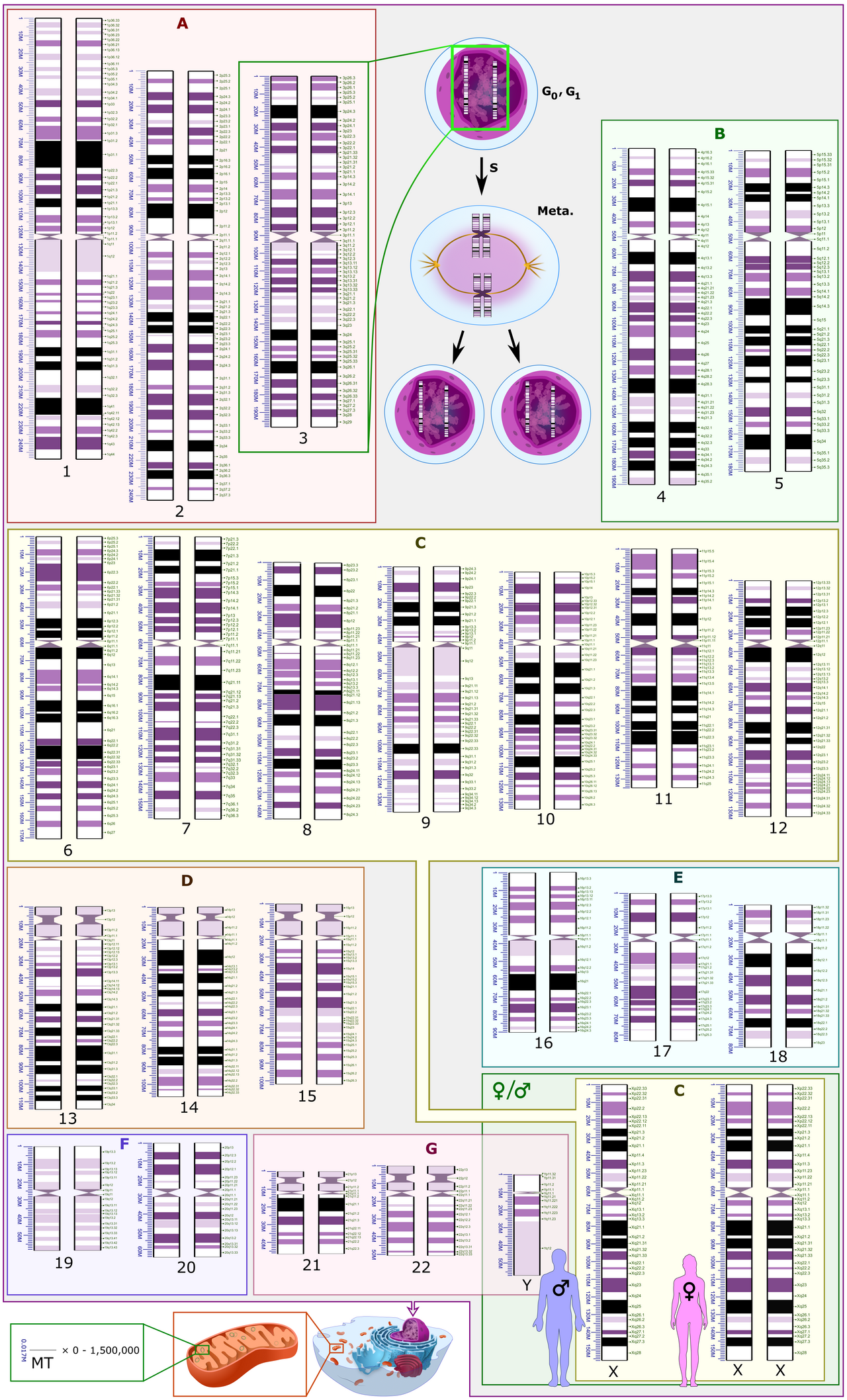
Human cells have 46 chromosomes. Chromosome 1 is the biggest, with about 250 million pairs. Straightened out, it would be about 85 millimetres long. Bacteria and archaea have no nucleus. Their DNA sits in a loop called a circular chromosome, in a region of the cell called the nucleoid.
Packing has a second job. Tight packing keeps some switched off, and looser packing lets others be read. Chemical tags on the DNA and the histones, such as methyl groups, change how tight the packing is. This is one reason why a skin cell and a nerve cell can use the same DNA in different ways.
A little DNA also sits outside the nucleus. Mitochondria, the power units of cells, have their own small circles of it.
What damages DNA, and what protects the ends of chromosomes?
DNA is always under attack. Ultraviolet light from the Sun can make neighbouring thymine stick together. X-rays, chemicals in tobacco smoke and harmful forms of oxygen made by normal cell chemistry can all change or break bases. At any moment, a typical human cell has about 150,000 bases with this kind of damage.
Cells have repair systems that fix almost all of it. The most dangerous harm is a double-strand break, where both sides of the ladder snap. It is hard to repair and can cause that lead to cancer. Some damage always remains, and it builds up as we age. Many scientists think this is an important cause of ageing. Doctors use the same weakness in cancer treatment. Some chemotherapy drugs damage the DNA of fast-growing cancer cells.
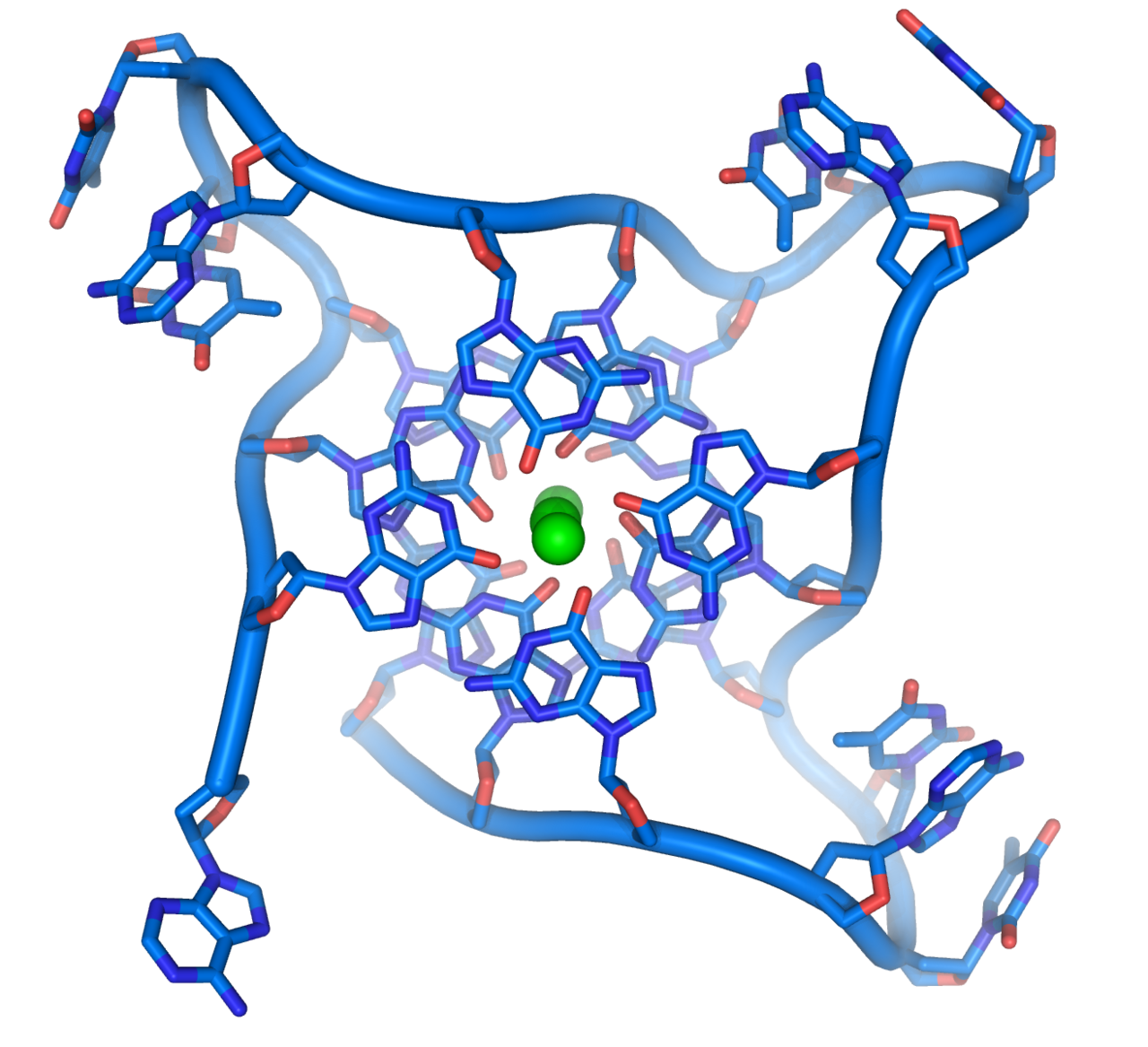
The ends of need special care. They carry caps called . Like the plastic tips on shoelaces, they stop the ends from fraying or sticking together. In humans, a telomere is a short pattern, TTAGGG, repeated thousands of times. The ordinary copying cannot copy the very tip of a chromosome. An enzyme called telomerase rebuilds the telomere instead. The guanine-rich repeats can fold into stacks of four-base plates called G-quadruplexes, which help to stabilise the ends.
Which proteins read, cut and mend DNA?
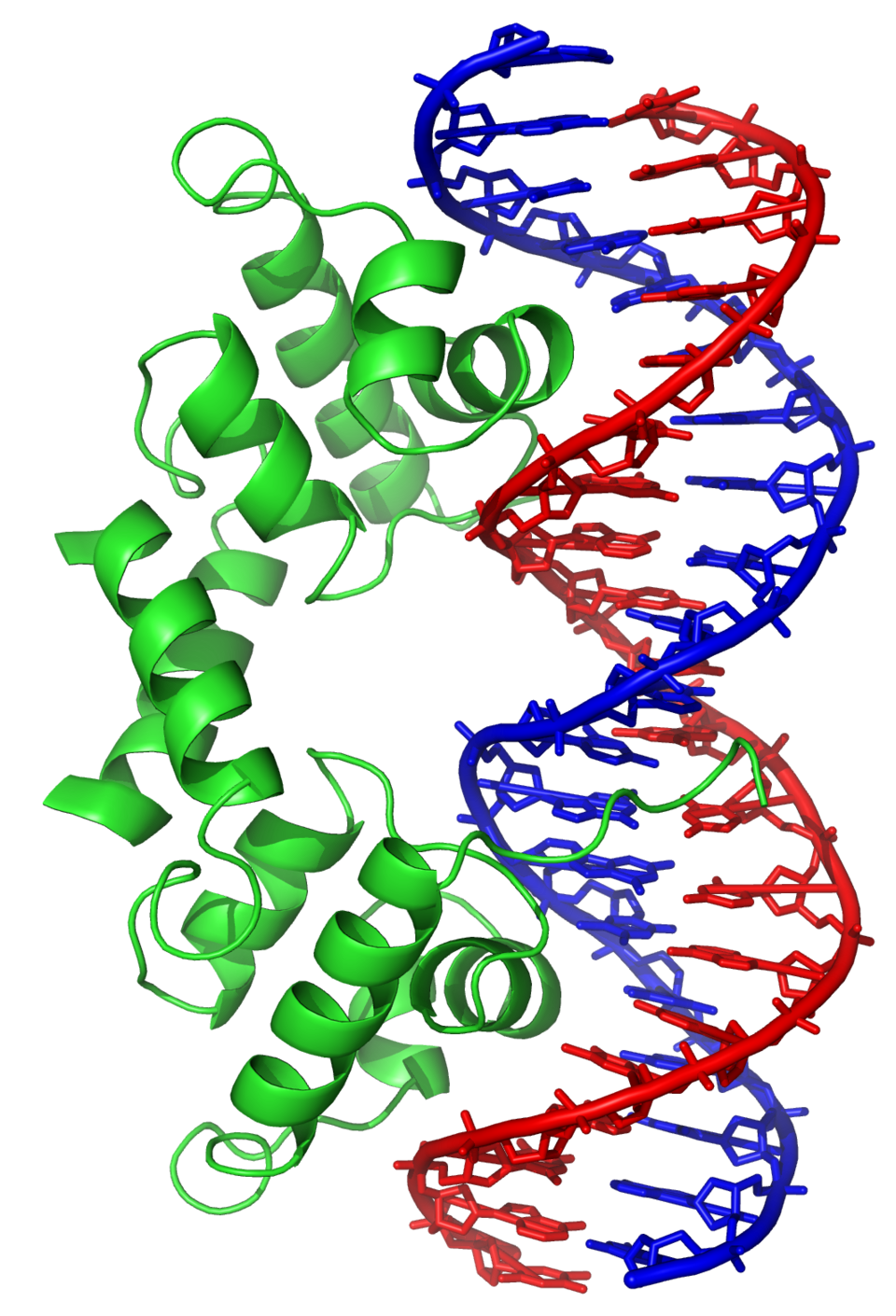
DNA never works alone. Every job it does depends on proteins that grip it, read it and change it.
Some proteins switch on or off. They are called transcription factors. Each one recognises a particular short sequence by touching the edges of the , mostly in the wider groove of the helix. When it binds, it helps polymerase start work, or it blocks it. One transcription factor can control thousands of genes, so these proteins steer how an embryo grows and how a cell reacts to danger. The lambda repressor is one such protein. It comes from a virus that infects bacteria, and it holds on to DNA to keep the virus's genes quiet.
Other are tools. Nucleases cut DNA. Restriction enzymes cut at one exact sequence. The enzyme EcoRV, for example, cuts at GATATC. Bacteria use these enzymes as a defence, chopping up the DNA of invading viruses. Scientists borrow them as molecular scissors for cloning genes and for DNA fingerprinting. Ligases glue pieces back together. Topoisomerases cut and reseal DNA to release twisting. Helicases unwind the helix, and polymerases build new strands.
Some viruses use an enzyme called reverse transcriptase to copy RNA into DNA. HIV does this. Telomerase works in a similar way.
How does DNA get shuffled from one generation to the next?
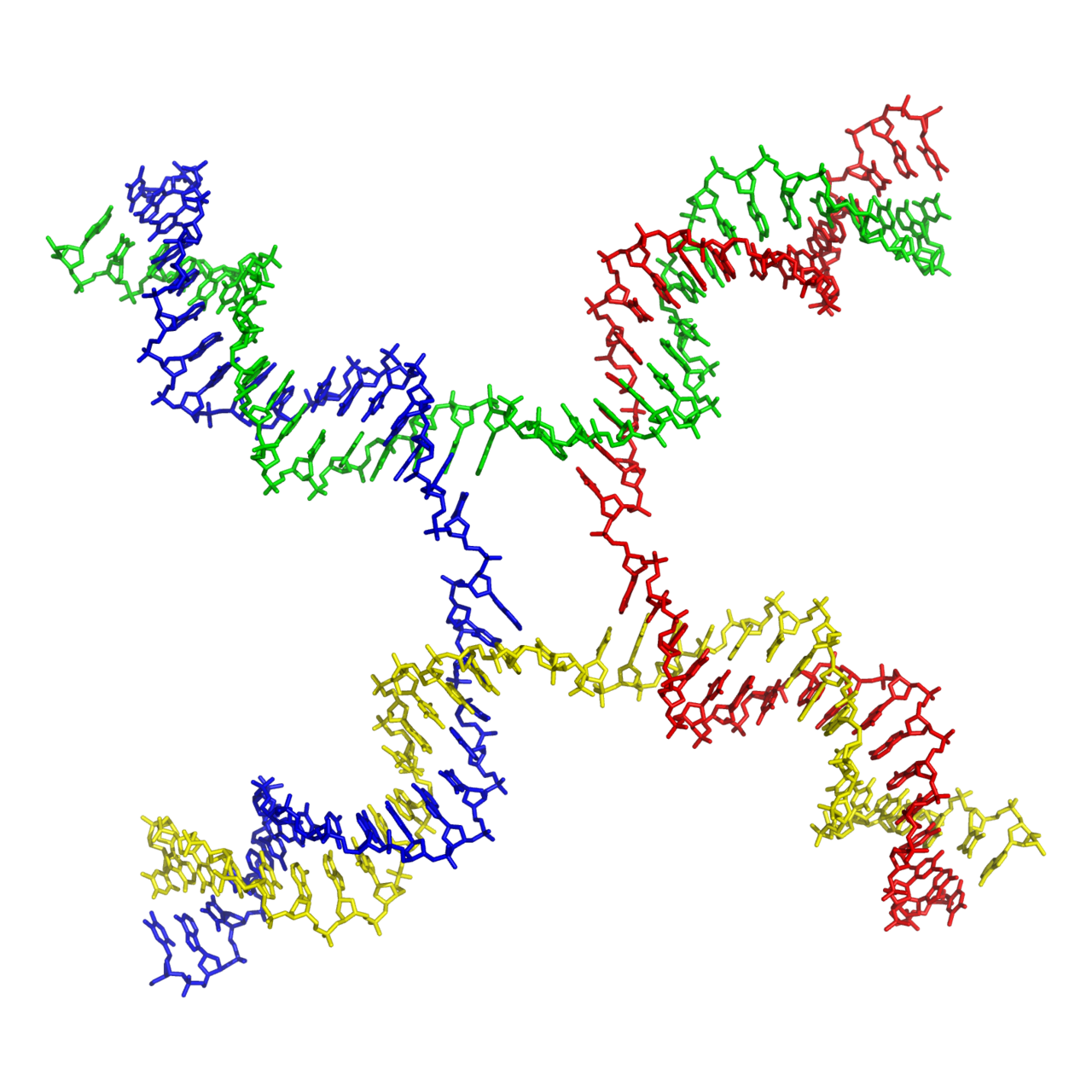
usually keep to themselves. In human cells, each chromosome even stays in its own zone of the nucleus. This keeps the information stable. There is one big exception. When egg and sperm cells are made, matching chromosomes line up and swap sections. This is called crossover, and it is a type of genetic recombination.
The swap works like this. Two DNA helices break, trade a section and then rejoin. called recombinases help. For a short time, the two helices are linked by a four-armed shape called a Holliday junction. Then the junction is cut and the strands are sealed again.
Why does it matter? Crossover makes new mixes of . Each egg or sperm carries a different mix, so brothers and sisters are not copies of each other. More variety gives natural selection more to choose from. It can also help new proteins to evolve more quickly. Cells also use recombination to repair double-strand breaks.
Swapping must be done between very similar sequences. If it happens between the wrong places, chromosomes can end up rearranged, which can harm a cell.
DNA can also be found outside cells. It is released when cells die. Ecologists now collect it from water, soil or air to find out which species live there. This method is called environmental DNA.
How do scientists read and edit DNA?
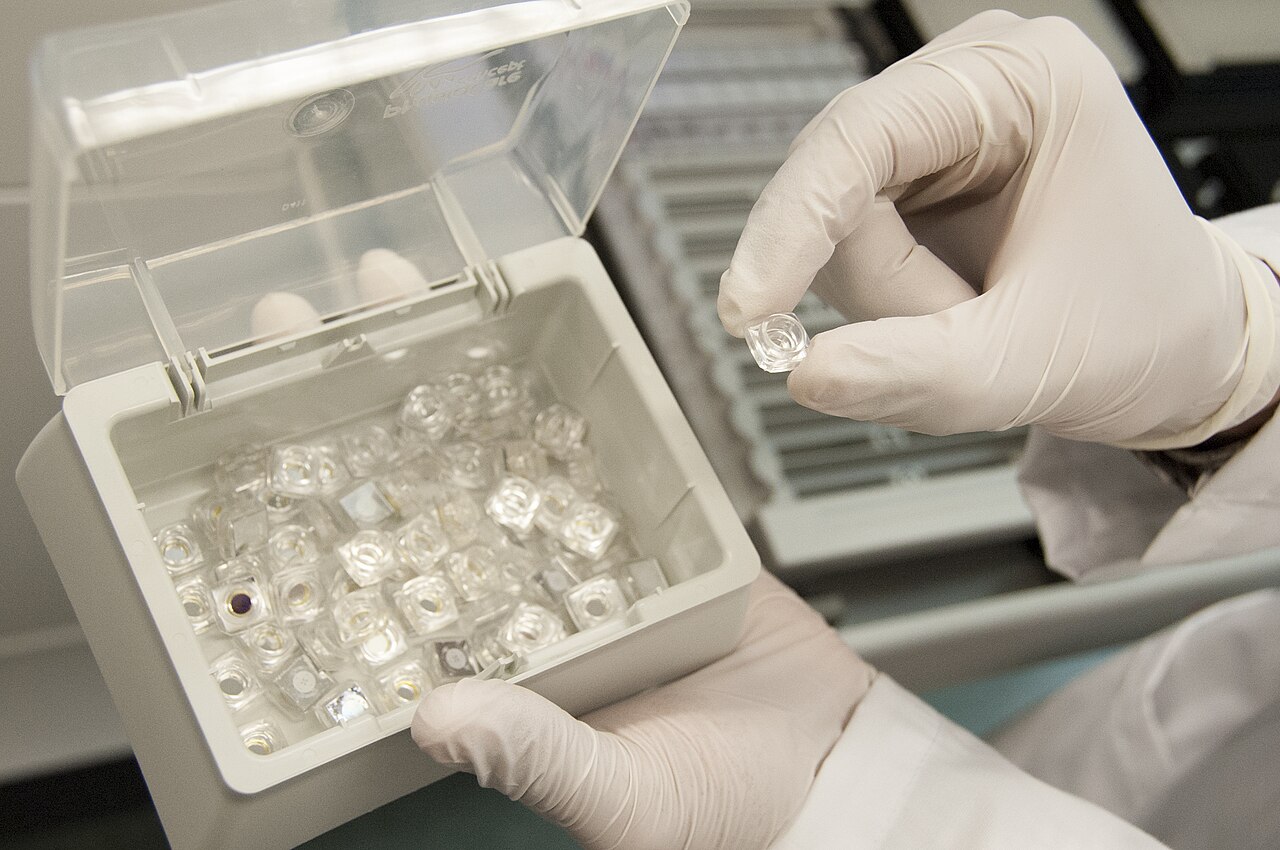
Reading DNA means working out the order of its . In 1977 the British biochemist Frederick Sanger and his team published a way to do it, by building copies of a DNA strand that stop at known letters. The first complete , of a small virus, was read that year. In 1983 Kary Mullis devised the polymerase chain reaction, or PCR. It uses the copying polymerase to make millions of copies of one short stretch of DNA from a tiny sample, which is why it helps in crime labs and disease tests.
The Human Genome Project set out to read all 3 billion letters of a human's DNA. Scientists published a draft in 2001 and declared the work finished in 2003. A few stretches, mostly long repeats, were still missing. In 2022 a team published the first truly complete human genome, with no gaps.
Editing came next. In 2012 Emmanuelle Charpentier and Jennifer Doudna showed that a bacterial defence system called -Cas9 can work as a pair of programmable scissors. A guide molecule leads the Cas9 enzyme to a chosen sequence, and the enzyme cuts the DNA there. The two scientists won the Nobel Prize in Chemistry in 2020. In 2023 the first medicine based on CRISPR, called Casgevy, was approved in the United Kingdom and then the United States. It treats two inherited blood diseases, sickle cell disease and beta thalassaemia.
Where did DNA come from, and what can it tell us?
Life has existed for at least 3.5 billion years, but nobody knows how long DNA has been its code. Some scientists think the earliest life used instead. RNA can store information and it can also speed up chemical reactions, as molecules called ribozymes. This idea is called the RNA world. DNA may have taken over later because it is more stable, but there is no direct evidence of those ancient systems.
DNA is also a poor fossil. It breaks into short pieces over time and survives in the open for less than a million years. In very cold places, scientists have read much older DNA. In 2022 a team reported DNA about 2 million years old from frozen sediment in northern Greenland, among the oldest ever read. Dinosaur DNA is out of reach.
The genetic code is shared by all known life. A bacterium and a human use the same four and nearly the same codon dictionary. This is strong evidence that all living things share a common ancestor. In 2019, scientists even built a synthetic DNA with eight letters, called Hachimoji DNA. It formed a and could be copied into RNA, so the natural four letters are not the only workable choice.
Reading DNA is now routine. It is used to diagnose inherited diseases, solve crimes, trace family history and improve crops. A chart called a karyotype lays out a person's in pairs so doctors can check them.
Explore Next
Your audio story keeps playing while you look around.
Words to Know
- base
- One of the four chemical letters of DNA, called A, T, C and G.
- chromosome
- A long, tightly packed piece of DNA, with the proteins that hold it.
- CRISPR
- A bacterial defence system that scientists use as a tool to cut DNA at a chosen place.
- double helix
- The shape of DNA, two strands twisted around each other.
- enzyme
- A protein that speeds up a chemical reaction in a living thing.
- gene
- A stretch of DNA that carries the instructions for one product, usually a protein.
- genome
- All of the DNA in an organism.
- histone
- A protein that DNA winds around so it can be packed tightly.
- mutation
- A change in the order of the bases in DNA.
- nucleotide
- One link in a DNA chain, made of a base, a sugar and a phosphate.
- RNA
- A single-stranded relative of DNA that copies genes and helps to build proteins.
- telomere
- A protective cap at the end of a chromosome.