Evolution
How billions of years of small changes built every living thing on Earth.
Evolution is the change in living things over many generations. Offspring are never perfect copies of their parents, so over time some features become more common in a population while others fade away. Repeated over billions of years, this slow change has produced everything from bacteria to blue whales, and from mushrooms to people. All life on Earth shares a common ancestor that lived more than 3.5 billion years ago, and perhaps as early as 4.2 billion years ago by a 2024 estimate. Evolution explains why animals and plants fit their surroundings so well, why relatives look alike, and why nearly every species that ever lived has disappeared. It is one of the best-tested ideas in all of science.
What is evolution, and who worked it out?

Evolution is the change in the inherited features of a group of living things from one generation to the next. A group of the same kind of living thing in one place is called a . Evolution happens to populations and not to single animals. A giraffe cannot evolve during its own life, but a population of giraffes can change over thousands of generations.
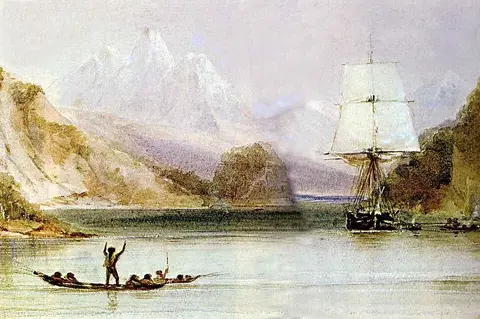
People had asked where living things came from for thousands of years. In the 1790s Darwin's own grandfather, Erasmus Darwin, suggested that living things might share a common origin. In 1809 the French naturalist Jean-Baptiste Lamarck proposed that animals change when they use or neglect parts of their bodies, and that they pass those changes on. He was right that species change, but a stronger arm or a suntan is not inherited. The modern scientific answer arrived in the middle of the 1800s. Two British naturalists, Charles Darwin and Alfred Russel Wallace, each worked out the idea of on their own. Wallace gathered his clues in South-East Asia, and Darwin gathered his on a five-year voyage around the world on HMS Beagle. Papers by both men were read to a scientific society in London in 1858, and Darwin's book On the Origin of Species followed in 1859.
Their idea rests on four facts. Living things often have more young than can survive. The young differ from one another. Some differences help an animal or plant survive and have young of its own. And many differences are passed on from parent to child. Put those four facts together and the next generation will contain more of the helpful features.
Neither man could say how inheritance worked. Scientists filled that gap between the 1910s and the 1940s by joining their idea to the science of genetics. The result is modern evolutionary theory.
How does a body pass on its instructions?

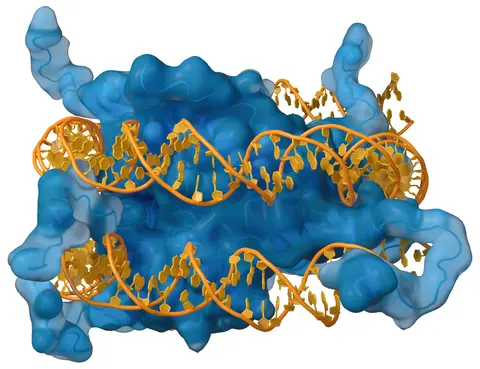
Every living thing carries a set of instructions in a molecule called DNA. DNA is a very long chain made from four kinds of building block, called bases. The order of the bases spells out information, much as the order of letters spells out a sentence. A stretch of DNA that carries the instructions for one job is called a . Inside a cell, each long strand of DNA is called a chromosome.
Before a cell divides, it copies all its DNA. Both new cells then get the same instructions. Parents also pass DNA to their young, and that is how features are inherited. Different versions of the same gene are called . In people, for example, one allele of an eye-colour gene might lead to brown eyes and another to blue.
Scientists separate the instructions from the result. The full set of genes an organism carries is its genotype. The features you can actually see and measure make up its phenotype. The two are not the same. A suntan comes from sunlight acting on skin, so it is not inherited and a tanned parent does not have tanned babies. What is inherited is the ability of skin to tan.
The first person to work out rules for inheritance was Gregor Mendel, a monk in what is now the Czech Republic. He bred pea plants and counted the results. Mendel lived at the same time as Darwin, but his work was ignored until it was rediscovered in 1900.
Where do new differences come from?
Evolution needs variety to work with. If every animal in a were identical, there would be nothing to change. Variety comes from three main sources.
The first is , a change in the DNA of a cell. Mutations are the original source of all new genetic variety. Most mutations in the parts of DNA that build proteins are either harmful or make no difference, in roughly equal numbers. A small share turn out to be helpful. Sometimes a mutation copies a whole . The spare copy is free to change and take on a new job while the original carries on as before. Our own eyes show this. The four genes we use to sense light, three for colour and one for night vision, all descend from a single ancestor gene.
The second source is the mixing of genes in sexual reproduction. A child gets a random mix of its parents' chromosomes, so brothers and sisters differ from each other. This shuffling makes new combinations without changing the genes themselves.
The third is gene flow, the movement of genes between populations. It happens when animals move from one place to another, or when pollen blows between plants. Bacteria go further. They can hand genes to unrelated bacteria, which is one way antibiotic resistance spreads between species.
Even so, most of a species' DNA is nearly identical from one individual to the next. Small changes still matter. A tiny difference in a gene that controls growth can make a big difference to a body.
What pushes evolution along?
Evolution happens when the share of a version, or , changes inside a . Several forces can change it.
The best known is . In every population, some individuals survive and have more young than others because of the features they carry. If those features are inherited, they become more common in the next generation. Scientists measure this advantage as fitness. Fitness is not about strength or long life. It is about how many of an animal's genes appear in later generations. A creature that lives only half as long as its neighbours but raises twice as many young that reach adulthood has the higher fitness.
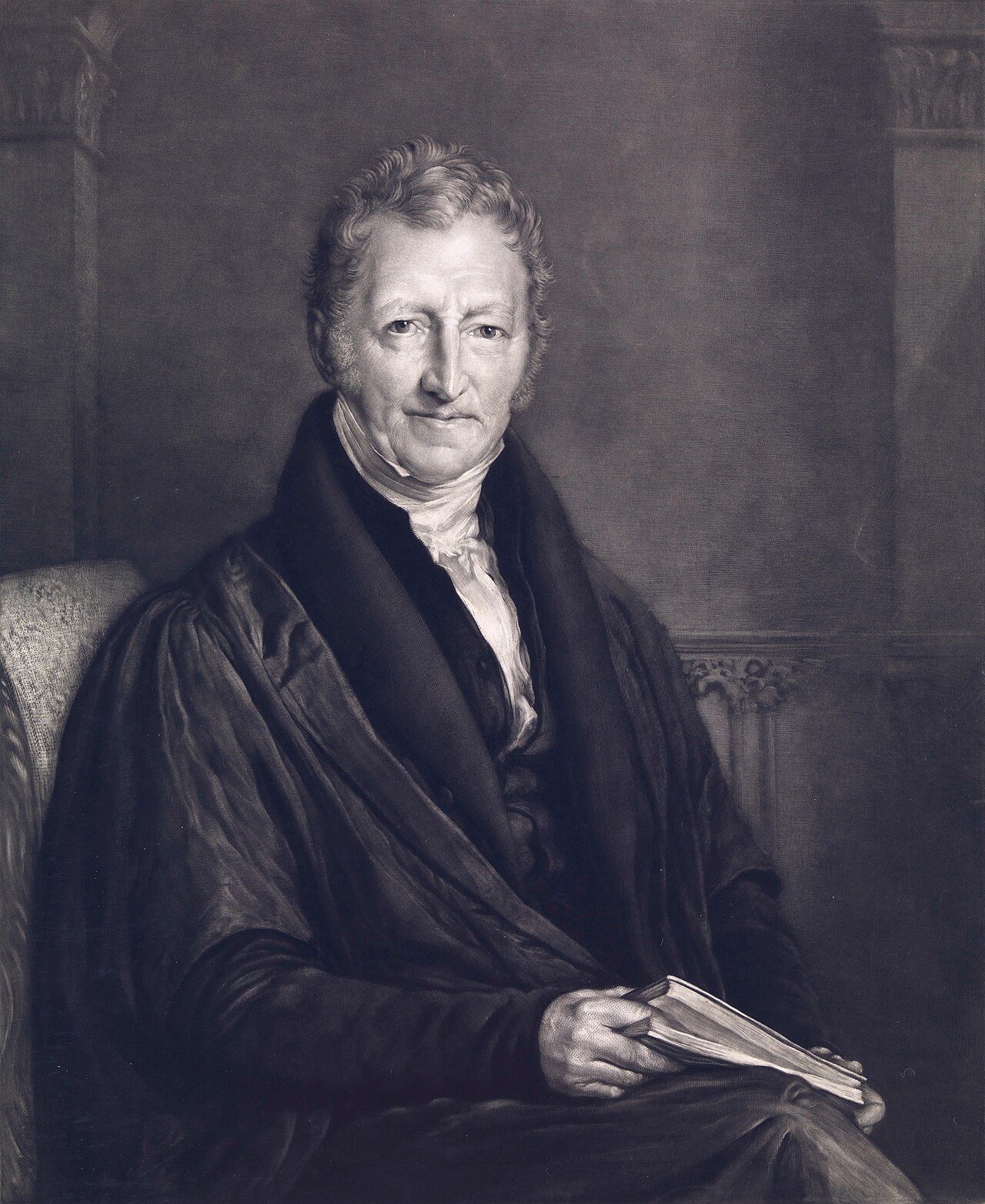
Darwin was helped by a book from 1798 by the economist Thomas Malthus. Malthus pointed out that populations can grow much faster than their food supply. Darwin read it in 1838 and saw that living things must compete to survive. Those with helpful features would win more often.
A second force is , which is change caused by pure chance. Imagine a small group of beetles where a few die by accident. The survivors may carry different alleles from the group that was lost, and that difference has nothing to do with who was better suited. Drift matters most in small populations.
The other forces are , which makes new alleles, and gene flow, which brings alleles in from other populations. Together these four forces shape every species.
How do living things come to fit their world?
A feature that helps an organism survive and reproduce in its surroundings is called an . The teeth of a horse are built for grinding tough grass. A desert plant stores water. A moth looks like tree bark. produces these features slowly. Each small improvement is kept because it helps, and many small steps add up over very long times.
Evolution works with what already exists. It cannot start from a blank page. The bones in a bat's wing, a mouse's foot and a human hand are arranged in a similar pattern. All three were inherited from a shared mammal ancestor and then reshaped for different jobs.
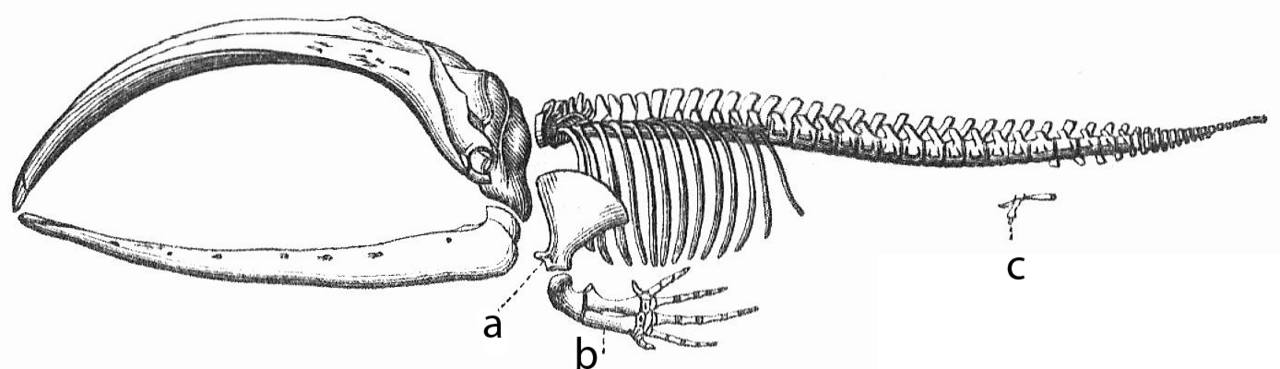
Sometimes a feature loses its job and shrinks. These left-overs are called . Whales and snakes have small hip bones, which show that their ancestors had legs. Humans have wisdom teeth and a tailbone, and cave fish may have the remains of eyes under their skin.
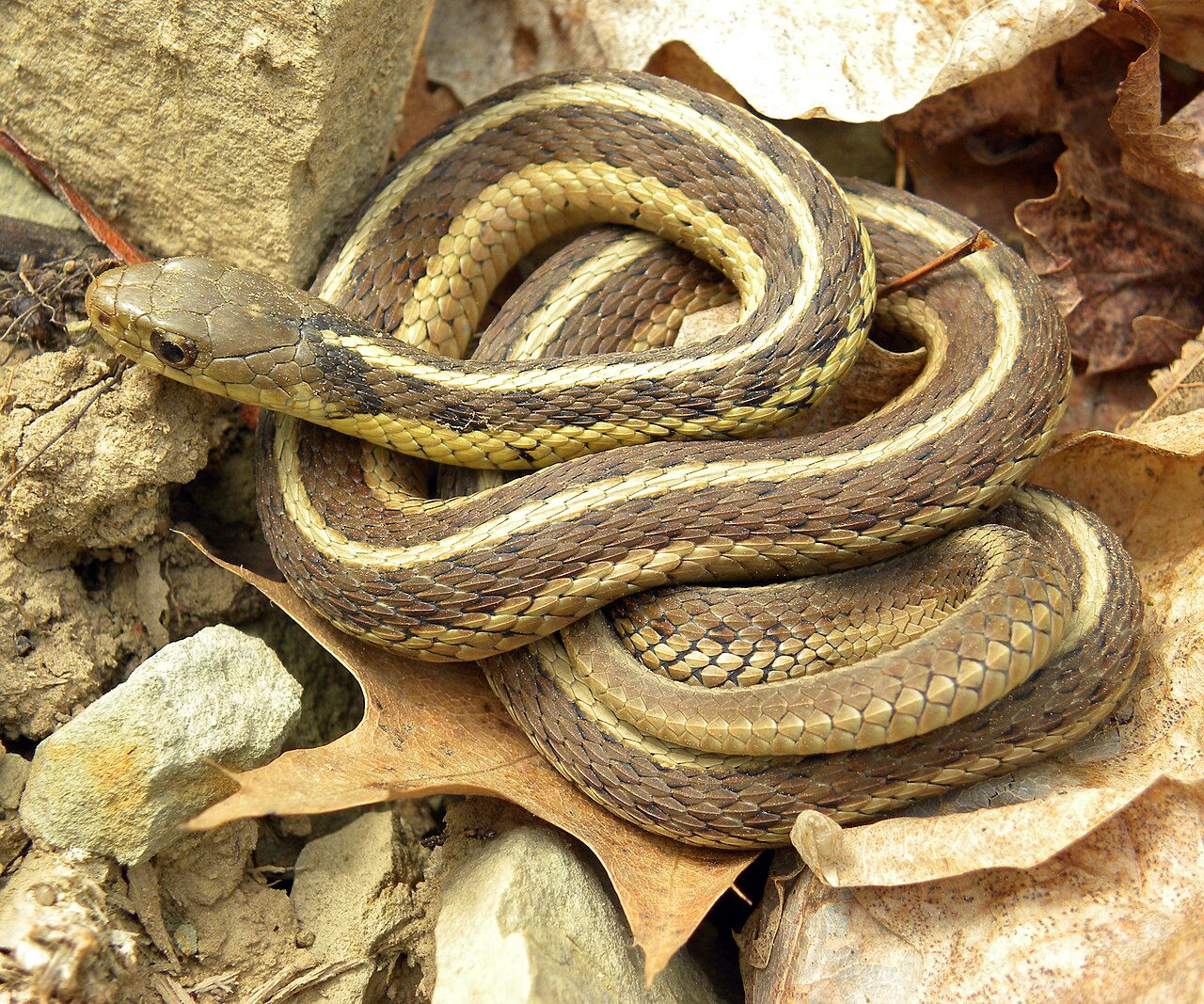
Adaptation is often a contest between species. A rough-skinned newt makes a deadly poison in its skin. The common garter snake that eats newts has evolved a strong resistance to it. Each step of poison is matched by a step of resistance. This is called coevolution. Other partnerships help both sides. Fungi on plant roots help plants to take in nutrients, and the plants feed the fungi with sugar.
What do fossils tell us?

A is the remains or the trace of a living thing preserved in rock. Fossils are the main way we learn what life was like long before people existed. Scientists can work out the age of the rock around a fossil by measuring natural radioactive atoms inside it, so fossils can be placed in order of time.
The order tells a story. The oldest traces of life are chemical marks of carbon in rocks. Then come fossils of mats of microbes. Much later come fossils of animals and plants with bodies built from many cells. All of this fits the idea that complex life grew from simple life.
Fossils also show extinct creatures that no longer exist. In the 1800s, the American fossil hunter Othniel Marsh dug up the bones of birds with teeth in North America. One of them, Hesperornis, was a bird that could not fly and hunted fish in the sea. Its teeth are a clue that birds descended from toothed reptiles.
The fossil record is not complete. Most animals die and rot away without leaving any trace, so we only see a small share of the creatures that lived. Some scientists think this also explains a pattern where species stay the same for a long time and then seem to change quickly. Fast change tends to happen in small groups in new places, and those groups rarely leave fossils behind. This idea is called punctuated equilibrium.
How do we know that living things are related?
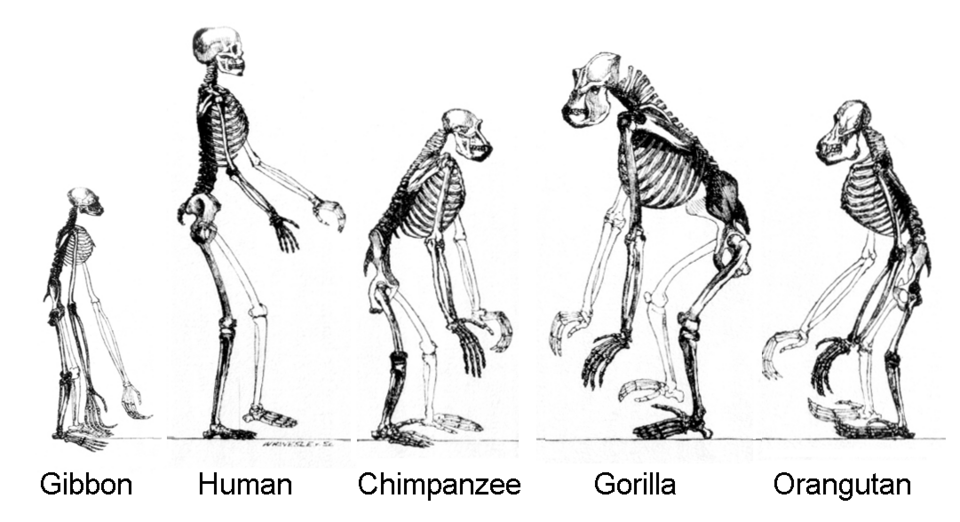
are only one line of evidence. The living world is full of clues that species share ancestors.
One clue is body shape. A gibbon, an orangutan, a gorilla, a chimpanzee and a human all have the same set of bones, with the same arrangement. They differ in size and proportion. The simplest explanation is that all five inherited the pattern from one shared ancestor.
The strongest clue today is DNA. Species that split from a common ancestor recently have DNA that is very alike. Species that split long ago are less alike. By comparing genetic sequences, scientists build family trees that show which species are closest cousins. Chimpanzees and bonobos are our closest living relatives.
We can also watch evolution happen. Bacteria reproduce in a matter of minutes or hours, so many generations pass in a short time. In a famous laboratory experiment, a bacterium called E. coli evolved the ability to feed on a chemical called citric acid after about 31,000 generations. Hospitals see the same thing when germs become resistant to drugs.
It is easy to think evolution aims at making animals bigger or cleverer. It does not. Evolution has no goal and no plan. Microscopic single-celled life has dominated Earth for most of its history. Microbes called prokaryotes still make up about a seventh of all living matter by weight, far more than all the animals put together. Complex life only looks more varied because it is easier to spot.
Where do humans fit in?
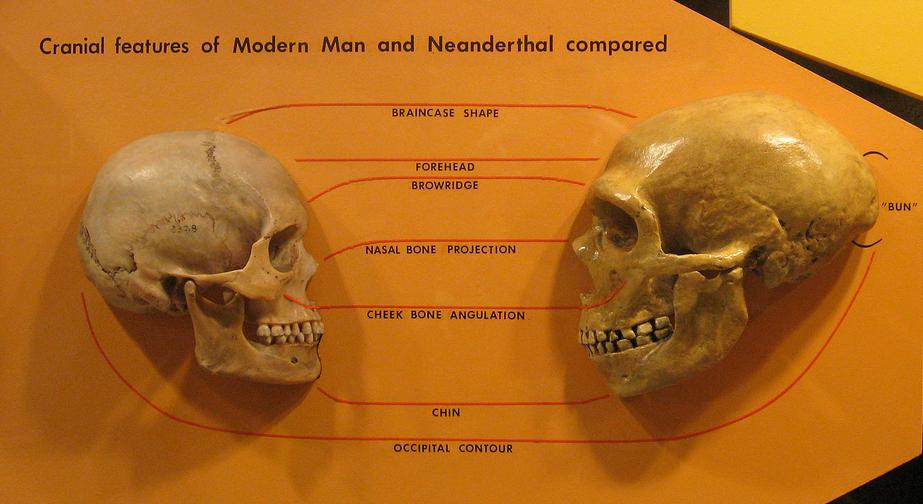
Humans are part of this story. We are apes, and our closest living relatives are the chimpanzees and bonobos. They did not turn into us. We share an ancestor that lived about 6 to 7 million years ago, and the two lines then went their own ways.
The human line began in Africa. A skeleton called Lucy, found in Ethiopia in 1974 and about 3.2 million years old, shows a small ape that walked upright on two legs. By about 2 million years ago, early members of our own genus, Homo, were making stone tools. Homo erectus then spread out of Africa into Asia and Europe. Our own species, , appeared in Africa about 300,000 years ago.
Other kinds of human lived at the same time. Neanderthals lived in Europe and western Asia, and Denisovans lived in Asia. Ancient DNA shows that our species had children with both. People whose families come from outside Africa carry about 1 to 2 per cent Neanderthal DNA. In 2022 Svante Pääbo won a Nobel Prize for reading this ancient DNA. In 1871 Darwin guessed in The Descent of Man that humans began in Africa, and and DNA have since supported him.
How does one species become two?
A species is a group of living things that can breed with each other and have young that can breed in turn. happens when one species splits into two or more, which can no longer mix. It needs a barrier that stops flowing between the groups.
The usual barrier is geography. Imagine a group of animals split in two when a river changes course, or when some of them are carried to an island. Each group meets different food, weather and enemies. Selection and chance then change the two groups in different ways. After many generations, they may be so different that they will not breed with each other even if they meet. This is called allopatric speciation. It is the most common route in animals.
Barriers do not have to be walls of water or rock. A grass that grows on poisoned soil near a mine can evolve to resist the metals. Its flowers open at a different time from those of its neighbours on clean soil. That stops the two kinds swapping pollen, so they drift apart even though they grow side by side. A split with no barrier at all is possible, but it is rare.
New species can also arise when two related species breed together. Animal hybrids are usually sterile. A mule, the young of a horse and a donkey, cannot have foals. Plants are more flexible, because they can double their sets of chromosomes. About 20,000 years ago, two kinds of cress plant crossed to make a new species called Arabidopsis suecica. Scientists have since repeated this in the laboratory.
Why do species die out?
is the disappearance of a whole species. It is not a rare event. New species appear and old ones vanish all the time, and nearly all the species that have ever lived on Earth are now extinct. Species die out when the world around them changes faster than they can adapt. They may also meet a new rival, a new disease or a lost food supply that they cannot cope with.
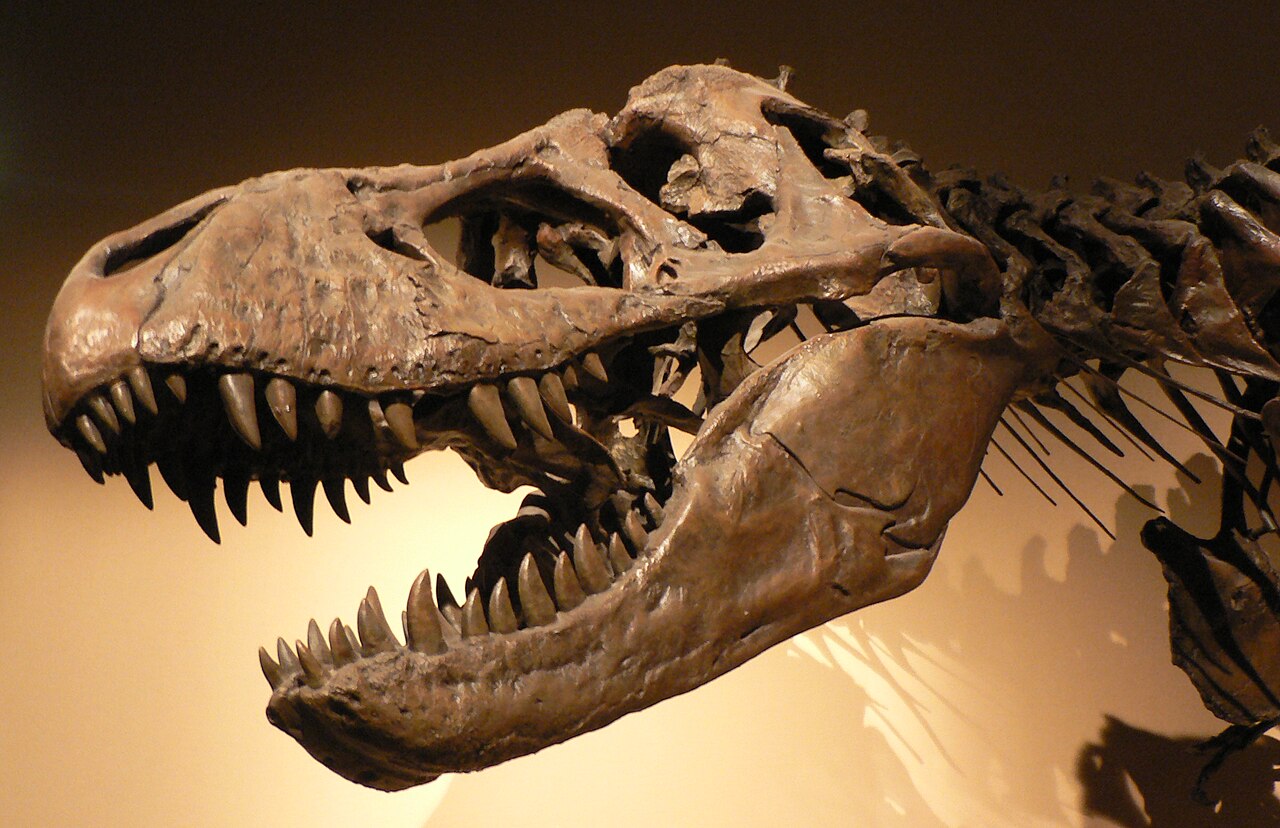
Most extinctions happen one at a time. A few times in history, huge numbers of species have vanished together. These are called mass extinctions. The best known ended the Cretaceous period about 66 million years ago, when a huge asteroid struck Earth and the non-bird dinosaurs died out. Birds are living dinosaurs, so that line carried on. An even bigger disaster came earlier, at the end of the Permian period about 252 million years ago. More than 80 per cent of all sea species died out.
Scientists now think another mass extinction is under way. It is linked to the spread of people around the world over the past few thousand years, through hunting, farming, cutting down forests and changing the climate. Scientists estimate that species are now vanishing 100 to 1,000 times faster than the usual background rate.
Extinction also opens up room for others. When the dinosaurs went, mammals took their place in many homes and habitats, and they spread into new forms, from bats to whales.
Explore Next
Your audio story keeps playing while you look around.
Words to Know
- adaptation
- A feature that helps a living thing survive and reproduce in its surroundings.
- allele
- One of the different versions of the same gene.
- extinction
- The disappearance of a whole species.
- fossil
- The remains or traces of a living thing preserved in rock.
- gene
- A stretch of DNA that carries the instructions for one job in the body.
- genetic drift
- A change in how common a gene version is that happens by chance alone.
- Homo sapiens
- Our own species, which appeared in Africa about 300,000 years ago.
- mutation
- A change in the DNA of a cell.
- natural selection
- The process in which helpful inherited features become more common because their owners leave more young.
- population
- A group of the same kind of living thing living in one place.
- speciation
- The splitting of one species into two or more.
- vestigial structure
- A body part that has lost most or all of its original job.