Natural selection
How nature sorts the living from the lost, one generation at a time.
Natural selection is the way nature sorts living things. Some individuals have features that help them survive and have young. If they pass those features on, the features spread through the population. Nobody decides which features win. The surroundings do the sorting, and the result can look like clever design. Charles Darwin and Alfred Russel Wallace announced the idea together in 1858. Darwin's 1859 book On the Origin of Species made it famous. It is the main way scientists explain why living things fit their homes so well. It is at work today, in moths, in trees and in the germs that make us ill.
What is natural selection?
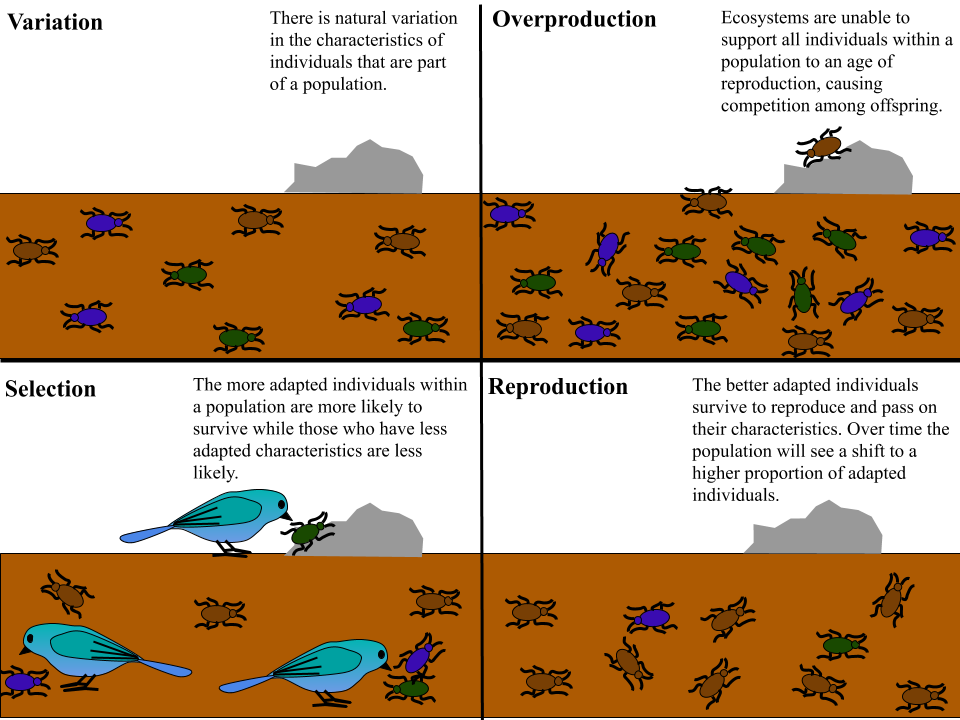
works whenever three things are true. First, the members of a population differ from one another. Second, some of those differences help an animal or plant survive and have young. Third, the helpful differences are inherited, so parents pass them to their young.
When all three are true, change must follow. Individuals with the helpful features leave more young. Those young inherit the features, and the pattern repeats. After many generations, the helpful feature is common. A population of rabbits can become faster over time. The fastest rabbits escape foxes and breed more often than the slow ones.
The word natural matters. Farmers have picked the best cows, wheat and pigeons for thousands of years. That is , where a person decides which animals breed. In natural selection nobody decides. The environment does the choosing, through food, weather, enemies and rivals. The word selection can make this sound like a plan, but there is no purpose or aim. Features that happen to help are kept. Features that happen to hurt are lost.
Natural selection is a main cause of evolution, which is the change in a population's inherited features over generations. It best explains , the way living things fit their surroundings. Genes can also change by chance, but natural selection is the main reason features become useful.
What did people think before Darwin?
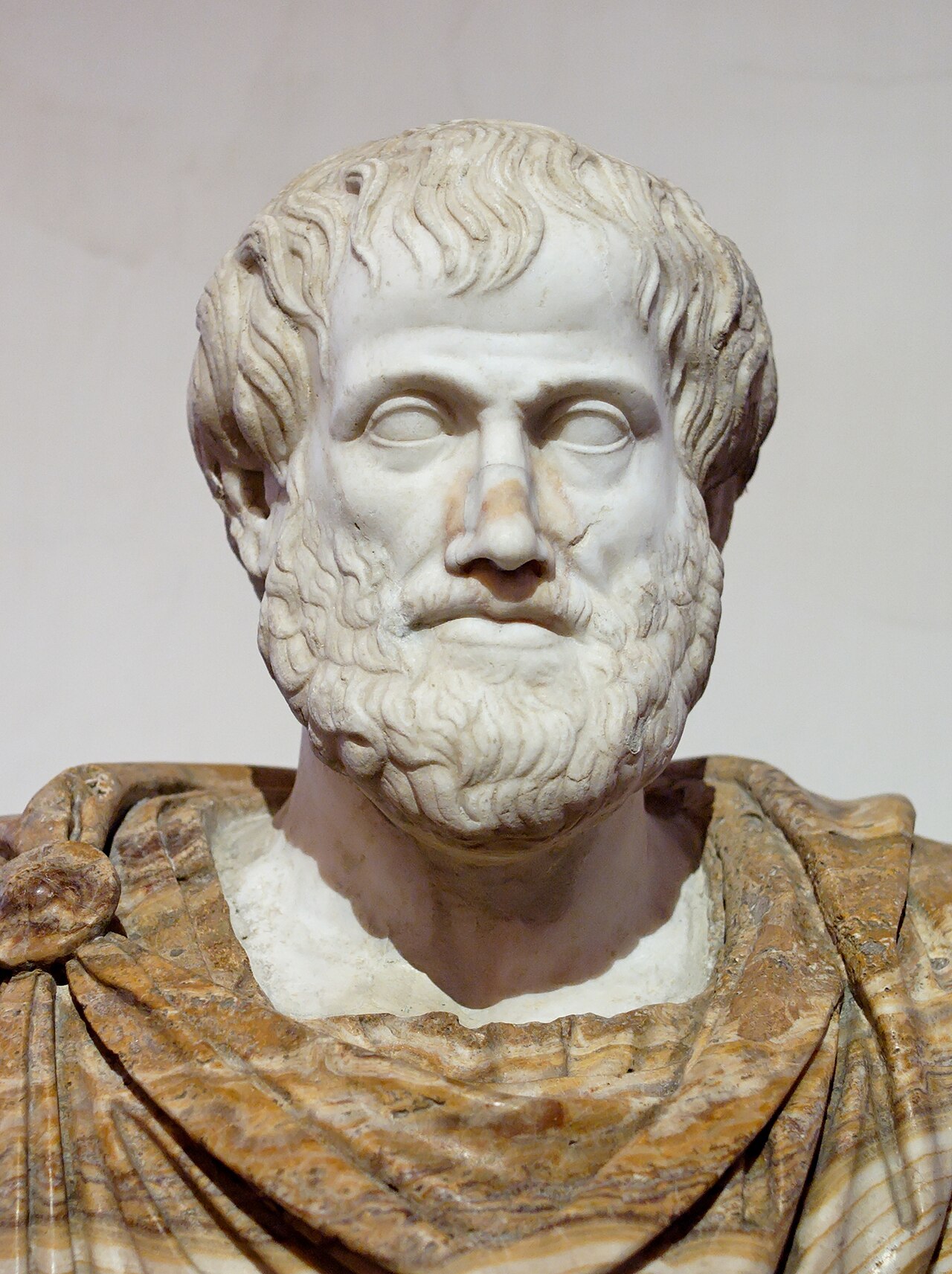
The idea did not appear from nowhere. Some ancient Greek thinkers, including Empedocles, said that nature made a huge variety of creatures at random. Only those that could feed themselves and have young carried on. The Roman poet Lucretius wrote about a similar idea. Aristotle disagreed. He believed that living things have a purpose built into their form. He pointed to how closely young animals resemble their parents.
The Arab writer Al-Jahiz described a struggle for existence in the 9th century. Around the year 1500, Leonardo da Vinci collected fossils. Some writers have credited him with the idea that the shapes of animals are not fixed for ever, but the evidence for this is thin. In the 1700s the French thinker Pierre Louis Maupertuis and Darwin's own grandfather, Erasmus Darwin, explored similar ideas.
For a long time most people in Europe thought each kind of animal was a fixed type. Differences between individuals did not seem to matter. Geology changed this. Scientists showed that slow forces, such as rain, rivers and frost, could carve valleys over huge stretches of time. If tiny changes could add up to change a landscape, then tiny changes between parents and young might add up to new species.
In the early 1800s, Jean-Baptiste Lamarck proposed that features gained in a lifetime, like a stretched neck, could be passed to young. That turned out to be wrong. But it made people take change in species seriously.
How did Darwin work it out?
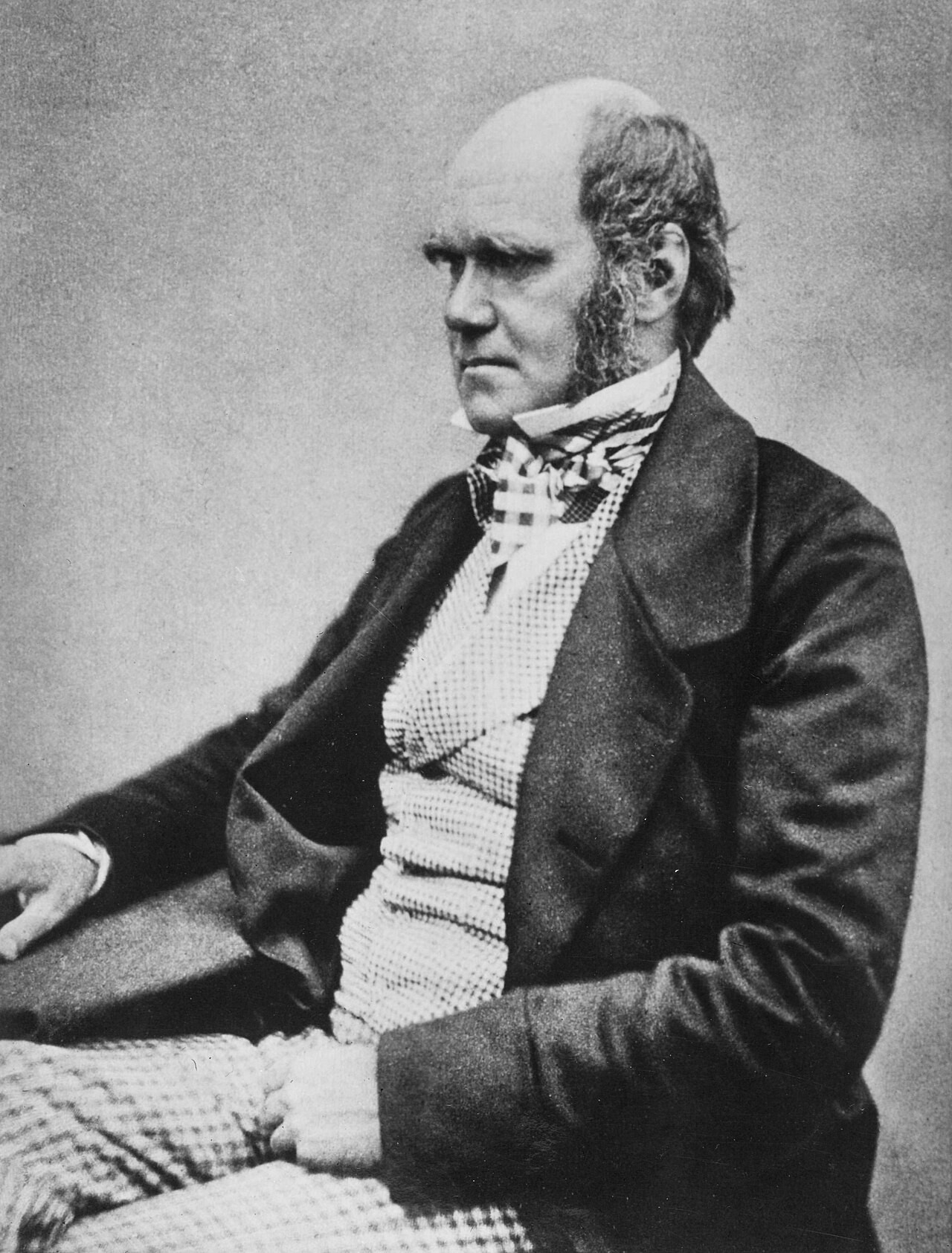
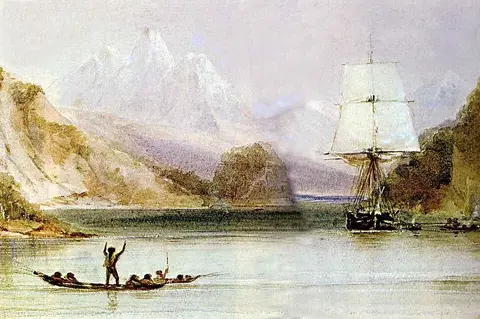
Charles Darwin was a young naturalist when he sailed on HMS Beagle in 1831. The voyage lasted until 1836. He collected animals, plants and fossils around the world and noticed how living things changed from place to place.
Back in England, he worked for years on the puzzle. A key clue came in 1838, when he read An Essay on the Principle of Population by Thomas Malthus, published in 1798. Malthus argued that populations grow much faster than food supplies, so living things must struggle to survive. Darwin saw that in such a struggle, helpful would be kept and harmful ones lost. Over time, that would produce new species.
He also borrowed an idea from farming. Breeders pick the animals with the features they want and let only those breed. Darwin called this . Nature, he reasoned, does something similar, without a breeder.
Darwin was careful. He spent about twenty years gathering evidence before publishing. Then, in 1858, he received an essay from another naturalist, Alfred Russel Wallace, who had reached the same idea on his own. Friends arranged for both men's work to be read to the Linnean Society of London in July 1858. Darwin published his full case in On the Origin of Species in 1859.
He admitted that selection was probably not the only cause of change. He wrote that it was the main but not the only means.
Where do the differences come from, and how are they passed on?
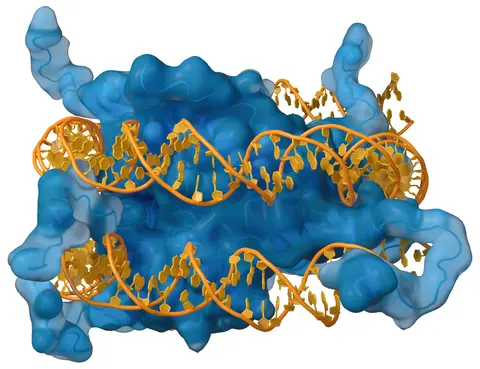
can only work with differences that already exist. In any population, individuals vary in size, speed, colour, behaviour and in countless other ways. Some of this variety comes from the environment. Much of it comes from genes, the instructions in DNA that are copied from parent to young.
Gene differences begin with , which are changes in DNA. Most mutations are small, and large effects are rare. A majority of mutations in humans are slightly harmful. A few are helpful. Some changes happen in toolkit genes that switch other genes on and off. These can have big effects, and most of them kill the embryo. Rarely, one helps, and selection then keeps it.
Darwin knew none of this. In his day nobody understood genetics. The Moravian monk Gregor Mendel, the father of modern genetics, lived at the same time. His work lay unread until it was rediscovered in 1900. Scientists then joined Darwin's idea to Mendel's rules of inheritance. The result is called the modern synthesis. By the middle of the 1900s most scientists accepted natural selection.
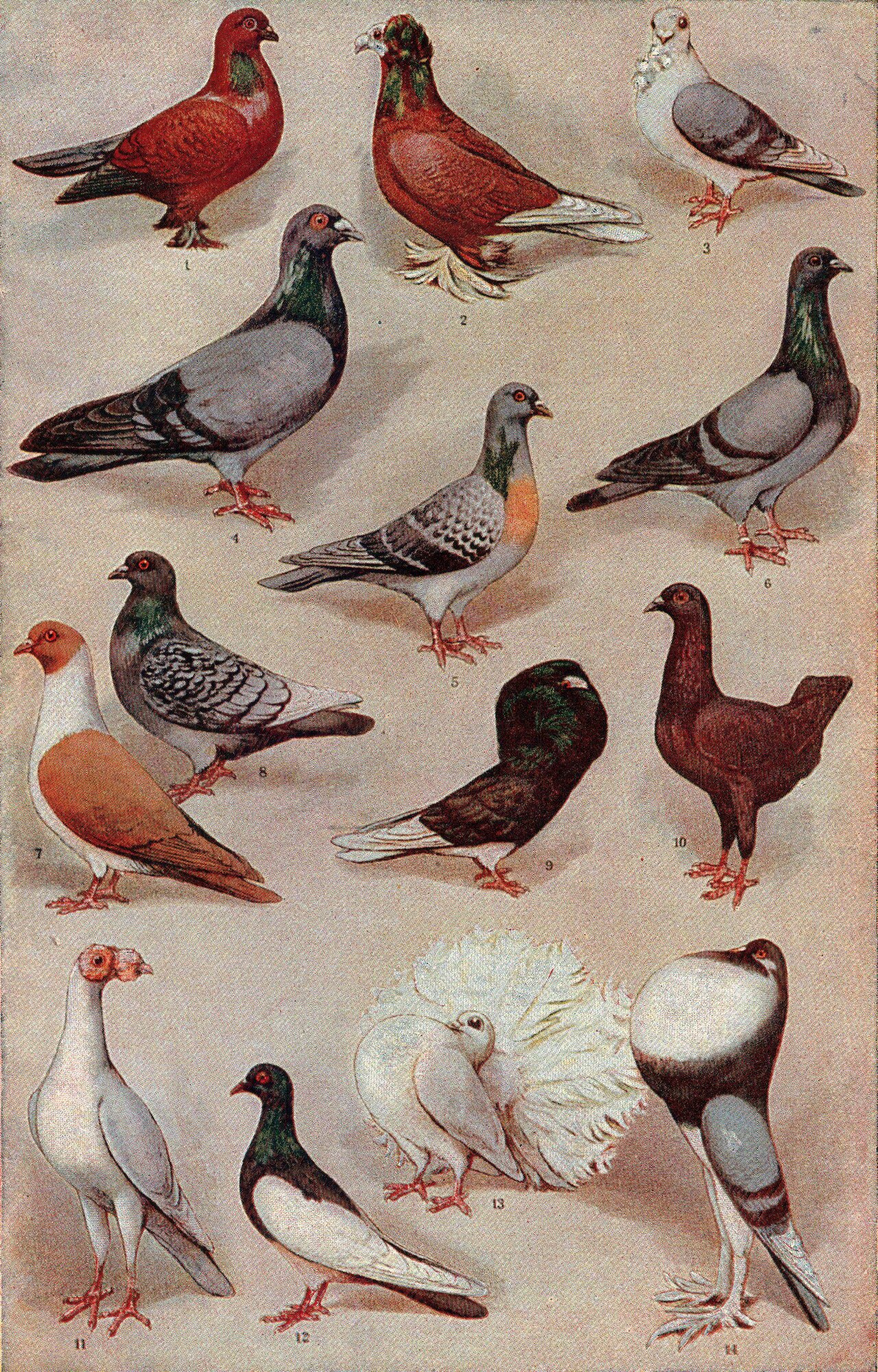
Darwin did have one good model. He kept and bred fancy pigeons, which come in dozens of shapes and colours, from a single wild rock dove. Breeders had made all of them by picking which birds to breed. That showed how far selection can shift a species over a few generations.
What does survival of the fittest really mean?
The English thinker Herbert Spencer came up with the phrase survival of the fittest after reading Darwin. Darwin liked it enough to add it to later editions of his book. It is catchy, but it can mislead.
In biology, is not about strength, speed or size. It is about how many of an organism's genes reach later generations. Take an animal that lives half as long as its neighbours. If it raises twice as many young to adulthood, it has the higher fitness. An animal that lives a long life but leaves no young has none.
Fitness depends on the surroundings. A feature that helps in one place can hurt in another. If the climate or the food supply changes, a harmless trait may start to help. A helpful one may turn harmful. Because chance plays a part, scientists work out fitness as an average across many individuals.
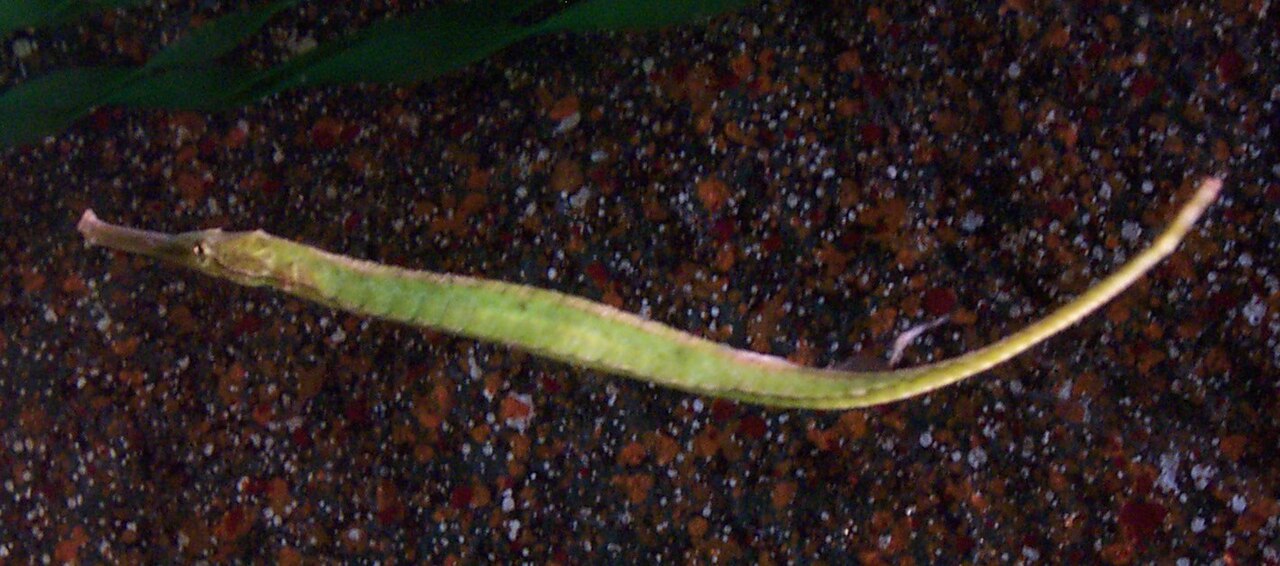
Selection can push a feature in different ways. In directional selection, the average moves one way, such as animals becoming taller. In stabilising selection, extremes are removed and most animals end up close to the average. In disruptive selection, both extremes do well and the middle does badly. Camouflage is a classic example. A fish like the alligator pipefish, which looks like weed, is hard for predators to find. Fish that blend in survive longer, so camouflage spreads.
Why do peacocks have such huge tails?
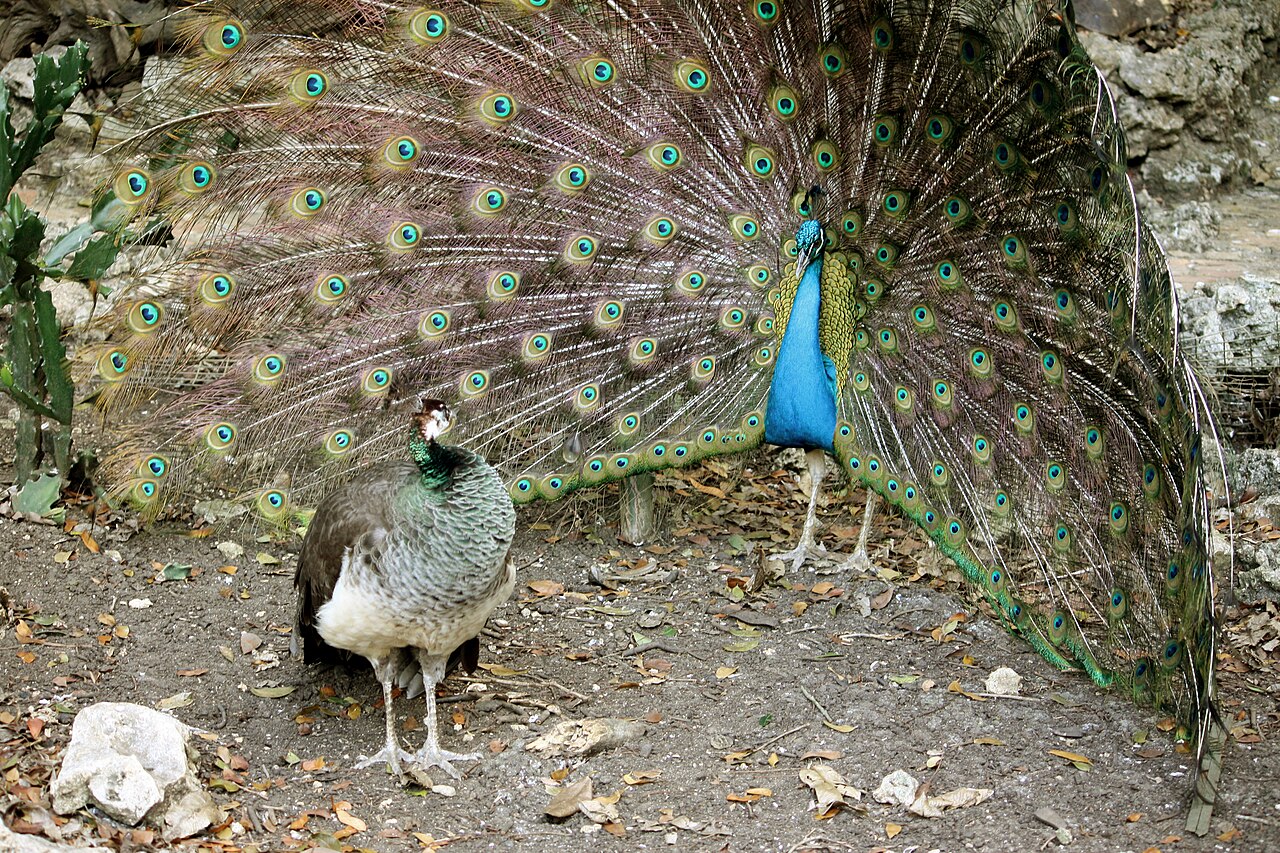
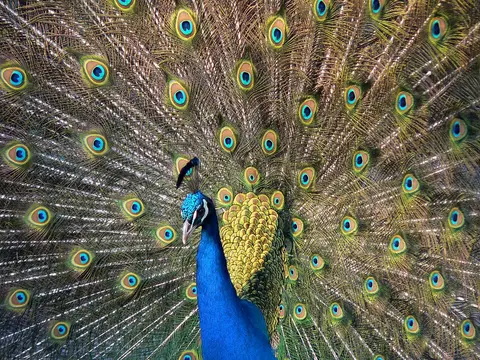
A peacock's tail looks like a problem for . It is heavy, bright and costly to grow. It makes a peacock easier for predators to see and harder for him to escape. So why has it survived?
The answer is a special case of natural selection called . Survival is only half of the story. An animal must also find a mate. Features that help an animal win a mate can spread even if they make life harder. Darwin used the peacock as his example of this idea.
There are two main forms. In one, members of the same sex compete. Male stags fight with their antlers, and the winners mate more often. In the other, one sex chooses. Peahens pick males with the best tails, so over generations tails became longer and brighter. A showy tail is hard to fake, because only a healthy bird can afford to grow and carry one. The advantage of getting more mates outweighs the risk of getting eaten.
Sometimes this runs away. If females prefer a trait and males with it have sons that also carry it, then the trait grows more and more extreme. This is called a Fisherian runaway.
In a few species the roles are reversed. Among pipefish and seahorses, males carry the young, and in some species it is the males that choose.
Can we watch natural selection happen?
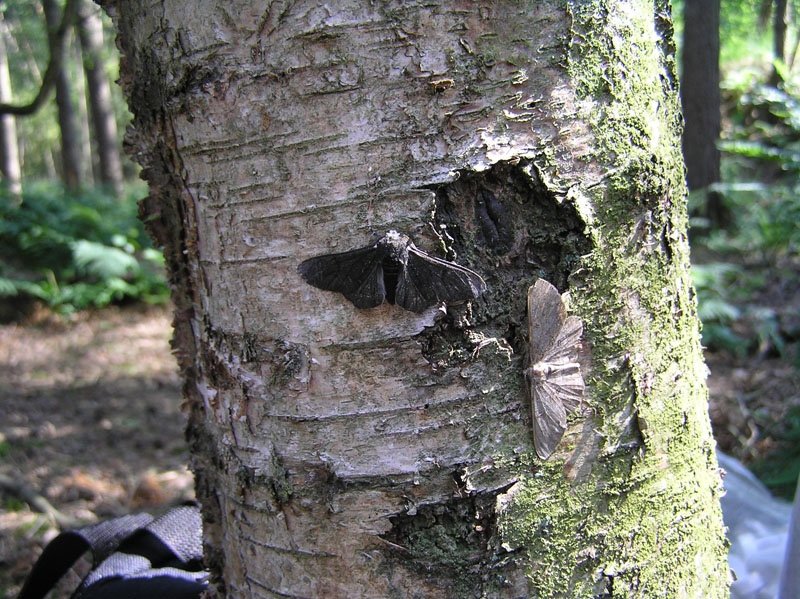
Yes, and some of the best examples are in Britain. The peppered moth comes in pale and dark forms. Before the Industrial Revolution, most were pale, which hid them against lichen on tree bark. As factories blackened tree trunks with soot, dark moths became harder for birds to spot. The dark form survived better and left more young. Within about fifty years of the first dark moth being caught, nearly all the moths in industrial Manchester were dark. After the Clean Air Act of 1956 cut pollution, pale moths became common again.
Another case is happening in British woods now. A fungus is killing ash trees, a disease called ash dieback. Some trees resist it better than others, thanks to many genes working together. In a wood in Surrey, scientists found that the young ash trees are, on average, more resistant than their parents. is already making the trees tougher.
The fastest examples involve germs. Since the discovery of penicillin in 1928, antibiotics have saved millions of lives. But when bacteria are exposed to a drug, those that happen to resist it survive and multiply. Over time, resistant strains take over. A bacterium called MRSA now resists many antibiotics. Doctors invent new drugs, and bacteria evolve new defences. This is an evolutionary . The same thing happens when insects become resistant to pesticides.
Can natural selection make new species?
Over very long times, yes. Imagine a population split into two groups, perhaps by a mountain range, a river or a stretch of sea. Each group faces different conditions, so selection pushes the groups in different directions. also arise separately in each group. After many generations the two groups may be so different that they can no longer breed together. They have become separate species.
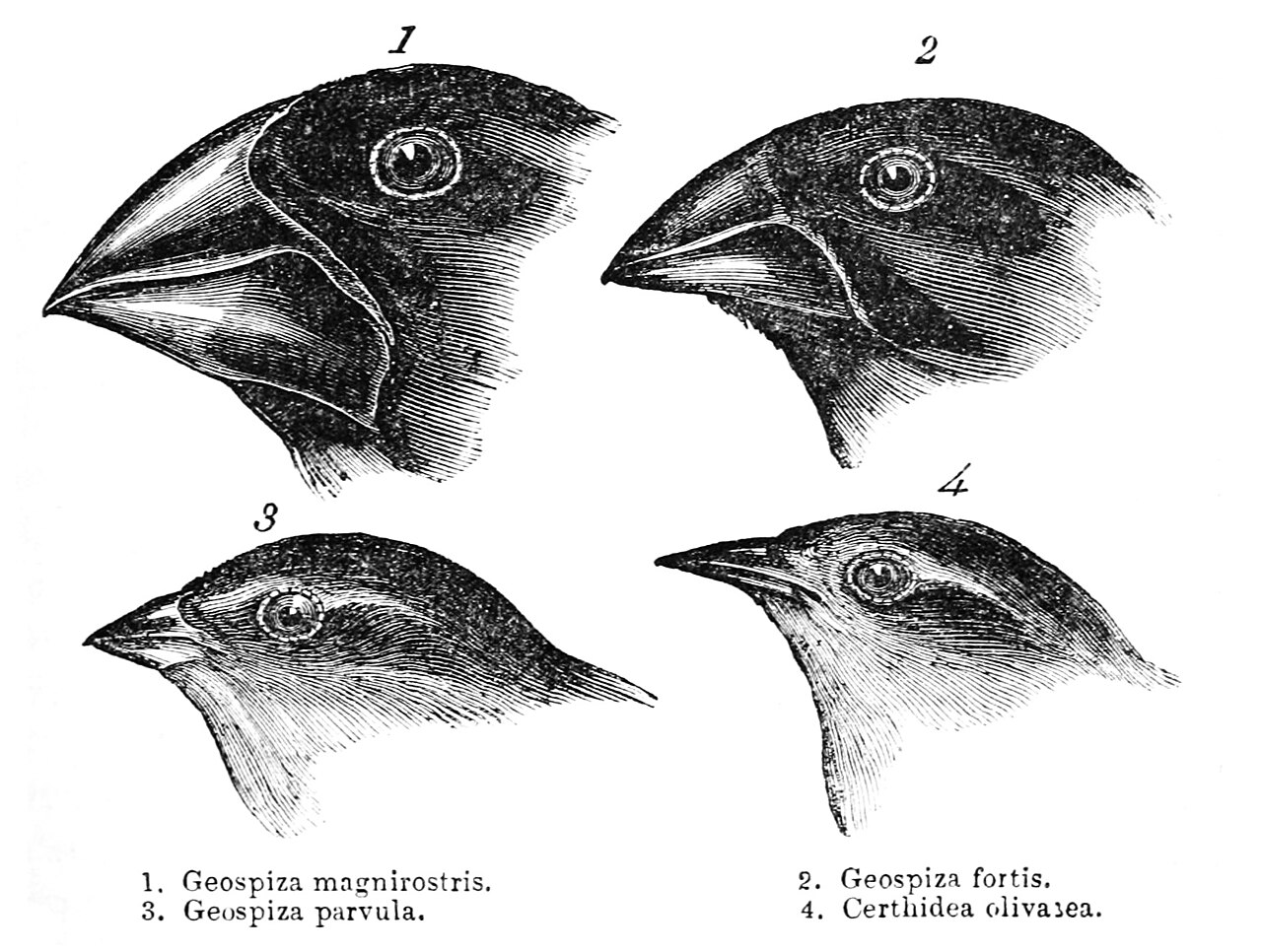
Darwin saw clues to this on his travels. On the Galapagos Islands, small birds now called Darwin's finches have beaks of many shapes. Some suit eating seeds, some insects and some cactus. The artist John Gould drew the beaks. They became a famous example of one ancestor giving rise to many species, each adapted to different food.
There is a problem. A species is defined by interbreeding. If the two groups meet and mix, the differences between them can be wiped out. can help here. If hybrids are less fit, animals that mate within their own group leave more young. Scientists call this reinforcement. Over many generations, differences in looks, songs or timing can grow until mixed matings stop altogether.
When the groups are far apart, the problem never arises. with a physical barrier is the most common kind in animals. Wallace studied how animals are spread across the world. His work helped to show how islands and barriers shape new species.
How has the idea changed the world?
is a cornerstone of modern biology. Doctors use it to understand how diseases and drug resistance spread. Farmers use it to think about pests and crops. Scientists studying DNA use it to read the past.
The idea also reached beyond biology. Computer scientists borrowed it to build genetic algorithms. These programs copy, change and test many possible answers, then keep the best, much as nature does. John Henry Holland pioneered the method in the 1970s. Engineers use it to design things from antennas to timetables.
In the 1800s and 1900s the idea also caused arguments. Many people disliked that evolution has no goal. They disliked that it places humans on the same tree of life as other animals. Others twisted it. Herbert Spencer, Francis Galton and others claimed that selection always means progress. They used that claim to defend colonial rule and eugenics. Eugenics is the false idea of improving humans by controlling who may have children. Modern biologists reject these ideas. Natural selection says nothing about which people or groups are better.
Science has also moved on since Darwin. Genetics, molecular biology and the study of how embryos develop have added detail. They have backed the central idea of selection acting on inherited differences.
Explore Next
Your audio story keeps playing while you look around.
Words to Know
- adaptation
- A feature that helps a living thing survive and reproduce where it lives.
- arms race
- A cycle in which each side keeps evolving new ways to beat the other.
- artificial selection
- Breeding in which people choose which plants or animals have young.
- fitness
- How many of an organism's genes reach later generations.
- heritable
- Able to be passed from parent to young through genes.
- mutation
- A change in an organism's DNA.
- natural selection
- The process in which helpful inherited features become more common because their owners leave more young.
- sexual selection
- Selection for features that help an animal win a mate.
- speciation
- The process in which one species splits into two or more.
- variation
- The differences between members of the same kind of living thing.