Yeast
A speck of life that makes bread rise and helps scientists study us.
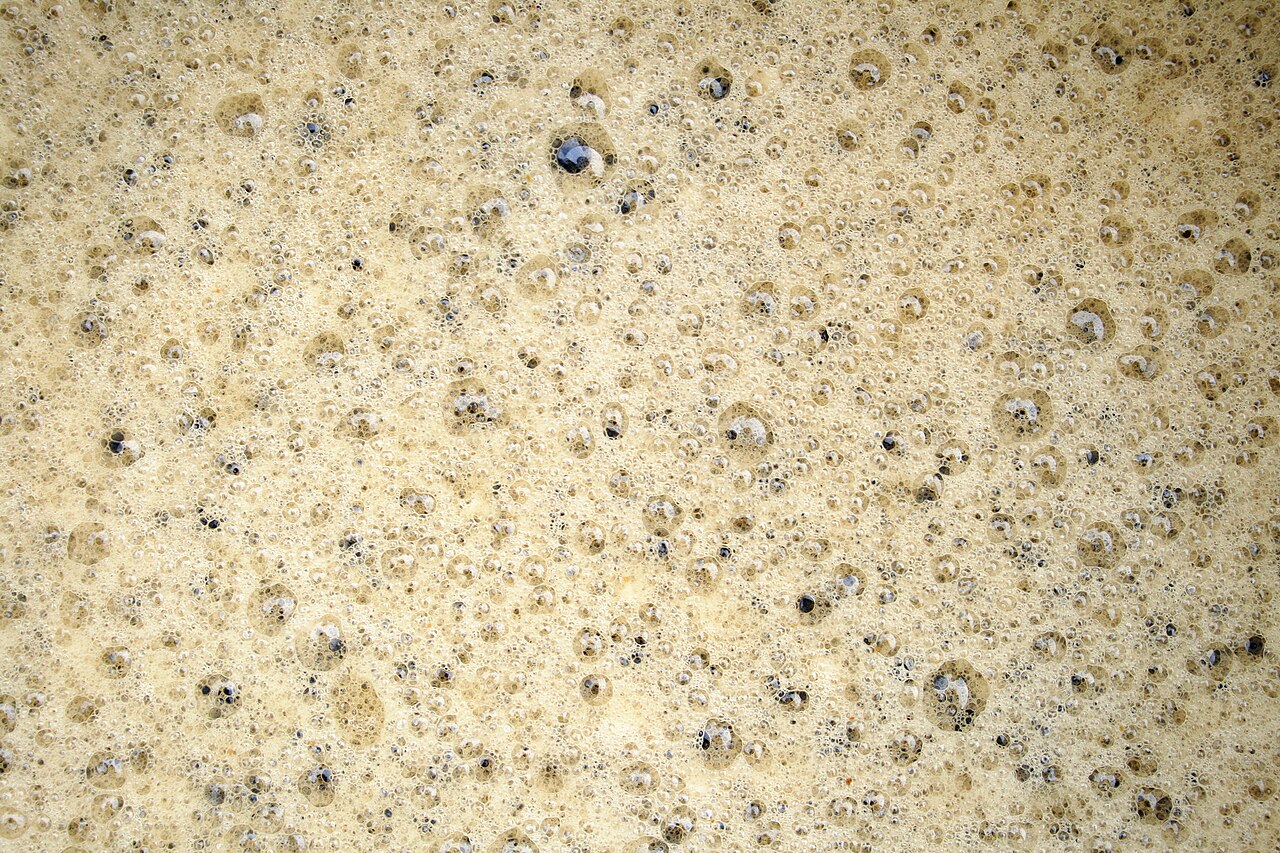
Yeasts are single-celled fungi, so small that a row of about 300 would measure a millimetre. Yet these tiny cells have shaped human life for thousands of years. When yeast feeds on sugar, it gives off carbon dioxide gas and alcohol. The gas puffs up bread dough, and the alcohol is found in drinks such as beer and wine. People used yeast long before anyone knew it was alive. Today it also helps scientists learn how human cells work, and it makes medicines such as insulin. At least 1,500 species are known, and one of them, Saccharomyces cerevisiae, is among the best-studied living things on Earth.
What is yeast?
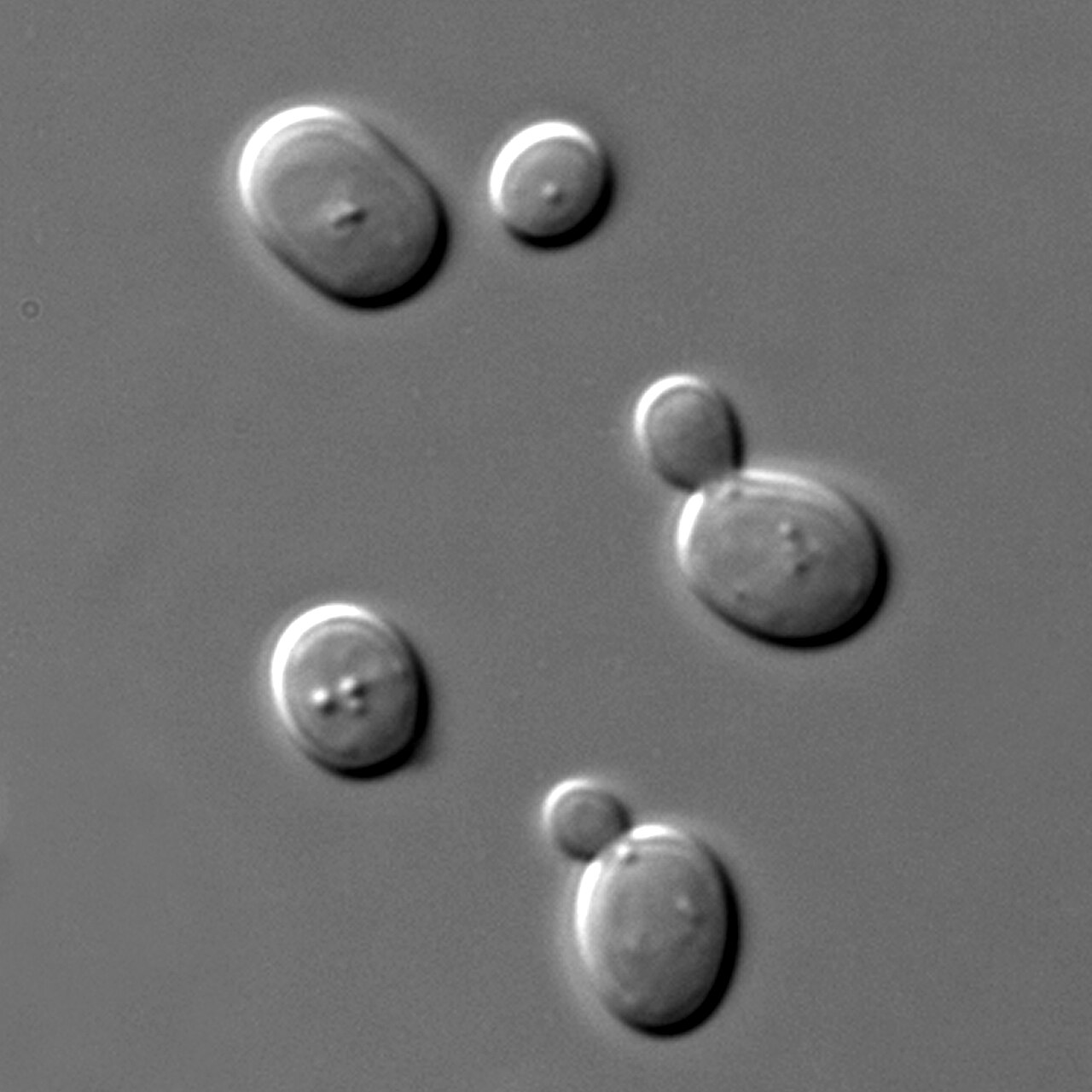
Yeast is a fungus, but it does not look like a mushroom. Each yeast is a single cell. Typical cells measure 3 to 4 micrometres across, and a micrometre is one thousandth of a millimetre. Some species reach 40 micrometres. Moulds are different. They grow long threads called . A few fungi can take either form depending on the temperature or other conditions, and these are called dimorphic fungi.
Yeasts are not one tidy family. Scientists place them in two separate groups of fungi, the Ascomycota and the Basidiomycota. The yeasts, sometimes called true yeasts, are in the order Saccharomycetales. People often use the word yeast to mean Saccharomyces cerevisiae, the species used in baking and brewing. At least 1,500 species are known, which is only about 1% of all described fungi.
Yeasts are everywhere that sugar is. They live on the skins of grapes, apples and peaches, in the sap of plants, and in the nectar of flowers. They are found in soil, in the guts of mammals and insects, and even in the deep sea. Some live between people's toes as part of the normal skin. In India, a study of bees and flowers found 45 yeast species in nectar and in honey bee stomachs. Compared with other microbes, though, the roles of wild yeasts are still little known.
How long have people used yeast?
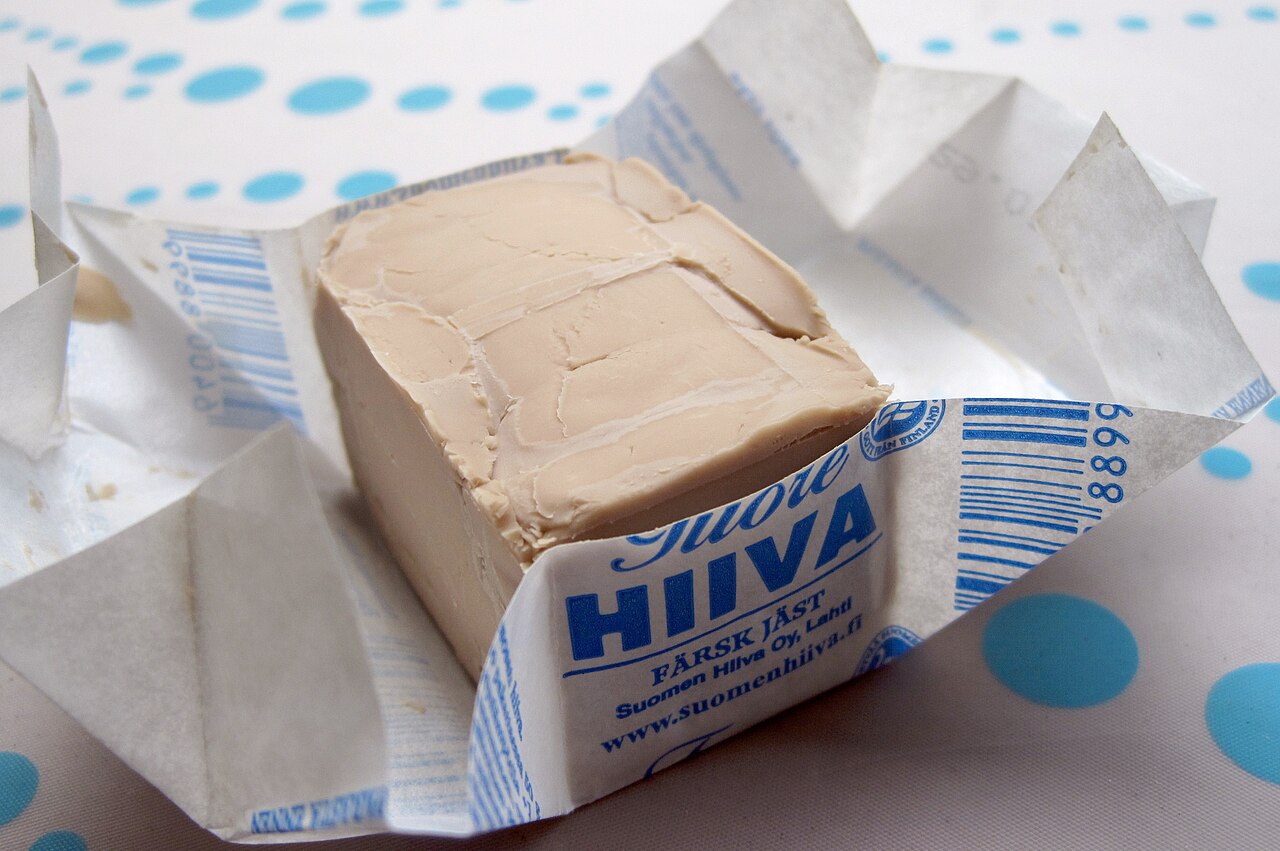
The word yeast comes from Old English and from an even older root meaning boil, foam or bubble. That is a good description of what it does. Yeast was probably one of the first living things that humans put to work. Archaeologists in Egypt found grinding stones and baking rooms for bread raised with yeast. Drawings show bakeries and breweries about 4,000 years old.
Evidence goes deeper still. Clay vessels from several sites in Israel, dating to about 5,000, 3,000 and 2,500 years ago, probably once held beer and mead. Scientists found yeast colonies in them that had survived all that time. This gave the first direct biological evidence of yeast use in early cultures.
Yeast became an industry only in recent centuries. The Dutch sold Saccharomyces cerevisiae for bread-making from 1780. Around 1800, German makers produced it as a cream. A method for pressing out the liquid to make solid blocks arrived in 1825, and a filter press improved production in 1867. At the Centennial Exposition in Philadelphia in 1876, Charles Fleischmann showed his commercial yeast and served the bread it made. Before that, bakers in the United States relied mostly on wild yeast in the air.
The mechanical refrigerator, patented in Europe in the 1850s, freed brewers and winemakers from the seasons. A Montreal brewer called John Molson could only brew from September to May.
Who found out that yeast is alive?

Nobody could see yeast until the microscope arrived. In 1680 the Dutch naturalist Anton van Leeuwenhoek looked at it through a microscope. He saw tiny globes, but he did not think they were alive. Other researchers were unsure whether yeasts were algae or fungi. In 1837 the German scientist Theodor Schwann decided that they were fungi.
The big question was how a liquid turned into alcohol. Many scientists thought that a chemical process did it. In 1857 the French microbiologist Louis Pasteur showed otherwise. In a paper on alcoholic , he proved that living yeast does the work, not a chemical catalyst.
Pasteur also noticed something surprising. When he bubbled oxygen into a broth of yeast, the cells grew more but fermentation slowed down. This became known as the Pasteur effect. It shows that yeast has two ways to get energy, one that uses oxygen and one that does not.
These discoveries changed more than baking and brewing. They helped build the idea that microbes are living things that cause chemical change. Pasteur's flasks and experiments on yeast and grape juice are still shown in museums.
How does yeast turn sugar into gas and alcohol?

Yeast cannot make food from sunlight, as plants do. Instead, it takes energy from sugars. It uses glucose and fructose, which are simple sugars, and also sucrose and maltose, which are made of two simple sugars joined together. When a yeast has plenty of oxygen, it can break sugar down fully, the way we do. When oxygen is scarce, it ferments. turns sugar into carbon dioxide gas and an alcohol called .
Yeasts differ in how they handle oxygen. Some need it to live, and others can live without it. Unlike some bacteria, no known yeast species grows only without oxygen. Most yeasts prefer a neutral or slightly acid setting. They also have favourite temperatures. One yeast, Leucosporidium frigidum, grows between -2 and 20 degrees Celsius. Another, Candida slooffi, grows between 28 and 45 degrees.
Fermentation is useful because both products matter. The carbon dioxide forms bubbles that lift or make drinks fizz. The ethanol is the alcohol in beer, wine and other drinks. People can also use it as a fuel.
You can see yeast working in a mixture of water and sugar. Active yeast makes it foam and bubble as it ferments the sugar. Bakers use the same idea to test whether their yeast is still alive.
How does yeast make bread rise?
To make bread, a baker mixes flour, salt and warm water or milk with yeast. The is kneaded until smooth, and then it is left to rise, sometimes until it has doubled in size. While it rests, the yeast ferments sugars from the flour. It gives off carbon dioxide, which gets trapped in the stretchy dough and makes thousands of tiny bubbles. Some doughs are knocked back after the first rise and left to rise again before baking. A longer rise gives a better flavour, but if the dough is left too long, the yeast can run out of strength.
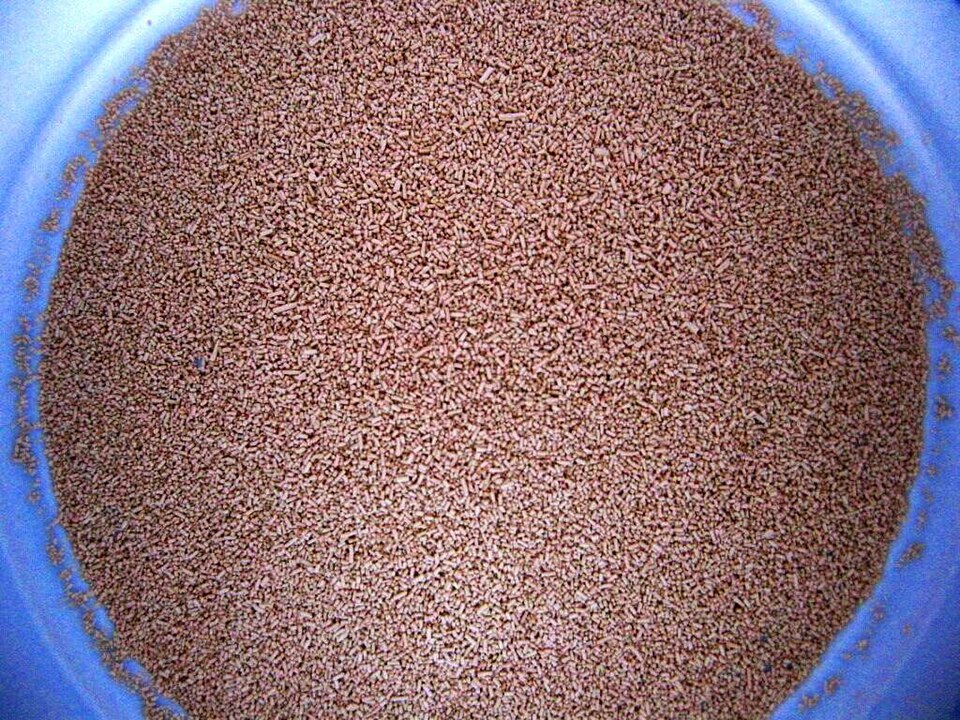
Bakers buy yeast in different forms. Fresh yeast comes in a pressed block, which spoils quickly. Dried yeast is sold as granules. During World War II, Fleischmann's made a granulated active dry yeast that did not need a fridge, lasted longer and rose twice as fast.
A baker can test yeast by adding it to a little water and sugar. If it foams, it is alive. Some recipes call this proofing the yeast. A sourdough starter is different. It is a mix of flour and water that wild yeast and friendly bacteria have taken over. Baking and brewing yeasts are the same species. The strains differ. Baker's yeasts are bred to be fast and strong, so that dough rises in the shortest time.
What drinks and foods does yeast make?
Yeast is the oldest and largest use of biotechnology. Beer, wine, mead and spirits such as whiskey and rum all use yeast at some stage. In brewing, ale yeasts form a foam at the top of the liquid and are called top-cropping. Lager yeasts work lower down and at colder temperatures. Brewing strains tend to work more slowly than baking strains, make fewer off-flavours and cope with more alcohol.
In winemaking, yeast turns the sugars in grape juice into . Yeast is already on grape skins, but wild yeasts give unpredictable results. So most winemakers add a pure culture, usually a strain of S. cerevisiae, which quickly takes over. Some other yeasts, such as Brettanomyces, can spoil wine.
Many fizzy drinks that contain little or no alcohol also use yeast, including kvass, kombucha and kefir. Kombucha is made with yeast and bacteria working together in sweetened tea.
Yeast is also food. Spreads such as Marmite and Vegemite are made from yeast extract, which has a strong savoury flavour. Nutritional yeast is dried flakes of dead yeast cells that taste nutty and cheesy. Both are rich in B vitamins. In 1920 the Fleischmann Yeast Company promoted yeast cakes as a health food. Its claims grew so broad that US regulators called them misleading.
How does yeast make more yeast?
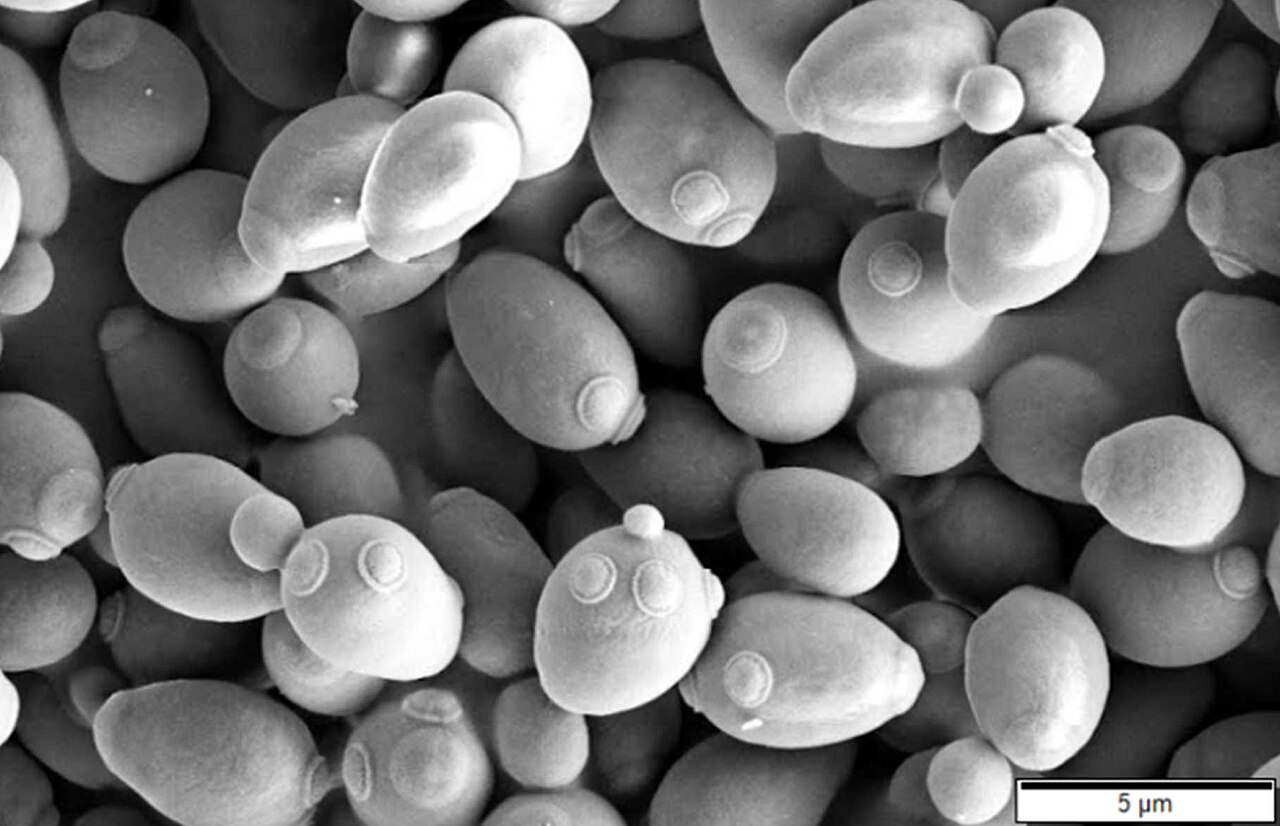
Most yeasts multiply by . A small bump, called a bud, grows on the parent cell. The parent's nucleus, which holds its DNA, splits in two. One copy moves into the bud. The bud keeps growing until it breaks away as a new cell. The daughter cell is usually smaller than its parent. Scientists can see the scars left behind where buds were attached. A few yeasts, such as Schizosaccharomyces pombe, divide in half instead. This is called fission, and it makes two cells of equal size.
Yeast can also mate when times get hard. If food runs out, certain cells form tough . The spores can survive harsh conditions. Later they can join together again and restart the cycle. In the wild, yeasts usually mate with close relatives, and mixing with a different group is rare. In Saccharomyces cerevisiae it happens only about once in every 50,000 cell divisions.
Some yeasts can form chains of linked cells called pseudohyphae, or false . A few can even grow into a small multicellular clump. These show how easily the line between a single cell and a many-celled body can blur. The cells also survive freezing in some conditions, though fewer live as time passes.
Why do scientists love yeast?
A yeast cell is a , which means its DNA is kept inside a nucleus, as in our own cells. This makes yeast a useful model for all eukaryotes, including humans. It is easy to grow, it divides quickly, and its genes are easy to change. Scientists use it to study the cell cycle, how DNA is copied, and how cells divide. Many proteins that matter in human biology were first found by studying their matches in yeast.
On 24 April 1996, S. cerevisiae became the first eukaryote to have its whole sequenced. Its 12 million base pairs took seven years and more than 100 laboratories. The second was the fission yeast S. pombe, in 2002.
Yeast work has won two Nobel Prizes. In 2001 Leland Hartwell, who studied yeast, and Paul Nurse, who studied fission yeast, shared the prize with Tim Hunt for discovering how cells control their cycle of division. In 2016 Yoshinori Ohsumi won for showing how cells recycle their own parts, a process called autophagy, which he first studied in yeast.
Yeast has also become a tiny factory. Scientists change its genes so it makes drugs. About 20% of biopharmaceuticals are made in S. cerevisiae. They include insulin, vaccines against hepatitis and a blood protein called human serum albumin.
Industry uses yeast too. To make fuel, plants such as sugar cane and maize are broken down into simple sugars, and yeast ferments them. The ethanol is then distilled to a purity of up to 96%. Some yeasts help clean up pollution, and some have been used to make electricity in microbial fuel cells. Some even help the stomach: a yeast called S. boulardii is used in supplements.
Can yeast ever be harmful?
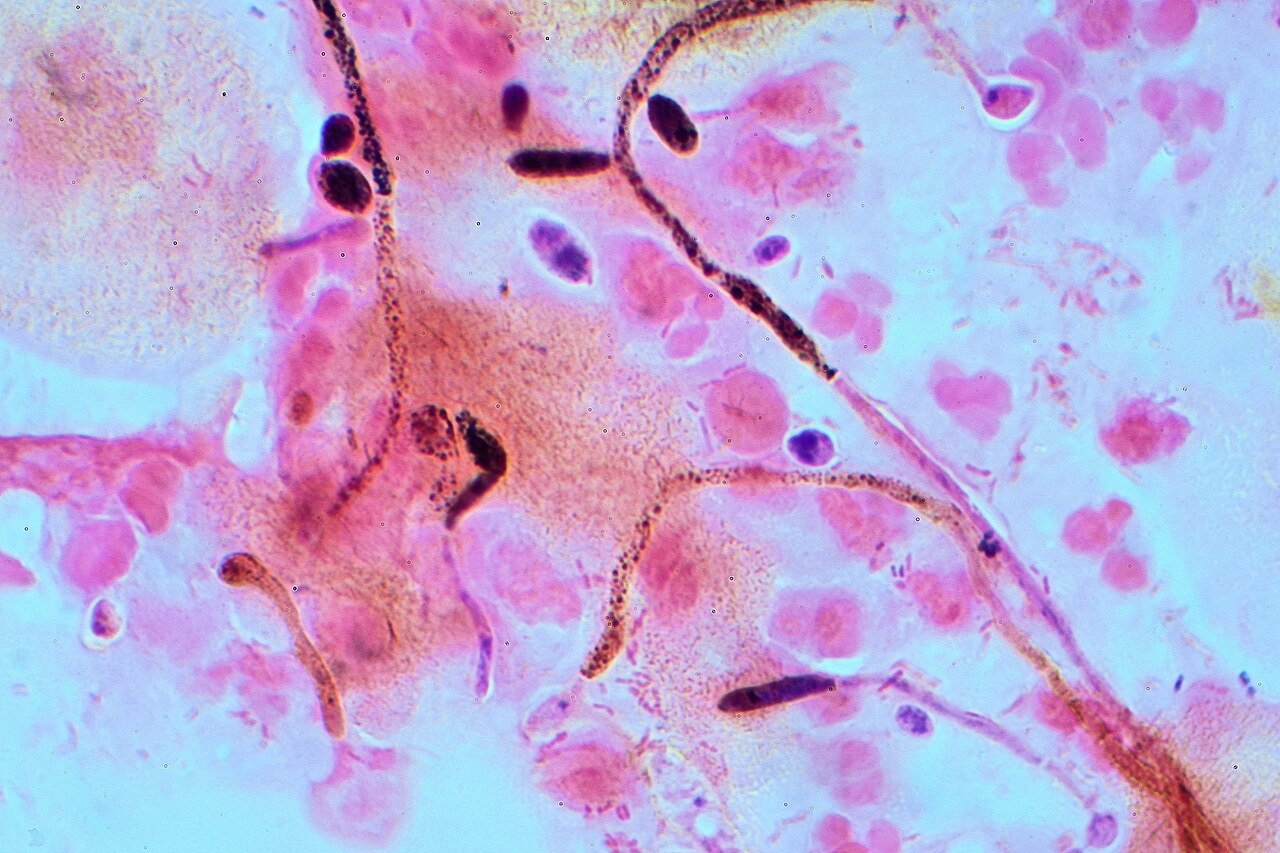
Most yeasts are harmless, but a few cause trouble. Candida lives on the skin and in the mouth of many healthy people without causing harm. Sometimes it grows out of control. Candida albicans can cause infections of the mouth and other parts of the body, called candidiasis. These infections are much more serious in people whose immune systems are weak.
Cryptococcus is a more dangerous yeast. It is surrounded by a stiff coat of sugar-like molecules that helps it avoid being swallowed by white blood cells. Cryptococcus infections strike about 150,000 people with HIV each year and kill more than 100,000 of them, according to a 2022 estimate.
Yeast also spoils food. Yeasts grow well in sugary and acid foods, so they attack jams, syrups, juices and cheese. Some, such as Zygosaccharomyces, survive the very preservatives that stop other microbes, including sugar, vinegar and sulfur dioxide. A white film called kahm yeast can form on pickled vegetables. It is harmless but gives a bad taste and needs to be removed. In wine, Brettanomyces can cause faults with an odd, farmyard smell.
Yeasts can even harm statues. Some are known to wear away bronze.
Explore Next
Your audio story keeps playing while you look around.
Words to Know
- budding
- A way of reproducing in which a small new cell grows from a parent cell.
- dough
- A mix of flour and water that is baked into bread.
- ethanol
- The kind of alcohol made by yeast and used in drinks and fuel.
- eukaryote
- A living thing whose cells keep their DNA in a nucleus.
- fermentation
- The process in which yeast turns sugar into carbon dioxide and alcohol.
- genome
- All the genetic instructions of a living thing.
- hyphae
- The thin threads that make up the body of a mould.
- pathogen
- A germ that can cause disease.
- probiotic
- A living microbe taken as a supplement to help the gut.
- spore
- A tough cell that can survive hard times and grow into a new organism.