Mushroom
The fruit of a hidden web that can outlive an empire.
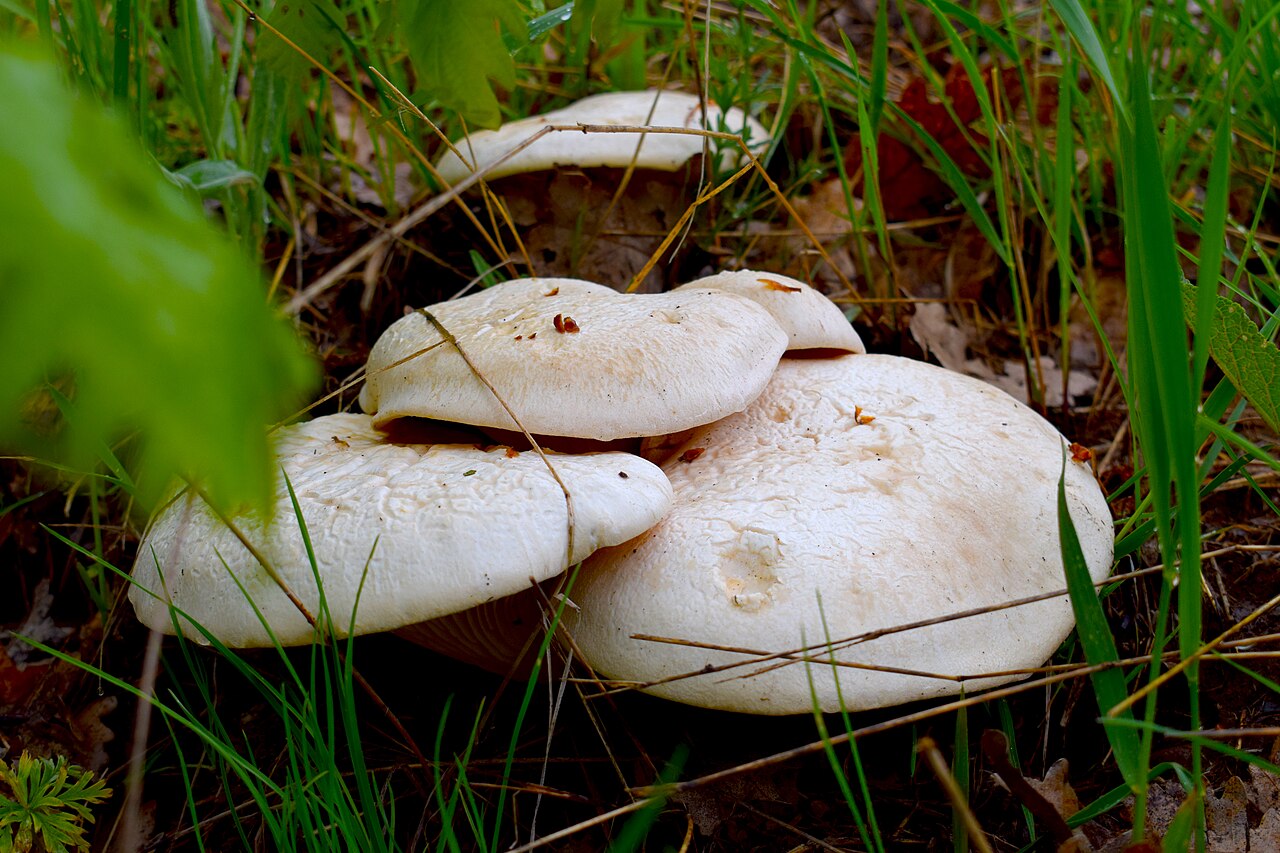
A mushroom is the fruiting body of a fungus, the part that pops up into the air to release spores. Most of the fungus stays hidden, living as a web of tiny threads in soil, wood or leaves. The mushroom is its way of spreading, rather like an apple on a tree. Some mushrooms are delicious, some are deadly, and some grow to full size in a few hours. One honey fungus in Oregon, in the United States, has spread through about 965 hectares of forest and may be between 2,400 and 8,650 years old. Mushrooms are not plants and not animals. They belong to the fungus kingdom, and they have a story full of surprises.
What exactly is a mushroom?
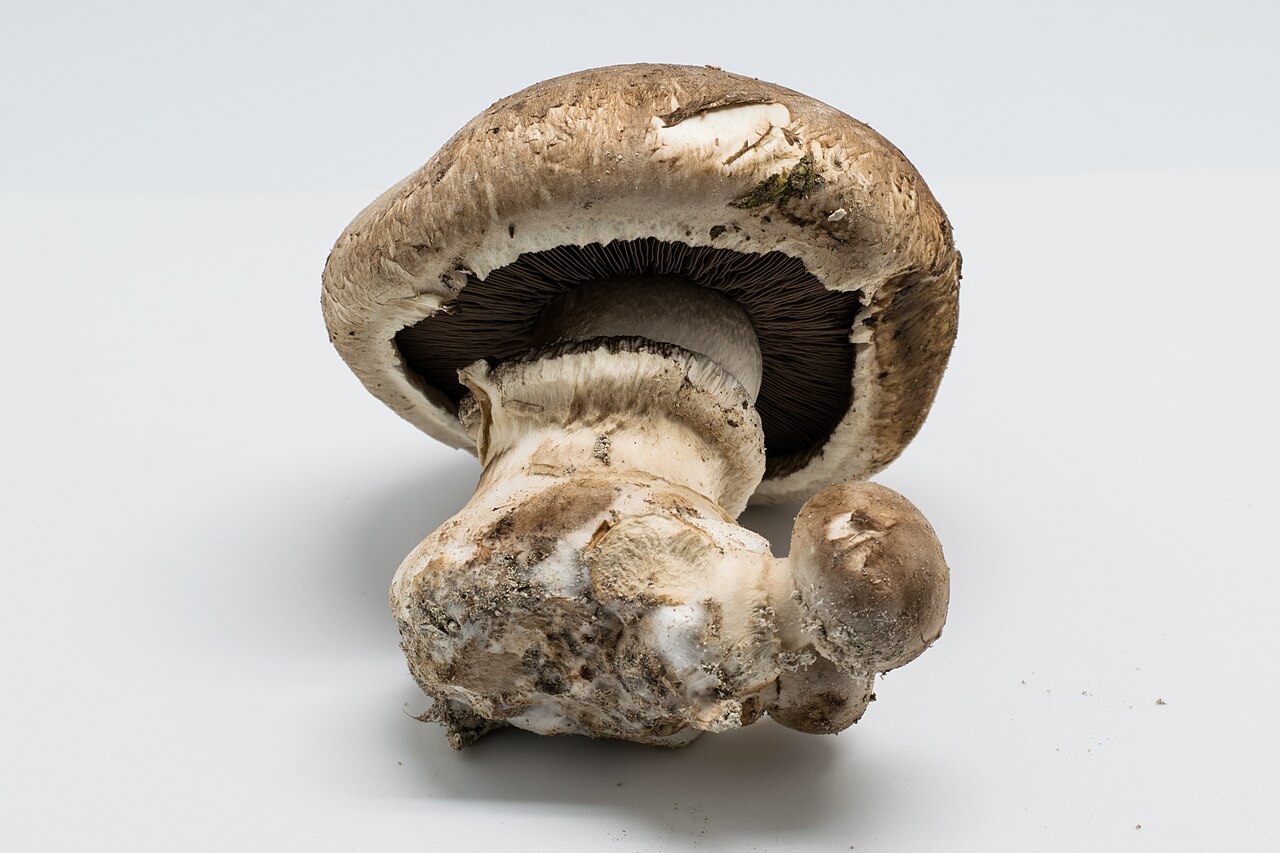
A mushroom is the fleshy, -bearing part of a fungus. Think of it as the fruit. The main body of the fungus is a mass of white threads called . Together the threads form a web called a . The mycelium hides in soil, rotting wood or a pile of leaves, soaking up food. When conditions are right, it pushes up a mushroom. The mushroom's job is to make and release spores. Spores are tiny cells that can grow into new fungi.
The word mushroom has a muddled history. It may come from the French word mousseron, which is linked to moss. In 15th and 16th century England it was spelt in many ways, such as mushrom and musserouns. Toadstool is older. It first appeared in 14th-century England and probably meant a stool for toads. Today people often use it for a poisonous mushroom, but nature does not make a clear split between the two words.
When most people say mushroom, they picture the white button mushroom sold in shops. It has a stalk, a rounded cap and underneath. That is only one design. Puffballs, morels, truffles, stinkhorns and shelf-like brackets on trees are fungal fruiting bodies too. So mushroom is an everyday word for a big, visible fungus fruit. It is not a strict scientific label. About 14,000 species of mushroom have been described.
What are the parts of a mushroom?
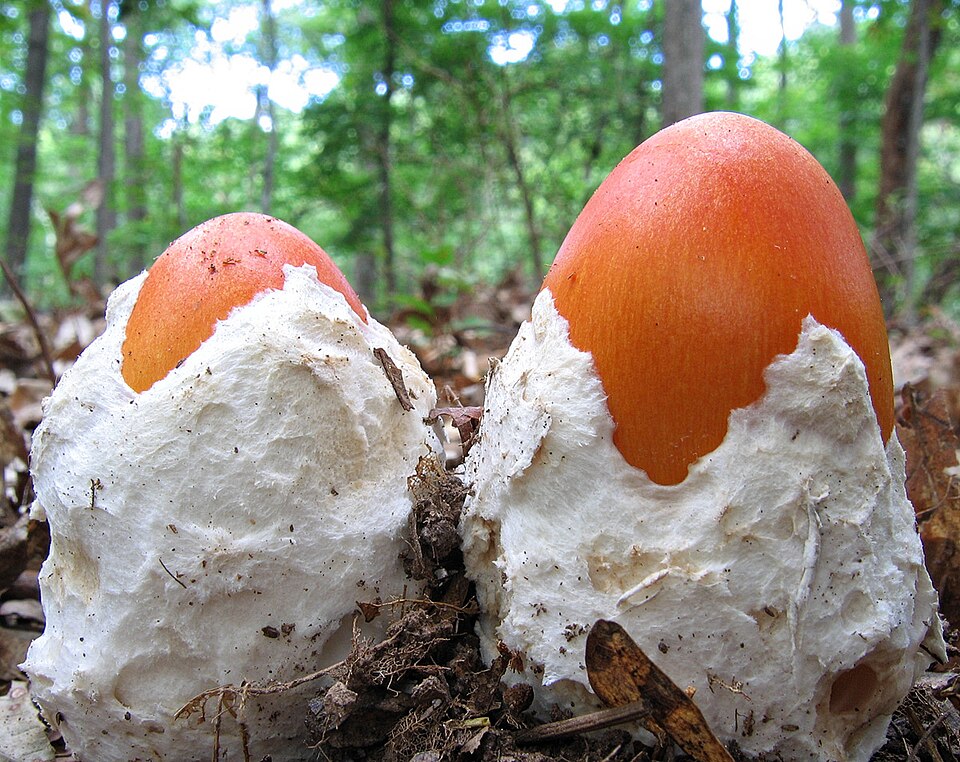
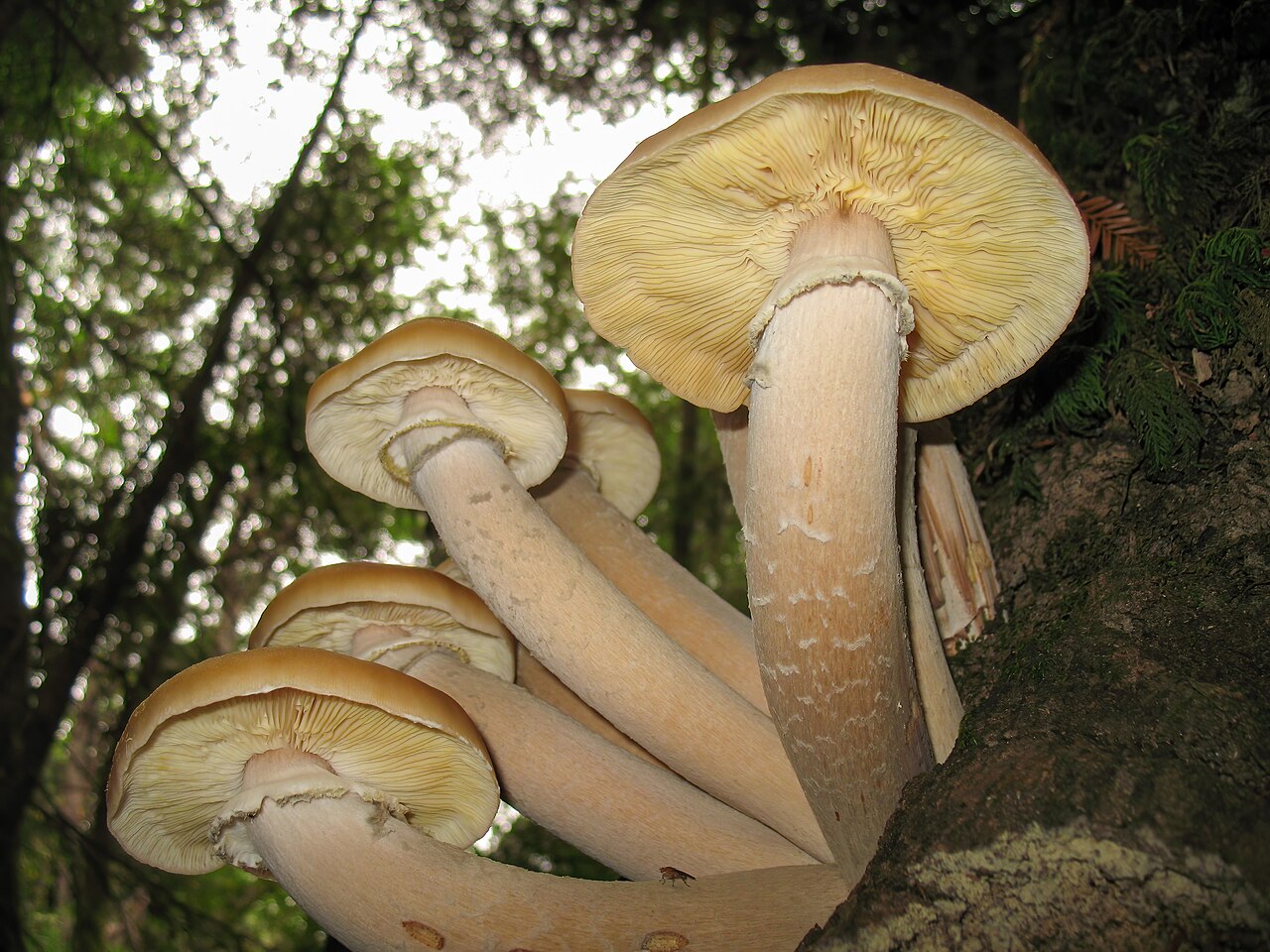
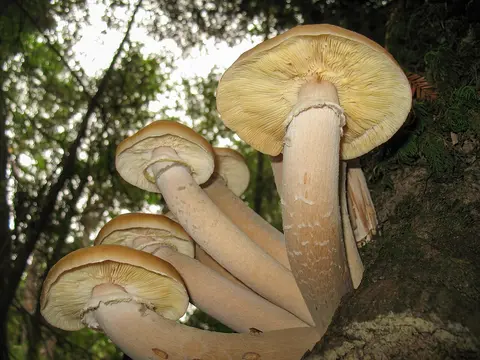
Picture a typical gilled mushroom. On top is the cap, which scientists call the pileus. Under it are thin, blade-like where the are made. Holding the cap up is the stalk, or . Some mushrooms also have a ring around the stalk and a cup at its base. Both are left over from the mushroom's early days.
A young mushroom starts as a pinhead less than 2 millimetres across, called a primordium. It forms inside the . The pinhead swells into an egg-shaped button. In some species a cottony wrapping, the universal veil, covers the whole button. When the mushroom grows, the veil splits. Scraps may stay at the base of the stalk as a cup called a , or stick to the cap as warts.
Many mushrooms have a second layer, the partial veil, that covers the gills. As the cap opens out, this layer tears. It can leave a ring, called an annulus, around the stalk.
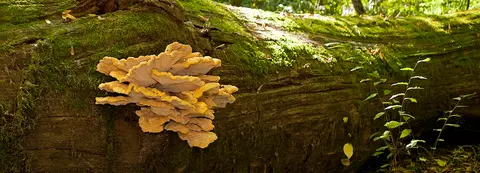
How the gills join the stalk is a useful clue. In some species the gills stop short of the stalk and are called free. In others, such as oyster mushrooms, the gills run down the stalk. Not every mushroom has gills at all. Boletes have sponge-like pores underneath, tooth fungi have little spines, and bracket fungi grow like shelves with no stalk.
How does a mushroom spread its spores?
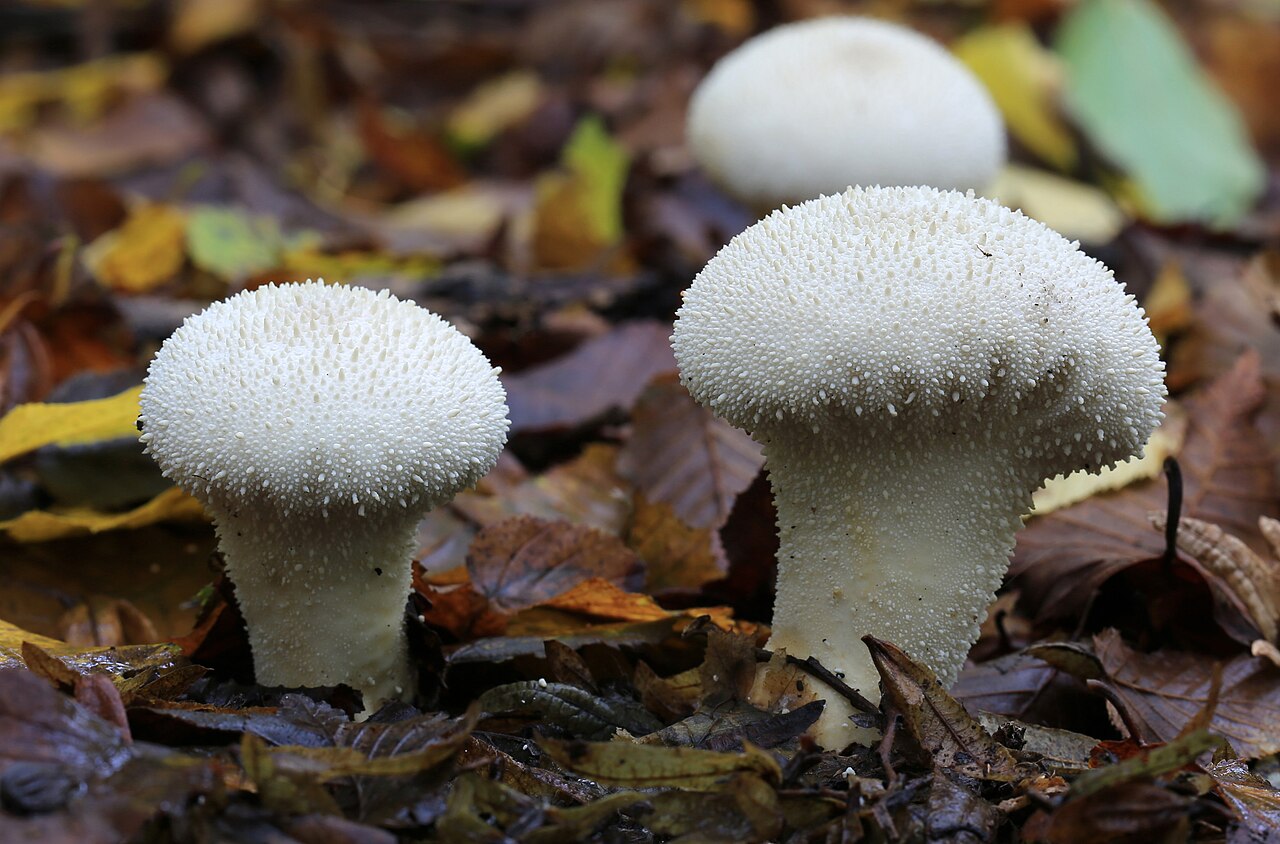
A mushroom exists to make , and it makes a huge number of them. In most gilled mushrooms the spores grow on the gill surfaces. They sit on the tips of tiny club-shaped cells called basidia, usually four spores to a cell. When a spore is ready, it is shot off and drops into the still air between the . From there it falls out from under the cap in a fine rain of powder. Wind or passing animals carry it away.
Puffballs use a different trick. A ripe puffball is a ball filled with powdery spores. A raindrop or a footstep squeezes the ball, and a cloud of spores puffs out of a hole at the top. Stinkhorns have their spores in a slimy, smelly coating that attracts flies, which carry the spores off.
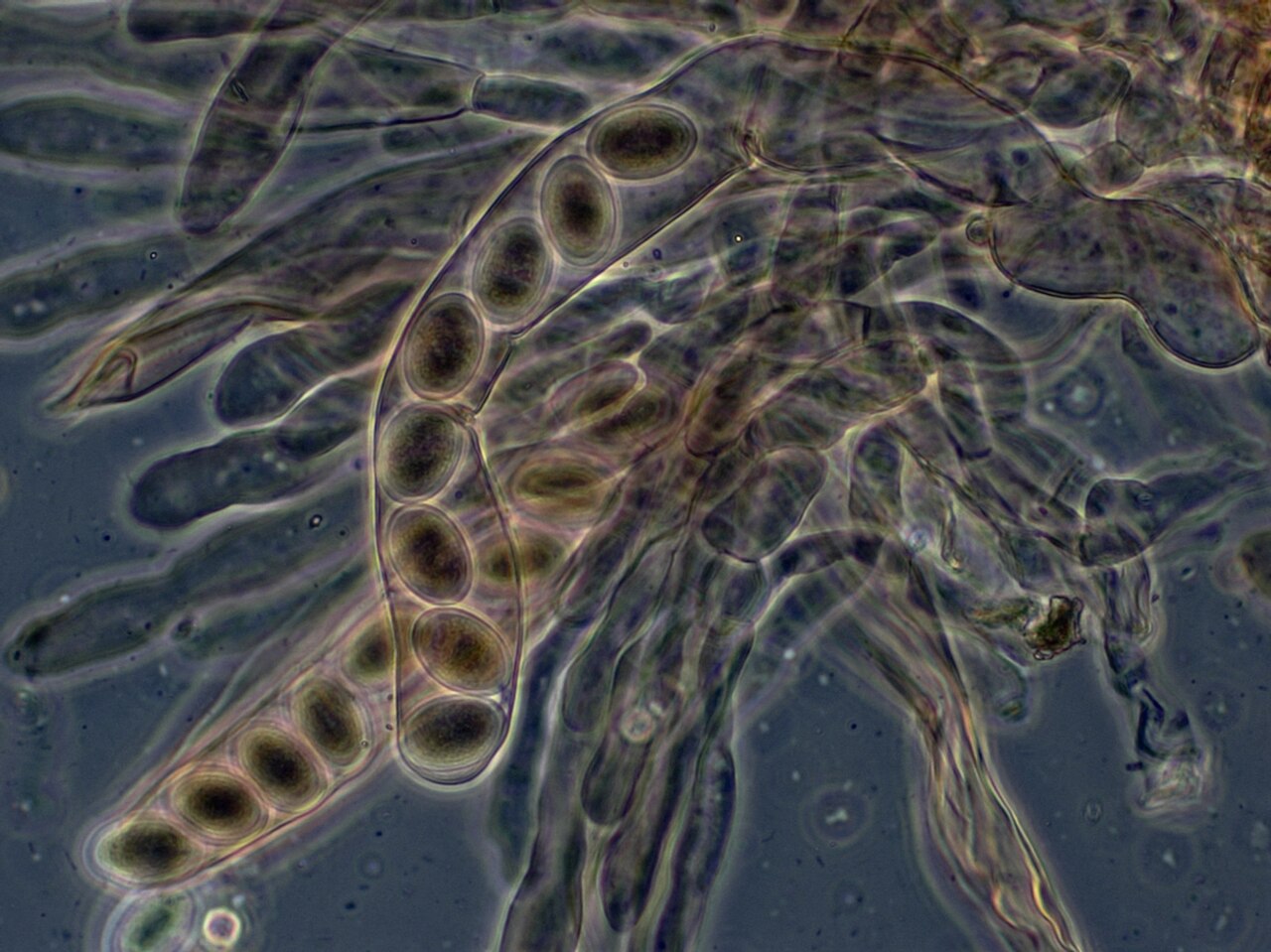
Other fungi, such as morels and cup fungi, grow their spores inside sac-like cells called asci. A sac usually holds eight spores.
Spores also help scientists name mushrooms. Cut off a cap and leave it gill-side down on paper overnight. The spores fall and leave a print in the shape of the gills. A can be white, brown, black, purple-brown, pink or yellow. It is almost never blue, green or red. Beginners sometimes mistake damp marks on the paper for white prints, so care is needed.
How can a mushroom appear overnight?
Mushrooms seem to pop up like magic after rain. People even say that something "pops up like a mushroom" when it appears quickly. The truth is that a mushroom takes several days to prepare. Inside the , the fungus builds a tiny pin and then a small button. The cells are all there, but they are small and waiting. When the moment comes, the mushroom pulls water in from the mycelium and inflates those cells. It swells fast, rather like a balloon being filled.
Some species are very quick. The pleated inkcap, Parasola plicatilis, grows on lawns. After heavy rain or a dewy night it balloons to full size in a few hours, releases its and collapses. On a hot day it can be gone by late afternoon. Others are slow. Pleurotus nebrodensis grows slowly, and because people also collect it, it is now critically endangered.
A mushroom is short-lived, but the fungus behind it is not. The mycelium can live for centuries. A fungus called Armillaria solidipes, in Malheur National Forest in the United States, is estimated to be between 2,400 and 8,650 years old. It covers about 965 hectares, an area larger than 1,300 football pitches. Most of it lies underground in dead wood and tree roots, as white threads and black cords like shoelaces. The mushrooms we see are only the visible fruit of a giant.
What do mushrooms do in nature?
The mushroom is only the visible tip. The real work happens in the , and it is some of the most important work on land. Many fungi are . They release chemicals that break down dead wood, leaves and animal remains, and then they absorb the nutrients. Without them, dead material would pile up and its nutrients would stay locked away from living plants.
Other fungi are partners. In a partnership called , fungal threads wrap around or enter the roots of a plant. The fungus gathers water and minerals from the soil and passes them to the plant. The plant gives the fungus sugars it makes by photosynthesis. Scientists are now exploring how these partnerships can help plants grow.
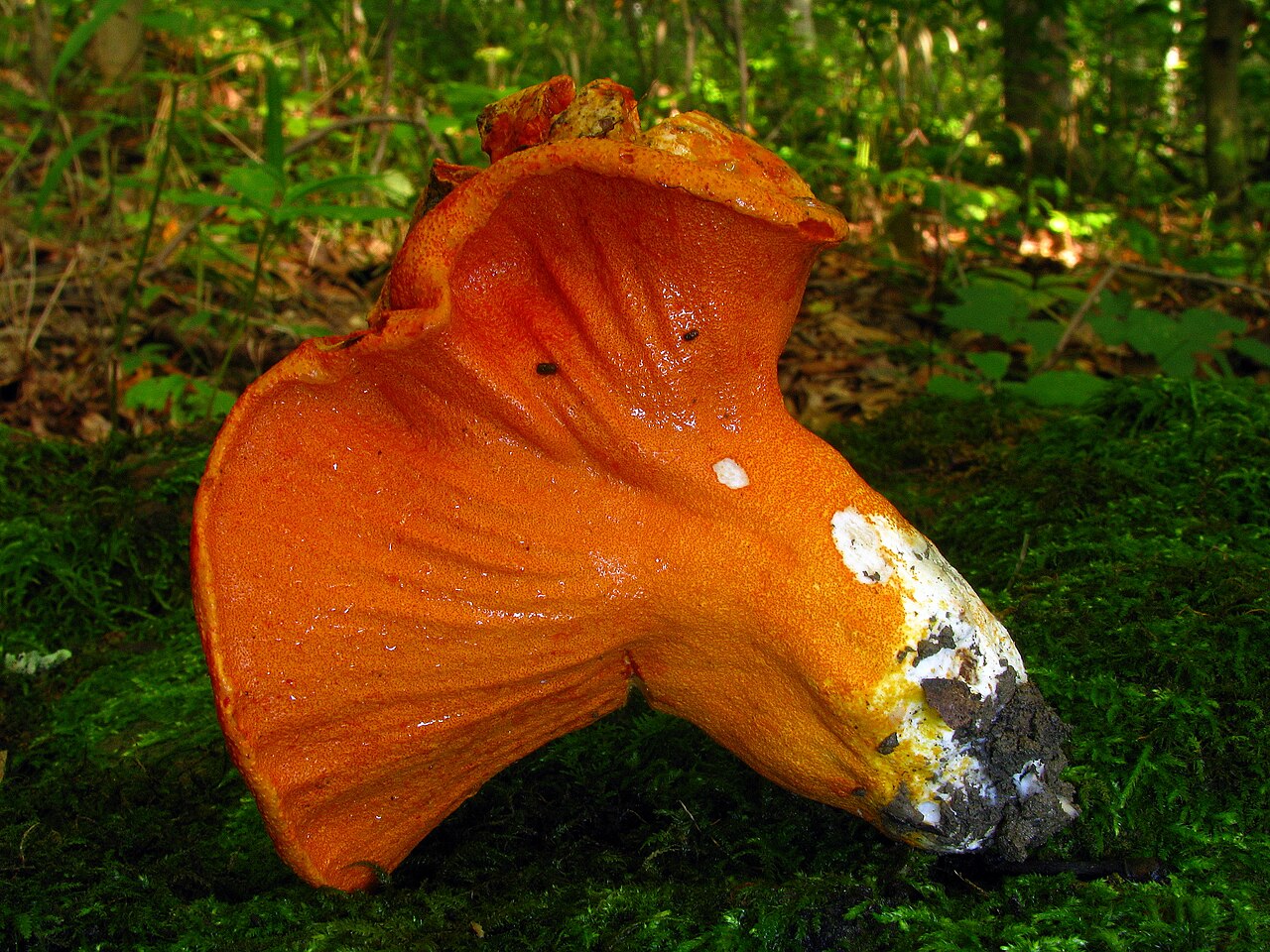
Some fungi are parasites, which means they feed on another living thing. The lobster mushroom shows how strange this can be. It is not one fungus but two. A milk-cap or russula mushroom is taken over by a parasitic fungus called Hypomyces lactifluorum. The parasite twists the shape of its host and turns it a bright orange-red, like a boiled lobster. People eat it in many places.
Mushrooms also feed animals and give shelter to tiny insects, though not every animal can eat them safely. Some of the chemicals they make protect them from being eaten.
Which mushrooms can we eat?
People have eaten mushrooms since ancient times. They appear in many cuisines, especially Chinese, Korean, European and Japanese cooking. Most mushrooms sold in shops are grown on farms. The most common is Agaricus bisporus. White buttons, brown crimini and large portobellos are all varieties of this one species. Farms also grow shiitake, oyster, enoki, maitake and lion's mane. China grows more than nine-tenths of the world's cultivated mushrooms.
Mushrooms are a light food. A raw brown mushroom is about 92% water, with 4% carbohydrate, 2% protein and less than 1% fat. A 100 gram portion gives about 22 calories. It also supplies B vitamins, selenium and copper. Mushrooms contain a chemical called ergosterol. When they are exposed to ultraviolet light, even after picking, it turns into vitamin D. Farms now use ultraviolet lamps to do this on purpose.
Even farmed button mushrooms contain a small amount of a harmful chemical called agaritine. Gentle cooking destroys it. Some people are also allergic to mushrooms.
Picking wild mushrooms is risky. No single trait tells every edible mushroom from every poisonous one. Experienced pickers learn a few distinctive species that cannot easily be mistaken for poisonous ones. The rule is clear. If you cannot identify a mushroom for certain, treat it as poisonous and leave it alone.
Why are some mushrooms poisonous?
Many mushrooms make chemicals that can be poisonous, mind-altering or germ-killing. A few even glow in the dark. Poison probably protects the mushroom. The fungus spends a lot of energy and material building a fruiting body to spread its . If an animal eats it too soon, that effort is wasted. A chemical that makes the eater sick teaches animals to leave it alone.
Only a small number of species are deadly, but several others cause severe illness. Some poisonous mushrooms look much like edible ones, which is why experts are so careful. Mushrooms also soak up heavy metals, including radioactive ones. Some wild mushrooms in parts of Europe still carry radioactive caesium from the 1986 Chernobyl disaster.
A few mushrooms contain chemicals that change how the mind works. The fly agaric, Amanita muscaria, is one. Psilocybin mushrooms, often called magic mushrooms, are another. Many cultures have used such mushrooms in healing ceremonies led by a shaman or healer. They are illegal in many countries. Scientists are studying psilocybin as a possible treatment for conditions such as depression, obsessive-compulsive disorder and addiction. In 2025 and 2026, two large phase 3 trials of a psilocybin treatment for depression that other drugs had not helped reported positive results. The makers have applied for approval in the United States, and regulators have not yet approved it.
What else are mushrooms used for?

Mushrooms are more than food. Before synthetic dyes were invented, they were a source of many textile dyes. Their dyes are strong and vivid, and every colour of the spectrum can be made from them. Wool and other natural fibres are still dyed with them today.
Some bracket fungi, called tinder fungi, have been used to start fires. A spark lands on the dry, spongy flesh and it smoulders.
Mushrooms also have a long place in folk medicine. The reishi mushroom, Ganoderma lingzhi, is used in traditional medicine. In a few countries, extracts from certain mushrooms are registered as extra treatments alongside cancer therapy. However, clinical evidence that they work and are safe in people has not been confirmed. Regulators such as the US Food and Drug Administration treat mushroom extracts as dietary supplements, not as prescription drugs.
Researchers are also putting fungi to work for the environment. Mycorrhizal fungi are being tested to help plants grow. Other fungi are being tried as filters to lower the number of bacteria in contaminated water. Genetic engineers are exploring ways to give mushrooms more nutrients or medical uses. Mushrooms are an old technology with a lot of unfinished business.
How do scientists sort and name mushrooms?
Most mushrooms belong to a group called the basidiomycetes. Typical gilled mushrooms sit in an order called Agaricales. It includes the field mushroom, shiitake, enoki, oyster mushrooms and the fly agaric. But do not guarantee a family. Chanterelles, milk-caps and many others look similar and sit in other orders. Mushroom is a common word for large fungal fruit bodies. It has no exact scientific meaning.
Identifying a species is detective work. Experts look at the shape, the , the juice that oozes when the flesh breaks, the colour change when it is bruised, the smell, the habitat and the season. Tasting and smelling carry their own risks because of poisons and allergens. Experts often need to see a mushroom at several ages. A button gives different clues from a mature mushroom, and an over-ripe one stops making spores and loses features.
A microscope adds more. The size, shape and surface of the are the most useful feature of all. Odd cells among the spore-makers, called cystidia, can also help. Today many identifications are confirmed with DNA, but the older field methods are still used by most people. A local field guide often gets you to the genus. Reaching the exact species takes more effort.
Explore Next
Your audio story keeps playing while you look around.
Words to Know
- decomposer
- A living thing that breaks down dead material and returns nutrients.
- gills
- The thin blades under a mushroom cap where spores are made.
- hyphae
- The thin threads that grow together to form a mycelium.
- mycelium
- The web of fine threads that makes up most of a fungus.
- mycologist
- A scientist who studies fungi.
- mycorrhiza
- A partnership between a fungus and the roots of a plant.
- spore
- A tiny cell that can grow into a new fungus.
- spore print
- The powdery pattern left when a cap drops its spores onto paper.
- stipe
- The stalk that holds up a mushroom cap.
- volva
- A cup at the base of some mushrooms, left from the universal veil.