Fungus
Neither plant nor animal, fungi digest the world and then grow through it.
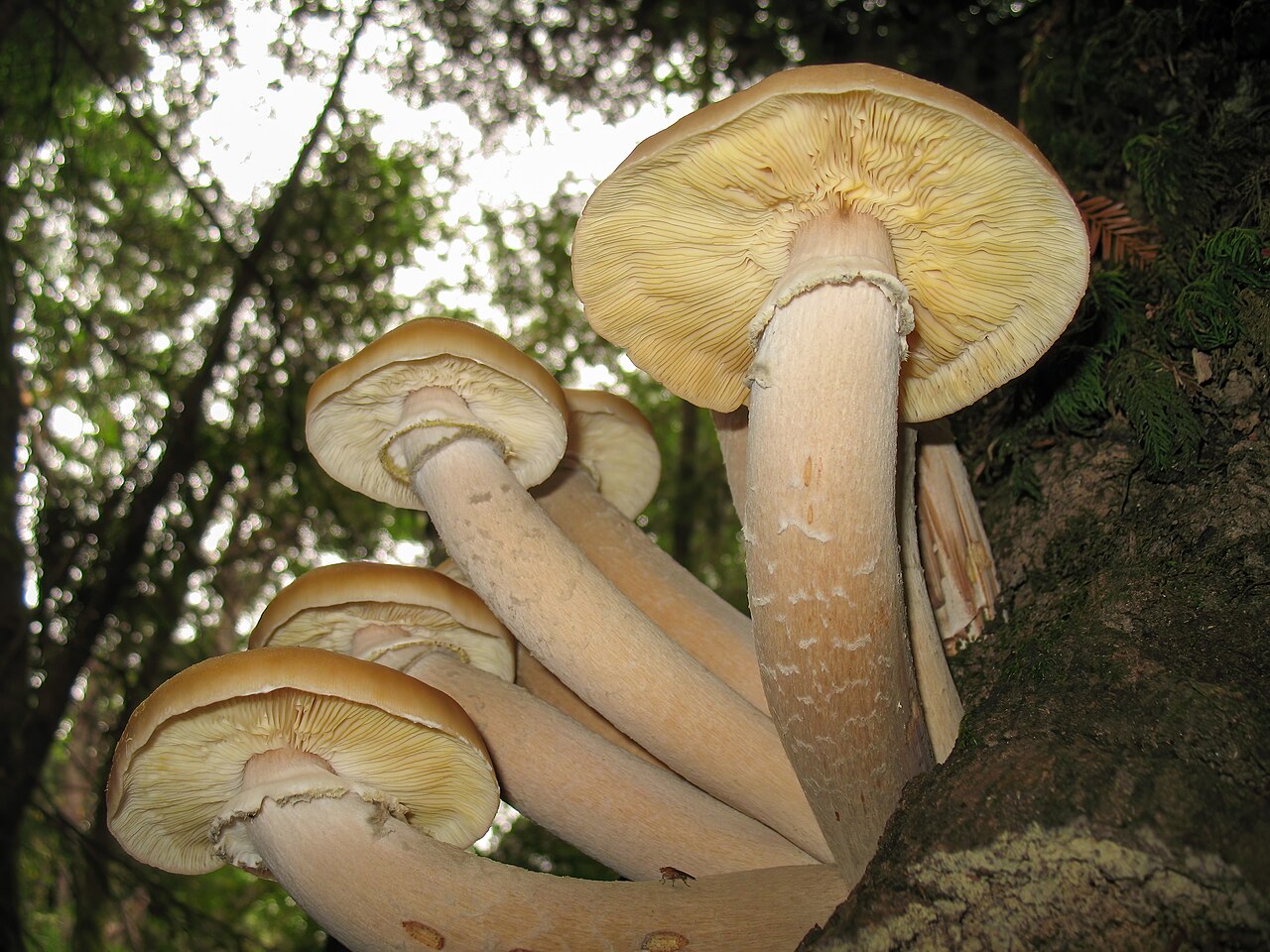
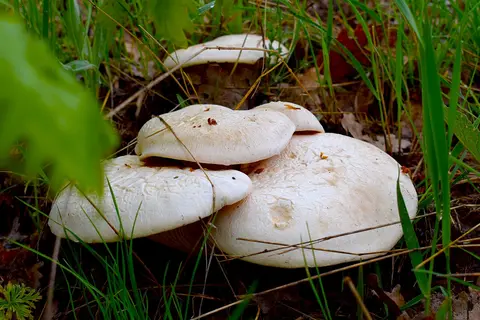
Mushrooms, mould, yeast and the green fuzz on old bread are all fungi. For a long time people thought fungi were odd plants. They are not. Fungi form their own kingdom of life, and they are more closely related to animals than to plants. Most of a fungus is hidden as fine threads inside soil, wood or food. The mushroom is only its fruit. Fungi break down dead matter, partner with trees, cause crop diseases, make bread rise and give us medicines. Some are among the largest and oldest living things on Earth. Scientists think most species are still unknown.
If a mushroom is not a plant, what is it?
A mushroom grows from the ground, stays still and often looks like a small plant. For centuries, scientists put fungi in the plant kingdom for these reasons. We now know this was a mistake. Fungi are a kingdom of their own, alongside animals and plants.
The big difference is how they feed. A plant makes its own food from sunlight. A fungus cannot. It has no chlorophyll, so it must take in food made by other living things, as animals do. But a fungus does not swallow food. It releases digestive chemicals called into its surroundings and then absorbs the dissolved nutrients.
Fungi also have a special building material. Their cell walls contain , the same tough substance that forms the outer skeleton of insects. Plant cell walls are made of cellulose instead.
DNA tests have shown that fungi are more closely related to animals than to plants. The two lines of life are thought to have split about a billion years ago.
The study of fungi is called , from the Greek word for mushroom. Fungi live almost everywhere, including deserts, salty places, deep-sea mud and even places with strong radiation. Some can survive the harsh radiation of space travel. Yet most are small and hidden, so people rarely notice them until a mushroom or a patch of mould appears.
What does a fungus look like under the ground?
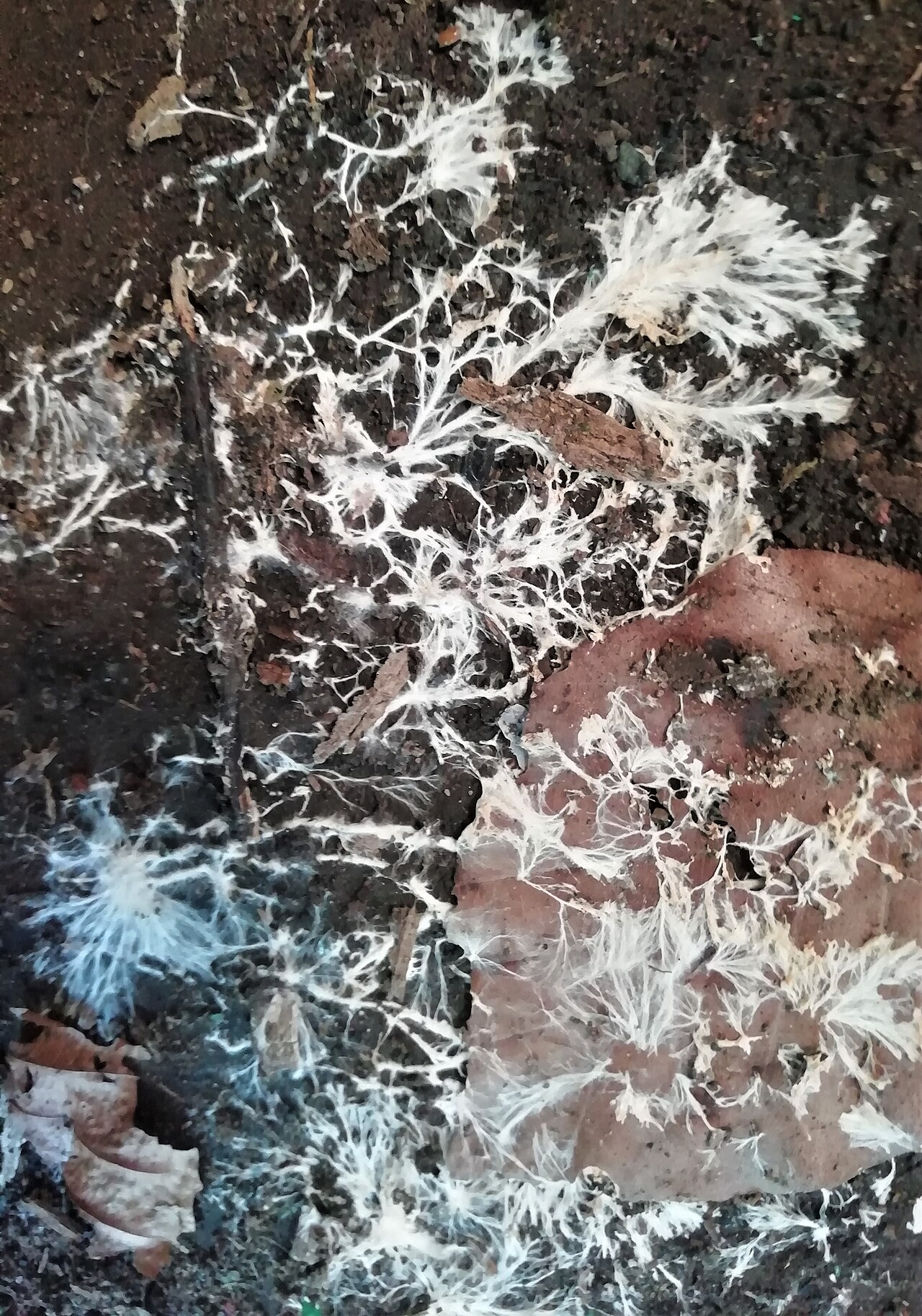
Most fungi grow as fine threads called hyphae. A is a tube, usually only 2 to 10 micrometres wide. A micrometre is a thousandth of a millimetre, so hyphae are far thinner than a human hair. They grow longer from their tips and branch again and again. When branches meet, they can join together.
The result is a , a woven network of hyphae. A mycelium has a very large surface compared with its volume. This is perfect for soaking up nutrients. Hyphae can also push hard. Some plant-killing fungi build a structure that works like a tiny drill, which punctures the surface of a leaf.
Most fungi have no tubes like the veins of plants for moving water over long distances. Some, such as honey fungus, make thick cords called rhizomorphs that look and work a little like roots.
A mushroom is only one stage. A mushroom is a fruiting body, a structure made for releasing . When the mycelium is ready, it packs its threads together and pushes up a mushroom, a little like an apple on a tree.
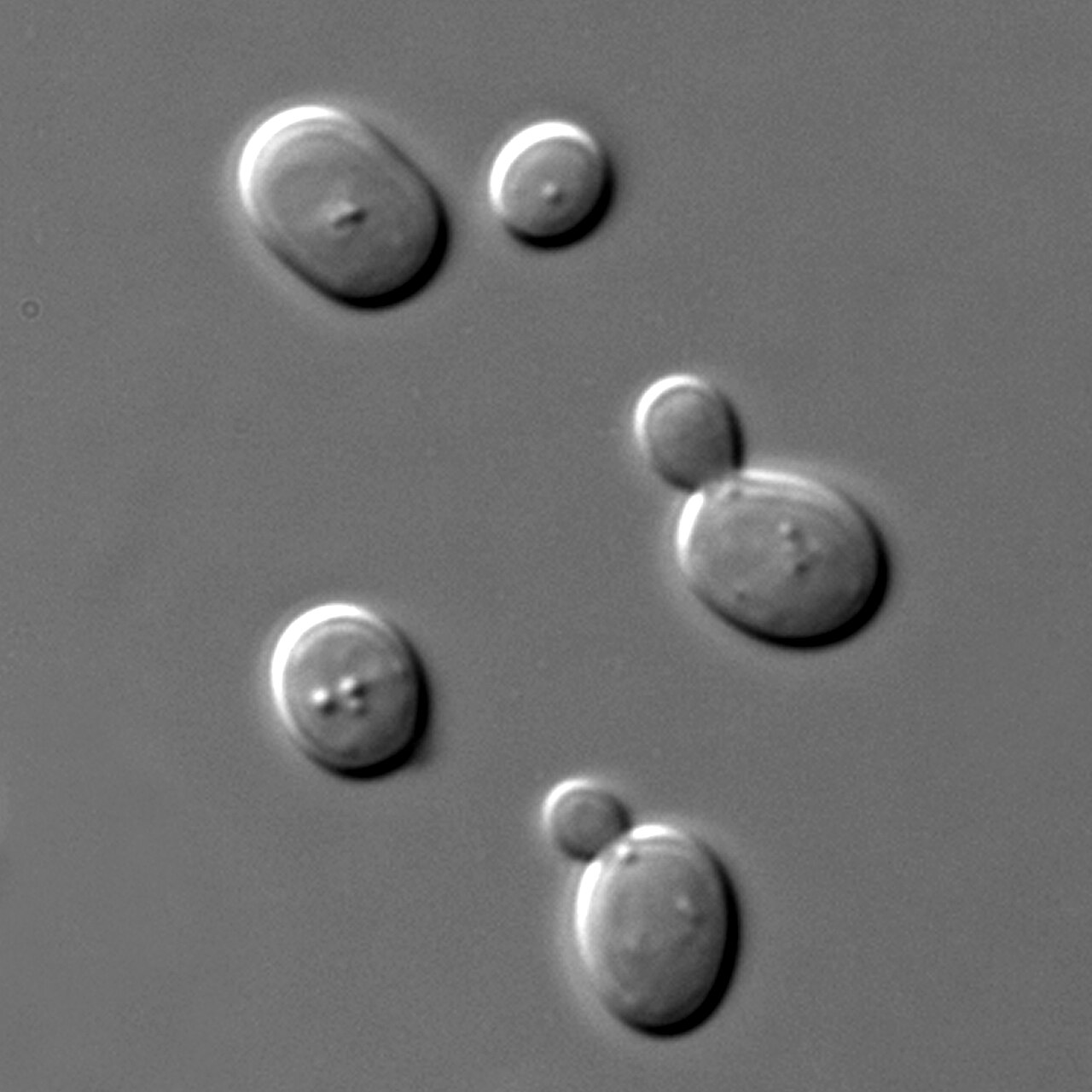
Not all fungi use threads. are single cells that reproduce by budding, which means a small bulge grows on the parent and breaks away. Some fungi can switch between yeast and thread forms depending on conditions.
Some colonies grow huge. One honey fungus colony in Oregon covers about 965 hectares. Estimates of its age range from about 2,400 to 8,650 years.
How do fungi eat, and who ends up on the menu?
Fungi feed in three main ways. Some are . They live on dead leaves, wood and animal remains. Together with bacteria, fungi are the main recyclers on land. They break dead matter into simple substances that plants can use again. Without them, dead plants and animals would pile up and nutrients would stay locked away. This is why fungi are so important in food webs and nutrient cycles.
Others are . They feed on living hosts and can cause disease. More than 8,000 fungus species are known to harm plants, and at least 300 can cause disease in people. Rice blast disease is a fungal disease that destroys rice crops, and rusts and smuts damage grains such as wheat and maize. Losses like these can affect food supplies and local economies. Two chytrid fungi have caused a worldwide decline in frogs and other amphibians.
The third way is partnership, which gets its own section.
Fungi are tough chemists. They can break down wood, paper and even some man-made materials and buildings. Some honey fungi attack living trees and then feed on the dead wood.
Fungi are versatile in other ways. They can live on simple chemicals such as ammonia or ethanol. A few species may even gain a little energy from radiation, though scientists do not yet understand how this works.
Why do most plants need fungi?
Many fungi live in close partnership with other living things. Both sides gain, and the partnership is called a mutualism.
The best-known partnership is the , from the Greek words for fungus and root. Fungal threads wrap around or enter plant roots. The fungus reaches far into the soil and brings back water and minerals, such as nitrate and phosphate, which are hard for roots to find alone. In return, the plant gives the fungus sugars made by photosynthesis. More than 90 per cent of plant species form these partnerships, and many depend on them to survive.
The partnership is very old. Evidence for it goes back at least 400 million years, to the time when plants first spread on land. Some fungal networks connect several plants at once and may carry sugars and nutrients between them. Scientists call these common mycorrhizal networks. A few plants, which have no chlorophyll, take all their food from fungi.
Other fungi live inside leaves, stems and roots. These are called endophytes. In grasses, endophytes can make the plant more resistant to grazing animals and other stresses. The grass gives food and shelter in return.
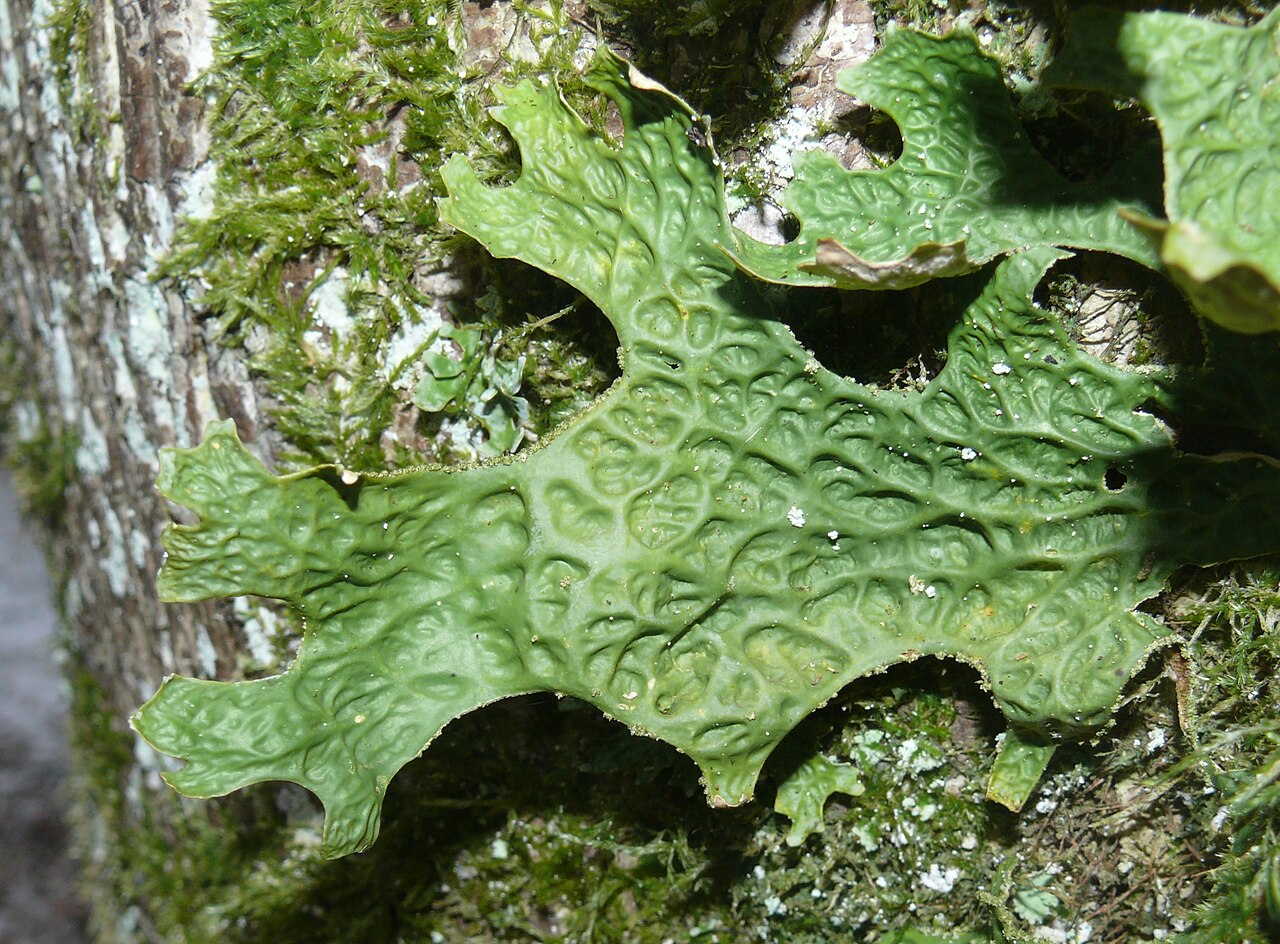
are another famous partnership. A lichen is a fungus living with an alga or a cyanobacterium, which makes food by photosynthesis. Lichens grow on bare rock, bark and soil, even in polar and mountain regions and deserts, and they help to build soil.
How do fungi make more fungi?
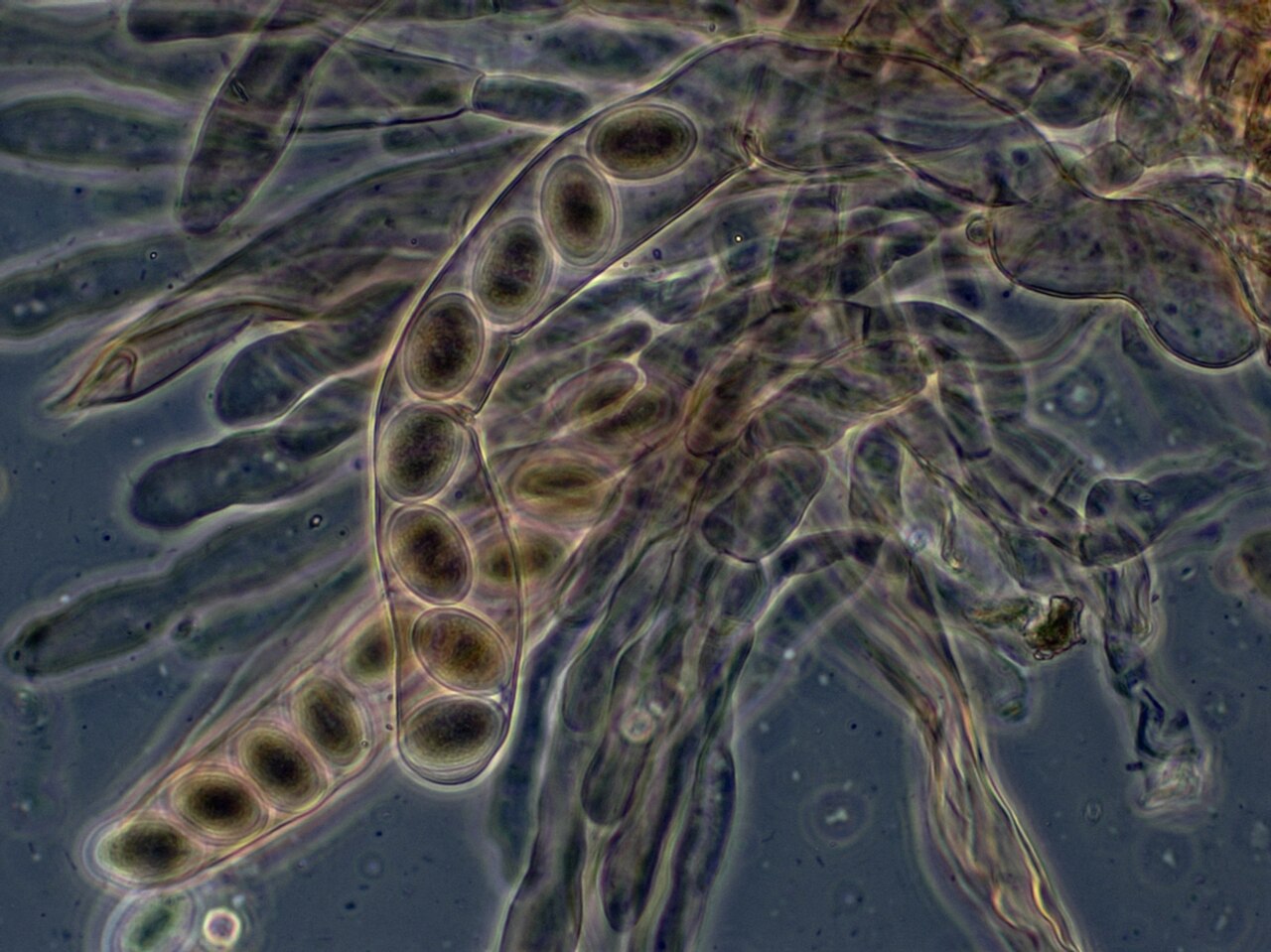
Fungi reproduce in two main ways, and about a third of species use more than one.
Asexual reproduction makes copies of a single parent. A fungus can release tiny , or the can break into pieces that each grow into a new one. These methods are fast and give many identical offspring that are suited to the place where the parent lived.
Sexual reproduction mixes genes from two parents, so the offspring are different. Fungal sex is unlike ours. Two compatible hyphae fuse. Often their nuclei stay separate for a long time, side by side in the same cell, before they finally join. Then the cell divides in a special way called meiosis, which makes spores with new gene mixes. Some fungi can mate only with a different mating type. Others can mate with any individual, even themselves.
The spores form in different structures. In the sac fungi, the spores grow inside small sacs called asci. Morels, truffles and many moulds belong to this group. In the club fungi, spores grow on tiny club-shaped stalks called basidia. Most mushrooms belong here.
These structures are how scientists first sorted fungi into groups. Looking at them with a microscope, they could tell the sac fungi from the club fungi.
How does a mushroom fire its spores?
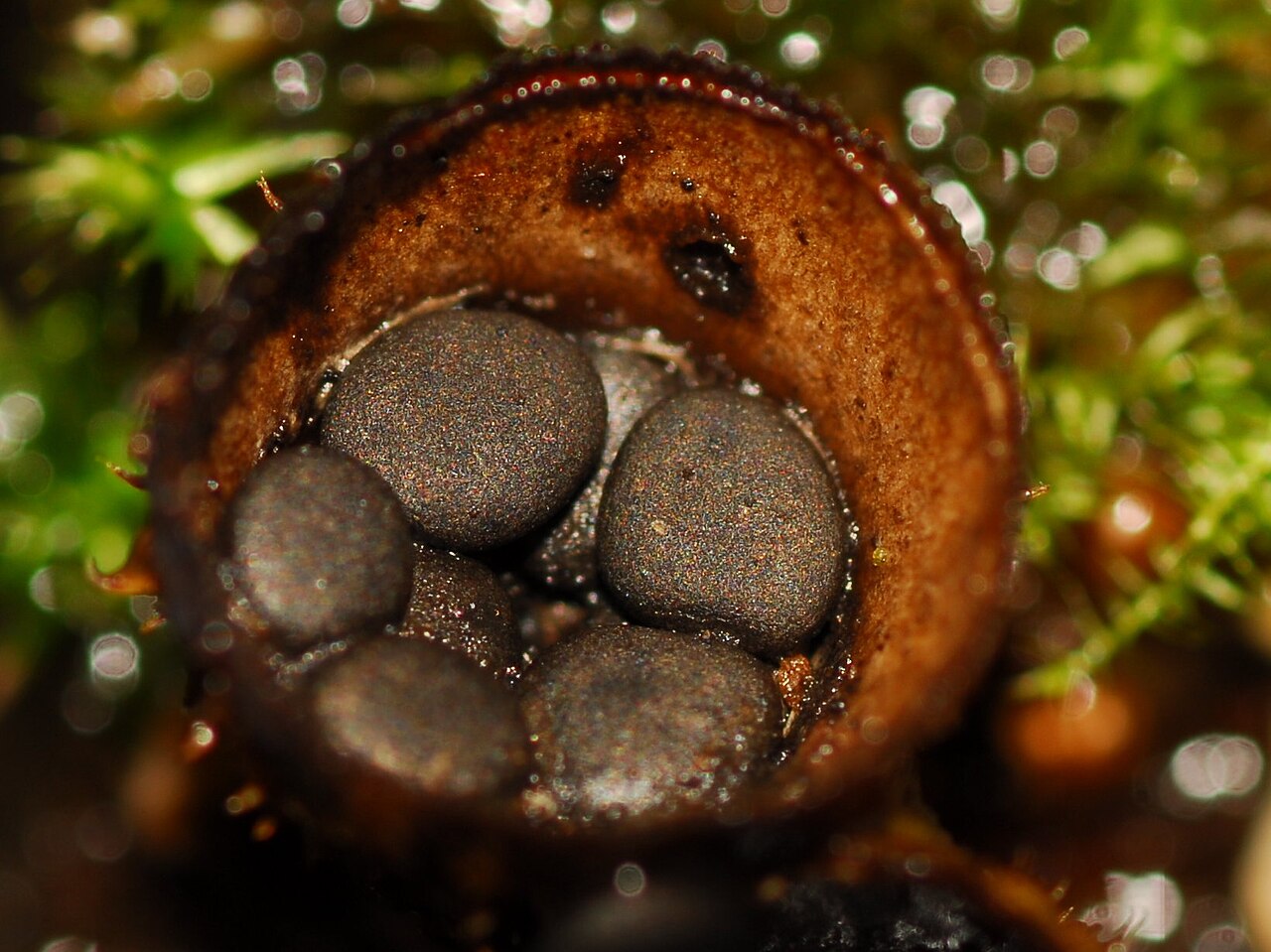
A fungus cannot walk, so its must travel. Most are carried by the wind. Many are dry or water-repelling, so raindrops scatter them easily.
Some fungi shoot their spores. In some sac fungi, pressure builds up inside the sac until it bursts and the spores fly out. In many mushrooms, a tiny drop of water, called Buller's drop, forms at the base of each spore. When it touches the spore, the spore is thrown off with an acceleration of more than 10,000 g. That is thousands of times stronger than gravity, and far greater than that felt by a fighter pilot. The spore flies only 0.1 to 0.2 millimetres. That is enough to clear the gills of the mushroom and drop into the open air below.
Other fungi use outside help. Puffballs release a cloud of spores when something presses on them, such as a raindrop or a passing animal. Bird's nest fungi look like tiny cups with eggs inside. Falling raindrops splash the spore packets out of the cups. Stinkhorns have bright colours and a foul smell that attracts flies. Insects walk over the sticky spores and carry them away.
These strategies work because spores are made in huge numbers. Only a few will land somewhere with the right food, moisture and temperature to grow.
How many kinds of fungi are there?
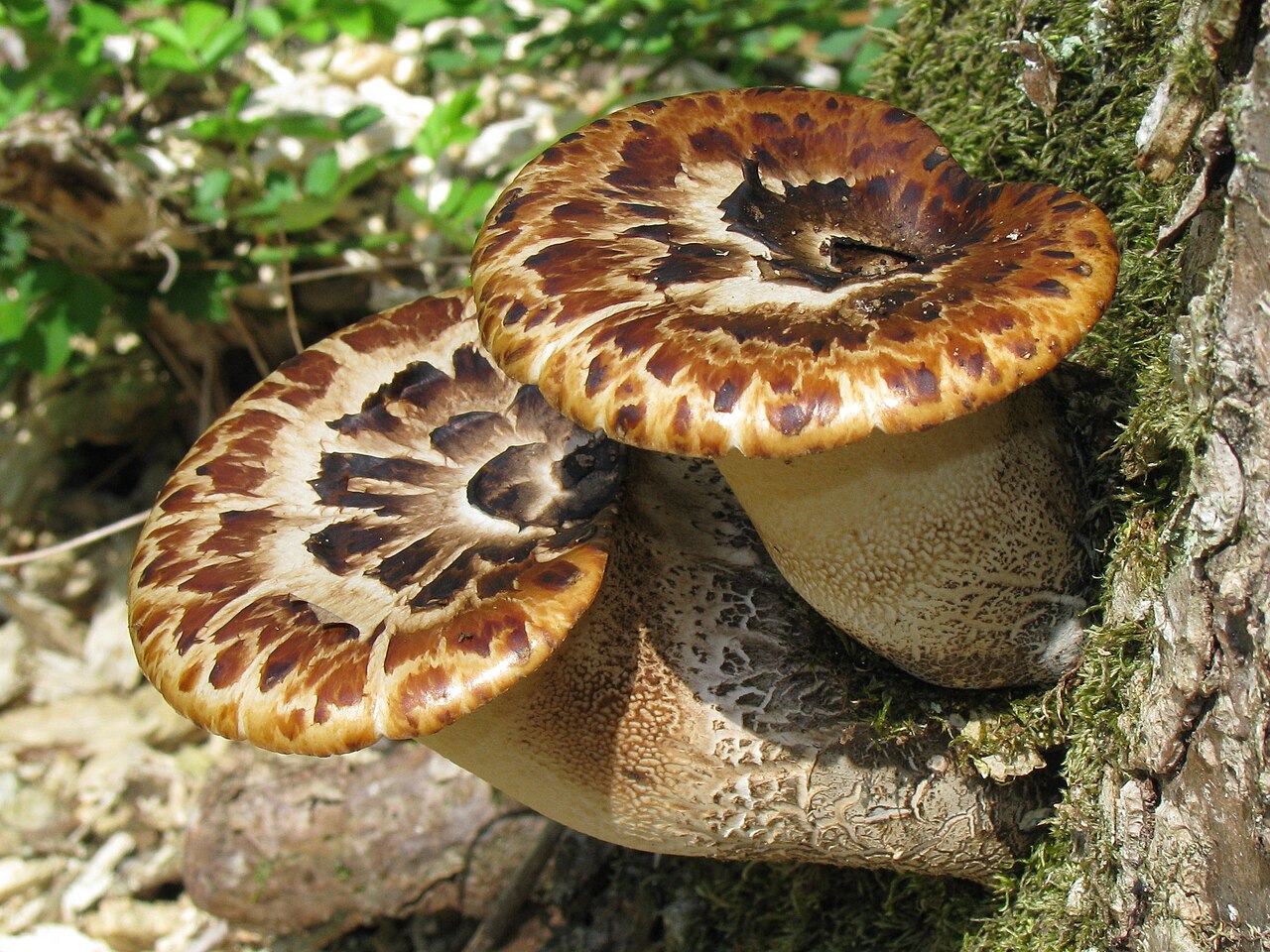
Nobody knows. About 155,000 species had been named by 2023, but a 2017 estimate suggests there may be 2.2 to 3.8 million. Scientists think more than 90 per cent are still unknown. Taxonomists now describe roughly 2,000 to 3,000 new species each year. In 2020, 2,905 were named, the highest figure on record.
Sorting fungi started with the Swedish naturalist Carl Linnaeus. The scientist Christiaan Persoon, who was born in South Africa, made the first classification of mushrooms in the early 1800s, and Elias Fries added colour and microscope features. Today scientists mostly use DNA comparisons, which have changed many old groupings.
Two big groups hold most of the familiar fungi. The sac fungi, or Ascomycota, include morels, truffles, , many moulds and the fungi in most . The club fungi, or Basidiomycota, include most mushrooms, as well as rust and smut fungi that harm grain crops.
Some smaller groups are very different. Chytrids are among the few fungi with swimming spores. Another group, the Glomeromycota, form with plants. A group of fungi living in the guts of plant-eating mammals can digest tough plant matter without oxygen.
Some organisms that look like fungi are not. Slime moulds and water moulds were once counted as fungi, but they are not closely related, and scientists now place them elsewhere.
How long have fungi been on Earth?
Fungi are soft and break down quickly, so they rarely become fossils. Even so, the fossils we have show a long history.
Some fossils with fungus-like threads are claimed to be 2.4 billion years old, but this is uncertain. A fossil fungus from the Canadian Arctic, named Ourasphaira, may be a billion years old. It may have grown on land before any plants did. A different method, the molecular clock, uses DNA changes to estimate time. It puts the first fungi at 760 to 1,060 million years ago.
Early fungi probably lived in water and had swimming , like modern chytrids. Later they moved onto land. Partnerships with plants and algae helped both groups. About 400 million years ago, the sac fungi and club fungi split apart. By about 300 million years ago, all the modern classes were present.
One strange fossil is Prototaxites, a trunk-like organism that stood taller than anything else alive in the late Silurian and early Devonian. For a long time scientists thought it was probably a fungus or a . A study published in Science Advances in January 2026 found that its tissue is structurally and chemically unlike any fungus, so its place on the tree of life is now in doubt. The oldest known fossil mushroom, Gondwanagaricites, lived in what is now Brazil about 115 million years ago.
After the asteroid impact that wiped out most dinosaurs about 66 million years ago, fossils show a big rise in fungi. So many plants and animals had died that the fungi seem to have bloomed on a vast compost heap.
How do people use fungi, and which ones are dangerous?
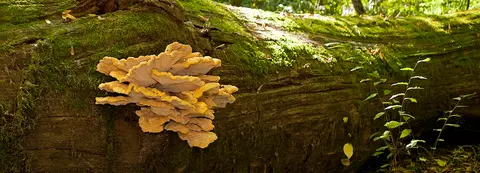
People have used fungi since prehistory. Ötzi the Iceman, a man who died about 5,300 years ago and was found frozen in the Alps, carried two kinds of bracket fungus. One may have been used as tinder to start fires and the other as medicine.
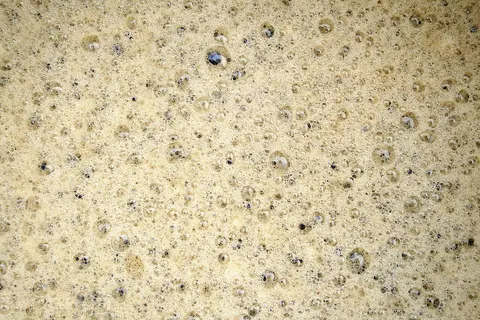
is the fungus we use most. Yeast cells feed on sugar and give off carbon dioxide gas and alcohol. The gas makes bread dough rise, and the process of fermentation turns grape juice into wine and grain into beer. Fungi also help make soy sauce and many cheeses. Mushrooms and truffles are eaten around the world.
Since the 1940s, fungi have been used to make antibiotics, medicines that kill bacteria. Fungal work in industry and in washing powders. Some fungi are used as natural pesticides to control weeds and insect pests.
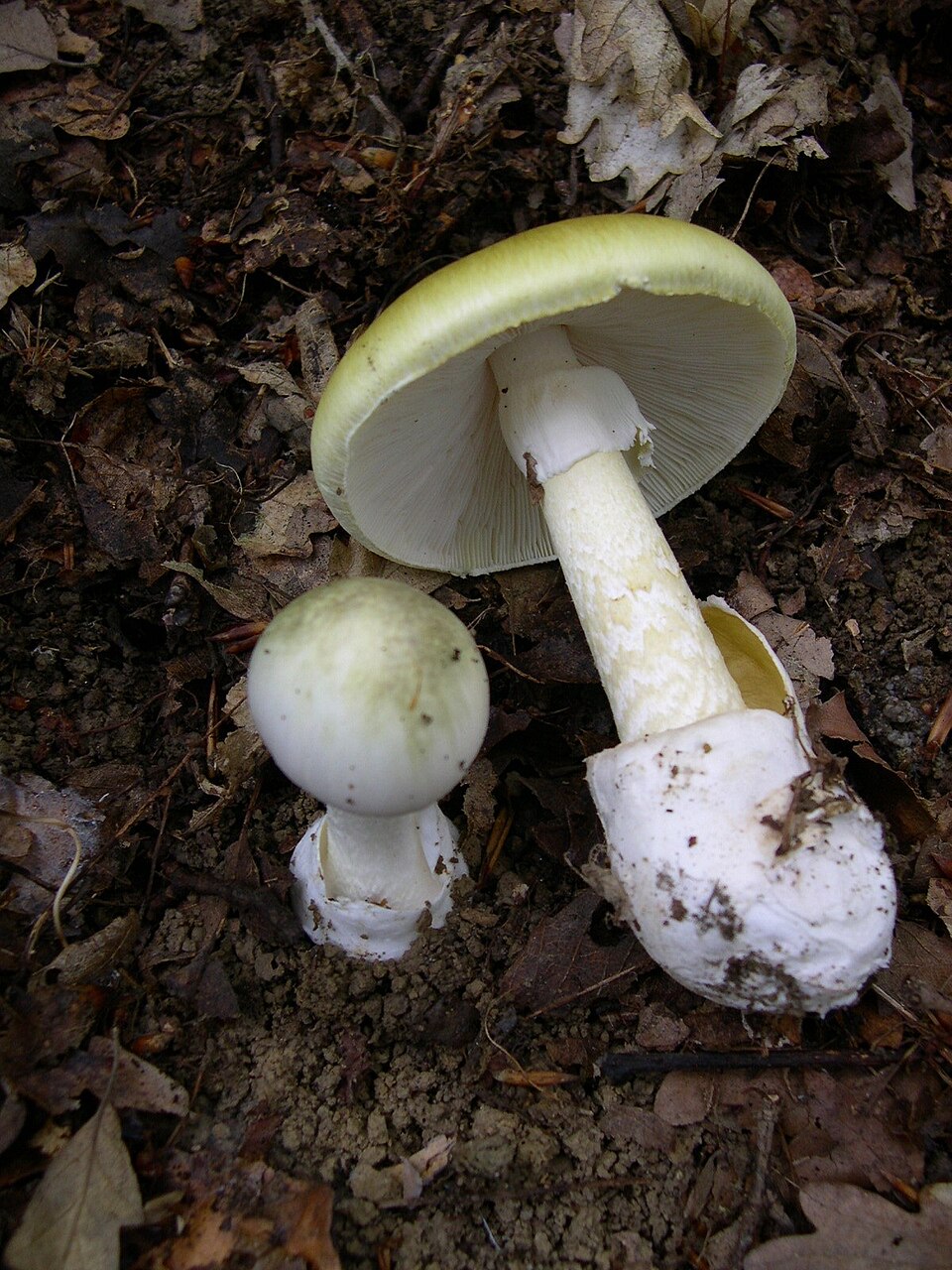
But some fungi are poisonous. Many make toxins called mycotoxins, which can harm animals and people. The death cap is among the deadliest mushrooms, and it can look like a safe, edible species. Never eat a wild mushroom unless an expert has identified it. Mould also spoils food, and some fungi infect people or damage buildings and crops.
A few mushrooms contain chemicals that affect the mind. Some are used in traditional ceremonies in some cultures.
Explore Next
Your audio story keeps playing while you look around.
Words to Know
- chitin
- A tough material found in fungus cell walls and in insect skeletons.
- decomposer
- A living thing that breaks down dead plants and animals.
- enzyme
- A chemical that speeds up a reaction, such as the breakdown of food.
- hypha
- A thin tube-like thread that makes up the body of most fungi.
- lichen
- A partnership between a fungus and an alga or cyanobacterium.
- mycelium
- A network of hyphae that forms the main body of a fungus.
- mycology
- The scientific study of fungi.
- mycorrhiza
- A partnership between a fungus and the roots of a plant.
- parasite
- A living thing that feeds on another living thing and harms it.
- spore
- A tiny cell that a fungus releases to grow into a new fungus.
- yeast
- A fungus that lives as single cells and is used to make bread and drinks.