Plastic
The shape-shifting material that built the modern world and now fills it with waste.
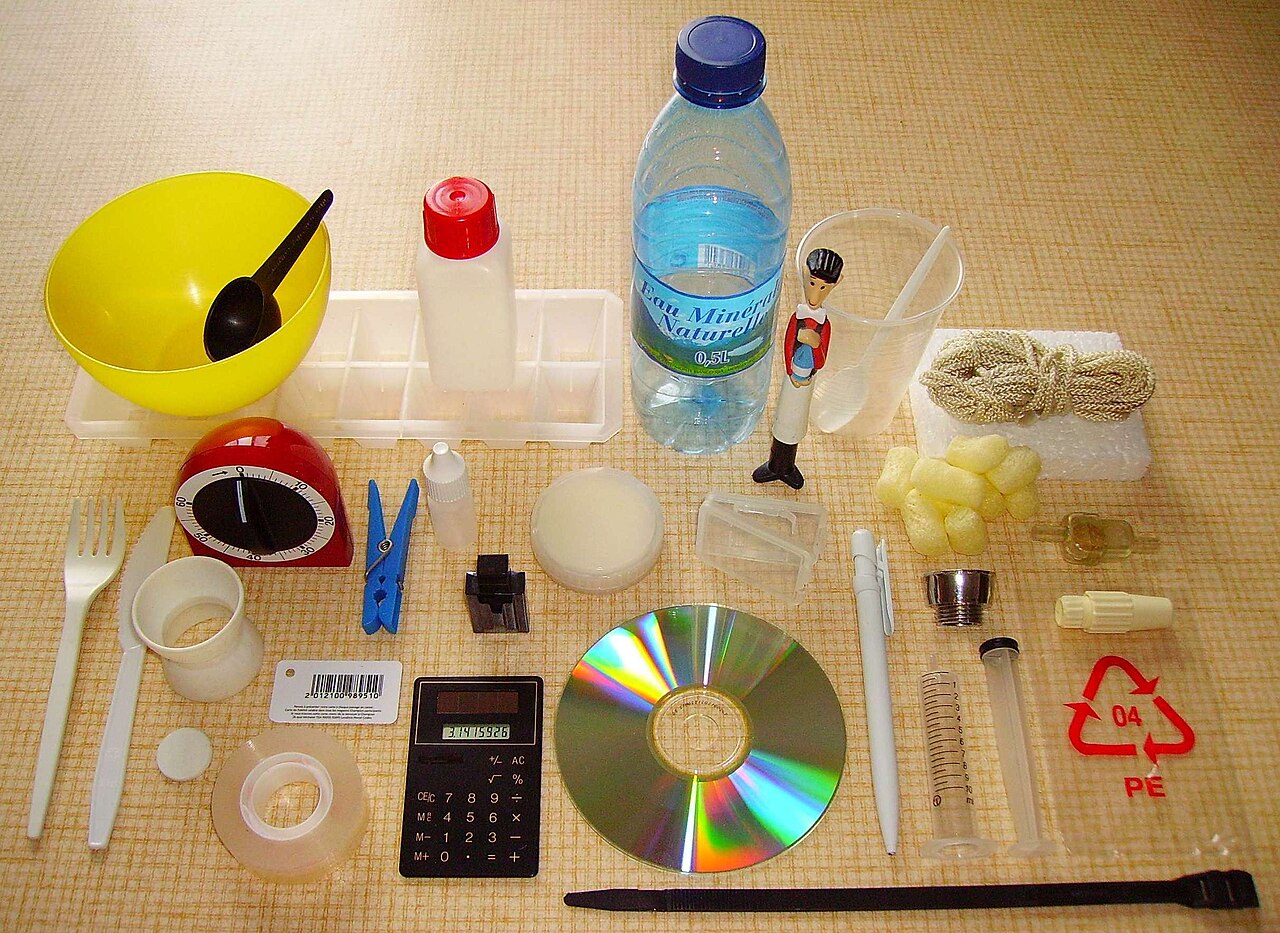
Plastic is a material that is soft enough to press into almost any shape and then sets hard. Its name comes from the Greek word plastikos, which means able to be moulded. Nearly all plastics are made of polymers, which are very long chains of atoms. Most come from oil or natural gas. Plastic is light, cheap, waterproof and tough, so it ended up in bottles, pipes, phones, car parts and hospital equipment. About 9.2 billion tonnes were made between 1950 and 2017. The toughness that makes plastic so useful also means it can last for centuries. That has turned plastic waste into one of the planet's biggest problems.
What makes plastic plastic?
Pick up a toothbrush, a pen or a drinks bottle and you are holding plastic. These things look very different, but they share one big idea. Plastic can be softened, pushed into a shape and then set solid. That ability is called , and it gave the material its name.
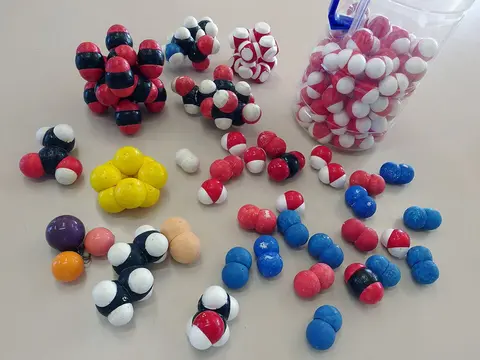
Most plastics are built from . A polymer is a very long chain made of small repeating units called . Think of a necklace with thousands of beads, where each bead is one monomer. In most plastics the main line of the chain, called the backbone, is made of carbon atoms. Sometimes oxygen, nitrogen or sulphur atoms join in too. Smaller groups of atoms, called side chains, hang off the backbone like charms on a bracelet. Changing the side chains changes how the plastic behaves.
That is why one family of materials can give us a stretchy bag, a stiff pipe and a clear lens. Chemists make polymers in big chemical plants by joining monomers together. Almost all the monomers come from oil or natural gas. A small but growing share of plastic is made from plant materials instead, such as polylactic acid.
Who made the first plastic?
People used plastic-like materials long before modern chemistry. Gums from trees, shellac and natural rubber can all be shaped. Around 1600 BC, people in Mesoamerica made balls, bands and small figures from natural rubber. In the Middle Ages, craftworkers treated cattle horn until it was clear enough to use as lantern windows.
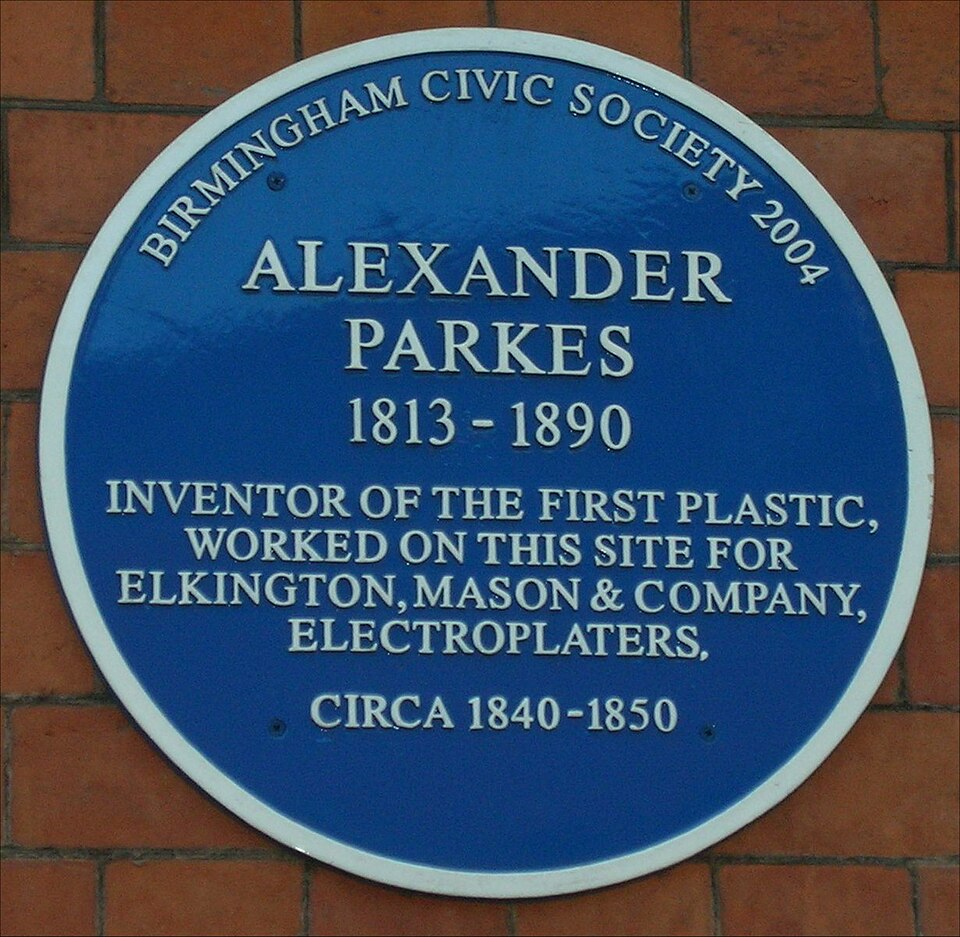
The big step came in the 1800s, when the Industrial Revolution pushed chemistry forward. In 1839 Charles Goodyear found that heating natural rubber with sulphur made it firm instead of sticky. This is called . Then in 1855 Alexander Parkes, an inventor from Birmingham, made Parkesine. It is usually called the first man-made plastic.
Parkes treated cellulose, the main material in plant cell walls, with nitric acid. The result could be dissolved in alcohol and then hardened into a clear, springy material. It could be moulded when warm. With pigments added, it could pass for ivory. Parkes patented it in 1856 and won a bronze medal at the 1862 International Exhibition in London.
Parkesine started from a natural material that had been changed. The first fully synthetic plastic came in 1907, when Leo Baekeland made Bakelite in New York. He also coined the word plastics. Bakelite never melted again once it had set, so it was ideal for telephones, radios and electrical plugs.
Why do some plastics melt and others never do?
Plastics fall into two big families. The difference is what happens when you heat them.
soften when heated and harden again when cooled. Their chemistry does not change, so you can melt and mould them again and again. Polyethylene in carrier bags, polypropylene in food tubs and PVC in pipes are all thermoplastics. When they are warm, their long chains slide past each other like cooked spaghetti. When they are cold, the chains lock in place. Together with synthetic fibres, thermoplastics made up about 86 per cent of all plastics in 2017.
behave differently. While they are being made, their chains link together into a rigid net. After they set, they keep their shape for good. If you heat them too much, they break down instead of melting. Epoxy resin and Bakelite are thermosets. Vulcanised rubber works in the same way. Before it is heated with sulphur, natural rubber is sticky and slightly runny. Afterwards it is dry and firm.
The arrangement of the chains matters as well. In some plastics the chains are jumbled like a bowl of noodles. These plastics are called amorphous. In others the chains are packed in neat rows. These are called crystalline. High-density polyethylene is mostly crystalline. Many plastics are a mix of both. They have a melting point and also a glass transition. That is the temperature above which their chains become much more flexible.
Which plastics are which?
There are dozens of plastics. They are often sorted into three groups by cost and toughness.
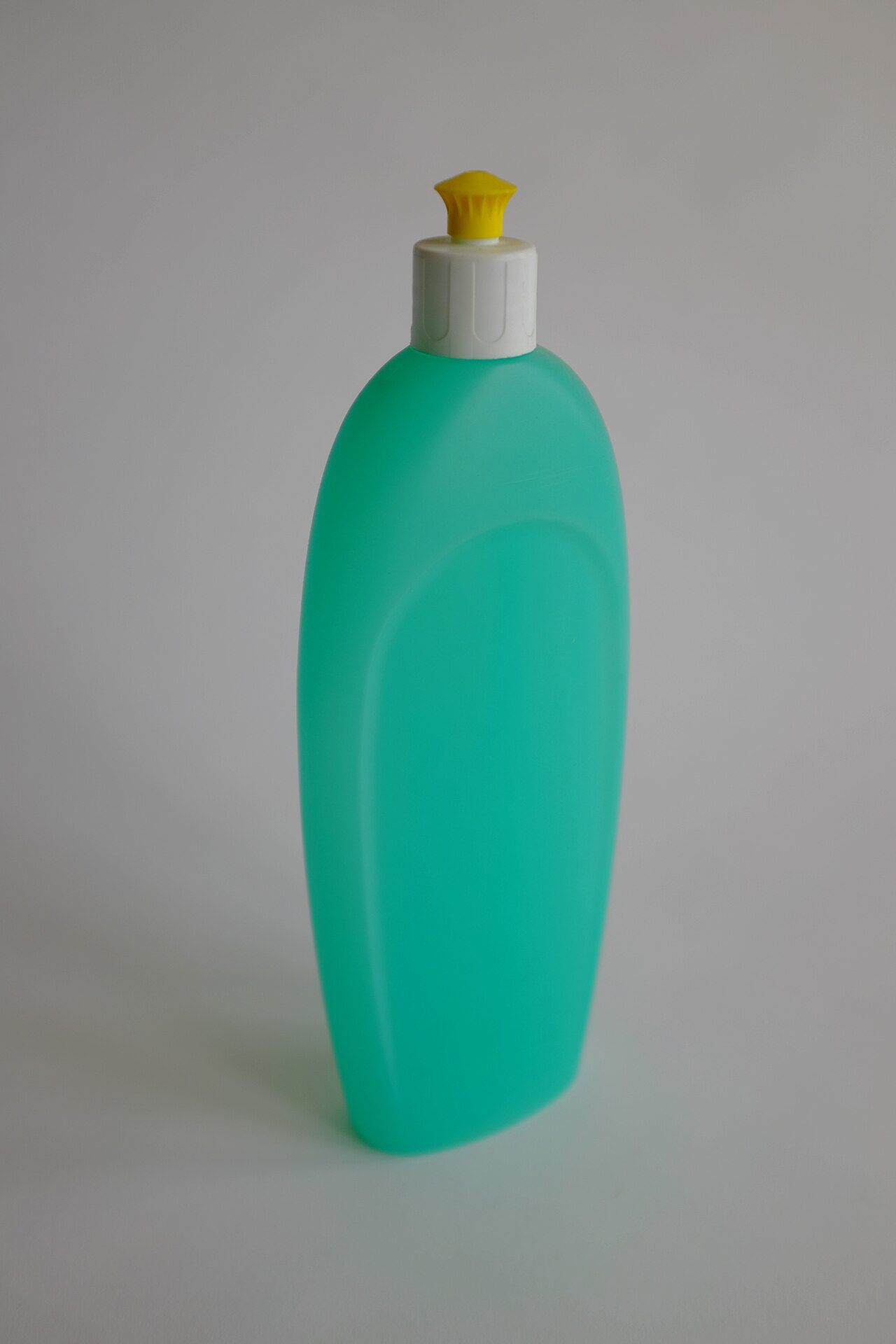
Commodity plastics are cheap and easy to make. They account for about 80 per cent of all production. Six of them carry numbered recycling codes. PET is used in drinks bottles. High-density polyethylene, or HDPE, is used in milk and shampoo bottles. PVC is used in pipes. Low-density polyethylene, or LDPE, is used in bags and film. Polypropylene makes food tubs, and polystyrene makes disposable cups. The numbering system was developed by ASTM International.
Engineering plastics are stronger and do harder jobs. Polycarbonate is used for compact discs, spectacle lenses and riot shields. Acrylic, known as Perspex or Plexiglas, makes clear windows and vehicle rear lights. ABS makes the cases of printers and keyboards. Plastic can replace metal in cars, which makes them lighter. That improves fuel efficiency by 6 to 8 per cent. Around half of a modern car by volume is plastic. Yet that is only 12 to 17 per cent of its weight.
High-performance plastics survive extreme conditions, often above 150 degrees Celsius. Kevlar is a strong, heat-resistant fibre used in body armour. PTFE gives frying pans their non-stick coating. PEEK is safe enough to be used in medical implants. It is one of the most expensive plastics sold.
How is plastic made into things?
Making plastic starts in huge chemical plants. They look a lot like oil refineries, with pipework running everywhere. There, from oil or natural gas are joined into . About 100 companies make 90 per cent of the world's plastic. Roughly half of production takes place in East Asia, and China is the biggest single producer.
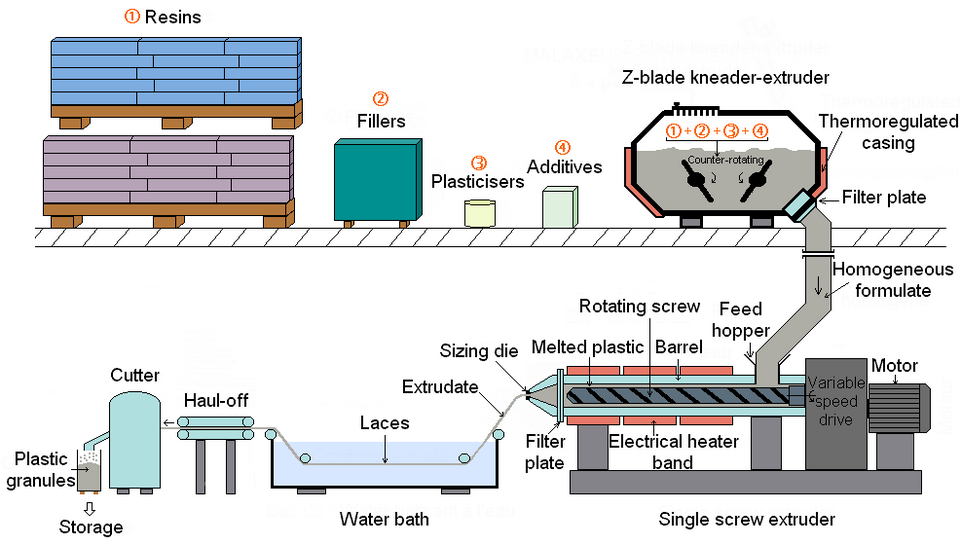
Pure plastic is rarely sold. First it goes through a stage called compounding, where it is mixed with . These chemicals include stabilisers that stop the plastic breaking down, plasticisers that make it bendy and dyes that give it colour. A typical plastic product contains around 20 additives. In PVC used for plumbing, additives can make up as much as 80 per cent of the volume.
Melted plastic is thick and sticky, so mixing is hard. Factories use a machine called an . It heats the plastic to between 150 and 320 degrees Celsius and pushes it along a turning screw. The screw blends everything evenly. The mixture is then cooled and cut into small granules.
Next, converters turn the granules into products. In injection moulding, melted plastic is forced into a mould under high pressure. In blow moulding, a hot plastic tube is inflated inside a mould, like a balloon, to make bottles. In film blowing, melted plastic is blown into a thin sheet for bags and wrapping. Other plastic is spun into fibres or built up layer by layer by 3D printers.
Why is there plastic everywhere?
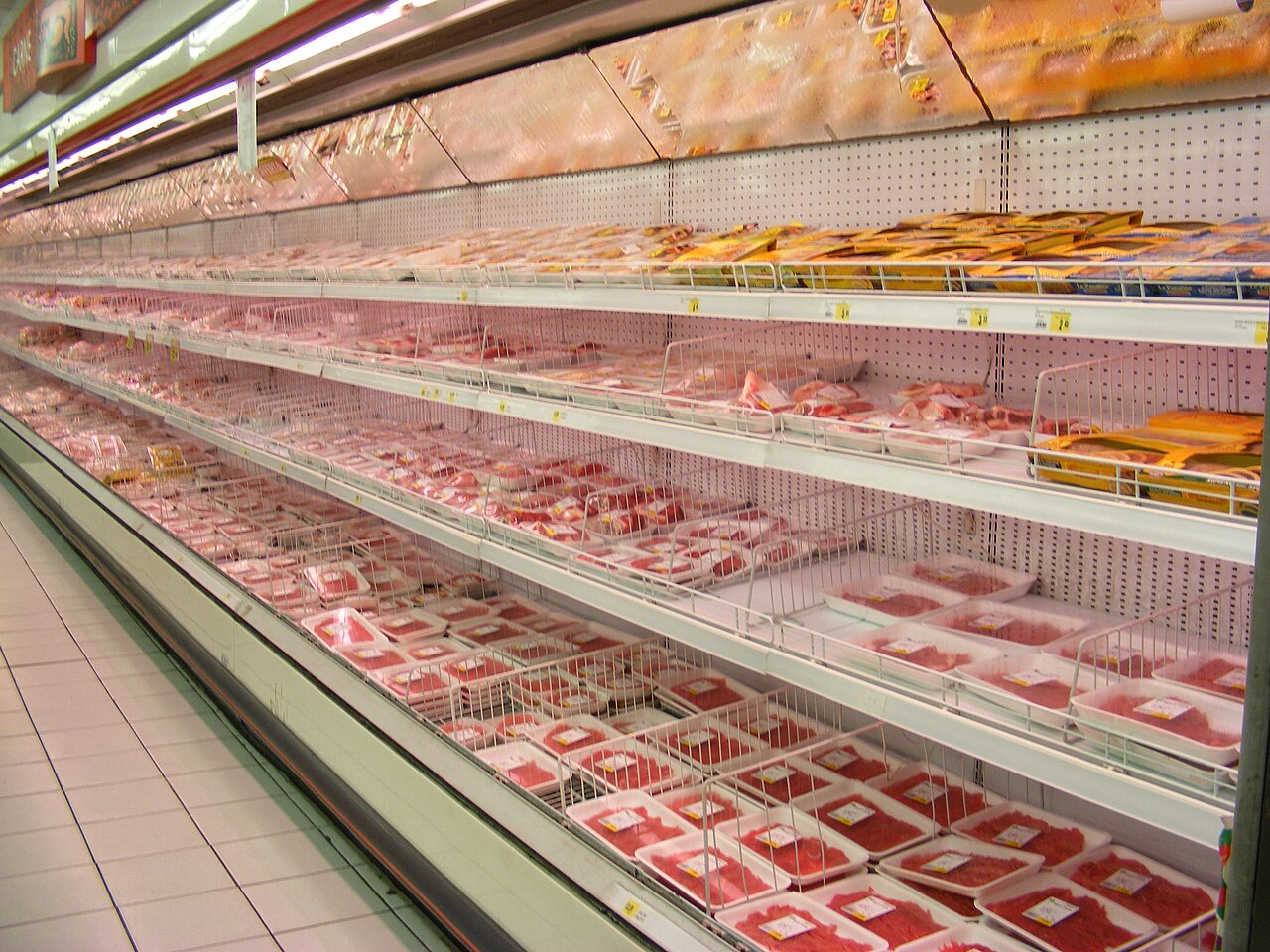
Plastic took over because it solves so many problems at low cost. It is light, it does not rust, it keeps water out, and it can be made soft, hard, clear or coloured. In one day you may meet it in a phone, a fleece jacket, a toothbrush and the pipes in your home.
Packaging is the biggest use, at about 40 per cent of all plastic. Building and construction comes next, at about 20 per cent. That includes pipes, window frames and gutters. In many countries PVC pipes carry sewage because they resist damage. Plastic is also used in cars, furniture, toys, clothing, electronics and medicine.
The numbers are huge. About 9.2 billion tonnes of plastic were made from 1950 to 2017. More than half of that was made after 2004. Production passed 400 million tonnes a year in the early 2020s. That works out at about 50 kilograms for every person on Earth each year. People in North America and Europe use much more than people in many other places.
Some plastic items last a long time. Pipes and machine parts can stay in use for 20 years or more. Packaging is very different. Many plastic cups, carrier bags and takeaway boxes are thrown away in less than a day. That short life is where much of the waste comes from.
Where does all the plastic go?
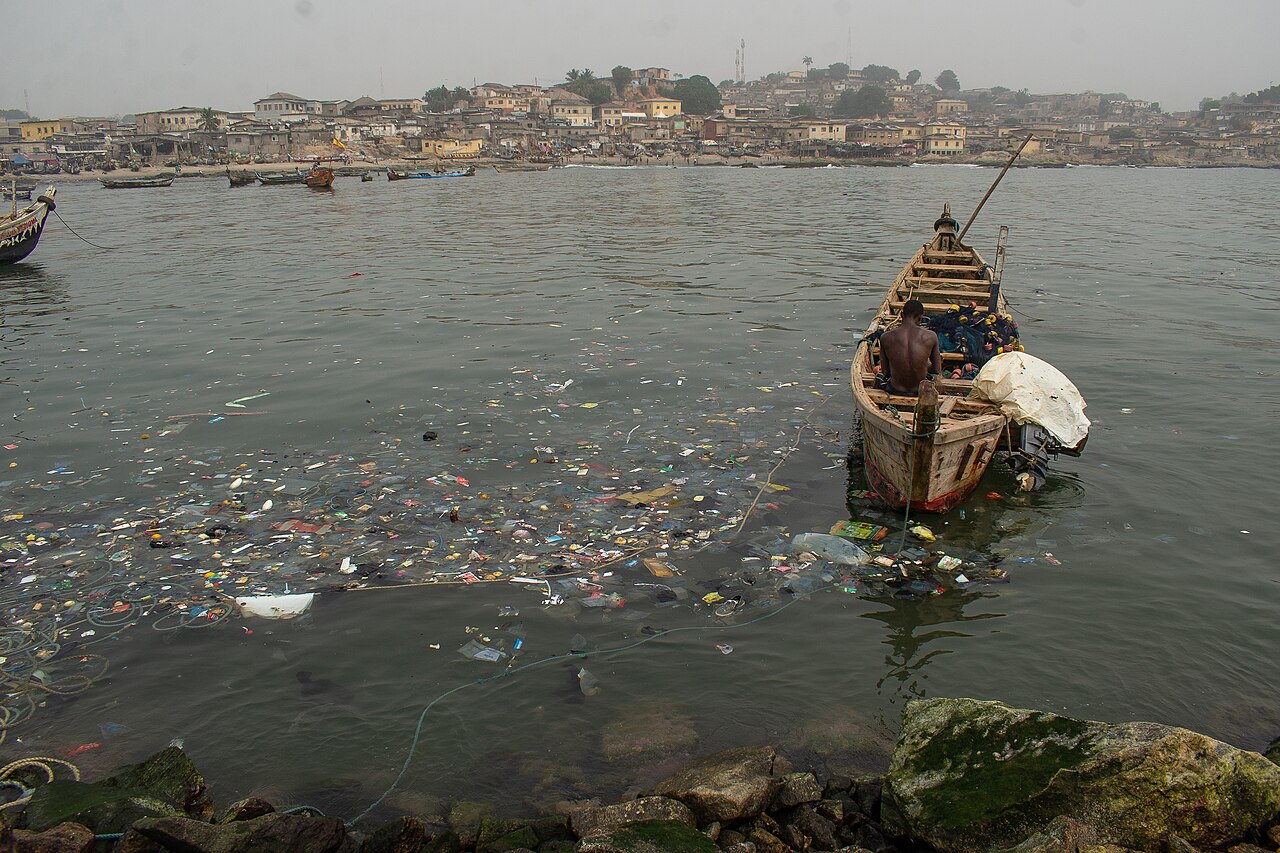
Plastic is built to last, and that is the heart of the problem. Its chains of atoms resist sunlight, water and most of the tiny living things that rot wood and food. One estimate says a foam cup takes about 50 years to break down. A plastic drink holder may take about 400 years, and fishing line about 600. These figures are only estimates, but they show the scale of the problem.
So where has the plastic gone? Of all the plastic thrown away so far, about 14 per cent has been burned. Less than 10 per cent has been recycled. Most of the rest sits in landfill or has escaped into the environment. Each year, an estimated 8 to 12 million tonnes of plastic enter the oceans. Most comes from packaging that was not collected or managed properly.
Rivers carry a great deal of it. One study named ten rivers, including the Yangtze, the Indus, the Ganges and the Nile, as carrying most of the plastic that reaches the sea.
In the ocean, currents gather floating plastic into huge areas of rubbish called garbage patches. Between half and four-fifths of the litter found in marine areas is plastic. Sunlight slowly breaks it into smaller pieces, but it does not vanish. Plastic also builds up in soil. Farmers use plastic sheets and films, and some estimates say there is more plastic in soil than in the oceans.
Does plastic harm living things?
Plastic itself is not very poisonous. Its molecules are so big that they do not dissolve in water or in the body. That is one reason plastic became popular for food packaging and medical equipment. The trouble is more complicated.
First, there are the . They are mixed into plastic but are not firmly bonded to it, so they can slowly leak out. Some are harmful. Bisphenol A, or BPA, is used to make polycarbonate and acts a little like a hormone in the body. Phthalates, which make PVC soft, have also raised concerns. Because of these worries, the European Union restricts several phthalates. It bans some in toys. Many places have banned BPA in baby bottles. Lead, cadmium and mercury were once used in plastics and are banned in many countries. Burning plastic in the open is especially dangerous because it gives off toxic fumes, including dioxins.
Second, there are . These are tiny pieces of plastic that form as larger items break apart. They have been found in the oceans, in soil, in animals and in the food chain. Scientists first spotted plastic fragments in the guts of seabirds in the 1960s, and the amounts have grown since.
In 2023 researchers described a disease they named plasticosis. Seabirds that swallow plastic get scarred, inflamed stomachs, which makes it harder to digest food. How microplastics affect people over the long term is still poorly understood.
Can we recycle plastic?
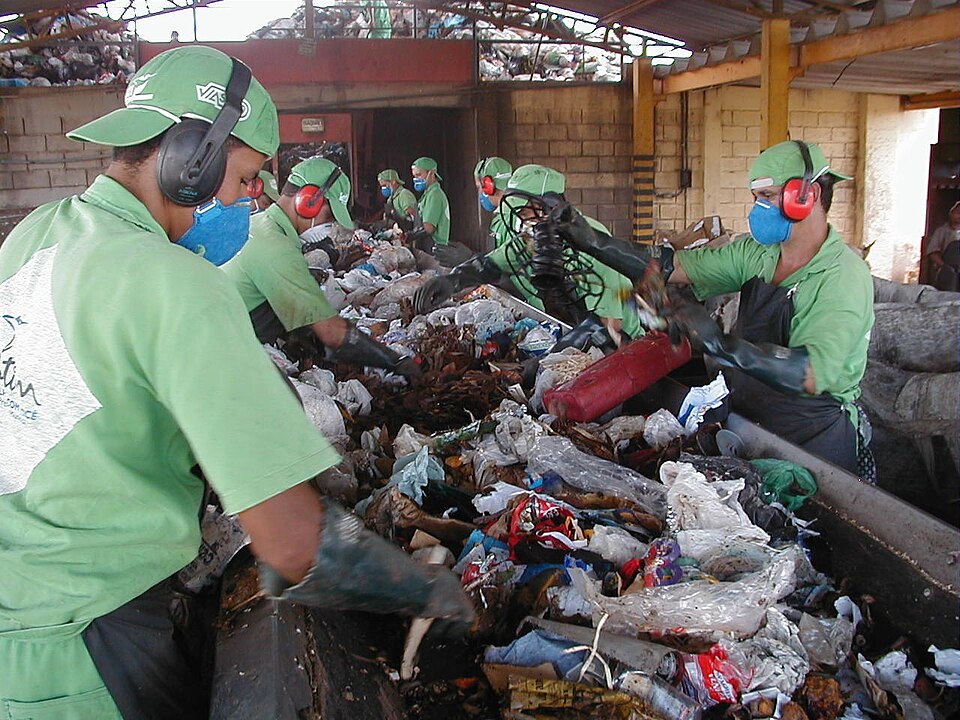
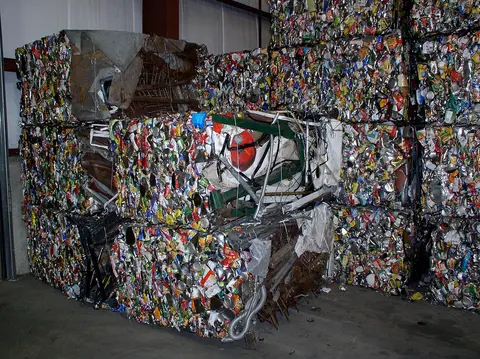
Recycling sounds easy, but plastic makes it hard. Today almost all plastic recycling is mechanical. Used plastic is sorted, cleaned, shredded and melted so it can be made into something new. Only can be treated this way, because never melt again.
Sorting is the first challenge. Plastic must be separated by type, because mixing different gives a weak, unreliable material. It is also usually sorted by colour. If several colours are melted together, the result is often a dull brown. Many sites still sort by hand as well as by machine.
cause a second problem. Every batch of plastic contains different dyes, stabilisers and other chemicals, and they are very hard to remove. They end up in the new product. Some recycled plastic should not be used for food packaging or toys for this reason.
Other methods exist. In , plastic is heated above 500 degrees Celsius with no oxygen. It breaks into simpler chemicals called hydrocarbons. These can be used to make new plastic or fuel. Plastic can also be burned in a modern incinerator. In the European Union, these must reach at least 850 degrees Celsius for two seconds to destroy harmful chemicals. A bonfire or open pit does not get hot enough.
Because of all these limits, less than 10 per cent of all plastic has been recycled.
How can we use less plastic and waste less?

Reducing and reusing come before recycling. Using fewer single-use items, choosing refillable bottles and making products that last all cut waste at the start. In many places people collect used bottles and sell them to recyclers. That gives plastic a second life.
Some people look to new materials. are made mostly from renewable plant materials such as cellulose and starch, not from oil. plastics are designed to break down in sunlight, moisture, bacteria or enzymes. Some scientists have even engineered bacteria to make a fully biodegradable plastic called polyhydroxybutyrate. In 2021 it was still expensive. A biodegradable label does not mean a plastic will vanish in a bin or in the sea.
Another idea is to put living things to work. In 1975 Japanese scientists found bacteria in ponds beside a nylon factory. They fed on waste chemicals from nylon. Since then researchers have found fungi that eat polyurethane and bacteria that attack PET. So far none of these solves the waste problem.
Climate matters too. The OECD estimated that plastic produced greenhouse gases equal to 1.8 billion tonnes of carbon dioxide in 2019. That is about 3.4 per cent of the global total. Yet a 2024 study found that replacing plastic with materials such as glass or aluminium often caused more emissions. Since 2022, governments have been trying to agree a global plastics treaty. Some want it to limit how much plastic is made. The talks broke down in August 2025 without a deal. A new chair was chosen in February 2026, and the next formal round of talks is planned for March 2027.
Explore Next
Your audio story keeps playing while you look around.

Words to Know
- additive
- A chemical mixed into plastic to change how it looks, lasts or works.
- biodegradable
- Able to be broken down by living things such as bacteria and fungi.
- bioplastic
- A plastic made mostly from renewable plant materials instead of oil.
- extruder
- A machine that melts plastic and pushes it along a screw to mix and shape it.
- microplastic
- A tiny fragment of plastic, usually smaller than 5 millimetres.
- monomer
- A small molecule that links with others to build a polymer.
- plasticity
- The ability of a material to be shaped and then keep that shape.
- polymer
- A very long chain of atoms made from many small repeating units.
- pyrolysis
- Heating a material without oxygen so that it breaks into simpler chemicals.
- thermoplastic
- A plastic that softens when heated and can be melted and moulded again.
- thermoset
- A plastic that sets for good and breaks down instead of melting when reheated.
- vulcanisation
- Heating natural rubber with sulphur to make it firm and tough.