Materials science
Why steel is strong, glass is clear and plastic bends, and how we invent better ones.

Everything made by people is made of something. Bridges use steel and concrete. Phone screens use specially strengthened glass. Computer chips use silicon, and artificial hips use metals and tough plastics. Materials science is the study of what materials are made of, how they behave and how to make new ones. Its big idea is that a material's story shapes its structure, and its structure decides what it can do. Materials scientists use that idea to design lighter aircraft, safer implants and faster electronics. They even make spacecraft that survive the heat of returning to Earth. The field is so important that whole ages of history are named after materials.
What do materials scientists actually do?
A material is a substance chosen for a job. Most are solids, such as wood, steel, glass or rubber. Materials scientists ask why one material is strong while another is brittle. They ask why one carries electricity while another stops it. And they try to make things that have never existed before. Materials engineers then find uses for the best new materials in industry.
The field rests on one chain of ideas, called the materials paradigm. How a material is made, which is called processing, decides its internal structure. That structure decides its properties, such as strength, hardness, flexibility, heat resistance and how it conducts electricity or light. And those properties decide how it performs in real life. Change the processing and you change the material.
The subject borrows from physics, chemistry and engineering. For a long time universities treated it as a branch of those subjects. From the 1940s it was recognised as a science in its own right. Big technical universities set up whole schools for it.
Materials science also helps work out why things break. Failure analysis is the careful study of products, structures or parts that fail or do not work as intended. Investigators examine broken parts to find the cause. This is one of the ways experts work out why aircraft accidents happen, and it leads to safer designs.
Why are ages of history named after materials?
Historians talk about the Stone Age, Bronze Age, Iron Age and, later, a Steel Age. The labels are not exact, but they show how much a new material can change life. Better tools, weapons and machines let people farm, build, trade and fight in new ways.
Materials science began with ancient crafts. Potters learned that fire could turn soft clay into hard . From there, people learned to heat rock and pull out metal, and that skill is called . Bronze is a mixture of copper and tin, and it was harder than copper alone. Later, iron and steel were stronger still. Modern materials science grew out of metallurgy, which itself grew out of the use of fire.
For thousands of years such skills were passed on as craft knowledge. People knew what worked without knowing why. During the Enlightenment in the 1700s, scientists began to use chemistry, physics and engineering to explain these old observations. In the 1870s the American scientist Josiah Willard Gibbs linked heat and energy to the way a material is built. He showed that the different forms of a material follow strict rules. Those rules tie its atomic structure to its physical properties.
The Space Race of the 20th century pushed the field forward again. Rockets and spacecraft needed new metal , silica materials and carbon materials. In the early 1960s the United States government paid for university laboratories to study materials. Many metallurgy departments grew into materials science departments.
Who invented the materials that changed the world?
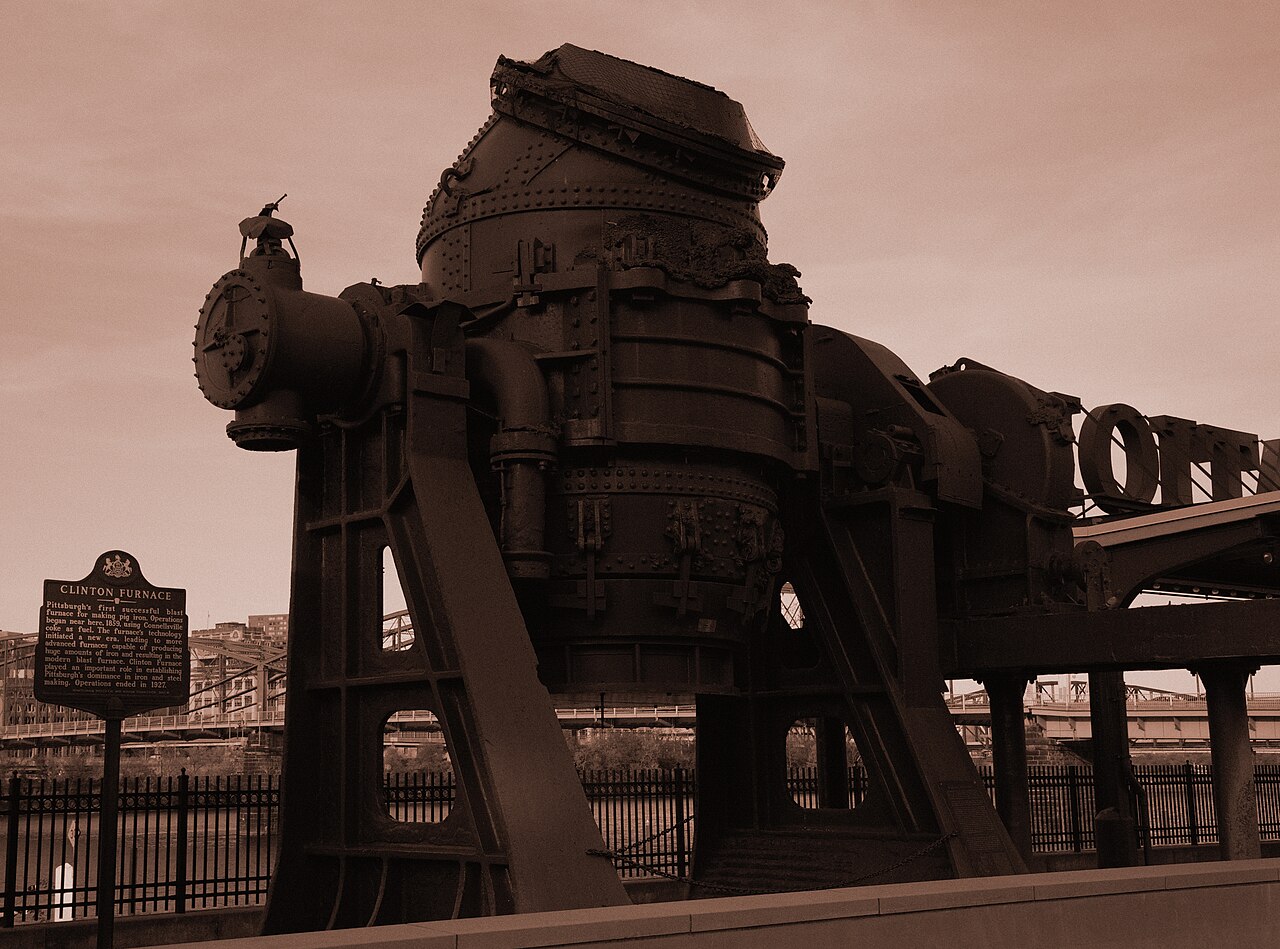
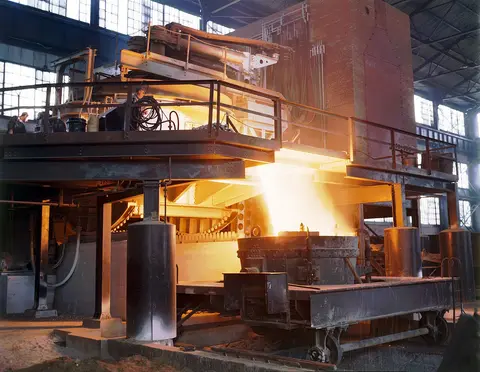
Many great materials began with someone noticing something odd. In 1856 the English inventor Henry Bessemer found a fast way to make steel. He blew air through molten iron. Oxygen in the air burned away extra carbon and other impurities in about 20 minutes. Older methods had taken many hours or days. Steel became cheap enough for railway lines, ships, bridges and, later, the frames of skyscrapers.
In 1913 Harry Brearley, a metallurgist in Sheffield, England, was testing steels for gun barrels. He noticed that one sample, which contained a lot of chromium, resisted the acid used to etch it and did not rust. It was the start of stainless steel, now used for cutlery, sinks and surgical tools.
In 1965 Stephanie Kwolek, a chemist at the American company DuPont, was looking for a light, strong fibre for car tyres. One of her mixtures was cloudy and runny, and most chemists would have thrown it away. She persuaded a colleague to spin it into fibres anyway. Weight for weight, they were about five times stronger than steel. The material, Kevlar, went on sale in 1971 and is now used in protective vests and helmets.
In 2004 Andre Geim and Konstantin Novoselov at the University of Manchester used sticky tape to peel thinner and thinner layers from graphite. In the end they had graphene, a sheet of carbon one atom thick. It is extremely strong and carries electricity very well. The pair won the Nobel Prize in Physics in 2010.
Why does the inside of a material decide what it can do?
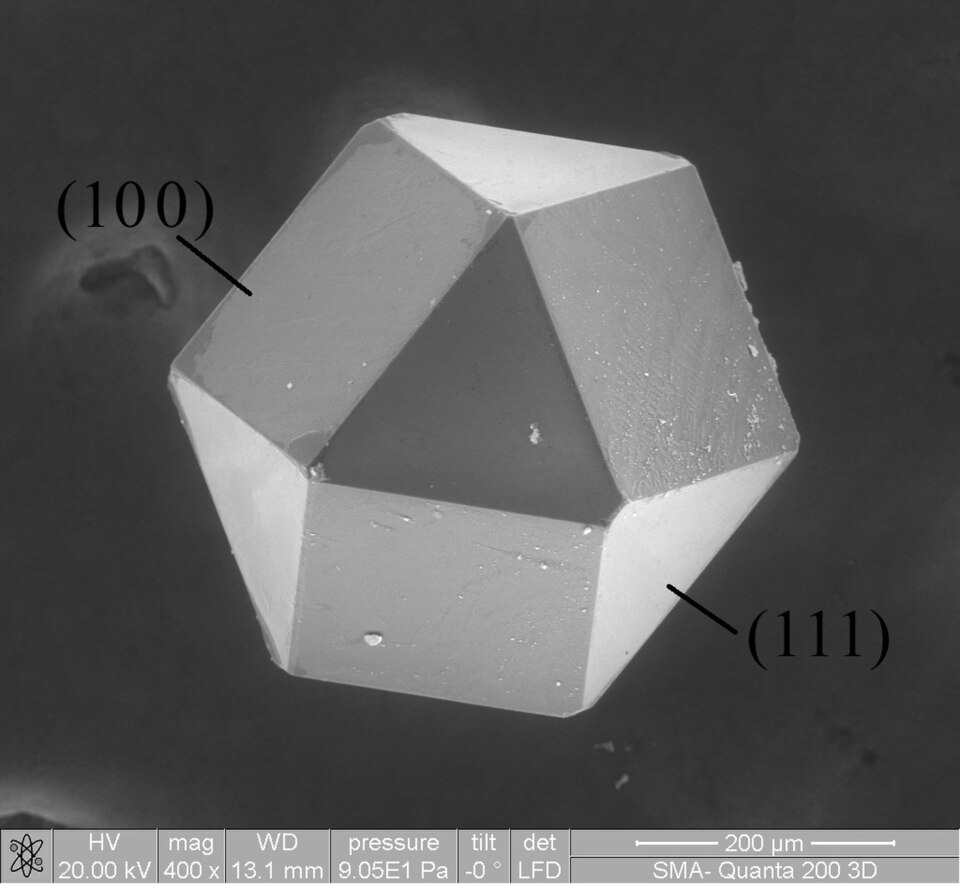
Materials scientists study structure at several sizes. At the smallest, the atomic scale, they ask which atoms are present and how they are joined together. This decides a material's electrical, magnetic and chemical behaviour. Next comes the nanoscale, then the microstructure seen under a microscope, and finally the macrostructure you can see with your own eyes.
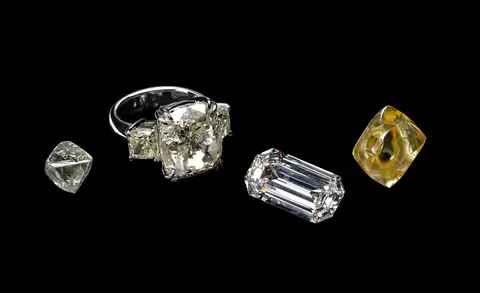
Many solids are . In a crystal the atoms sit in a neat, repeating pattern, like bricks in a wall. The smallest block that repeats is called the unit cell. The outside shape of a crystal often shows its inner pattern. Diamond and graphite are both pure carbon, yet their atoms are arranged differently. That is why one is the hardest natural material and the other is soft enough to write with.
Perfect crystals do not exist. Real materials have flaws such as missing atoms, extra atoms or rows of atoms that are out of line. These defects often control strength. Most metals are also made of many tiny crystals, called grains, packed together with different orientations. The edges between grains change how easily the metal bends.
Not every solid is a crystal. Glass has no long-range pattern, and scientists call it , which means shapeless. Many plastics and natural materials are the same. So what a material is made of is only half the story. How its atoms are arranged is the other half.
What happens when things get really tiny?
Nanomaterials are materials with parts between about 1 and 100 in size. A nanometre is one billionth of a metre. A human hair is around 80,000 nanometres wide. Nanostructures are far too small to see even with an ordinary microscope.
At this size, materials can behave in surprising ways. The same substance can have different electrical, magnetic, optical or mechanical properties when its pieces are only a few nanometres across. That is why nanomaterials are a very active area of research.
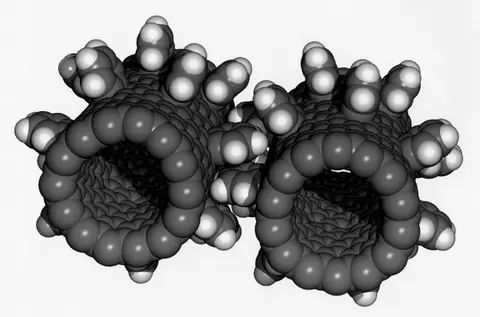
Scientists describe nanostructures by how many of their dimensions are tiny. A nanotextured surface is only thin at the nanoscale. A nanotube has a width at the nanoscale, but its length can be much greater. A nanoparticle is tiny in all three directions.
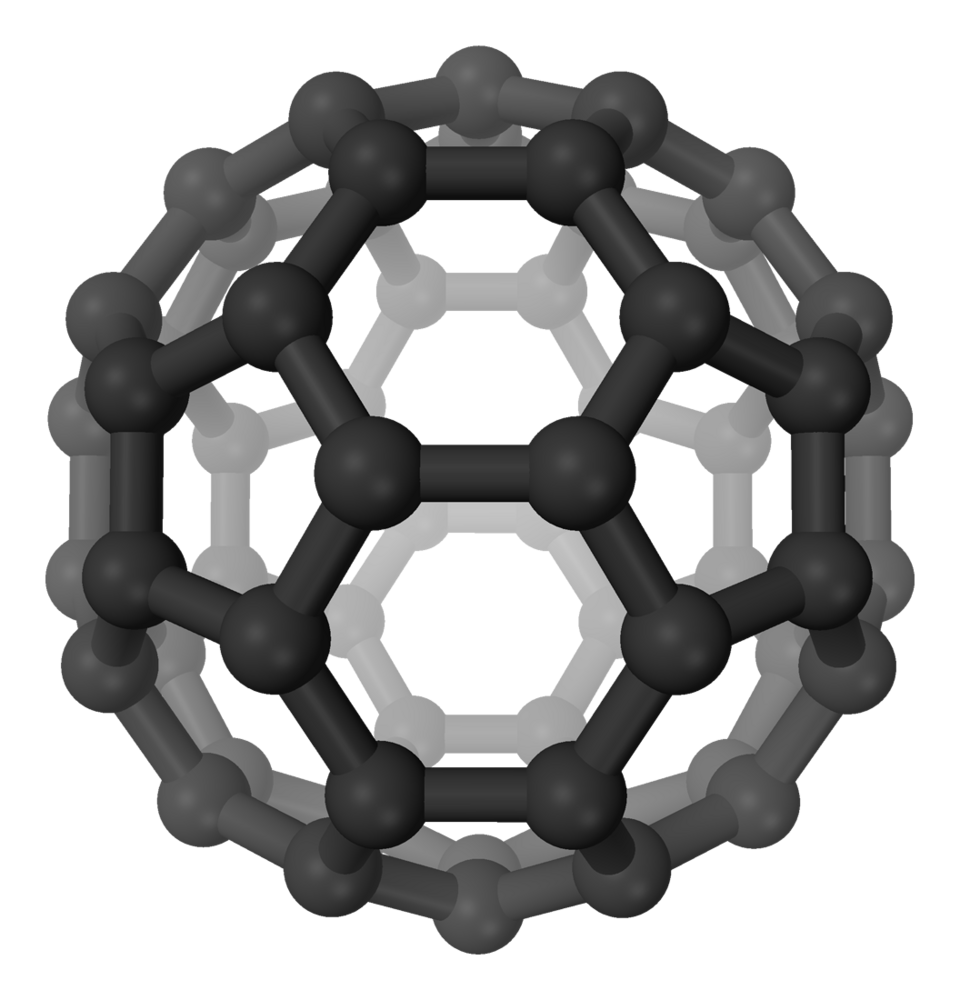
Carbon has produced some of the best-known examples. Buckminsterfullerene, also called a buckyball, is a hollow cage of 60 carbon atoms shaped like a football. Carbon nanotubes are rolled-up sheets of carbon atoms. Graphene is a single flat layer of carbon atoms. These belong to the organic, or carbon-based, nanomaterials. Others are based on elements such as silicon.
Graphene was first separated in 2004, and better ways of making it and other nanomaterials are still being developed. Researchers hope for stronger materials, better electronics and new medicines.
How do scientists see inside a material?
Atoms are far too small to see directly, so materials scientists use clever tools. This work is called characterisation. One method is diffraction. A beam of X-rays, electrons or neutrons is fired at a sample. The way it scatters reveals how the atoms are arranged. Other tools use light and energy to find out which chemical elements are present. Electron microscopes can show details far smaller than an ordinary microscope can.
Temperature also changes structure. Thermodynamics is the study of heat, temperature and energy, and it helps predict how a material will behave. Kinetics is the study of how fast things change. When a metal is heated, for example, its atoms slowly move about. This is called diffusion, and it changes the microstructure over time. Controlling this is key to making a good material.
A material is only useful if it can be made at a sensible cost. Factories use methods such as casting, rolling and welding. Others include glassblowing, growth and growing thin films. Tiny amounts of other elements can change a material a lot. Steel is graded by the tiny amounts of carbon and other elements it contains. So the way iron is purified in a blast furnace affects the steel made from it.
Computers are now a major tool. With enough computing power, scientists can simulate how a material behaves at every scale, from single atoms to whole parts. They can test new designs on screen and save years of trial and error in the laboratory.
What makes steel so strong?

Metals are strong, can be shaped, and usually carry heat and electricity well. Pure metals are often too soft, so engineers mix them with other elements to make . Alloys of iron, such as steel, make up the largest share of all metals used today, in both amount and value.
Steel shows the materials paradigm at work. It is iron with a little carbon, usually well under 2 per cent. A small change in that recipe changes the steel. More carbon makes it harder and stronger, but also more brittle.
Processing matters as much as the recipe. Steel can be heated until it glows and then cooled fast in water or oil. This is called , and it makes the metal very hard. Warming it again gently, called tempering, trades a little hardness for toughness. With the right heating and cooling, the same steel can be made springy or very hard.
Other important alloys use aluminium, titanium and magnesium. These metals react easily with other substances. So they can only be pulled from their ores with electricity, in a process called electrolysis. They cost more than steel, but they are strong for their weight. So they are chosen where lightness matters most, such as in aircraft and some cars.
Why does glass break but concrete hold up skyscrapers?
and glasses are usually the most brittle materials used in industry. Most are built from silica, a compound of silicon and oxygen, and their atoms are held by strong bonds. They resist heat and wear well, but a crack can race through them. Fired clay pots, tiles, and the tough tool tips made of tungsten carbide are all ceramics.
Glass is made by heating silica with other ingredients until it becomes a thick liquid. It is then cooled before its atoms can form a regular pattern. Windowpanes and spectacle lenses are common examples. Thin fibres of glass carry light over long distances in telecommunications cables. Scratch-resistant Corning Gorilla Glass shows how materials science can improve an everyday part.
Scientists can also toughen ceramics. By mixing in tiny extra particles, they make cracks change direction instead of racing straight through. This idea is called crack deflection.
A is a material built from two or more different parts that stay separate. Each part adds its own strength. Concrete reinforced with steel bars is a building example. Many plastic casings contain fibres or chalk that add strength.
Some composites survive extreme heat. NASA's Space Shuttle was protected by reinforced carbon-carbon on its wing edges and nose. This light grey material withstood re-entry temperatures of up to 1,510 degrees Celsius. The Shuttle flew its last mission in 2011.
What are plastics made of?
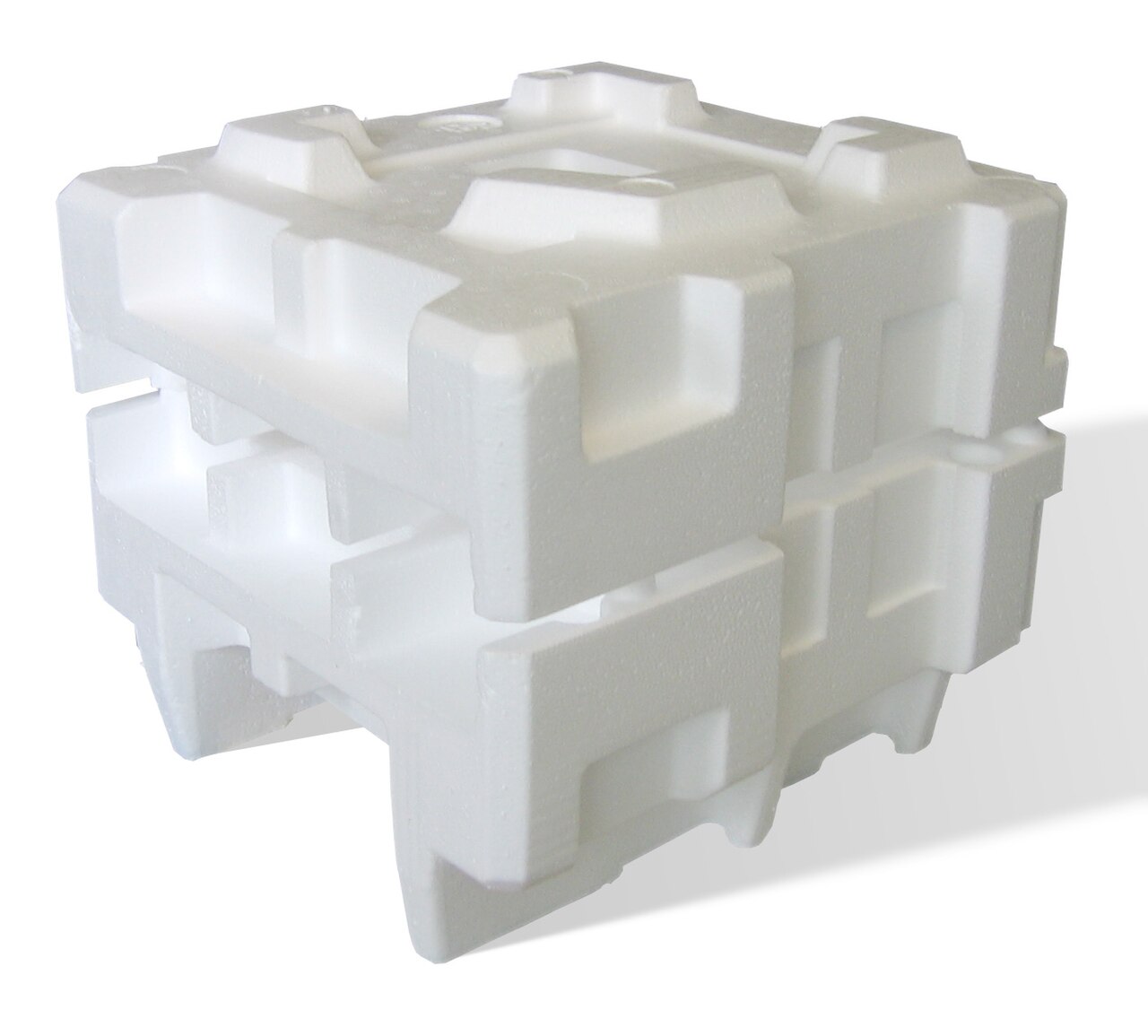
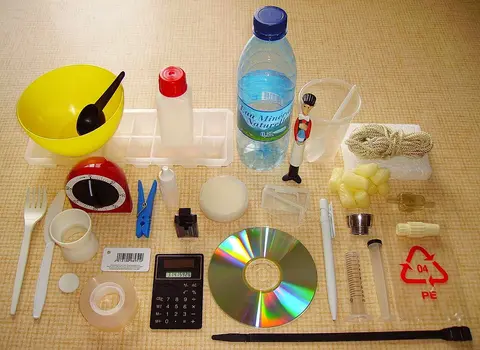
A is a very long molecule made of many small identical units joined in a chain, like links in a necklace. Natural polymers include rubber from trees, as well as wool and silk. Many polymers are made in factories, mostly from oil and gas. When a polymer is mixed with additives and shaped, it becomes a plastic or a rubber.
To a materials scientist, the exciting part is how much one polymer can change. Polyethylene is a good example. When its chains are short and branched, they cannot pack closely. The result is the soft, cheap film of a carrier bag. With fewer branches, the chains line up more tightly. That gives the stiffer plastic of underground gas and water pipes.
With extremely long chains, it becomes ultra-high-molecular-weight polyethylene. This form is so tough and slippery that it is used for sliding rails in factories and in the socket of artificial hip joints. The atoms are the same in all three. Only the length and shape of the chains are different.
Polymers also show the trade-offs every designer faces. For a drinks container, glass is clear but heavy, aluminium cans are strong but dent, and plastic bottles are light and cheap.
What materials run computers and heal bodies?
A is a material that conducts electricity better than an insulator but worse than a metal. Its great trick is that tiny amounts of other atoms can change its behaviour a lot. Adding them on purpose is called . That lets engineers build diodes, transistors, LEDs and computer chips. Silicon is the most used semiconductor in the world. Gallium arsenide is second. It is chosen for high-speed uses such as mobile phones, satellite links and radar. Chips have replaced the old glass vacuum tubes in most devices, and one chip can hold billions of tiny devices.
are materials that work with living tissue. Some come from nature and others are made in laboratories from metals, plastics or . They are used in heart valves, dental work, surgery, hip implants coated with hydroxylapatite, and drug delivery. One design is an implant soaked in medicine that releases it slowly over a long time.
Other research areas include superconducting materials, which carry electricity with no resistance, and metamaterials with properties not found in nature. Materials scientists even take ideas from living things and from archaeology.
Today scientists can also search for new materials with computers. Add the tools of nanotechnology, and the next great material may first appear on a screen. It might even start a new age of history.
Explore Next
Your audio story keeps playing while you look around.
Words to Know
- alloy
- A metal made by mixing two or more elements, usually to make it stronger.
- amorphous
- Having no regular pattern in the arrangement of atoms, like glass.
- biomaterial
- A material designed to work safely with living tissue.
- ceramic
- A hard, heat-resistant, brittle material such as fired clay or porcelain.
- composite
- A material made from two or more different parts that work together.
- crystal
- A solid whose atoms are lined up in a neat, repeating pattern.
- doping
- Adding tiny amounts of other atoms to a semiconductor to change how it conducts.
- metallurgy
- The science and craft of getting metals from rock and shaping them.
- nanometre
- One billionth of a metre.
- polymer
- A very long molecule made of many small units joined in a chain.
- quenching
- Cooling hot metal very quickly in water or oil to make it harder.
- semiconductor
- A material that conducts electricity better than an insulator but worse than a metal.