Scientific method
How scientists test ideas, and why a good answer always leads to a new question.
The scientific method is the way scientists find out how the world works. They watch carefully, suggest an explanation, and then try hard to prove it wrong. If the explanation survives every test, they trust it a little more. If it fails, they change it or throw it out. People have used this habit of testing ideas against evidence since at least the 17th century, and its roots go back much further. It has given us medicines, electricity and spacecraft. It is also a loop, not a straight road. Every answer leads to new questions, and anyone, anywhere, can check the work.
What is the scientific method?
The scientific method is how scientists decide what to believe. Instead of guessing and stopping there, they observe carefully, suggest an explanation, and then test it as hard as they can.
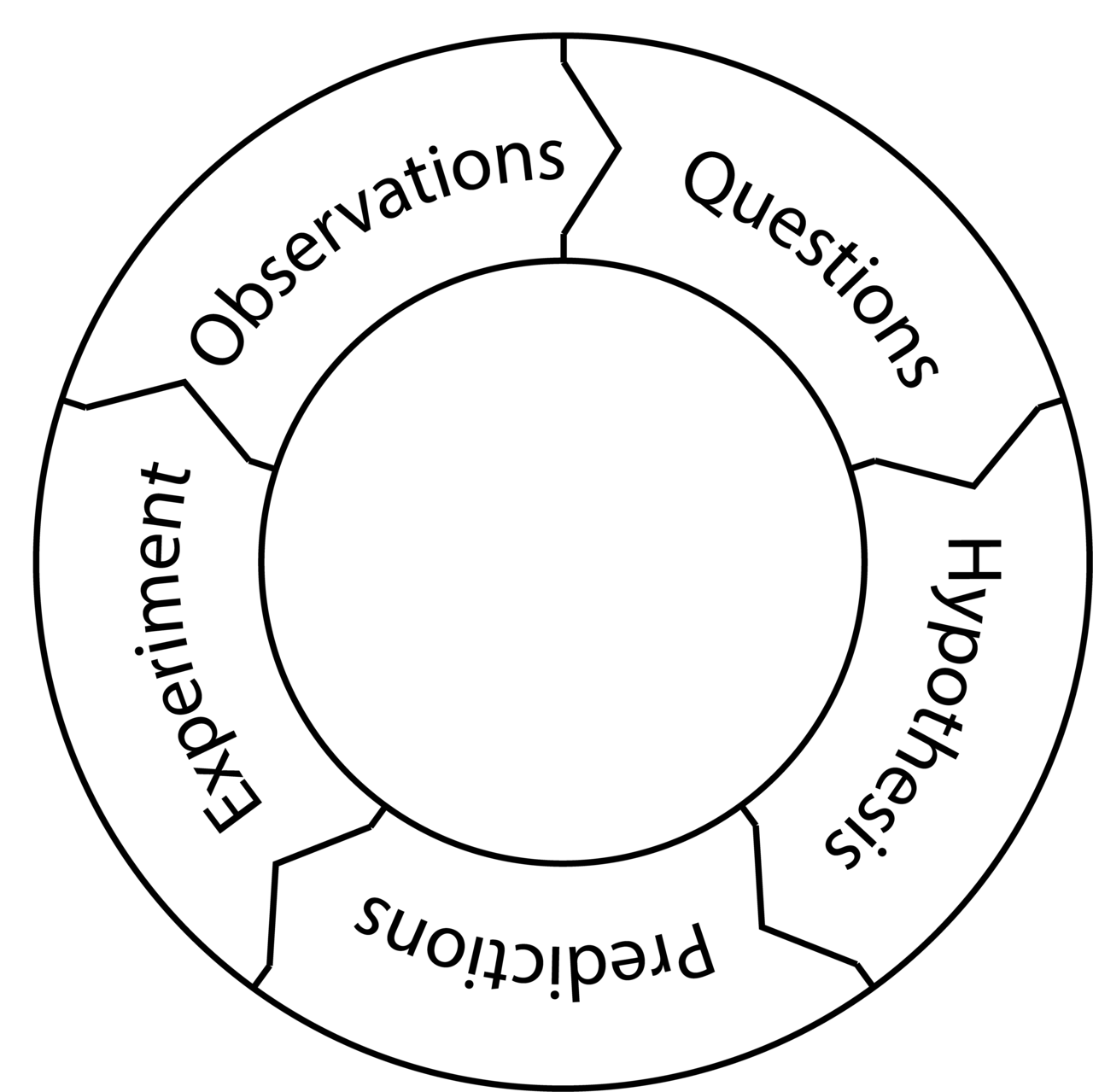
Textbooks often list the steps like a recipe. First, ask a question. Then gather information and form a , which is a suggested explanation that can be tested. Next, make a , which is what you should see if the hypothesis is right. Then carry out an or make new observations. Last, share the results so that other people can check them.
The key word is test. A good hypothesis must be . That means there must be some possible result that would show it is wrong. 'Ghosts hide whenever anyone looks' can never be proved wrong, so science cannot do anything with it. 'Plants grow taller in more light' can be checked with a ruler and a few weeks of patience.
The method is not a rigid ladder. Scientists often skip steps, go back, or do them in a different order. Chance has helped with many discoveries. It works best as a loop. Each answer raises fresh questions, and the cycle starts again.
Who first tested ideas with experiments?
People have used evidence to settle arguments for thousands of years. The Greek thinker Aristotle studied nature closely. The Greek astronomer Hipparchus lived about 2,100 years ago. He measured how Earth's axis slowly shifts over the centuries. His careful records show the habit of measuring and writing things down.
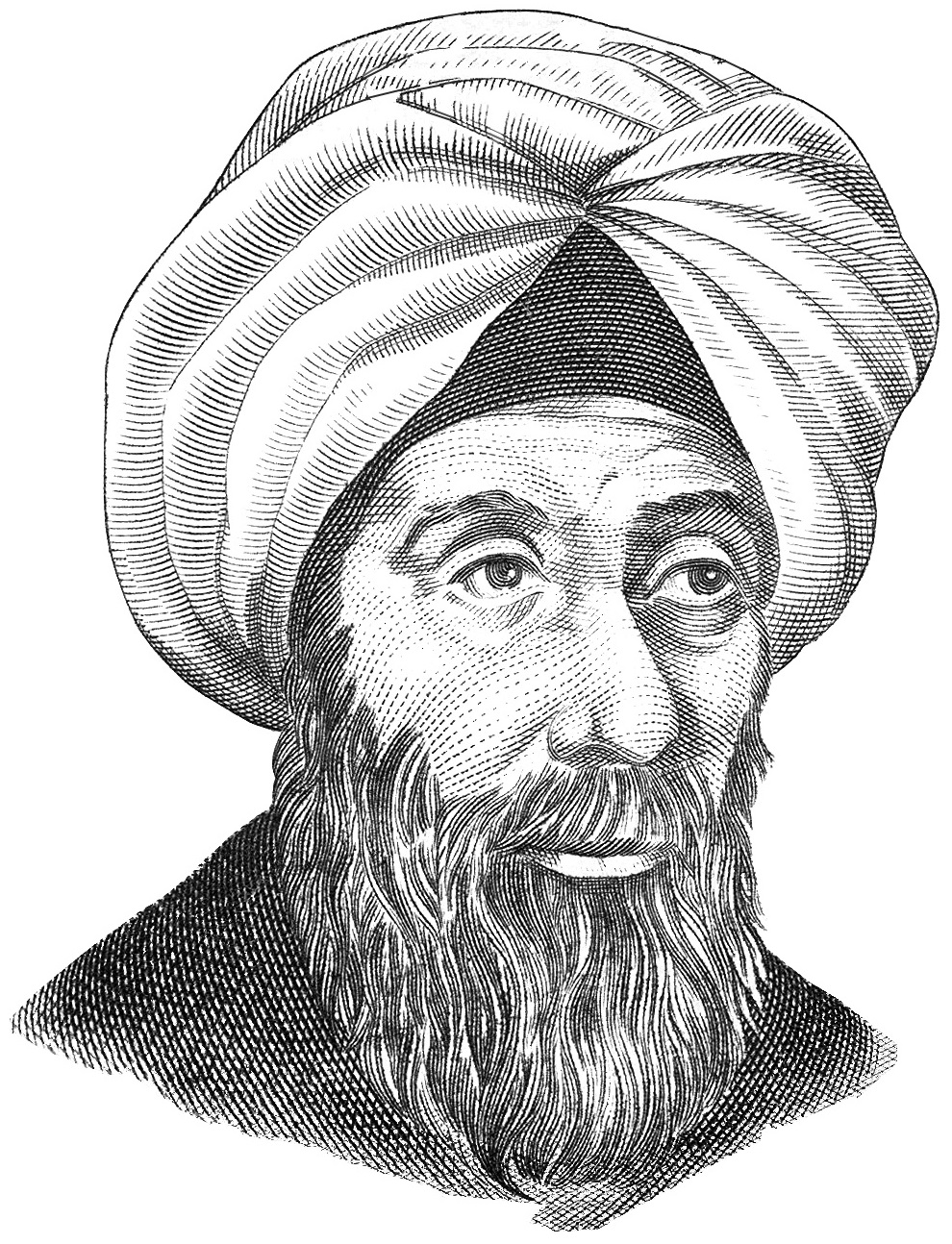
The scholar Ibn al-Haytham took a big step. Europeans called him Alhazen. He was born in 965 and studied light and vision. In his day, people argued about whether the eye sends out rays or takes them in. Alhazen tested ideas with . He wrote up his results in the Book of Optics. Many historians count him as an early founder of experimental science.
Other scholars in the Muslim world had similar habits. Al-Battani lived from 853 to 929 and made careful controlled measurements. Al-Biruni and Avicenna also wrote about testing claims. In 1079, a scholar called Ibn Mu'adh studied how sunlight bends in the air at twilight. From this, he worked out how thick Earth's atmosphere is. Alhazen's own work on bending light had already led him to say that space is thinner than air.
Later, in medieval Europe, Roger Bacon and William of Ockham argued that knowledge should rest on observation. Each thinker used the work of those before. Science grows across centuries, not in a single flash.
How did Galileo change the way people study nature?
About 400 years ago, a burst of new thinking changed how people studied nature. Historians call it the Scientific Revolution. It ran through the 16th and 17th centuries.
The English thinker Francis Bacon said that knowledge should come from and carefully gathered facts, not from old books alone. The French thinker René Descartes stressed clear reasoning. Isaac Newton and those who followed him built big theories. They collected observations and looked for the patterns in them.
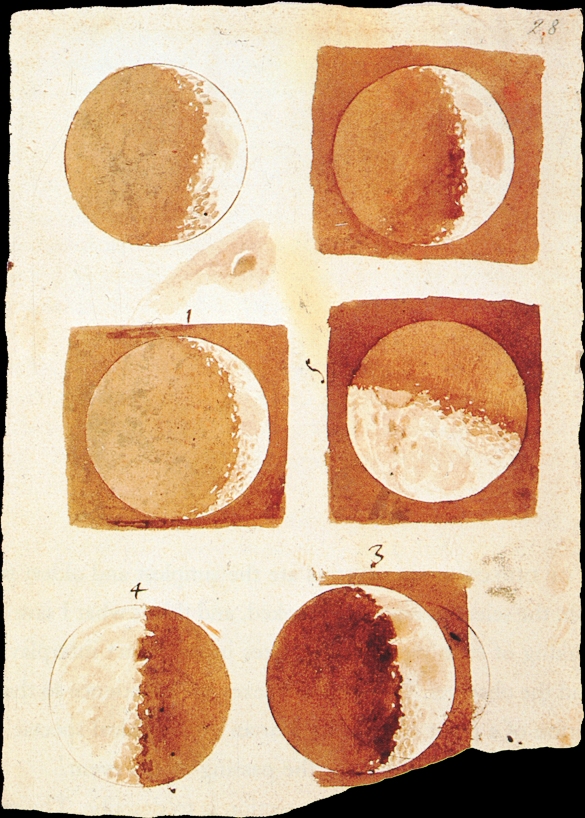
Galileo Galilei showed what this looked like in practice. In 1609 he heard about the new Dutch telescope and built better ones himself. He pointed them at the sky and drew the Moon's changing phases and its rough surface. He also saw moons circling Jupiter. In 1638 he published Two New Sciences, a book about motion and the strength of materials. Johannes Kepler also tested ideas against careful measurements of the planets.
The name 'scientific method' came later. Words like 'scientist' and 'pseudoscience' appeared in the 19th century. By then, science was a profession with its own societies and journals. The phrase became popular in the 20th century. The American thinker John Dewey wrote How We Think in 1910, and it inspired guidelines that soon reached dictionaries and school textbooks.
How does a hunch become a hypothesis?
Every investigation starts with a question. It might ask about one thing you have noticed, such as why the sky is blue. Or it might be wide open, such as how to design a drug that cures a disease. Good questions are hard to find. They shape everything that comes after.
Scientists then measure and count. Careful measurement is a big difference between chemistry and the old practice of alchemy. It often needs instruments such as thermometers, spectroscopes and voltmeters. A science usually moves forward when better instruments are invented.
Next comes the . It can come from anywhere. Scientists use their imagination, ideas from other subjects and patterns in earlier results. Many have described a flash of inspiration or a hunch that sent them looking for evidence. Albert Einstein once said there is no logical bridge from what we observe to the theories that explain it.
Scientists like explanations that fit the facts but stay simple. A rule of thumb called Occam's razor says to prefer the simpler of two explanations that work equally well. They also try to keep several hypotheses alive at once, so they do not fall in love with one idea.
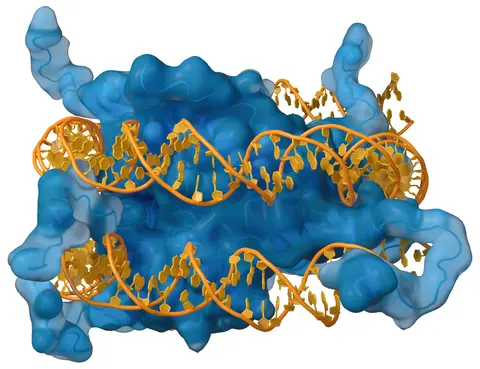
The search for the shape of DNA shows this. By 1950, people knew that DNA carries genetic information. They did not know how. The chemist Linus Pauling proposed a triple helix. Francis Crick and James Watson had considered that shape too. They dropped it when the did not fit.
How do you test an idea?
A useful lets you make a . The prediction must be about something nobody has seen yet. Only then does success mean much, because the hypothesis took a risk and survived.
Watson and Crick suspected that DNA is a helix. That meant its X-ray pattern should look like an X. Other scientists had already shown that helical shapes give X-shaped patterns, so the idea could be tested.
Einstein's theory of general relativity predicted that light bends when it passes a heavy object. In 1919 there was a total solar eclipse. Arthur Eddington and others measured the positions of stars near the Sun. Their results supported Einstein rather than Newton.
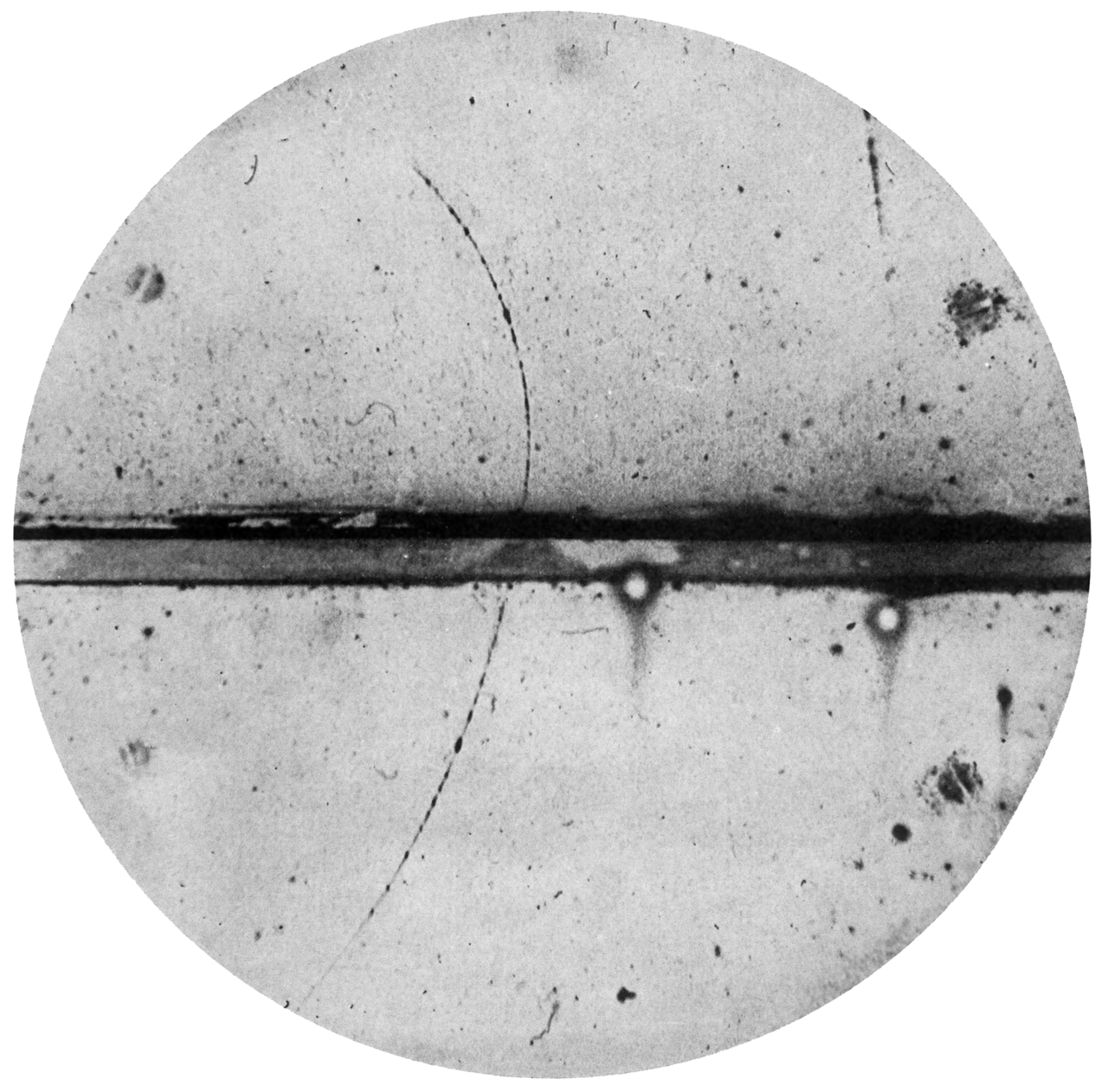
A prediction can also come from mathematics. In the 1920s, the physicist Paul Dirac wrote equations for electrons. They implied a new kind of matter, called antimatter. In 1932, Carl Anderson photographed the track of a positron in a cloud chamber. The prediction had come true.
If a result contradicts a prediction, the hypothesis is in trouble. If the result matches, the hypothesis becomes more likely. It is still never proved for ever. Scientists use controls to tell cause from chance. They compare samples under different conditions to see what changes and what stays the same.
come in many forms. A laboratory test, a double-blind medical trial and an archaeological dig all count. Some need huge machines that cost billions and take decades to build. The Large Hadron Collider and the James Webb Space Telescope are two examples.
Why do scientists check each other's work?
A result that only one person has seen is not yet trusted. Science is a team effort. Findings are accepted when others repeat them. This is called . If nobody else gets the same result, the first one may have been a mistake.
Repeating can be risky. In 1753, the physicist Georg Richmann was killed by ball lightning. He had been trying to repeat Benjamin Franklin's kite of 1752.
Before a paper appears in a scientific journal, experts review it. This is . The reviewers are usually anonymous. They judge whether the experiments were sound. Peer review does not prove that the results are right. It checks that the work was done well.
Honest record-keeping matters too. Scientists keep careful notes of what they did. Journals and funding agencies often require them to store their and methods. That way, others can test the work and build on it.
Some experiments use a . In a drug trial, one group gets the drug and another gets a harmless placebo. Then the groups are compared.
Replication can be hard in medicine and social science, because people differ from each other. In 2005, the researcher John Ioannidis pointed out that many published findings could not be repeated. Other scientists can join the cycle at any stage. They may take someone's and make their own . Or they may build on someone's measurements.
Can luck lead to great discoveries?
Many great discoveries did not follow the textbook steps. Chance has helped, but only when a sharp-eyed scientist noticed it.
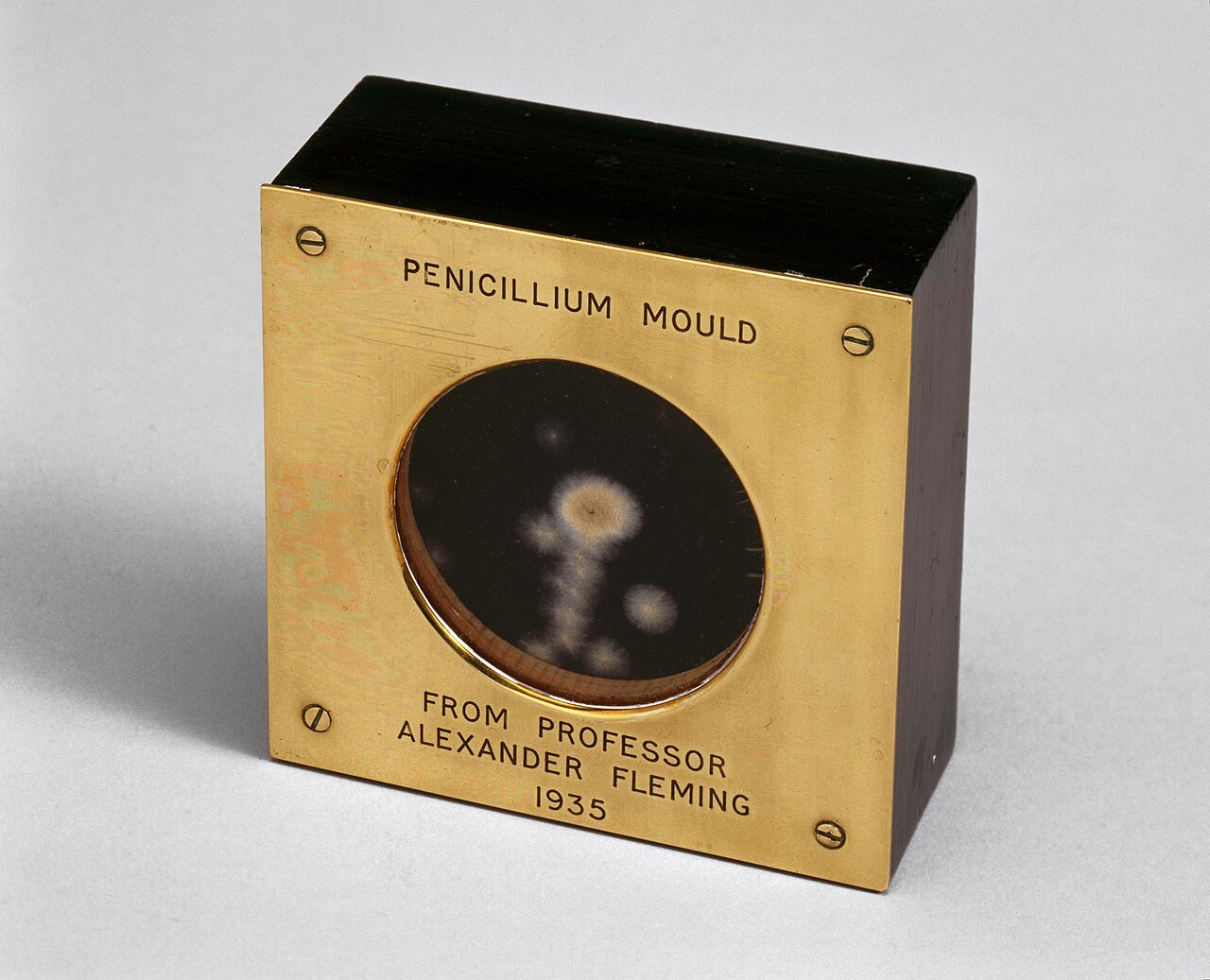
In 1928, the Scottish scientist Alexander Fleming left dishes of bacteria on his bench while he went on holiday. A mould spore, probably from a laboratory on the floor below, settled on one of them. Fleming saw that bacteria close to the mould were dying. He isolated the mould and named it as a member of the Penicillium family. Penicillin later became the first widely used antibiotic, a medicine that fights bacteria. Fleming could not make enough of it to treat patients. Around 1940, Howard Florey and Ernst Chain at the University of Oxford found a way to purify it, and it became a life-saving medicine. The three men shared the Nobel Prize in 1945.
Fleming's discovery began with an accident. It became science when he asked why it happened and checked.
The DNA story shows luck and teamwork together. In the early 1950s, Rosalind Franklin, Maurice Wilkins and Raymond Gosling at King's College London were taking X-ray pictures of DNA. Franklin quickly spotted flaws in Watson and Crick's first model. In 1952 Gosling, a student working under Franklin, took Photo 51, a sharp X-ray image with the X shape. In early 1953 Wilkins showed it to Watson without Franklin's knowledge. It helped confirm that DNA was a helix.
Watson and Crick then built a model from the shapes of DNA's building blocks. They used Franklin's and rules about how the parts pair up. After many false starts, they worked out the double helix. People share clues, make mistakes and build on the work of others.
How do scientists avoid fooling themselves?
The easiest person to fool is yourself. People tend to notice facts that fit what they already believe. This is called . Scientists guard against it with controls, repeated tests and the checking of other people.
A famous case involves galloping horses. For years, artists painted a galloping horse with its legs stretched out front and back, as if flying. Then, in 1878, Eadweard Muybridge took the first stop-action photographs of a gallop. They showed that the legs tuck in together. The old pictures were wrong.
Scientists also admit that measurements are never perfect. They usually give an estimate of how uncertain a result is. They often repeat a measurement many times to find out. Statistics need care too. A claim such as '9 out of 10 doctors recommend it' means little if nobody says who was asked or how.
The philosopher Karl Popper said that a real scientific theory takes a risk. Astrology can 'explain' almost any event after it happens. But it never predicts anything that could prove it wrong. A scientific theory makes that could fail.
Science also has limits. It cannot answer questions about faith. Nor can any settle questions about right and wrong, or about what makes a painting beautiful.
Even a successful theory can be improved. Einstein did not throw away Newton's work. Newton's equations are what remain when Einstein's theories are used for ordinary speeds, sizes and masses. New ideas refine old ones, and that is how the cycle moves forward.
Explore Next
Your audio story keeps playing while you look around.

Words to Know
- confirmation bias
- The habit of noticing only the evidence that fits what you already believe.
- control group
- A group treated normally, used for comparison with a test group.
- data
- Measurements and observations collected during an investigation.
- empiricism
- The view that knowledge comes from observation and experience.
- experiment
- A test designed to see whether a prediction comes true.
- falsifiable
- Able to be proved wrong by some possible result.
- hypothesis
- A suggested explanation that can be tested.
- peer review
- Checking of a scientific paper by other experts before it is published.
- prediction
- What you expect to observe if a hypothesis is correct.
- replication
- Repeating an experiment to see if the result is the same.