Telescope
Machines that catch faint light and unseen waves from the far side of the universe.
A telescope is a machine for seeing things that are far away. It gathers light, or other waves such as radio and X-rays, and brings them to a focus so we can study them. The first telescopes appeared in the Netherlands in 1608. A year later Galileo pointed one at the sky and found mountains on the Moon and moons around Jupiter. Today telescopes sit on mountaintops, in deserts and in orbit, and they see far more than our eyes ever could. Some of them catch signals that left their source billions of years ago. How do telescopes work, how have they changed and what have they shown us?
What does a telescope actually do?
A telescope is a machine for studying things that are far away. It works by catching the light, or other kinds of radiation, that those things give out, reflect or block. Then it brings that radiation to a single spot called a focus. A camera, a detector or a human eye can use it from there.
Many people think a telescope is mainly for making things bigger. Magnifying matters, but the real job is gathering. Your eye has a small opening, called the pupil, that lets in only a tiny amount of light. A telescope has a much wider opening, called the . Think of a wide bucket and a small cup left out in the rain. The bucket catches far more. In the same way, a big aperture collects enough light from faint stars to make them bright enough to study.
A bigger aperture also shows finer detail. Astronomers call this resolution. It is the power to tell two objects apart when they sit close together, such as the two stars of a double star that would otherwise look like one blurry dot.
The first telescopes used only visible light. Today the word covers a huge family of instruments. Some catch radio waves, some catch X-rays, and some orbit high above the air. A place built to hold one or more telescopes is called an . The same optical ideas also work in binoculars, spyglasses and camera lenses.
Who invented the telescope?
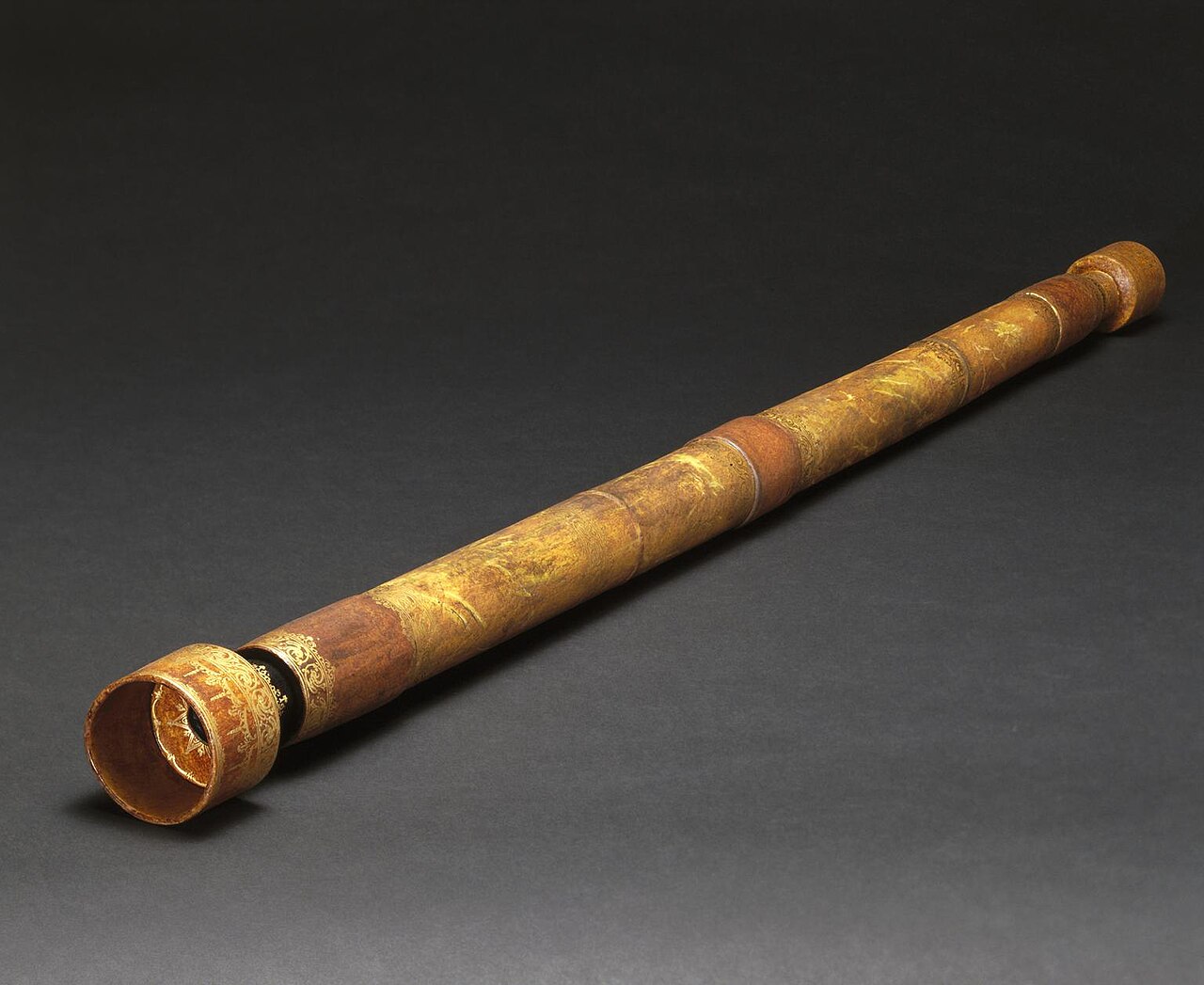
Nobody knows for certain. The oldest record we have dates from 1608. A spectacle maker named Hans Lipperhey, from the town of Middelburg in the Netherlands, applied to his government for a . A patent is an official paper that protects an invention. His device made faraway things look close. Word of it spread across Europe within months, and the real inventor remains unknown.
These first telescopes were . A refractor uses glass lenses to bend, or refract, light. A lens at the front gathers the light and a lens at the eye magnifies the image. People used them to watch ships at sea and to spy on far-off land, so governments were keen to own them.
In 1609 an Italian scientist named Galileo Galilei heard about the Dutch device and built his own. Then he did something new. He pointed it at the sky. He saw mountains and craters on the Moon, far more stars than the eye can see, and four small moons moving around Jupiter. He wrote about it in a book called the Starry Messenger. The moons of Jupiter were a shock, because they proved that not everything in the sky goes around the Earth.
The name came a little later. In 1611 the Greek mathematician Giovanni Demisiani coined the word "telescope" for one of Galileo's instruments. It was shown at a banquet of the Accademia dei Lincei, a scientific society. The word comes from two ancient Greek words, tele, meaning far, and skopein, meaning to look.
How do lenses and mirrors bring light into focus?
Optical telescopes come in three main types. use lenses. use mirrors. Catadioptric telescopes combine mirrors with lenses.
Refractors have a problem. A simple lens bends each colour of light by a different amount, so stars get coloured fringes and the image looks soft. This is called . In 1733 the achromatic lens, made with more than one kind of glass, corrected much of this. It allowed shorter and more useful refractors. Even so, a lens can be held only at its edges, and a very big piece of glass sags under its own weight. That puts a limit on how large a refractor can be. For this reason, almost every large research telescope built since 1900 has been a reflector.
A reflector gathers light with a curved mirror. Light bounces off the surface instead of passing through glass, so there are no colour fringes. Scientists began to explore this idea soon after the first refractors appeared. In 1668 Isaac Newton built the first practical reflecting telescope. Its design is still called the Newtonian reflector.
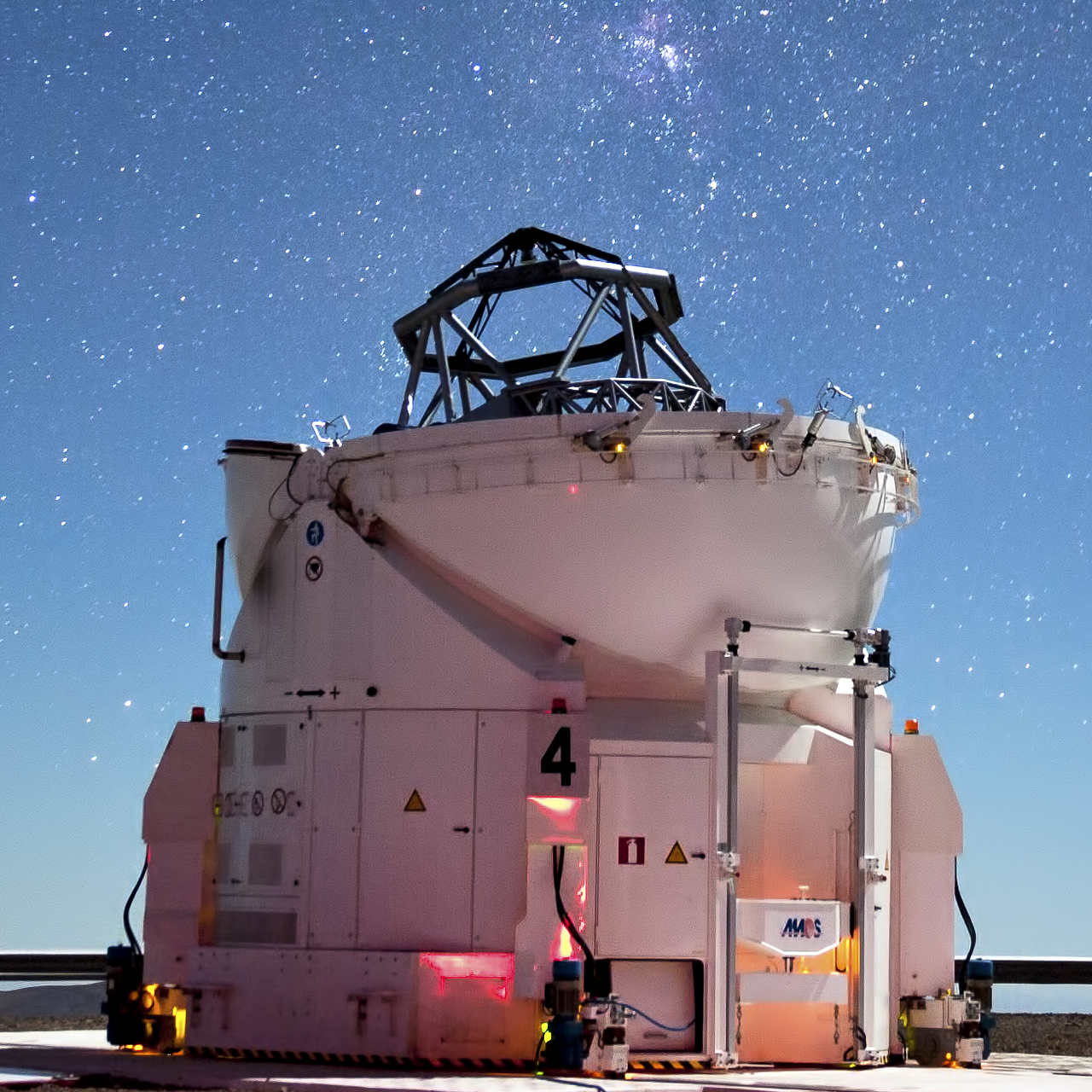
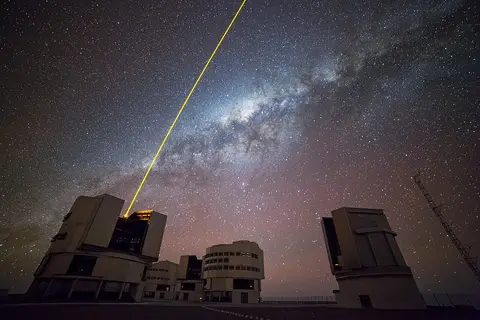
Early mirrors were made from a shiny metal alloy called speculum metal. It tarnished quickly and needed constant repolishing. Silver-coated glass mirrors arrived in 1857, and aluminium coatings in 1932. Aluminium made mirrors brighter and longer lasting. Today the biggest reflectors have mirrors about 10 metres across, built from many segments, and builders are working on designs 30 to 40 metres wide. The Very Large Telescope in Chile uses several telescopes at once, including four smaller auxiliary ones.
Why do telescopes see more than our eyes can?
Light is a wave, and it belongs to a huge family called the . The family is sorted by , which is the distance from one wave crest to the next. From longest to shortest the main members are radio waves, microwaves, , visible light, , X-rays and gamma rays. Visible light, the only part our eyes can detect, is a very narrow slice in the middle.
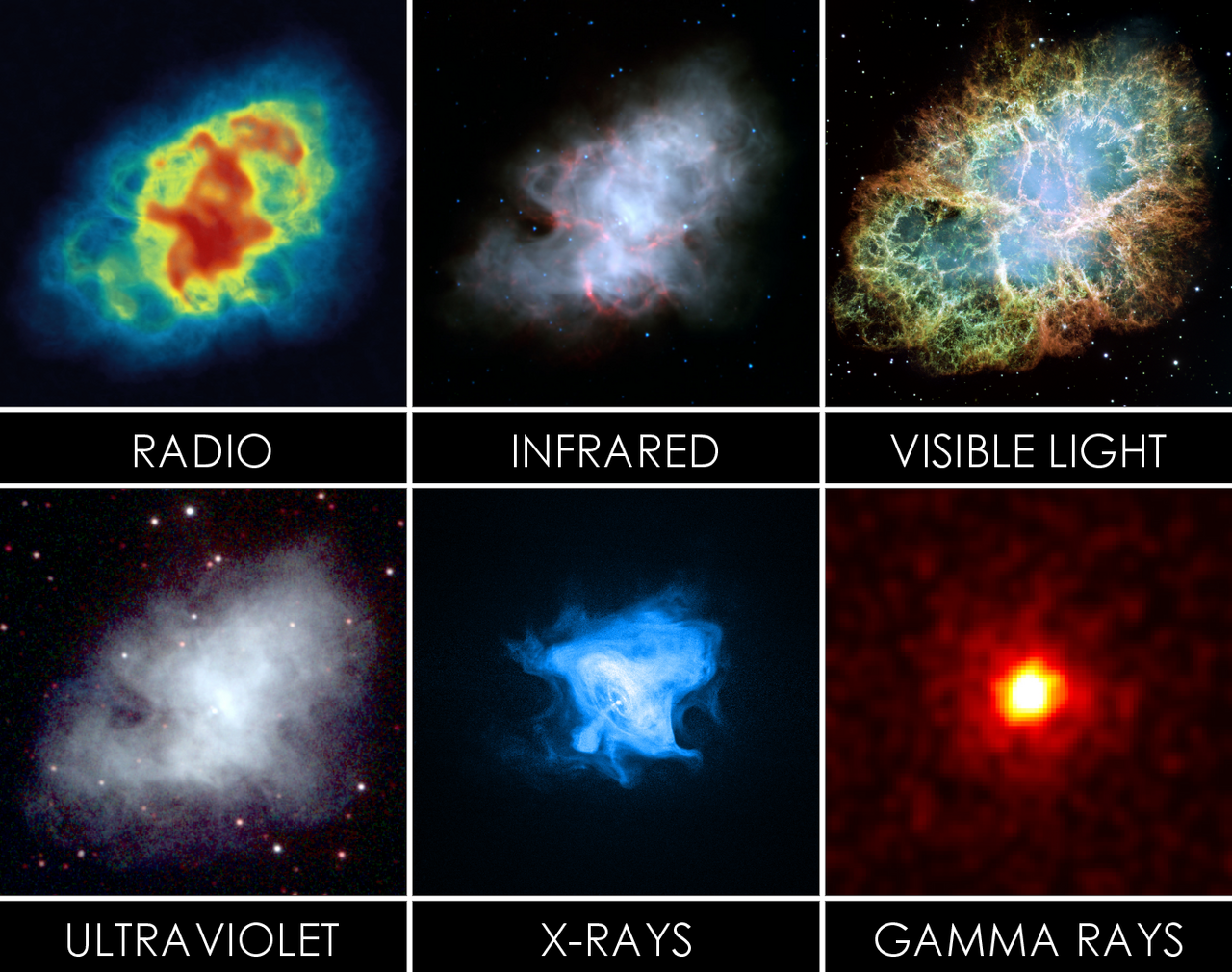
Space objects give out different parts of the spectrum. A cool cloud of dust glows in infrared. A hot young star shines strongly in ultraviolet. Gas heated to millions of degrees gives out X-rays. A telescope that sees only visible light misses much of the story. The Crab Nebula, the cloud left by an exploded star, shows this well. Each of its six views, from radio to gamma rays, reveals something different about the same object.
Different wavelengths need different tools. Long waves are easy to catch with antennas. Short waves are harder to bend, so they need special mirrors. Near-infrared light can be collected much like visible light. Far-infrared and submillimetre light are caught more like radio waves. The James Clerk Maxwell Telescope studies wavelengths from 0.003 to 2 millimetres, using a dish of aluminium. The Spitzer Space Telescope covered a shorter range using a mirror. The Hubble Space Telescope with its Wide Field Camera 3 sees from ultraviolet to near-infrared.
Radio telescopes appeared in the 1930s and infrared telescopes in the 1960s. Since then astronomers have built instruments for almost every part of the spectrum.
How do radio telescopes listen to the sky?
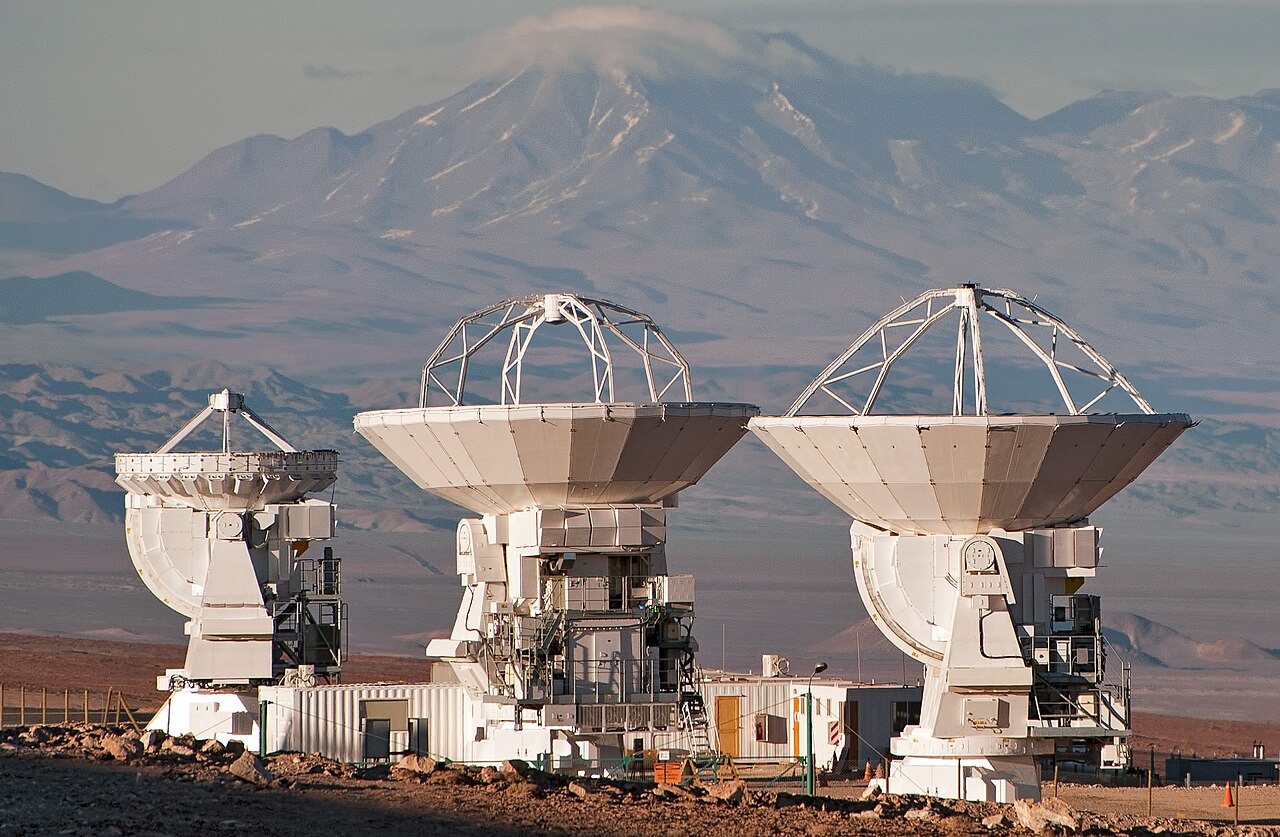
A radio telescope looks very different from a normal telescope. It is usually a large dish, shaped to collect radio waves and send them to a receiver. Some dishes are made of wire mesh. That works because the holes are smaller than the waves being studied, so the waves cannot slip through. The first purpose-built radio telescope began work in 1937.
A traditional radio dish does not take a picture. An optical telescope makes a magnified image of a patch of sky. A radio dish has a single receiver and records a signal that changes over time. Astronomers can record it at several frequencies. Some newer dishes hold an array of receivers, which gets closer to making an image.
To see sharper detail, astronomers link several dishes together. They collect the signals from all of them at the same moment and combine them by computer. This is called an , and the method is called synthesis. The linked dishes act like one giant telescope about as wide as the distance between them. Linking a dish in space to dishes on the ground makes an array many times wider than the Earth. Japan's HALCA satellite did this in the late 1990s, and Russia's RadioAstron stretched it to about 30 Earth widths in the 2010s. The same trick now also works with optical telescopes.
Radio waves and microwaves pass through the atmosphere and through clouds of gas and dust in space. That lets astronomers see places that light cannot reach. Radio telescopes such as the Allen Telescope Array and, until its collapse in 2020, the Arecibo have also been used in the search for signals from alien life.
How do you catch X-rays and gamma rays?
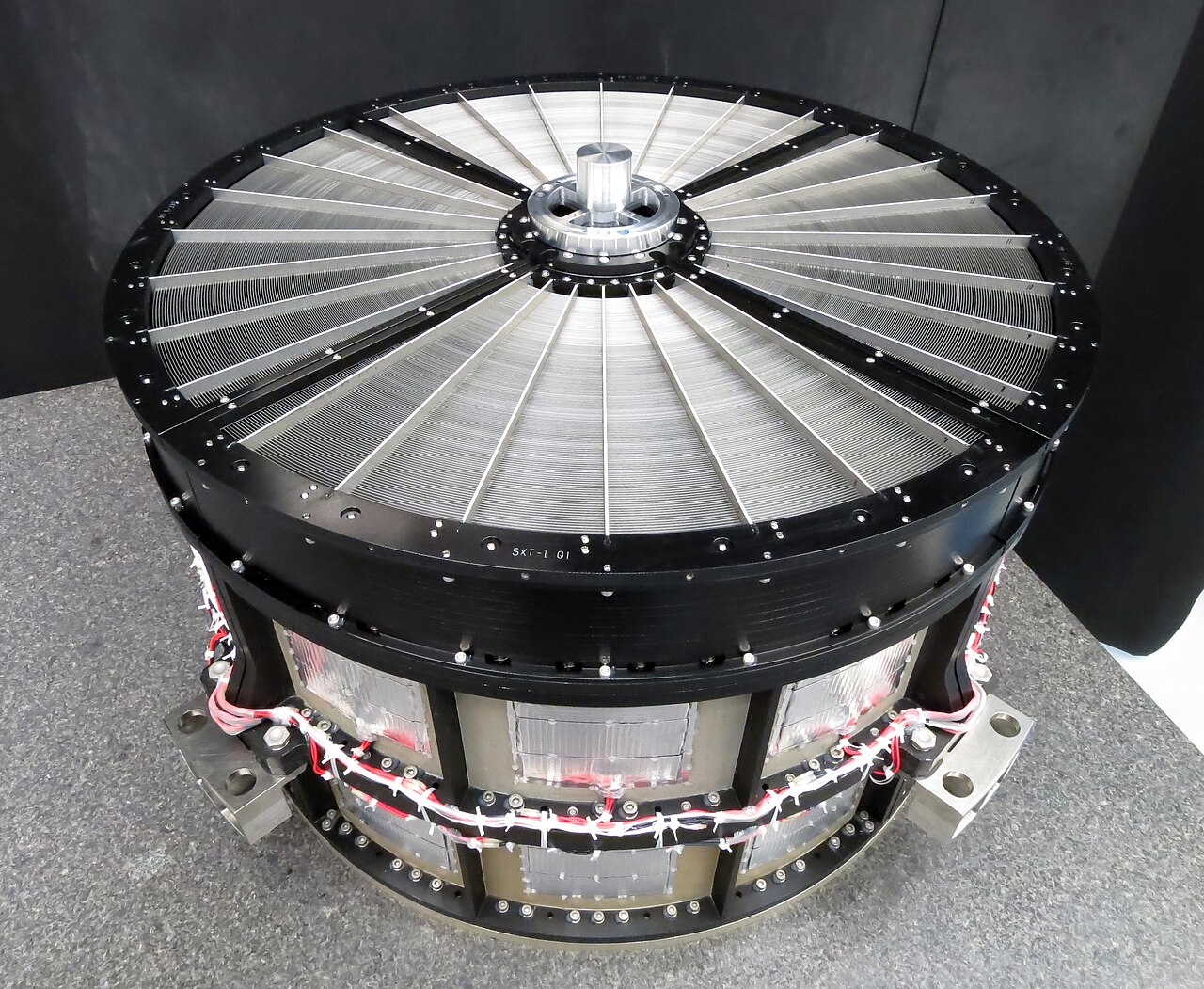
Most light is absorbed by the air, so ultraviolet telescopes must fly high up or go into space. X-rays and gamma rays are even harder. They carry so much energy that they pass straight into an ordinary mirror instead of bouncing off.
X-rays can be reflected if they strike a surface at a very shallow angle, like a flat stone skipping over a pond. In 1952 a scientist named Hans Wolter showed three ways to build an X-ray telescope from this kind of mirror. The mirrors are rings made of heavy metals, nested inside each other like the layers of an onion. Space observatories using this design include the Einstein , ROSAT and the Chandra X-ray Observatory. In 2012 NASA launched NuSTAR, which puts its mirrors at one end of a long mast to catch X-rays of even higher energy.
Gamma rays are more energetic still, so telescopes usually do not focus them. Instead they use a mask, a plate with a pattern of holes. The mask casts a shadow pattern on the detector, and a computer works out where the rays came from. Telescopes such as the Burst Alert Telescope on NASA's Swift satellite study the sky this way. The Fermi Gamma-ray Space Telescope, launched in June 2008, uses a different trick. It tracks the particles that each gamma ray makes inside its detector.
The most energetic gamma rays strike the atmosphere and cause a brief shower of particles and flashes of light. Ground telescopes called Cherenkov telescopes, such as H.E.S.S. and VERITAS, watch for those flashes. A larger one, the Cherenkov Telescope Array, is being built.
Why launch a telescope into space?

The air around us is a problem for astronomers. It blocks most kinds of electromagnetic radiation. Only visible light, near- and part of the radio range reach the ground well. That is why there are no X-ray or far-infrared telescopes on the ground. They have to work from orbit, or from high-flying balloons.
Even for light that does reach the ground, space has big advantages. Clouds get in the way. Moving air makes stars twinkle and blurs images, a problem astronomers call poor seeing. Streetlights and cities add glare, called light pollution. A telescope above the air avoids all of these.
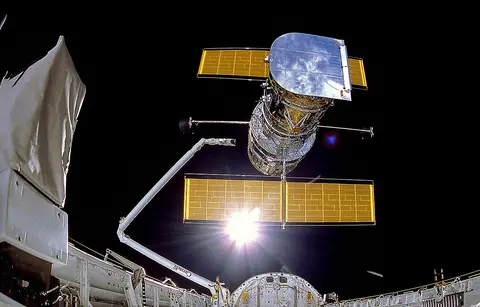
The costs are large. A space telescope is expensive to build and launch. It must fit inside a rocket. It is hard to mend or upgrade once it is out there, though astronauts did visit Hubble several times to repair it.
NASA has launched several famous examples. The Hubble Space Telescope sees visible light, and near-infrared. The Spitzer Space Telescope detected infrared radiation. The Kepler Space Telescope discovered thousands of , which are planets that circle other stars. The Compton Gamma Ray , which the space shuttle Atlantis released into orbit in 1991, studied gamma rays, which the atmosphere blocks completely.
What can the James Webb Space Telescope see?
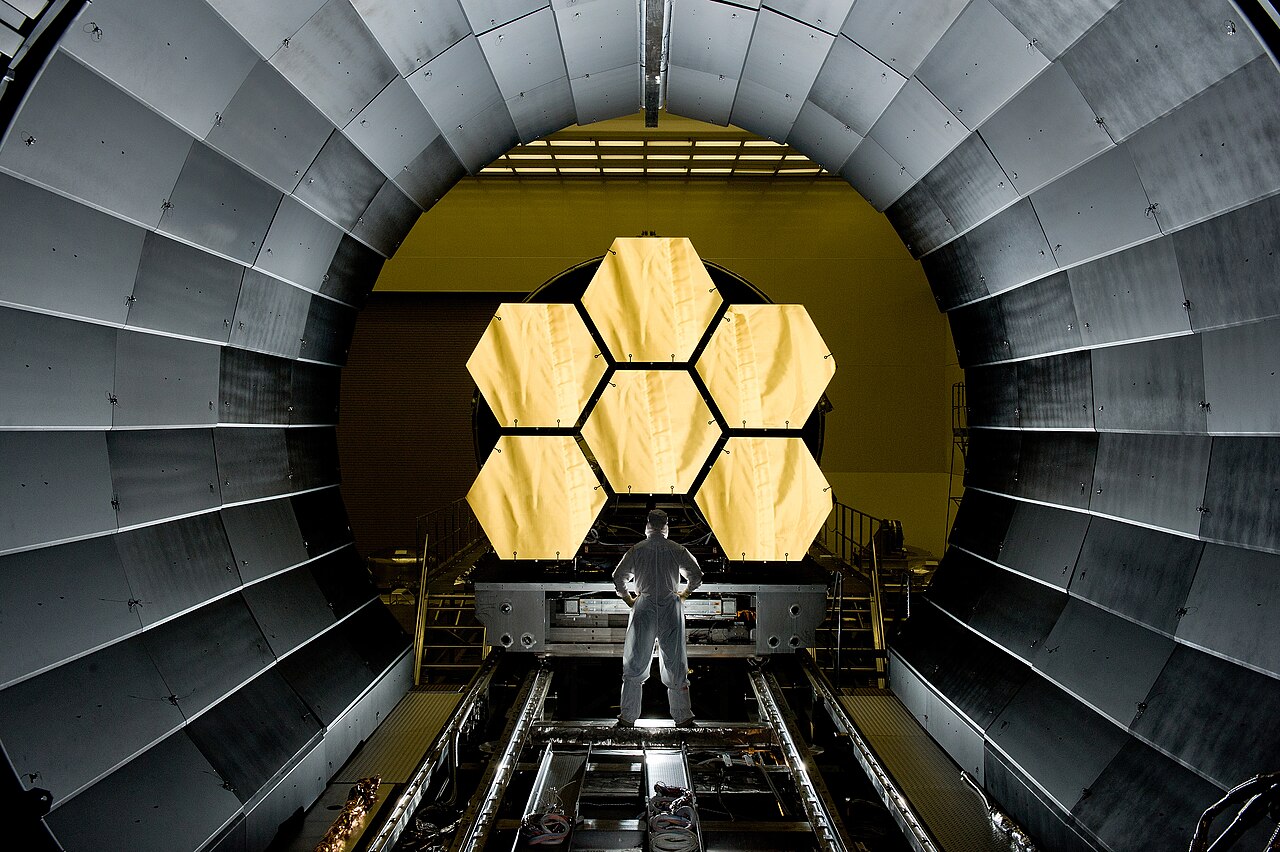
The largest space telescope ever launched is the James Webb Space Telescope. It launched on 25 December 2021 from Kourou in French Guiana. Webb looks mainly at light.
Why infrared? There are three good reasons. First, the universe is expanding, which stretches the light of very distant galaxies. Light that left them as visible or arrives as infrared. Second, infrared passes through dust clouds that block visible light, so Webb can look inside places where stars and planets are forming. Third, warm objects glow in infrared, so a telescope must stay very cold to see faint heat from space. Webb carries a huge sunshield, about the size of a tennis court, that keeps its mirror cold.
The main mirror is 6.5 metres across. That is wider than most ceilings are tall, and it was too large to fit inside a rocket in one piece. Engineers built it from 18 hexagonal segments coated in a thin layer of gold, which reflects infrared very well. The mirror folded up for launch and unfolded in space.
Webb does not sit in low orbit like Hubble. It orbits the Sun about 1.5 million kilometres from Earth, in a spot where the pull of the Sun and Earth help it stay in line behind us. The distance makes repairs impractical, so everything had to work first time.
What have telescopes shown us, and what comes next?
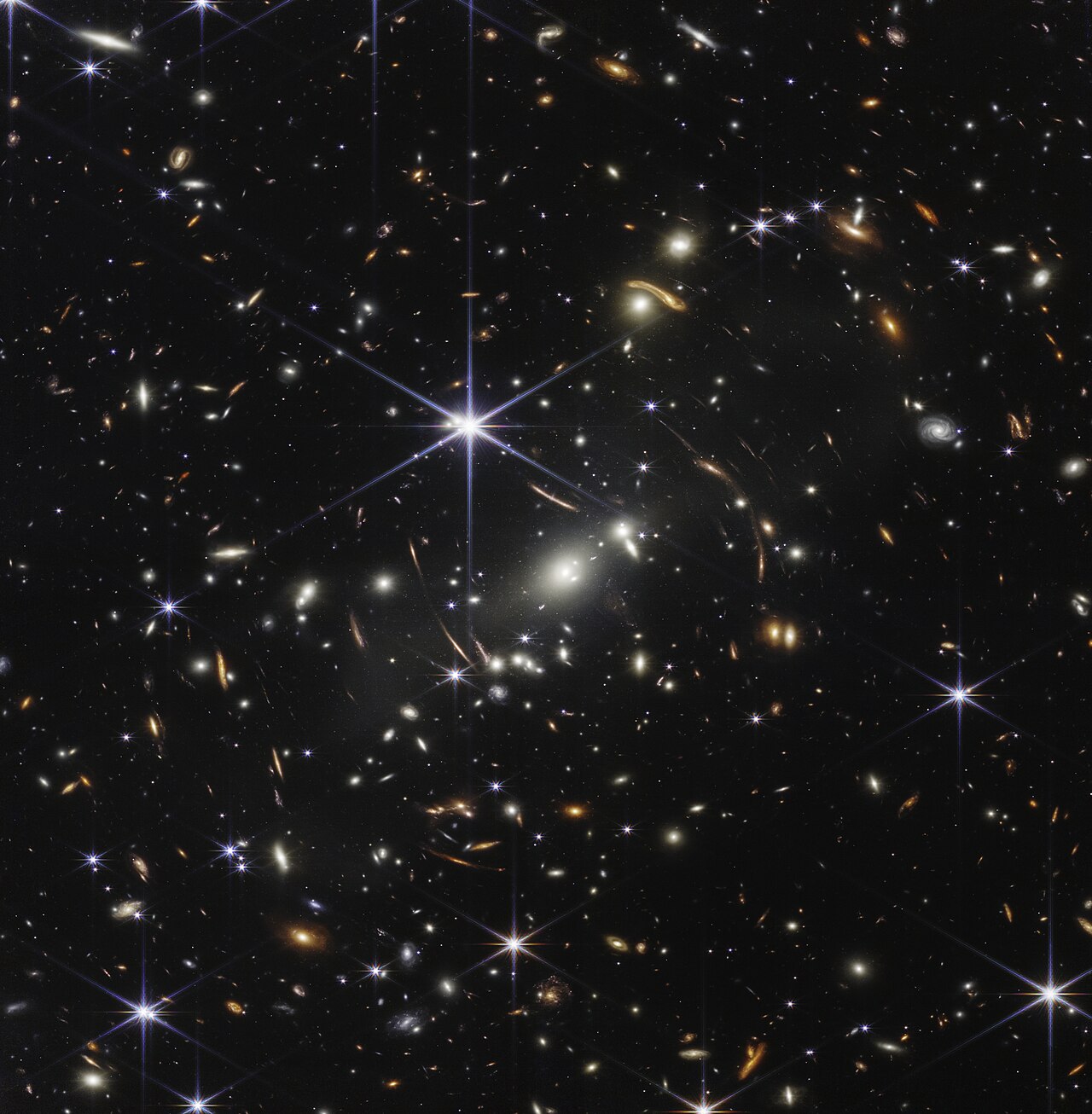
Telescopes have changed what we know about the universe. Galileo's moons of Jupiter helped to overturn the old idea that everything circled the Earth. Later telescopes showed that our galaxy, the Milky Way, is one of billions. Kepler found thousands of , so we now know that planets are common.
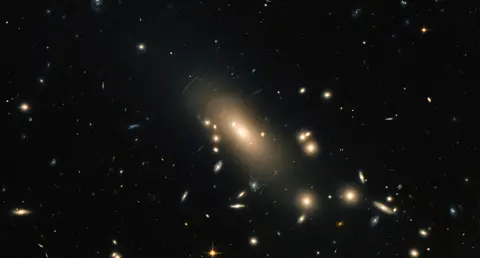
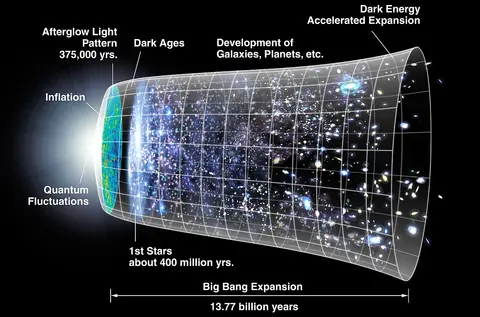
In 2022 Webb released its first deep field, a picture of a galaxy cluster called SMACS 0723. It holds thousands of galaxies. The cluster's gravity bends the light of galaxies behind it, which magnifies them like a giant lens. Some of those galaxies are so far away that their light left them more than 12 billion years ago. This is one way telescopes act like time machines. Light takes time to travel, so a faraway object is seen as it used to be.
What comes next? Builders are working on mirrors 30 to 40 metres wide, which would see far finer detail than any telescope today. Cherenkov gamma-ray observatories are under construction. Another idea is the Fresnel imager, a very light design for a space telescope that would use a flat lens with rings to focus light. NASA's Nancy Grace Roman Space Telescope launched on 30 August 2026. It will survey huge areas of the sky in light.
Nearer home, smart telescopes arrived in the late 2010s. They have no eyepiece. They take many images of an object, stack them in real time and show a clear picture on a screen. They set up easily and can work even under bright city skies.
Explore Next
Your audio story keeps playing while you look around.
Words to Know
- aperture
- The width of the opening, such as a lens or mirror, that collects light in a telescope.
- chromatic aberration
- A fault in simple lenses that makes coloured fringes around images.
- electromagnetic spectrum
- The whole family of light waves, from radio waves to gamma rays.
- exoplanet
- A planet that circles a star other than our Sun.
- infrared
- Light with a longer wavelength than red, which we feel as heat.
- interferometer
- A group of telescopes linked so that they work like one much bigger telescope.
- observatory
- A place that holds telescopes and other instruments for studying the sky.
- patent
- An official paper that protects the rights to a new invention.
- reflector
- A telescope that uses curved mirrors to collect and focus light.
- refractor
- A telescope that uses glass lenses to bend light into focus.
- ultraviolet
- Light with a shorter wavelength than violet, which our eyes cannot see.
- wavelength
- The distance from one crest of a wave to the next.