Laboratory safety
How scientists work with fire, chemicals and germs and still go home safe.
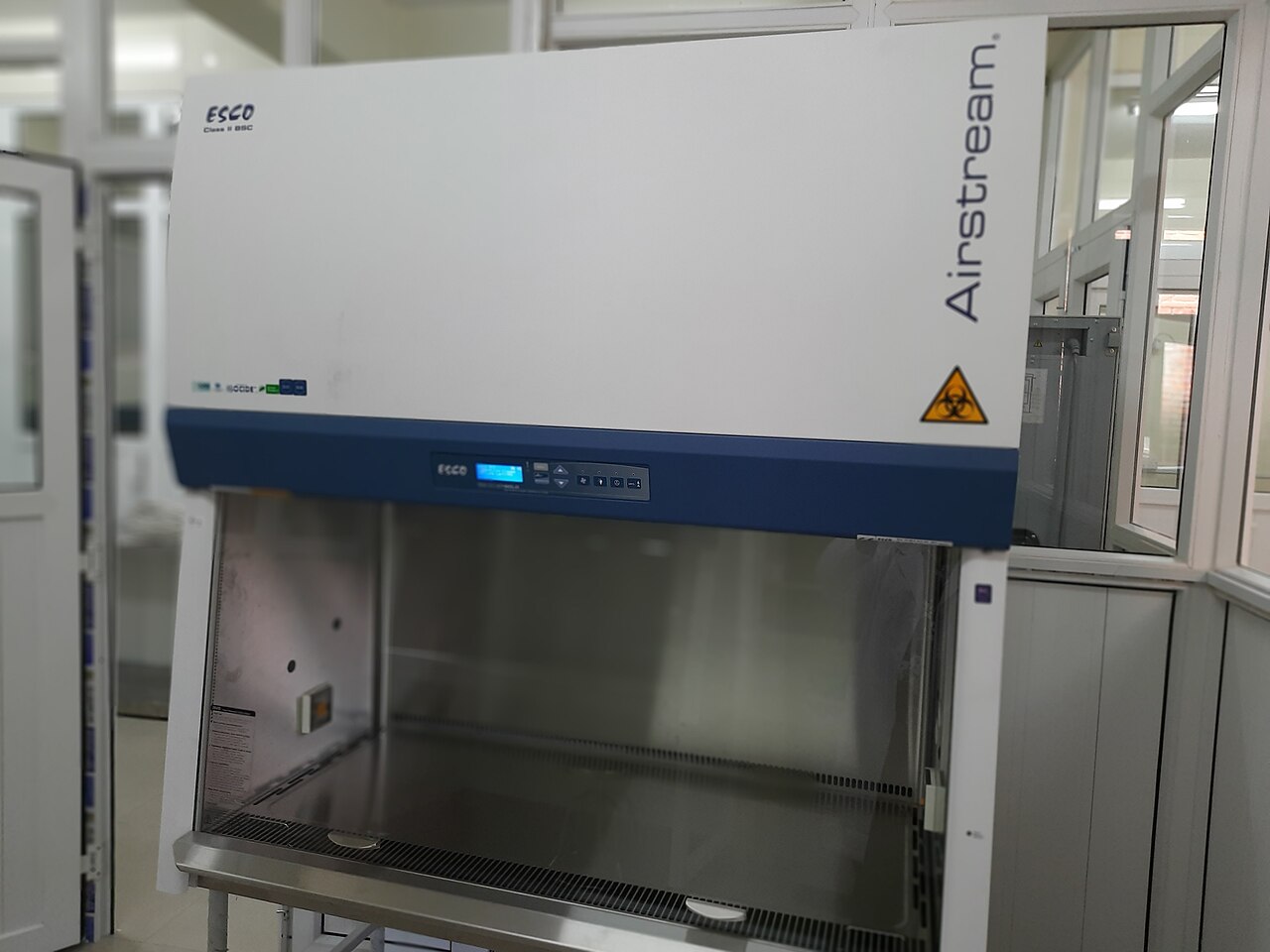
A laboratory is a place where scientists test ideas, and that often means working with things that can hurt people. Chemicals can burn skin, gases can be stored at crushing pressure, liquids can be colder than the polar night, and some germs cause serious disease. Laboratory safety is the set of habits, equipment and rules that keep accidents from happening. It covers what scientists wear, how they store dangerous materials, how they plan experiments, and what they do when something goes wrong. Many of today's rules were written after real accidents, some of them deadly. Safety is not a brake on discovery. Careful scientists can run experiments that would be far too risky without it.
Why can a laboratory be dangerous?
Scientists work with things that are rare in everyday life. In a single building you might find very high voltages, very high and very low pressures, extreme heat and cold, and poisonous chemicals, radiation, fire and dangerous germs. Most of the time these things are safely controlled. The risk comes when something is handled the wrong way, or when someone is not paying attention.
That is why safety experts talk about constant vigilance. An accident rarely needs a big mistake. A cracked glass tube, a worn cable, an unlabelled bottle or a rushed step can be enough. A large number of accidents with machines such as , for example, happen because of user error and not because the machine is faulty.
Labs also affect more than the people inside them. Toxic or infectious material that escapes could harm the environment and the people living nearby. For this reason laboratory work in many countries is covered by health and safety laws.
So how do scientists stay safe? They use several layers of protection together. They are trained before they start, and their experiments are reviewed for danger in advance. They wear protective equipment, follow written rules, and use a for the riskiest jobs, so that someone else is always nearby who can raise the alarm.
What makes chemicals hazardous?
Chemicals are the most obvious danger in many laboratories. A hazardous chemical can threaten health, or it can cause physical harm by burning, exploding or catching fire. Some are and eat into skin and eyes. Others are irritants, or poisons that damage the liver, kidneys or nervous system. Some, called , can cause cancer after long exposure. A few harm the blood or the lungs, and others can make a person allergic after repeated contact.
The harm can come in different ways. A chemical might touch the skin, splash into the eyes, be swallowed by accident, or be breathed in as a vapour. Vapours are the hardest to spot because many of them cannot be seen.
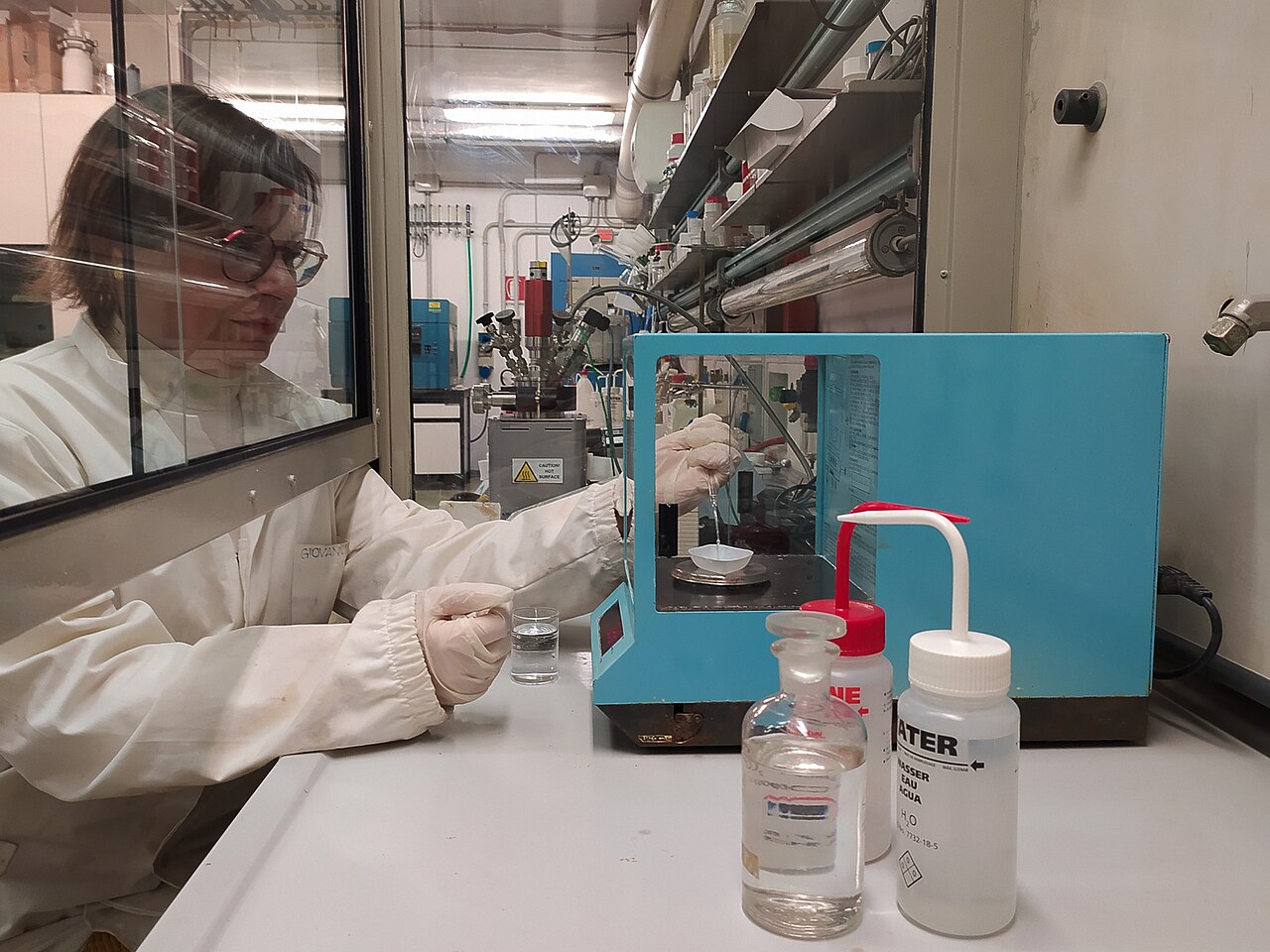
The main defence is a . It is a cabinet with a glass front, where experiments are done. A fan pulls air through the cabinet and away from the person, so that harmful fumes are carried off through a vent instead of into the room. The scientist works with their hands inside and their face behind the glass.
Bottles are labelled with their contents, stored in the proper places and used in the smallest amounts that will do the job. Waste is put into marked containers. Reading the label and knowing the risk before opening a bottle is the first rule of chemistry.
What is dangerous about gas cylinders and liquid nitrogen?
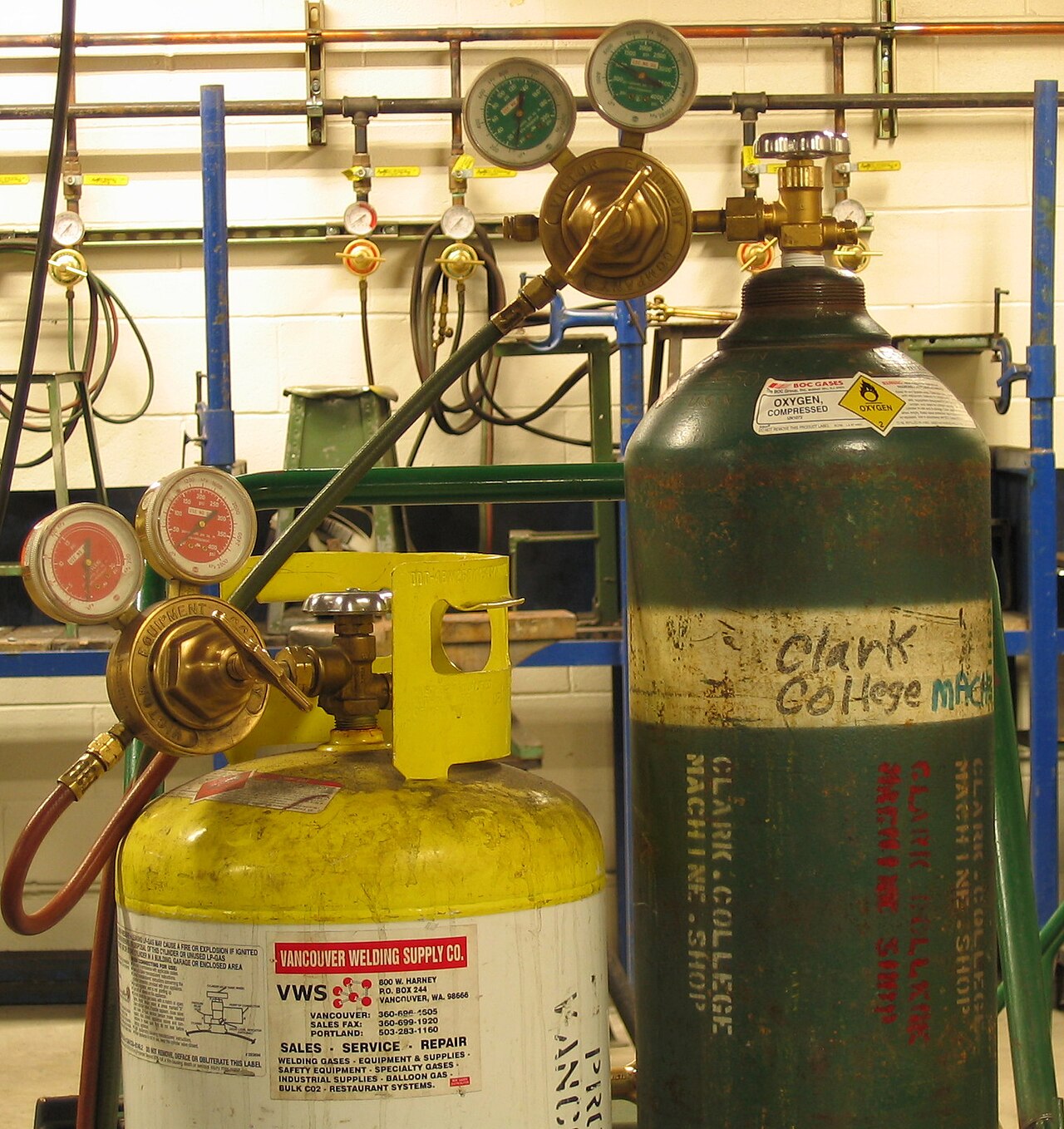
Laboratories often use gases stored under high pressure. Compressed gases come through fixed pipes or in steel cylinders. They can be poisonous, flammable, or able to feed a fire. Even a harmless gas such as nitrogen can be a , because a leak in a closed room can push out the air that people need to breathe.
A full cylinder holds enormous energy. If a cylinder falls and its valve breaks, the escaping gas can turn it into a dangerous projectile. For this reason the rules are strict. Cylinders must be stored upright and fixed in place, whether they are full or empty. They should never be dropped or knocked together. When they are moved, the protective cap must be on, and they should not be rolled or dragged.
The opposite problem is extreme cold. Substances that make very low temperatures are called . Liquid nitrogen is the best known, and it boils at -196 °C. Dry ice, which is solid carbon dioxide, is not a cryogen, but it is still cold enough to injure skin. At -78 °C it turns straight into gas.
Touching such cold surfaces can damage skin badly, so workers wear special insulated gloves. Eye protection is needed at all times, and a full face shield is recommended when pouring a cryogen, because cold liquid can spit and splash as it boils.
How do scientists work safely with germs?
Many laboratory workers meet biological every day. These come from blood and other body fluids, from cultures of microbes grown in dishes, from tissue samples, from laboratory animals, and even from other people. The agents involved include viruses, bacteria, fungi and prions, and also toxins made by living things.
Some of the diseases are well known. Anthrax is caused by a bacterium that forms tough spores. Avian flu is caused by influenza viruses. Hantavirus spreads from the droppings and urine of mice and rats. Legionnaires' disease is a bacterial infection linked to water droplets in the air. Plague still causes about 1,000 to 3,000 cases every year, according to the World Health Organization. Smallpox is a highly contagious disease that only affects humans. It was wiped out worldwide in 1980, and the virus is now kept only in two high-security laboratories, one in the United States and one in Russia. Because vaccination stopped, few people today have immunity. In 1978 Janet Parker, a medical photographer, caught smallpox from a laboratory in Birmingham, England, and died. She was the last person known to have died of it.
Working with this kind of material needs special equipment. The main one is the biological safety cabinet. It is a sealed workbench with filtered air, and it protects both the worker and the sample. Gloves, lab coats and eye protection add another layer.
Some agents are so dangerous that governments regulate who may hold them. Strict rules cover how they are stored, who can enter the room, and how waste is made safe, often by heating it in a machine called an .
Why is fire the biggest danger?
Fire is the most common serious in a typical laboratory. That may seem odd, because large fires are rare. Small fires on a bench do happen from time to time, and most are put out quickly. But the potential harm is great. Laboratories hold flammable solvents, gases, electrical equipment and many heat sources, all in one place. This is what safety experts call a high fuel load.
That means a fire can spread very fast. Solvent vapours can ignite in a flash fire, and explosions are possible. The smoke and fumes from burning chemicals can also be highly poisonous, so even a small fire is a reason to act early.
Prevention comes first. Flammable liquids are kept in small quantities and well away from flames and sparks. Heaters are placed carefully, and experiments with heat are never left alone.
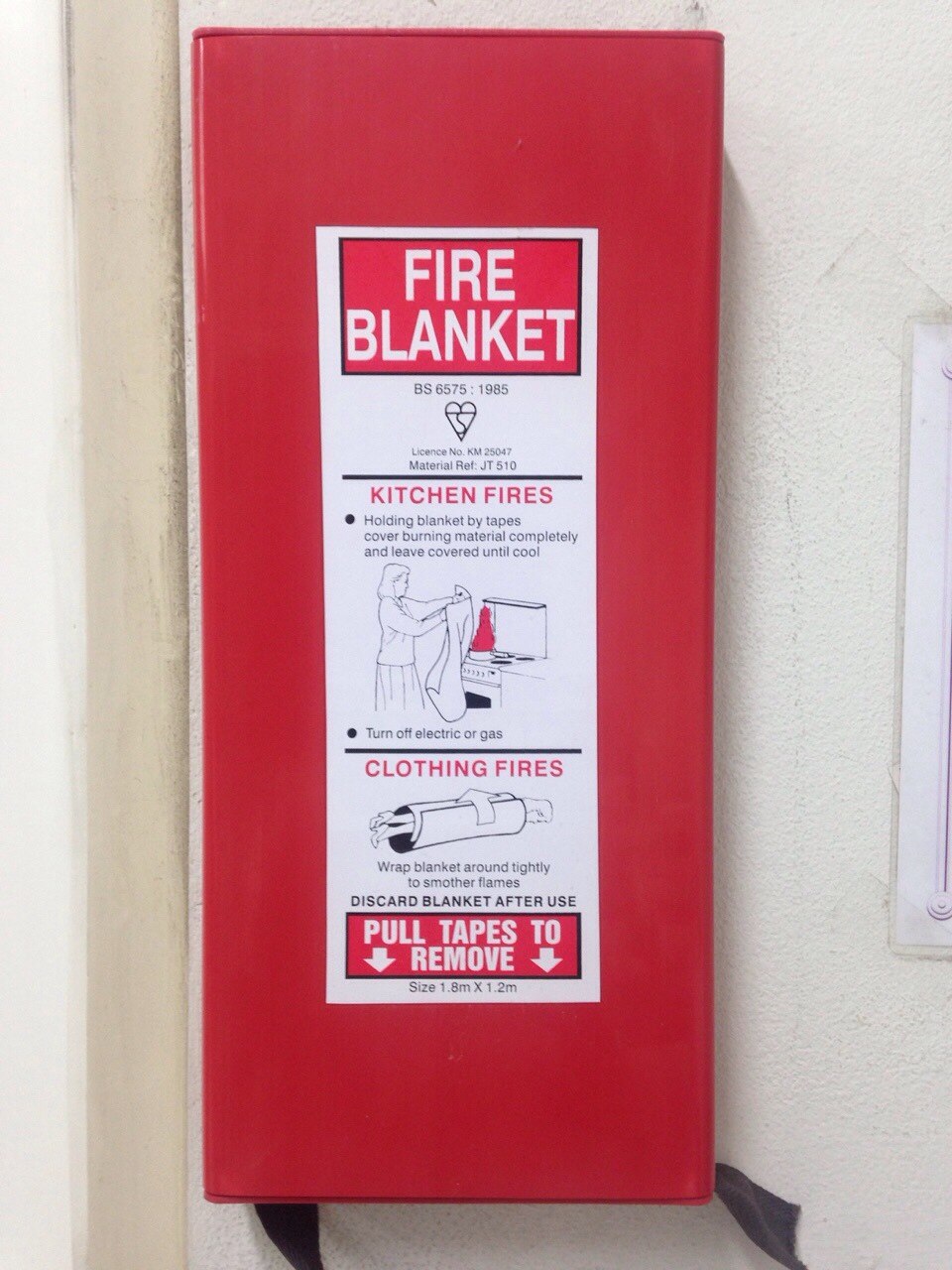
People also need to be ready. Extinguishers hang near exits. A fire blanket, a sheet of fire-resistant cloth kept in a wall box, can smother a small fire or wrap around someone whose clothing has caught alight. Every worker learns where the alarm, the exits and the extinguishers are, and when to leave instead of fighting a fire.
If there is a fire in a lab holding infectious material, containers of that material are put into , incubators, refrigerators or freezers, so that the fire does not spread the contents.
What other hazards hide in a lab?
Some of the biggest dangers look quite ordinary. Glassware is a good example. Broken glass makes sharp edges, and even a small crack can fail without warning. Heating a glass vessel too fast makes one part expand more than another, and the stress can crack it. Hot glass looks the same as cold glass, so people must take care before they grab anything. Sealed glass apparatus can burst if gas has nowhere to go, and it can collapse inwards if the pressure inside falls too low. Broken glass goes into a separate marked container so that no one is cut.
Machines can be dangerous too. A spins samples at very high speed. If the load is not balanced, the machine can shake violently and cause serious injury. An heats items with steam, so the load and the steam pipes can burn hands.
Electricity is another . Worn cords, damaged plugs and faulty equipment can cause electric shocks and fires. A cord can be damaged by a door, by a staple or by the weight of a trolley rolling over it.
Radiation is a different kind of risk. Labs that use materials need a licence. The aim is to keep the amount that reaches the body as low as reasonably achievable.
Even repetitive jobs, like pipetting or working at a microscope for hours, can strain muscles and joints over time.
What do scientists wear to stay safe?
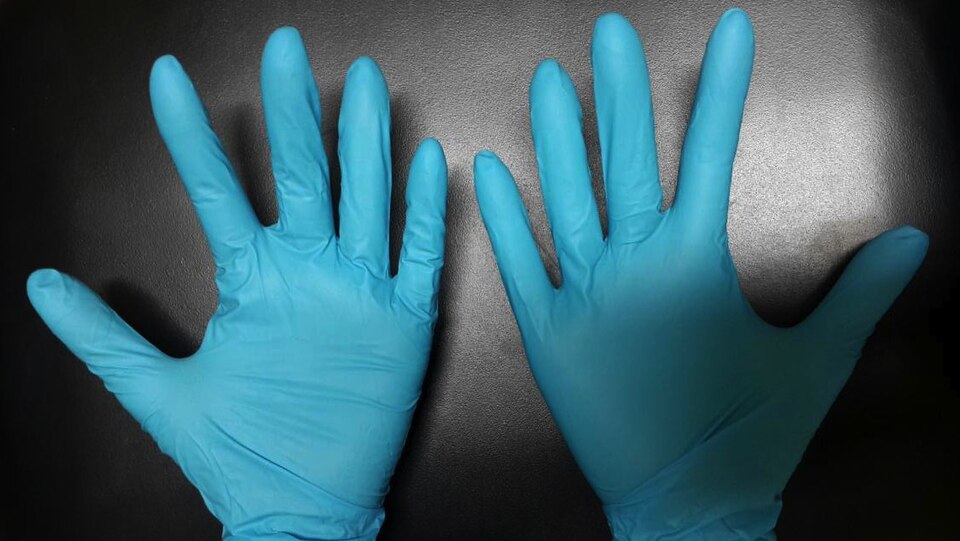
The equipment people wear is called personal protective equipment, or . It forms a barrier between the worker and a . A typical set includes a lab coat or apron, long sleeves, goggles, gloves, and in some jobs a face shield or a mask. For certain tasks a respirator is added. A particulate respirator filters out tiny solid particles, while an organic vapour respirator filters out harmful vapours.
The two most common kinds of gloves are latex and nitrile. Latex is very sensitive to touch, which makes it suitable for delicate work such as surgery. Nitrile is usually tougher and resists tears and many chemicals better. Some people are allergic to latex, which is one reason nitrile is so popular. The sulphur in some nitrile gloves can tarnish silver and some other metals, so even the choice of glove depends on the job. The chemical matters too, because some chemicals soak straight through thin gloves.
No piece of PPE removes the danger. It only reduces the chance that harm reaches the wearer. This is why workplaces teach people how to choose the right equipment for each situation, how to put it on, and how to take it off without spreading dirt or chemicals. Goggles are no help on a forehead, and gloves that have a tear can trap a chemical against the skin.
PPE is the last line of defence, after , safe design and good habits.
What happens when something goes wrong?
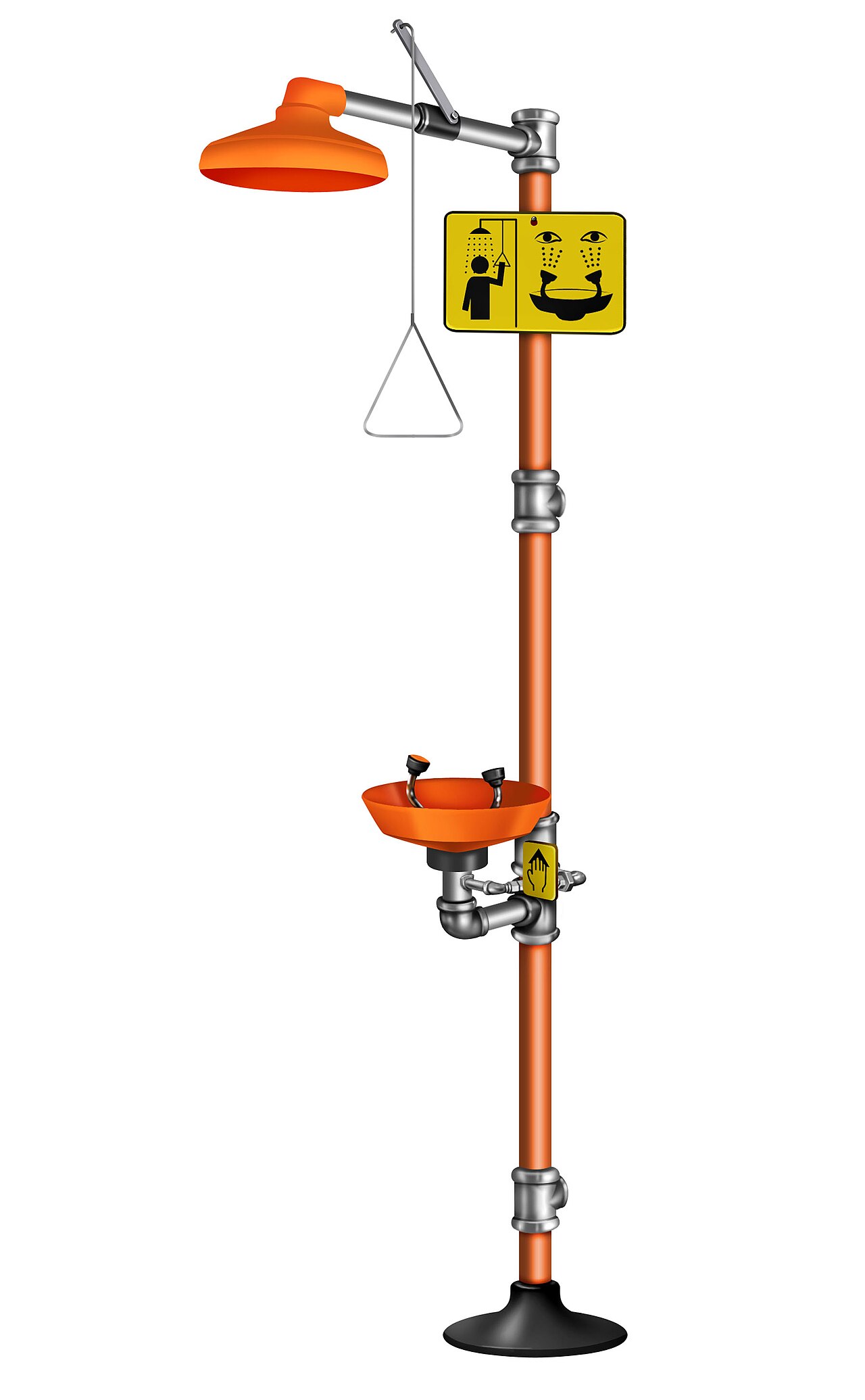
Even in a careful lab, accidents can happen, so every lab plans for them. The equipment is placed where it can be reached in seconds.
If a chemical gets on skin or clothing, the response is to flush it off with a large amount of water straight away. Labs have an emergency shower for the whole body, and an eye-wash station for splashes to the eyes. The eye-wash has a gentle stream of water that can wash the eyes while the person holds their eyelids open. These are usually fitted by a doorway or in a corridor, in a spot that is easy to find, even if the person's sight is blurred. The usual advice is to keep rinsing for around 15 minutes and then get medical help.
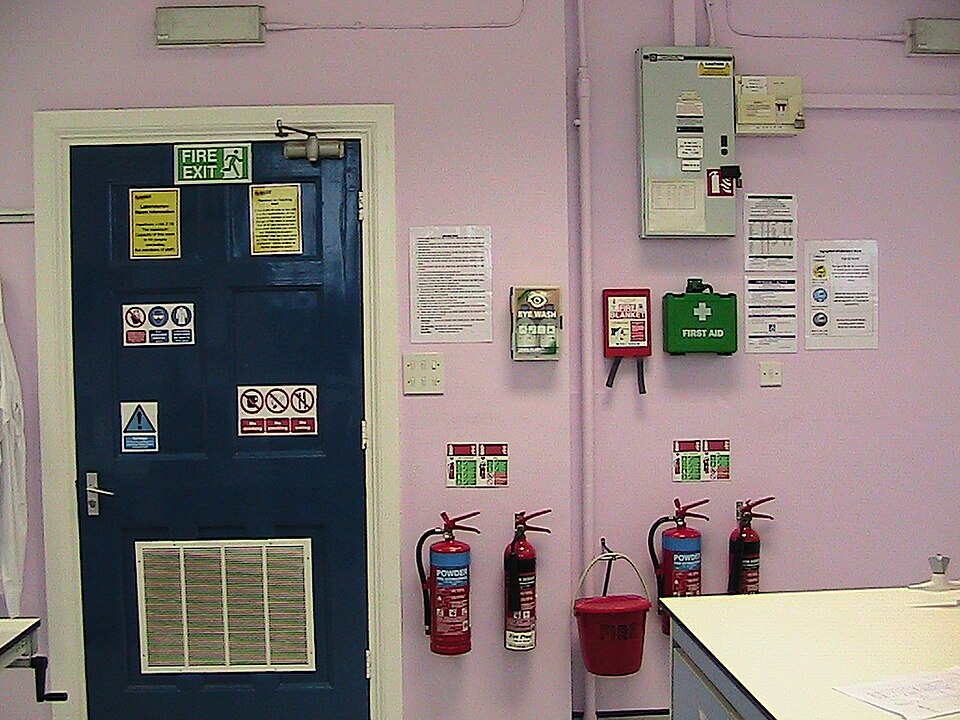
For burns, cuts and other injuries, a first-aid kit and trained first-aiders are available, and anything serious means calling the emergency services at once. A fire blanket and extinguishers deal with small fires.
People practise too. Fire drills show everyone the quickest way out. Workers learn to raise the alarm and tell others, instead of trying to handle a big problem alone. This is where the helps. If one person is hurt or overcome by fumes, the other can call for help.
After any incident, labs look into why it happened, so that the same thing is less likely to happen twice.
How do labs keep everyone following the rules?
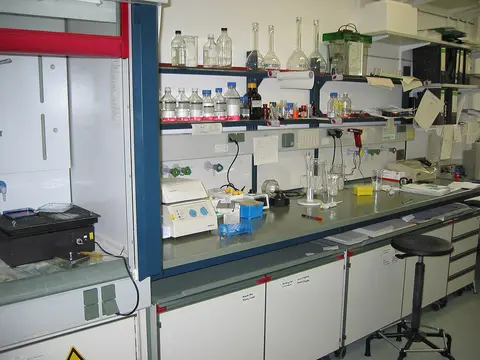
Equipment on its own is not enough. Safety depends on people knowing what to do and doing it every time. So laboratories build safety into their daily routine.
Training comes first. New workers learn about the they will meet and how to use the equipment. Many labs also have written safety policies, which are enforced, so that rules do not slip when people are in a hurry. Impatience is a real danger. Newcomers who rush to heat large pieces of glass too fast, for example, are one of the common causes of breakage.
Before an experiment starts, its design can be reviewed for safety. Someone asks what could go wrong, how bad it would be, and what would reduce the risk. If a step is too dangerous, the plan is changed. The most dangerous jobs are done with a buddy.
Signs carry the message at a glance. Doors, cabinets and bottles have warning symbols, and exits and extinguishers are marked clearly. Visitors who do not know the lab can still see where the hazards are and where to leave in an emergency.
And there are laws. In many countries health and safety legislation applies to laboratory work, and licences are needed for the most hazardous materials such as sources.
Which accidents changed the rules?
Many laboratory rules exist because of real accidents. Some of the people involved were brilliant scientists who did not yet know the danger.
In 1898 Marie Curie and her husband Pierre discovered the elements polonium and radium. Nobody then understood that radiation harms the body. Curie carried samples in her pockets and worked without shielding. She died in 1934 of a blood disease that was very probably caused by radiation. Her notebooks are still radioactive. They are kept in lead-lined boxes in the national library of France, and readers wear protective clothing to handle them.
Karen Wetterhahn was a chemist at Dartmouth College in the United States. In August 1996 she spilled a drop or two of a compound called dimethylmercury on her gloved hand. She was working in a and wearing latex gloves. Tests later showed that the chemical passes through latex in about 15 seconds. She fell ill months later and died in June 1997. Since then, the advice for such chemicals has been a under a heavy-duty outer glove.
Sheri Sangji was a 23-year-old research assistant at the University of California, Los Angeles. In December 2008 she was using a syringe to move a chemical that catches fire in air. The syringe came apart, and her clothes caught fire. She was not wearing a lab coat, and she died of her burns 18 days later. Her professor became the first American university scientist to face criminal charges over a lab accident. The university brought in strict safety training on all its campuses.
Explore Next
Your audio story keeps playing while you look around.


Words to Know
- autoclave
- A machine that uses hot steam to sterilise equipment and waste.
- biohazard
- A living thing or its product that is dangerous to health.
- buddy system
- A rule that risky work is done with another person nearby.
- carcinogen
- A substance that can cause cancer.
- centrifuge
- A machine that spins samples very fast to separate their parts.
- corrosive
- Able to damage or destroy materials and skin by chemical action.
- cryogen
- A substance used to make very low temperatures, such as liquid nitrogen.
- fume hood
- A ventilated cabinet that draws harmful fumes away from the person working.
- hazard
- Anything that has the potential to cause harm.
- laminate glove
- A glove made of thin layers of plastic that blocks chemicals which pass through latex.
- PPE
- Personal protective equipment, such as goggles, gloves and lab coats.
- radioactive
- Giving off radiation as the centres of atoms break down.