Vibration
The back-and-forth shaking behind every sound, every buzz and many a broken machine.
A vibration is a back-and-forth movement around a resting position. A guitar string does it when you pluck it. So does a phone buzzing on a table, the skin of a drum and the walls of a building in an earthquake. Vibrations make every sound we hear, because a shaking object pushes on the air and sends waves flying outwards. They can also be a menace. Shaking engines waste energy, loosen bolts and can tear a machine apart if the shaking grows too strong. Marching soldiers once shook a bridge until it fell, and a famous London footbridge had to close 2 days after it opened. Engineers study vibration to build quieter cars, safer bridges and spacecraft that survive the violent ride into orbit.
What is a vibration?
A is a repeating movement around a point where an object would rest if nothing disturbed it. Scientists call that point the . When a guitar string is pulled to one side and let go, it swings past the middle, overshoots, swings back and keeps going. That repeated to-and-fro is called an .
Some vibrations are easy to predict. A pendulum swings in a steady rhythm, so its motion can be described exactly. Scientists call this deterministic. Other vibrations are messy. The bounce of a car tyre on a gravel road never repeats in the same way twice, so it can only be studied with statistics. Scientists call this random.
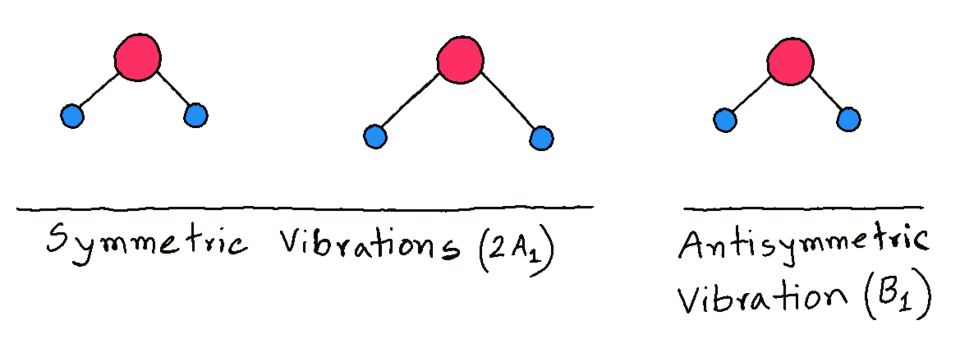
Vibration happens at every size. Big things shake, like a bridge when a lorry crosses it. Small things shake too. The atoms inside a water molecule are not frozen in place. They move in set patterns, stretching and bending like balls joined by springs. Hot things vibrate faster at the tiniest scale, and that is part of what we feel as heat.
How fast something vibrates is its . It is counted in hertz, where 1 hertz means one complete back-and-forth every second. A low bass note might vibrate about 50 times a second. A high squeak from a mouse vibrates thousands of times a second.
When is shaking useful?
Many things we rely on work because they vibrate on purpose. A tuning fork rings with one clear note because its two metal prongs shake at a steady rate. The reed in a clarinet, a saxophone or a harmonica flutters as you blow, and that flutter makes the sound. In a loudspeaker, a paper or plastic cone moves in and out many times a second.
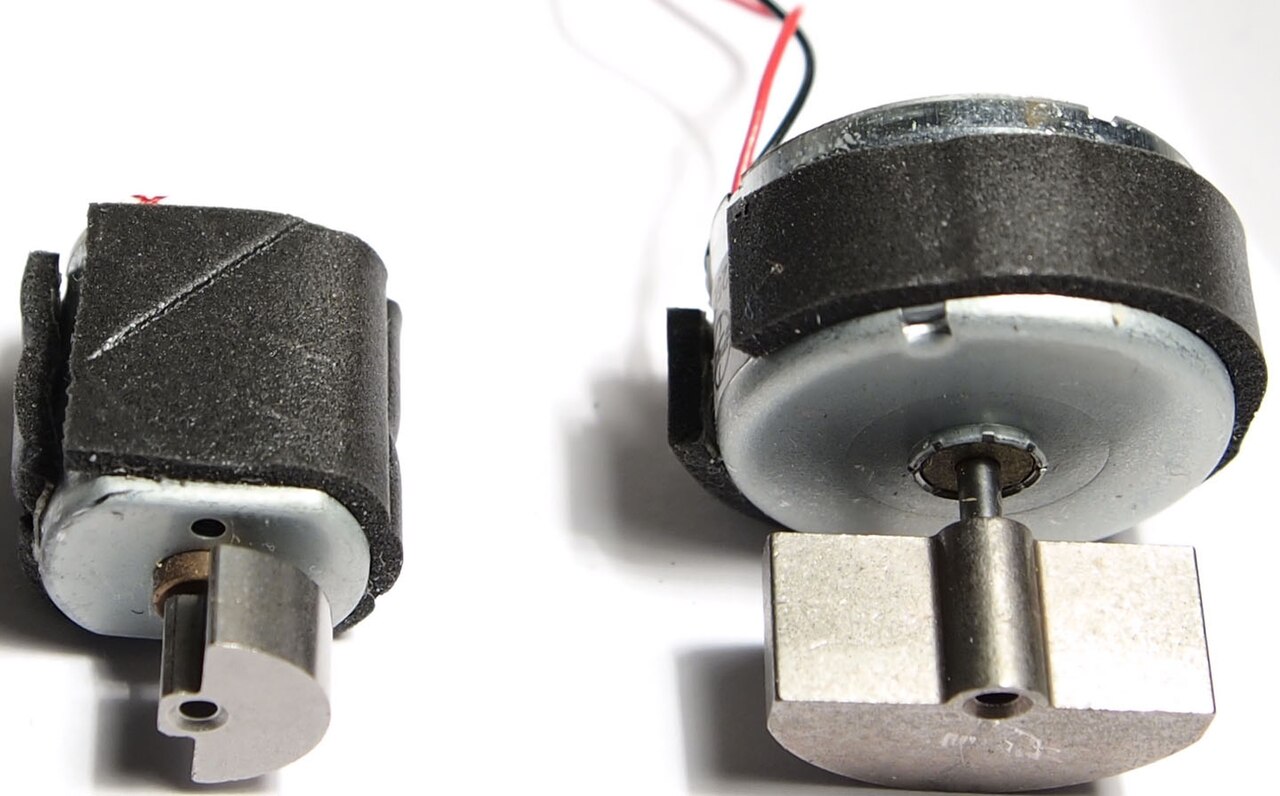
Your phone buzzes by the same trick. Inside is a tiny motor with a weight fixed off-centre on its spindle. When the motor spins, the lopsided weight makes the whole phone shake, and you feel it in your pocket. Game controllers use the same kind of motor to make a rumble when something explodes on screen.
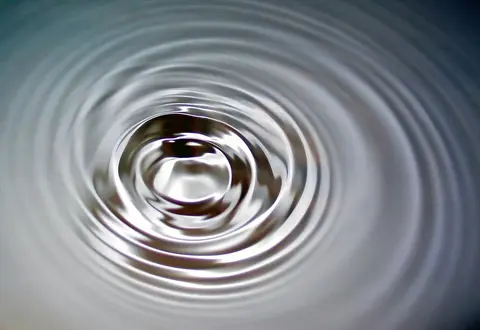
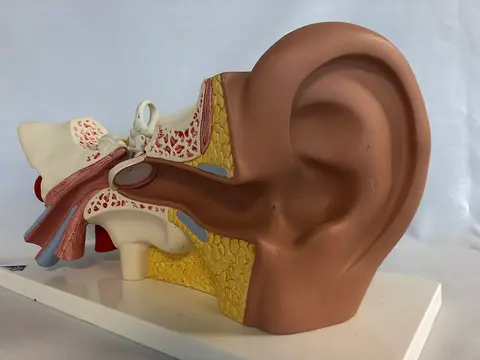
Sound and belong together. Sound is a pressure wave in the air, and vibrating things make it. Your vocal cords vibrate when you speak, and each shake pushes the air and sends a wave out from your throat. The wave can work the other way too. When a sound wave reaches your ear, it makes your eardrum vibrate, and that is the first step in hearing.
Because sound and vibration are so close, the study of both is part of one science called . Cutting down noise almost always means cutting down vibration first.
What happens after a single push?
A child on a swing who is pulled back and let go swings forward, back again and forward again, and each swing is a little smaller than the last. This is called free . A free vibration starts with one push or pull and then the object is left to move on its own.
A tuning fork shows the same thing. Struck once, it keeps ringing by itself for several seconds, getting quieter until it stops.
Every object that can vibrate has its own favourite speeds, called its natural frequencies. A swing has one, set by the length of its chains. A longer swing takes more time for each trip. A heavy object on a stiff spring vibrates in a pattern set by two things, how heavy it is and how stiff the spring is. A heavier weight makes the vibration slower. A stiffer spring makes it faster.
This explains something you can feel in a car. When a van is loaded with heavy boxes, its ride feels softer and more floaty. The extra mass has lowered the of the suspension, so the van bounces more slowly.
Energy explains why the motion goes back and forth. A stretched spring stores energy. When released, that stored energy turns into movement, and the moving weight then squeezes the spring and stores the energy again. The energy keeps swapping between stored and moving.
Why does shaking always die away?
If energy only swapped back and forth, a swing would go on for ever. It never does. Friction and air resistance steal a little energy on every swing and turn it into heat. This slow loss is called , and a that fades this way is called a damped vibration.
Engineers use damping on purpose. The shock absorbers on a car are dampers. Without them, a car that hit a bump would bounce up and down many times, like a ball on a spring. A good shock absorber lets the car bounce once or twice and then settle.
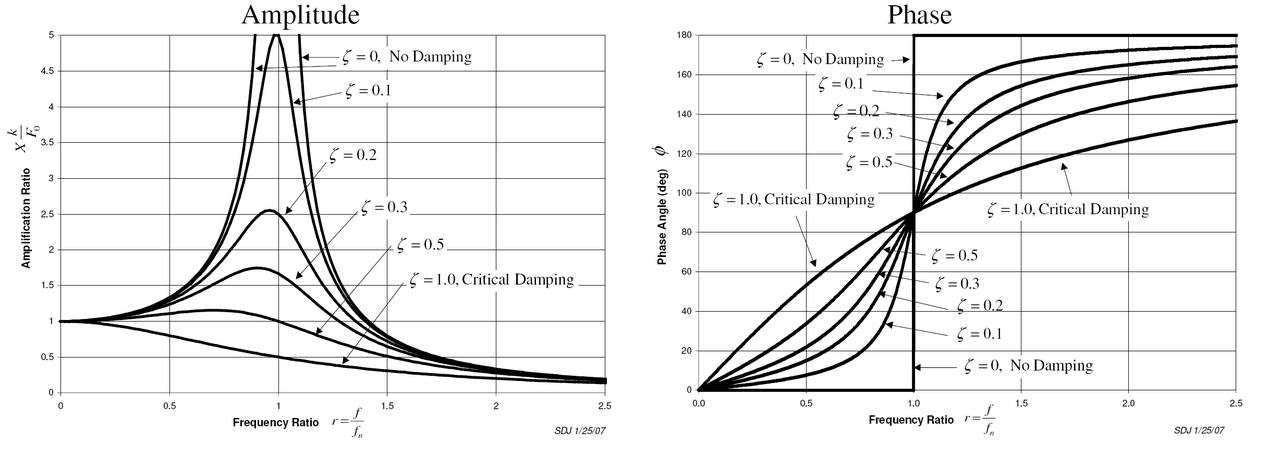
How much damping a thing has is measured by a number called the damping ratio. A tiny number means a thing keeps ringing for a long time. Metal structures, such as an aeroplane body or the crankshaft of an engine, have a damping ratio below 0.05. They ring like a bell. Car suspensions are tuned to between 0.2 and 0.3, so that they settle fast but still feel comfortable.
There are three cases. With light damping, the system still vibrates but fades over time. With exactly the right amount, called critical damping, it returns to rest as fast as possible without any extra swing. With heavy damping, it creeps back slowly and never swings at all, like a door closing on a strong hydraulic arm.
Light damping also changes the speed a little. A damped vibration is slightly slower than an undamped one, though for most real machines the difference is tiny.
What is resonance and why is it dangerous?
Free starts with one push. happens when something keeps pushing. A washing machine shakes when its load is lopsided. A car trembles on a bumpy road. A building sways during an earthquake. In each case, a repeating disturbance is driving the vibration.
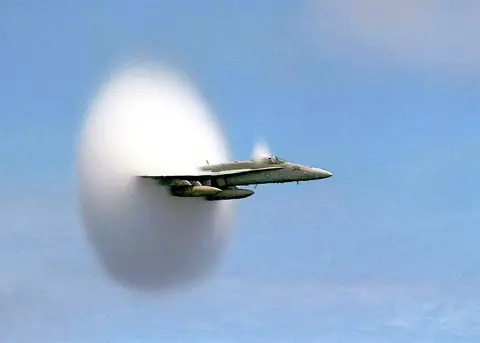
A driven object vibrates at the same rate as the push. But how big the shaking gets depends on how that rate compares to the object's . When the two match, the vibration can grow enormous. This is .
The swing again gives the best picture. If you push at random moments, you get nowhere. If you push at the same rhythm as the swing, every push adds energy at exactly the right moment. The swing climbs higher and higher, even though each push is gentle. The push does not need to be strong. It only needs to be well timed.
In machines, resonance can be harmful, and eventually cause failure. In spinning machinery, any speed that sets off a resonance is called a critical speed. Engineers try hard to keep machines away from those speeds.
There are three main cures. Add , so that energy leaks away as fast as it arrives. Change the mass or stiffness, which moves the natural away from the push. Or change the rate of the push, for example by running the machine at a different speed. With no damping at all, the shaking would in theory grow without limit, but in real life something always breaks first or friction takes over.
Which bridges taught engineers about resonance?
On 12 April 1831, about 74 soldiers marched in step across the Broughton Suspension Bridge near Manchester. The bridge began to bounce in time with their feet, and some of the men stepped harder to make it bounce more. Then a bolt holding one of the chains snapped, and one end of the deck dropped into the river. Nobody was killed, but about 20 soldiers were hurt. The British Army then ordered troops to break step when crossing a bridge, a custom soldiers still follow.
The Millennium Bridge, a footbridge across the River Thames in London, opened on 10 June 2000. Crowds felt it sway from side to side. As it swayed, people shifted their steps to keep their balance, and this pushed it further in the same rhythm. It closed 2 days later. Engineers fitted about 90 dampers, and the bridge reopened in February 2002 without the wobble.
Tall buildings fight sway too. Taipei 101, a 508-metre skyscraper in Taiwan, hangs a steel ball weighing 660 tonnes between its 87th and 92nd floors. When wind or an earthquake makes the tower sway, the heavy ball lags behind and soaks up energy. This is called a tuned mass damper.
The 1940 collapse of the Tacoma Narrows Bridge in the United States is often blamed on . In fact the cause was flutter, in which the twisting deck kept drawing more energy from a steady wind.
Why do engineers fight vibration?
Most machines shake when they work, and most of that shaking is wasted. It uses up energy that should be doing useful jobs. It makes noise. It slowly wears parts out, because metal that is flexed millions of times can crack in the end. This kind of damage is called fatigue.
The causes are easy to list. A spinning part may be slightly lopsided, which is called imbalance, so it tugs sideways on every turn. Parts that rub unevenly make friction shake. The teeth of gears meet and part many times a second, and each meeting gives a small knock.
Careful design cuts the problem. Rotating parts are balanced, like the wheels of a car when a garage adds small weights to the rim. Springs and rubber mountings isolate an engine from the body of a car. This works because of a neat fact. When something is pushed much faster than its , it hardly moves, so little force passes into the base. A soft mount lowers the natural frequency, which helps a lot.
Even small rattles matter. Car makers test for squeaks and rattles with special quiet , because a buyer who hears a buzzing dashboard thinks the whole car is poor. Machining is another place where is a problem. When a tool cuts metal, shaking can leave a rough, wavy surface on the part.
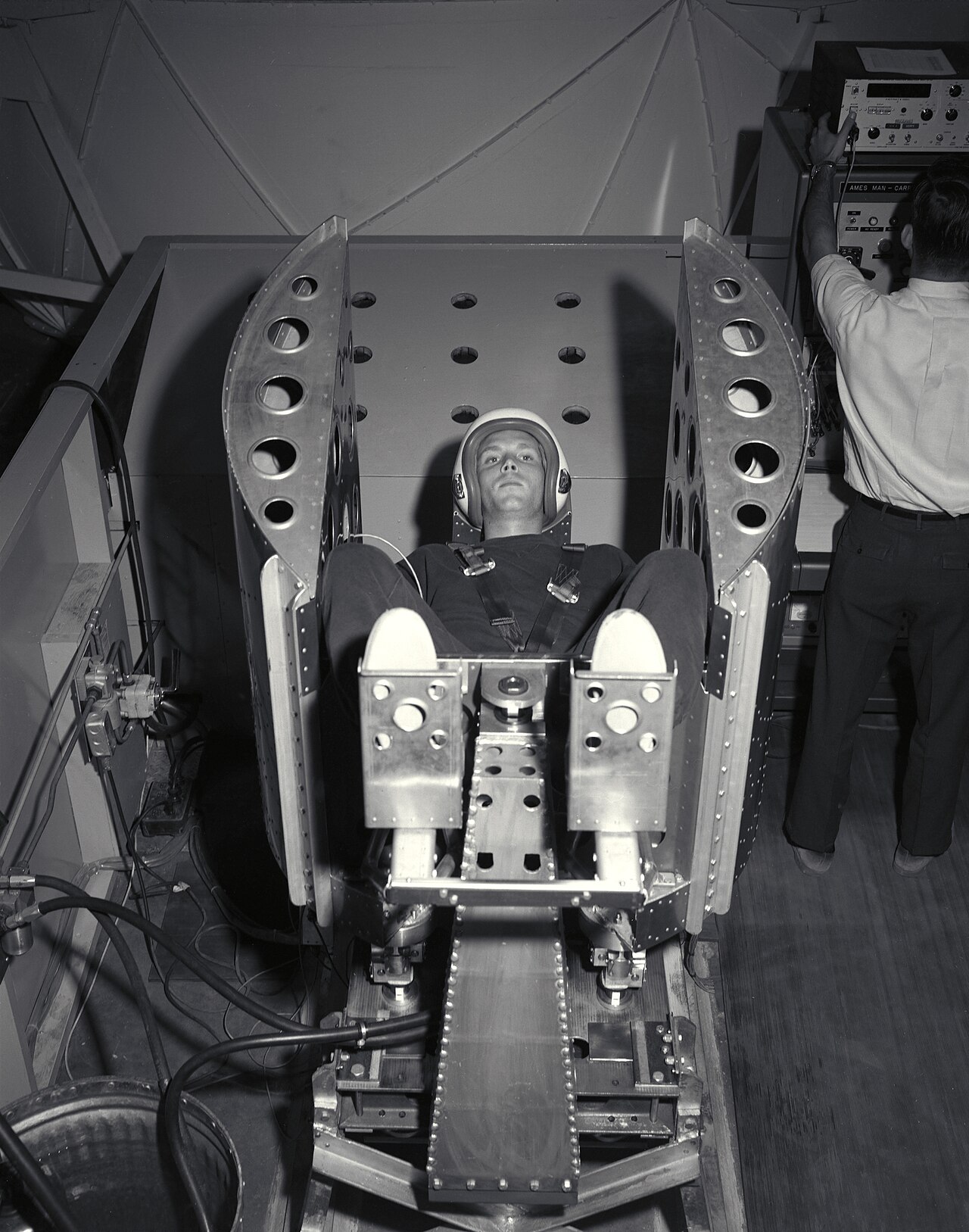
Shaking affects people too. In 1965 NASA scientists strapped volunteers into vibrating chairs to study how shaking affects the human body, because astronauts face strong vibration during a launch.
How do you test if a spacecraft can survive a shaking?
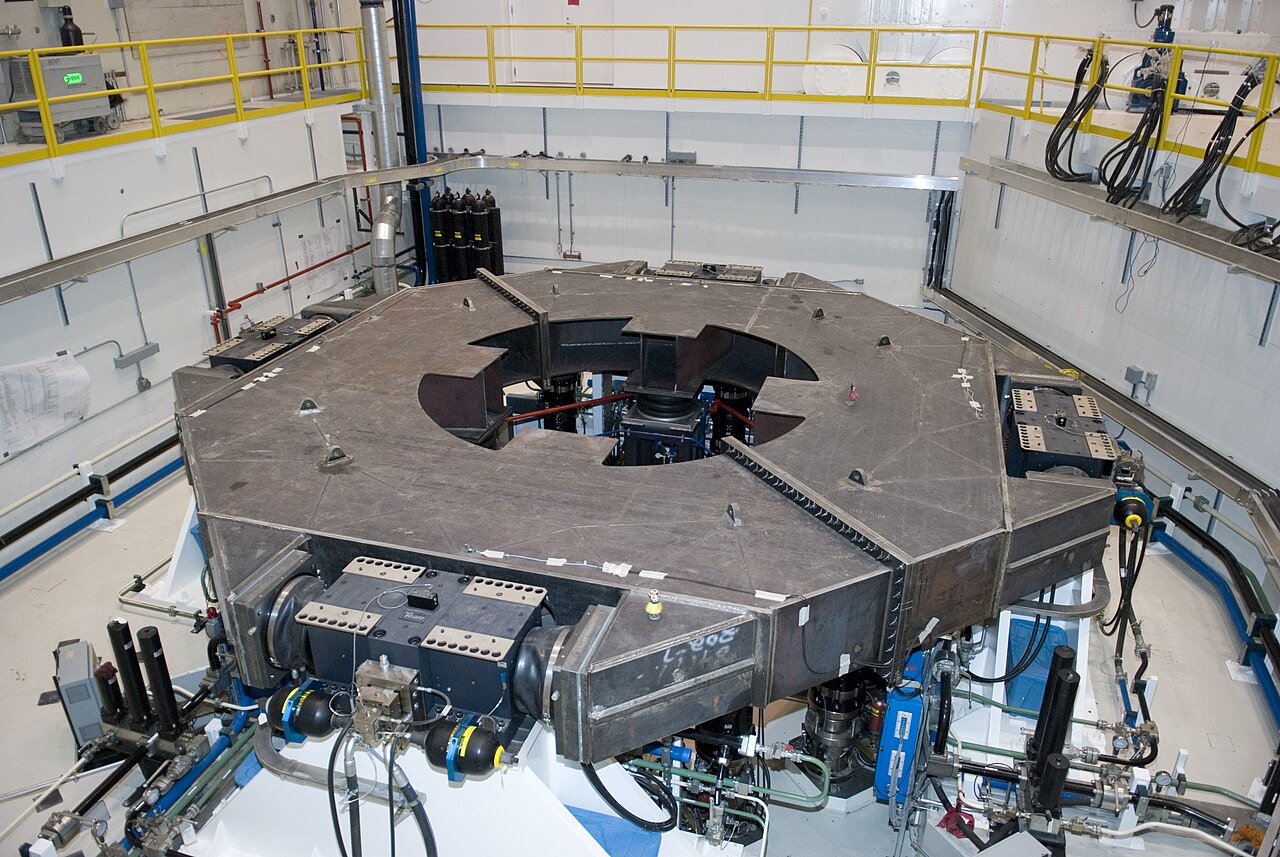
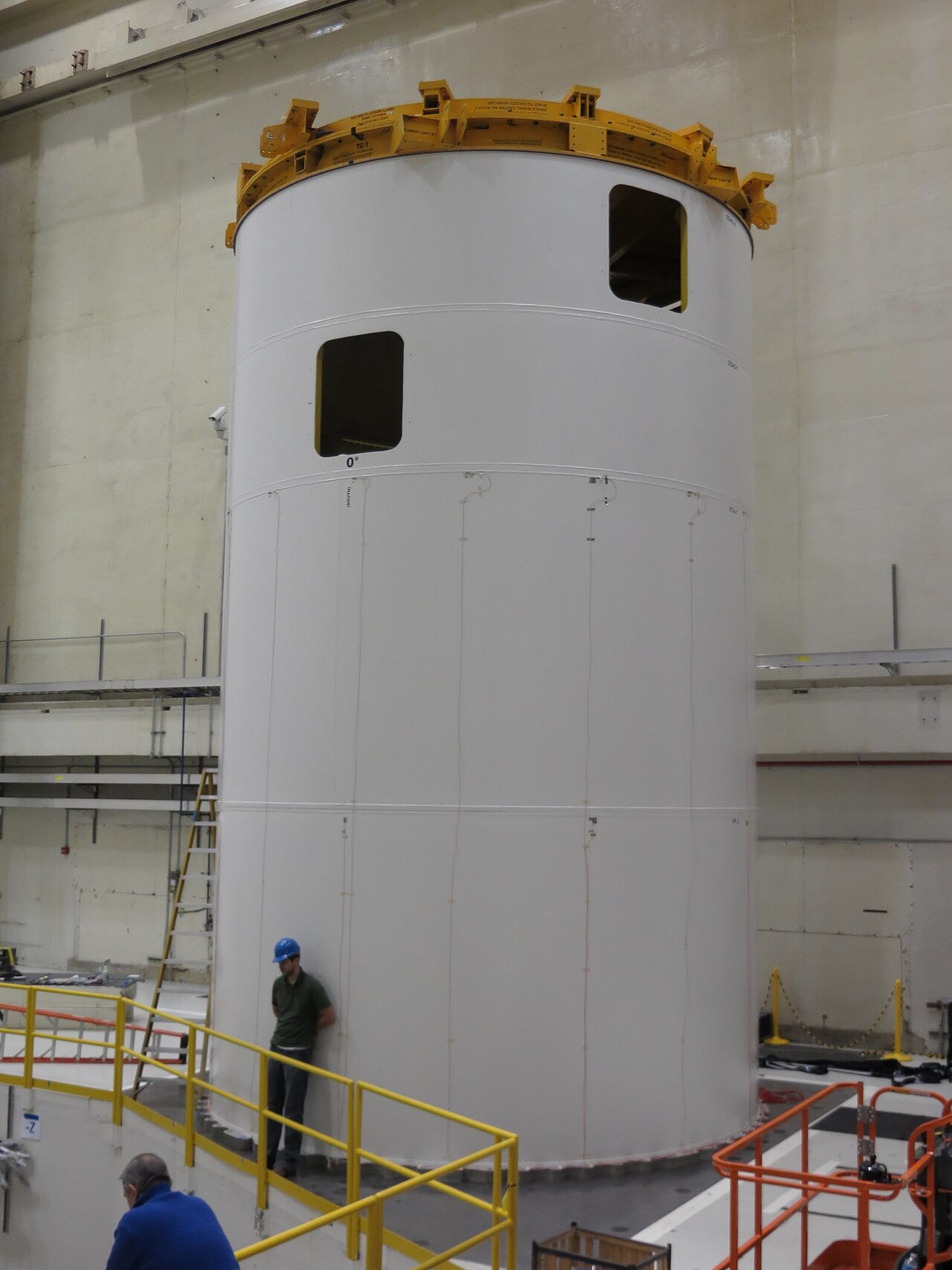
Rockets shake violently on the way to space. Before launch, engineers test whether satellites and their parts can take it, by shaking them on purpose in a laboratory. The machine that does this is called a . The thing being tested, the device under test, is bolted to the shaker table, and a computer controls how hard and how fast it moves.
Different shakers suit different jobs. For slow shaking, with frequencies under about 100 hertz, labs use servohydraulic shakers, which push with oil under pressure. For faster shaking, from about 5 hertz up to 2,000 hertz, they use electrodynamic shakers, which work rather like a very strong loudspeaker.
There are two main kinds of test. In a sine test, the shaker moves at one at a time and sweeps slowly through the range. This shows how the object reacts at each speed. In a random test, every frequency is present at once. This copies real life better, such as the bumps a car feels on a road.
The early shaking machines could only do sine tests. Later, first analogue and then digital controllers made random tests possible.
Tests usually shake along one direction at a time, though real comes from many directions together. Some modern test standards, including one used by the US military, call for tests with several shakers working together. The test measures whether the object still works, how long it lasts and where it rattles or resonates.
How can you find a fault by feeling the shaking?
A doctor listens to a heart to learn if it is healthy. Engineers do the same with machines. Fans, pumps, motors and gearboxes each vibrate in their own pattern, and a fault changes that pattern. Measuring it is called analysis. It lets a factory repair a machine before it breaks, which saves money and stops long delays.
The key tool is the . A sensor records the shaking over time. A computer then uses a method called the fast Fourier transform to split it into separate frequencies, rather as a prism splits white light into colours. A healthy gearbox has a spectrum with its usual peaks. A worn bearing or an unbalanced shaft adds a new peak at a particular , and that frequency points to the faulty part.
The starting point for the mathematics is a very simple model, a weight on a spring with a damper. Even a whole car body can be treated as many of these joined together. A real structure has many natural frequencies, each with its own , the pattern in which it bends and twists. In a modal test, engineers tap or shake the structure and measure the response at many points to find these modes.
Only the first few modes usually matter in practice. Knowing them, engineers can check that a bridge, an aeroplane wing or a satellite will not resonate with the pushes it will meet.
Explore Next
Your audio story keeps playing while you look around.


Words to Know
- acoustics
- The science of sound and vibration.
- damping
- The loss of energy, often through friction, that makes a vibration fade.
- equilibrium
- The point where an object rests when nothing is disturbing it.
- forced vibration
- Shaking that keeps going because something keeps pushing.
- frequency
- The number of vibrations in each second, measured in hertz.
- mode shape
- The pattern in which a structure bends when it vibrates at one natural frequency.
- natural frequency
- The rate at which an object likes to vibrate once it is disturbed.
- oscillation
- One kind of repeated to-and-fro movement.
- resonance
- Very large shaking that happens when a push matches the natural frequency.
- shaker
- A machine used to shake things on purpose to test them.
- spectrum
- A chart showing how much vibration there is at each frequency.
- vibration
- A repeating back-and-forth movement around a resting position.