Earthquake
When rock deep underground snaps, the whole ground can shake.
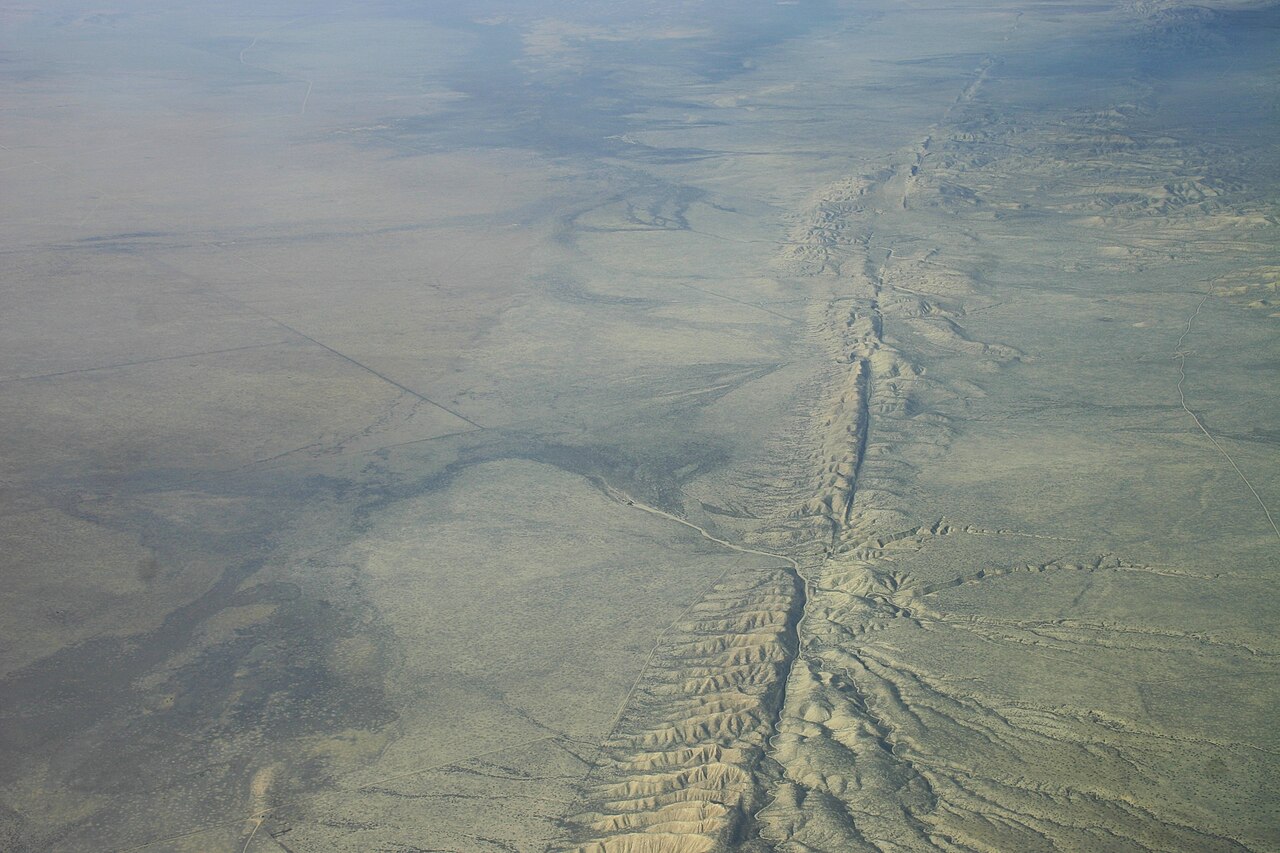
An earthquake is a shaking of the ground. It starts when rock breaks suddenly and releases stored energy, which spreads outwards as waves. Some earthquakes are so weak that only instruments notice them. Others are strong enough to throw people into the air and flatten whole cities. Scientists record about 500,000 earthquakes every year, and about 100,000 of them are strong enough to feel. Most happen along the edges of Earth's tectonic plates, where huge slabs of rock push, pull and grind past each other. Earthquakes have destroyed cities, caused giant sea waves and inspired myths. They also let scientists see inside our planet.
What is an earthquake?
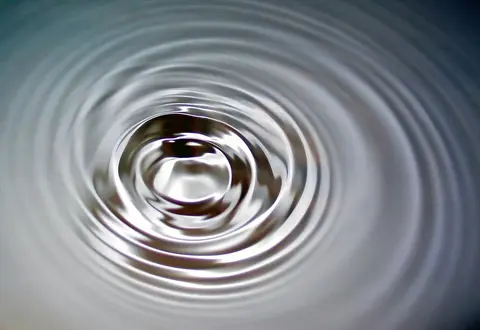
An earthquake is the shaking of Earth's surface caused by a sudden release of energy in the lithosphere, the hard outer shell of our planet. The energy travels outwards as , a bit like ripples spreading from a stone dropped in a pond. Some earthquakes are weak and only sensitive instruments notice them. Others are violent enough to throw objects and people into the air and to damage roads, bridges and power lines.
Two words help to say where an earthquake happens. The , also called the hypocentre, is the point underground where the rock first breaks. The is the spot on the surface straight above it. News reports usually give the epicentre.
Most earthquakes happen because rock breaks along a crack called a . Others are set off by volcanoes or landslides. People can cause some too, with mining, filling huge reservoirs, pumping waste fluid into the ground or testing nuclear weapons. Quake, tremor and temblor are other words for the same thing.
Earthquakes are very common. Instruments pick up around 500,000 a year, and about 100,000 are strong enough to be felt. Most are small and harmless. Since 1900 there have been about 18 major earthquakes a year, of 7.0 to 7.9, and about 1 great earthquake of magnitude 8.0 or more.
Why does the ground suddenly slip?
Earth's tectonic plates are always moving, but only by a few centimetres a year, about as fast as your fingernails grow. The edges of plates do not slide smoothly. A has rough bumps that lock it in place. The plates keep moving, so the rock near the fault is squeezed and bent, and it stores energy like a stretched elastic band.
At some point the stress becomes greater than the locked part can hold. The fault breaks, and the two sides lurch past each other in seconds. The stored energy is set free at once. This idea is called the elastic-rebound theory. Only a small part of the energy, about a tenth or less, leaves as . The rest cracks the rock and heats the fault with friction.
The break starts at the and spreads along the fault. It moves at close to the speed of S waves in the surrounding rock, a few kilometres every second. It stops when it reaches the end of the fault or a patch of rock where there is too little stress. Big ruptures can be as long as 1,000 kilometres, as in Alaska in 1957, Chile in 1960 and Sumatra in 2004.
Only cold, brittle rock can snap. Rock hotter than about 300 degrees Celsius flows slowly, so it bends instead of breaking. That is why earthquakes happen in the crust and in cold slabs of plate sinking into the mantle.
Where on Earth do earthquakes strike?
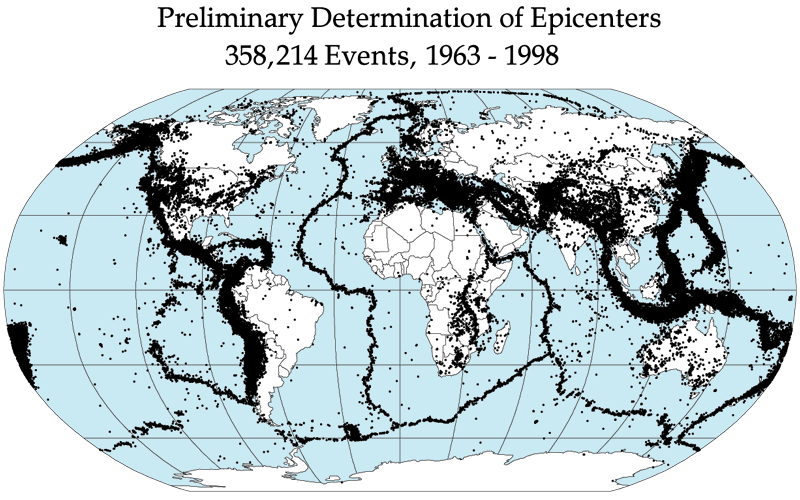
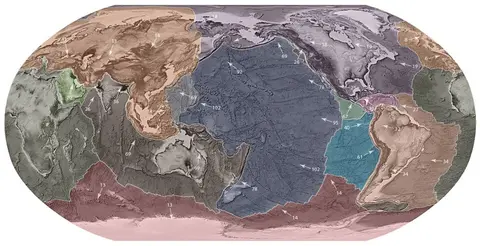
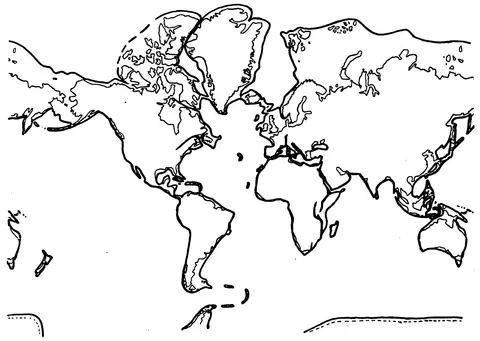
About 90 per cent of all earthquakes, and about 81 per cent of the largest, happen in a horseshoe-shaped belt around the Pacific Ocean. It is about 40,000 kilometres long and is called the Pacific . Strong quakes also strike other plate boundaries, such as the Himalayan mountains.
The kind of decides how big a quake can be. In a normal fault, the crust is being pulled apart, and earthquakes are usually below 7. In a reverse or thrust fault, the crust is being squeezed together, and one side is pushed up over the other. Reverse faults at plate boundaries make the most powerful earthquakes, called . They include almost all quakes of magnitude 8 or more. In a strike-slip fault, the two sides slide sideways past each other. The San Andreas Fault in California is one. These can produce quakes up to about magnitude 8. In March 2025 the Sagaing Fault in Myanmar slipped in a magnitude 7.7 earthquake that killed several thousand people. The shaking also brought down a tower under construction in Bangkok, about 1,000 kilometres away.
Earthquakes also vary in depth. Those shallower than 70 kilometres are called shallow-, and most damaging ones are in this group. Where cold ocean plate sinks into the mantle, deep-focus earthquakes can happen 300 to 700 kilometres down.
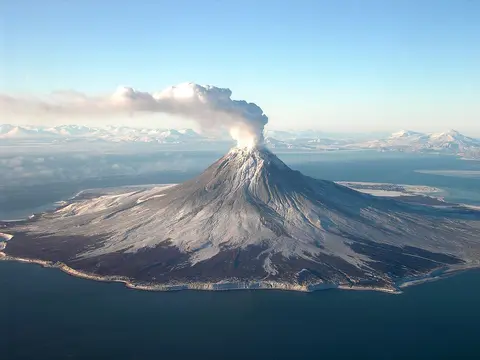
Volcanoes cause quakes as magma moves inside them, so tremors can be an early warning, as before the 1980 eruption of Mount St Helens. Human activity can cause earthquakes too. A magnitude 5.7 quake in Oklahoma in 2011 is thought to have come from pumping waste water from oil wells underground.
How do we measure an earthquake?
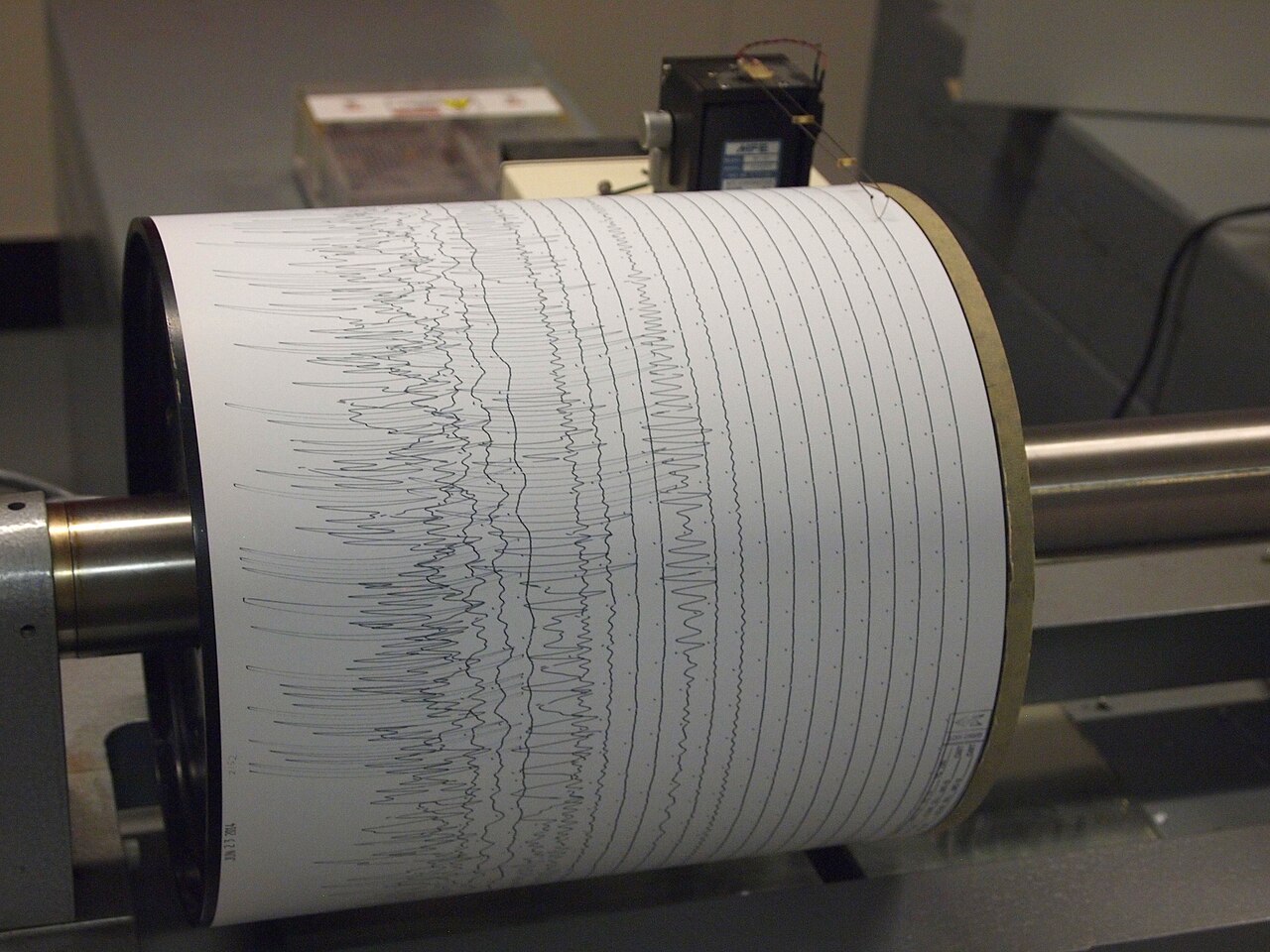
A is an instrument that senses ground movement. The record it draws or stores is called a seismogram. Seismometers can feel quakes that happen on the far side of the world, because travel right through the planet.
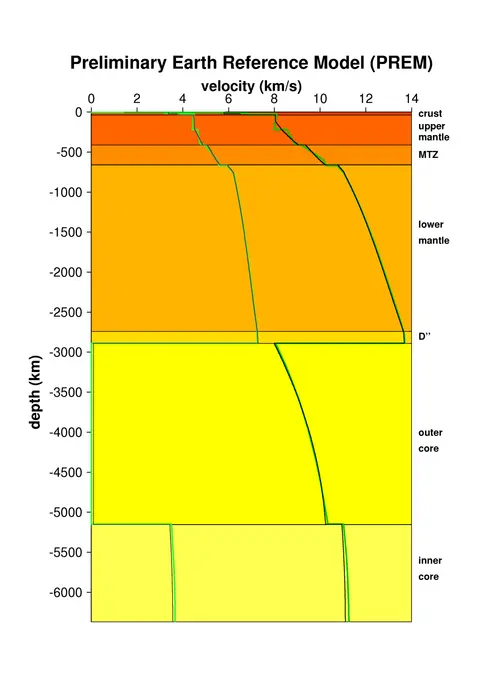
There are three main kinds of wave. P waves are the fastest. They squeeze and stretch the rock in the direction they travel. S waves arrive later and shake the ground up and down and from side to side. Surface waves travel along the ground and come last. S waves and surface waves do most of the damage. In solid rock the waves move at about 3 to 13 kilometres every second.
Because P waves and S waves travel at different speeds, the gap between their arrival times shows how far away a quake was. Multiply the gap in seconds by about 8 to get the distance in kilometres. Stations in different places can then work out the together. In 1913 the scientist Beno Gutenberg used seismograms to find the Earth's core in this way.
Size is described by , a single number for the quake at its source. Charles Richter made the first magnitude scale in 1935. Most scientists now use the moment magnitude scale. Each step up means about 10 times more ground movement and about 32 times more energy. Intensity is different. It describes how strongly the ground shook at one place, so it changes from town to town. The Mercalli scale measures it by what people see and feel.
Which earthquakes have been the biggest and the deadliest?
Energy grows fast with . A magnitude 6.0 quake releases about 32 times as much energy as a 5.0, and a 7.0 releases about 1,000 times as much.
The largest earthquake ever measured on a seismograph, the Valdivia earthquake, struck Chile on 22 May 1960. Its was near the town of Cañete. Its magnitude was 9.5. It released about twice the energy of the next largest, the Good Friday earthquake of 27 March 1964 in Prince William Sound, Alaska, which measured 9.2. All of the ten largest quakes on record are .
The biggest quakes are not always the deadliest. Death tolls depend on how close a quake is to crowded places and how well buildings are made. On 23 January 1556, an earthquake struck Shaanxi in China, where many people lived in yaodongs, homes dug into soft hillsides. Many died when these collapsed. Estimates of the dead range from more than 100,000 to as many as 830,000, if people who later died of famine and disease are counted. The Tangshan earthquake of 1976, also in China, was the deadliest of the 20th century, with a toll between 240,000 and 655,000. The 2004 Indian Ocean earthquake, of magnitude 9.2, is the only one of the ten largest that is also among the deadliest, because it made a huge tsunami.
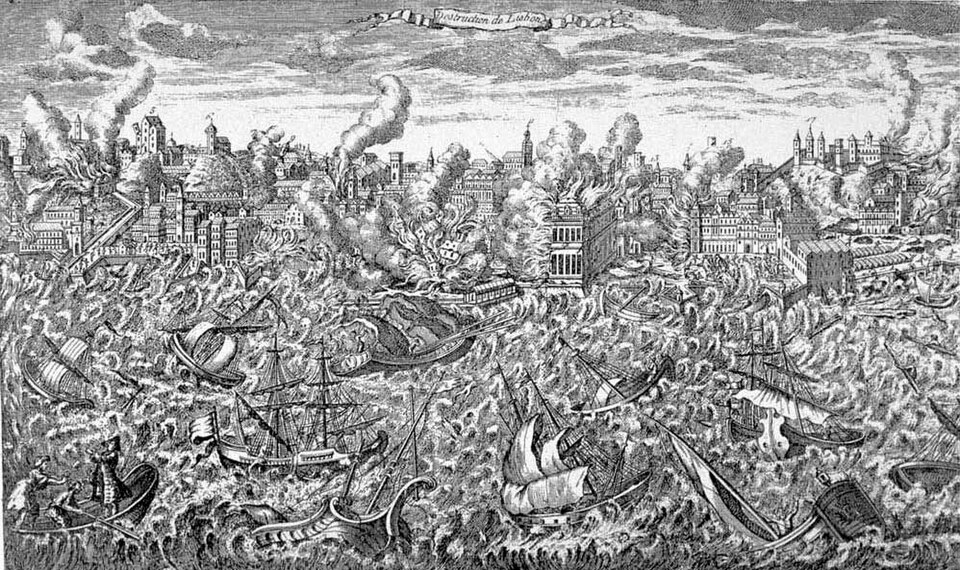
The 1755 Lisbon earthquake, followed by a tsunami and fires, destroyed much of Portugal's capital. Seismologists warn that mega-cities such as Mexico City, Tokyo and Tehran keep growing in risky places. One quake there could kill up to 3 million people.
What does shaking do to the land?
How badly the ground shakes depends on the , the distance from the and the kind of ground. Soft soil can make shaking stronger than hard rock does, because waves slow down and grow as they pass from deep rock into loose surface layers.
Sometimes the breaks right through the surface. This ground rupture can shift the land by several metres and is a big risk for dams, bridges and power stations, so engineers map faults before building.
Soil happens when shaking makes wet sand lose its strength and act like a liquid for a short time. Buildings can tilt or sink into it. In the 1964 Alaska earthquake, many buildings sank into the ground this way and then collapsed.
Earthquakes can also bring down hillsides. In a study of 162 earthquakes between 1772 and 2021, China had 42 per cent of all landslide deaths, mostly from the 2008 Sichuan earthquake. Peru followed from the 1970 Ancash earthquake, and Pakistan from the 2005 Kashmir earthquake.
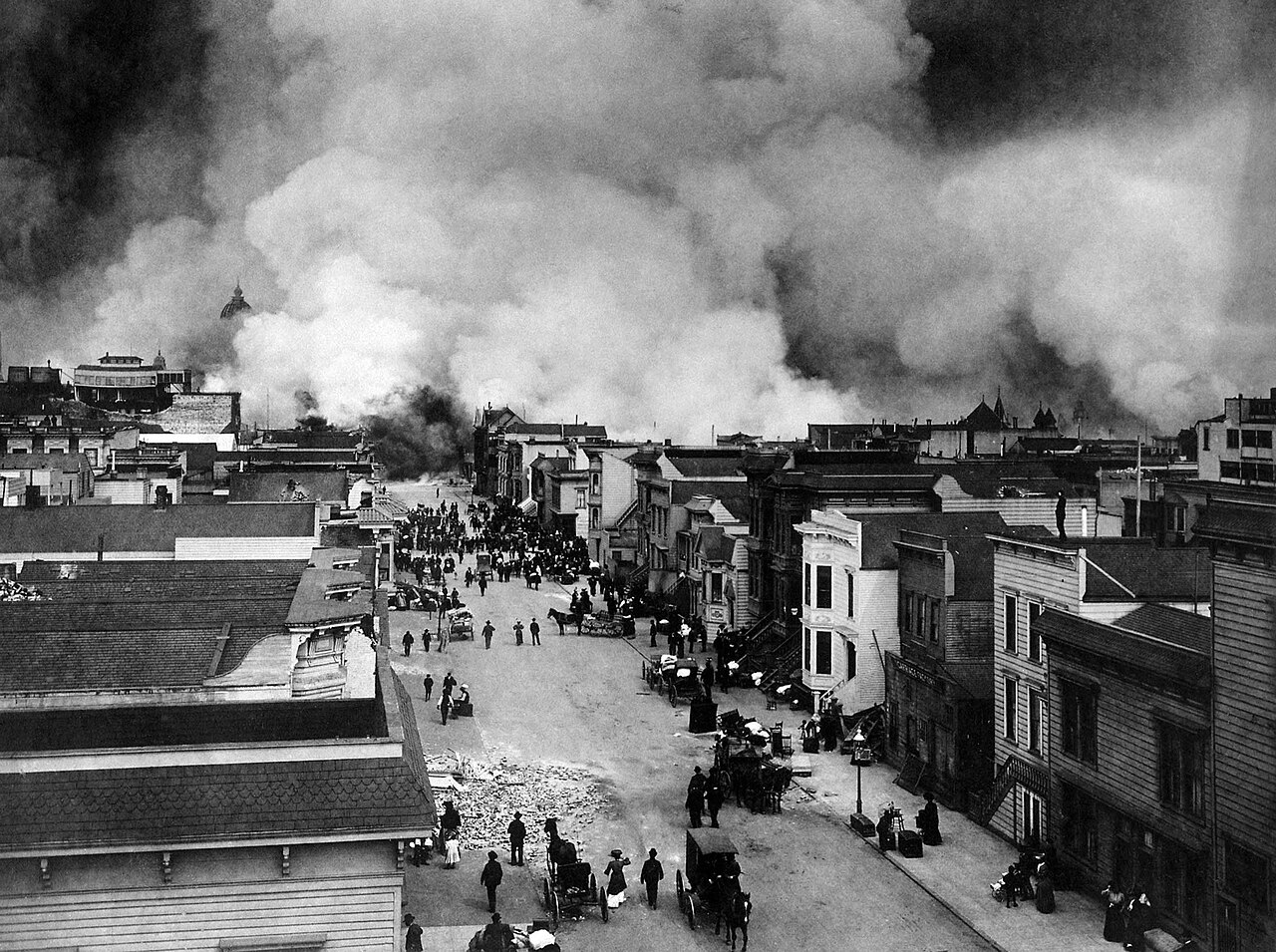
Fire is another danger. Quakes can break electrical wires and gas pipes, and broken water mains leave firefighters short of water. In the 1906 San Francisco earthquake, fire killed more people than the shaking did.
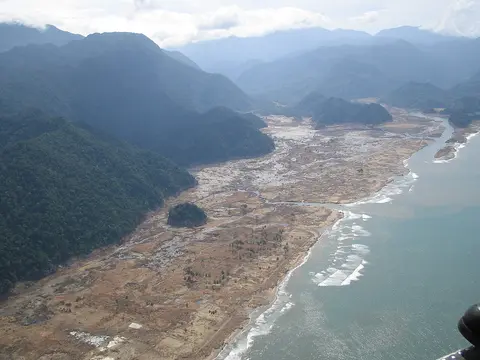
Quakes at sea can lift or drop the sea floor and cause a tsunami. A landslide can block a river and form a lake, and the dam of loose rock may fail later. Sarez Lake in Tajikistan lies behind such a natural dam. If it failed, flooding could threaten about 5 million people.
What happens to people after a big earthquake?
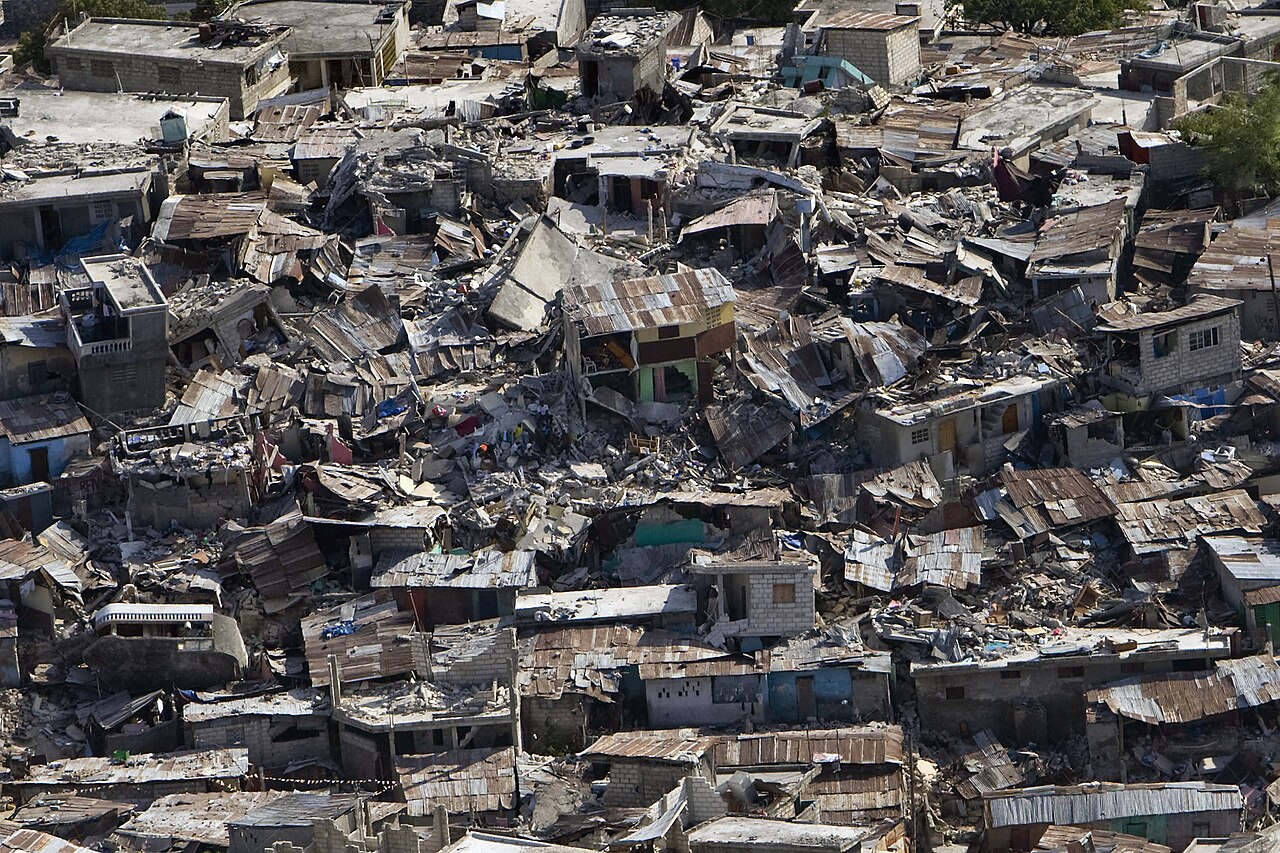
Most deaths in earthquakes come from buildings that collapse. Damage depends on the strength of the shaking and on how the buildings were made. Poorer communities often suffer worse and take longer to recover. The most at-risk places are those where earthquakes are rare but powerful, and places where building rules are weak or not enforced.
The effects spread far beyond the first minute. Roads and bridges can fail. Water, power, sewers, gas and phone networks may stop working. Hospitals, police and fire services can be damaged just when they are most needed. Afterwards, survivors may face disease, shortages of food and clean water, and long-lasting fear and sadness.
Haiti is a clear example. On 12 January 2010 a 7.0 earthquake struck close to the capital, Port-au-Prince, where many homes were weakly built. Estimates of the number of deaths vary widely, from about 100,000 to more than 300,000.
The main earthquake is often followed by smaller ones called , as the crust around the settles. They are always smaller than the mainshock, but they can bring down buildings already weakened. If a later quake is larger, it becomes the mainshock, and the first one is renamed a foreshock. Some earthquakes arrive in swarms with no single biggest shock, and others come in long storms. About a dozen earthquakes hit the North Anatolian Fault in Turkey during the 20th century, one after another.
Can we predict earthquakes, or only be ready for them?

Scientists cannot yet predict an earthquake to a specific day or month. The ground shows no reliable signal that works every time. Popular ideas such as 'earthquake weather' have no support.
What they can do is forecast. For well-studied , experts can work out the chance of a quake of a certain size over the next years or decades. This helps governments decide where to build and how strong buildings must be.
Some countries have earthquake warning systems. Sensors near a fault detect the first waves, and a signal travels faster than the damaging waves. People in range can get seconds of notice to drop to the ground, stop trains or shut off gas.
The best defence is stronger buildings. Earthquake engineers design buildings, bridges and tunnels to bend and sway without collapsing. Older buildings can be improved with seismic . Insurance, emergency plans and practice drills also help. At home, families can fix heavy furniture to walls, secure water heaters and learn where to switch off gas, water and power.
When disaster does strike, rescue teams race to find survivors. On 6 February 2023, a 7.8 earthquake hit southern Türkiye and northern Syria, and rescuers searched through collapsed buildings in towns such as Kahramanmaraş. Tens of thousands of people died. For coasts, preparation also includes knowing what to do if a tsunami follows.
Do earthquake and tsunami warnings really work?
Two recent great earthquakes show what warnings can and cannot do.
Japan's warning system was tested by the Tōhoku earthquake of 11 March 2011, 9.0 to 9.1, the best-recorded great earthquake in history. Alerts went out seconds after the first waves were detected, ahead of the strongest shaking, and bullet trains braked automatically. The earthquake and the tsunami it caused left about 18,000 people dead or missing.
The most recent great earthquake struck off the Kamchatka Peninsula in Russia on 30 July 2025. At magnitude 8.8 it is among the six largest ever recorded. Tsunami warnings went out across the Pacific, and people were moved away from coasts in Russia, Japan and Hawaii. No deaths were caused directly by the shaking or the waves, which shows how well warnings can work.
What did people believe, and do other worlds shake too?
People have tried to explain earthquakes for thousands of years. Many scholars blamed air or vapours trapped in caves under the ground. The idea began with the Greek thinker Anaxagoras in the 5th century BCE and lasted until the 14th century CE. The Roman writer Pliny the Elder called earthquakes underground thunderstorms. Thales of Miletus, who lived from about 625 to 547 BCE, thought they came from tension between the earth and water.
Myths told other stories. In Norse myth, the trickster god Loki was punished for the murder of Baldr, and his struggles shook the ground. The ancient Greeks said that the sea god Poseidon caused earthquakes. In Japan, people told of Namazu, a giant catfish. In Taiwan, the Tē-gû, a giant earth buffalo, was blamed.
Quakes appear in books and films. Heinrich von Kleist wrote a story about the destruction of Santiago in 1647. Haruki Murakami wrote tales about the aftermath of the 1995 Kobe earthquake. The most famous earthquake in fiction has not happened yet. It is the 'Big One' that people expect one day on California's San Andreas .
Earthquakes are not only on Earth. Moonquakes were first recorded by that Apollo astronauts left on the Moon, which worked from 1969 to 1977. NASA's InSight lander recorded more than 1,300 marsquakes between 2018 and 2022. Wherever a world has rock that stores strain and then breaks, it can shake.
Explore Next
Your audio story keeps playing while you look around.
Words to Know
- aftershock
- A smaller earthquake that follows a larger one in the same region.
- epicentre
- The point on the surface directly above where an earthquake starts.
- fault
- A crack in Earth's crust where rock on one side can move past the other.
- focus
- The point underground where the rock first breaks in an earthquake.
- liquefaction
- When shaking makes wet sand or soil act like a liquid.
- magnitude
- A number that shows the size of an earthquake at its source.
- megathrust earthquake
- A very powerful earthquake where one plate is forced under another.
- retrofitting
- Strengthening an existing building so that it can resist earthquakes.
- Ring of Fire
- The belt around the Pacific Ocean where most earthquakes and volcanoes occur.
- seismic waves
- Waves of energy that travel through the Earth from an earthquake.
- seismometer
- An instrument that detects and records ground shaking.