Wave
How energy, sound, light and even earthquakes travel without carrying anything along.
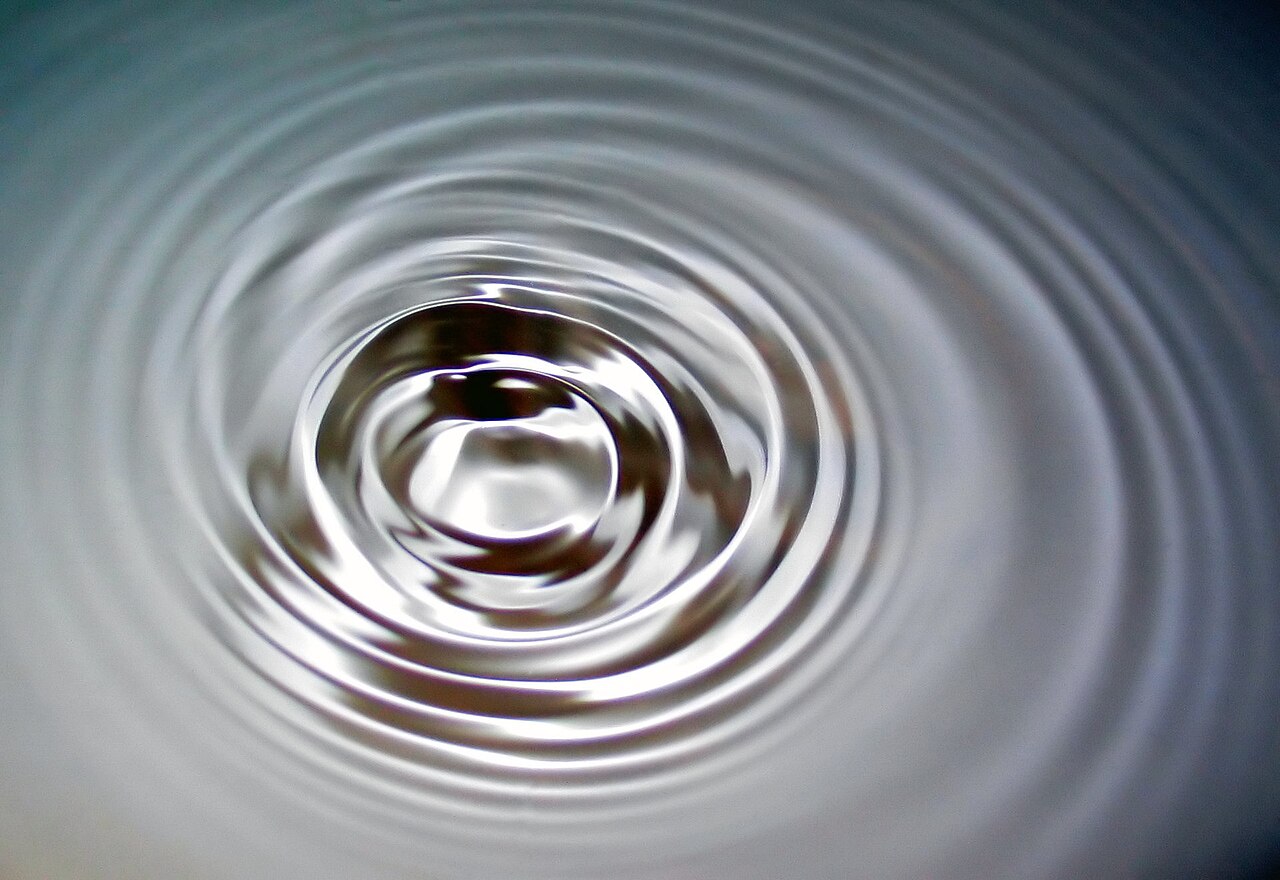
Drop a pebble in a pond and rings spread out across the water. Those rings are a wave, a disturbance that moves from place to place. The surprising part is that the water itself does not travel across the pond. Only the disturbance does, carrying energy with it. Waves are everywhere. Sound is a wave in air. Light is a wave of electric and magnetic fields. Earthquakes send waves through the whole planet. Even tiny particles such as electrons behave like waves, and ripples in space itself were first detected in 2015. Understanding waves explains how we hear, see, talk by radio and learn about the inside of the Earth.
What is a wave?
A is a disturbance that moves. Something is knocked away from its calm, resting state, and that change spreads from one place to the next. The pebble in the pond is the classic case. Where it lands, the water is pushed down and up. That movement pushes on the water next to it, which pushes on the water beyond that, and the ring grows outwards.
The key idea is that the wave moves but the material does not. A cork floating on the pond bobs up and down as the ripples pass, but it stays more or less where it was. The same is true of the stands at a football match when fans do a Mexican wave. People stand up and sit down, but nobody runs round the stadium.
What the wave does carry is energy. It can also carry momentum and information. Your voice, a radio programme and a message sent by light along a cable are all patterns of disturbance. The pattern travels while the material that carries it stays in place.
Some waves repeat again and again around a resting value, and these are called periodic waves. If the whole pattern travels in one direction, it is a travelling wave. If two waves travel in opposite directions and overlap, they can make a , where some places hardly move at all.
What carries a wave along?
Many need something to travel through. This is called the . A wave in a rope needs the rope. A sound needs air, water or a solid. These are mechanical waves. Each bit of the material pushes its neighbour, and that push passes along like a line of falling dominoes. Because of this, mechanical waves only form in materials that can spring back, and that have some weight to keep them moving.
There are two main ways the material can move. In a , the shaking is at right angles to the direction the wave travels. Flick a skipping rope up and down and the bumps race along the rope, though your hand moved up and down. In a , the shaking is along the same line as the travel. Sound is longitudinal. A speaker cone pushes the air in front of it into a squeezed patch, which pushes the next patch, and so on.
Water waves are a mixture. Each bit of the surface moves in a small circle as the wave passes, rather than only up and down.
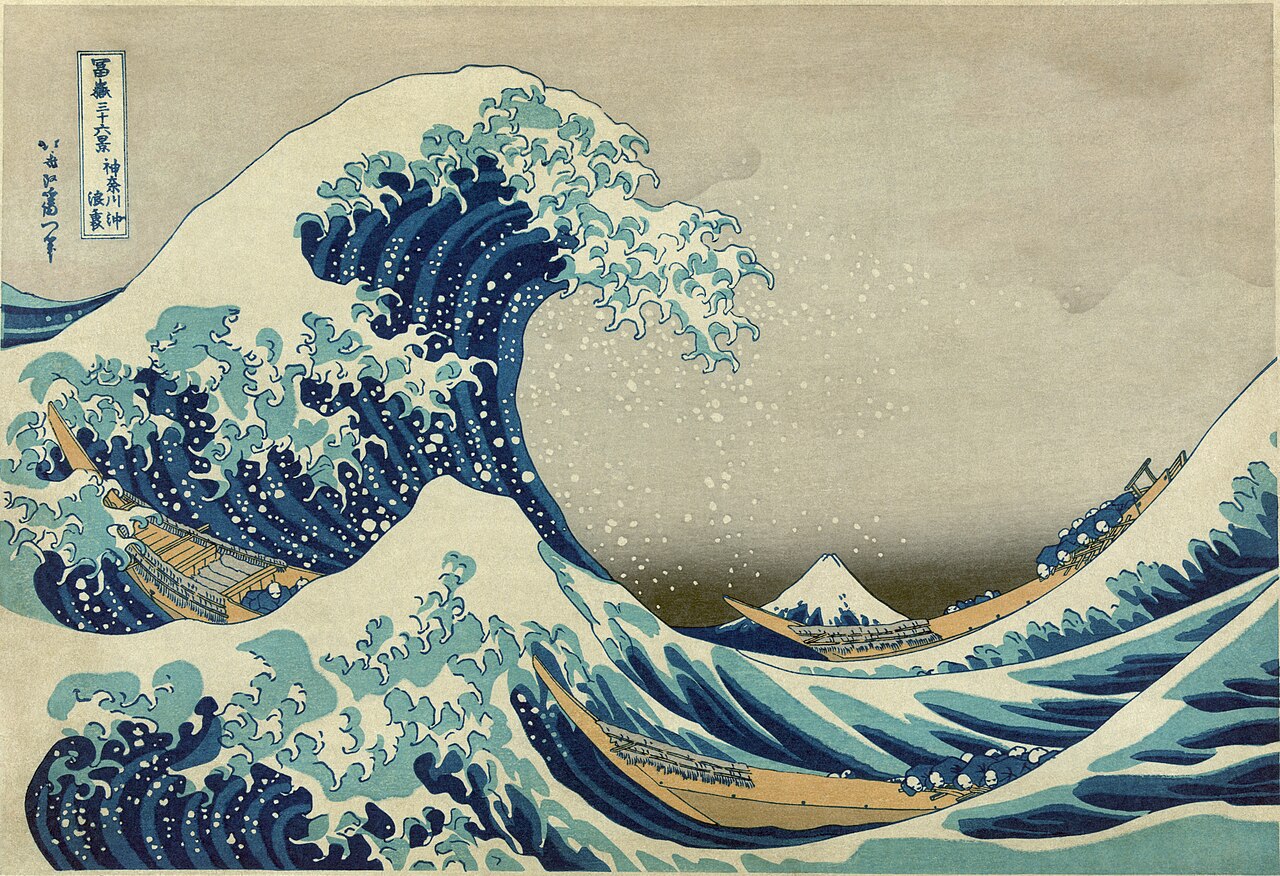
Hokusai's famous print The Great Wave off Kanagawa shows a gigantic wave towering over boats. A wave like that is a moving hill of water, but it is the same energy-carrying disturbance as a tiny ripple.
How do you measure a wave?
Three measurements describe most . The first is , the distance from one crest to the next. Think of the gap between two neighbouring peaks of a rope wave. Radio waves can be longer than a football pitch, or even many kilometres, while the waves of visible light are about a hundred times thinner than a human hair.
The second is , the number of waves that pass a point each second. It is measured in hertz. If five crests pass you every second, the frequency is 5 hertz. The time one wave takes to pass is called the period.
The third is , how far the wave rises above its resting level. A big amplitude means a lot of energy. In a sound wave, a bigger amplitude means a louder sound. In a water wave, it means a taller wave.
The three are linked to speed. The speed of a wave equals its frequency multiplied by its wavelength. In a given material, a wave of higher frequency has a shorter wavelength. A high note and a low note travel at the same speed through air, but they fit different numbers of waves into a metre.
The speed depends on the material. A wave on a string moves faster when the string is pulled tighter and slower when the string is heavier. Sound goes faster through stiff materials, and waves on water slow down in the shallows.
Which waves can we hear, ride and feel?
Sound is a of squeezed and stretched air. It can also travel through liquids, solids and the hot gas called plasma, but never through empty space. Sound waves in air are always longitudinal, with the shaking running along the line of travel.
Waves on a guitar or violin string are transverse. When a string is plucked, waves race to both ends, bounce back and overlap into a . The tightness, weight and length of the string decide which notes it can make.
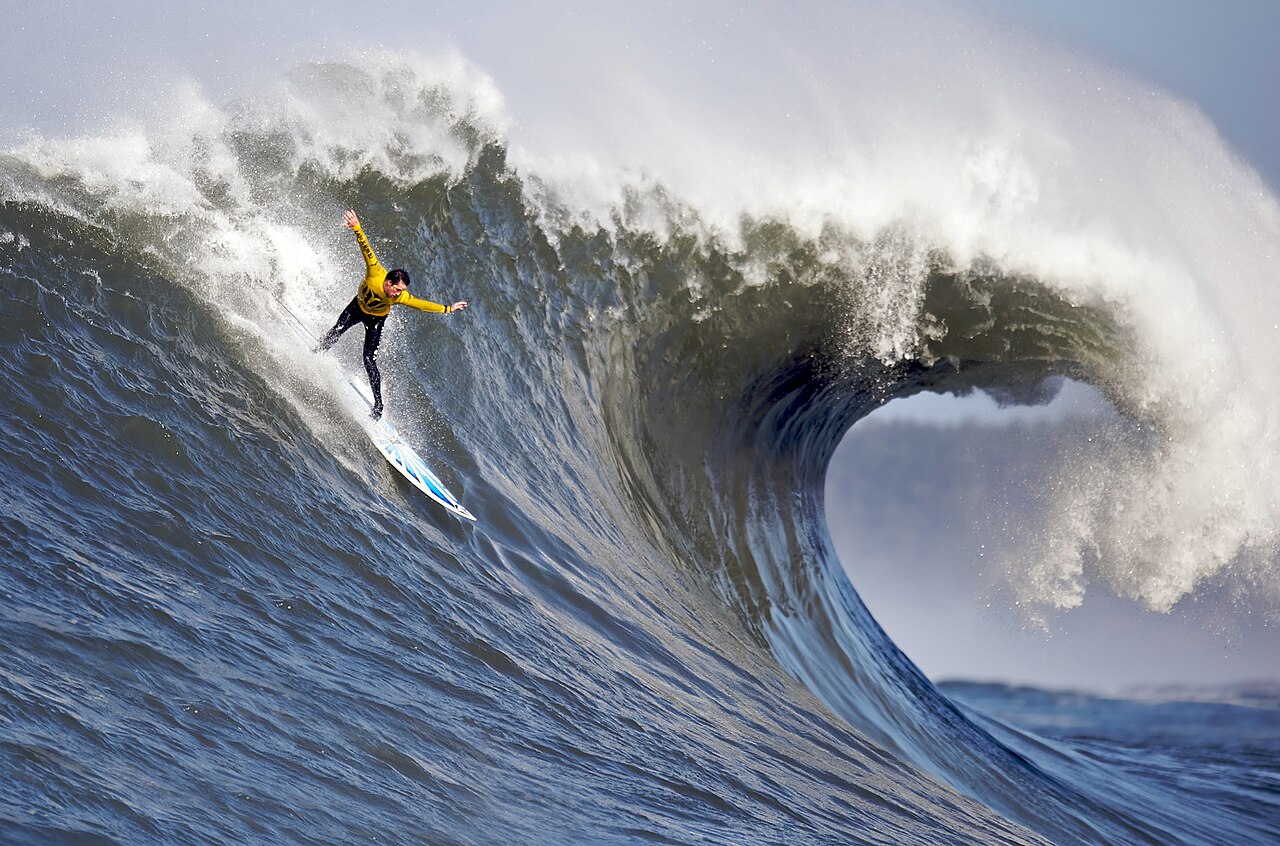
Ocean waves are made mostly by wind, and surfers ride them. A surfer on a huge wave, such as those at the Mavericks competition in California, is using the energy that the wave has gathered over a long stretch of sea. When the wave reaches the shore, that energy goes into the beach.
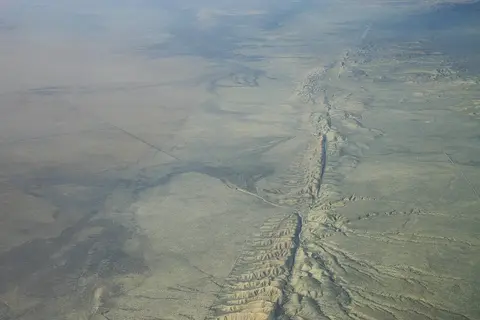
Earthquakes make seismic waves, which spread through the Earth's layers. Volcanic eruptions, moving magma, large landslides and big explosions can make them too. Two kinds travel through the body of the planet. Primary waves, or P waves, are squeezes that can pass through solids and liquids. Secondary waves, or S waves, are shear waves that pass only through solids, or through very thick liquids. Because they behave differently, scientists can read these waves to learn what the inside of the Earth is made of.
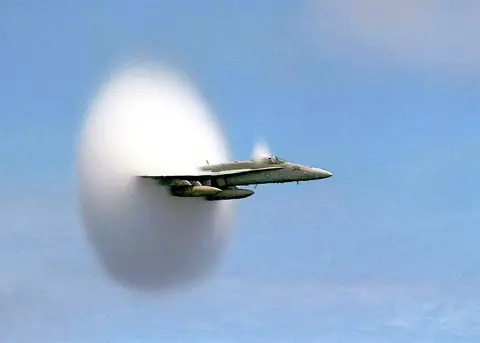
A shock wave happens when something moves faster than the local speed of sound, and it makes a sudden jump in pressure.
How can light travel through empty space?
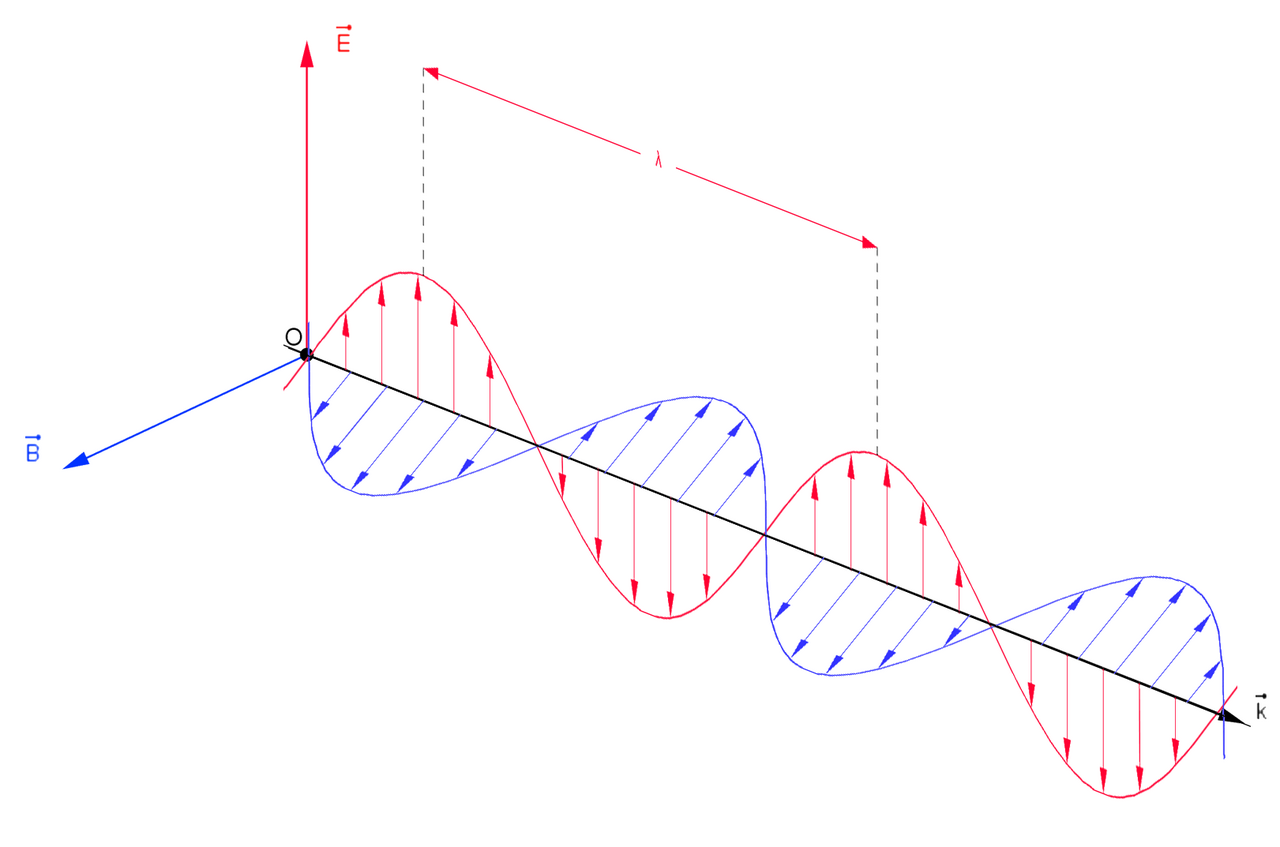
Sound cannot cross empty space, yet light from the Sun reaches us across about 150 million kilometres of nearly nothing. Light is a different kind of , called an . It is not a shaking of material. It is a linked shaking of electric and magnetic fields, and each field keeps the other going. The two fields wiggle at right angles to each other, and at right angles to the direction the wave travels, so electromagnetic waves are transverse.
In the 19th century, the Scottish scientist James Clerk Maxwell worked out that electric and magnetic fields should be able to make waves that travel at one fixed speed. When he calculated it, the speed matched the speed of light. That led to the idea that light itself is an electromagnetic wave. The German physicist Heinrich Hertz confirmed it by experiment in the late 1880s.
Electromagnetic waves come in a huge range of . From longest to shortest, scientists name them radio waves, microwaves, infrared, visible light, ultraviolet, X-rays and gamma rays. The edges of each band are mostly a matter of convention. The one band with a clear definition is visible light, because it is whatever our eyes can detect.
These waves carry our phone calls, heat our food, warm our skin and let doctors photograph our bones.
How do waves bounce, bend and change colour?
do the same set of things wherever they are found. When a wave hits a surface, it can bounce back. This is reflection. The angle at which it arrives equals the angle at which it leaves. That is why a ball bounces off a wall at a matching angle and why you can see yourself in a mirror. An echo is a sound wave that has bounced.
When a wave goes from one material to another, its speed changes, and it often changes direction too. This is refraction. It is why a straw in a glass of water looks bent. Each material has a number called its refractive index that says how much it slows light.
Some materials take energy out of a wave and turn it into heat. This is absorption. Because materials absorb some colours of light more than others, objects look coloured.
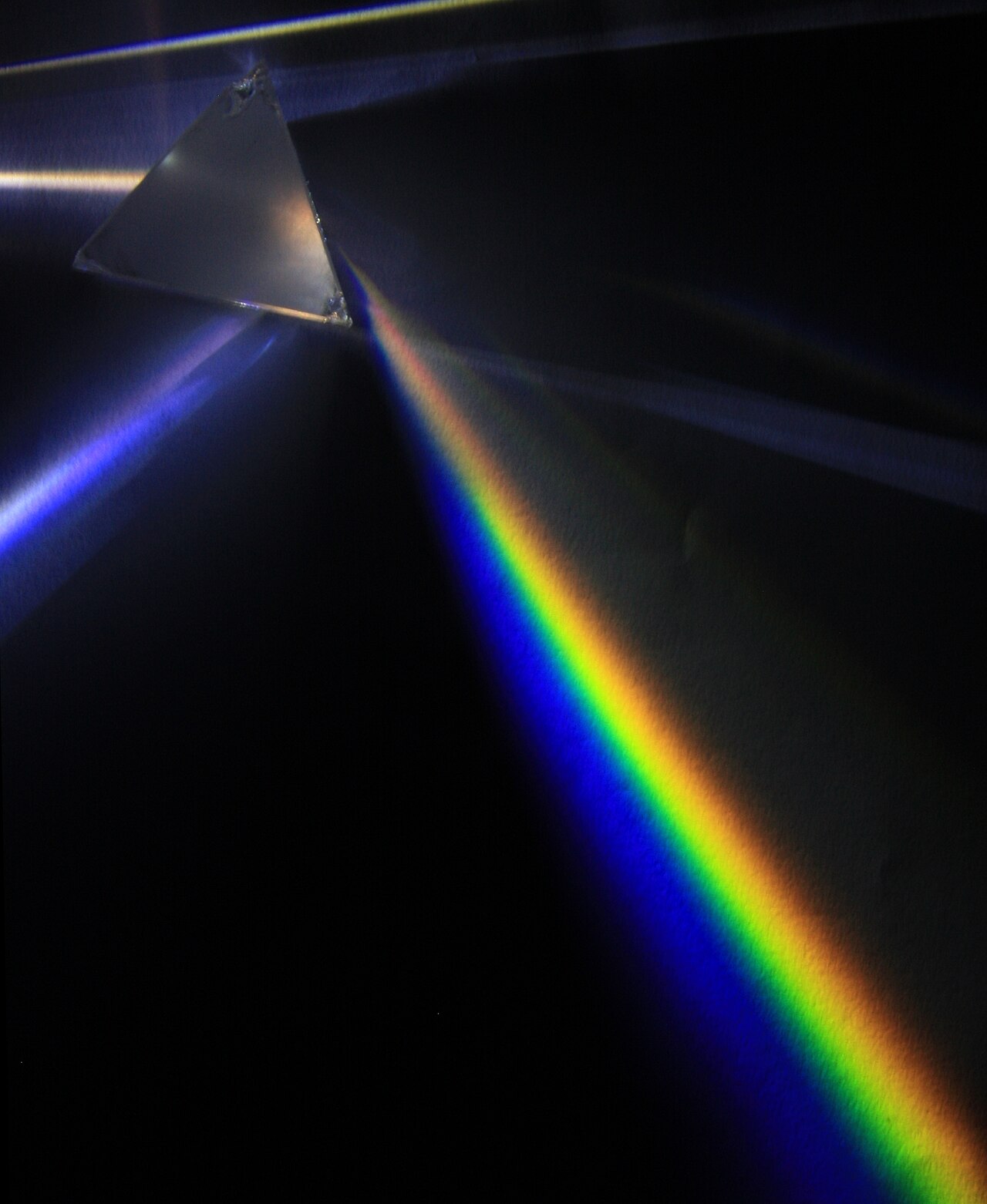
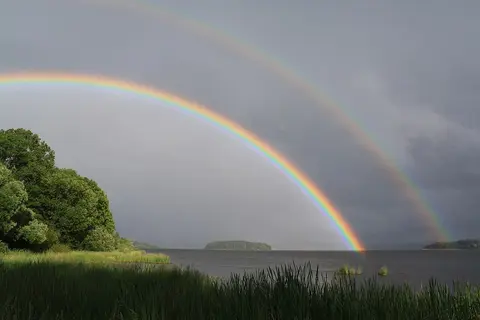
Refraction can also split light. The speed of light in glass depends slightly on its colour. When white light passes through a prism, each colour bends by a different amount and the colours spread out into a rainbow. This is called dispersion. Isaac Newton was the first to realise that this meant white light is a mixture of colours.
Finally, the Doppler effect. When a wave source moves towards you, the waves are squeezed together and the pitch rises. When it moves away, the pitch falls. An ambulance siren does exactly this as it passes. Christian Doppler described the effect in 1842.
What happens when waves meet?
When two cross, they do not crash into each other. They pass straight through and carry on, as if the other had never been there. But while they overlap, their disturbances add together. This is called superposition.
If two crests meet, they make a bigger crest. If a crest meets a trough, they can cancel out. Where waves of the same overlap in a steady pattern, there are places of strong waves and places of little or none. This is an pattern. It is how noise-cancelling headphones work, because they make a sound wave that cancels the noise coming in.
Waves also spread out when they pass through a gap or round an obstacle. This is . It is strongest when the gap is about the same size as the . That is why you can hear someone talking round a corner. Sound waves are long enough to curl round a door frame. Light waves are much too short, so you cannot see round it.
are a special case of interference. When a wave is trapped between two ends, such as a violin string held at the bridge and the nut, it reflects back and overlaps itself. At some points, called nodes, the two waves cancel and the string hardly moves. Halfway between them are antinodes, where the shaking is biggest. Every note on a guitar or a recorder depends on standing waves.
Can a particle be a wave?
In the 1920s, scientists made a startling discovery. The tiniest things in the universe do not behave only like tiny balls. They also behave like . The French physicist Louis de Broglie suggested that every particle with momentum has a . The heavier and faster the particle, the shorter its wavelength. The wave of an everyday object is too small to ever notice. For electrons it is big enough to matter.
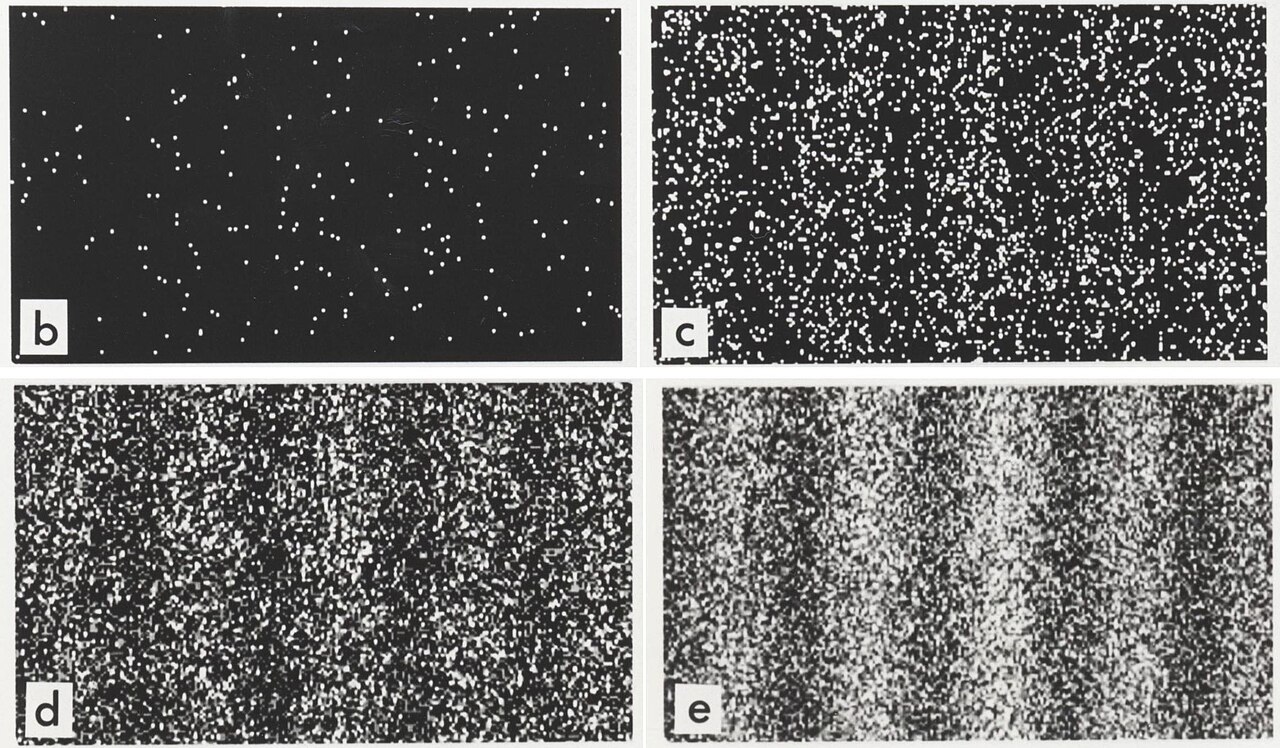
Experiments back this up. Electrons fired one at a time at a screen with two narrow slits do not make two simple blobs. Over time, each electron lands as a single dot, but the dots slowly build up into a pattern of stripes, the same pattern that makes with water waves. Each electron acts as if it passed through both slits as a wave.
This idea is the heart of quantum mechanics, the science of the very small. The Schrödinger equation describes how these matter waves behave, and its solutions are called wave functions. They tell us the chance of finding a particle in a given place, rather than a certain position.
Quantum waves explain how atoms are built, why chemicals behave as they do, and how electronic devices in your phone work. Waves and particles turn out to be two views of the same strange reality.
Can space itself ripple?
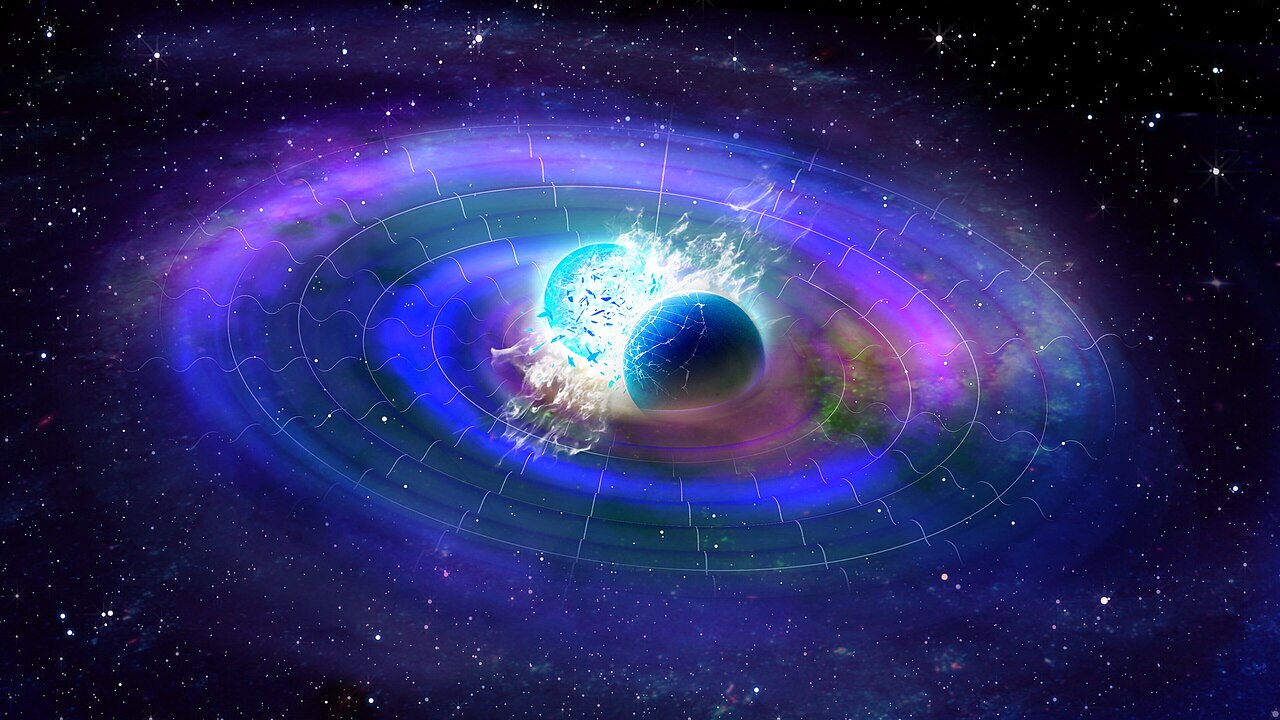
Albert Einstein's theory of general relativity says that mass bends space and time together, which scientists call spacetime. If very heavy objects move fast enough, they should make ripples in spacetime that spread out at the speed of light. These ripples are . Einstein predicted them about a century before anyone could detect them.
They are very weak. Even the strongest ones, made when two black holes crash together, stretch and squeeze a distance by an amount far smaller than the width of an atom. Catching one needs instruments of enormous accuracy.
The first gravitational were detected on 14 September 2015, and the discovery was announced on 11 February 2016. The signal came from two black holes that spiralled together and merged, far across the universe. It was picked up by LIGO, a pair of huge detectors in the United States that use laser beams along arms several kilometres long to spot the tiny stretch. The discovery was awarded the Nobel Prize in Physics in 2017.
Gravitational waves are a new kind of messenger. Light and other can be blocked or bent, but gravitational waves pass through almost everything. They give astronomers a way to study black holes and other events that give out no light at all.
They should not be mixed up with gravity waves, which are ripples on water or air when gravity pulls a disturbed fluid back towards balance.
Explore Next
Your audio story keeps playing while you look around.
Words to Know
- amplitude
- How far a wave rises above its resting level.
- diffraction
- The spreading of a wave as it passes a gap or an edge.
- electromagnetic wave
- A wave of linked electric and magnetic fields that can cross empty space.
- frequency
- The number of waves that pass a point each second, measured in hertz.
- gravitational wave
- A ripple in space and time made by moving heavy objects.
- interference
- What happens when waves overlap and add together or cancel out.
- longitudinal wave
- A wave whose shaking is along the direction it travels.
- medium
- The material that a wave travels through.
- standing wave
- A wave pattern that stays in place, made by two waves travelling in opposite directions.
- transverse wave
- A wave whose shaking is at right angles to the direction it travels.
- wave
- A disturbance that travels from place to place and carries energy.
- wavelength
- The distance from one crest of a wave to the next.