Desert
Lands so dry that every living thing must be a master of saving water.

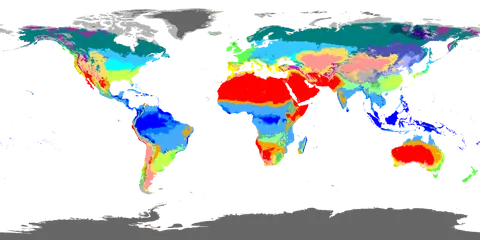
A desert is a place that gets very little rain, snow or other moisture. Most deserts get less than 250 millimetres of precipitation in a year, and some get almost none. That makes them harsh homes for life. About one third of Earth's land is arid or semi-arid, and deserts can be scorching, freezing or both in the same day. The biggest desert on Earth is not hot at all. It is Antarctica. Wind, sudden floods and huge swings in temperature carve deserts into dunes, stony plains and deep canyons. Plants and animals survive with some of the cleverest tricks in nature.
What makes a place a desert?
A desert is defined by water, not by heat. Scientists call a place a desert when it gets less than about 250 millimetres of a year. Precipitation means rain, snow, mist or fog. Places with 250 to 500 millimetres are semi-deserts. When they are covered in grass they are called steppes.
Deserts come in degrees. A hyperarid desert gets less than 25 millimetres a year, and can go for twelve months or more with no rain at all. An desert gets 25 to 200 millimetres. A semi-arid desert gets 200 to 500.
The amount that could evaporate matters too. Tucson in Arizona gets about 300 millimetres of rain a year. Yet the sun and dry air could evaporate about 2,500 millimetres of water. That is about eight times more water than ever falls. Cold places lose much less water to evaporation, so the same rainfall counts for more there.
About one third of Earth's land surface is arid or semi-arid. This includes the polar regions. Antarctica is the largest cold desert on Earth. About 98 per cent of it is a thick ice sheet and 2 per cent is bare rock. Snow falls so rarely on its Dry Valleys that strong, dry winds even evaporate the ice.
The word desert comes from the Latin dēsertum, which means an abandoned place. Long ago, English speakers used it for any empty land, whether or not it was dry.
Why are some places so dry?
Deserts form where moisture cannot reach, and there are several ways that happens.
In the trade wind deserts, dry air sinks to the ground in belts at about 30 to 35 degrees north and south of the Equator. Sinking air gets warmer and soaks up moisture instead of dropping it. The Sahara is this kind of desert.
In a desert, mountains do the work. Moist air is forced up over a mountain range. It cools and drops its water on the windward side. By the time it sinks down the far side, it is dry and warm. The Taklamakan Desert lies in the rain shadow of the Himalayas and gets less than 38 millimetres of rain a year.
Monsoon deserts such as the Thar, near the border of India and Pakistan, lie far inland. Damp sea air drops its rain before it gets there. Mid-latitude deserts such as the Sonoran are also far from the sea.
Coastal deserts lie beside cold ocean currents. Cool winds over cold water pick up little moisture. These deserts get their water mostly from fog and dew. The Namib in Namibia and the Atacama in Chile are examples.
The Atacama is one of the driest places on Earth. The Andes block moisture from the east and the Chilean Coast Range blocks it from the west. In one region, the average is only about 1 millimetre of rain a year. Some weather stations there have never recorded any rain. Even so, special plants survive by drinking fog that blows in from the Pacific.
How does a desert break rock into sand?
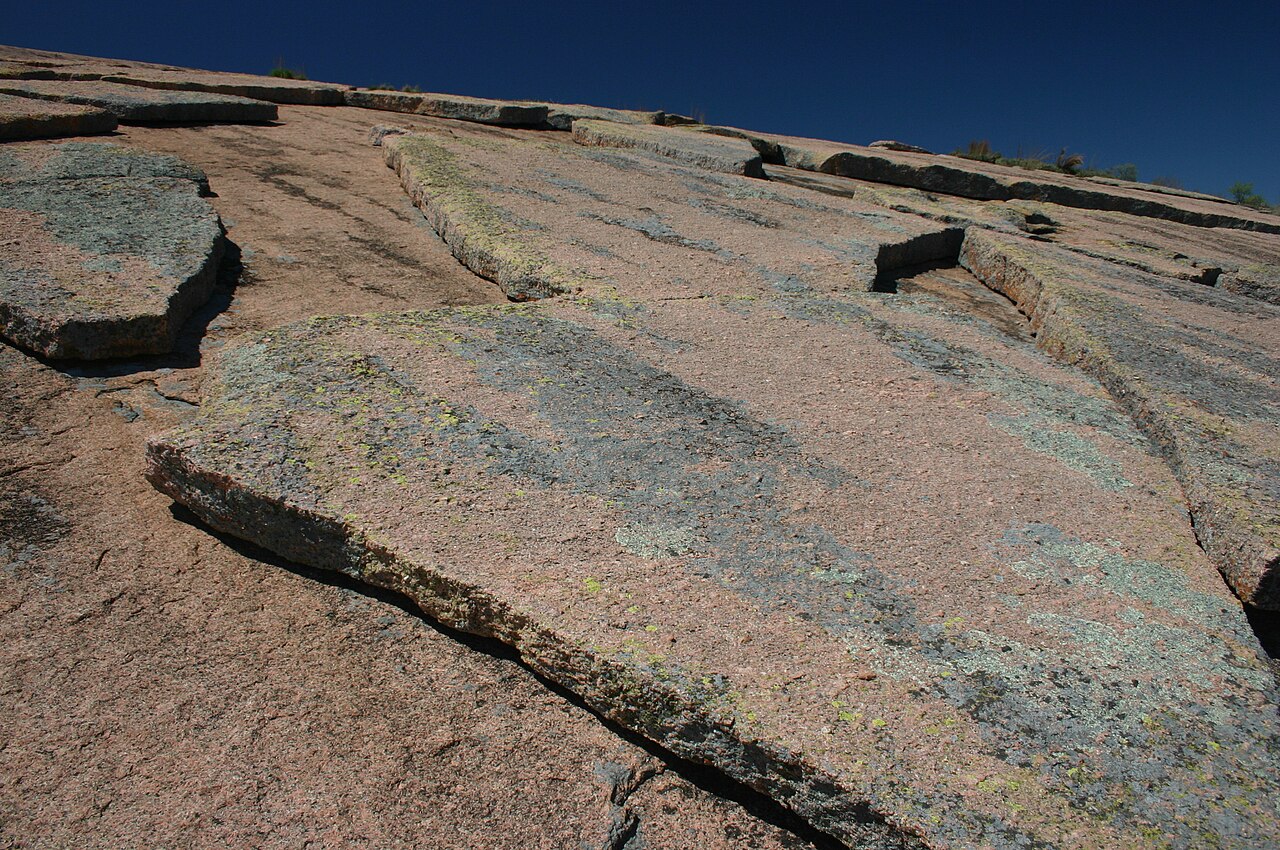
Deserts have wild swings in temperature. The sky is usually clear, so the sun heats the ground fiercely by day. After sunset the heat escapes quickly into space. In a hot desert, the daytime temperature can pass 45 degrees Celsius in summer and fall below freezing on a winter night. The gap between day and night can be 20 to 30 degrees.
Rock heats and cools faster than its own insides can keep up with. The outside expands and then shrinks again, day after day. Over many years this strain makes mountainsides crack and shatter. Sometimes the outer skin of a rock peels off in flat flakes. This is called exfoliation. Rain that falls on hot rock can make it shatter too.
Water plays a part, even in dry places. Dew and mist soak into rocks. Salt crystals can grow in tiny gaps and push grains loose, which sometimes carves shallow caves at the base of cliffs.
Broken rock slides into the valleys and keeps breaking. In the end it turns into dust or sand. Dust comes from clay and volcanic material. Sand comes from harder rocks such as granite, limestone and sandstone. Sand grains stay about 0.5 millimetres or bigger, because below that size temperature changes stop breaking them further.
Then the wind takes over. It picks up grains and carries them along in short hops. This is called . The flying grains work like sandpaper and slowly grind away anything solid in their path. In the end, the sand settles in flat sheets or piles up into .
Are all deserts sandy?
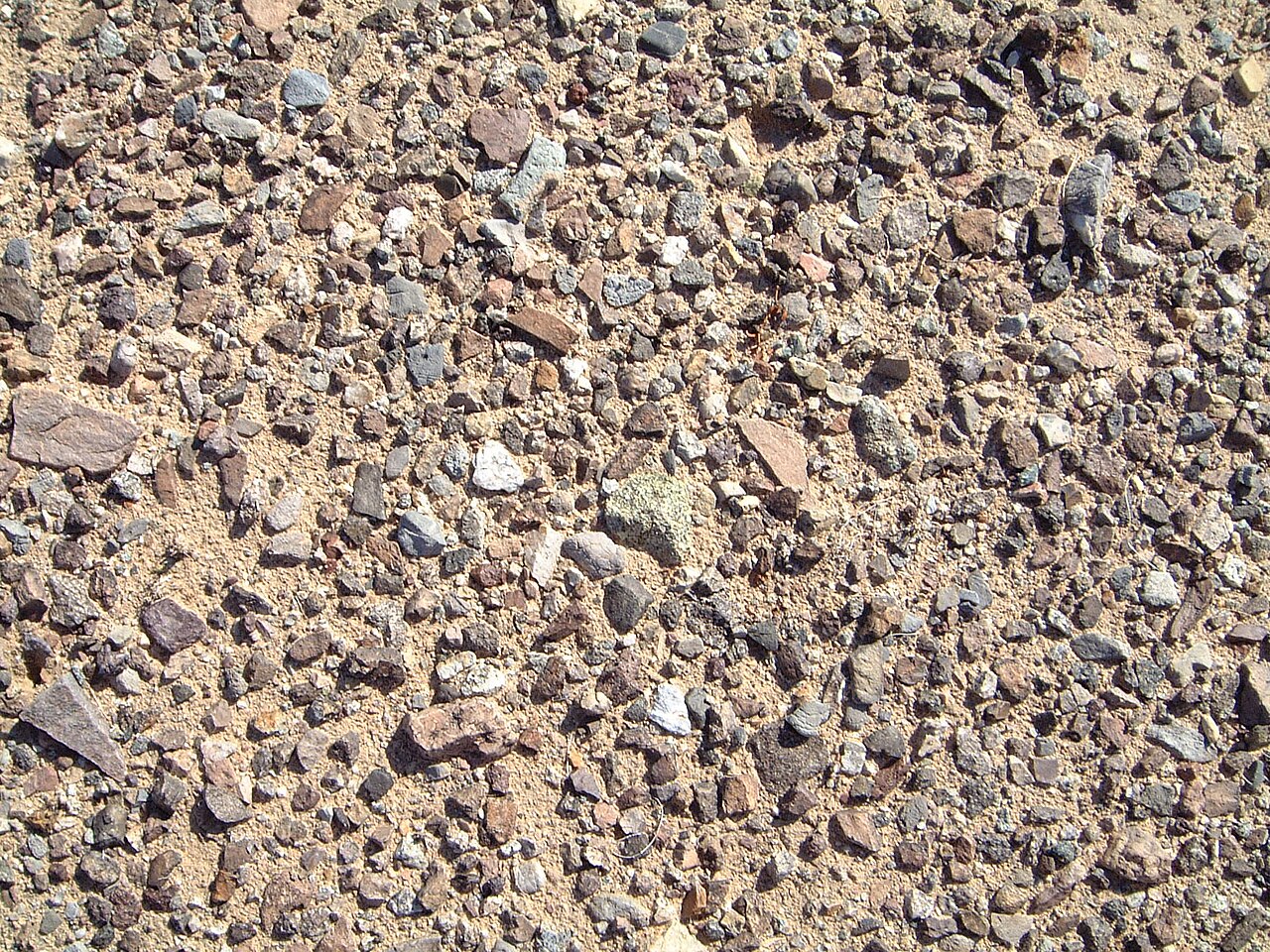
Far from it. Only about 20 per cent of desert area is sand. The share is about 2 per cent in North America, about 30 per cent in Australia and over 45 per cent in Central Asia.
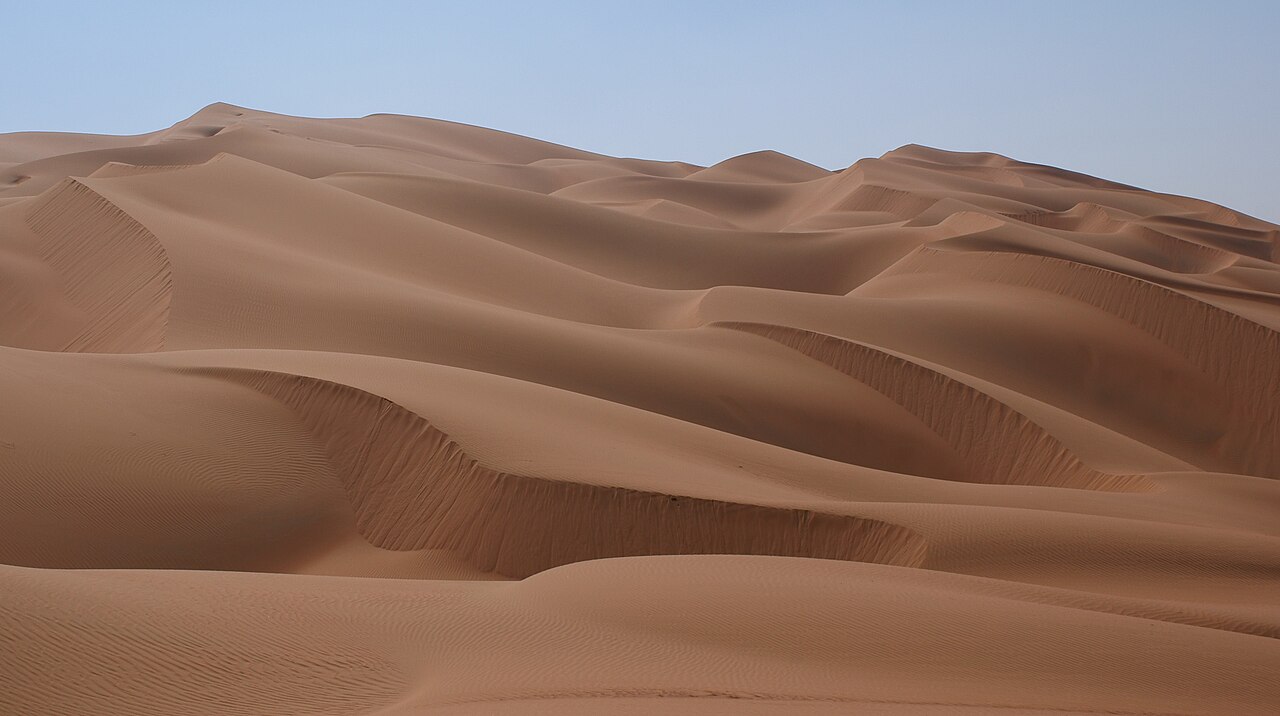
Where sand does gather, wind piles it into . Grains hop and creep up the windward side and tumble down the far side. Dry sand slips at about 32 degrees, so the dune slowly walks downwind. Barchan dunes are crescents made by strong winds over flat ground. Seif dunes are long and straight, and form where winds blow from two directions. Star dunes form where the wind keeps changing. They grow upwards and can reach about 500 metres, which makes them the tallest dunes. Big dune fields are called sand seas or ergs.
A large part of the world's deserts is flat and stony instead. There the wind has blown away the fine material and left pebbles and cobbles behind. This is called deflation. The stones form a tight, smooth mosaic called . Once a pavement forms, the ground is stable and little more erosion happens. Over time, bacteria on the stones build a thin, shiny brown film called desert varnish.
Other dry lands have their own names. A hamada is a high rocky plateau stripped of sand. A stony plain is a reg in the western Sahara, a serir in the eastern Sahara and a gibber plain in Australia.
Sometimes water is the sculptor. The Colorado River has cut canyons into the Colorado Plateau that are in places more than 1,800 metres deep. They expose rock layers nearly 2 billion years old.
What is inside a desert storm?
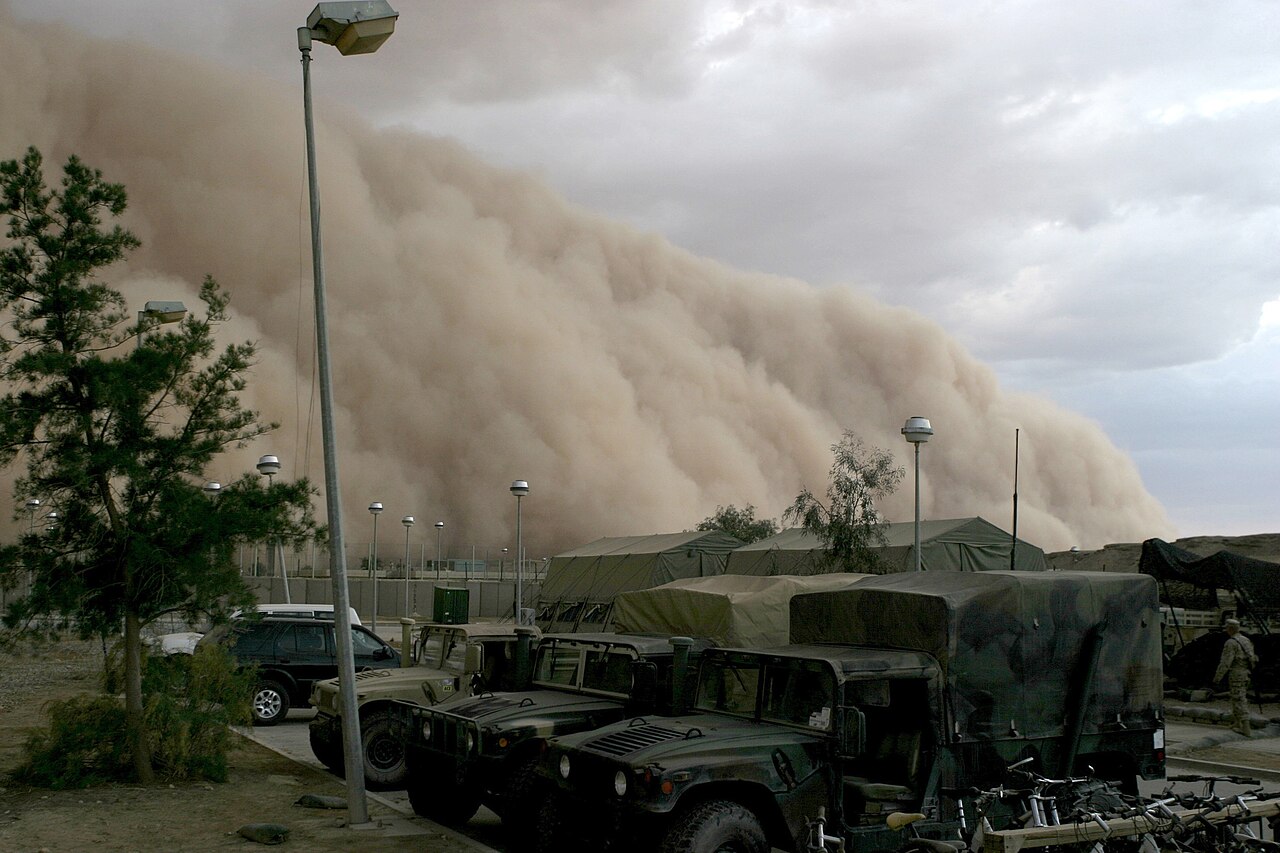
Dust storms and sandstorms happen where wind meets bare, dry ground. Dust storms are far more common. They usually start at the edges of deserts, because the finest material has already blown away from the middle.
A steady wind makes fine grains vibrate. As the wind speeds up, some grains lift into the air. When they fall, they hit other grains and knock those into the air too. The result is a chain reaction.
Grains travel in three ways. The finest, under 0.1 millimetres wide, are lifted into suspension. A dust storm can carry them as high as 6 kilometres. They can stay in the air for days and be carried up to 6,000 kilometres by the trade winds. A large dust storm can turn day into night at ground level. One storm in China in 2001 carried an estimated 6.5 million tonnes of dust across a huge area.
Sand grains are heavier. They hop along in and rarely rise higher than about 30 centimetres. In a very strong, steady wind they might reach 2 metres. The biggest grains never leave the ground. They creep along.
On calm, hot days, a small whirling dust devil can form. Hot air near the ground rushes upwards through cooler air above it, and spins sand and dust into a column.
During a sandstorm, grains rub together and pick up electric charge. The electric fields can produce sparks, disturb radio signals and give people headaches.
Where does water come from in a desert?
Rain is rare in a desert, but when it comes it can be violent. Dry stream channels, called wadis or arroyos, can fill in minutes with a raging flash flood. The storm that causes it may have fallen kilometres away, so people are caught without warning.
Most deserts sit in basins with no outlet to the sea. A few are crossed by rivers that start in wetter lands far away. The Nile, the Colorado and the Yellow River are examples. They lose a lot of water to evaporation on the way.
Water also hides underground. In some places an , which is rock that holds water, lies close to the surface. Where springs flow or wells can be dug, a green can appear. Kharga Oasis in Egypt is about 150 kilometres long and is the biggest oasis in the Libyan Desert. Under the Sahara lies the Nubian Sandstone Aquifer System. It is the largest known store of fossil water, which is ancient water laid down long ago and not refilled today. Libya has built a scheme called the Great Man-Made River to pipe some of it to coastal cities. It still supplies about 60 per cent of the country's water, though war damage and poor maintenance have strained it.
Shallow lakes sometimes fill basins after rain or glacier melt. When they dry up, they leave a flat crust of clay, silt or sand called a . North America has more than 100 playas. Many are relics of Lake Bonneville, which covered parts of Utah, Nevada and Idaho in the last ice age. Playas are so flat and hard that people have used them for speed records. Rogers Dry Lake in the Mojave Desert has served as a runway for aircraft and the Space Shuttle.
How do desert plants survive without rain?
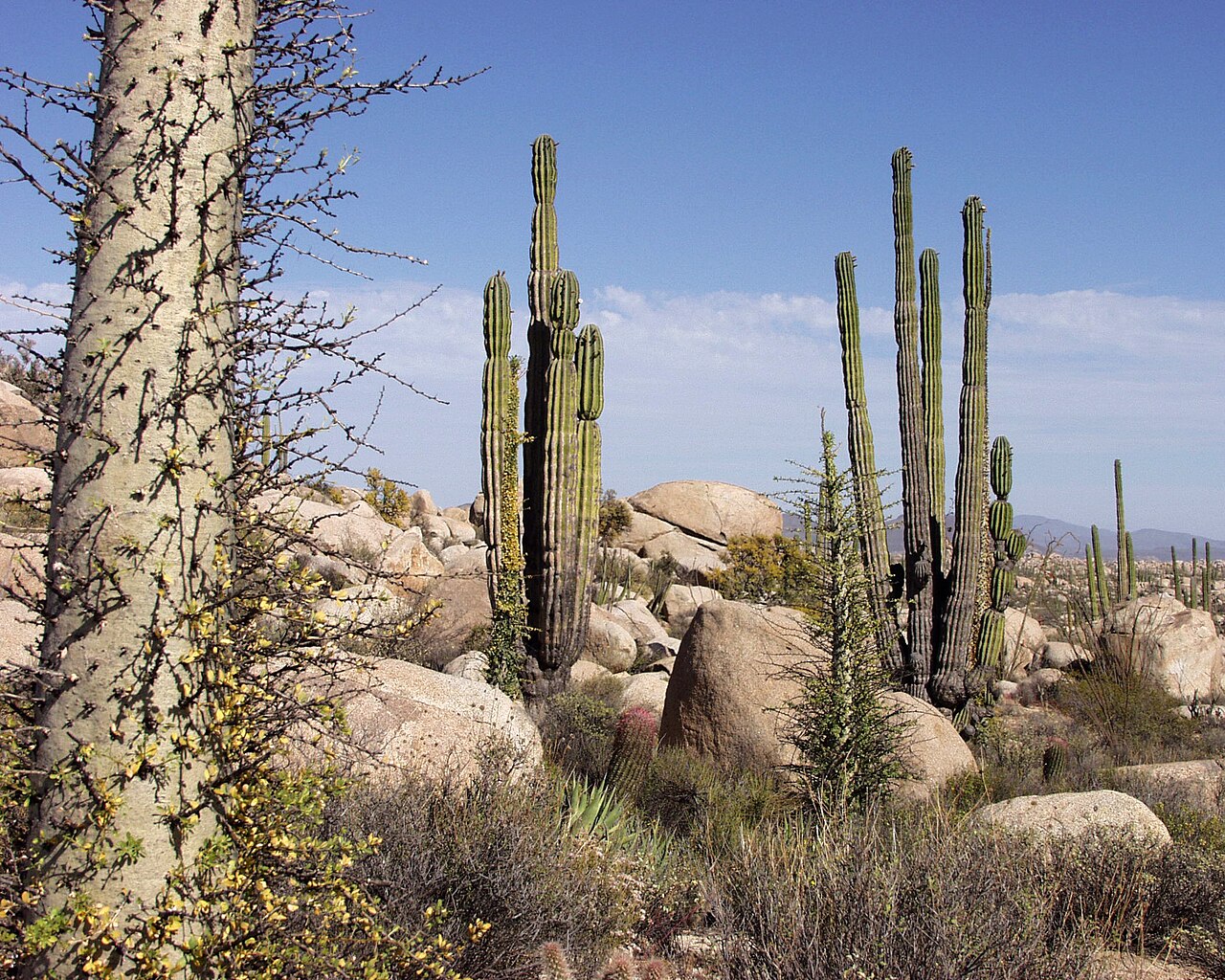
Desert plants face three problems. They must find water, avoid being eaten and manage to reproduce. Their answers are some of the cleverest in nature.
Plants need to open tiny pores called stomata to take in carbon dioxide for photosynthesis. But open pores also let precious water escape. Many desert plants have tiny leaves, waxy coats or hairy surfaces to save water. Some drop their leaves in the driest season. Some open their pores at night and shut them by day.
Cacti have gone furthest. They have given up leaves, and their green trunks do the work of making food. The trunk folds like a concertina so it can swell when it rains. A big saguaro cactus in the Sonoran Desert can hold about 8 tonnes of water after a downpour. It grows slowly and may live up to 200 years. Spines keep hungry animals away. Aloes and other plants store water in thick leaves or roots.
Roots matter too. Some plants spread shallow roots wide to catch every drop of rain. Others send a long taproot down to underground water. The saltbush of Australia can even live in salty soil.
Many desert plants are annuals. Their seeds lie dormant, or asleep, until rain falls. Then the plants grow fast, flower and set seed within weeks, before the soil dries. Some seeds need to be scuffed up by wind or even to pass through an animal first. Mesquite seeds sprout best after they pass through a pronghorn.
How do desert animals stay cool and drink less?
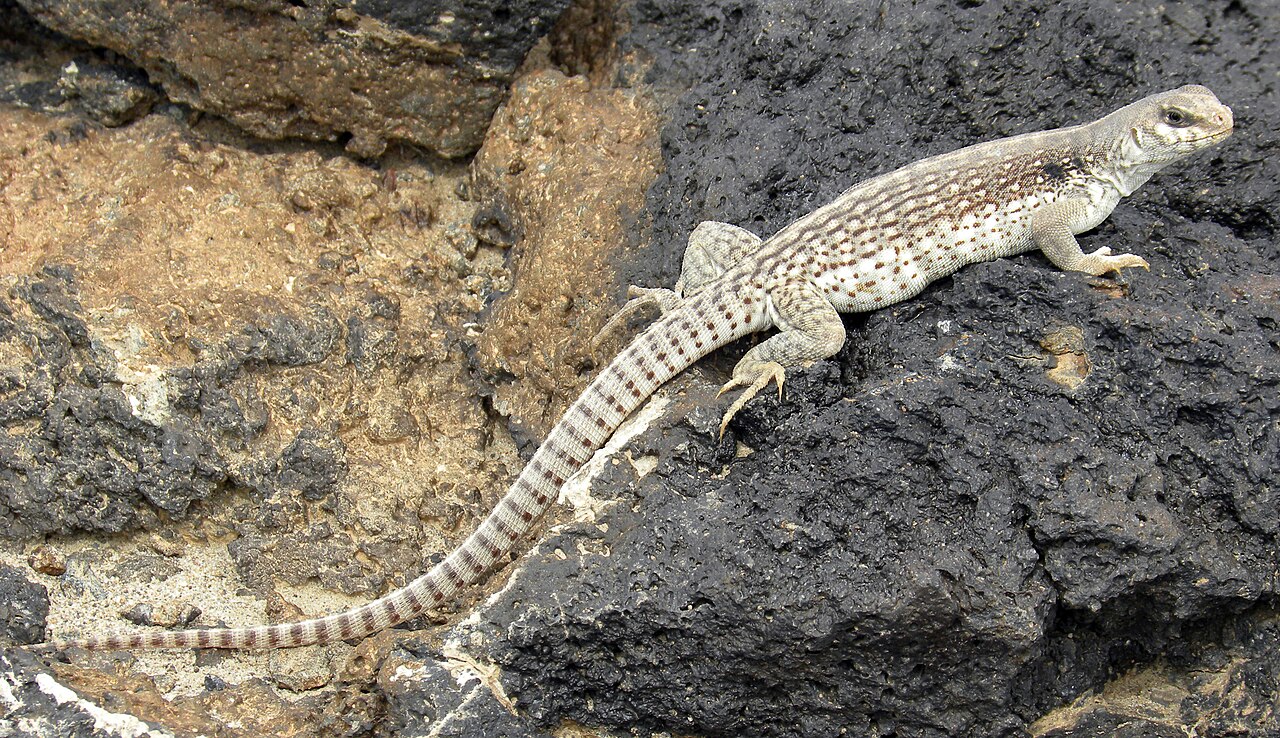
Animals that live in deserts are called . They must find food, find water and avoid overheating, all at once.
Many hide from the sun. Small mammals such as kangaroo rats and jerboas shelter in burrows by day and come out at night. Below about 50 centimetres underground, the temperature stays between 30 and 32 degrees Celsius, whatever the heat above. Foxes, jackals and snakes come out to hunt them.
Some animals barely need to drink. The kangaroo rat gets water from its own food, because breaking down fat, protein and carbohydrate makes water inside the body. The oryx and addax get moisture from plants. The camel saves water by making concentrated urine and dry dung. It can lose 40 per cent of its body weight in water and survive.
Reptiles cannot sweat. They shelter in the day and come out as the ground cools. The horned viper of Africa and the sidewinder of North America move sideways across loose sand. They are not related, but they evolved the same trick.
Birds can fly to distant waterholes. The sandgrouse nests dozens of kilometres from the water it visits daily. Many desert birds have camouflage that matches the sand.
Some creatures sleep through the dry spells. Couch's spadefoot toad in the Sonoran Desert spends most of the year in a burrow and emerges only after heavy rain. In Namibia, the darkling beetle stands on its front legs to catch fog on its back and drink the drops that run down.
How do people live and travel in deserts?
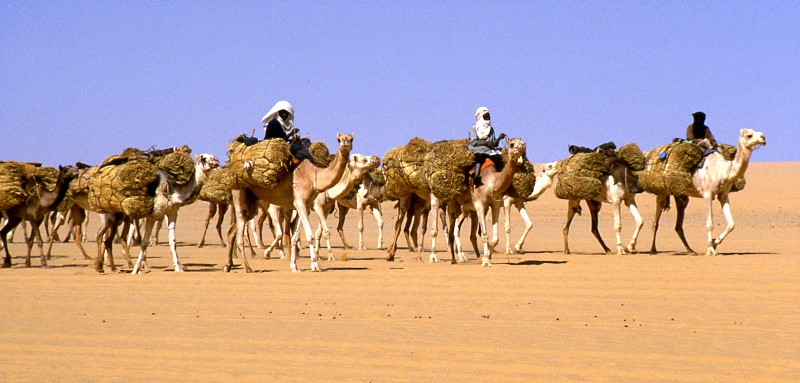
People have lived in deserts for thousands of years. Hunter-gatherers such as the San people of the Kalahari, Aboriginal peoples of Australia and many Native American peoples learned to track animals, find water and use every plant. Nomads move herds from one patch of grazing to the next. Oases allow a more settled life, with date palms and small farms.
Trade crossed the sands too. Camel caravans carried salt, gold, ivory and other goods across the Sahara for centuries. One salt route runs from Agadez to Bilma in Niger, and camels still carry salt along it today. Large numbers of enslaved people were also taken north across the Sahara.
Today some deserts are farmed with irrigation. The Imperial Valley in California was once barren, but water imported from outside now makes it productive. But farming dry lands has a cost. Ploughing and overgrazing in semi- places strip away the plants that hold the soil, and this adds to . That is when drying land loses its vegetation and turns more desert-like.
Deserts also give us minerals. Their cloudless skies make them good places for solar power, since they receive strong sunshine all day.
The Sahara was not always dry. Rock paintings and engravings across the desert show cattle, giraffes and people swimming. They were made when the region was green and grassy, between about 6,000 and 10,000 years ago. A slow change in Earth's orbit shifted the monsoon rains, and the grassland gradually turned back to desert.
Explore Next
Your audio story keeps playing while you look around.
Words to Know
- aquifer
- A layer of rock or sand that holds underground water.
- arid
- Very dry, with too little rain for most plants to grow.
- desert pavement
- A smooth surface of closely packed stones left when wind removes fine material.
- desertification
- The process by which dry land loses its plants and becomes more like a desert.
- dune
- A mound or ridge of sand piled up by wind.
- oasis
- A place in a desert where water comes to the surface and plants can grow.
- playa
- A flat crust of clay, silt or sand left when a desert lake dries up.
- precipitation
- Water falling from the sky as rain, snow, mist or fog.
- rain shadow
- A dry area on the sheltered side of mountains.
- saltation
- The hopping of sand grains along the ground in the wind.
- xerocole
- An animal adapted to live in a desert.