Erosion
How water, wind, ice and gravity carry the land away, grain by grain.
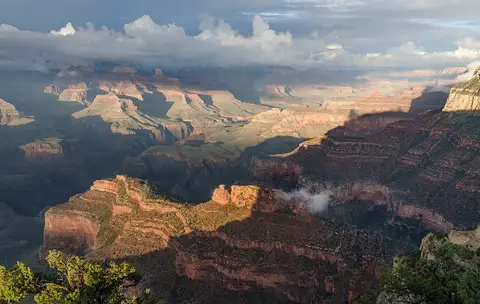
Nothing on Earth's surface stays put for ever. Rain splashes soil downhill, rivers cut valleys, waves chew at cliffs and glaciers grind across mountains. This steady removal of soil and rock is called erosion. It is a natural process that has shaped every landscape you can name, from the Grand Canyon to the sandy beach at the end of a road. But people have sped it up, and in some places the soil is vanishing far faster than nature can replace it. Understanding how erosion works shows how our planet is built, worn down and rebuilt.
What is erosion?
is what happens when water, wind, ice or gravity picks up soil, rock or dissolved material in one place and carries it to another. The place where the material finally comes to rest is where it is deposited. So every eroded hillside has a partner somewhere else, such as a river delta, a beach or the bottom of the sea.
Erosion is not the same as . Weathering breaks rock into smaller pieces or changes it chemically, but the pieces stay where they are. Erosion does the moving. The two work together. Weathering loosens and erosion carries away.
Geologists describe two main kinds. Physical or mechanical erosion removes solid pieces such as grains of sand and mud. Chemical erosion removes material dissolved in water. A river can carry both at once.
The distances involved vary hugely. A grain of soil might move a few millimetres in one rainstorm. Another grain might be carried thousands of kilometres by a great river.
How quickly the land erodes depends on the force of the agents and how easily the surface gives way. Steep slopes erode fastest. More rain, stronger storms, stronger winds and bigger waves all raise the rate. Erosion also feeds on itself. A river loaded with sand and pebbles can scrape its bed far better than clear water can.
How can a single raindrop move soil?
Rain is the most common agent of on land, and it works in stages. Soil scientists name four main types: splash, sheet, rill and erosion. They usually come in that order, from least to most severe.
It starts with splash erosion. A falling raindrop hits the ground like a tiny bomb. It makes a small crater and throws soil particles into the air. On level ground those particles can fly as far as 0.6 metres up and 1.5 metres sideways. Bigger drops that fall faster carry more energy, so they throw soil further.
If the soil is already soaked, or rain falls faster than the ground can soak it up, the extra water runs off over the surface. This is surface . If it flows with enough energy it carries the loosened particles downhill in a thin sheet. That is sheet erosion.
Bare soil suffers most. Plants break the fall of raindrops and their roots help water to sink in. A farm field left bare after harvest, or a slope where trees have been cut down, can lose soil quickly in one heavy storm.
When the thin sheet of water begins to gather into streams, the next stage begins.
What are rills, gullies and badlands?
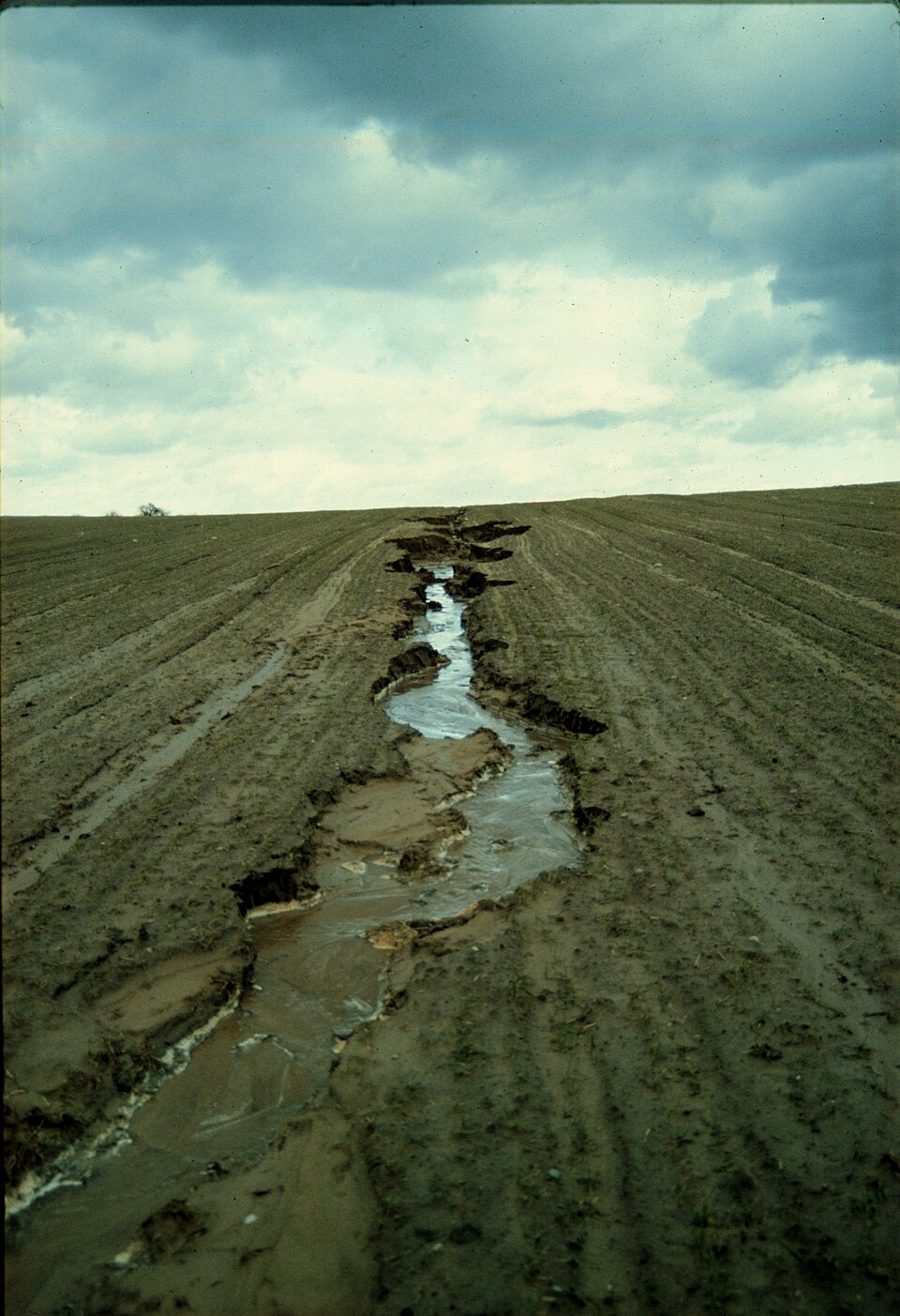
As collects, it digs tiny channels called rills. A rill is only a few centimetres deep, and it may appear and vanish within a single rainy season. But rills matter. They carry water and soil downhill very efficiently. Where is at its worst on disturbed hillsides, rills are almost always at work.
When the channels join and deepen, they become gullies. A forms when runoff gathers in narrow channels during or just after heavy rain or melting snow, and cuts deep into the ground. Scientists use a practical rule to tell a gully from a rill. A gully is a channel too big for a farmer to smooth out when ploughing. One common rule says a gully is at least 0.09 square metres, about the area of a large floor tile, in cross-section.
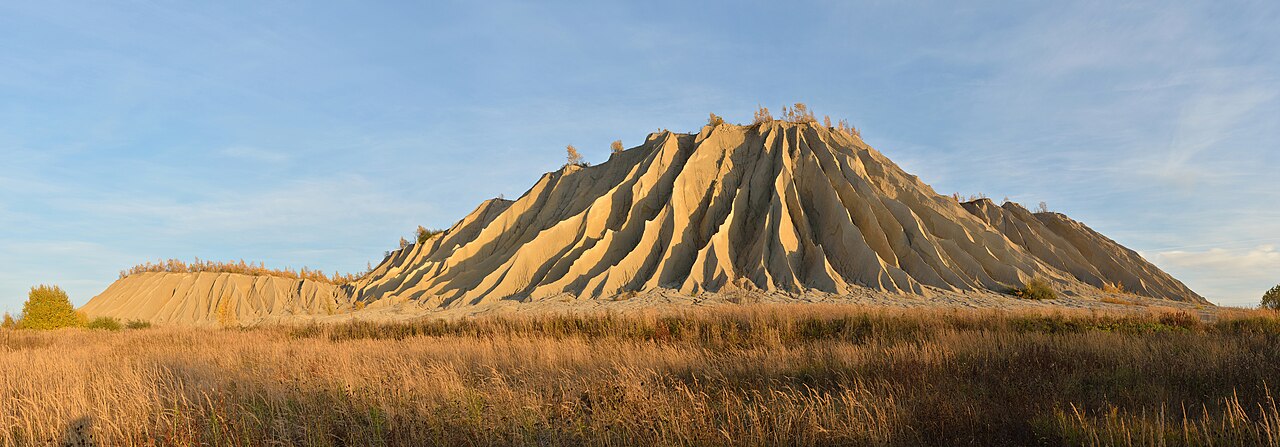
In the worst cases, gully erosion goes on until it forms badlands. These are rugged, maze-like landscapes of steep ridges and gullies. They form where the land is high and steep, the rock is soft and the climate favours erosion. They grow fastest when something prevents plants from growing and protecting the surface.
A badland is a lesson in how erosion can feed on itself. Once the soil is gone and bare rock or clay is exposed, plants find it hard to return, and the water keeps cutting.
How do rivers carve valleys?
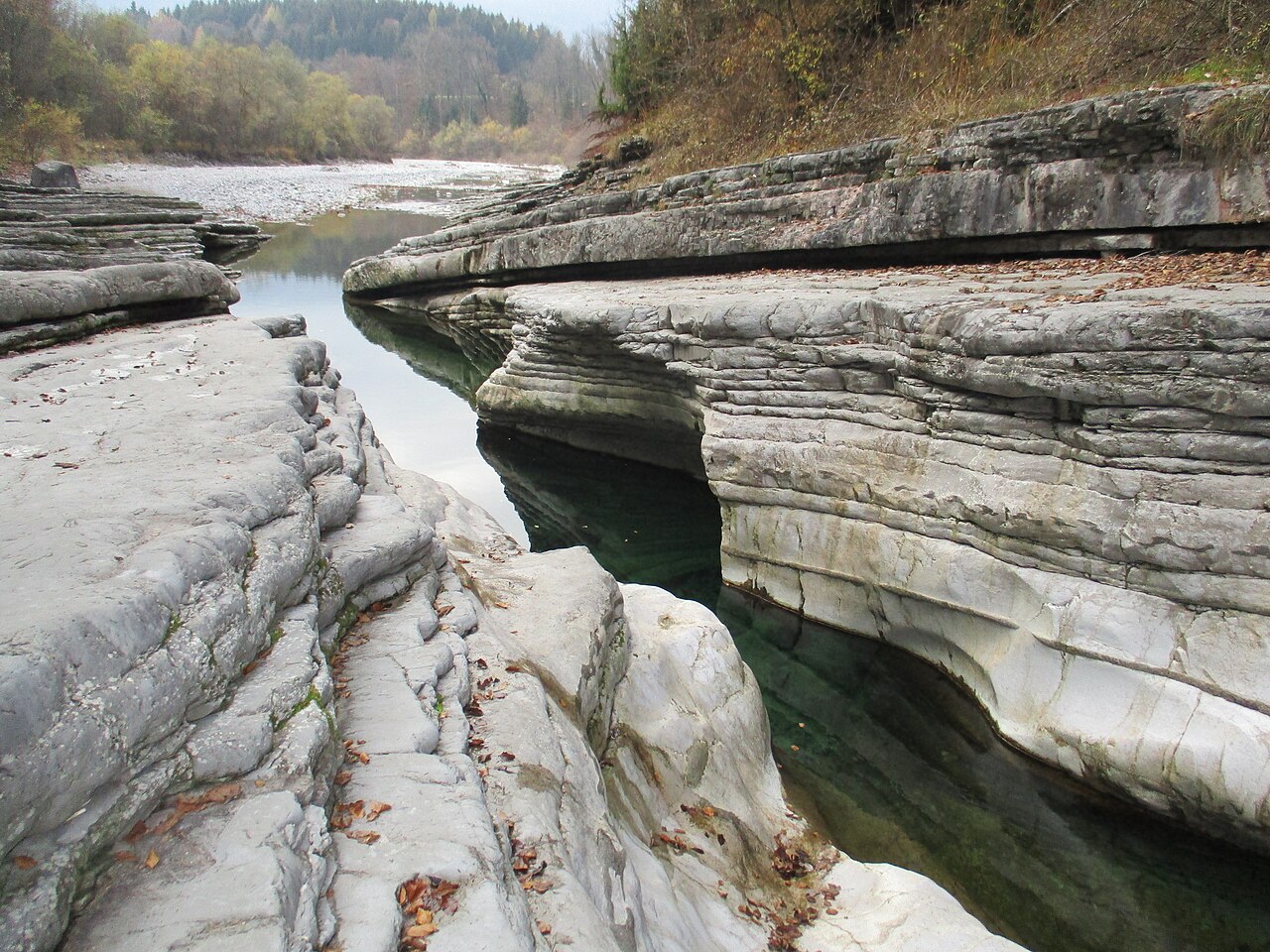
A river is an machine that never stops. At first the water cuts mainly downwards. That makes a steep, narrow valley with a V-shaped cross-section. Meanwhile the head of the valley creeps backwards into the hillside, so the valley grows longer.
Later, when the river has cut down as far as it easily can, it starts to wear sideways instead. This widens the valley floor and makes a flat floodplain. The river now winds from side to side in loops called .
On each bend the water flows faster on the outside, where the bend is sharpest. That side is worn away. On the inside of the bend the water is slower, so sand and mud settle and build up. Over time the whole bend slides across the valley.
Water alone is not the full story. A river carries sand, pebbles and boulders, and these grind along the bed and banks like sandpaper. Most of the work is done in floods, when the river is bigger and faster and can carry far more .
In very cold lands, rivers can also melt the frozen ground that holds their banks together. This is called thermal erosion. In Siberia the Lena River shifts its channel quickly this way. Large slumps of weakened bank collapse into the water.
How does the sea eat the land?
Along a coast, waves and currents do the work, and the rise and fall of the tide can help. Waves attack cliffs in several different ways.
In hydraulic action, a wave rushes into a crack in the rock and traps air. The air is squeezed hard and splits the crack wider. In wave pounding, the sheer force of the water breaks off pieces of rock. In , the waves throw sand and pebbles at the cliff. This is the most effective way the sea wears away a shore.
Two slower processes join in. Corrosion is the dissolving of rock by weak carbonic acid in seawater. Limestone cliffs are especially open to it. Attrition happens when the pebbles knocked off the cliff bump against each other and wear down into smaller pebbles, shingle and sand. Even living things add to the damage. Some creatures bore into, scrape or grind rock, which is called bioerosion.
The sea also moves along the shore. This is . If less sand arrives from upcurrent than leaves, the beach erodes. If more arrives, banks of sand and gravel build up. Where the coast bends, the sand can form a long thin bank called a spit.
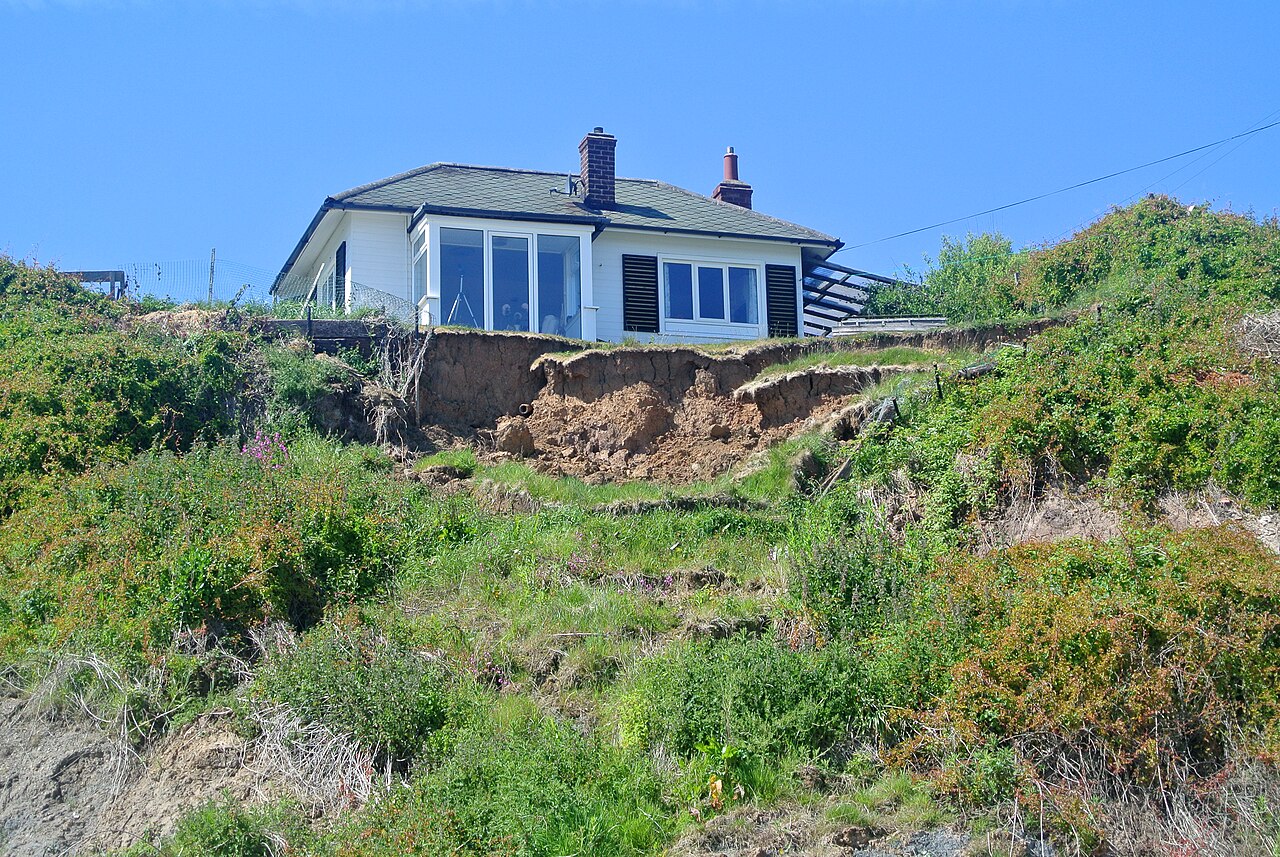
At Filey Bay in Yorkshire, soft boulder clay cliffs are cut back by the waves, and houses stand close to the edge.
How do ice and giant floods reshape the land?
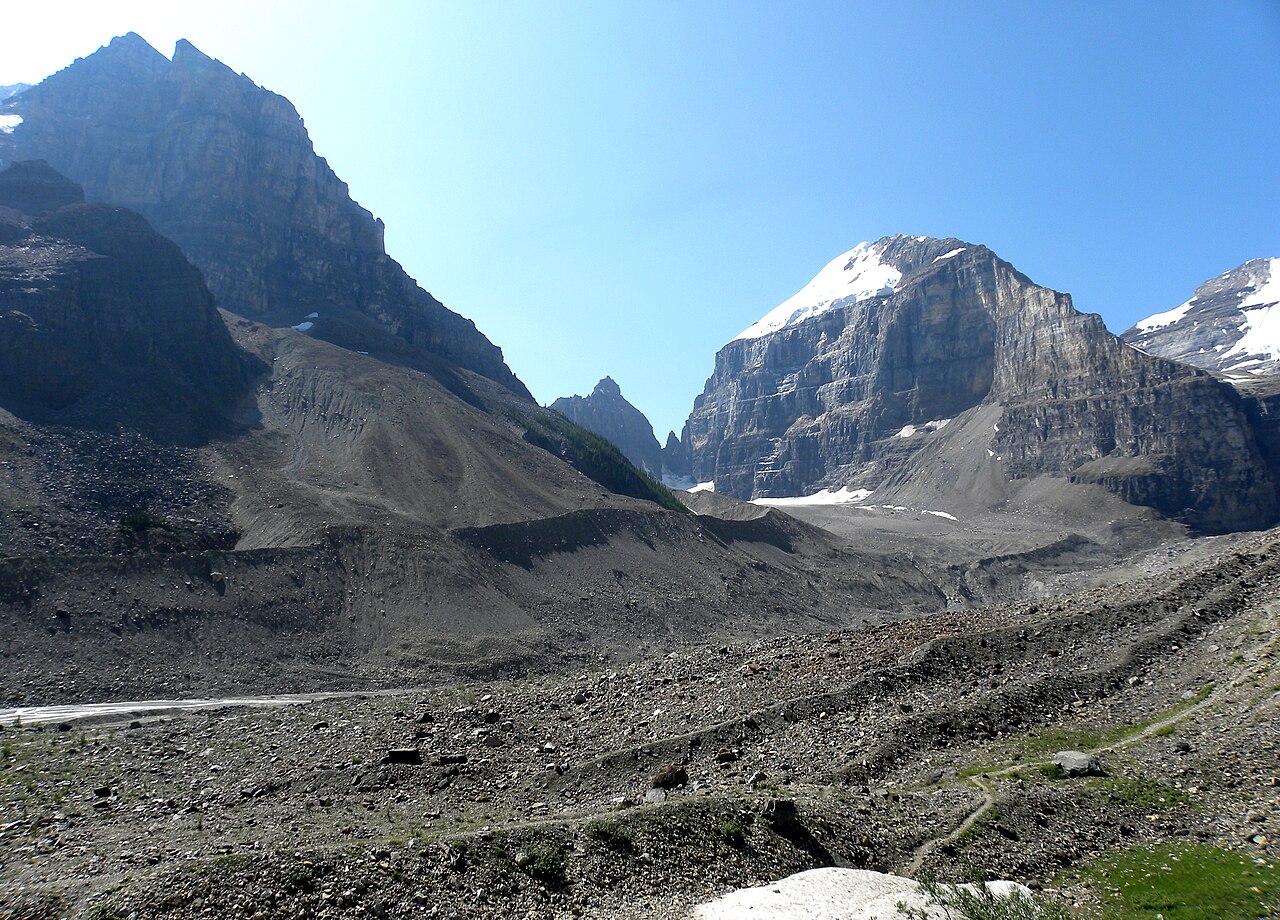
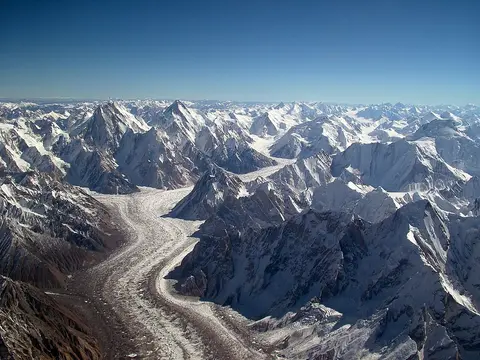
Glaciers are rivers of slow-moving ice, and they are powerful tools. They erode in three main ways. In , rocks and grit frozen into the bottom of the ice scrape along the ground, like sandpaper on wood. In plucking, the ice freezes onto cracked bedrock and tears pieces away as it moves. In ice thrusting, a glacier frozen to its bed shoves sheets of frozen ahead of it. This carved out many of the thousands of lake basins along the edge of the Canadian Shield.
Because a glacier fills the whole valley, it carves a rounded U shape, quite different from a river's V. Scientists estimate that a glacier needs about 100,000 years to form a full, steady U-shaped valley.
When the ice melts, it leaves heaps of rubble behind. These include , like the ones beside Lake Louise in the Canadian Rockies, and large boulders called erratics that were carried far from home.
Glaciers even limit how tall mountains can grow. Scientists call this the glacial buzzsaw. Mountain peaks are generally kept within about 1,500 metres of the snow line, because ice erodes any higher ground so fast.
Giant floods can be even more dramatic. In the Columbia Basin of Washington state, huge floods from a glacial lake called Lake Missoula tore up the ground and left the channeled scablands. Fast whirlpools called kolks can pluck out lumps of bedrock.
How does wind sculpt the land?
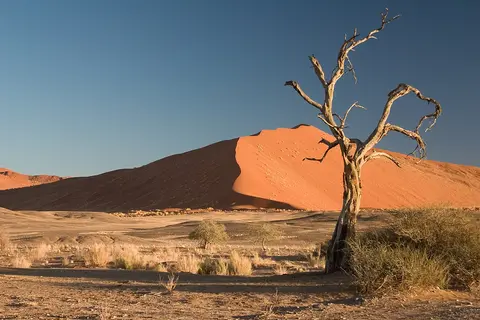
Wind matters most in dry places, where there are few plants to hold the surface in place. It comes in two main types.
Deflation is when the wind picks up loose particles and carries them off. is when the wind blows sand and dust against surfaces and wears them down, a little like a natural sandblaster.
Deflation moves particles in three ways, depending on how big they are. In surface creep, larger and heavier grains slide or roll along the ground. In saltation, grains are lifted a short way into the air, then fall and bounce on. In suspension, very small and light particles rise into the air and can travel long distances. Saltation does most of the work, accounting for roughly 50 to 70 per cent of wind erosion.
Wind erosion gets much worse in droughts, when the soil is dry and plants die back. It can strip away farmland, spread harmful dust and add to the spread of deserts. These problems have grown because of human activities such as cutting down forests, building cities and farming.
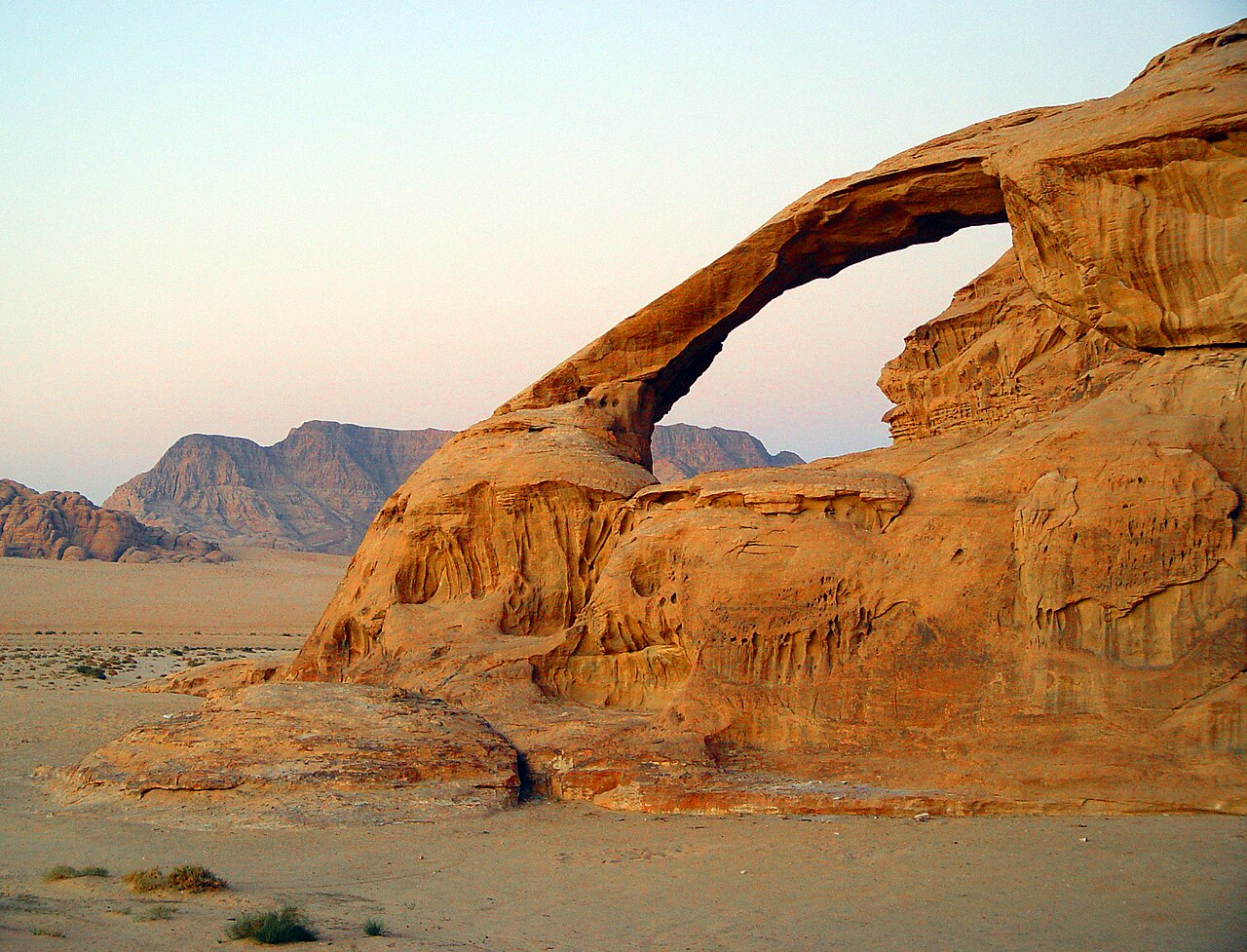
In natural rock the result can be beautiful. Wind-blown sand wears away softer layers faster than hard ones. It can carve arches like the one at Kharaza in Jordan, or shape mushroom-topped rocks such as the stone tree on the Bolivian plain.
What makes a hillside slide?
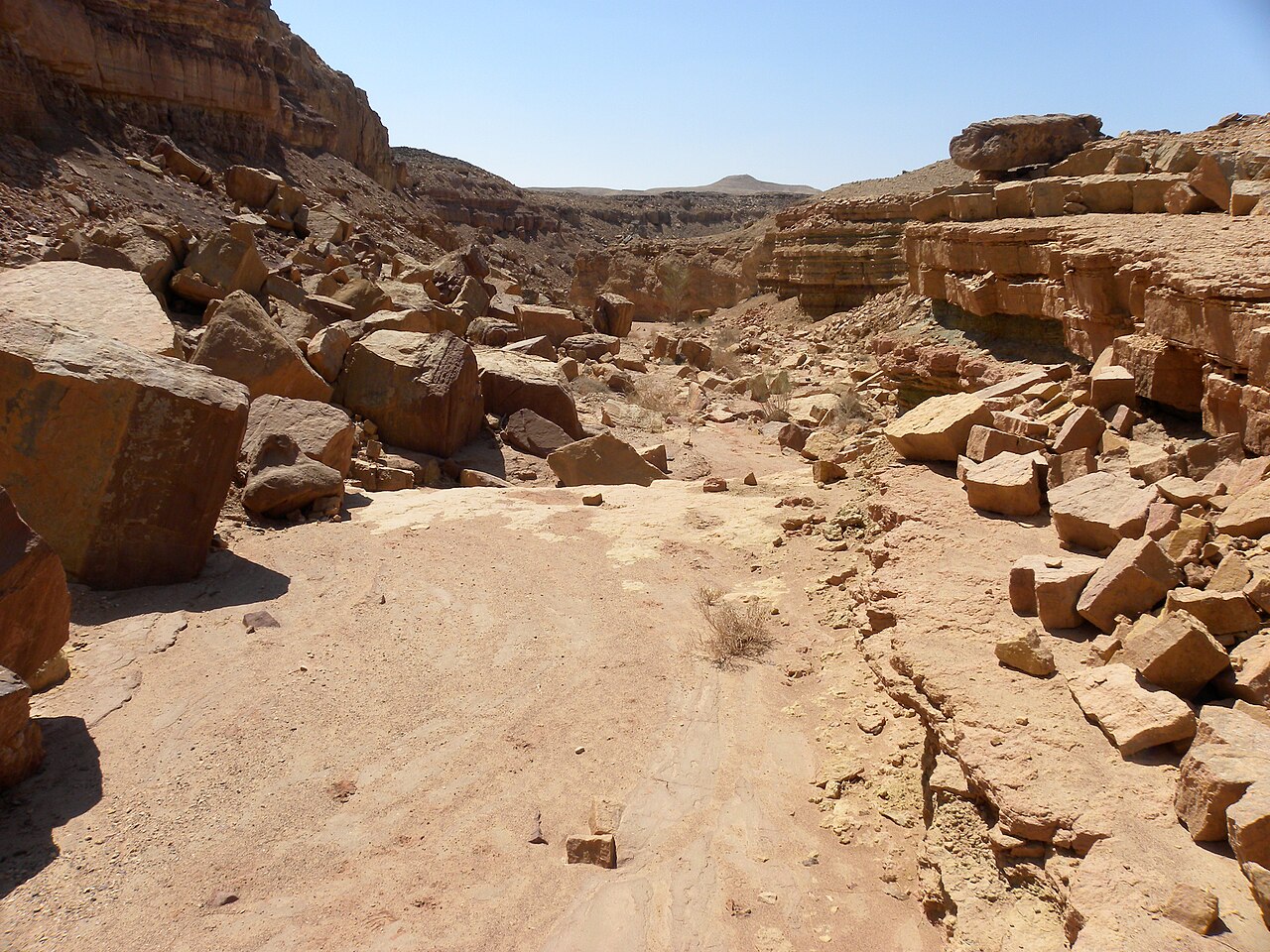
Sometimes the land does not need a river or the wind to move it. Gravity is enough. , or mass movement, is the downhill movement of rock and soil on a slope, mostly because of gravity. It is usually the first step in breaking down and carrying away weathered rock in mountains. It delivers material to lower ground, where streams and glaciers can pick it up and carry it further.
Mass wasting is always going on somewhere. Some of it is so slow you would never see it. Surface creep is the slow downhill shuffle of soil and rock, noticed only over a long time. Other movements are sudden and can be terrible. Any visible movement of rock or soil downhill is often called a landslide, though scientists divide landslides into many types by how they move and how fast.
A rockfall drops pieces from a cliff, and the broken pieces pile up at the bottom as a scree slope. A slump happens when a block of ground on a steep hillside slides along a curved crack, often in clay. Water beneath the slope can weaken it. Badly built roads cut into hillsides can also cause slumps.
Gravity also works beneath the sea. Muddy water can race down the continental slope as a turbidity current, cutting deep canyons into the sea floor.
What speeds erosion up, and can we slow it?
Several things set the pace of . Climate is one. Heavy, intense rain does the most damage, especially where the soil is bare. In parts of western Europe it is the total amount of rain on already soaked soil that matters more. Wind erosion needs strong winds and dry soil.
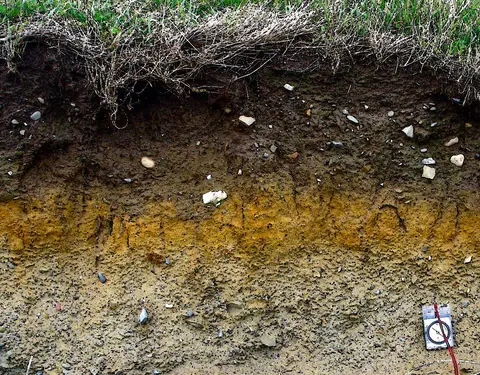
Plants are the second. Leaves and roots protect soil in three ways. They help water to soak in instead of running off. They shelter the ground from wind. And their roots bind the soil together into a firm mass. Take plants away and erosion speeds up.
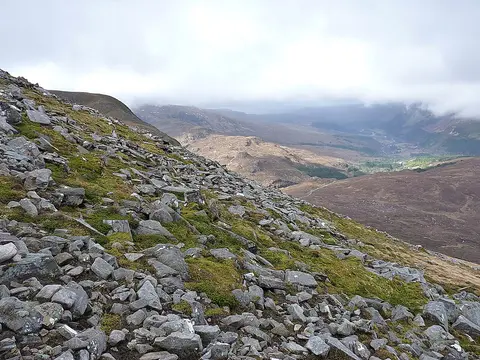
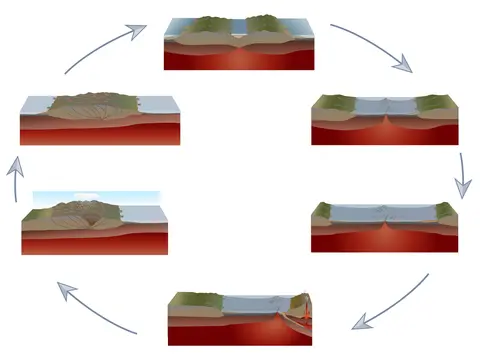
The third is slope. Long, steep slopes make fast and powerful. Tectonic uplift can raise mountains, making slopes steeper and erosion quicker.
People are the fourth. Natural erosion is slow, but human activity has raised the global rate of soil erosion by about 10 to 40 times. In some farmed parts of the Appalachian Mountains, it has reached up to 100 times the natural rate. Intensive farming, deforestation, roads and spreading cities are the main causes.
The damage is serious. Farms lose the nutrient-rich top layer of soil. Eroded clogs rivers and lakes, and can feed algae blooms. Water and wind erosion together cause about 84 per cent of the world's degraded land.
There are ways to slow it. Farmers can keep land covered with plants, and in the United States, farmers on highly erodible land must follow a conservation plan to get farm support.
What was the Dust Bowl, and how was land saved?
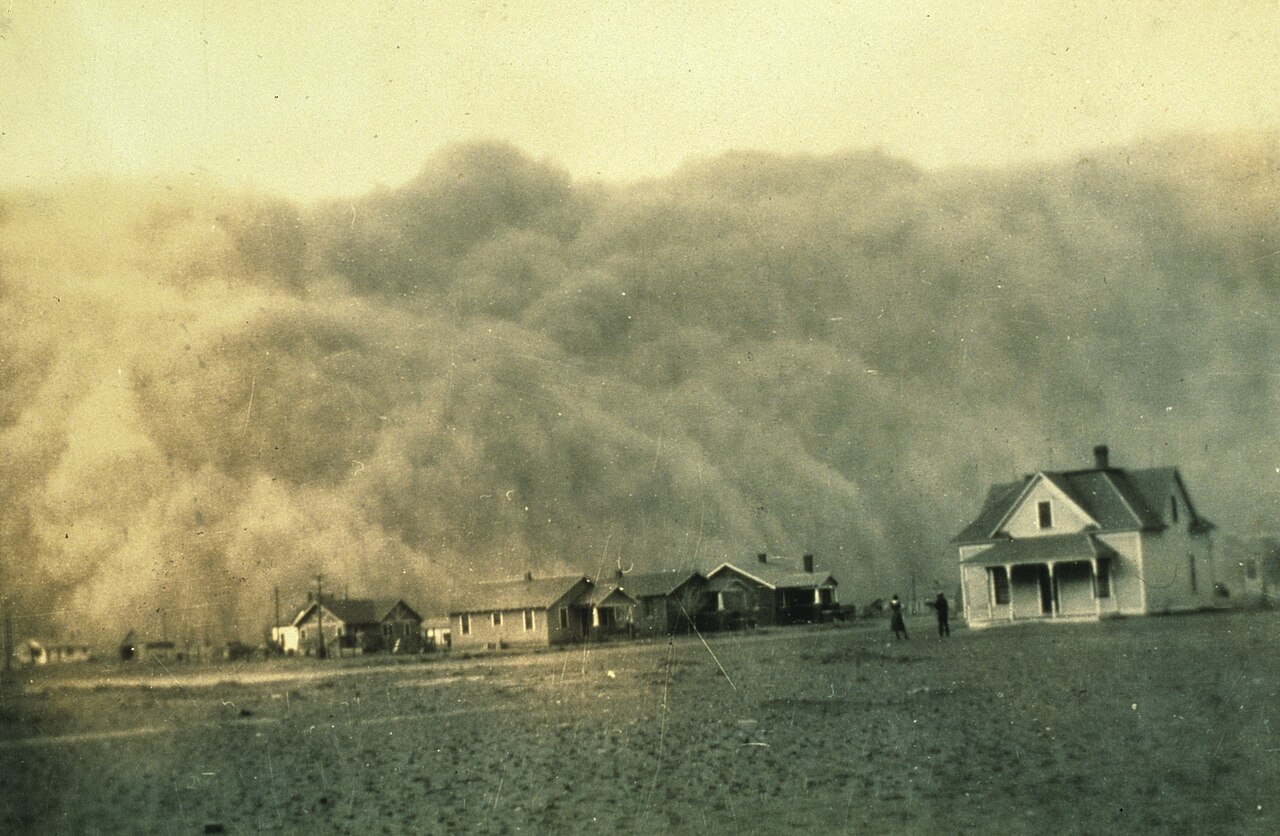
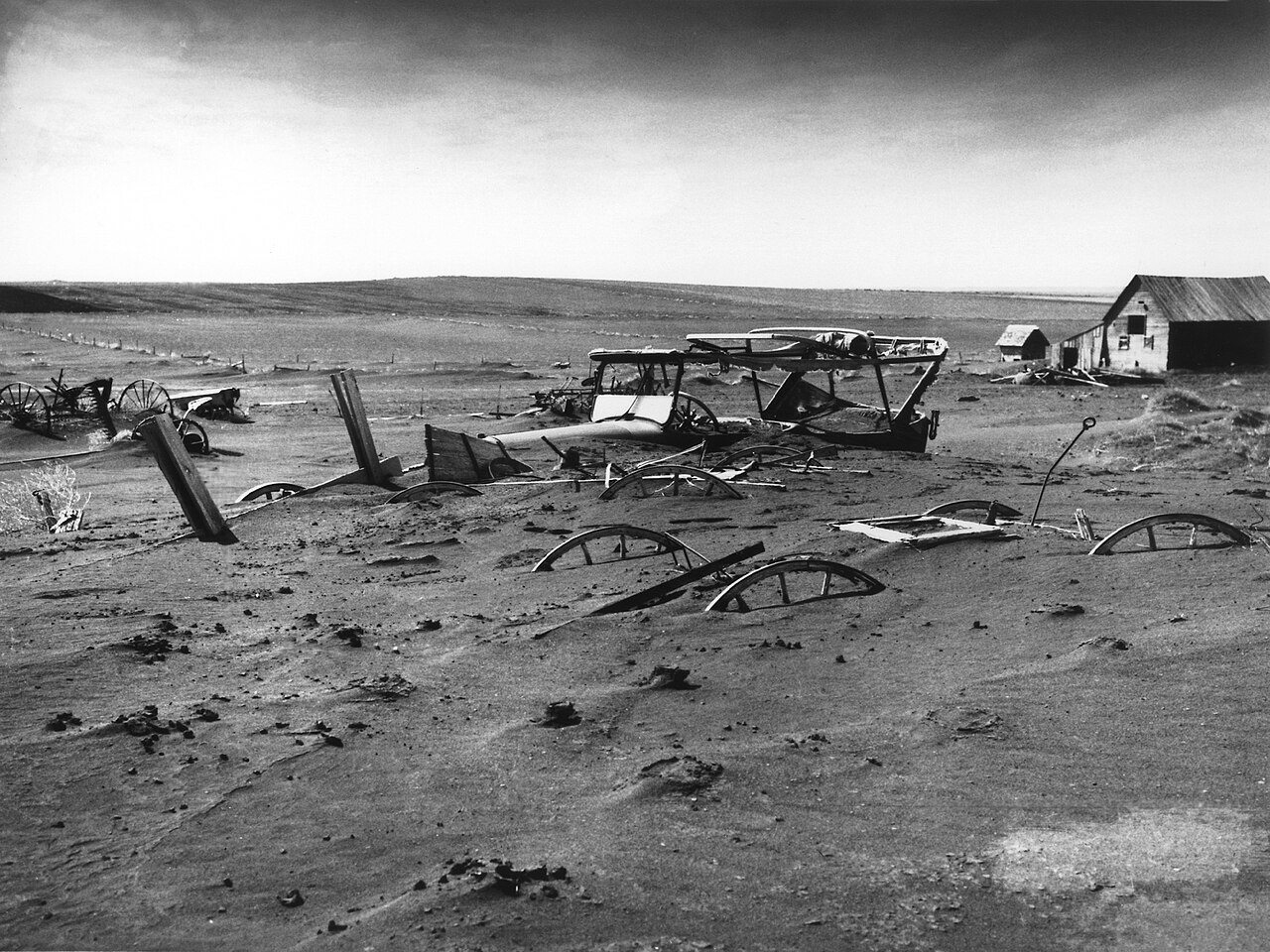
In the 1930s the Great Plains of the United States showed what happens when people strip away the plants that hold soil down. Farmers had ploughed up millions of hectares of prairie grass to grow wheat. Then a long drought began in 1931. The crops failed, the bare soil dried to powder and the wind lifted it.
The worst storm came on Sunday 14 April 1935, known as Black Sunday. A wall of dust rose more than 150 metres into the air and swept across the Texas and Oklahoma panhandles, turning the afternoon dark. Over the decade about 2.5 million people left the Plains states, one of the largest migrations in US history.
The disaster changed farming. Less than two weeks after Black Sunday, on 27 April 1935, the US Congress set up the Soil Conservation Service, led by Hugh Hammond Bennett. Farmers were paid to use , which follows the curves of a slope so that furrows hold water instead of channelling it downhill. Terracing cuts flat steps into hillsides, and rows of trees were planted as windbreaks.
Restoration can work on a huge scale. China's Loess Plateau is one of the most eroded landscapes on Earth. A project backed by the World Bank began there in 1994, and farmers were paid to build terraces, plant trees and graze fewer animals. The soil washing into the Yellow River fell by more than 100 million tonnes a year.
Explore Next
Your audio story keeps playing while you look around.
Words to Know
- abrasion
- Wearing away by scraping, such as sand carried by wind, waves or ice.
- contour ploughing
- Ploughing along the curves of a slope instead of up and down it, so furrows hold water.
- deposition
- The settling of eroded material in a new place.
- erosion
- The removal and carrying away of soil and rock by water, wind, ice or gravity.
- gully
- A deep channel cut by running water, too large to smooth over by ploughing.
- longshore drift
- The movement of sand and pebbles along a coast by waves and currents.
- mass wasting
- The downhill movement of rock and soil under gravity.
- meander
- A wide loop in a river's course.
- moraine
- A heap of rock and rubble left behind by a glacier.
- runoff
- Rainwater that flows over the ground instead of soaking in.
- sediment
- Loose pieces of rock and soil that have been moved.
- weathering
- The breaking down of rock where it sits, without moving it.