Weathering
How wind, water, ice and living things slowly break rock apart where it sits.
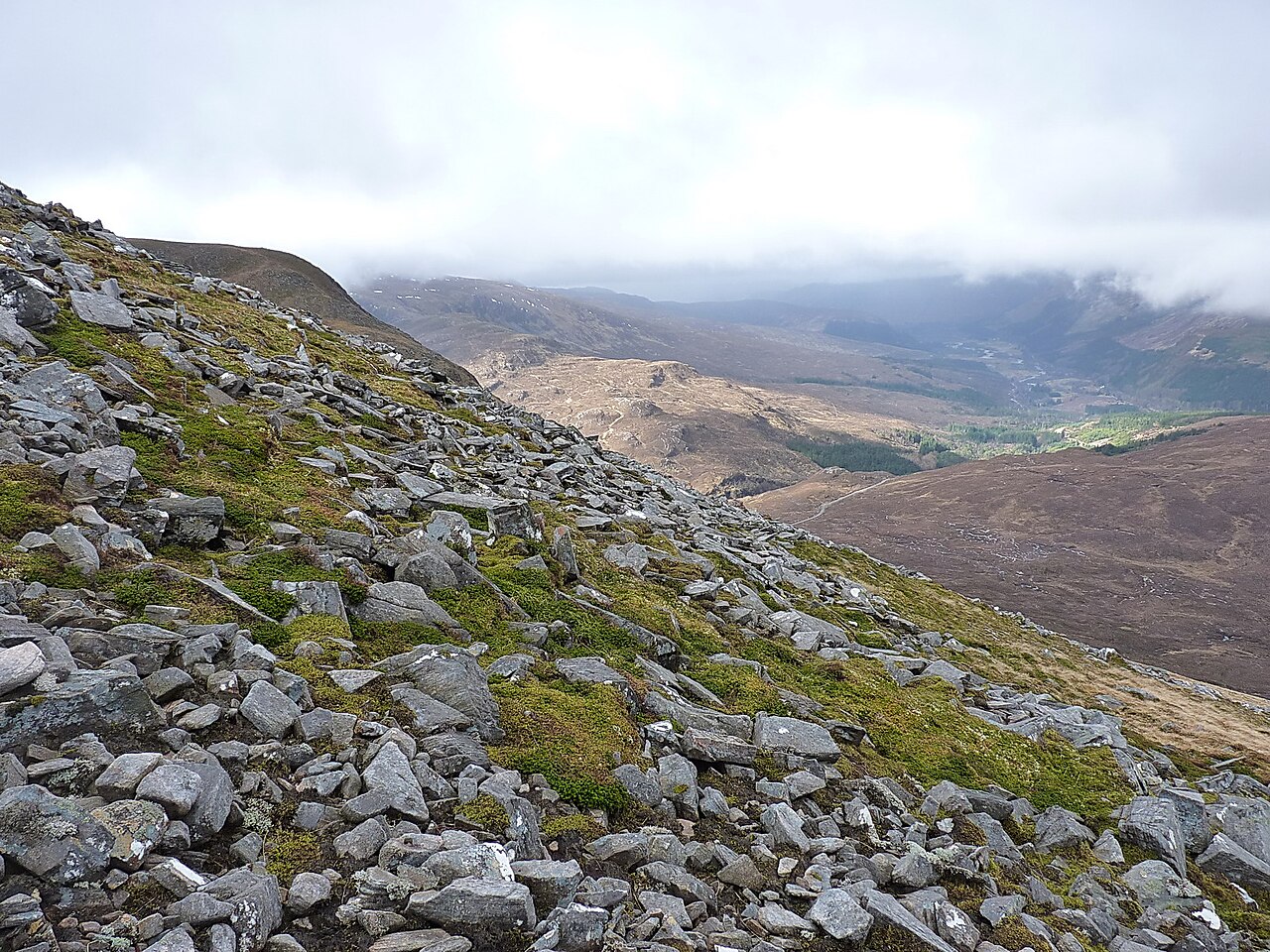
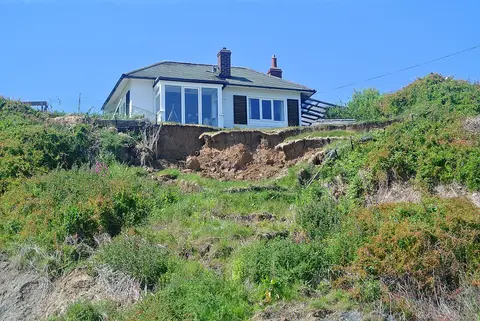
Rock looks like the toughest material on Earth. Yet every cliff, boulder and gravestone is slowly falling apart. Weathering is the name for this decay. Water, air, sunlight and living things work on rock for thousands or millions of years, and they crack it, dissolve it and change what it is made of. Weathering happens in place, so it is different from erosion, which carries the pieces away. The two partners carve canyons, round off mountains and shape coastlines. Weathering also makes the crumbs that mix with dead plants to become soil, so it helps to feed the world. Even the stone of old castles is being weathered today.
What happens when rock wears away where it sits?
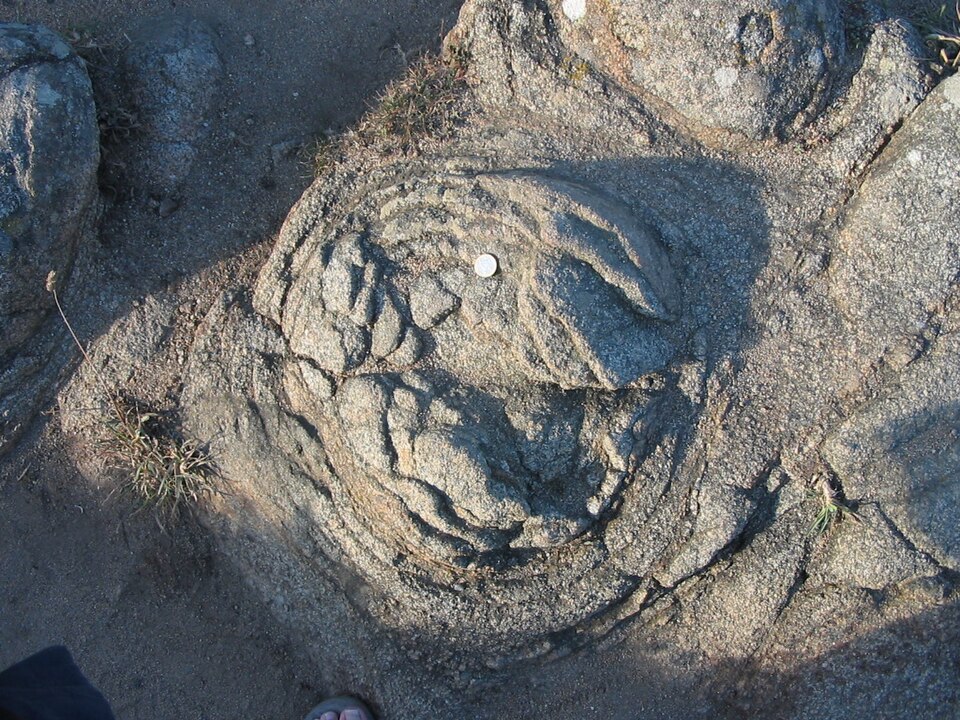
is the slow decay of rocks, soils and minerals through contact with water, air, sunlight and living things. Wood, paint and concrete weather too. Nothing at Earth's surface is safe from it.
The key idea is that weathering happens in place. The rock breaks or changes right where it sits. That makes it different from , which moves rock and soil from one place to another. Rivers, ice, snow, wind, waves and gravity do the moving. The two jobs work as a team. Weathering loosens the material and erosion carries it off, so together they cut valleys, carve cliffs and wear down mountains.
Geologists sort weathering into three main kinds. Physical weathering breaks rock into smaller pieces without changing what the rock is made of. Chemical weathering changes the minerals themselves into new ones. Biological weathering is done by living things, such as , fungi, bacteria and plant roots.
The kinds often work together. A crack opened by ice gives water and air more surface to attack, so the rock crumbles faster. Water is the main agent behind both physical and chemical weathering, and that is why wet places usually weather faster than dry ones.
How can ice split solid rock?
In cold places, ice is one of the strongest rock breakers on Earth. Frost is the name for all the ways that ice forming inside rock can split it apart.
Water gets bigger when it freezes. Its volume grows by about 9.2 per cent. Rain and meltwater seep into tiny cracks, and when the temperature drops the water turns to ice and pushes on the walls of the crack. This is called . It works best when the rock is soaked with water and the weather swings above and below freezing every day. So it is rare in the tropics, in polar regions and in deserts.
Many scientists now think a second process matters even more. It is called ice segregation. Even well below freezing, a thin skin of liquid-like water clings to the surface of ice grains. That skin pulls in more water from warmer parts of the rock, a bit like a sponge soaking up a spill. The ice grows into needles and flat lenses inside the rock, and it pushes with far more force than wedging does. It works best when the rock stays a few degrees below freezing, between -4 and -15 degrees Celsius.
Over many winters the ice pries the rock apart. That is why high mountain slopes are often covered with piles of broken stone.
Can heat and pressure crack a rock?
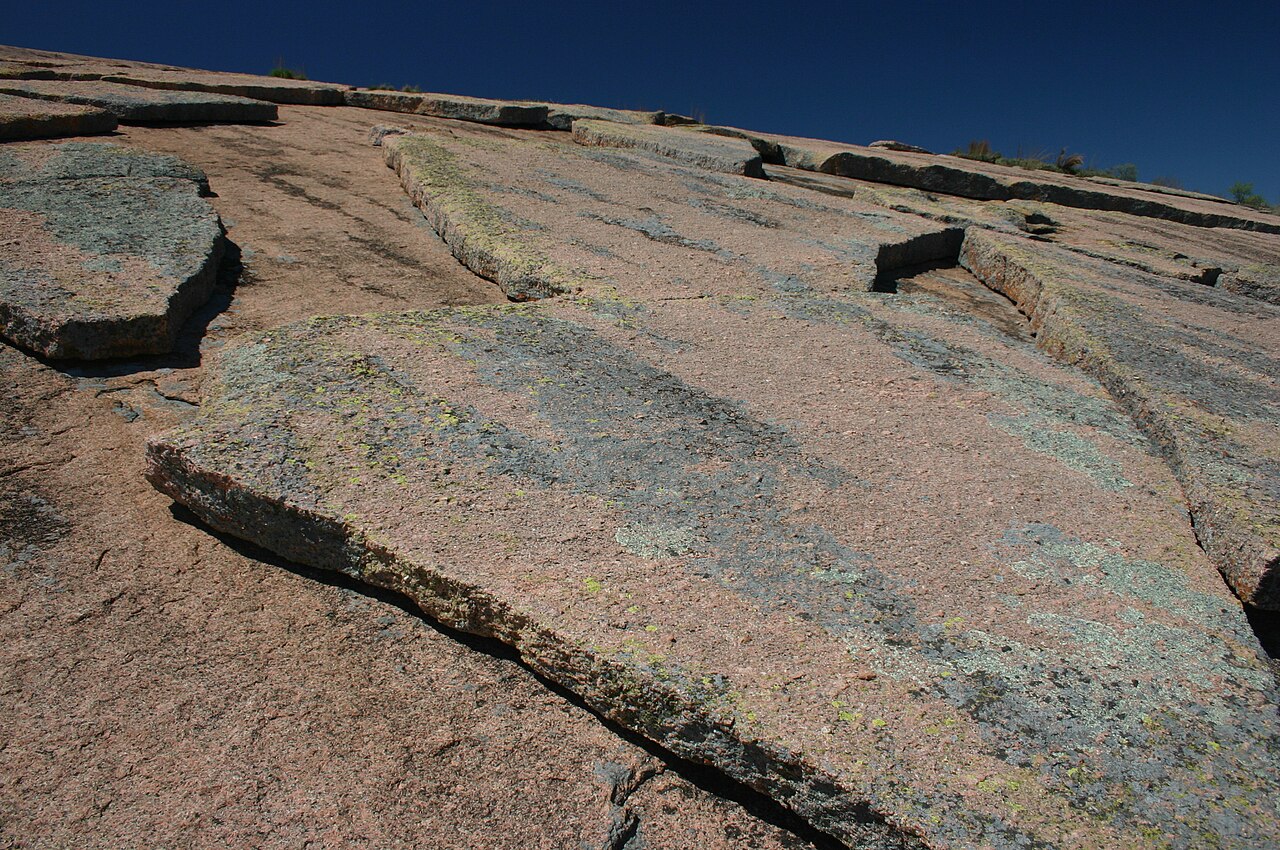
Rock can crack without any ice at all. Thermal stress happens when rock swells as it warms and shrinks as it cools. A desert rock face can be scorching by day and cold at night, so it flexes again and again. A single big shock can crack a rock at once, but this is uncommon. More often it is thermal fatigue, where each cycle weakens the rock a little until it splits into blocks. Wildfires can heat rock so quickly that they speed this up.
Geologists once thought heat hardly mattered. Old laboratory tests used small, polished samples that could expand freely in every direction. Real rock is held in place by the rock around it, so the stresses are greater. Today scientists think heating and cooling matter in cold climates as well as hot ones.
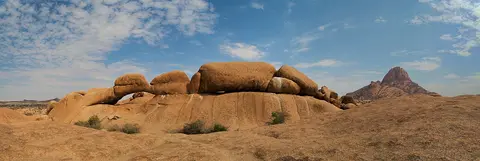
Pressure release works in a different way. Granite forms deep underground, squeezed by the weight of the rock above. When strips that rock away, the pressure drops, and the outer layers try to expand. Cracks open parallel to the surface, and curved sheets of rock peel off like the layers of an onion. This is called , or sheeting. It helps to make the smooth, rounded granite domes found in places such as Yosemite in California. Pressure release also cracks the walls of mines and quarries.
What do salt crystals and roots do to stone?
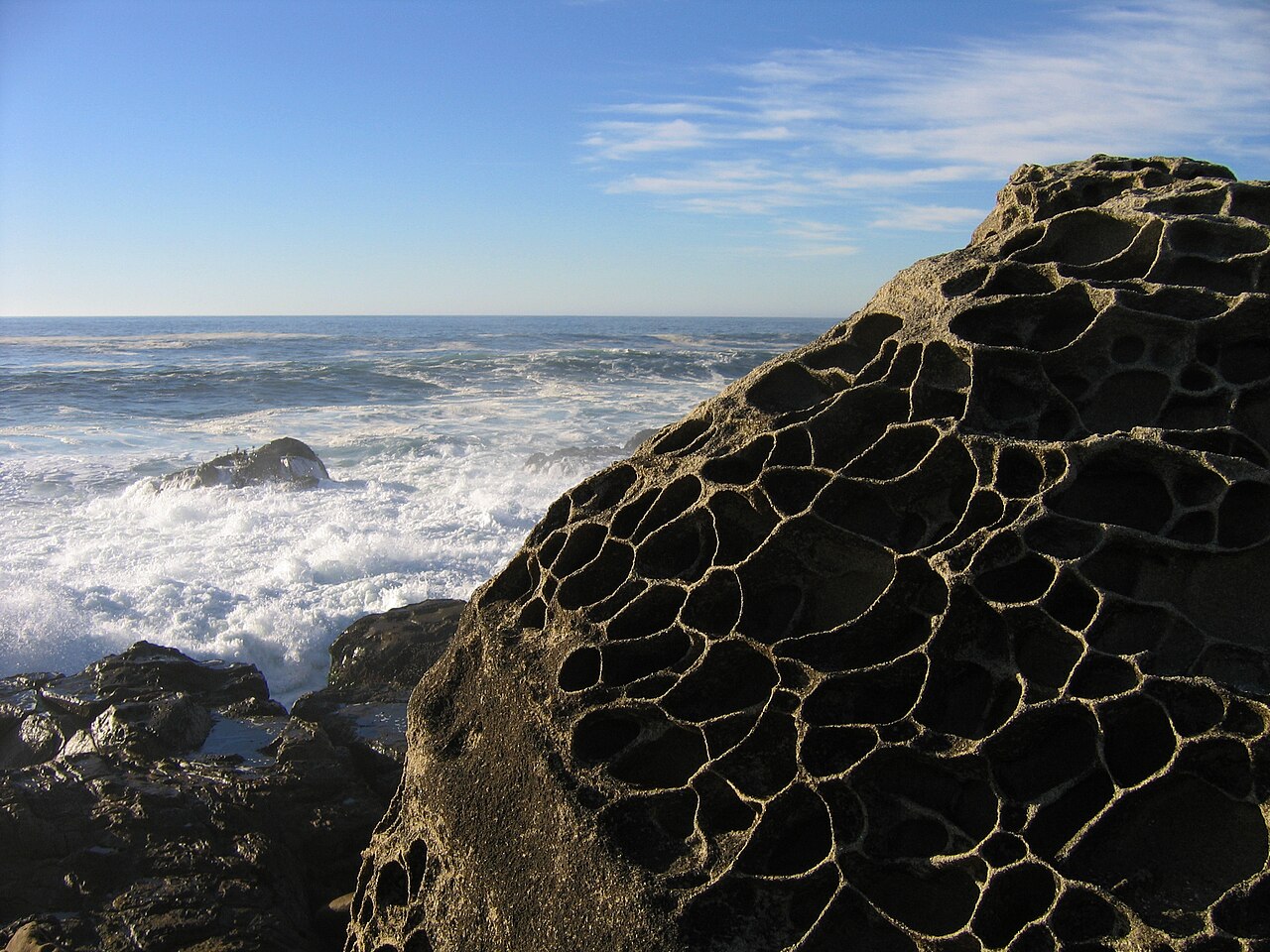
Salt can wreck stone. In salt , salty water seeps into cracks and then dries up. The salt crystals left behind keep growing as they draw in more dissolved salt, and they press hard on the rock around them. Sodium and magnesium salts do the most damage. Salt weathering is most common in dry places, where strong heat dries water quickly, and along coasts, where sea spray keeps supplying salt. It helps to carve , the honeycomb of hollows seen on some sea cliffs and boulders.
Living things break rock too. A seedling that sprouts in a crevice grows a root, and the root widens the crack as it thickens. Roots also open a pathway for water and chemicals to reach deeper into the rock. After frost, root wedging is the next most important kind of physical weathering. Burrowing worms and other animals can help to break up rock as well.
and mosses go a step further. They grow on bare rock and hold moisture against its surface. Lichens grip the rock with root-like threads called hyphae. Scientists have watched these threads pull mineral grains out of shale, a soft rock, in a process called plucking. The loosened grains are drawn into the lichen's body, where they start to break down chemically, not unlike digestion.
How can rainwater eat away stone?
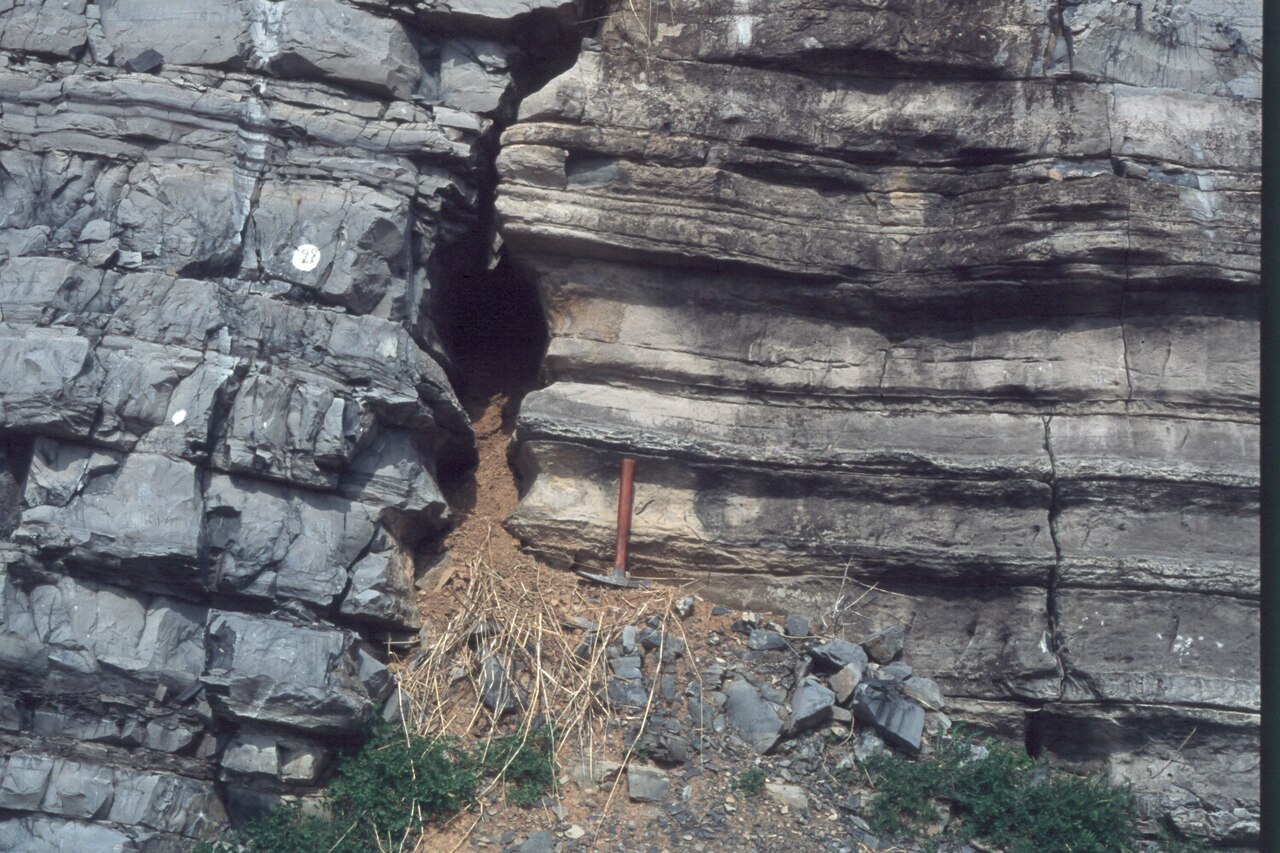
Chemical changes what a rock is made of. Most rock forms deep underground, where it is hot and under great pressure. At Earth's surface it is cool, wet and surrounded by oxygen, so many of its minerals are unstable and slowly react. Water is the main agent. Oxygen and carbon dioxide help.
The plainest process is , where a mineral dissolves in water and leaves nothing new behind. Rock salt and gypsum dissolve easily. Even quartz, one of the toughest minerals, dissolves in rainwater if it is given enough time.
The most important case is limestone and chalk. Rain picks up carbon dioxide from the air and becomes carbonic acid, a weak acid. Carbonic acid reacts with the calcium carbonate in limestone and turns it into a substance that dissolves in water. The acid works along cracks, which makes them wider and deeper. On a flat limestone surface this leaves a pattern of blocks and gaps called limestone pavement. Cold water holds more carbon dioxide, so this process is a big part of weathering around glaciers.
Clean rain is already slightly acidic, with a pH of about 5.6. is stronger. Sulphur dioxide, from volcanoes and from burning fossil fuels, and gases called nitrogen oxides make stronger acids in the rain. They can lower the pH to 4.5 or even 3.0. The lower the pH, the stronger the acid.
Why do some rocks turn rusty or crumble to clay?
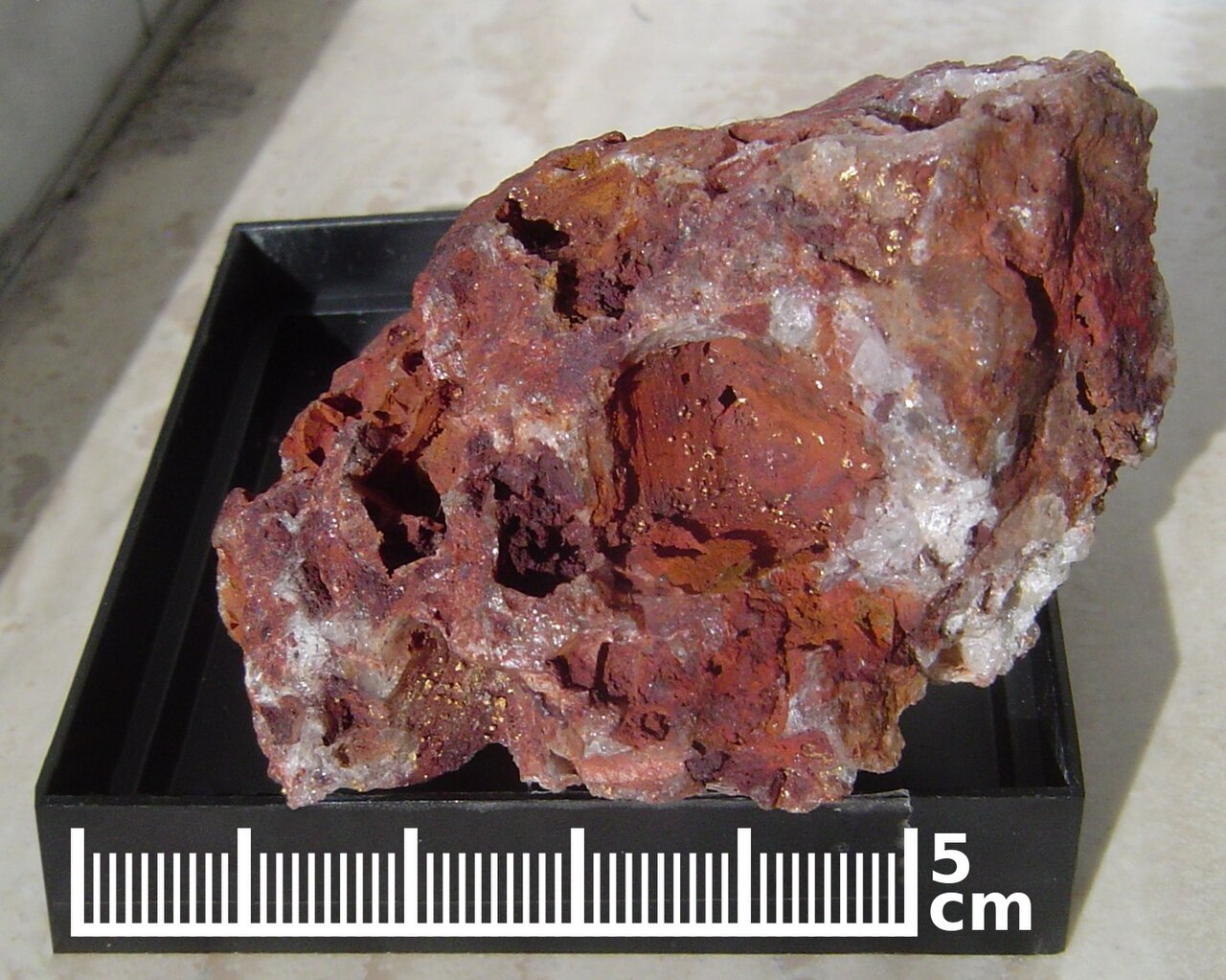
is the same chemistry that makes a nail rust. Many rocks contain iron. When iron reacts with oxygen and water, it forms iron oxides with names such as goethite, limonite and hematite. These give weathered rock a reddish-brown crust that crumbles easily and weakens the stone. Sulphide minerals oxidise too. Pyrite, a shiny mineral known as fool's gold, can turn into iron sulphate and gypsum. When the new crystals grow in the rock, they push it apart like salt does.
is a more complicated change. Only part of a mineral dissolves, and the rest turns into a new solid, often a clay mineral. For example, feldspar, a very common mineral in granite, is attacked by carbonic acid and becomes the clay called kaolinite. The acid works with hydrogen ions, which break the weakest chemical bonds in a mineral first. So the minerals in igneous rock tend to weather in about the same order in which they first formed.
Hydration is when water molecules attach to a mineral. The mineral anhydrite becomes gypsum this way. Hydration of a fresh crystal surface is also the first step of hydrolysis.
There is a link to climate. of silicate rock uses up carbonic acid, so over very long times it helps to control how much carbon dioxide is in the air. Rising mountains expose fresh rock to rain, which keeps this going.
Can living things really eat rock?
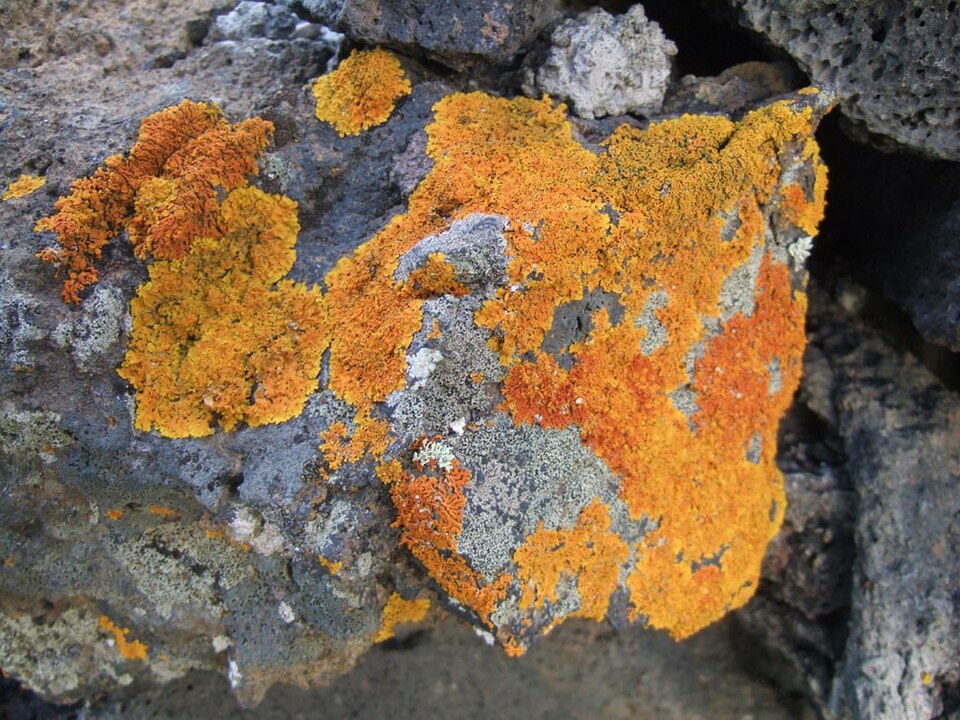
Living things speed up chemical as well as physical weathering. Soil is full of microbes, and they matter. In laboratory tests, the minerals albite and muscovite weathered twice as fast in live soil as in soil with all its microbes killed.
are some of the best rock weathering organisms. A lichen is a partnership between a fungus and an alga. In one study of granite in New Jersey, rock under lichens weathered 3 to 4 times faster than bare rock that was newly exposed. Lichens release chemicals that grab metal atoms such as aluminium out of the rock surface. This ability lets lichens be among the first living things to settle on bare land, where they begin to turn rock into the first thin soil.
Plants do it too. Roots give off carbon dioxide and organic acids. In soil the carbon dioxide can build up to 30 per cent of the gases, because it escapes very slowly. Dead plants also rot into acids that dissolve minerals. Fungi that live with tree roots can release nutrients from minerals such as apatite and biotite and pass them to the tree. Many kinds of bacteria can colonise mineral surfaces and break them down too.
So a forest floor is not only sitting on rock. It is slowly dissolving it, and feeding on what it releases.
How does weathering make soil and new rock?
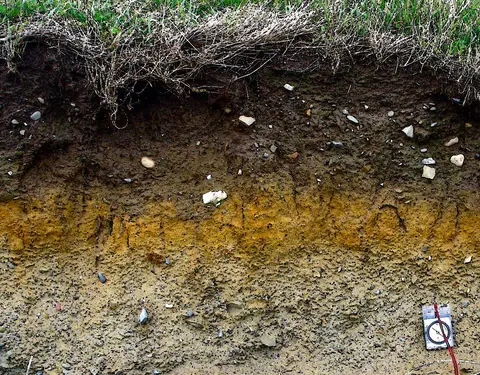
The pieces left behind by mix with dead plants and animals to make soil. A few centimetres of soil take hundreds to thousands of years to form, which is still a short time for geology. Layers of ancient soil, called paleosols, can be found buried in the rock record. One site in Wyoming has over 1,000 of them in a 770 metre stack that covers 3.5 million years. Elsewhere, the oldest known ancient soils are more than 2.5 billion years old.
What soil is like depends on the rock beneath it. Granite, the most common crystalline rock at the surface, slowly turns into a mix of clay minerals and iron oxides. Basalt weathers more easily, because it forms at higher temperatures, has very fine grains and often contains volcanic glass. In tropical rainforests, where rain washes the soluble parts away all year, basalt can end up as , the main ore of aluminium. Where heavy rain comes in seasons, as in monsoon climates, it ends up as a red, iron-rich soil called laterite.
Weathered material does not stay put for ever. carries it to rivers, lakes and seas, where it settles in layers. Over time the layers are squeezed and cemented into . This kind of rock covers about 66 per cent of the continents and much of the ocean floor. That is the weathering part of the rock cycle, the endless recycling of Earth's stone.
How do gravestones and monuments show how fast stone weathers?

Old stone is a record of with the date written on it. Gravestones are among the best, because most carry the year they were put up. In a churchyard, a marble headstone from the 1860s may be worn so smooth that its lettering is almost gone, while a slate one beside it is still sharp. Marble is calcium carbonate, so rain dissolves it far faster than it dissolves slate. Scientists compare stones of known age to measure how quickly each kind of rock weathers.
Famous monuments tell the same story. The Great Sphinx in Egypt is carved from limestone layers of different hardness, and salt and damp have flaked away the softer ones. The white marble of the Taj Mahal in India has dulled and yellowed in polluted air, and the area around it has been closed to polluting traffic and industry to protect it.
hit living things too. In the 1980s, trees on mountains in Germany, such as the Black Forest, were dying in what people called Waldsterben, or forest death. Acid rain from power stations was blamed as one cause. Laws such as the US Clean Air Act amendments of 1990 and European agreements cut sulphur dioxide pollution, and rain today is less acidic than it was in the 1980s.
What does weathering do to buildings and the sea floor?
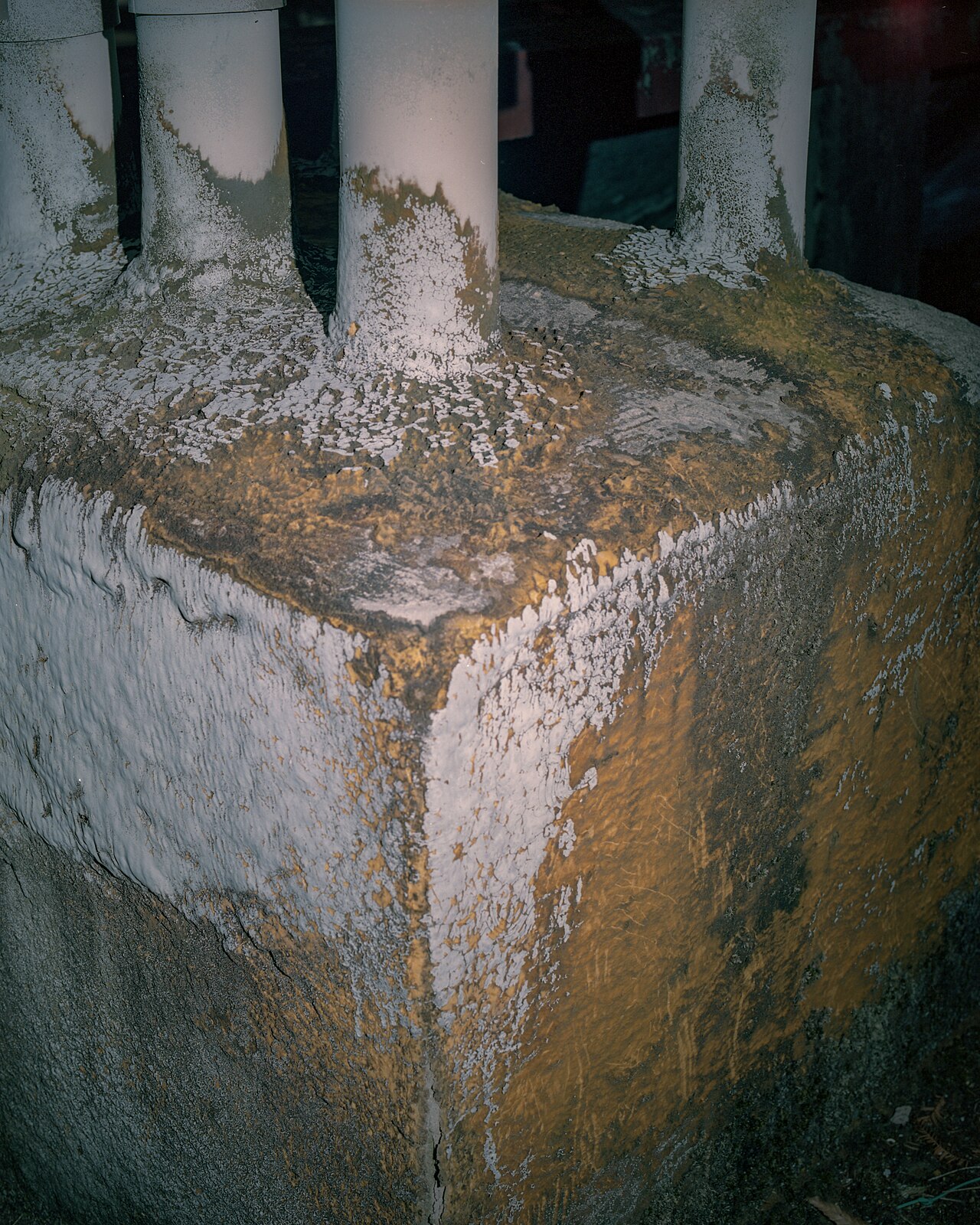
Buildings of stone, brick or concrete face the same attackers as any rock. Statues, monuments and carved stonework can be badly damaged, and the damage speeds up where falls. Freezing water in the pores of concrete cracks it, and salt can stain and crust it white. can even threaten the safety of the people inside a building. Designers fight back by shedding rain with screens, controlling damp air with ventilation, and using concrete mixes with less water to cope better with freezing and thawing.
Weathering is not only about rock. Sunlight contains ultraviolet radiation, which sets off chemical reactions that wear down the surface of wood, paint and plastic. That is why an old fence turns grey and a garden chair turns brittle and faded.
The ocean floor weathers as well, but in a different way and much more slowly. Basalt on the sea floor takes up water and becomes less dense by about 15 per cent every 100 million years. It gains some elements, such as magnesium and sodium, and loses others, such as silica and aluminium.
So nothing at or below the surface of Earth stays unchanged. Each stone is slowly passing through a long cycle of building up, wearing down and building up again.
Explore Next
Your audio story keeps playing while you look around.
Words to Know
- acid rain
- Rain made more acidic than usual by gases such as sulphur dioxide.
- bauxite
- The rock that is the main ore of aluminium.
- dissolution
- The process in which a mineral dissolves in water.
- erosion
- The carrying away of rock and soil by water, ice, wind, waves or gravity.
- exfoliation
- The peeling away of curved sheets of rock from a rock surface.
- frost wedging
- The splitting of rock by water that freezes and expands inside cracks.
- hydrolysis
- A reaction in which water and acid change a mineral into a new solid, often clay.
- lichen
- A living partnership of a fungus and an alga that grows on rock and bark.
- oxidation
- A reaction with oxygen, such as iron turning to rust.
- sedimentary rock
- Rock made from pieces of older rock that were laid down in layers and pressed together.
- tafoni
- Honeycomb-like hollows in rock, often made with the help of salt weathering.
- weathering
- The breakdown of rock where it lies, caused by water, air, heat, cold and living things.