Tsunami
A series of giant waves that can cross an ocean in a day.

A tsunami is a series of waves made when a huge amount of water is suddenly pushed out of place. Most are caused by earthquakes under the sea. Others come from landslides, volcanic eruptions and, rarely, meteorite impacts. In the open ocean a tsunami can be so low and long that ships barely notice it, yet it travels as fast as a jet plane. When it reaches shallow water near the coast, it slows down and grows taller, and it can flood the land far beyond the beach. The 2004 Indian Ocean tsunami killed at least 230,000 people in 14 countries. Understanding how tsunamis work helps people to spot the warning signs and escape.
What is a tsunami, and why is it not a tidal wave?
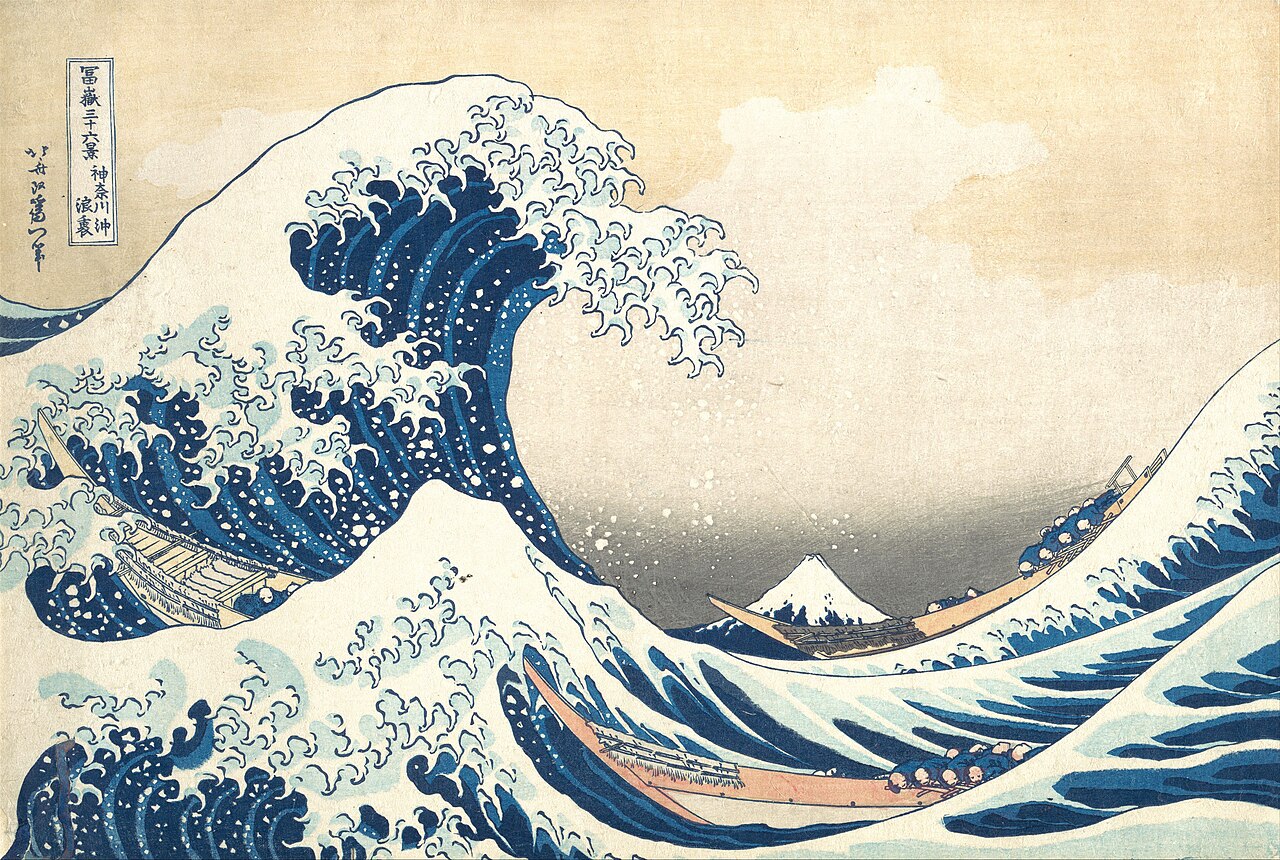
A is a series of waves in a large body of water, such as an ocean or a big lake. It is caused by a sudden push on a huge amount of water. The word comes from Japanese. It means 'harbour wave', because fishermen out at sea sometimes noticed nothing, then came home to find their harbour wrecked.
People used to call tsunamis tidal waves, and you may still hear it. Scientists dislike the term because tides are caused by the pull of the Moon and Sun, and tsunamis have nothing to do with them. They also dislike 'seismic sea wave', because earthquakes are not the only cause.
A tsunami is very different from the waves you see at a beach. Everyday sea waves are made by wind. They are about 100 metres from crest to crest and about 2 metres high. A tsunami is made by water being displaced, and its crests can be up to 200 kilometres apart. Because it is so long, it often does not look like a breaking wave. It can look more like a very fast, rising tide.
A tsunami is also not one wave. It is a train of waves that arrive minutes or hours apart. Big events make waves tens of metres high. Tsunamis harm only coasts, but they can cross an entire ocean and affect many countries.
How does an earthquake make a tsunami?
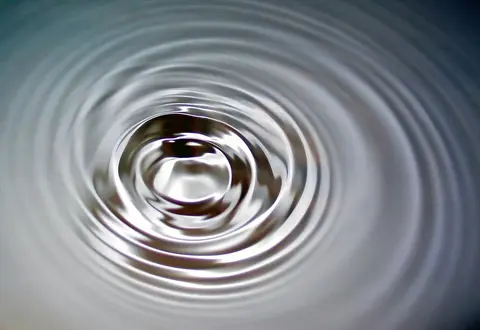
Most start with an earthquake under the sea. The sea floor does not only shake. It can lift or drop by several metres across a huge area. The water above moves with it and is pushed out of its resting level. Gravity pulls the raised water back down, and waves spread out in all directions.
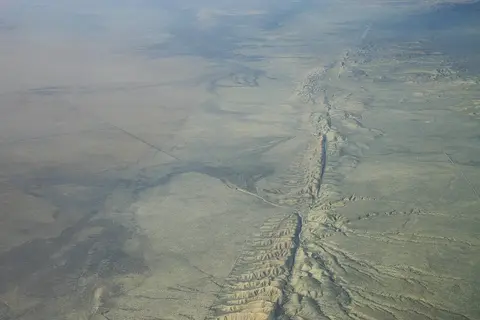
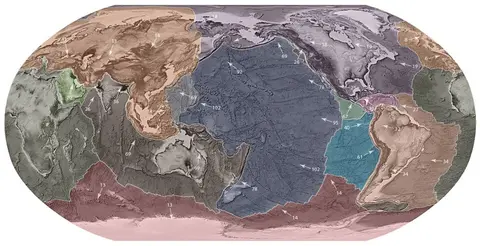
The quakes that matter most happen at , where one tectonic plate slides under another. When a thrust fault there slips, the sea floor jerks upwards, so the push on the water is mostly vertical. Slipping sideways, as along a strike-slip fault, moves little water, so it rarely makes a tsunami. Ordinarily the earthquake needs to be about magnitude 7.5 or more. Why some large quakes do not make tsunamis, while some smaller ones do, is a question scientists are still studying.
Five recent giants were Chile in 1960 (magnitude 9.5), Alaska in 1964 (9.2), the Indian Ocean in 2004 (9.2), Japan in 2011 (9.0) and Russia's Kamchatka in 2025 (8.8). All made teletsunamis, which are waves that cross entire oceans. Local tsunamis can be even faster, because they can strike the nearest coast within minutes.
In 1946, a magnitude 8.6 earthquake in the Aleutian Islands sent a wave across the Pacific. It surged 14 metres high in Hilo, Hawaii, and 165 to 173 people died. In a valley on Molokai, people saw the sea pull back, ran uphill and rang alarm bells. The village was wiped out, but nobody was killed.
Can landslides, volcanoes and storms make giant waves?
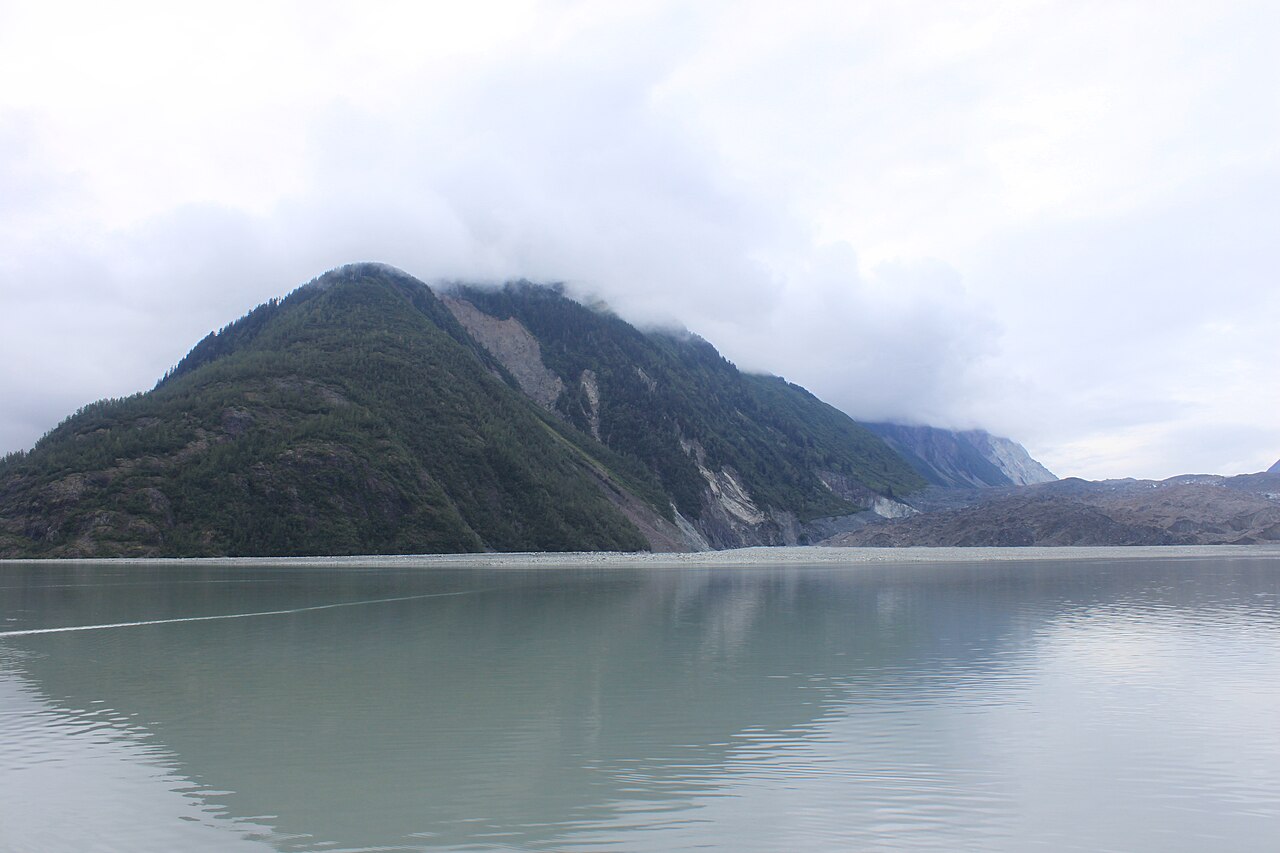
Yes. Anything that shoves a large volume of water can start a . Landslides are the best known of these other causes. In 1958 a huge landslide fell into Lituya Bay in Alaska. It made the highest wave ever recorded. The water surged 524 metres up the mountainside. It struck land almost at once, so it did not travel far. In 1963 a landslide from Monte Toc plunged into a reservoir in Italy. The wave rose 250 metres over the 262 metre Vajont Dam and destroyed towns downstream. About 2,000 people died. Scientists named waves of this size .
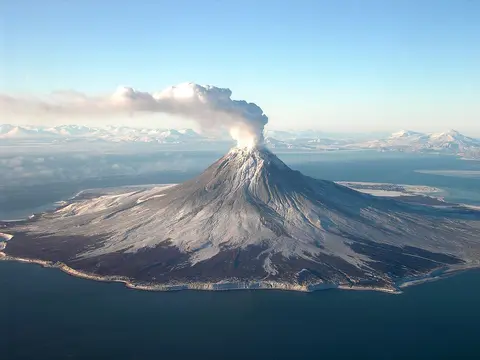
Volcanoes can do it too, by landslides, collapse of the crater, or explosions. The eruption of Santorini around 1600 BC may have damaged harbours across the region, though scientists still argue about how much it harmed the Minoan civilisation. Krakatoa in 1883 and Hunga Tonga-Hunga Ha'apai in 2022 also made tsunamis. In 2018, part of Anak Krakatoa collapsed into the sea. The tsunami killed 426 people, and nobody had warning. More than 20 per cent of volcano deaths in the past 250 years are blamed on tsunamis.
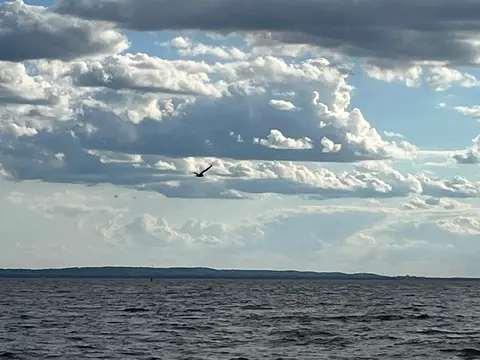
A sudden change in air pressure, such as a storm front, can also push the sea into waves called . They are weaker and cannot cross oceans, but they have caused damage in Nagasaki, Menorca and the Great Lakes. A meteorite impact could make a tsunami, but scientists debate how likely that is.
Why does a wave you cannot feel at sea become a wall at the shore?

In deep water, a is stretched out and low. Its crests can be up to 200 kilometres apart, yet it is only about 1 metre high. A ship that passes over one feels almost nothing. The wave rises and falls so slowly that one cycle takes 20 or 30 minutes.
Its speed depends on the water depth. In the deep ocean, which counts as shallow water for a wave this long, speed depends on depth alone. Multiply the depth in metres by 10, then take the square root, to get the speed in metres per second. In a 5,000 metre deep ocean, that gives about 224 metres per second, or about 800 kilometres per hour. That is as fast as a jet airliner.
Near the coast, the sea gets shallower, and the front of the wave slows down while the back is still rushing in. The wave bunches up. Its speed falls below 80 kilometres per hour, its crests move closer together, and its height grows enormously. This is called . Most tsunamis do not break like surf. They look like a fast tidal bore, the surge of water you can see rushing up some rivers. The highest water that the wave reaches on land is called .
Tsunamis cause damage in two ways. First the water smashes into things at speed. Then the huge volume of water drains back to the sea. It drags a mass of wreckage with it, even when the wave does not look very big. The first wave is often not the biggest.
Why does the sea sometimes drain away first?
Every wave has a high part, the crest, and a low part, the trough. A can arrive with either one first. If the crest comes first, the water floods in at once. If the trough comes first, the sea pulls back from the shore, sometimes by hundreds of metres. This is called . It exposes the seabed and the fish and boats lying on it.
Drawback is a warning, but it has tempted many people to walk out and look. A damaging tsunami has a typical wave period of about 12 minutes. The sea can empty out for about 3 minutes, then rise for about 6 minutes as the trough turns into a crest and floods the coast. Then it drains back, in another drawback. This repeats with each wave. Survivors often describe a sucking sound. The only safe response is to run straight to high ground, or to the upper floors of a strong building.
In 2004, a ten-year-old girl from Surrey, England, named Tilly Smith was on Maikhao beach in Phuket, Thailand. She had learned about tsunamis in a geography lesson two weeks earlier, from her teacher Andrew Kearney, and she recognised the sea pulling back. She told her parents, who warned others on the beach just minutes before the wave arrived. Their action saved dozens of lives.
Not every coast sees drawback. In the 2004 tsunami, no drawback was reported on the African coast or other east-facing shores. The sea floor moved down on the east side of the fault and up on the west.
What do old records tell us about tsunamis?
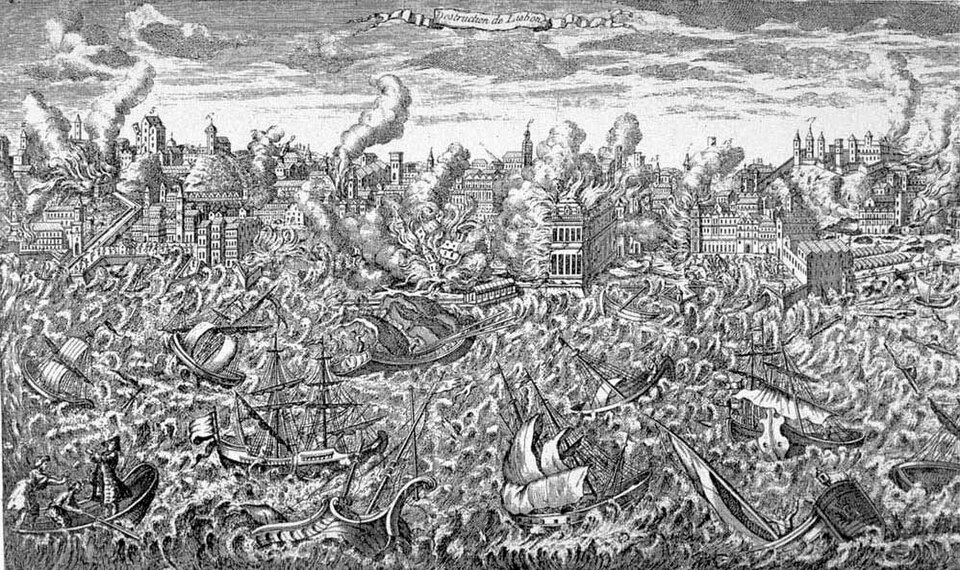
Japan has the longest written history of , and the word itself came from there. Other records are very old too. The oldest known account is from 479 BC in the Greek colony of Potidaea, where a wave may have saved the town from a Persian invasion.
In the 5th century BC the Greek historian Thucydides was the first to argue that earthquakes at sea must be the cause. He wrote that the shock drives the sea back, and that it then returns with great force. In 365 AD a tsunami devastated Alexandria in Egypt. The Roman historian Ammianus Marcellinus described the pattern we now recognise. First came an earthquake, then the sea drew back, and then a gigantic wave came in.
Europe has also suffered. The Lisbon earthquake and tsunami of 1755, caused by a fault between the Azores and Gibraltar, killed tens of thousands of people. So did the earthquakes in Calabria, Italy, in 1783. The 1908 Messina earthquake and tsunami in Sicily and Calabria killed more than 100,000 people. It is among the deadliest natural disasters in modern Europe. Around 8,000 years ago, the Storegga Slide, a giant underwater landslide off Norway, sent a tsunami towards the British Isles.
Scientists today also study 'orphan tsunamis'. These are waves recorded in Japan long ago with no known local earthquake, which turned out to come from quakes far across the ocean.
What happened in the Indian Ocean in 2004?
On 26 December 2004, a magnitude 9.2 earthquake struck off the coast of Sumatra, in Indonesia. A huge section of the sea floor, where the Indian plate slides under the Burma plate, slipped and lifted. It sent out waves across the whole Indian Ocean.
The hit coasts in 14 countries. It reached Indonesia within minutes, and Sri Lanka, India and Thailand within hours. It later came ashore in East Africa. At least 230,000 people were killed or went missing, and it is among the deadliest natural disasters in history. The worst-hit place was Aceh, at the northern tip of Sumatra, where whole towns were flattened.
The event showed how much the world needed a warning system for the Indian Ocean. At the time, none existed there, although the Pacific had one for decades. Many people in the Indian Ocean had never heard of tsunamis, and they had no idea what the meant. As a direct result of the disaster, governments and the United Nations began a new look at tsunami risk for all coasts. An Indian Ocean warning system was then built.
The disaster also changed how schools teach about natural hazards. Stories like Tilly Smith's showed that a single lesson can save lives.
Can walls stop a tsunami?

Japan has more experience with than any other country, and it began serious tsunami research after a disaster in 1896. It has built sea walls up to 12 metres high along many populated coasts. Some places have floodgates up to 15.5 metres high and channels to steer water away. Japan also teaches children and adults what to do, and practising drills are required for government, local authorities, emergency services and the public.
But walls have limits. In 1993 a tsunami struck Okushiri island in Hokkaido within two to five minutes of an earthquake. Its waves were 30 metres high, as tall as a 10-storey building. The port of Aonae was ringed by a wall, but the water washed right over it and destroyed the wooden buildings.
On 11 March 2011 a magnitude 9.0 earthquake struck off north-east Japan. About 18,000 people died or went missing, most of them in the tsunami. In Iwate Prefecture, sea walls at the town of Taro stretched for 25 kilometres. The tsunami knocked down more than half of them. At the Fukushima Daiichi nuclear power plant, the waves rose over the sea wall and flooded the emergency generators. This led directly to a nuclear disaster.
Sea walls can slow a wave and lower its height, so they still help. But the lesson of 2011 was that no wall is enough alone. People also need warnings, evacuation routes and a habit of moving to high ground immediately.
How do we get a warning in time?

Scientists cannot predict exactly when a will come or how big it will be, even when they know where an earthquake happened. But they can warn people quickly after one starts.
One of the most successful tools is the . It sits on the sea floor and measures the weight of the water above it. When a tsunami passes, the weight changes, and the sensor sends the news to a buoy at the surface and then to a satellite. Computers combine these readings with earthquake data and maps of the sea floor and coast. They can estimate when the wave will land, usually to within a few minutes, and how high it will be.
The Pacific Tsunami Warning System, based in Honolulu, Hawaii, watches earthquakes in the Pacific Ocean. A large enough quake triggers a warning. Not every earthquake makes a tsunami, so scientists check each one. Pacific countries share this work and practise evacuations. In July 2025 a magnitude 8.8 earthquake off Kamchatka, Russia, set off warnings across the whole Pacific. Coasts from Japan to Hawaii were evacuated, and the waves did little harm.
Warnings must reach people. In Japan there are sirens, often on hills above towns, and signs. On the United States west coast, signs show evacuation routes. Warnings also go out by radio and television. Signs like this can be found in many other places, including Lisbon in Portugal.
Some people think animals sense danger. Elephants in Sri Lanka in 2004 reportedly moved away from the sound of the approaching wave, but scientists say the evidence is weak. The best warning is still the natural one. If the ground shakes for a long time or the sea pulls back, go uphill.
Explore Next
Your audio story keeps playing while you look around.
Words to Know
- bottom pressure sensor
- An instrument on the sea floor that senses the passing of a tsunami.
- drawback
- The sudden retreat of the sea from the shore before a tsunami wave arrives.
- megathrust earthquake
- A very powerful quake where one plate is forced under another.
- megatsunami
- A giant tsunami, often caused by a landslide, with a huge wave height.
- meteotsunami
- A tsunami-like wave caused by a sudden change in air pressure.
- run-up
- The height above sea level that the water of a tsunami reaches on land.
- shoaling
- The slowing and growing of a wave as it enters shallow water.
- subduction zone
- A place where one tectonic plate slides under another.
- tsunami
- A series of long sea waves caused by a sudden movement of a large amount of water.
- wave train
- A set of tsunami waves that arrive one after another.
- wavelength
- The distance from the top of one wave to the top of the next.