Volcano
Openings in a planet's crust where molten rock, ash and gas burst out.
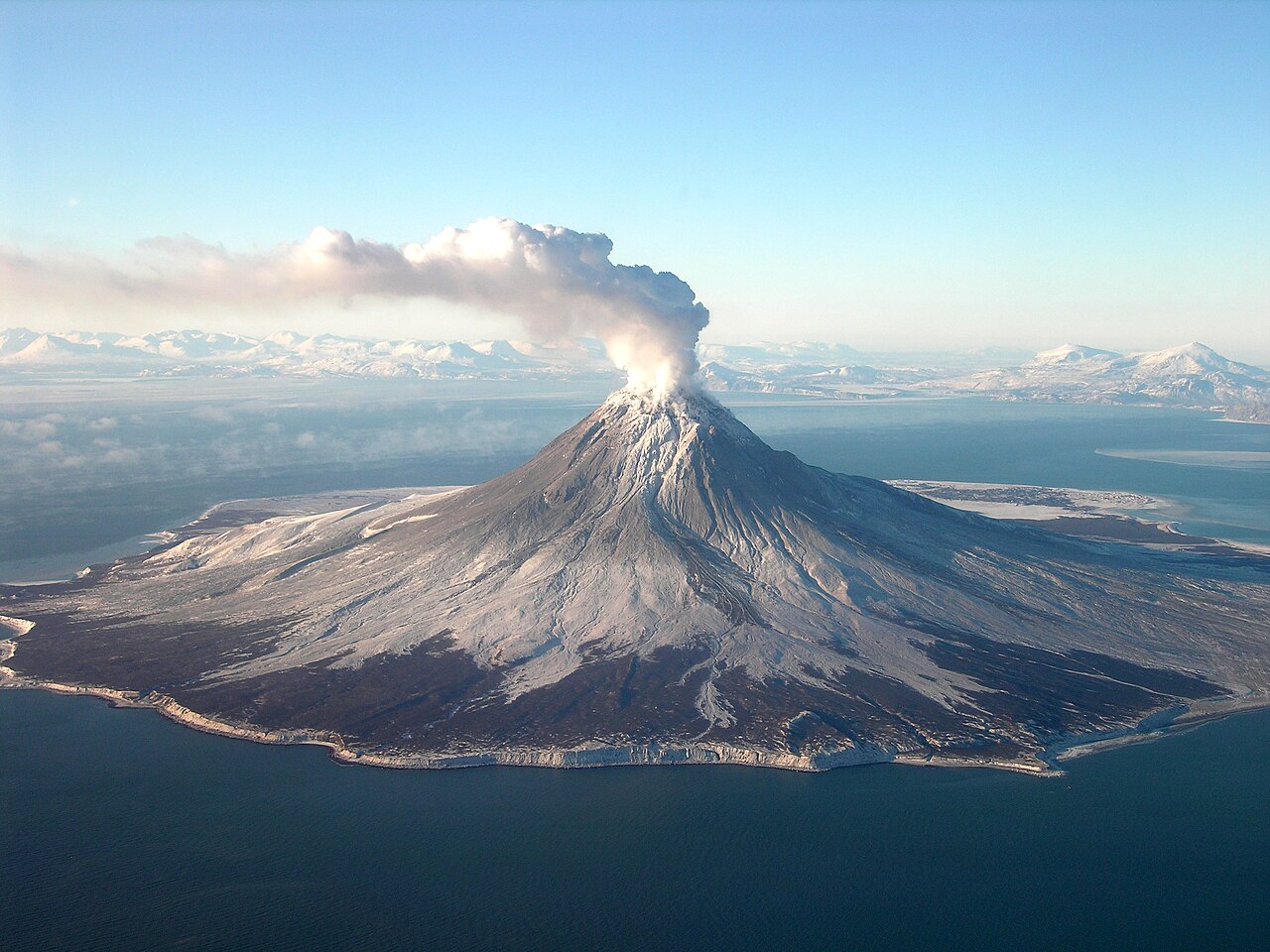
A volcano is an opening in a planet's crust. Through it, hot melted rock, ash and gas escape from deep below the surface. Some volcanoes spill slow rivers of glowing lava. Others blast ash many kilometres into the sky. Most of Earth's volcanoes are hidden under the sea, where new ocean floor is being made. Volcanoes build islands and mountains, create some of the richest soils on Earth, and heat water that people use for power. They can also destroy towns and change the climate of the whole planet. Scientists now watch many volcanoes closely, and they can often give warnings before an eruption begins.
What is inside a volcano, and why does it erupt?
Deep underground, rock can melt into a thick, glowing liquid called . Magma collects in a huge pocket called a magma chamber. A volcano needs three things. It needs that chamber of magma, a long crack or pipe called a conduit that lets the magma rise, and a where it escapes at the surface. Once magma reaches the open air it is called .
Why does magma rise at all? It is lighter than the solid rock around it, so it floats upwards like a bubble in syrup. It also holds dissolved gas, mostly steam and carbon dioxide. As magma climbs, the pressure on it falls and the gas bubbles out. Think of a fizzy drink when you open the lid. If the magma is runny, the gas escapes easily and the eruption is gentle. If the magma is thick and sticky, the gas is trapped until it blows the magma apart.
An eruption can send out three kinds of material. There are volcanic gases, lava, and , which is the name for any solid pieces thrown into the air. Tephra smaller than 2 millimetres is called volcanic ash. Ash is not soft like wood ash. It is made of tiny sharp grains of rock and glass.
Scientists measure how explosive an eruption is with the Volcanic Explosivity Index, or VEI. It runs from 0 for gentle Hawaiian-style eruptions to 8 for the biggest supereruptions.
Why do volcanoes appear where they do?
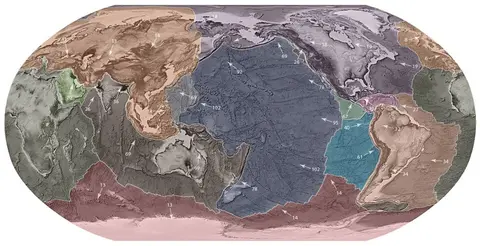
Earth's hard outer shell is broken into huge slabs called . They creep along very slowly, because the hot rock beneath them slowly churns. Most volcanoes sit along the edges of these plates, and most plate edges are on the ocean floor. That is why most of Earth's volcanoes are underwater.
Where two plates move apart, hot rock rises to fill the gap. The drop in pressure lets some of it melt, and new seafloor forms. This happens along the Mid-Atlantic Ridge. Where the ridge pokes above the waves, it makes islands such as Iceland.
Where two plates push together, one often dives beneath the other. This is called . The sinking plate carries water down with it. The water lowers the melting point of the rock above, and forms. This magma is thick and full of gas, so the eruptions are violent. Curved chains of volcanoes called volcanic arcs line these zones. The Pacific Ring of Fire, which includes the Cascades in North America and the islands of Japan and Indonesia, is the best-known example.
A few volcanoes sit far from any plate edge. Many scientists think they sit above , where a column of hot rock rises from deep in Earth. The plate drifts over the hotspot like paper sliding over a candle. Old volcanoes are carried away and new ones form. This explains the chain of the Hawaiian Islands. A continent can also stretch and thin until it cracks, as it is doing in the East African Rift. Volcanoes seldom form where plates slide past each other.
Why is some lava runny and some thick as treacle?
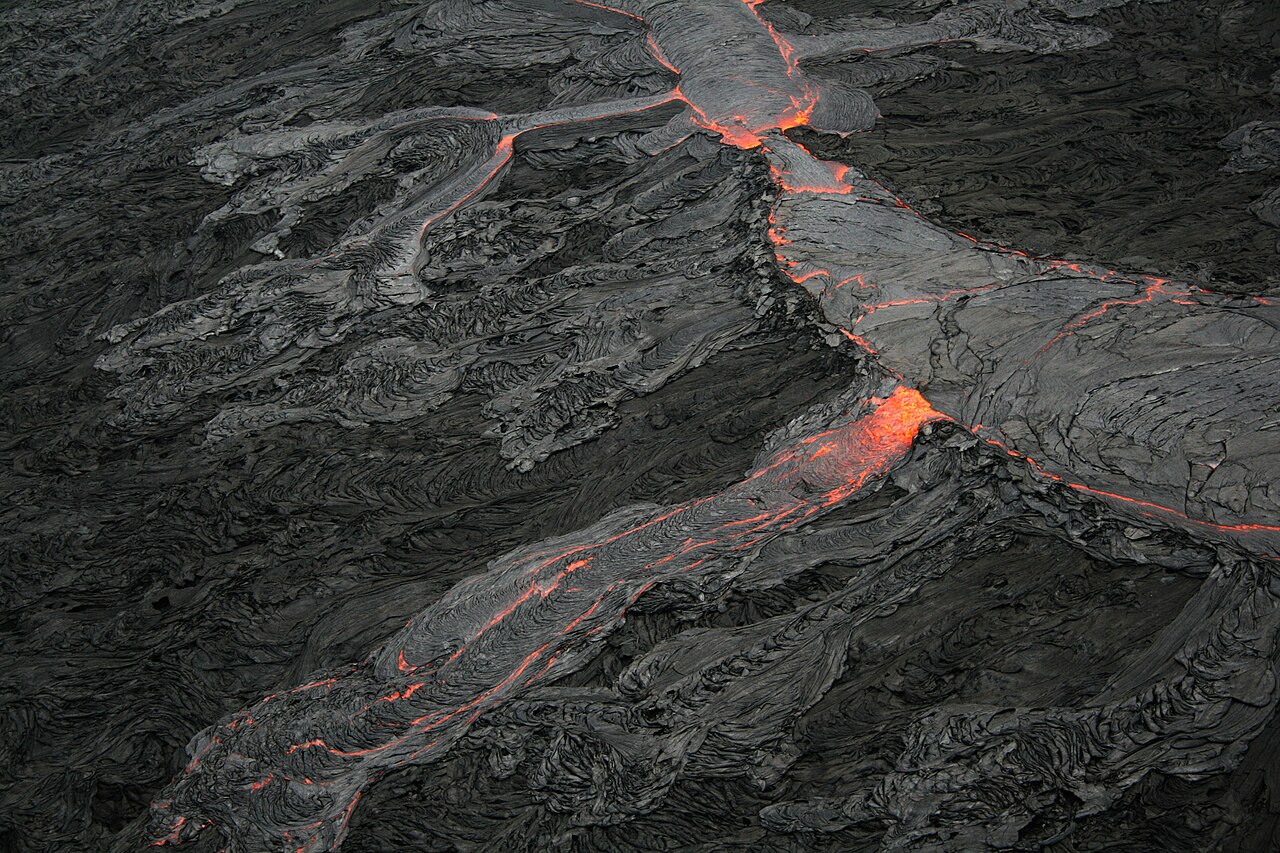
comes in different recipes, and the recipe decides how a volcano behaves. The key ingredient is , a compound that makes thick and sticky. Scientists call thick, silica-rich lava felsic. Thinner lava with little silica is mafic, and it also holds more iron and magnesium.
Mafic lava is hotter and runs freely. It flows long distances and its gas escapes easily, so it usually makes gentle eruptions with fountains and rivers of lava. Hawaii's volcanoes erupt this kind. Its surface cools into two textures, and both names come from Hawaii. Pāhoehoe is smooth and ropey. Aa is rough and clinkery, because the lava is cooler and thicker as it moves.
Felsic lava is stiff. It can barely flow, and it traps gas like a cork in a shaken bottle. Pressure builds until the volcano explodes. Such eruptions can throw out ash, sharp rock fragments and giant pieces called volcanic bombs, some more than a metre across. In between sits intermediate lava, which feeds many of the tall cone-shaped volcanoes found around zones.
Eruptions are named after famous places that show each style. Hawaiian eruptions are gentle and flowing. Strombolian eruptions, named after Stromboli in Italy, throw out glowing fragments in short bursts. Vulcanian eruptions blast apart the plug in the . Plinian eruptions, named after Pliny the Younger who described the one at Vesuvius in 79 CE, send a huge column of ash high into the air.
Why are volcanoes different shapes?
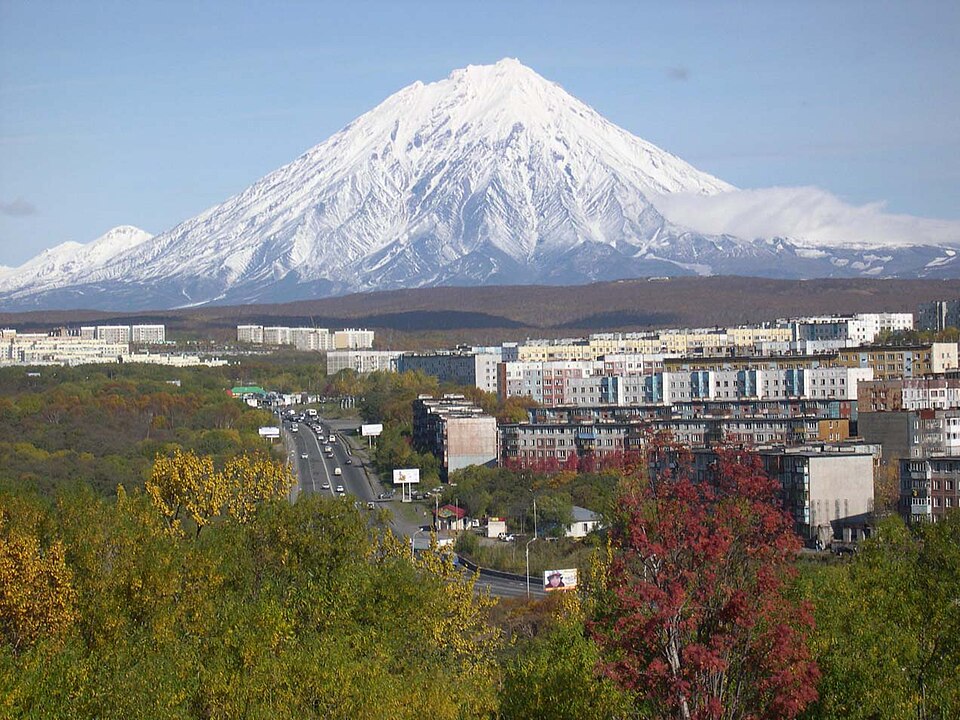
The shape of a volcano is a record of how it has erupted. Runny spreads far before it freezes, so it builds a broad, gently sloping mountain called a shield volcano, named after a warrior's shield laid on the ground. Mauna Loa and Kīlauea in Hawaii are shield volcanoes. Their slopes are usually only 5 to 10 degrees.
Cinder cones are small and steep. They form when gas-rich sprays out cinders, which are fragments of frothy rock that pile up around the . Most are only 30 to 400 metres high, and many erupt only once. Parícutin in Mexico and Sunset Crater in Arizona are cinder cones.
The classic tall, cone-shaped mountain is a stratovolcano, also called a composite volcano. It is built from alternating layers of lava and ash, so it is named after the word strata, meaning layers. Mount Fuji in Japan, Mayon in the Philippines and Vesuvius in Italy are stratovolcanoes. Their slopes reach 30 to 35 degrees. Their thick, gassy magma makes them the most dangerous volcanoes to live near, because they throw out ash and fast, hot clouds of gas and rock.
Very thick lava may pile up above the vent without flowing far. It builds a steep, rounded lump called a lava dome. Domes form inside the craters of other volcanoes, as at Mount St. Helens in the United States. They can collapse or explode, so they are risky too.
Volcanoes can also grow under the sea, and over time some rise above the surface as new islands.
What is a supervolcano?
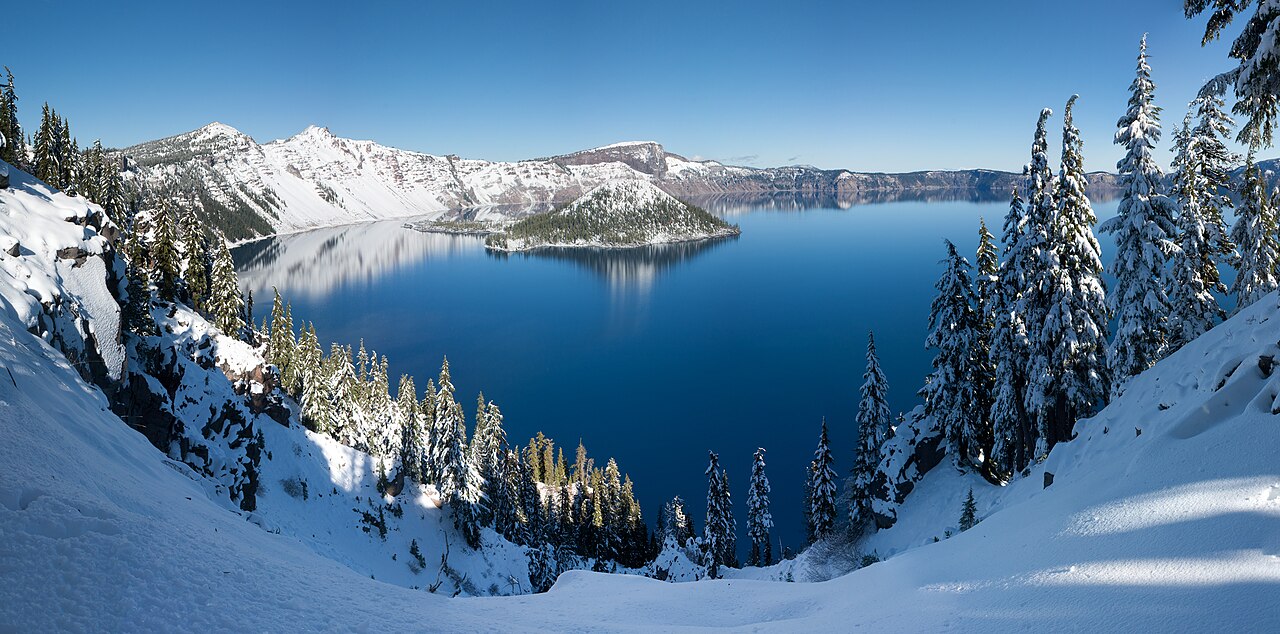
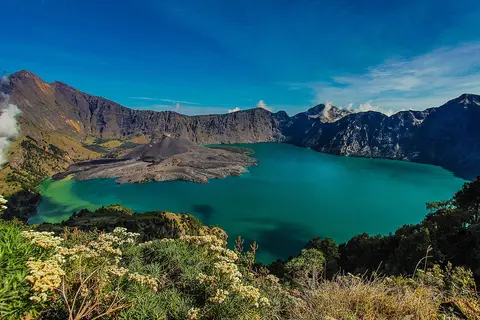
Some volcanoes empty their chambers so violently that the ground above collapses. The great bowl left behind is called a , which comes from the Spanish word for cauldron. Calderas can be many kilometres wide. Crater Lake in Oregon fills a caldera that formed when a mountain called Mount Mazama collapsed in a huge eruption about 7,700 years ago. The lake is now the deepest in the United States.
A supervolcano is a volcano that has had at least one eruption producing more than 1,000 cubic kilometres of material. That is enough to bury a large country. These eruptions are at the top of the scale, with a VEI of 8. They are rare. Four are known from the last million years, and about 60 have been found in the rock record over millions of years.
Famous supervolcano sites include Yellowstone in the United States, Lake Toba in Indonesia, Lake Taupō in New Zealand and Ngorongoro Crater in Tanzania. Yellowstone has a long rest between big eruptions of around 700,000 years, and Toba around 380,000 years.
A supereruption would affect the whole planet. Ash would cover huge areas, and sulfur gas in the upper atmosphere would form tiny droplets that reflect sunlight. Earth would cool for years in what is called a volcanic winter. Some scientists think the Toba eruption about 70,000 years ago did this. Others doubt how big its effect on people was. Nobody expects a supereruption soon, and monitoring would give signs beforehand.
What are geysers, hot springs and mud volcanoes?
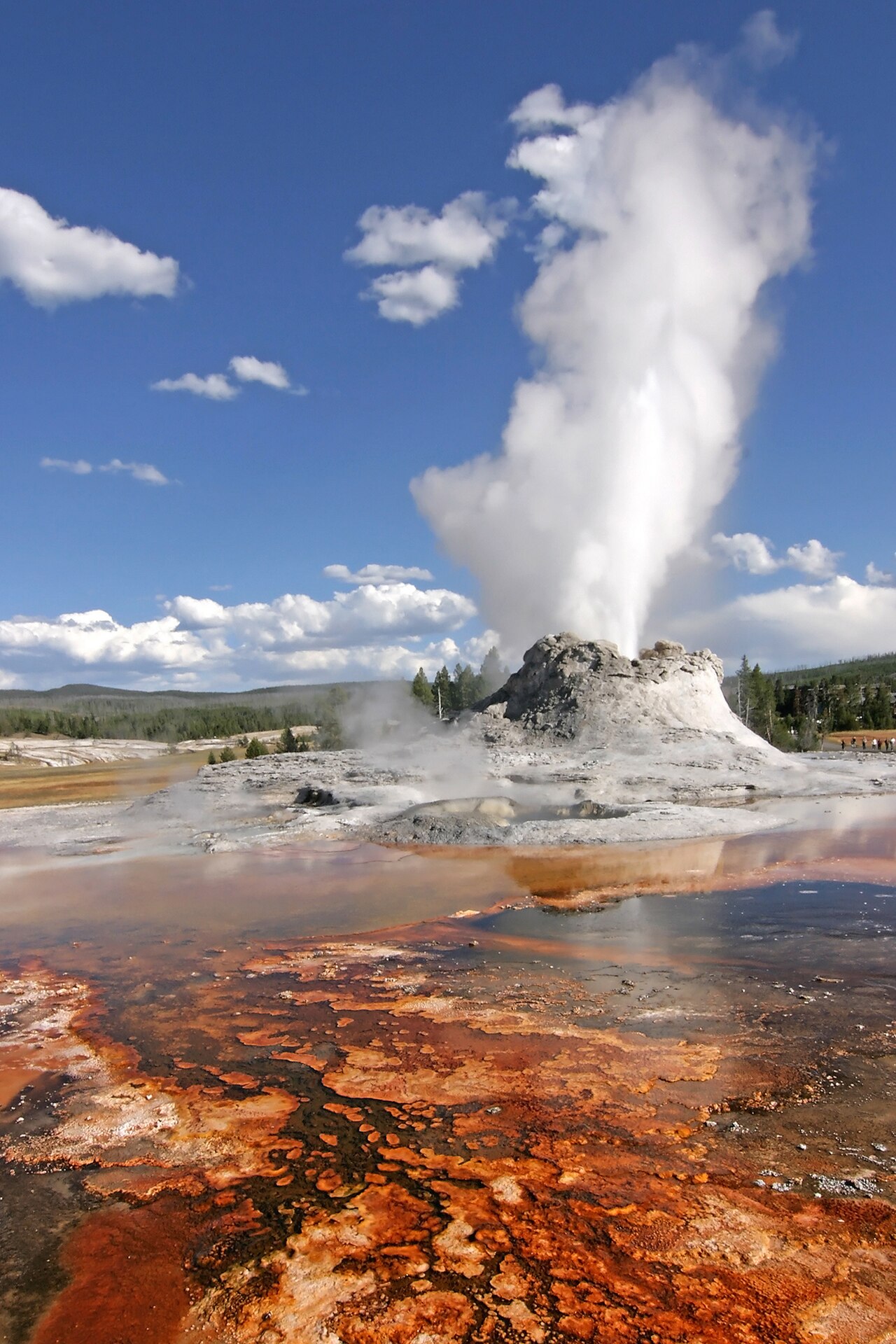
Not every volcanic feature involves . Where hot rock lies near the surface, it heats groundwater, and the water makes dramatic displays. Scientists call these hydrothermal features.
A hot spring is water warmed underground that flows to the surface. A fumarole is a that puffs out steam and volcanic gases. Those that give off sulfur gas smell of rotten eggs. In a mud pot, steam and gas bubble through wet clay, which plops and splutters.
A geyser is a hot spring that erupts. Water in underground channels is heated above its usual boiling point by the pressure around it. Some of it flashes into steam, which shoves the water above it out in a tall jet. Then the pool refills and the process starts again. Almost half of the world's active geysers are in Yellowstone National Park in the United States, which sits on top of a supervolcano.
Mud volcanoes are cone-shaped mounds that push out mud, water and gas. They do not always have anything to do with molten , and they are far cooler than true volcanoes. The largest are about 10 kilometres wide and 700 metres high. They are found in places such as Azerbaijan, Indonesia and Central Asia.
Hydrothermal features are useful clues. Their presence tells scientists that heat from magma or hot rock is close below.
How have volcanoes changed human history?
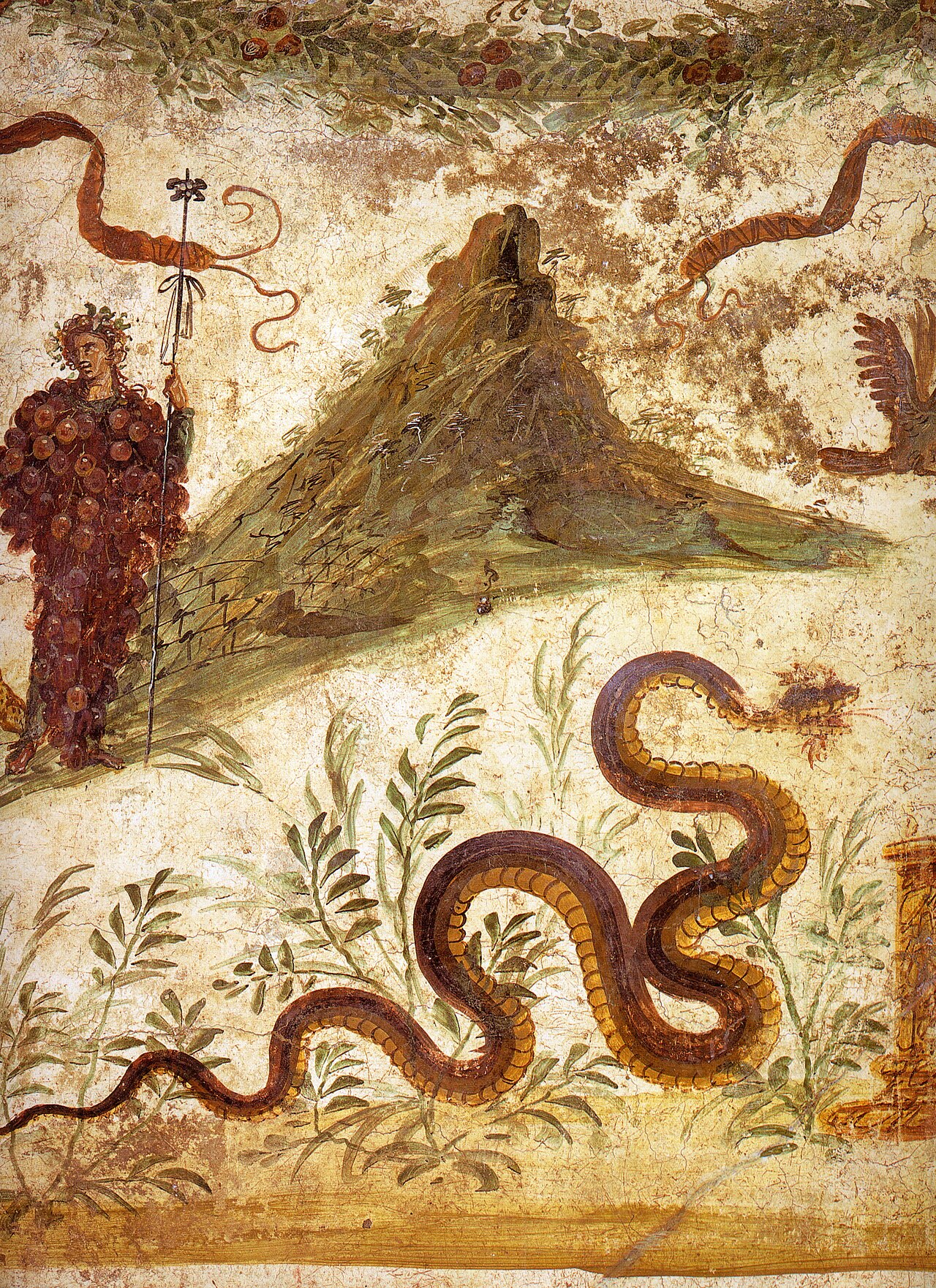
Volcanoes are among the most powerful forces on Earth, and people have always lived beside them. In 79 CE, Vesuvius erupted without warning. Roman writers had described its slopes as covered with gardens and vineyards. The eruption buried the towns of Pompeii and Herculaneum under ash and hot flows of gas and rock. Pliny the Younger watched from across the bay and wrote an account that scientists still use. In 1902, a hot cloud of gas and ash from Mount Pelée destroyed the town of Saint-Pierre on Martinique.
Eruptions can change the weather. In 1815 the Tambora eruption in Indonesia sent so much sulfur into the sky that 1816 became known as the Year Without a Summer in Europe and North America. Crops failed in cold, wet weather. Volcanic ash can also be dangerous to aircraft, because it melts inside jet engines, as the next section shows.
Other hazards include , which are fast mudflows made when ash mixes with water or melted snow. Poisonous gases can drift down valleys. Eruptions can also set off landslides.
Volcanoes have also given people a lot. Ash and weathered make some of the most fertile soil on Earth, which is why farmers settle on their slopes. Soft volcanic rock called tuff has been used for building since Roman times, and the Rapa Nui people carved most of the giant moai statues of Easter Island from it. Volcanic heat can be tapped as geothermal power. Volcanic regions also bring valuable metal ores and tourism.
Which recent eruptions have made the news?
Three eruptions this century show how far the effects of a volcano can reach.
In April 2010, the Eyjafjallajökull volcano in Iceland threw ash high into the air. Winds carried it over Europe, and authorities closed much of the continent's airspace for about a week, because ash can stop jet engines. About 100,000 flights were cancelled and about 10 million journeys were disrupted. It was the biggest shutdown of European air traffic since the Second World War. The eruption itself was modest. The ash mattered because it drifted over some of the busiest skies on Earth.
On 15 January 2022, the Hunga Tonga-Hunga Ha'apai volcano in the South Pacific blew itself apart. Its plume rose about 58 kilometres, the highest ever recorded, into the layer of air above the stratosphere. The blast and the sea waves it set off crossed the Pacific, and the tsunami killed at least five people in Tonga and Peru.
In Iceland, began collecting under the Reykjanes peninsula. On 10 November 2023, earthquakes shook the nearby town of Grindavík so hard that its 3,790 residents were told to leave. Instruments had picked up the magma moving, so people were out of the way when an eruption began on 18 December 2023, about 3 kilometres from the town. More eruptions followed. As of November 2026, none is under way, but magma is still collecting beneath the area.
How do scientists watch volcanoes and warn people?
Volcanologists are scientists who study volcanoes. Before an eruption, rising gives off signs. Tiny earthquakes shake the ground, and instruments called seismometers record them. The ground may swell as magma pushes up from below. Gas instruments can pick up changes in the amount of carbon dioxide and sulfur dioxide coming out of the . Satellites and drones add further views.
Monitoring has saved many lives. On well-watched volcanoes it can often give warnings of hours or, more usually, days before an eruption. In 1991, Mount Pinatubo in the Philippines erupted violently after centuries asleep. Scientists spotted the signs in time, and the evacuation is believed to have saved around 20,000 lives. Mount Etna in Italy is another well-monitored volcano. A 2021 review found 77 deaths from its eruptions since 1536, and none since 1987.
Yet volcanoes can still surprise us. A volcano may seem extinct for thousands of years, then wake up. Chaitén in Chile erupted in 2008 after a long sleep. Soufrière Hills on Montserrat woke up in 1995 and turned the island's capital, Plymouth, into a ghost town. Because of this, scientists no longer trust a neat sorting into active, dormant and extinct. Many countries use alert levels with colours or numbers to tell people how worried to be.
Even so, nobody can forecast an exact date far ahead. Forecasts are about probability and risk. Some eruptions give only hours of warning, and some give none that is useful.
Are there volcanoes on other worlds?
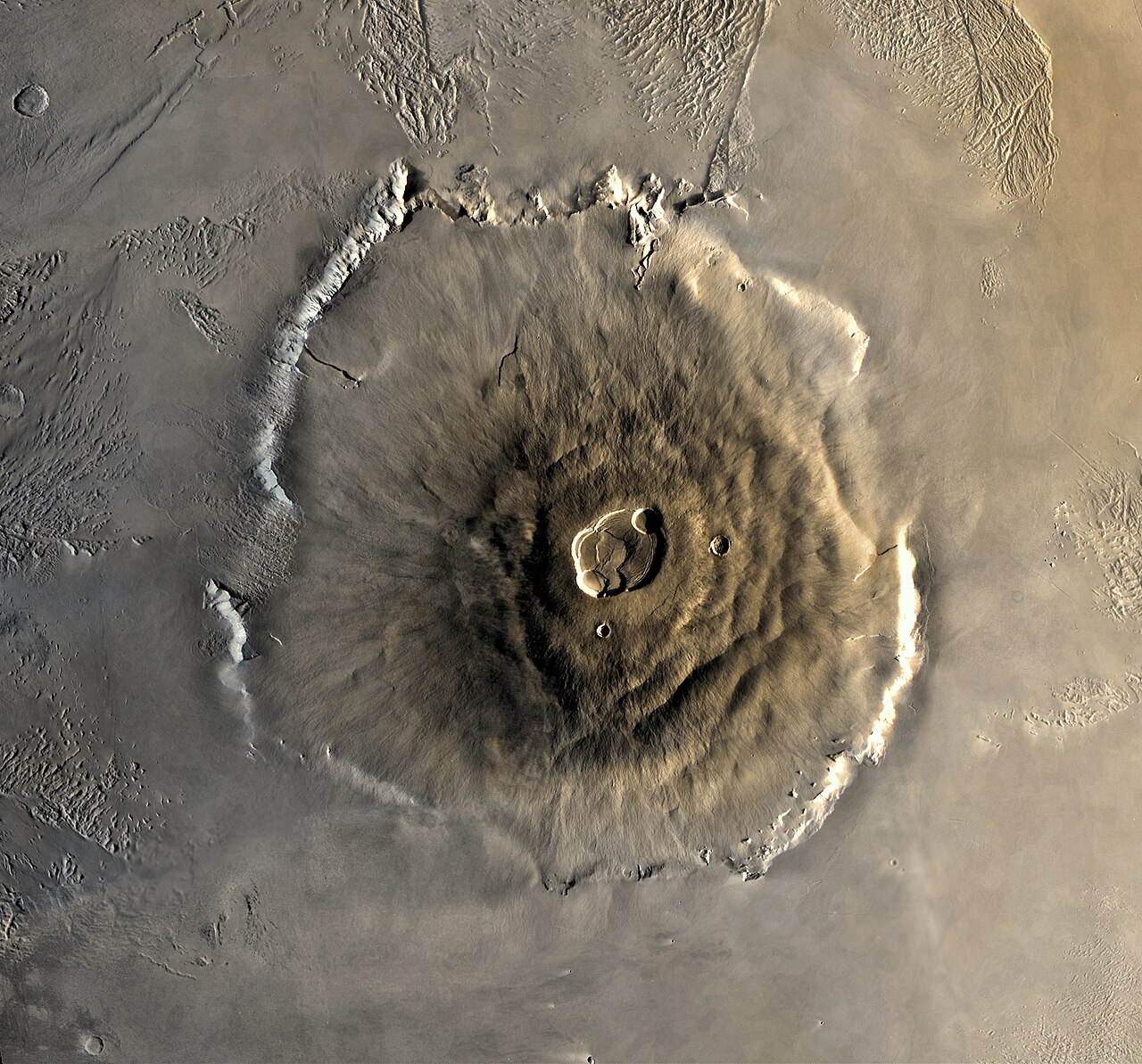
Volcanoes are not unique to Earth. Mars has the largest known volcano in the Solar System, Olympus Mons. It is a shield volcano about 22 kilometres high, which is roughly two and a half times the height of Mount Everest. Mars has several more giant volcanoes. All are thought to have stopped erupting millions of years ago, though some evidence points to more recent activity.
Venus has a surface that is about 90 per cent basalt, which shows that volcanoes shaped it. Are any of its volcanoes erupting today? The best evidence comes from old radar images. In 2023, scientists re-examined pictures taken by the Magellan spacecraft in 1991. They found that a on Maat Mons, Venus's highest volcano, had grown and changed shape over eight months. In 2024, another team found fresh-looking flows at two other places. Together, these are the best sign yet that Venus is still volcanically active. Earth's Moon has no active volcanoes, though the dark patches we see on its face are ancient lava plains.
The most volcanic place we know is Io, a moon of Jupiter. Jupiter's gravity squeezes and stretches Io, and the friction heats its inside. As a result Io is covered with volcanoes that erupt sulfur and rock, and its surface is constantly being renewed. Its lava is hotter than any other seen in the Solar System, above 1,500 degrees Celsius.
Colder worlds have , which erupt icy mixtures instead of molten rock. Voyager 2 saw them on Neptune's moon Triton in 1989. In 2005 the Cassini spacecraft photographed fountains of ice erupting from Saturn's moon Enceladus.
Explore Next
Your audio story keeps playing while you look around.
Words to Know
- caldera
- A large bowl-shaped hollow left when a volcano collapses after emptying its magma chamber.
- cryovolcano
- A volcano that erupts ice, water or gases instead of molten rock.
- hotspot
- A place where hot rock rises from deep in Earth to make volcanoes far from plate edges.
- lahar
- A fast-moving mudflow of volcanic ash and water.
- lava
- Magma that has reached the surface and flows over it.
- magma
- Molten rock that is still underground.
- pyroclastic flow
- A fast, hot cloud of gas, ash and rock that rushes down a volcano's slopes.
- silica
- A compound in magma that makes it thick and sticky.
- subduction
- When one tectonic plate dives beneath another.
- tectonic plate
- One of the huge slabs that make up Earth's hard outer shell.
- tephra
- Solid pieces of rock thrown into the air by an eruption, from ash to boulders.
- vent
- The opening where magma, gas and ash escape to the surface.