Forest
Where trees crowd together to make homes, weather and the air we breathe.
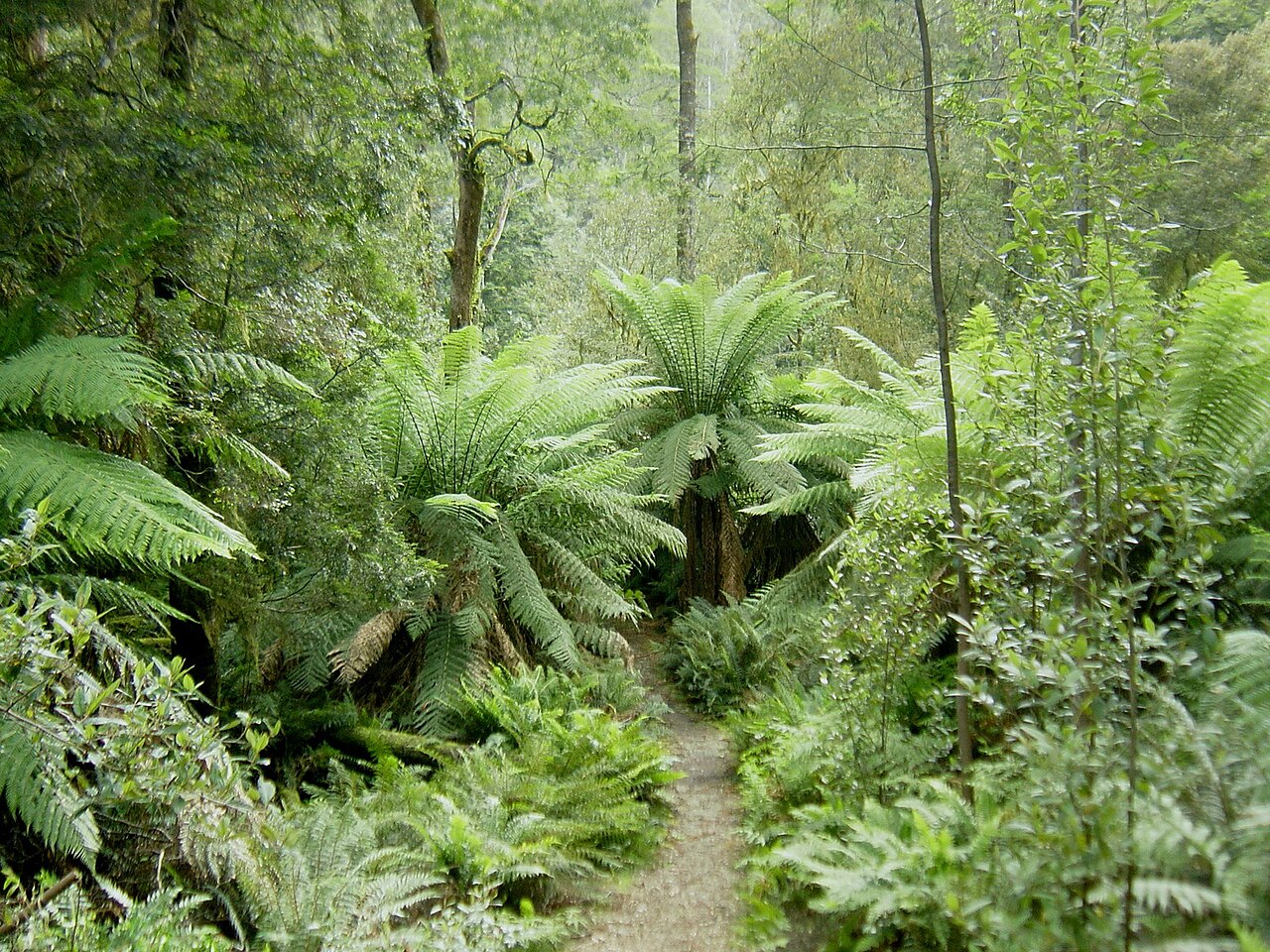
A forest is a community of living things dominated by trees. Forests cover about 32 per cent of the world's land, which is more than 4 billion hectares, and they grow from the steamy tropics to the frozen north. They hold about 80 per cent of the plant material on land and make a huge share of the food that powers life. Forests clean water, store carbon, shelter millions of species and give homes and work to many people. They can also change the weather. Yet forests are shrinking in many places, and how we treat them in this century will shape the future of the planet.
What counts as a forest?
It sounds like an easy question, but scientists use more than 800 different definitions of a forest. Everyone agrees that a forest has lots of trees. The argument is about how many, how tall and how big.
The United Nations Food and Agriculture Organization, or FAO, uses one common rule. A forest is land of more than 0.5 hectares with trees taller than 5 metres and a covering more than 10 per cent of the ground. Canopy means the layer of leaves and branches. Land used mainly for farms or towns does not count. By this rule, forests covered about 4.14 billion hectares in 2025, or about 32 per cent of the world's land.
Other definitions use the law or how land is used. A legal forest might have no trees at all. A timber area that has recently been cut still counts as a forest in many countries, because it will grow trees again.
The word itself shows how meanings change. It comes from the Medieval Latin foresta. Early kings, including Charlemagne, used it for land kept for royal hunting, whether or not trees grew there. The Norman rulers of England brought the word over as a legal term. Over time, people linked it with woodland, and that became its main meaning.
Forests are the largest ecosystems on land. About 45 per cent of forest land is in the tropics. The next largest share is in the cold subarctic, followed by temperate and subtropical lands.
When did the first forests grow?
For most of Earth's history there were no forests at all. Plants lived at the water's edge and stayed small. The first known forests appeared in the Middle Devonian period, about 390 million years ago. They were made of plants such as Calamophyton, which are not much like modern trees.
A little later, in the Late Devonian, came Archaeopteris. It looked like a tree and a fern mixed together, and grew 20 metres tall or more. It spread quickly, from the Equator to cold lands near the poles. Archaeopteris was the first known plant to cast shade. Its roots helped form soil. It dropped its fronds on the ground, and the litter built up into a layer that fed the soil.
The effects spread to the water. The fallen leaves changed how fresh water flowed and gave it food. This helped freshwater fish to thrive. Early forests also changed the air and the climate, because growing plants take in carbon dioxide.
Wood itself helped. The wood of a tree contains lignin, a tough material that rots slowly. This is why trunks and dead wood can last for years in a forest. Today the world's forests hold about 606 gigatonnes of living material, above and below ground, and 59 gigatonnes of dead wood. A gigatonne is a billion tonnes.
So the first forests did more than grow tall. They changed the land, the water and the air, and prepared the Earth for the animals that came after.
What are the layers of a forest?
A forest is like a tall building with different floors. Each layer has its own light, moisture and living things.
The forest floor is covered in dead leaves and rotting logs. Animals called detritivores, such as worms, millipedes and many insects, break this material down into new soil. The leaf litter keeps the soil moist, stops erosion and protects roots from extreme heat and cold. Many insects spend the winter in it, and amphibians and birds hunt there.
Under the soil, threads of fungus called mycelium link with tree roots. This network is called a . The fungus moves nutrients from rotting material to the trees, and the trees feed the fungus.
The is the layer of bushes, shrubs and young trees. They are adapted to life in the shade.
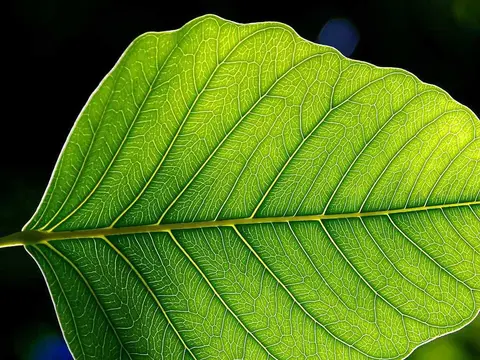
The is the roof. It is formed by the leaves and branches of the mature trees, which catch most of the sunlight. This is the most productive part of the forest, where most food is made. It makes a shady umbrella for everything below.
In tropical rainforests, a few giant trees poke out above the canopy. They form the emergent layer.
Trees 30 metres tall or more create a vertical world with many niches. A niche is a way of living. Birds, bats, monkeys, insects and plants that grow on branches each find a place in it. The more layers and the more kinds of tree, the more complex the forest.
The tallest known living tree is Hyperion, a coast redwood in California about 116 metres tall. One of the oldest is Methuselah, a bristlecone pine in California that is about 4,800 years old.
Which forests grow in cool and cold lands?
Forests change with the climate as you travel from the poles towards the Equator.
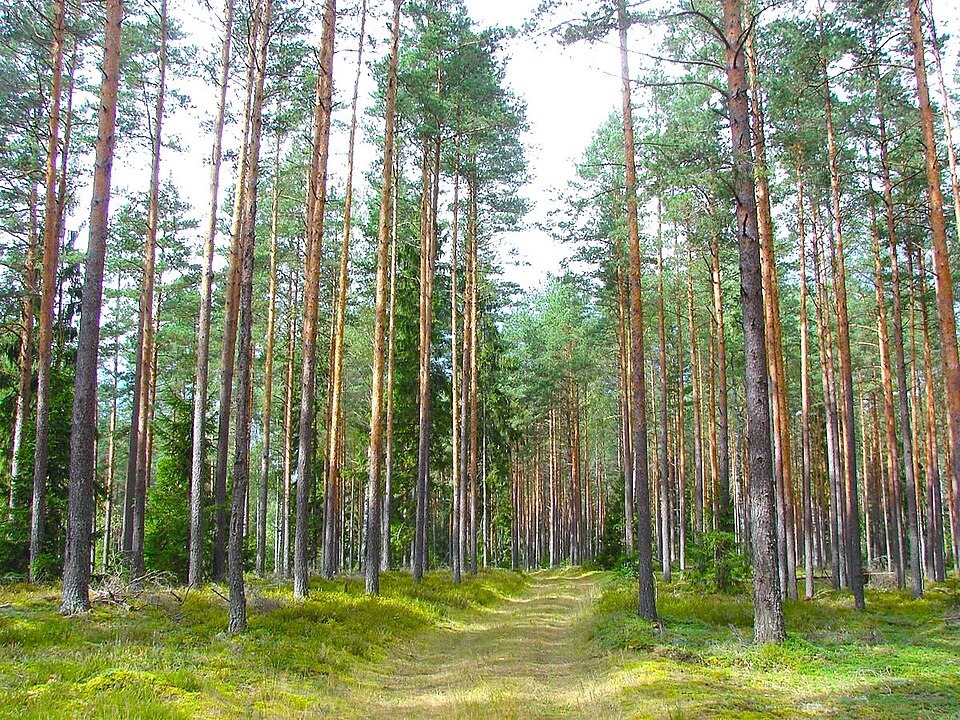
, also called taiga, grow in the cold subarctic zone, mostly between 53 and 67 degrees north. They are mostly evergreen , such as pines, spruces, larches and firs. Conifers have needles and cones, and they keep their leaves in winter. They can grow on poor soils. Boreal forests have fewer kinds of tree, spread over very large areas. Further north the trees thin out into open woodland, which blends into the tundra.
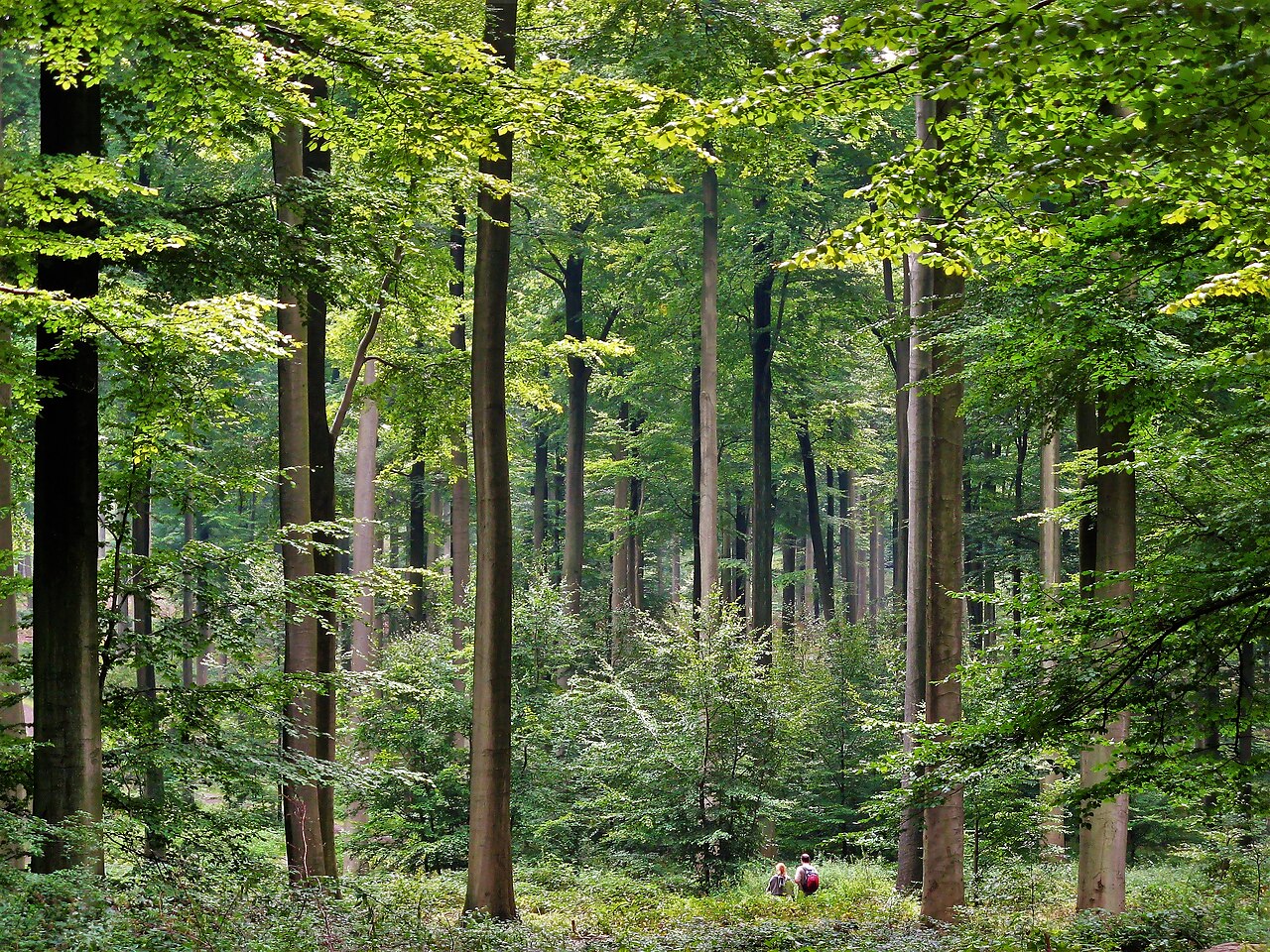
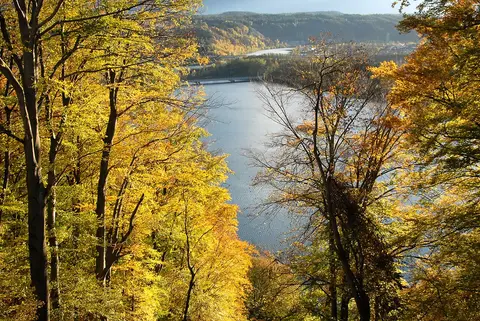
Temperate forests grow in the middle latitudes, where there are four seasons. Broadleaf forests of oak, beech and maple shed their leaves in autumn. These are trees. Temperate broadleaf forests are found in places such as the eastern United States, China and Japan, and Europe. Temperate coniferous forests have evergreen trees. In wetter places, such as Tasmania, Chile and Japan, there are broadleaf evergreen temperate rainforests. Mediterranean-type forests in places such as Australia, California and central Chile have tough, hard leaves to survive dry summers.
As a general rule, forests of broadleaf trees hold more species than forests of conifers. But exceptions exist.
Temperate forests have long been cleared for farms and towns. Over the past 2,000 years, the area of forest in Europe has dropped from about 80 per cent of the land to about 34 per cent.
Why are tropical forests so rich in life?
Near the Equator it is warm all year, so trees can grow all year. Tropical forests hold the greatest variety of life on land.
Tropical moist forests include the rainforest of the Amazon Basin, the high forests of the Congo Basin, the swampy peat forests and the dipterocarp forests of Southeast Asia. Seasonal tropical forests, often called jungle, stretch from the rainforest zone to the Tropic of Cancer and the Tropic of Capricorn. Mountain forests are included too. They change from lower to upper forest as you climb.
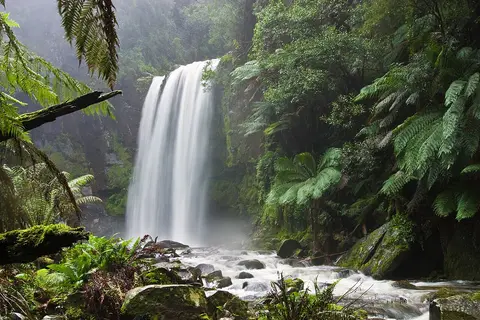
Most tropical rainforests lie within about 10 degrees of the Equator. Trees there stay green all year, and the forests are full of many tree species.
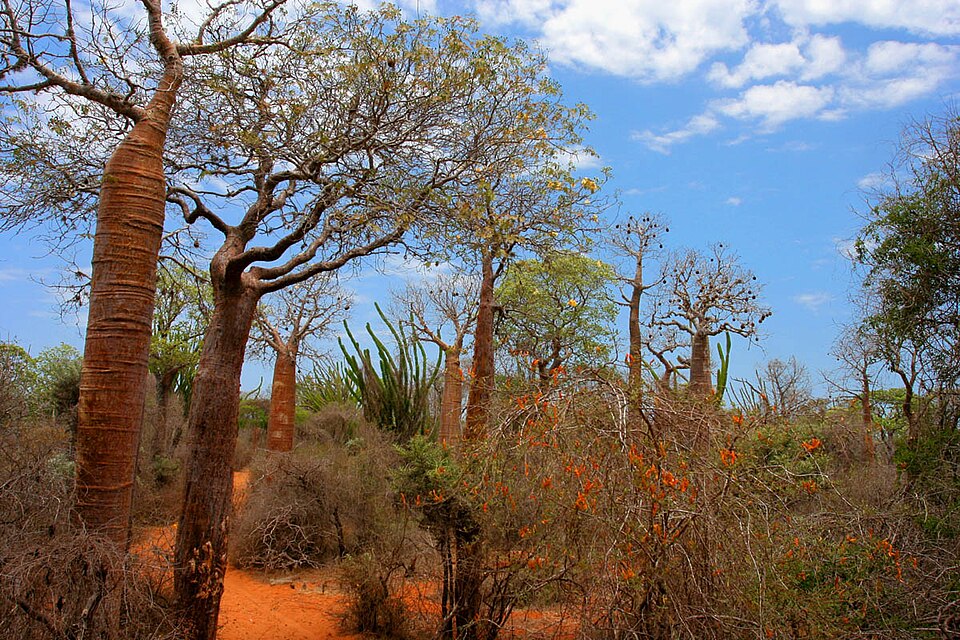
Further out, rain falls in only one season. Tropical dry forests cope with a long dry spell. Most trees drop their leaves for several months to save water. Where drought is long and grazing animals are many, the forest turns into thorn forest. This is a low, dense forest of thorny plants. The spiny forest in south-western Madagascar is a famous example, with baobab trees standing above dry scrub.
Where soil is very poor, or fire and grazing keep coming back, trees become sparse. The land becomes . A savanna is a mix of woodland and grassland, with trees spread so widely that the does not close. Sunlight reaches the ground, so grass grows.
About 45 per cent of the world's forest land is in the tropics. It is also where most happens today.
How do forests make rain and feed the world?
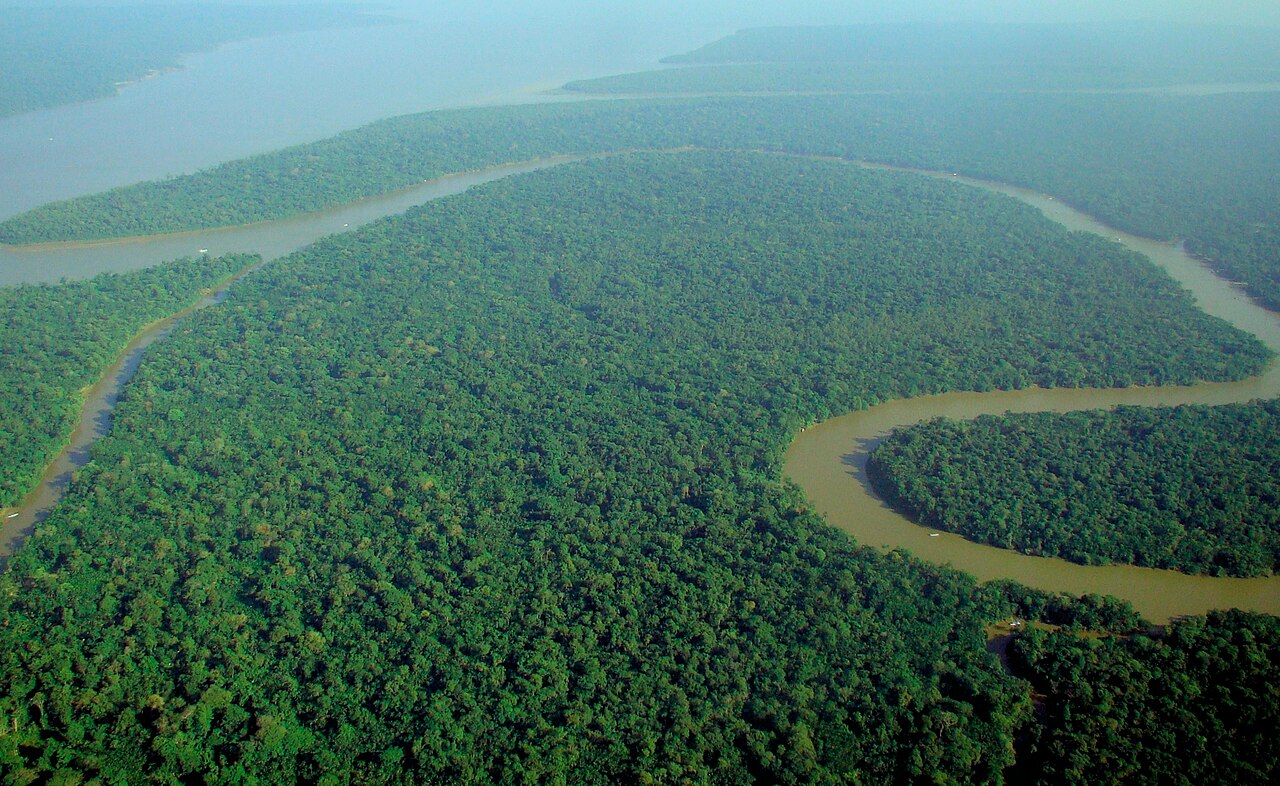
Forests do more than stand there. They run the planet's systems.
About 75 per cent of all the new plant food made on Earth is made in forests. They contain about 80 per cent of the plant material on land. Each year, tropical forests add about 21.9 gigatonnes of new plant material. Temperate forests add about 8.1 and about 2.6.
Trees take in carbon dioxide and give out oxygen. A full-grown tree makes about 100 kilograms of net oxygen a year. Forests are also a , which means they store more carbon than they release. That helps to limit climate change. But a forest can turn into a carbon source if it is cut, burned or loses its variety of plants. Studies suggest the typical tropical forest might become a carbon source by the 2060s.
Forests also help make rain. In the Amazon, trees release water vapour from their leaves before the wet season. This helps trigger rain two to three months earlier than the climate alone would allow. Research from 2017 shows that cutting forest can lead to drought. Where tree cover falls below about 40 to 45 per cent, a forest can switch quickly into .
Forests clean water, soften floods and keep soil in place. They are a genetic reserve, which means a store of the wild species and varieties that people may need one day. They also supply timber, fuel and food.
Who depends on forests?
Millions of people depend on forests for fuelwood, food and animal fodder. Scientists call them forest-dependent people. In India, about 22 per cent of the population belongs to forest-dependent communities. Many practise , which means growing crops among trees. In Ghana, people rely on timber and wild meat from the forest. Indigenous peoples of the Amazon live in and care for rainforest that has been their home for generations.
For poorer households, forests supply food and fuel for home use. Richer households tend to earn more cash from them. Either way, forests make communities more able to cope with hard times.
Indigenous peoples have a special role. Their lands hold at least 36 per cent of the world's intact forest, and these lands tend to have more wildlife and less . Many Indigenous groups were forced from their forests during colonial times, and many still have little say in how forests are managed. In Wisconsin in the United States, forests managed by Indigenous peoples have more kinds of plant, fewer invasive species and more young trees than forests nearby. In the Amazon, traditional farming among trees builds up wildlife.
Forests can also cost people something. They may harbour dangerous animals or diseases, and they can take up land that could grow food. Even so, spending time in forests can lower stress and improve health. Some schools hold lessons among the trees, so that children learn science and teamwork outdoors.
Why are forests disappearing?
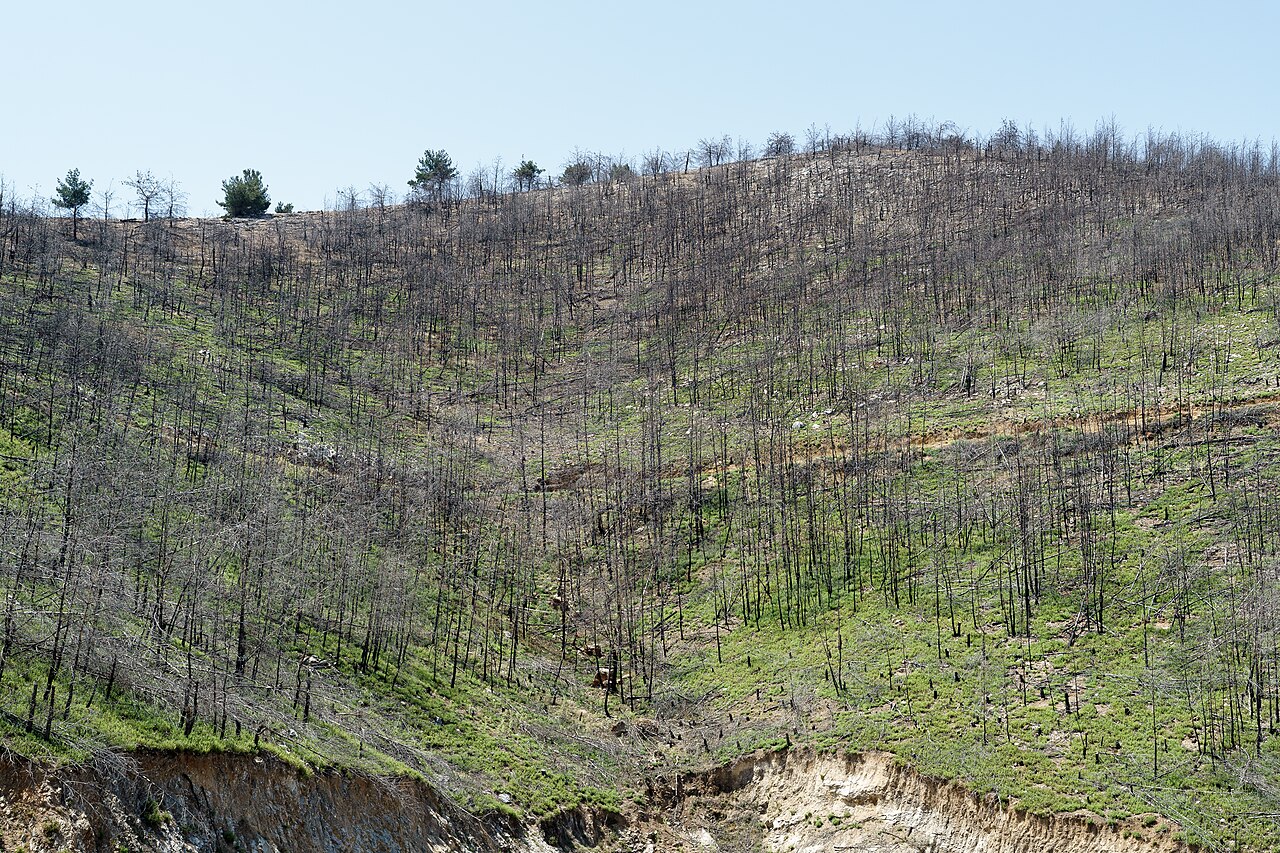
happens when people remove trees by cutting or burning, usually to harvest timber or to clear land for farming. Most of it now happens in the tropics. The vast majority is driven by four products: wood, beef, soy and palm oil.
This is not new. Over 2,000 years, forest in Europe fell from about 80 per cent of the land to about 34 per cent. Large areas were also cleared in China. In the eastern United States, only 0.1 per cent of the land was left undisturbed.
Other harm comes from fire, disease, insects, storms, acid rain and invasive species. Some fires are natural, and some are started by people. Fire is part of life in many forests. The cones of some pines open only in the heat of a fire and drop their seeds onto freshly cleared ground. A burned hillside like the one on the Greek island of Thasos may regrow, but it takes years.
The FAO estimates that 489 million hectares of forest were lost to deforestation between 1990 and 2025. The yearly rate has fallen, from about 17.6 million hectares in the 1990s to about 10.9 million hectares a year between 2015 and 2025. Counting new forest growth, the net loss over that decade was about 4.1 million hectares a year.
Forests also break into fragments. About 49 per cent of the world's forest is fairly intact. About 9 per cent sits in small patches with little connection to other forest. About 80 per cent of forest lies in patches larger than 1 million hectares, but the other 20 per cent is split into more than 34 million patches. Most are smaller than 1,000 hectares.
Can we grow forests back?
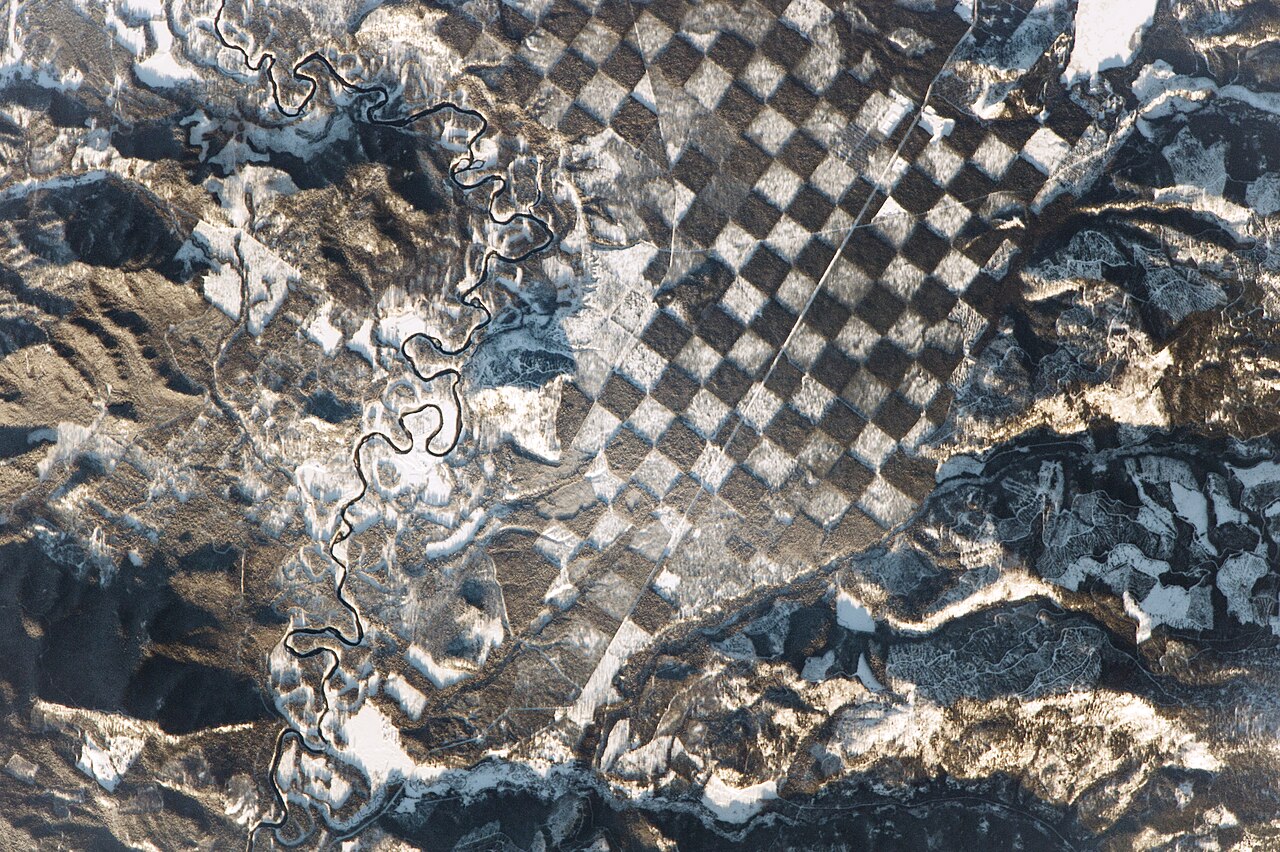
In many places, yes. When forest area in a region turns from shrinking to growing, scientists call it the forest transition. It happens in a few ways. People plant tree farms, farmers grow trees on their land, or old fields are left alone and woods return on their own.
China banned logging in some regions in 1998, after erosion and flooding caused harm. Tree-planting programmes in China, India, the United States and Vietnam have added more than 7 million hectares of new forest a year. The net loss of forest, after counting new growth, fell from about 10.7 million hectares a year in the 1990s to about 4.1 million hectares a year between 2015 and 2025. Even so, the world was not on track to meet a United Nations target of growing forest area by 3 per cent by 2030. A new forest is also not the same as an old one. It holds fewer species and stores less carbon.
Some countries have done well. Latvia has about 3.27 million hectares of forest, about half its land. Its forests have grown by more than 150 per cent since 1935, mostly on land no longer used for farming. In Canada, forest companies must make sure that cut areas grow back. About 813 million hectares of forest around the world, about a fifth of the total, are in protected areas.
The IPCC, the United Nations climate science panel, says the best result comes from growing forest stocks and harvesting timber sustainably. Sustainable forest management balances nature, people and the economy.
Explore Next
Your audio story keeps playing while you look around.
Words to Know
- agroforestry
- Growing crops and trees together on the same land.
- boreal forest
- A cold evergreen forest of the far north, also called taiga.
- canopy
- The roof of a forest, made of the leaves and branches of mature trees.
- carbon sink
- Something that takes in and stores more carbon than it gives out.
- conifer
- A tree with needles and cones, such as a pine or a spruce.
- deciduous
- Describes trees that lose their leaves in autumn or in a dry season.
- deforestation
- The removal of trees from a forest, by cutting or burning.
- mycorrhizal network
- A web of fungus threads linked to tree roots that shares nutrients.
- old-growth forest
- A forest with natural patterns of life that has not been cut down and regrown.
- savanna
- A grassland with trees spread so widely that the canopy does not close.
- understorey
- The layer of shrubs and young trees that grows in the shade below the canopy.