Rainforest
Warm, wet and crowded with life, from the forest floor to the treetops.
A rainforest is a forest with a thick, unbroken roof of leaves, a damp climate and an enormous variety of living things. Most people picture the hot, steamy tropical kind, such as the Amazon, but cool temperate rainforests exist too. Rainforests cover only a small part of the planet, yet scientists estimate that they hold somewhere between 40% and 75% of all species. Millions of kinds of plants, insects and microbes there may still have no name. The trees recycle nutrients so quickly that the soil beneath them is often poor. Today, rainforests are being cleared faster than they can recover.
What makes a forest a rainforest?
Not every wet forest is a rainforest. Scientists look for a set of features. The trees form a closed, continuous , which is a roof of leaves high above the ground. The air is humid, and a damp layer of rotting leaves covers the soil. Plants that need moisture thrive there. , which are plants that grow on other plants without harming them, perch on branches. , which are woody vines, climb the trunks. And fire is rare, because the forest is too wet to burn.
The two biggest kinds are rainforests and rainforests. Smaller types have names of their own, such as subtropical, coastal, cloud forest and even dry rainforest. Cloud forests grow high on mountains, where mist hangs among the trees.
Rainforests matter far beyond their size. Estimates of how many of the world's species live in them range from 40% to 75%, and nobody knows the true figure. Millions of plants, insects and microbes there may still be undiscovered. Over a quarter of natural medicines have been found in tropical rainforests, which is why they have been called the world's largest pharmacy.
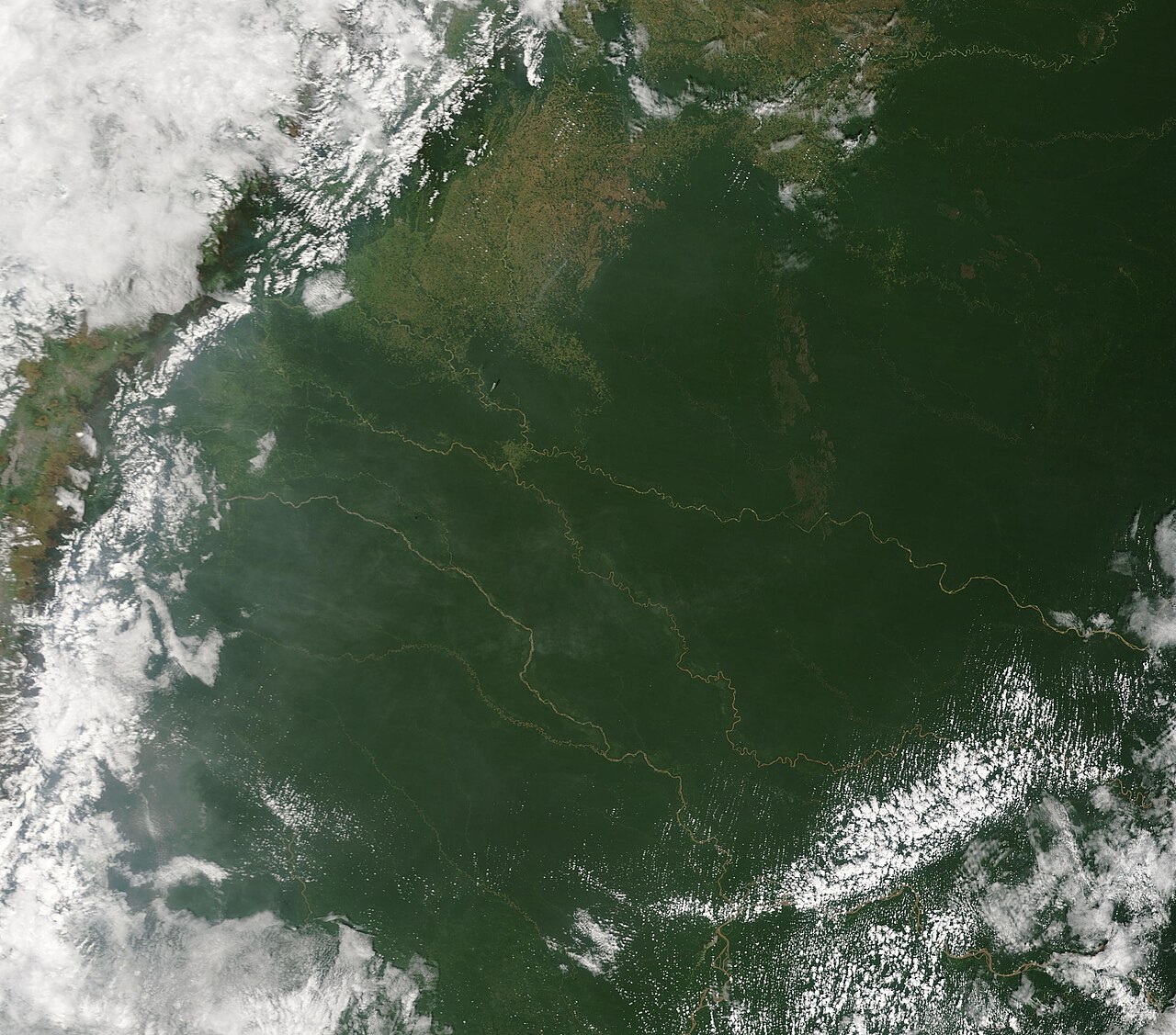
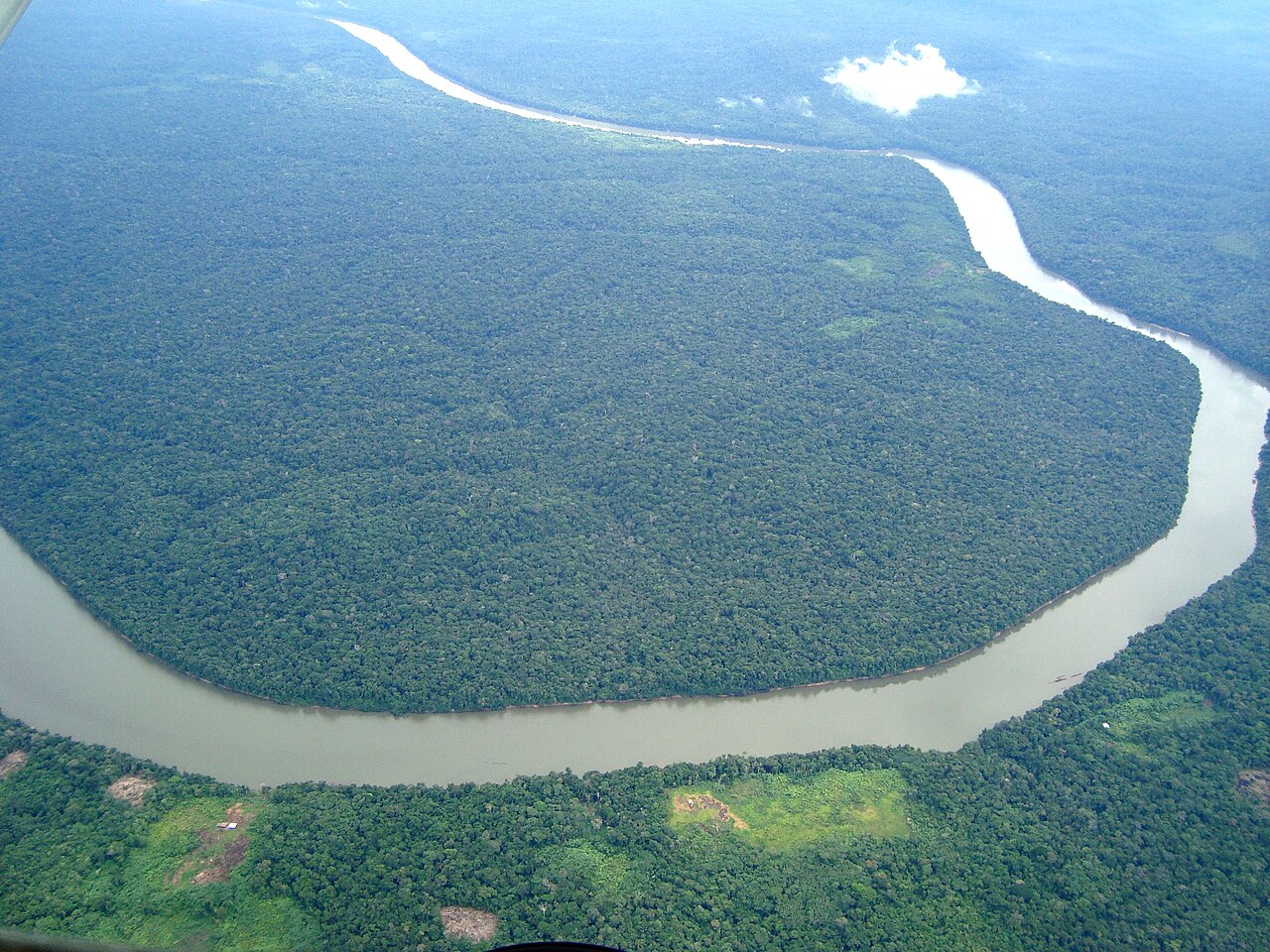
The Amazon is the largest rainforest of all. From space it looks like a dark green carpet cut by wide brown rivers.
Where in the world do rainforests grow?
rainforests need heat and rain all year round. The average temperature stays above 18 °C in every month. Rainfall is at least 168 cm a year, and in some places it tops 1,000 cm. There is no real dry season. These conditions are found mostly within 10 degrees north and south of the equator, where the Sun's heat is strongest and warm air rising from the ground makes frequent storms.
That gives tropical rainforests a patchy belt around the globe. They grow in South America, such as the Amazon, and in Central America. In Africa they stretch from Cameroon to the Congo. In Asia they range from Myanmar to the Philippines, Malaysia and Indonesia, and on to Papua New Guinea and Sri Lanka. There are also patches in Australia and on Pacific islands such as Hawaii.
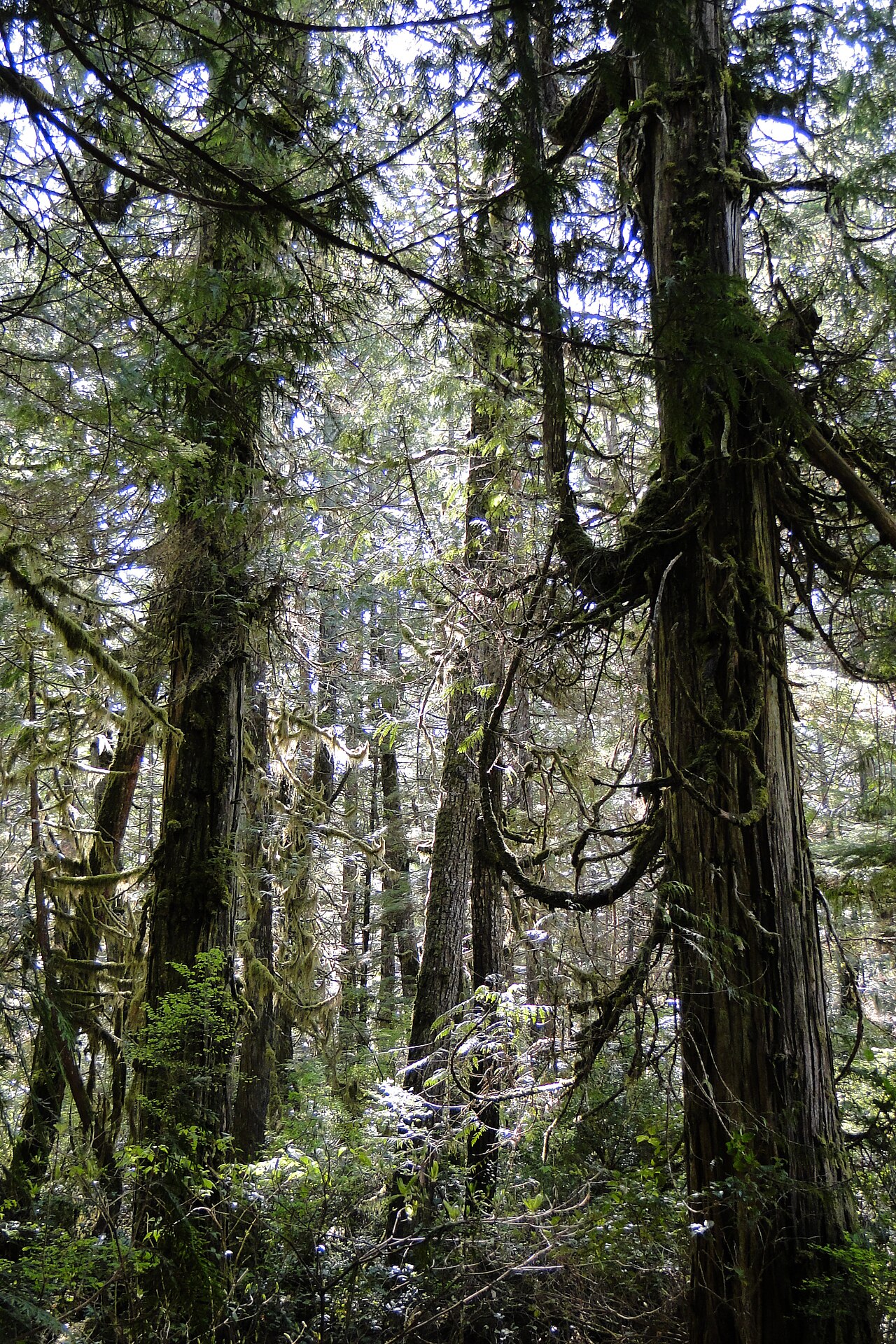
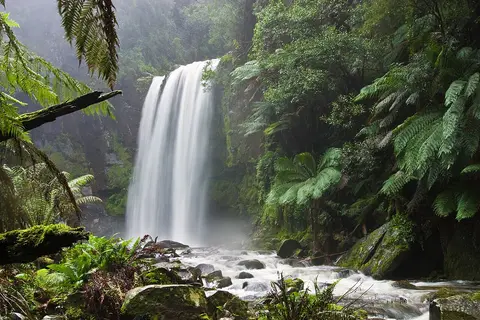
rainforests grow in cooler places that still get a great deal of rain, often near coasts. They are found in the Pacific Northwest of North America, southern Chile, parts of the British Isles and Norway, southern Japan and Korea, and in Australia and New Zealand. Temperate rainforests are much rarer than tropical ones. Their trees are often draped in moss and ferns, and the whole forest drips with moisture.
So a rainforest is defined by wetness and a dense , and not by heat alone.
What are the layers of a rainforest?
A rainforest is like a tall building with floors. Each layer has its own light, wind and wildlife.
At the top is the layer. A few giant trees, called emergents, poke out above the leafy roof. They usually reach 45 to 55 m, and a few species grow to 70 or 80 m. They face heat and strong winds. Eagles, butterflies, bats and some monkeys live here.
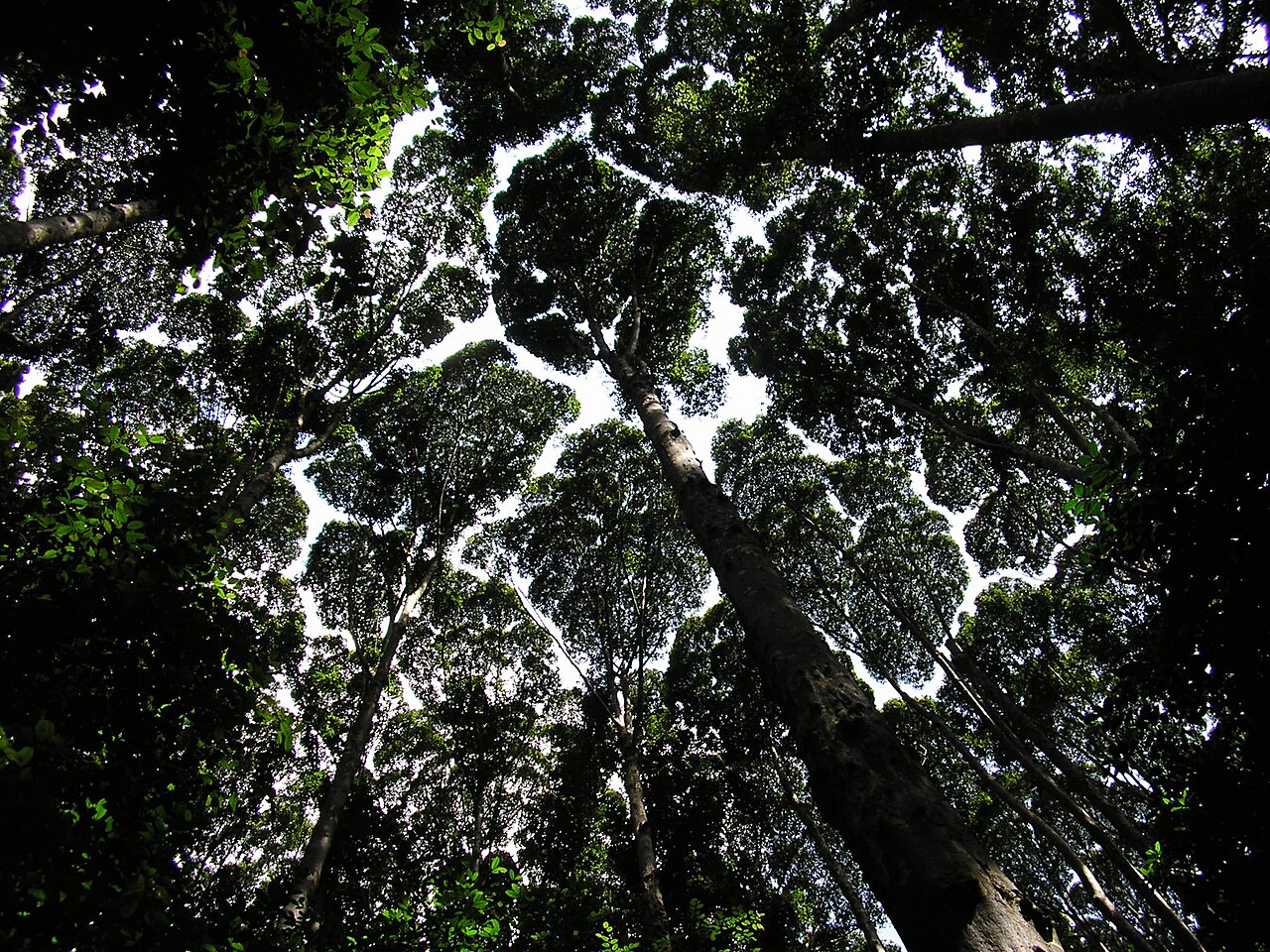
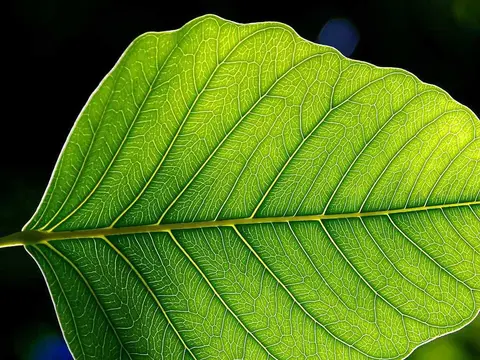
Below it is the , at about 30 to 45 m. It is formed by the treetops growing side by side, and it holds most of the forest's biggest trees. Some estimates say it is home to half of all the plant species in the forest and a quarter of all insect species. cling to branches and take water and minerals from rain and fallen debris.
The lies beneath. Only about 5% of the sunlight from the top reaches it. Its leaves are large to catch what light there is. Birds, snakes, lizards and big predators such as jaguars hunt here, and seedlings wait for a gap so they can grow up to the canopy.
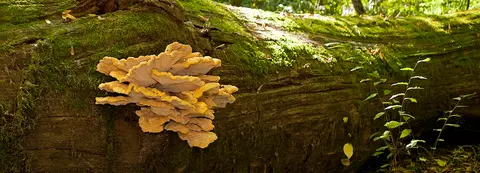
The forest floor gets only 2% of the light. Few plants grow there, so the ground is often fairly clear. Fallen leaves and dead animals vanish quickly, because the warmth and damp help fungi and bacteria break them down.
Why do rainforests hold so many species?
Nobody knows how many species live in the world's rainforests, but a very large share of all flowering plants and ferns grow there. The forests are home to mammals such as monkeys and big cats, reptiles, amphibians, birds, fungi and a huge range of invertebrates.
One reason for the crowding is the number of hiding places. A rainforest has countless nooks, such as bark, leaves, hollows, vines and puddles of water trapped in plants. Plants can hide from many plant-eaters, and animals can hide from predators. More refuges mean more species can live side by side, and more living matter can fit into the same space. Constant warmth and rainfall also mean that food is available all year.
For most of history, the was almost impossible to study. In 1917, the naturalist William Beebe wrote that another continent of life waited to be discovered, not on the ground but one to two hundred feet above it. Real exploration began only in the 1980s. Scientists used crossbows to fire ropes over high branches and climbed up them. Since then they have also used balloons, airships, cranes and walkways. Studying the canopy from airships is called dendronautics.
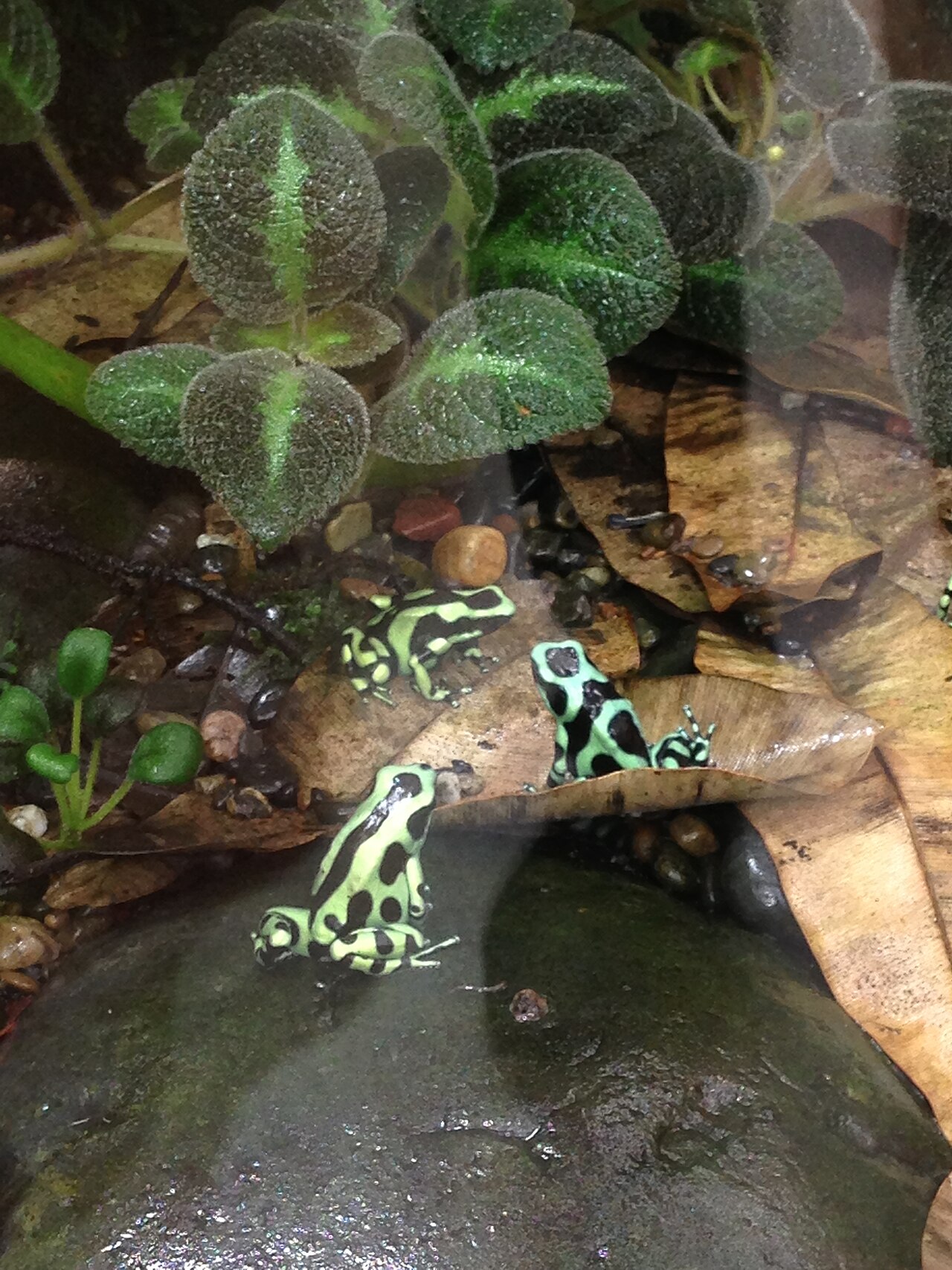
Some rainforest animals are brilliantly coloured. Poison dart frogs advertise that their skin is toxic, so predators learn to leave them alone.
How can such rich forests grow in poor soil?
It seems odd, but the soil under a rainforest is often poor. The reasons lie in the climate.
First, decay is fast. Warm, damp conditions let bacteria and fungi break down dead leaves and animals within weeks, so little rich builds up. The nutrients are taken up again straight away by the trees. Most of the forest's goodness is held in living plants and in the thin layer of rotting leaves on top. For this reason, most trees have shallow roots that spread near the surface.
Second, the heavy rain washes nutrients out of the soil faster than it does in other climates. The type of clay in rainforest soil is also poor at holding on to nutrients. Third, the soil is very acidic, which makes it harder for roots to take in what is left. Iron and aluminium oxides collect in the ground and often give it a bright red colour. In places they form minerals such as bauxite, the main ore of aluminium.
There are exceptions. Soil that has formed on young volcanic rock can be fertile.
The thin soil explains why clearing rainforest for farming so often fails. Without the trees, rain beats on bare ground and washes it away in a process called . Streams and rivers form and flooding becomes more likely. Even if farmers add fertiliser, much of it is washed away before plants can use it.
Are rainforests the lungs of the Earth?
Rainforests are often called the Earth's lungs, but the idea is only partly true. Trees do release oxygen as they make food from sunlight, a process called photosynthesis. Yet the forest also uses oxygen, because the animals, fungi and bacteria that live there breathe and rot. Overall, rainforests add very little extra oxygen to the air.
What rainforests do matter for is carbon dioxide, a gas that traps heat in the atmosphere. A natural rainforest takes in huge amounts of carbon dioxide and gives out huge amounts. Over the long term these roughly balance, so an undisturbed rainforest has little net effect on the level in the air. The trees also store large amounts of carbon in their wood and leaves. They affect weather too, because they release water vapour that helps clouds form.
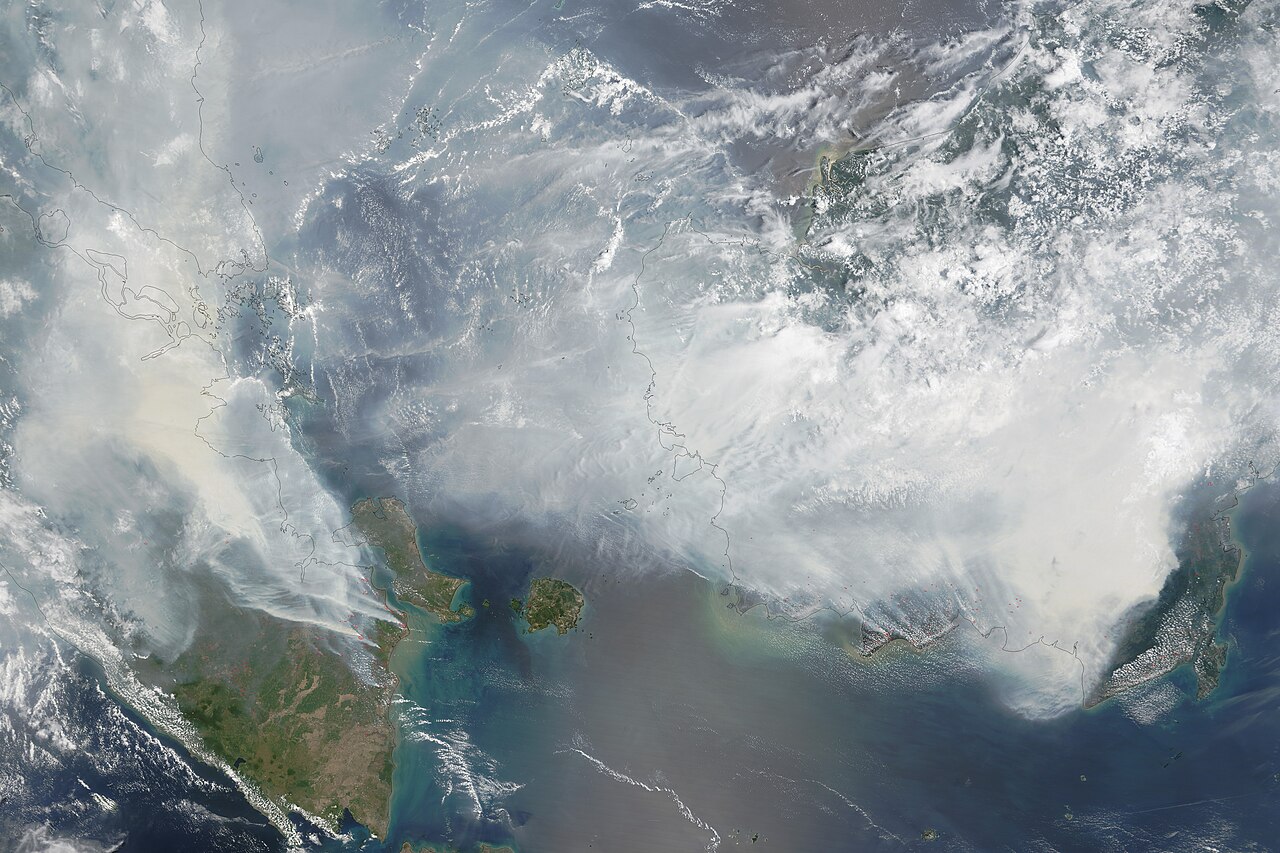
The balance changes when forests are damaged. When trees are burnt or die from drought, the stored carbon goes back into the air as carbon dioxide. Fire is the biggest danger. In 2015, smoke from forest and peatland fires in Southeast Asia spread a thick haze over a wide area, as satellites showed.
Scientists also worry about the future. Some climate models predict that drought and forest dieback could cause a large loss of Amazon rainforest, releasing even more carbon dioxide.
Who lives in the rainforest and what do we get from it?
People have lived in rainforests for thousands of years. Hunter-gatherer peoples such as the Mbuti of the Central African forest collect food, honey and medicines from the trees. In Borneo, the many peoples of Sarawak, known together as the Dayaks, have long lived along its rivers. Some groups in the Amazon and in New Guinea have little or no contact with the outside world, and they depend on the forest staying whole.
Rainforests provide many things the wider world uses. Trees give valuable timber. The forests provide meat, hides, fruits and nuts, and many foods first came from forests. Today, many of those foods are grown on plantations on land that was once forest. Plants supply medicines for fevers, fungal infections, burns, stomach problems, pain and wounds. Forests also bring in tourists.
The forest does other jobs for free, known as ecosystem services. It soaks up rain and slows floods. It holds soil in place, helps make clouds and stores carbon.
There is a problem, though. Outsiders often take from rainforests in ways that cannot last. Timber is cut faster than it grows, and land is cleared for farms. Studies, including a 2021 report by the United Nations Food and Agriculture Organization and the Fund for the Development of Indigenous Peoples of Latin America and the Caribbean, find that forest in Indigenous territories with legal land rights is cleared far less often than similar forest elsewhere.
Why are rainforests disappearing?

Through the 1900s, rainforests were logged for valuable hardwoods and cleared for farming. Farmers often use , where they cut and burn trees to make fields. Others use clearcutting, which means removing all the trees from an area. Cities and roads spread too. Coastal rainforest in eastern Australia is now rare because of building along the shore.
One big driver is palm oil, used in food and fuel. Oil palm plantations have spread over huge areas, especially in Indonesia, and Indonesia and Malaysia together have produced most of the world's palm oil. In Brazil, cattle ranching and farming have eaten into the Amazon.
The losses add up. Almost 90% of West Africa's rainforest has been destroyed. Madagascar has lost about two thirds of its original rainforest since people arrived. When the forest goes, the species that live only there lose their homes. Biologists have warned that very large numbers of species could be driven to extinction. Soil washes away, rivers silt up and carbon dioxide is released.
There is some good news. Some land is regrowing as secondary forest on abandoned farmland. But this new forest is not the same as old forest, which took centuries to build up its web of life. In 2024 the tropics lost a record 6.7 million hectares of old-growth forest, 80% more than in 2023, mostly because of fires. In Brazil, Amazon clearing has fallen sharply since 2023, and in the year to July 2025 it was about 5,800 square kilometres, the lowest in 11 years. Protecting rainforest that still stands is the surest way to save its species.
Explore Next
Your audio story keeps playing while you look around.
Words to Know
- canopy
- The roof of leaves formed by the treetops in a forest.
- deforestation
- Clearing forests so the land can be used for something else.
- emergent
- A giant tree that grows above the canopy.
- epiphyte
- A plant that grows on another plant without harming it.
- erosion
- The wearing away of soil by water or wind.
- humus
- Dark, rich material in soil made from rotted plants and animals.
- liana
- A woody vine that climbs up trees.
- slash-and-burn
- Clearing land by cutting down trees and burning them.
- temperate
- In a mild climate, between the tropics and the polar regions.
- tropical
- Near the equator, where it is warm all year.
- understory
- The shady layer of the forest between the canopy and the floor.