Biodiversity
The huge variety of life on Earth, and why losing it matters.
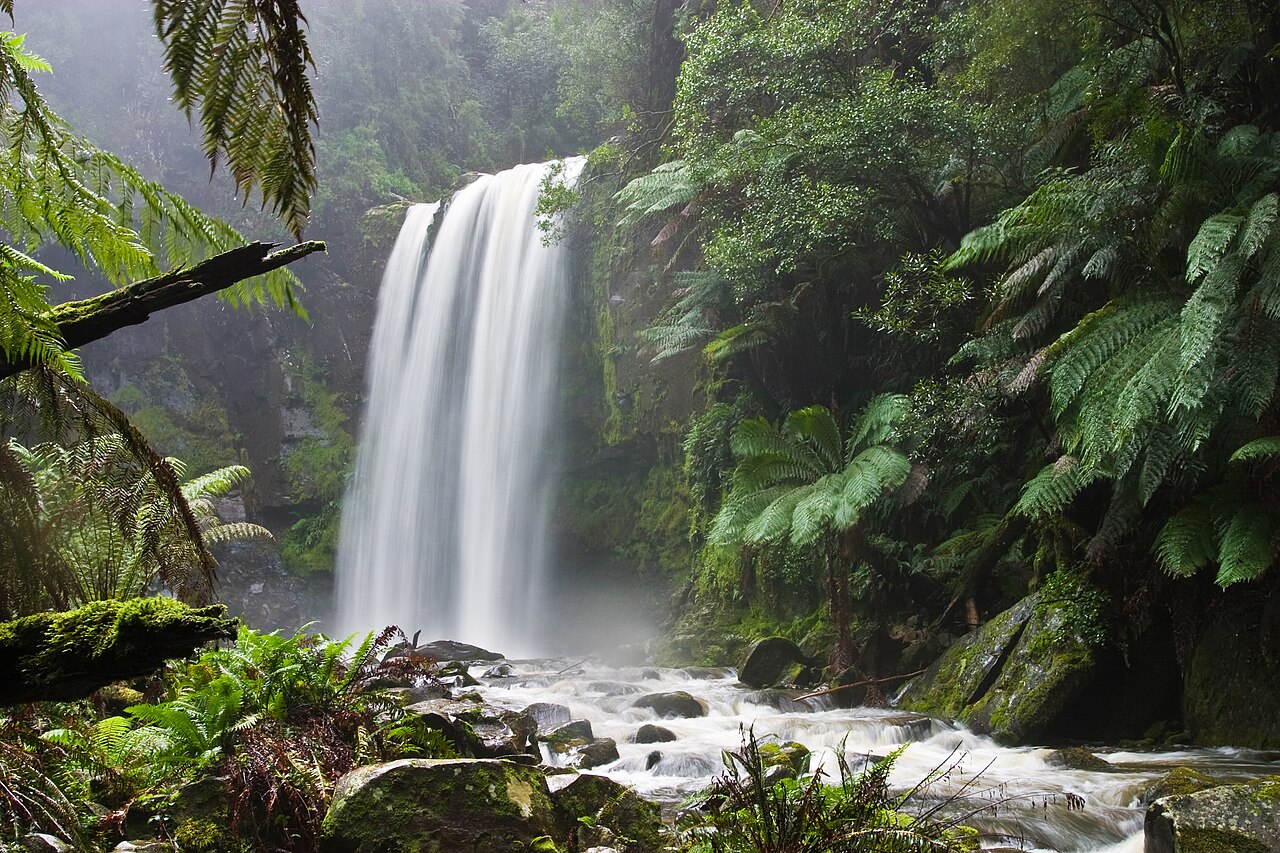
Walk through a rainforest, a meadow or a rock pool and you meet living things of every shape and size. Biodiversity is the word for all of this variety. It covers the genes inside living things, the species they belong to and the ecosystems they live in. Life has been building this variety for about 3.5 billion years. It gives us food, medicine, clean water and pollination, and we depend on it every day. It is also falling fast. Scientists estimate that species are now disappearing at least a hundred times faster than the usual rate. Understanding why is the first step to protecting what is left.
What does biodiversity really mean?
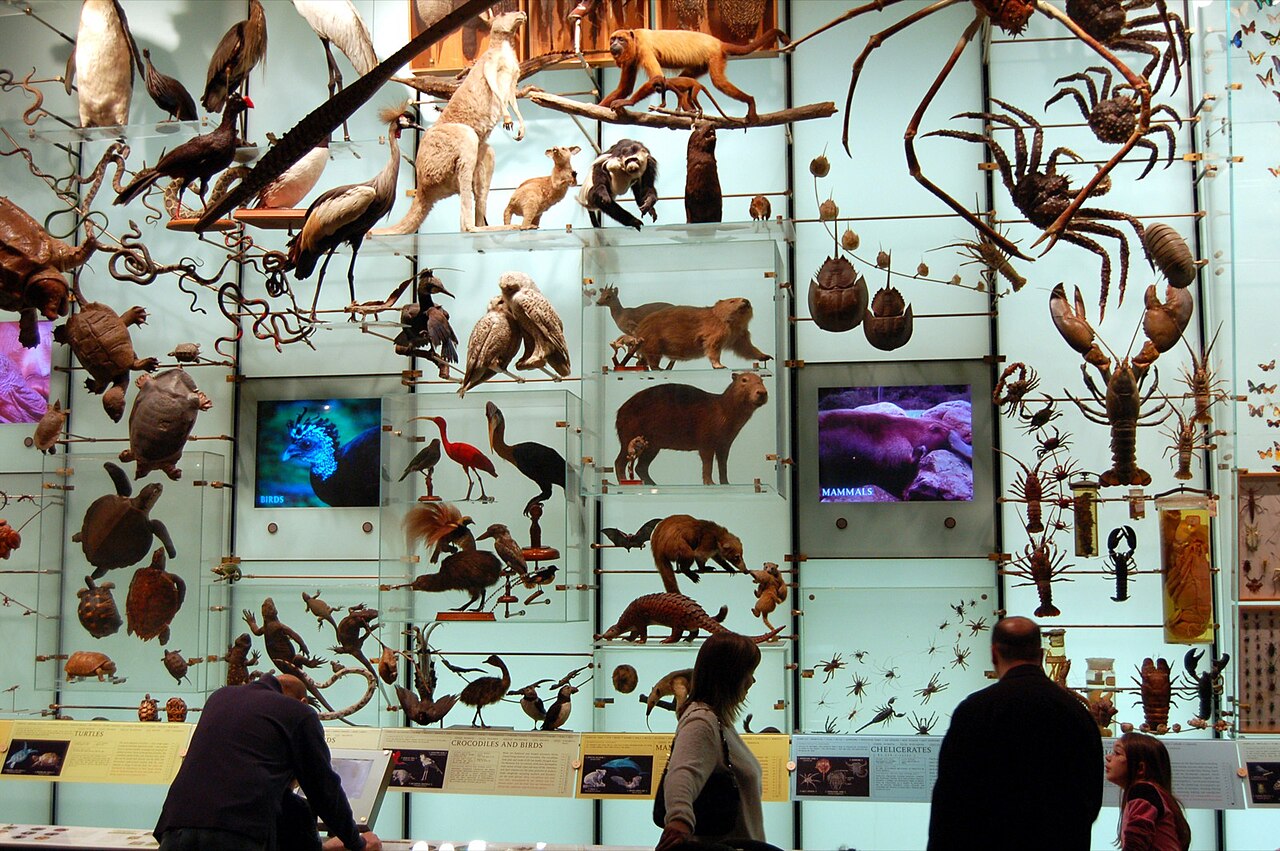
is short for biological diversity, which means the variety of life. Biologists often define it as the total of genes, and in a region. Each of these three levels matters.
Genetic diversity is the variation inside one species. All potatoes belong to a single species, yet russet, purple and new potatoes differ, and so do many other types. Species diversity is the number of different kinds of living things in an area. Ecosystem diversity is the range of . Forest, wetland, desert and coral reef are examples.
Scientists also look at how animals and plants make a living. Functional diversity counts how different the jobs are. Some species are predators and some are prey. Some feed on leaves and some on wood or dead matter. An area with many different jobs often runs more smoothly.
The word does not have one fixed definition. In 2019 the United Nations Food and Agriculture Organization called it the variety among living things and their ecosystems. The World Health Organization uses the simpler phrase variability among living organisms from all sources. Both agree on the main idea. Biodiversity is the whole web of life, not a list of rare animals.
How many species share our planet?

Nobody knows exactly. Scientists have described about 2.1 million , but that is a small part of the total. A well-known 2011 study by Camilo Mora and colleagues estimated that about 8.7 million species live on Earth. About 6.5 million of those live on land and about 2.1 million in the sea. Other estimates are higher, and the real number could be much bigger.
Insects are by far the biggest group. Scientists have named about 900,000, and there may be 10 to 30 million. Fungi, bacteria and mites are numerous too. Most of Earth's species are microbes, living things too small to see. These are the hardest to count. Seawater samples taken around 2004 to 2006 revealed huge numbers of new genes from plankton. This changed how scientists think about microbial life.
How do we know? Scientists measure species in small areas and use patterns to predict totals. One example is the link between the size of an area and the number of plants in it.
New species keep turning up, between 5,000 and 10,000 each year, and most are insects. Fewer than 1 per cent of described species have been studied beyond a name. Birds and mammals are the best known groups, and fish and arthropods are the least known.
Some species may vanish before anyone has described them.
Why are the tropics so full of life?

Life is not spread evenly. is highest in the , the warm region near the equator, and lower toward the poles. Warm weather and plenty of sunlight let plants grow fast all year, and that feeds a large number of animals. This is called high primary productivity.
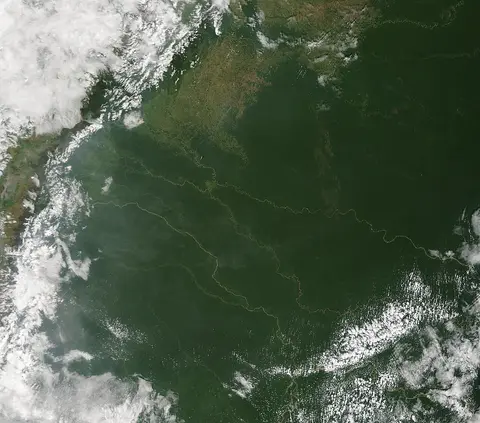
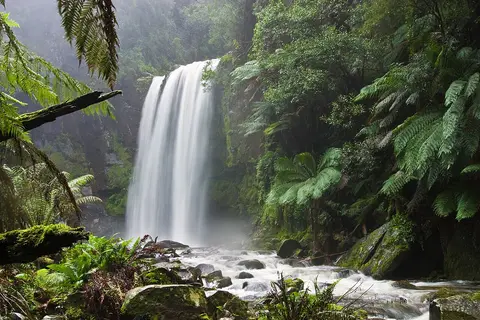
Tropical forests cover less than one fifth of Earth's land, yet they hold about half of its . About 60 per cent of all vascular plants, the plants with tubes that carry water, grow in tropical forests. Forests overall are home to 80 per cent of amphibian species. They also hold 75 per cent of bird species and 68 per cent of mammal species. Rainforests with a wet climate for a very long time are especially rich. Yasuní National Park in Ecuador is one.
Some countries stand out. Colombia has about 10 per cent of the world's species, including more than 1,900 bird species. Indonesia has more than 17,000 islands and holds about 10 per cent of the world's flowering plants. Madagascar broke away from Africa about 160 million years ago, and from India about 88 million years ago. Its living things evolved on their own, so many are found nowhere else.
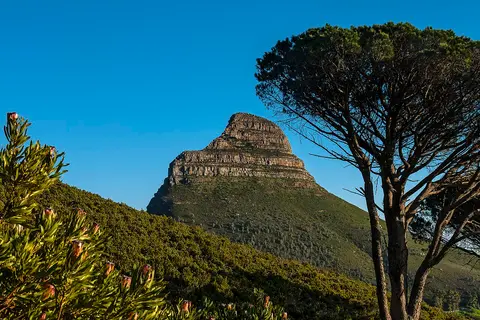
Mountains, islands and unusual can also be rich. The Cape Floristic Region in South Africa is one of them. Land in total has far more species than the oceans, possibly up to 25 times more.
How did life become so varied?
is the result of about 3.5 billion years of evolution. Evidence suggests that life began only a few hundred million years after Earth formed. For about 3 billion years, almost all life was microscopic. Bacteria and archaea came first, and single-celled protists appeared about 2 billion years ago.
Things sped up in the last 540 million years. During the Cambrian explosion, nearly every major group of animals with many cells first appeared. The trend since then has not been smooth. Life has suffered several , which are sudden events that wipe out a large share of .
The worst was the Permian-Triassic extinction, about 252 million years ago. It took vertebrates around 30 million years to recover. The most recent major one struck 66 million years ago. It ended the non-bird dinosaurs, and it also killed ammonites, which were sea creatures with coiled shells. After each disaster, survivors spread into the empty , and new species evolved. Diversity bounced back, although it took millions of years.
The fossil record suggests that the last few million years may have had the most variety ever. Some scientists doubt this, because younger rocks are easier to find and preserve more fossils. It is estimated that more than 99 per cent of all species that ever lived are now extinct. Extinction is normal. The worry today is how fast it is happening.
What does biodiversity do for us?

Nature does work for us for free. Scientists call these jobs , and they come in three kinds. Provisioning services give us food, wood and fresh water. Regulating services lessen change, such as controlling climate, pests and disease. Cultural services are the things we value, like beautiful landscapes, recreation and spiritual meaning.
Pollination is a good example. Bees and other insects carry pollen between flowers so crops can form seeds and fruit. Nobody has found an easy way to copy this work, although engineers have tried to build robot pollinators. Wild insects also eat crop pests and help cycle nutrients in the soil.
Food depends on variety. Although humans use at least 40,000 plant , about 80 per cent of our food comes from only 20 kinds. Wild relatives of crops hold genes that breeders can use to make plants stronger.
Medicine is another gift. At least half of the drugs sold in the United States come from plants, animals or microbes. Only a tiny fraction of wild species has been tested for medical use.
Health links in other ways. Wetlands filter water and soften storm surges. Studies also suggest that species which block disease are the first to vanish. The ones left behind can spread illnesses such as Lyme disease and West Nile virus. Some scientists also argue that nature has value in itself, beyond what it gives us.
Where do the wild places go?

The main reason for loss today is the destruction of . A habitat is the natural home of a living thing. When a forest is cut or a wetland is drained, the plants and animals that depend on it lose their home. Many cannot move elsewhere.
Most of the clearing is for farming. People need food, and land is cleared to grow crops and graze animals, and for products such as palm oil. Cleared forests in places like Sabah in Malaysian Borneo have been replaced with oil palm plantations. Plantations like these hold far fewer than the forest they replace.
The damage is also unfair around the world. Rich countries use around five times more natural resources than poor countries. Some reports suggest that wealthy nations seem to protect their wildlife while the damage moves abroad to poorer countries. Scientists disagree about the exact causes. Some name population growth and overconsumption. Others say crops and goods grown for export are the key driver.
Some habitats are more at risk than others. Places with many people and intensive farming have less of their original wildlife left. Parts of Europe, China, India and North America are examples. Northern Africa, southern Australia, coastal Brazil, Madagascar and South Africa have also lost a lot.
What else threatens living things?
loss is not the only threat. Intensive farming can harm wildlife even on land that stays green. Big fields with a single crop, heavy use of pesticides and little room for hedges leave few homes for wild . A study in 2017 found that flying insects in some German nature reserves had fallen by about three-quarters in 27 years.
Climate change is another pressure. Warmer weather changes where species can live. Many cannot move fast enough to follow the climate they need. Some studies, however, point out that habitat loss and overexploitation of wildlife are currently bigger causes than climate change.
are a third threat. Mountains, seas and deserts keep species apart, and that is part of why different places evolved different life. People move species by accident or on purpose. Kudzu, a vine from Southeast Asia, now smothers areas in the United States. Pines have taken over grasslands and shrublands in the southern hemisphere. Invaders can crowd out natives by taking their food and space. But even the worst invaders have rarely wiped out whole species. More often they cause local losses and make places look alike.
Humans have a long history of hunting too. Some scientists think overhunting helped wipe out many large animals at the end of the last ice age.
Is a sixth mass extinction under way?
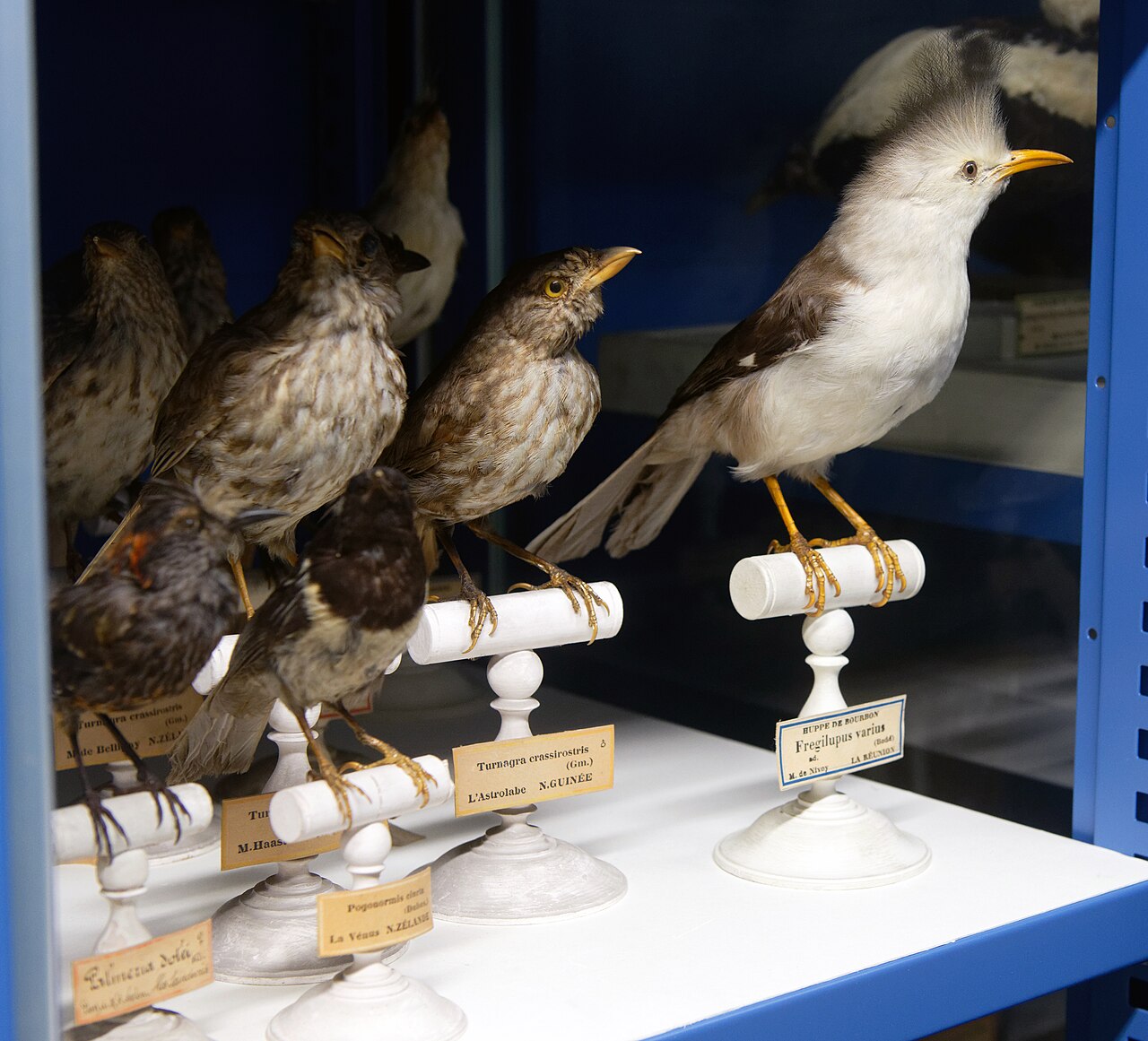
Many scientists say yes. They call it the Holocene extinction or the sixth , and they say it is caused mainly by people. Estimates suggest are being lost 100 to 1,000 times faster than the normal background rate.
How do we know? One tool is the Living Planet Index from the World Wide Fund for Nature. It tracks the numbers of thousands of wild mammals, birds, reptiles, amphibians and fish. The 2024 report found that the monitored populations had fallen by an average of 73 per cent between 1970 and 2020. The loss was largest in freshwater life and in Latin America. The index measures how big populations are, so it does not mean 73 per cent of species have vanished.
Another tool is the Red List, kept by the International Union for of Nature. It sorts species by how close they are to dying out. A 2020 study led by Kew Gardens estimated that about two in five plant species are threatened with extinction. In 2023, scientists monitored 70,000 species. About 48 per cent were losing numbers because of human actions. Only about 3 per cent were growing.
Older predictions are only estimates and are debated. One from 2007 said up to 30 per cent of species could be gone by 2050. The key point is that the speed of loss is far above the pace seen in most of Earth's history.
How can we protect what is left?
biology grew up in the middle of the twentieth century. Scientists then began to study falling wildlife numbers and to act on them. Its main tool is the . These include national parks, nature reserves and forest reserves. A national park sets aside a large natural area to guard its and to let people learn and enjoy it.
In December 2022, at a United Nations meeting, nearly 200 countries agreed a goal known as 30 by 30. They promised to protect 30 per cent of the planet's land and sea by 2030. The agreement is called the Kunming-Montreal Global Biodiversity Framework. By 2024, protected areas covered about 17.6 per cent of Earth's land and about 8.4 per cent of the ocean, so there is still a long way to go.
Protecting land is not enough alone. Wildlife corridors are strips of that let animals travel between reserves. Gene banks store seeds and cells in case a is needed again. Removing can help natives return. Using fewer or better targeted pesticides lets more insects survive on farms. Some places also use ecotourism, where visitors pay to see wildlife, to give local people a reason to protect it.
The 2019 Global Assessment Report on biodiversity called for transformative change. That means deep changes in how societies use land, food and energy.
Explore Next
Your audio story keeps playing while you look around.
Words to Know
- biodiversity
- The variety of life, from genes to species to whole ecosystems.
- conservation
- Looking after nature so that living things and places survive.
- ecosystem
- A community of living things and the place where they live.
- ecosystem services
- The free benefits nature gives us, such as pollination and clean water.
- endemic
- Found naturally in one place and nowhere else.
- habitat
- The natural home of a plant or animal.
- invasive species
- A species that spreads into a new area and harms the native life there.
- mass extinction
- A sudden event in which a large share of all species die out.
- protected area
- Land or sea set aside by law to guard nature.
- species
- A group of living things that can breed together and have young that can breed too.
- tropics
- The warm region on either side of the equator.