Photosynthesis
How green life turns sunlight, air and water into food and oxygen.
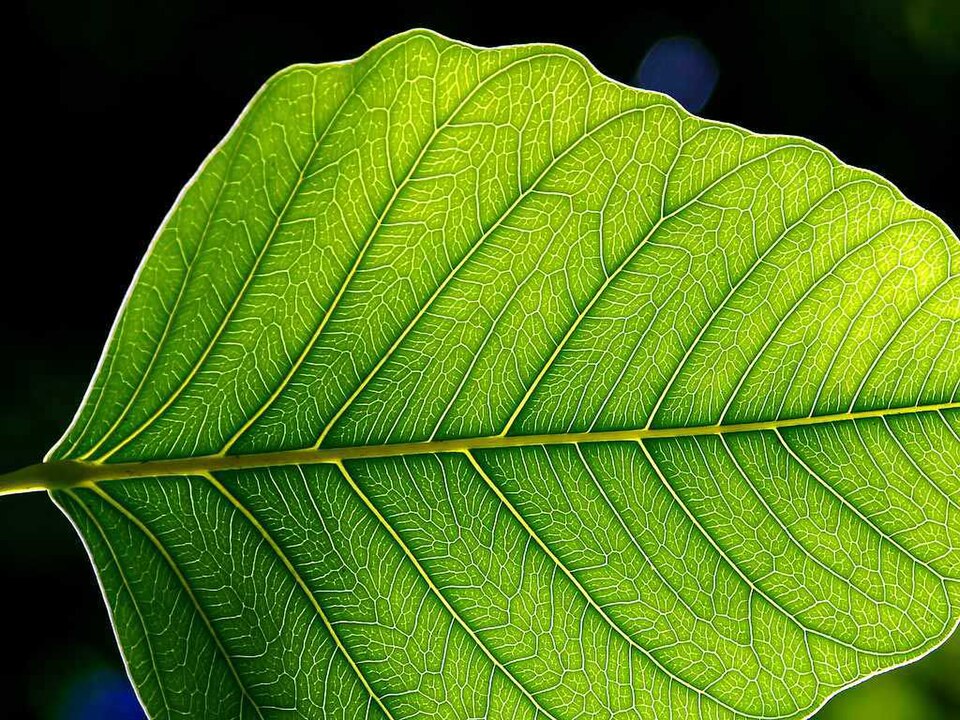
Almost every meal you eat started as sunlight. Plants, algae and some bacteria catch light and use its energy to build sugar from carbon dioxide and water. This is called photosynthesis, from Greek words meaning "putting together with light". Oxygen is released along the way. Photosynthesis feeds nearly all life on land and in the sea, and it fills the air with the oxygen that animals breathe. It is also one of the most studied reactions in science, because understanding it could help us grow more food and make cleaner fuels.
How do plants make food from light?
Animals have to find food, but plants make theirs. Inside the green parts of a plant, light energy is stored as chemical energy in sugar. In words, the reaction goes like this: carbon dioxide plus water plus light makes sugar plus oxygen.
The carbon dioxide comes from the air and enters through tiny pores in leaves. The water usually comes up from the roots. The sugar, mostly , is used straight away for energy. It can also be built into starch, which is a store, or cellulose, which makes strong cell walls. The oxygen is a by-product and drifts back out into the air.
Living things that make food this way are called photoautotrophs, meaning "self-feeders using light". Plants, algae and a group of bacteria called are the main ones. Some shade-loving plants make so little oxygen that they use all of it themselves.
Photosynthesis is almost the opposite of . In respiration, cells break sugar down with oxygen to release energy, and they give off carbon dioxide and water. Plants do both. They build sugar in the light, and they burn some of it for energy day and night. Animals and fungi only do the second part, so they depend on photosynthesis for their sugar.
The energy involved is huge. All the photosynthesis in the world captures energy at a rate of about 130 terawatts. That is several times the power used by all human civilisation.
Why are leaves green?
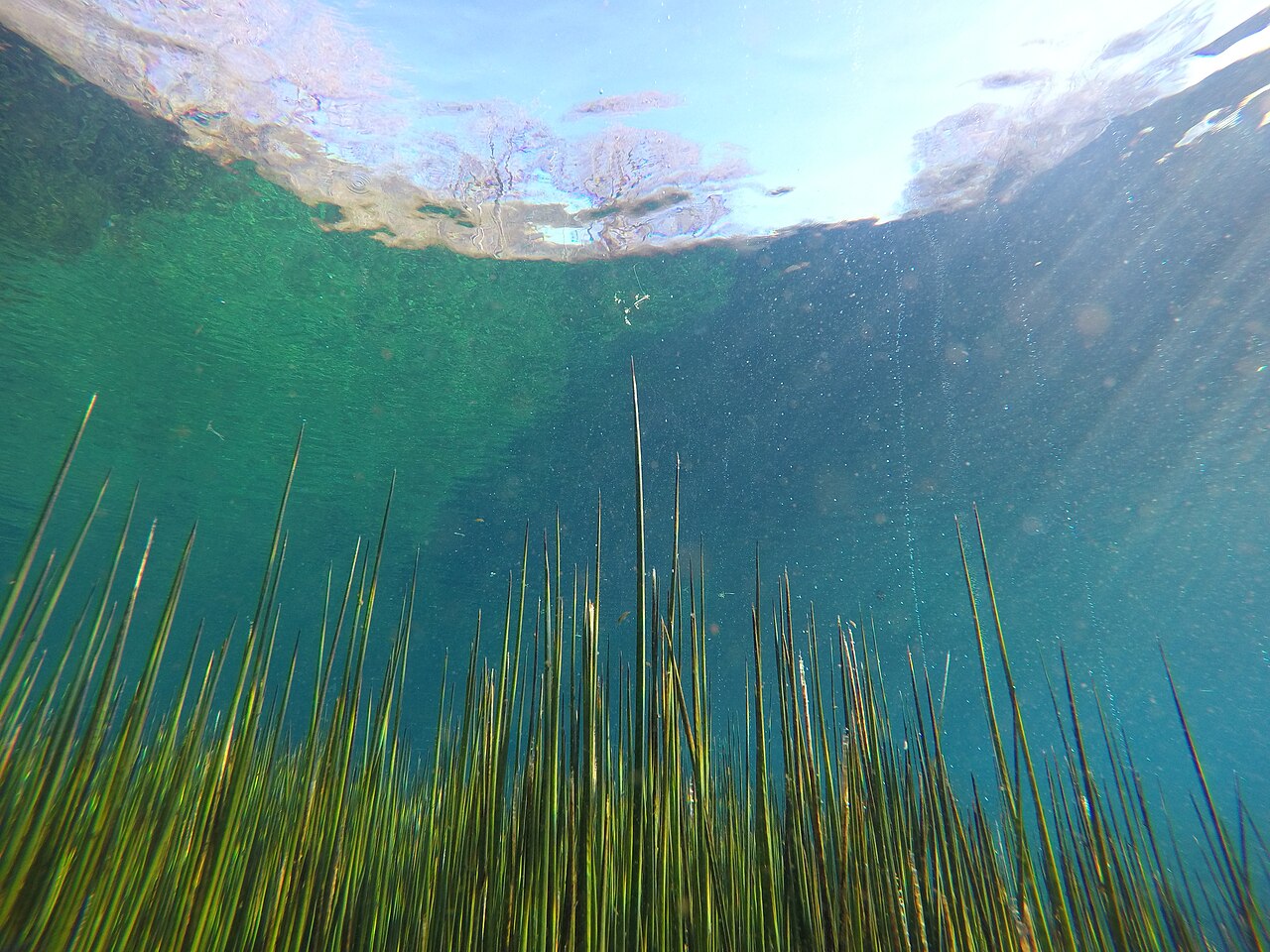
Most photosynthesis in a plant happens in the leaves. Their flat shape catches lots of light. The top surface has a waxy layer called the cuticle, which keeps water in. Below it is a clear layer of cells, the epidermis, which lets light through. Underneath are the mesophyll cells, where most of the work is done. Each square millimetre of this tissue can hold between 450,000 and 800,000 .
A chloroplast is a tiny green capsule inside a plant cell, and a typical cell has about 10 to 100 of them. Inside is a fluid called the stroma, with stacks of flattened discs called thylakoids. The discs hold the pigment .
Chlorophyll absorbs red and blue light very well but does not absorb green light, so green is reflected towards our eyes. That is why leaves look green. Plants also have yellow and orange pigments, called carotenes and xanthophylls, which help to collect light. In autumn the chlorophyll breaks down in some leaves and these colours show through.
Algae use different mixes of pigments. Red algae have pigments that absorb blue-green light, which travels deeper in seawater than red light. This lets them grow in places where land plants could not.
Cactus and some other desert plants do most of their photosynthesis in their green stems, because their leaves are tiny spines or are missing.
What happens when light hits chlorophyll?
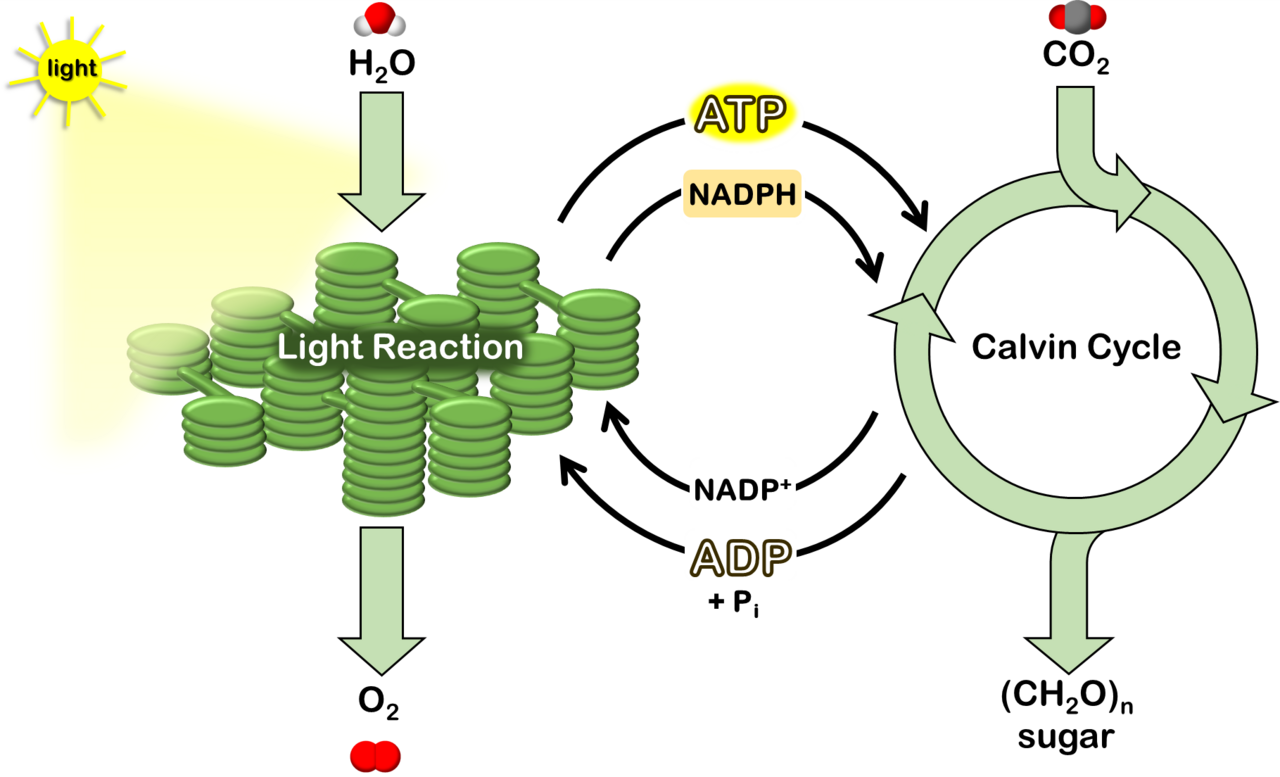
Photosynthesis has two stages. The first stage needs light, so it is called the light reactions. It takes place on the thylakoid discs inside the .
A particle of light, called a photon, hits a molecule and knocks an electron loose. The electron is passed along a chain of molecules, like a ball passed down a line of people. As it moves, it gives up energy. That energy pumps hydrogen ions across the thylakoid membrane. The ions then rush back through an enzyme called synthase, a little like water turning a mill wheel. The enzyme uses this flow to make ATP, the energy currency of cells.
The electron ends up on a carrier molecule called NADPH. So the first stage turns light into two energy carriers, ATP and NADPH.
The chlorophyll must get its lost electron back, and it takes one from water. The plant splits water molecules in a step called photolysis. This frees hydrogen ions and electrons. The oxygen left over is released as a gas. Every oxygen atom that plants release comes from water in this way.
Scientists proved this in the 1930s and 1940s. Robert Hill showed that isolated chloroplasts give off oxygen in light. Later, Samuel Ruben and Martin Kamen used special forms of oxygen to show that it comes from water, not from carbon dioxide.
How does carbon dioxide become sugar?
The second stage is the . It does not need light directly, but it relies on the and NADPH made by the light reactions. It happens in the stroma, the fluid around the thylakoids.
The first step is called , which means turning carbon from a gas into a solid compound. An enzyme named attaches a carbon dioxide molecule to a five-carbon sugar. The result splits into two three-carbon molecules. ATP and NADPH then give these molecules extra energy and hydrogen, turning them into a three-carbon sugar called a triose phosphate.
The cycle must keep going, so most of the triose phosphate is used to rebuild the five-carbon sugar. Out of every six molecules made, five go back to restart the cycle. The sixth is the plant's profit. It can be joined with others to make , sucrose, starch and cellulose. It can also supply the building blocks for fats and amino acids, the parts of proteins.
This is why plants are the base of nearly every food chain. When you eat bread, an apple or a steak, you take in carbon that was fixed from the air by a plant at some point.
RuBisCO is probably the most common enzyme on Earth. It is not very fast, and it sometimes grabs oxygen instead of carbon dioxide, which wastes energy, but plants have found several ways around this.
How do plants cope with heat and drought?
To take in carbon dioxide, a leaf must open its pores, called . But open pores also let water escape. In hot, dry weather a plant must choose between drying out and starving.
About 90 per cent of plant species use the standard method, called C3 photosynthesis. The name comes from the first compound made, which has three carbon atoms. In heat the pores close, and oxygen builds up inside the leaf. Then wastes effort on oxygen.
Some plants have a fix. C4 plants first capture carbon dioxide in one set of cells, using an enzyme that ignores oxygen. They pass it on as a four-carbon acid to special cells deeper in the leaf. There RuBisCO works in a place rich in carbon dioxide. Only around 3 per cent of plant species do this. They include maize, sugarcane, sorghum and millet. In strong light and heat they make more sugar than C3 plants. C4 photosynthesis has evolved separately in more than 60 plant lines. This is a striking case of .
Cacti and most succulents use another trick, called CAM, short for crassulacean acid metabolism. They open their pores at night, when the air is cooler, and store carbon dioxide as an acid. By day the pores stay shut and the stored gas feeds the . About 16,000 species use CAM.
Underwater, and algae pump carbon into tiny compartments around RuBisCO to get the same effect.
How did scientists work it out?
The answer took about 300 years of experiments. In the 1600s the Flemish scientist Jan van Helmont grew a tree in a pot of soil and weighed everything. The tree gained a great deal of mass but the soil lost almost none. He thought the extra mass came from water. He was partly right, but much of it comes from carbon dioxide in the air.
In the 1770s the English minister and chemist Joseph Priestley made a discovery. A candle going out in a closed jar, or a mouse struggling there, could be put right by a growing plant. In 1779 the Dutch-born Jan Ingenhousz repeated this and showed that the plant needs sunlight to clean the air. In 1796 the Swiss pastor Jean Senebier showed that green plants take in carbon dioxide and give off oxygen in light. Soon after, Nicolas-Théodore de Saussure showed that water also adds to a plant's weight.
In the 1800s the overall equation was clear. In 1893 the American botanist Charles Reid Barnes proposed the name photosynthesis.
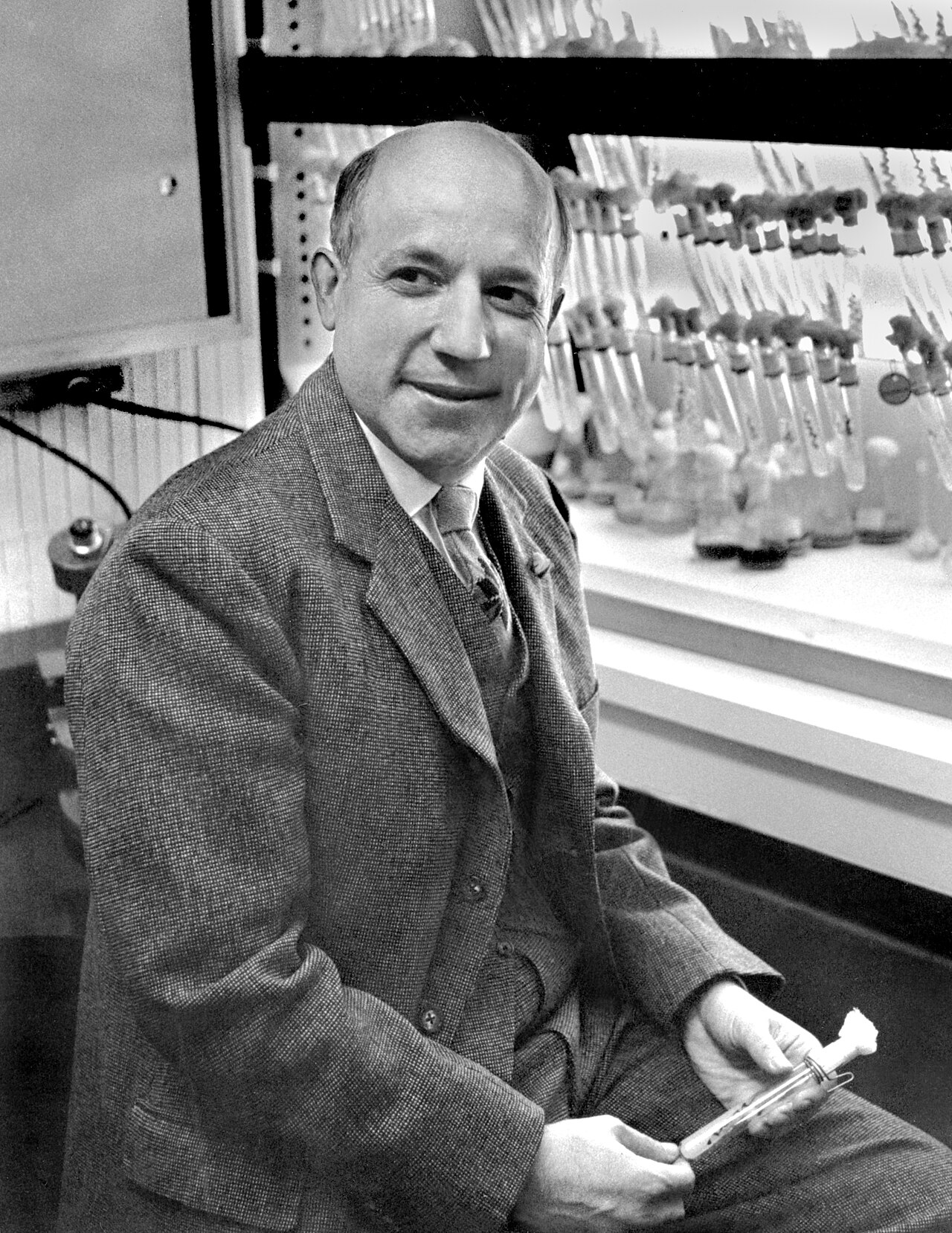
The 1900s revealed the details. Cornelis van Niel studied bacteria and showed that photosynthesis moves hydrogen to carbon dioxide. Robert Emerson found there are two light reactions. In the late 1940s Melvin Calvin, Andrew Benson and James Bassham at Berkeley fed algae radioactive carbon-14 and followed it through the cycle. Calvin won the Nobel Prize in Chemistry for this in 1961.
How did photosynthesis change the planet?
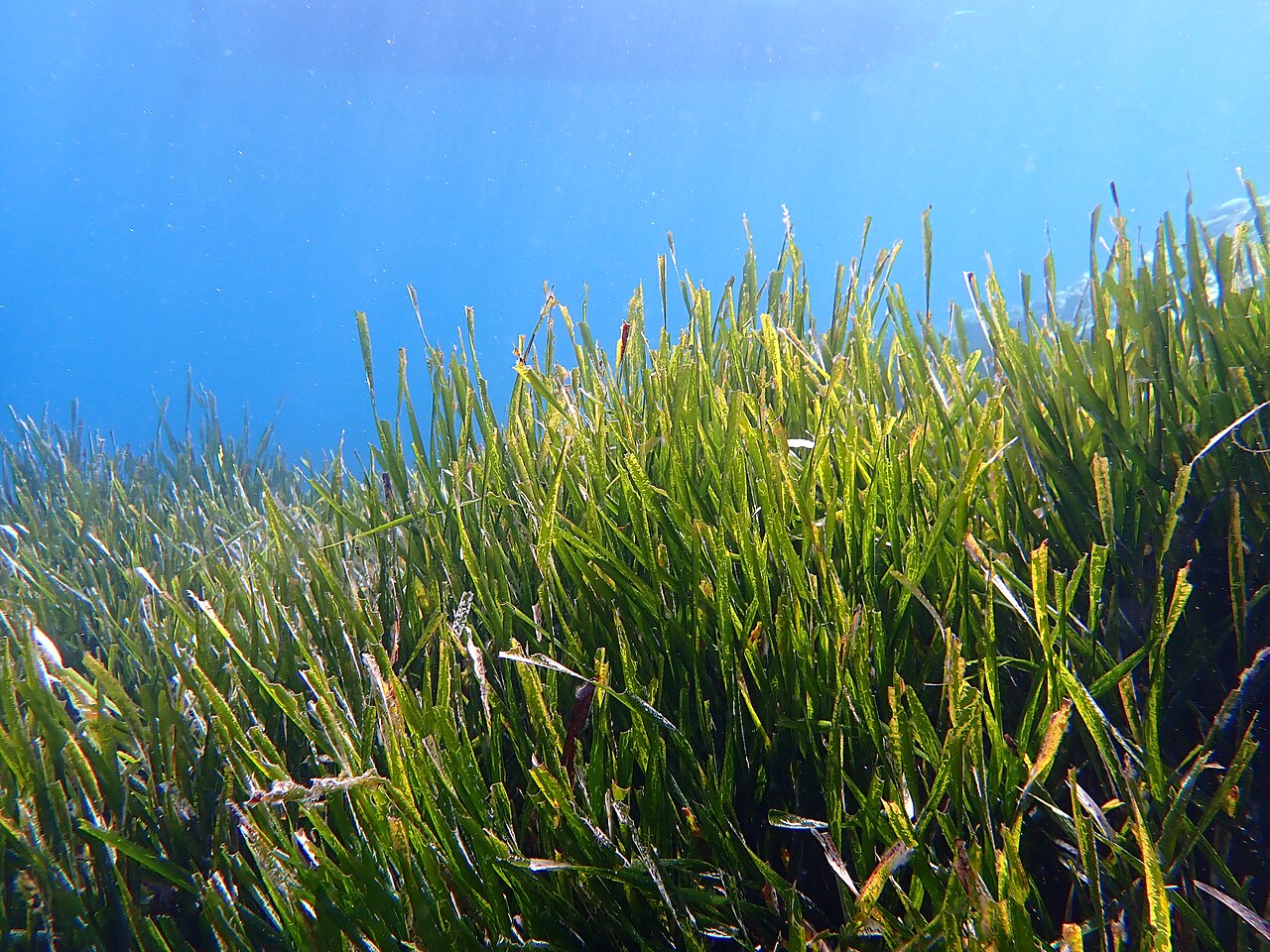
The first photosynthetic organisms were bacteria, and they probably did not make oxygen. They used other chemicals, such as hydrogen or hydrogen sulfide, as the source of electrons. Possible traces of photosynthesis go back about 3.4 billion years, though scientists still debate the earliest evidence. Clear evidence appears in rocks 1.75 billion years old, which hold the preserved membranes that carried .
Then came a breakthrough. In an ancestor of today's , life found out how to use water as the source of electrons. Water is everywhere, so these bacteria could spread over the whole ocean. Their waste, oxygen, built up and changed the air. Oxygen was poisonous to much of the early life. It also gave a far richer way of getting energy from food, and without it large animals could not have evolved. Geologists put this big rise in oxygen at roughly 2.4 billion years ago.
Later, a cell swallowed a cyanobacterium and kept it as a partner. This idea is called endosymbiosis. still carry their own DNA, which looks like a bacterium's, and that is key evidence. The partnership gave rise to green algae and then to plants. Other algae got their chloroplasts by swallowing algae that already had them.
Some animals still borrow the trick. Corals host algae in their tissues. A few sea slugs steal chloroplasts from the algae they eat and live on sunlight for months.
How good is photosynthesis, and can we improve it?
Photosynthesis powers the planet, but it is not very efficient. Plants usually store about 3 to 6 per cent of the light energy that reaches them. Real values range from 0.1 to 8 per cent. Most solar panels do better, with about 20 to 23 per cent. The best laboratory cells pass 40 per cent.
Four main things limit it: the amount of light, the supply of water, the amount of carbon dioxide and the temperature. Shade from other plants is a big limit too. Across the world, plants, algae and bacteria turn around 100 to 115 billion tonnes of carbon into living matter each year.
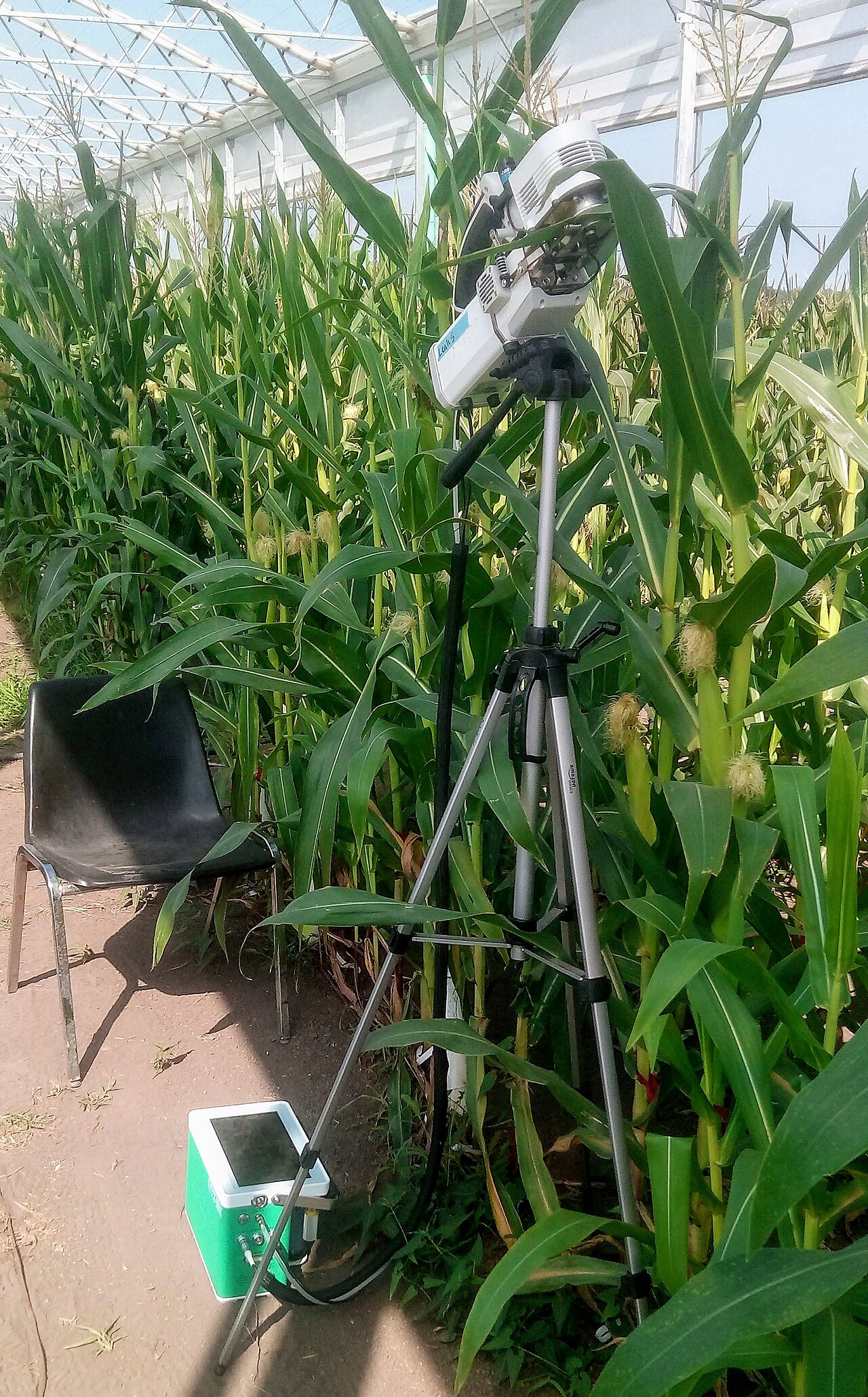
This is why scientists study photosynthesis so closely. Some want crops that use more wisely, or that borrow C4 tricks, to raise yields. Some measure photosynthesis in the field with devices that clamp onto leaves and track how much carbon dioxide each leaf absorbs.
Others are building artificial photosynthesis. In one design, a "bionic leaf" uses sunlight to split water into hydrogen and oxygen. Bacteria then turn the hydrogen and carbon dioxide into fuel. It is still at laboratory scale, because plants have had billions of years of practice and matching them cheaply is hard.
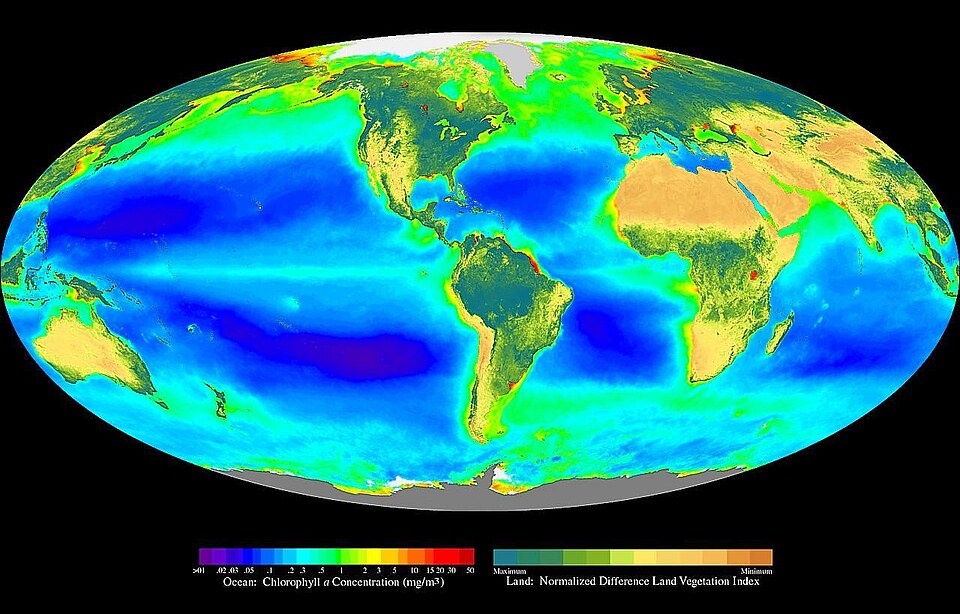
Satellites such as NASA's SeaWiFS watch the green glow of life from space. They map the plants on land and the algae in the oceans, and so show where photosynthesis is happening across the globe.
Explore Next
Your audio story keeps playing while you look around.
Words to Know
- ATP
- A molecule that carries energy around inside cells.
- Calvin cycle
- The chain of reactions that builds sugar from carbon dioxide.
- carbon fixation
- Turning carbon dioxide gas into solid compounds in living things.
- chlorophyll
- The green pigment that absorbs light for photosynthesis.
- chloroplast
- A tiny part of a plant or algal cell where photosynthesis happens.
- convergent evolution
- When unrelated living things evolve the same solution separately.
- cyanobacteria
- Bacteria that make oxygen by photosynthesis, once called blue-green algae.
- glucose
- A simple sugar that cells use as fuel and as a building block.
- respiration
- The way cells release energy from food, usually using oxygen.
- RuBisCO
- The enzyme that attaches carbon dioxide to a sugar in the Calvin cycle.
- stomata
- Tiny pores in a leaf that let gases in and out.