Mountain
Giant lumps of rock, pushed up from below and slowly worn away from above.

A mountain is a part of the Earth's crust that rises high above the land around it, usually with steep sides and bare rock showing. Most mountains stand together in long chains called ranges. They are built over millions of years by the slow movement of the planet's crust, and they are slowly torn down again by ice, water and wind. Mountains change the weather and shelter special plants and animals. They feed rivers that supply more than half of humanity with water. In many faiths they are sacred places. The highest of them all, Mount Everest, is about 8,849 m tall.
What makes a mountain a mountain?
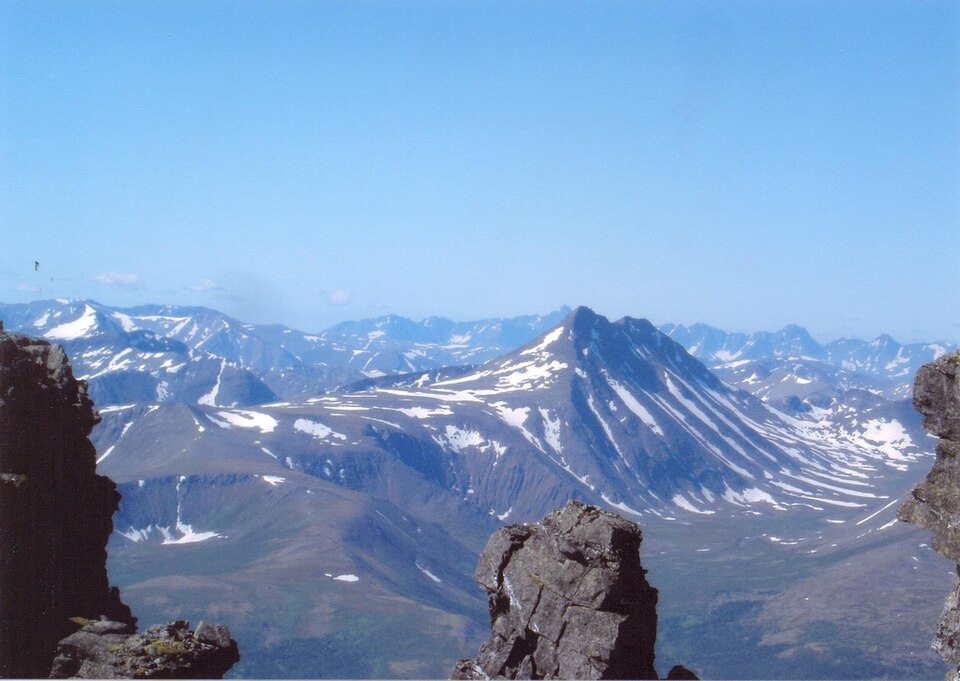
There is no single, agreed rule. A mountain is higher and steeper than a hill, with a small area at the top and a lot of bare rock on its sides. Many geographers call any peak that rises at least 600 m above the land around it a mountain, and anything lower a hill.
The rules change from place to place. In the United Kingdom and Ireland a mountain is usually a summit of at least about 600 m, or 2,000 feet. The United States once used about 300 m, or 1,000 feet, but dropped the idea in the 1970s. Today the US Geological Survey says that mountain and hill have no technical meaning there. Some definitions add a rule about how far a peak sticks out above the ground around it. Local custom matters too. A bump that people call a hill in one country may be a mountain in another.
A few mountains stand alone, but most come in . About a quarter of the Earth's land, 24 per cent, counts as mountainous by the United Nations Environment Programme's definition. That is about 33 per cent of Eurasia, 24 per cent of North America, 19 per cent of South America and 14 per cent of Africa.
Mountains matter because they shape rainfall, rivers, soils, plants and people. To understand why they stand where they do, we have to look deep inside the planet.
How do mountains rise up?
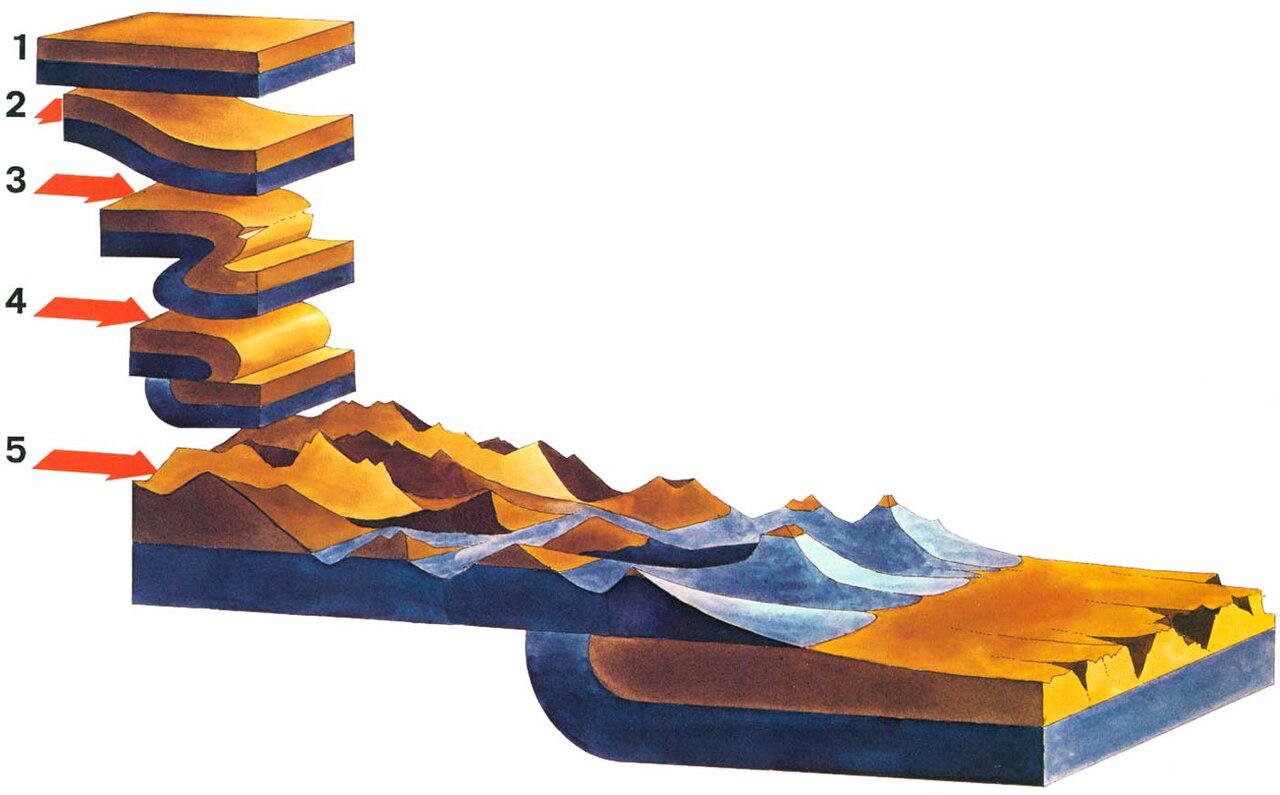
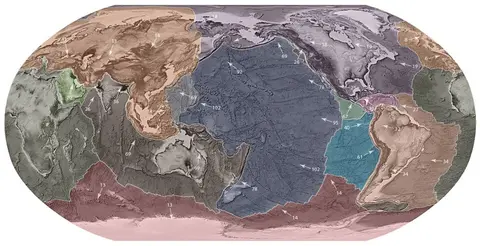
The Earth's outer shell is broken into huge pieces called , which creep slowly across the surface. Where they meet, the crust is pushed, stretched and squeezed. Almost all major mountains were built by these movements, which is why big mountain chains often follow the edges of plates.
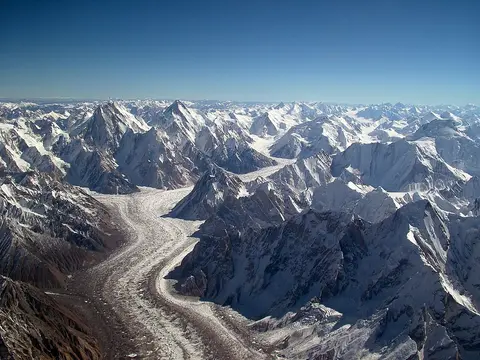
There are three main kinds of mountain. The first is the . These form when two plates push towards each other. The crust crumples, rather like a rug pushed against a wall. Rock is stacked up along cracks called thrust , and the layers bend into upfolds and downfolds. Fold mountains are the most common kind of mountain chain. The Jura Mountains in Europe and the Balkan Mountains are examples.
There is also a surprise hidden underneath. Continental crust is lighter than the hot rock of the mantle below, so it floats on it a bit like an iceberg floats on the sea. A tall mountain is held up by a much greater thickness of crust pushing down into the mantle beneath. This means the crust is thickest under mountains.
These processes are slow. Building a can take tens of millions of years. That is why you cannot watch a mountain grow, but we can measure how the rocks have been bent and piled up.
How did the Himalayas, the Alps and the Andes rise?

The Himalayas are the best-known story in mountain building. About 50 million years ago, the Indian Plate, which had been drifting north across the ocean for tens of millions of years, ran into Asia. Both plates carried light continental crust, and neither could sink easily beneath the other. So the crust crumpled and piled up. The Himalayas rose along the southern edge of the high Tibetan plateau.
The proof is on the summit. The top of Mount Everest is made of limestone that formed on the floor of a warm, shallow sea. It holds fossils of sea creatures, including sea lilies, which are animals related to starfish. Rock that once lay under the ocean now stands 8,849 m above it.
The collision has not stopped. India is still moving north by about 5 cm a year, and the Himalayas are still rising by about 5 mm a year. The 2015 earthquake in Nepal was one result of that push.
Other ranges tell similar stories. The Alps rose when Africa, along with the small Adriatic Plate, pushed north into Europe. The Andes are different. There, the ocean floor of the Nazca Plate slides beneath South America, and the crust above is squeezed up and studded with volcanoes. Both ranges are young, and both are still changing.
How do volcanoes and block mountains form?
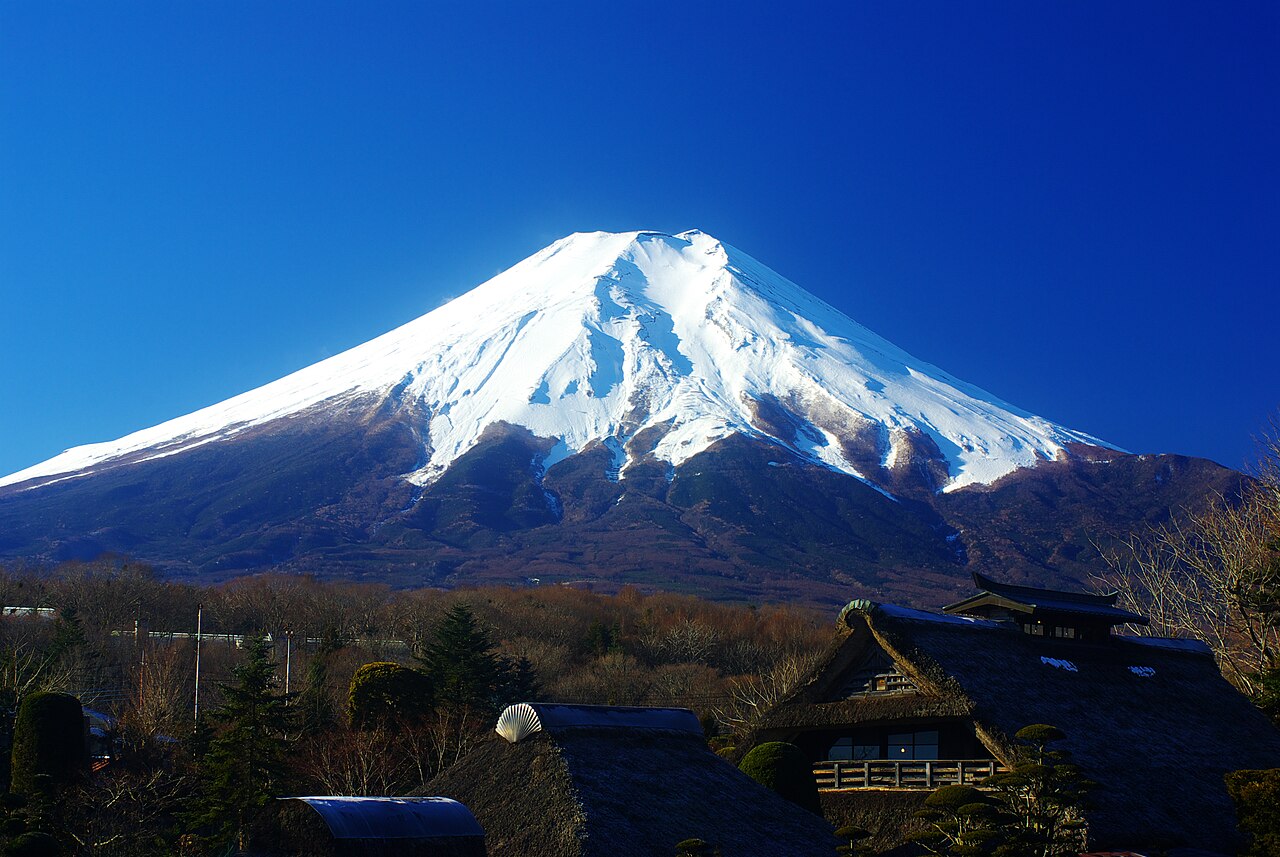
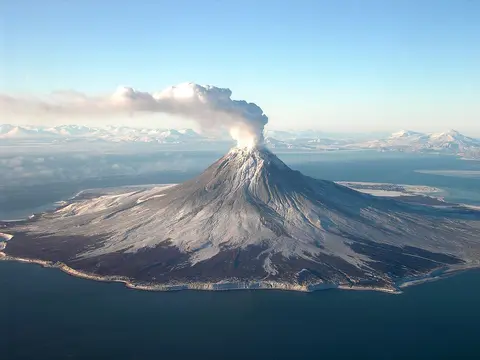
Volcanoes are the second kind of mountain. Many form where one plate is pushed beneath another. About 100 km down, water from the sinking plate makes the rock above it start to melt. The melted rock, called , rises and breaks out at the surface. Over time, layers of lava and ash pile up into a cone. Volcanoes can also form at mid-ocean ridges or over hotspots, which are places where heat rises from deep inside the Earth. Mount Fuji in Japan and Mount Pinatubo in the Philippines are examples. Magma does not have to reach the surface. When it hardens underground, it can push the rock above it up into a dome, as with Navajo Mountain in the United States.
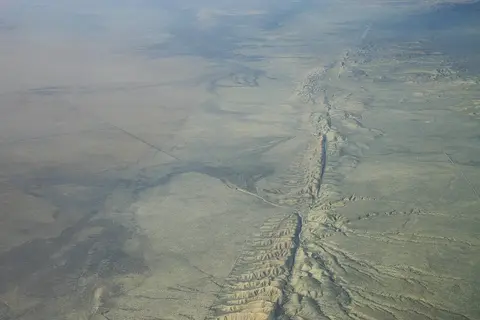
The third kind is the . These form when the crust breaks along , which are cracks where rock slides past other rock. When one block rises compared with the block beside it, the raised block is called a horst. The dropped blocks between them are called grabens, and long chains of them make rift valleys. This pattern appears in East Africa, along the Rhine valley and the Vosges in Europe, and in the Basin and Range region of western North America. These landscapes tend to form where the crust is being stretched and thinned.
How are mountains worn down?
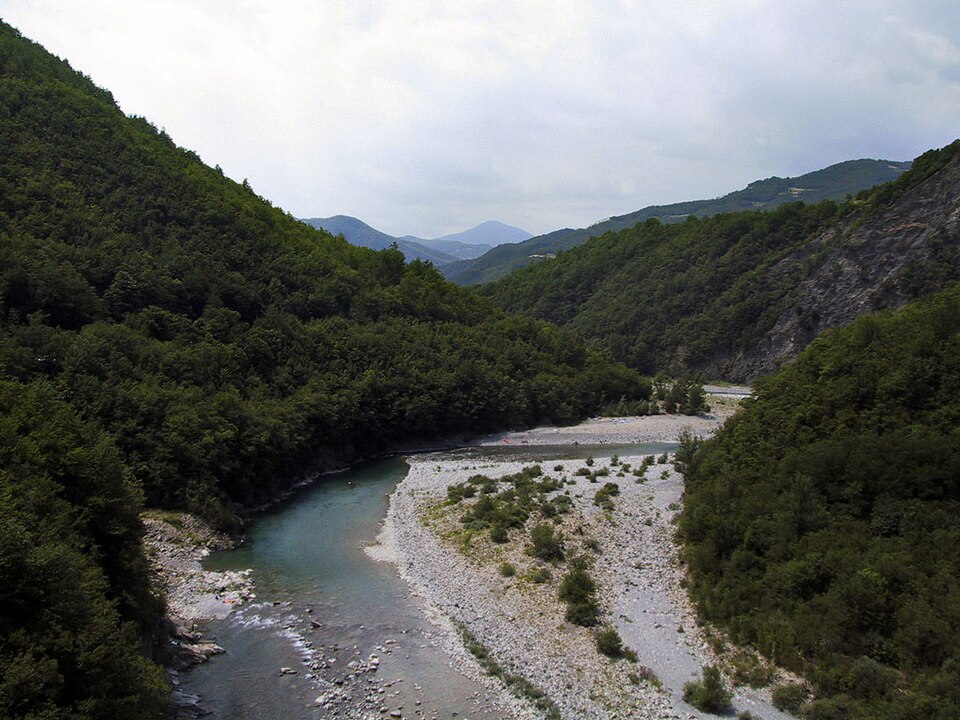
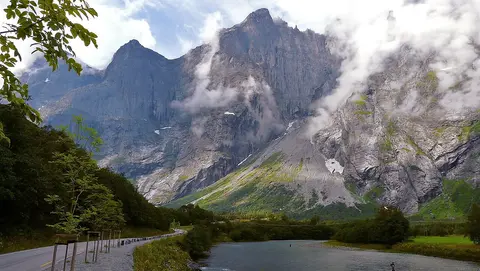
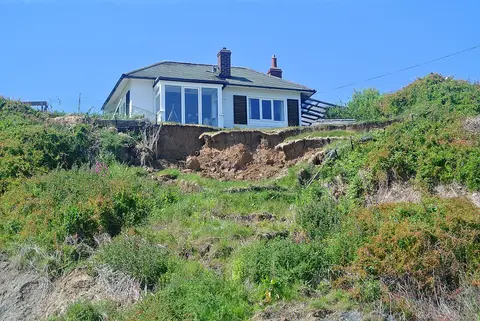
As soon as a mountain starts to rise, it starts to wear away. Water, wind, ice and gravity all break rock down and carry it away. Once the mountain building stops, these forces slowly level the land. Rock slumps and slides downhill. Rivers cut valleys and carry sand and gravel to the sea. Glaciers, which are slow rivers of ice, grind and pluck at the rock.
Because rock is constantly being stripped from the surface, the surface of a mountain is always younger than the rock it is made of. The surface we see today may be only a thin skin on rock that is far older.
Ice leaves clear signs. Glaciers carve bowl-shaped hollows called cirques, which may hold small lakes. Where two cirques cut back to back, they leave a thin, sharp ridge called an arête. Where several surround a peak, they leave a steep pyramid. Not all mountains are made by folding or volcanoes. Plateau mountains, like the Catskills in the United States, are what is left when cuts into a high, flat plateau, leaving ridges and peaks standing.
The Appalachians in North America and the Caledonian mountains of Scotland and Norway show where this ends up. Both may once have been as tall as the Himalayas. After hundreds of millions of years of wearing away, they are now gentle ranges. Ben Nevis, the highest peak in Britain, stands at only 1,345 m.
It is a long, slow contest. Uplift builds a mountain and erosion pulls it down. Over tens of millions of years, even a huge range such as the Himalayas will eventually be worn down. A mountain is never finished. It is always in the middle of being made and unmade.
Why is it colder at the top, and who lives there?
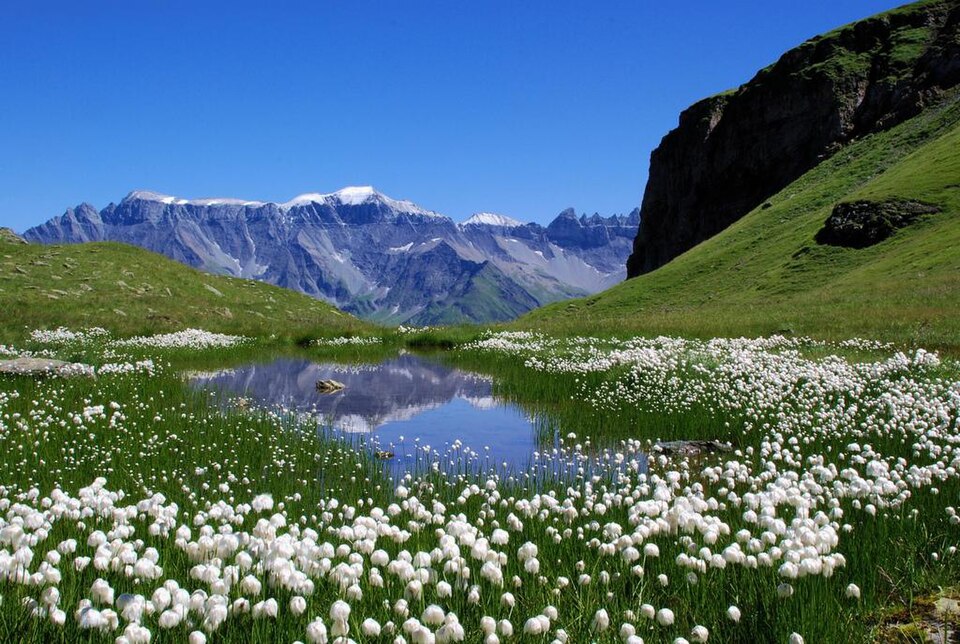
If you climb a mountain, the air gets colder. This seems odd, since you are closer to the Sun. The reason is that sunlight mostly warms the ground, and the ground warms the air next to it. Warm air rises and expands as the pressure drops, and as it expands it cools. Air temperature drops by about 5 to 10 degrees Celsius for every kilometre you climb. Climbing 100 m is roughly like moving 80 km towards the nearest pole. Higher up, snow replaces rain and the wind grows stronger.
Because temperature changes with height, life on mountains is arranged in bands. This is called altitudinal zonation. At the bottom, in the tropics, there may be rainforest, or in cooler regions forests of broadleaf and needleleaf trees. Higher up are needleleaf forests that can survive cold and dry weather. Above the , where trees can no longer grow, the plants look like those of the tundra, low and tough. Higher still there is only rock, snow and ice.
These bands can strand species. A plant or animal adapted to one zone may be cut off from others by warmer lowlands. Its home then becomes a , an isolated patch of habitat.
Mountains are warming. They are changing faster than at any time in the last 10,000 years. Glaciers and permafrost are melting, landslides are more common and rivers that depend on meltwater are shifting.
How do people live in the mountains?
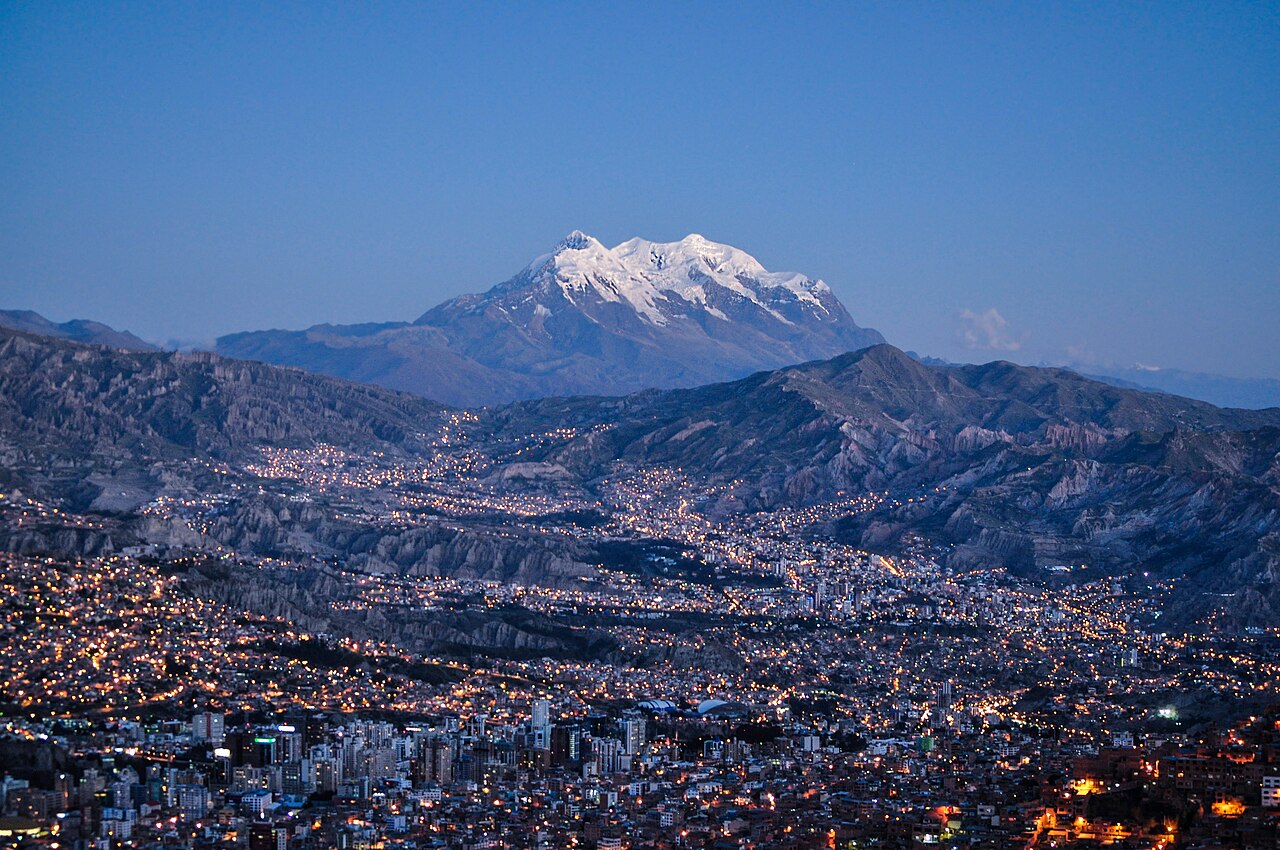
Mountains are harsh places to live. The weather is severe, and there is little flat land for farming. About 7 per cent of Earth's land is above 2,500 m, yet only about 140 million people live above that height. Only 20 to 30 million live above 3,000 m. About half of them are in the Andes, Central Asia and Africa.
Few communities exist above 4,000 m, and many are small and specialised. La Rinconada in Peru is a gold-mining town at about 5,100 m, the highest place where people live all year. El Alto in Bolivia stands at about 4,150 m and is the opposite. It has factories and services and a population close to a million. Its neighbour, La Paz, lies in a valley below a snowy peak.
Traditional mountain people farm, but crops fail more easily at height. Many mountains have minerals, so mining matters. More recently, tourism has grown around national parks and ski resorts.
The biggest gift of mountains is water. In cold regions, snow acts like a store. It builds up in winter and melts slowly in spring and summer, feeding rivers that flow to the lowlands. Most of the world's rivers begin in mountains, and more than half of humanity relies on them for water. In dry regions, such as Central Asia, mountain water can be vital.
Mountains have also been natural borders between peoples and countries.
Why is it so hard to breathe on the highest peaks?
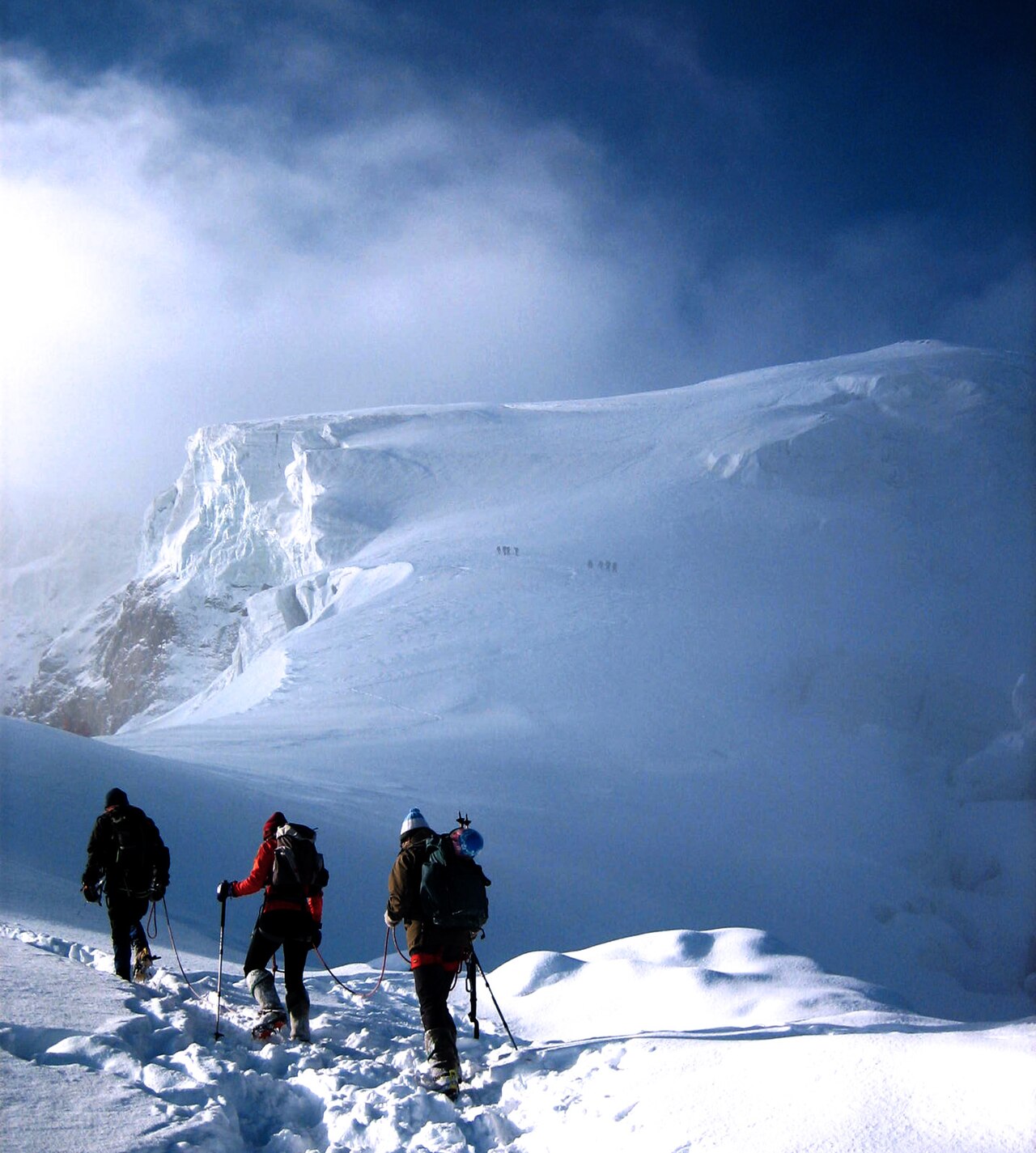
The higher you go, the thinner the air. Air does not get less rich in oxygen, but the pressure falls, so each breath contains fewer oxygen molecules. Up high there is also less air to block ultraviolet light from the Sun.
Scientists think the human body can adapt to living permanently up to about 5,950 m, though no town is that high. Above about 8,000 m there is not enough oxygen for human life to last. Climbers call this the . The summits of Mount Everest and K2 are in it, so climbers there usually carry bottled oxygen, move as quickly as they can and avoid staying long.
People have climbed mountains for a mix of reasons. Some need to cross them. Some hunt, farm or mine on them. Since the 1800s, climbing for adventure has grown into a sport called mountaineering. People climb mountains to test themselves, to enjoy the view and to be the first to reach a peak. In 1953 Edmund Hillary and Tenzing Norgay were the first to be confirmed at the summit of Everest.
Tourism has a downside. Roads and helicopters can harm fragile mountain places and the traditions of the people who live there. Helicopters used for tourism are criticised both for their effect on nature and for how they change the sport of climbing.
Why are so many mountains sacred?
Across the world, people have looked up at mountains and felt that they were close to the sky, to the gods or to something larger than themselves. Mountains play a big part in many religions.
In ancient Greece, Mount Olympus was held to be the home of the gods. In Japan, the volcano Mount Fuji, which is 3,776 m high, is sacred, and about 200,000 people climb it every year. Mount Kailash in Tibet is holy to four religions, Hinduism, Buddhism, Jainism and the Tibetan religion Bon. In Ireland, Catholics make pilgrimages up the 952 m Mount Brandon. The Himalayan peak Nanda Devi is linked with the Hindu goddesses Nanda and Sunanda, and has been closed to climbers since 1983. Many people believe that Mount Ararat is where Noah's Ark came to rest, according to the Bible.
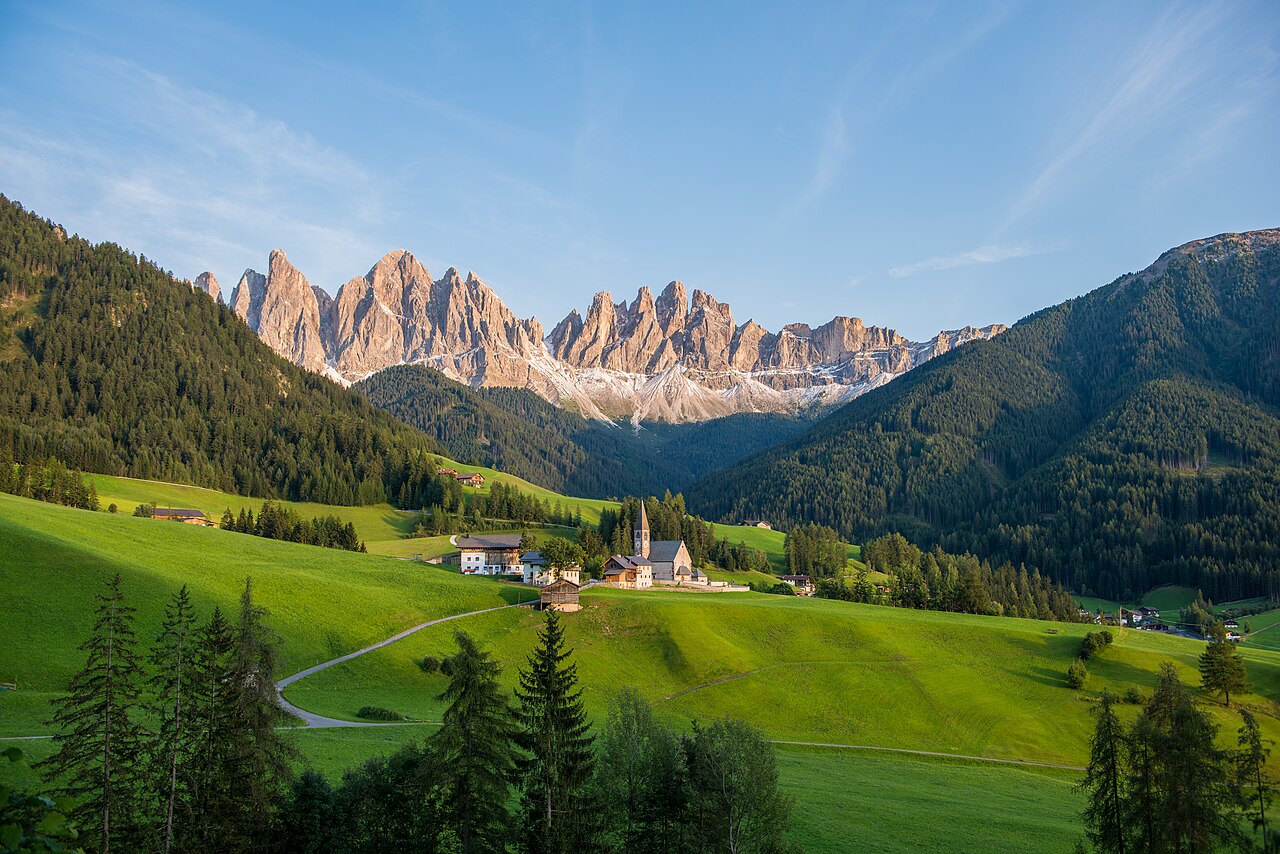
In the Alps, many peaks are topped by a summit cross. Churches also nestle in the valleys below the peaks, as in South Tyrol.
Mountains were often chosen as holy places because they are hard to reach, look dramatic and seem to touch the sky. Pilgrimages up them are a way of showing devotion.
Which mountain is the tallest, the biggest or the farthest from the centre of the Earth?
It depends how you measure. Height above sea level gives us Mount Everest in the Himalayas, at about 8,849 m. There are at least 100 mountains above 7,200 m, and all of them are in central and southern Asia.
But Everest does not rise highest above its surroundings. It stands on the high Tibetan plateau. Peaks such as Denali in Alaska, Mount Kilimanjaro in Tanzania and Nanga Parbat in Pakistan are candidates for the tallest mountain on land when measured from their base.
If you count the part under the sea, the winner is Mauna Kea in Hawaii. It reaches only 4,207 m above sea level, but it rises about 10,000 m from the Pacific sea floor, taller than Everest. Mauna Loa, nearby, is the biggest mountain on Earth in terms of its base area and volume.
The Earth is not a perfect ball. It bulges at the equator, so sea level there is farther from the centre of the planet. Because of this, the summit of Chimborazo in Ecuador is usually named as the point farthest from Earth's centre, although Peru's Huascarán is another contender. Both are more than 2 km lower than Everest above sea level.
And Earth does not hold the record in the Solar System. Olympus Mons on Mars rises about 22 km, about two and a half times the height of Everest.
Explore Next
Your audio story keeps playing while you look around.
Words to Know
- block mountain
- A mountain formed when blocks of crust are lifted along faults.
- death zone
- The height above 8,000 m where there is too little oxygen for people to survive for long.
- erosion
- The wearing away of rock and soil by water, ice, wind and gravity.
- fault
- A crack in the crust where rock has moved.
- fold mountain
- A mountain made when two plates push together and crumple the rock.
- magma
- Hot melted rock beneath the Earth's surface.
- mountain range
- A chain of mountains.
- sky island
- A patch of mountain habitat cut off from similar places by very different land below.
- tectonic plate
- A huge slab of the Earth's outer shell that moves very slowly.
- tree line
- The height above which trees cannot grow.