Soil
The thin living skin of Earth that feeds almost everything on land.
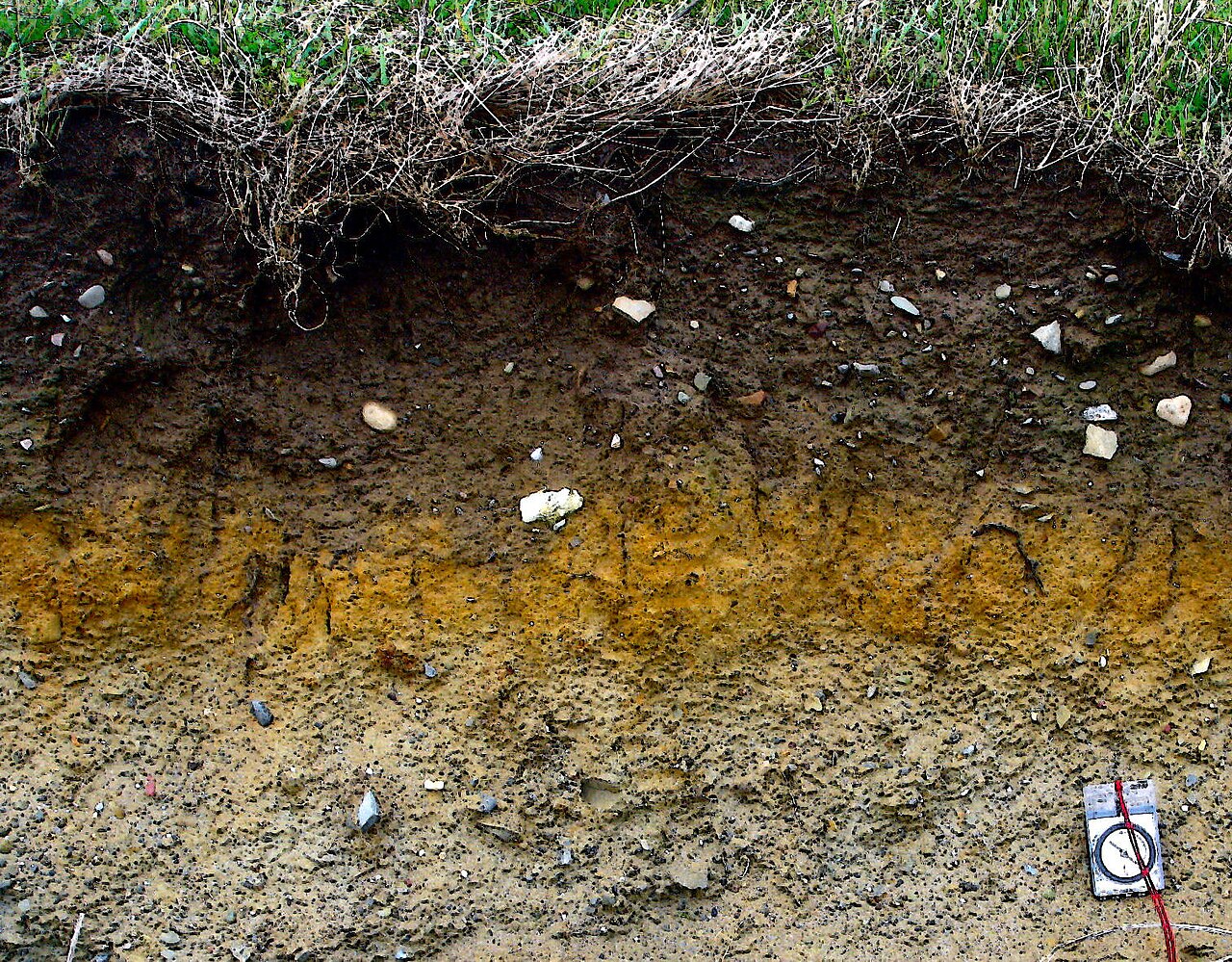
Under your feet lies one of the most important materials on Earth. Soil is a mix of crumbled rock, rotting plant and animal matter, air, water and billions of living things. It anchors plant roots, stores and cleans water, and recycles dead material into food for new life. Almost everything we eat grows in it or depends on something that does. Soil takes a very long time to form, yet it can be washed or blown away much faster. Learning what soil is, and how it works, explains why this thin layer is such a precious resource.
What exactly is soil?

Soil is not the same as crushed rock. It is a mixture of minerals, organic matter, gases, water and living organisms that together support plant life. Some scientists use the word dirt only for soil that has been moved from where it formed. In everyday speech, people use earth, soil and dirt more or less the same way.
Soil is made of three states of matter at once. Solid minerals and organic matter form the framework. Between them lie tiny gaps called . Some pores hold air and other gases. Others hold water with substances dissolved in it. Because it is solid, liquid and gas all together, soil is a complex system.
Soil scientists treat soil as a whole ecosystem, because it is packed with living things and constant exchanges. Four jobs make soil vital. It is a medium for plants to grow in. It stores, supplies and cleans water. It changes the make-up of the air. And it is a home for living things. Each of these jobs, in turn, changes the soil itself.
All the soil on the planet together is called the . It forms a thin layer where rock, water, air and life meet.
Soil science has two main branches. Pedology studies how soils form, look and are classified in nature. Edaphology studies how soils affect living things, including farm crops.
What is soil made of?
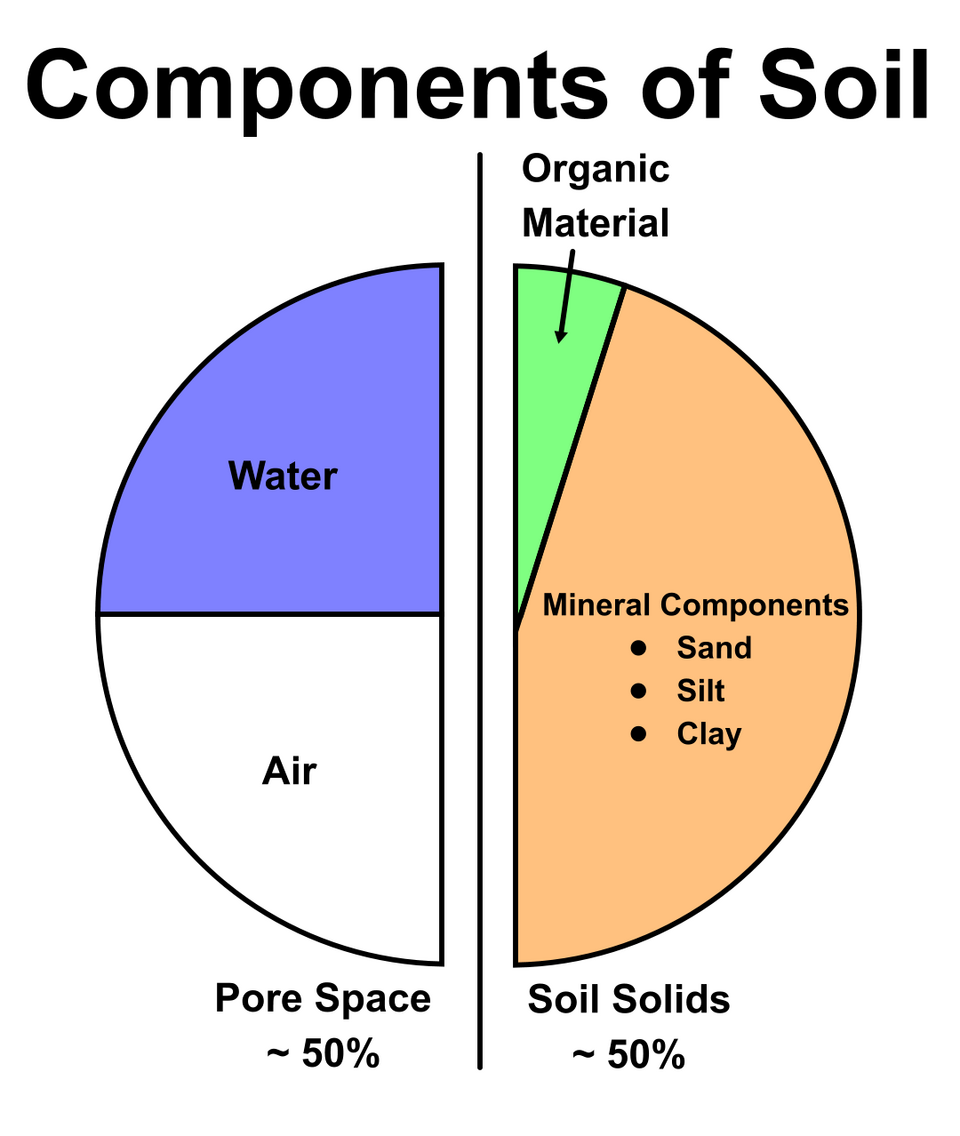
A typical soil is about half solid and half empty space. The solid half is about 45 per cent minerals and about 5 per cent organic matter. The empty half is made of . In a typical soil, one half of the pore space holds water and the other half holds air.
The amounts of mineral and organic matter change slowly. The proportions of water and air change all the time. When rain fills the pores with water, the air is pushed out. When the soil dries, air moves back in.
Those pores matter as much as the solids. Plant roots and soil creatures need oxygen, and pores let air and water move through. Rainwater soaks into them and is held there until roots take it up. is a common problem. When soil is squashed by heavy machines or too many feet, the pores shrink. Air and water cannot reach the roots, and the soil becomes much less useful.
The mineral part is made of three sizes of grain. Sand is the largest, silt is in the middle and clay is the finest. The mix of the three gives a soil its . Sandy soil feels gritty and drains fast. Clay soil feels sticky and holds water. Particles also clump into crumbs called aggregates, which make a soil crumbly and healthy.
The gases in soil are different from the air above. Soil air has less oxygen and more carbon dioxide, because roots and breathe there.
How does bare rock become soil?
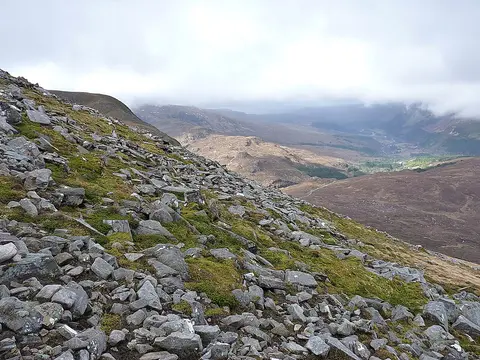
Soil begins with rock. Weathering breaks rock into small mineral pieces, and these form the . Then living things and water get to work.
Take a fresh lava flow. Plants arrive in stages. The first are lichens and certain bacteria that can take nitrogen from the air, so they can live where there is almost no organic matter. Later, larger plants take hold. Their roots grow into cracks and pockets in the porous rock where fine material has collected. Fungi attached to the roots help to break the rock apart. Slowly, dead plant matter and fine mineral grains build up. This is how soil starts. Similar early stages have been seen on volcanoes, on bare rock hills and on the rubble left by glaciers.
Development is fastest on new lava in a warm climate with heavy and frequent rain. It is much slower where it is cold or dry.
In 1941 the American soil scientist Hans Jenny set out five main factors that shape any soil. They are climate, relief or the shape of the land, living organisms, the parent material and time. The first letters make a memory aid, CROPT.
Given enough time, water carries fine clay and dissolved materials down through the soil. Animals mix it as well. This sorting is what makes the layers.
Who worked out where soil comes from?
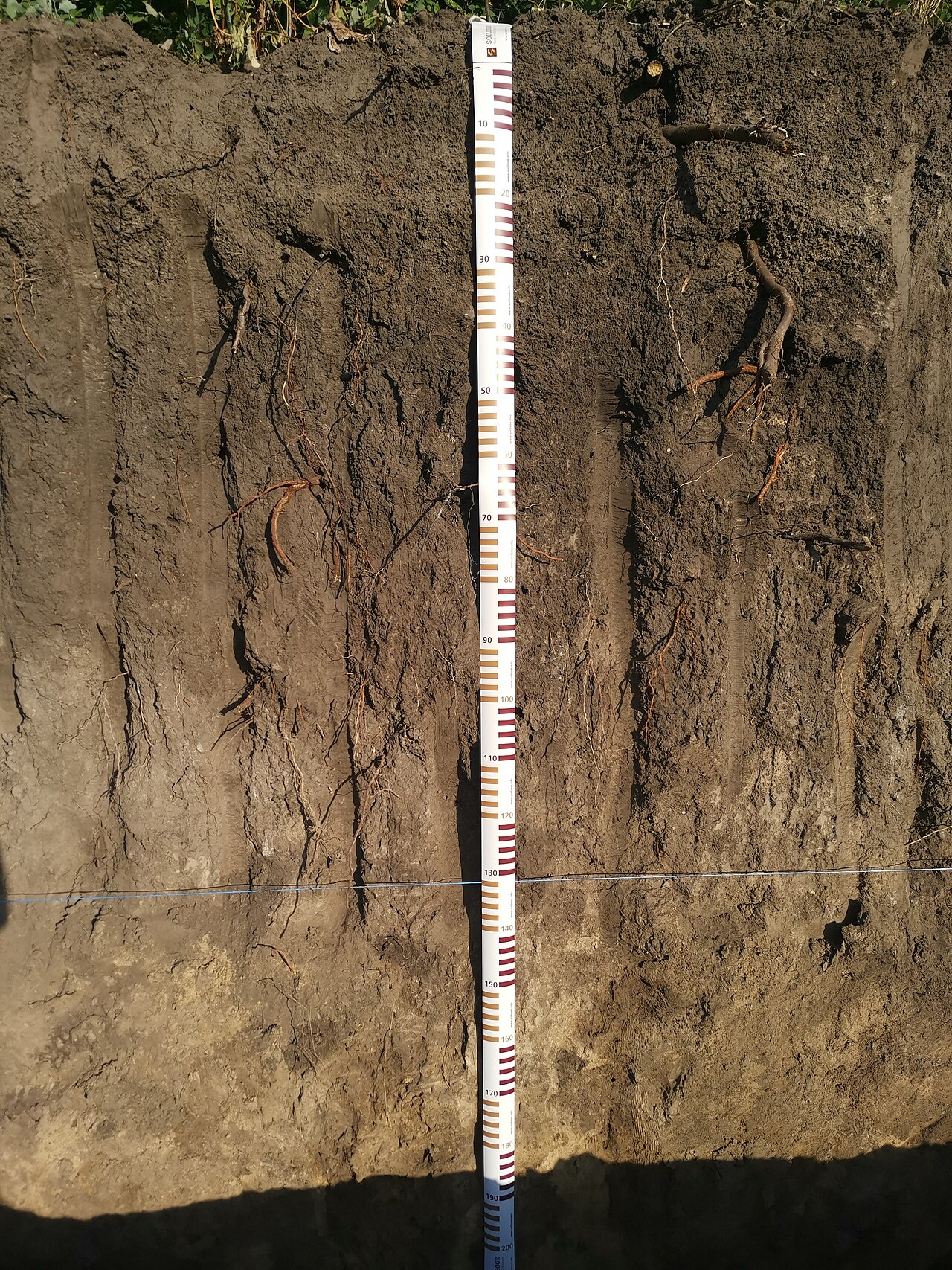
For most of history, soil was just the ground under a farmer's feet. The first scientist to treat it as a natural body with its own history was the Russian geologist Vasily Dokuchaev. From the late 1870s he studied the , the black earth of the Russian steppe, and in 1883 he published a book called Russian Chernozem. He argued that soil is not simply crumbled rock. It is shaped by climate, living things, the parent rock, the lie of the land and time. Many people call him the founder of soil science, and the five factors that Hans Jenny later listed grew out of his ideas.
Charles Darwin looked at soil from the point of view of the animals in it. In 1881, the year before he died, he published a book on earthworms. Worms eat their way through the ground and leave their castings on the surface. Darwin showed that over the years this buries stones, fallen objects and even the ruins of old buildings, and that earthworms keep turning the soil over.
What can you see in a hole in the ground?
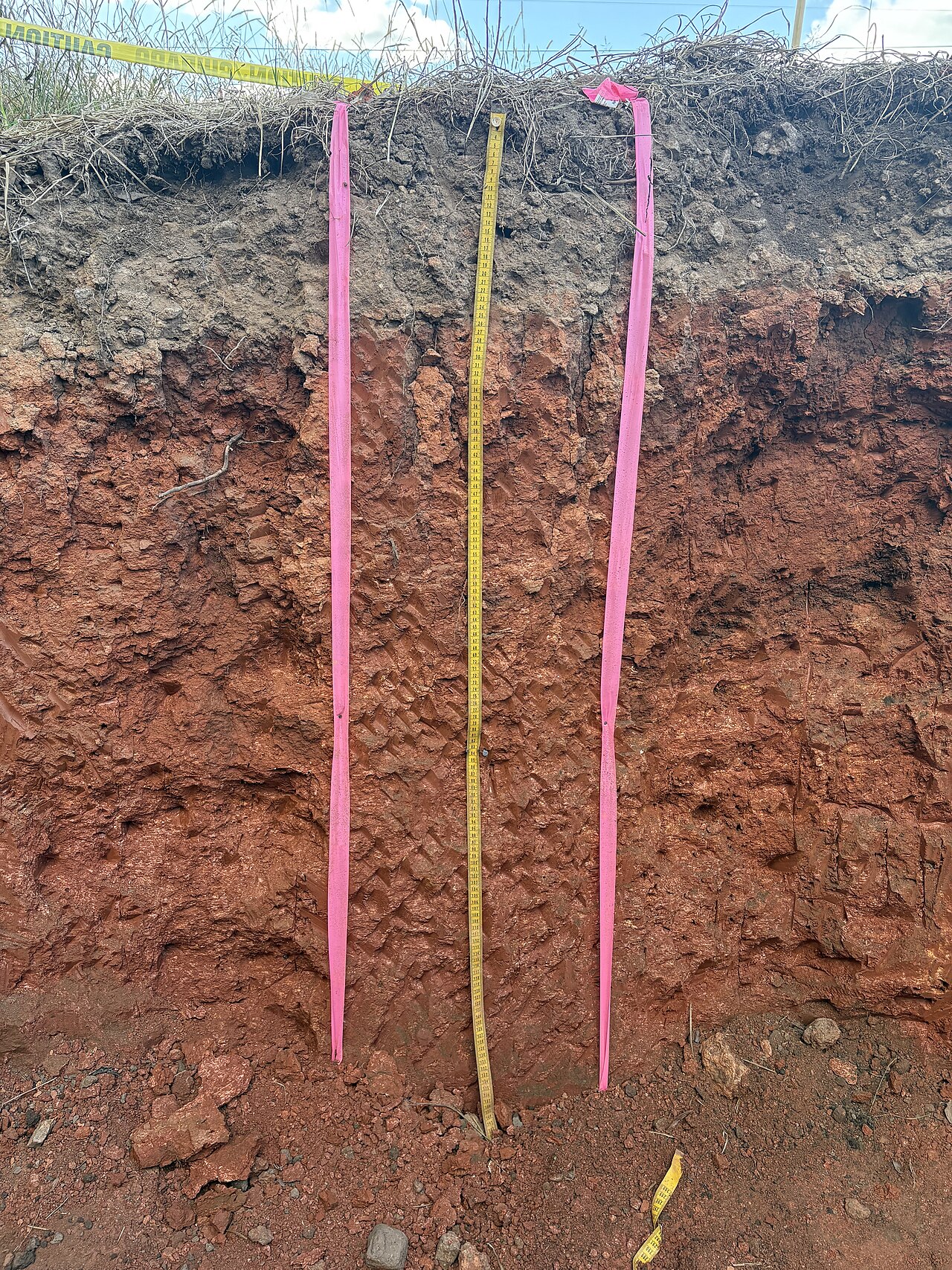
If you dig a deep hole, you can see that soil is arranged in layers. Each layer is called a horizon, and the whole stack is a soil profile. The horizons differ in colour, , structure, density and many other properties. Their edges are usually fuzzy, not sharp.
Mature soils usually show three main horizons. The A horizon is the top layer. It is where most living things are found and where dead plant matter mixes with minerals, so it is often dark. The B horizon below it is where clay, iron oxide and other materials that were washed down tend to collect. The C horizon is the weathered that is yet to become true soil. The A and B horizons together are called the solum, the true soil, and most of the living part of soil is found there. In a forest, a layer of litter on top is sometimes called the O horizon.
The layers are not the same everywhere. Under grassland, deep fibrous grass roots add organic matter far down. That gives a thicker, darker A horizon. Under forest, much of the organic matter stays in the leaf litter on the surface, and the A horizon is thinner.
Colour is a clue to what has happened in a soil. Red soils are rich in iron oxide. Mottled yellow and grey patches can show that the soil is often waterlogged.
A soil scientist reads these layers like pages of a book.
Soil scientists also sort the world's soils into types. is a deep black soil, rich in , that formed under grassland in places such as Ukraine, Russia and the American Great Plains. Laterite is a red, iron-rich soil of hot, wet lands, where heavy rain has washed most of the away. Peat is the dark, spongy remains of plants that only partly rotted in cold, waterlogged ground.
Who lives in the soil?
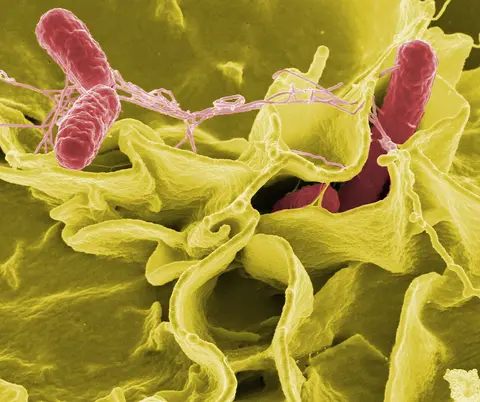
A handful of soil can hold more living things than there are people on Earth. A single gram can contain billions of organisms from thousands of species. Most are , and many have never been studied. This is partly because most soil life is invisible. It is hard to count.
A recent study estimated that soil may be home to about 59 per cent of all species on Earth, though the margin of error is large. Some groups live almost entirely in soil. Nearly all potworm species do, and about 90 per cent of fungi, 85 per cent of plants and 84 per cent of termites. About 30 per cent of insects and close to half of the arachnids also live in the soil. Many burrowing animals, such as most blind snakes, spend their lives underground.
By weight, a typical soil's living material is about 70 per cent microorganisms, 22 per cent larger animals such as worms and insects, and 8 per cent roots.
These creatures form a soil food web. Bacteria and fungi feed on dead plant and animal matter. Tiny animals called protozoa eat the bacteria. Nematodes, worms and arthropods eat the protozoa and also the organic matter itself. Everything is processed a little like food in a digestive system.
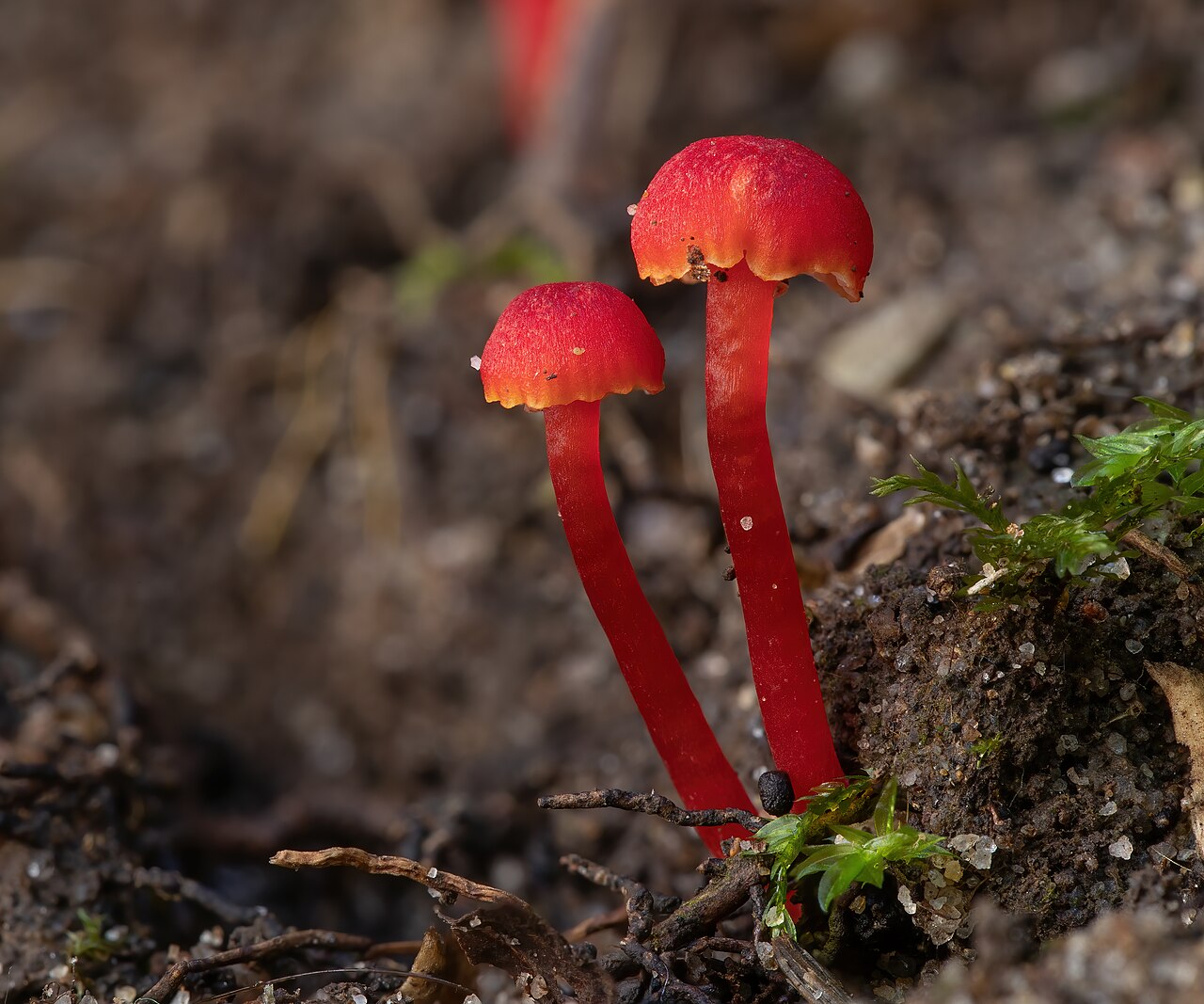
Some of the most colourful visitors are fungi. Their mushrooms, such as bright red waxcaps, are only the fruiting parts of huge networks of threads hidden underground.
How does soil feed plants?
Plants need 17 chemical elements to grow and reproduce. Carbon, hydrogen and oxygen come from air and water. Nitrogen comes mostly from bacteria that turn nitrogen from the air into a form plants can use. The rest, such as phosphorus, potassium, calcium and iron, come originally from soil minerals.
Rock minerals release slowly. They hold on to most of them for a long time, so they cannot feed fast-growing plants alone. Plants and their partners help out. Roots release acids, and fungi and bacteria around the roots help to free nutrients.
Much of the food supply is held on tiny particles of clay and organic matter. These particles carry an electric charge that lets them grab nutrient atoms and hold them against being washed away by rain. As roots take up nutrients from the soil water, more are released from the particles to replace them. This is how soil keeps a steady supply.
The other source is dead matter. decay it and release nutrients. The last stage of decay leaves , a dark, stable material that resists further breakdown. It makes up five per cent or less of a soil, yet it holds nutrients and water far better than clay does, gram for gram. Organic matter can hold as much as twice its own weight in water.
Humus can last centuries. Long ago people in the Amazon basin added charcoal to poor soil and made rich Amazonian dark earths. Today the same idea is called biochar.
How does soil store water and stay healthy?
Rain does not fall all the time, but plants need water almost continuously. Soil solves this by acting as a store. Water clings to soil particles and sits in the , ready for roots to take up.
Scientists describe soil moisture in stages. Saturation is when every pore is full of water. Field capacity is the level in a wet soil after the extra water has drained away under gravity. Wilting point is the dry limit where plants can no longer pull water out of the soil. Between field capacity and wilting point lies the water a plant can actually use.
Water also moves upwards. In capillary action, it creeps from wet parts of the soil to drier ones, like water climbing a paper towel. This helps gardeners who water plants from below. In dry regions it can bring salts up to the surface, which poisons the soil. This is called salination.
Another key property is acidity, measured on the scale. Most soils range from pH 3.5 to 9.5. Most crops do best near pH 6.5 on mineral soils. Heavy rain tends to make soil more acidic because it washes away alkaline minerals. Soils rich in clay and resist these shifts, because they act as buffers. Pure sand has almost no buffering power.
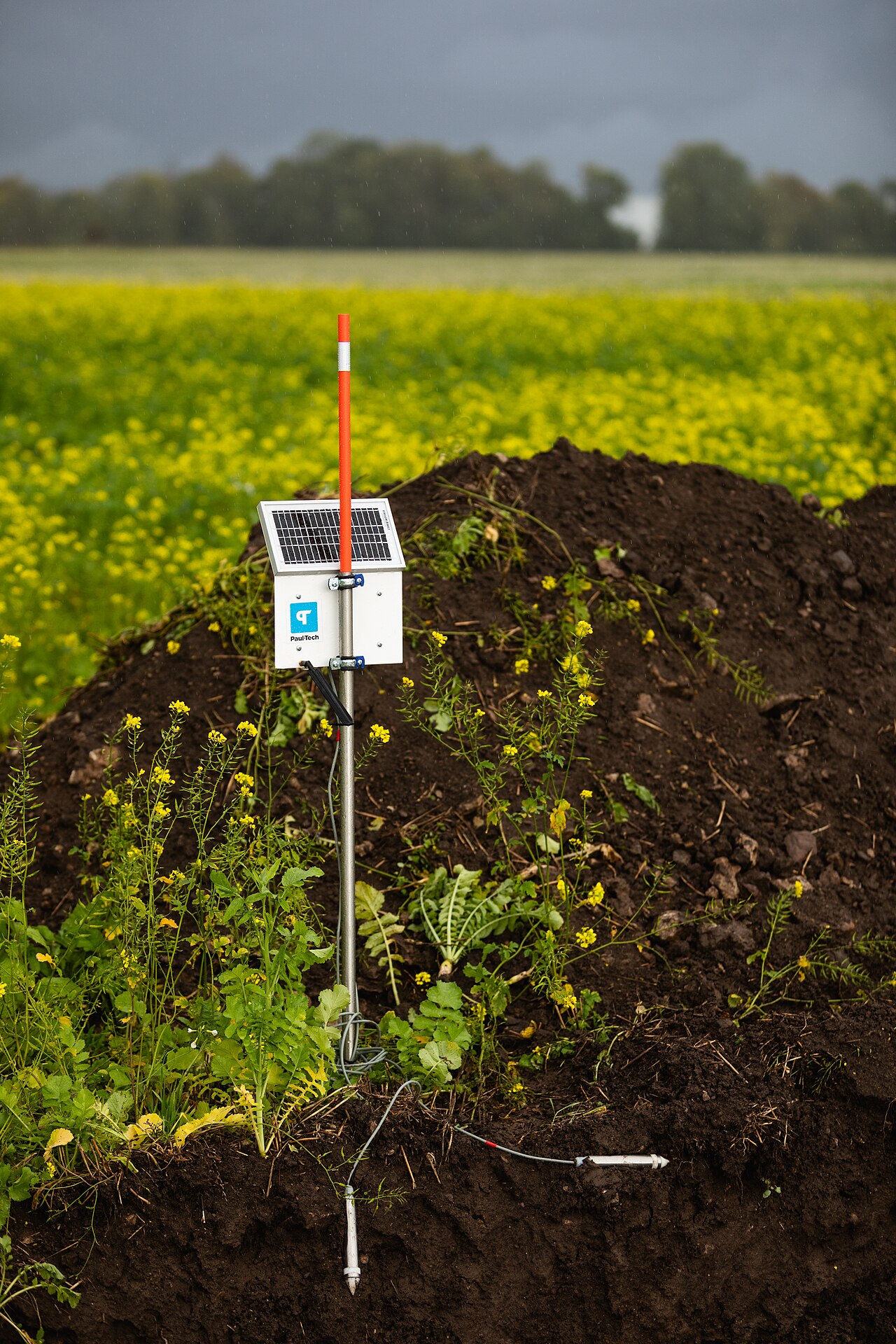
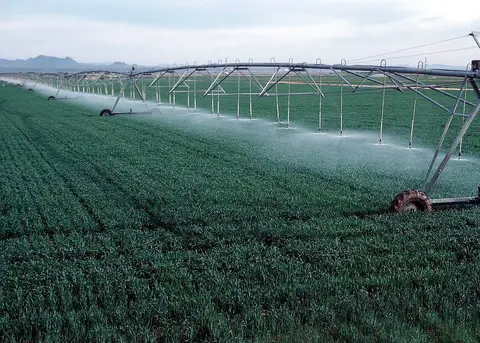
Farmers and scientists measure soil moisture with probes and also by remote sensing. The data helps them to water crops only when they need it.
Why does soil matter, and can we lose it?

Soil does far more than grow food. It stores and filters water. It breaks down wastes and can remove impurities and some disease-causing . It also holds a great deal of carbon, mostly in organic matter, and swaps gases with the air. Soil releases carbon dioxide as microbes and roots breathe, but it can also take in methane. The way soil handles carbon is a big question for climate science. Researchers still debate how much extra carbon warmer soils will release.
After rain on dry ground, many people notice a fresh, earthy smell. It comes from chemicals in the soil air that rainwater flushes out. One of them is geosmin, made by soil microbes. In 1964 two Australian scientists, Isabel Joy Bear and Richard Thomas, named the smell , from the Greek words for stone and for the fluid in the veins of the gods.
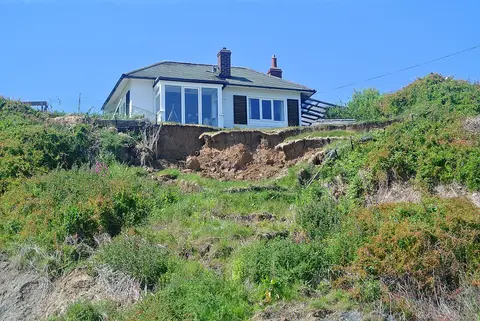
Soil also takes a very long time to make. A few centimetres of soil take hundreds to thousands of years to form, so any soil that is lost is almost impossible to replace in a human lifetime. Erosion by water and wind carries away the fertile top layer. squeezes out the . Ploughing speeds up the loss of organic matter. Wet, hot tropical climates leach out of the ground, so forest soils there depend on rapid recycling of fallen leaves.
Protecting soil is possible. Keeping plant cover, planting trees along streams, adding compost and avoiding compaction all help. Soil is a living, slowly built resource, so looking after it is a decision with long consequences.
Explore Next
Your audio story keeps playing while you look around.
Words to Know
- chernozem
- A deep black, humus-rich soil that forms under grassland.
- compaction
- Squashing of soil that squeezes out its air and water spaces.
- humus
- Dark, stable organic matter left after plant and animal remains have mostly decayed.
- microbe
- A living thing too small to see without a microscope.
- nutrient
- A chemical element that living things need to grow.
- parent material
- The rock or loose minerals that a soil forms from.
- pedosphere
- All the soil on Earth, seen as one global layer.
- petrichor
- The fresh, earthy smell of rain falling on dry ground.
- pH
- A scale that shows how acidic or alkaline something is.
- pore
- A tiny gap between soil particles that holds air or water.
- soil horizon
- A layer of soil that differs from the layers above and below it.
- texture
- How coarse or fine a soil feels, set by its mix of sand, silt and clay.