Rock Cycle
Every rock on Earth is slowly being melted, broken, buried and remade.
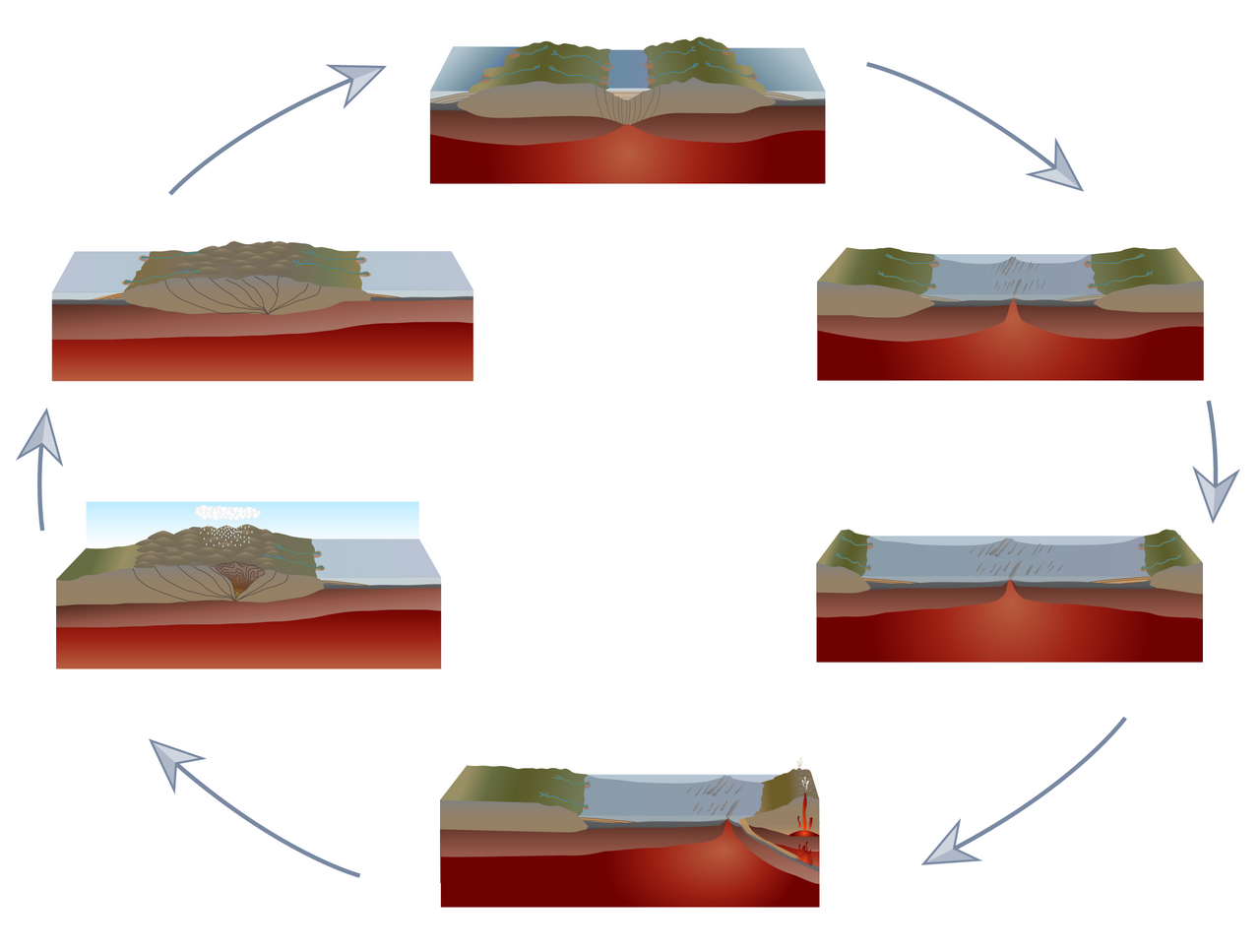
Rocks look solid and unchanging, but over millions of years they change again and again. The rock cycle is the story of how. A rock can melt, cool, crumble into sand, get buried and be squeezed into something new. There are three main kinds of rock, called igneous, sedimentary and metamorphic, and each one can turn into the others. Two great engines drive the changes. One is the slow movement of the plates that make up Earth's outer shell. The other is the water that flows from sky to land to sea. Together they keep our planet's surface recycling itself.
Do rocks really change?
Pick up a pebble and it feels fixed for ever. Yet every rock on Earth is slowly changing. A rock stays the same only while its surroundings stay the same. Move it somewhere hotter, colder, deeper or wetter and it is no longer in balance, so it starts to change.
Geologists sort rocks into three main types. form when melted rock cools and hardens. form when pieces of older rock, or the remains of living things, are buried and turned to stone. form when heat and pressure change a rock that was already there.
The rock cycle describes how one type turns into another over geological time. A volcanic rock such as basalt might be worn away by wind and rain. It might instead melt as it sinks beneath a continent. Either way, it is on the move.
The word cycle can mislead, because there is no fixed route and no starting point. Any of the three types can melt and become igneous rock. Any can be broken down into . Any can be baked and squeezed into metamorphic rock. The changes take thousands or millions of years, so nobody can watch one happen in a lifetime. We read the results in the rocks around us.
On a planet with life, the cycle also moves chemicals such as carbon between rock, air, water and living things.
Who worked out the rock cycle?
Until about 250 years ago, many people thought Earth was only a few thousand years old. James Hutton, a Scottish farmer who had trained as a doctor, disagreed. He watched soil wash into rivers and rock crumble on hillsides, and he asked where it all went.
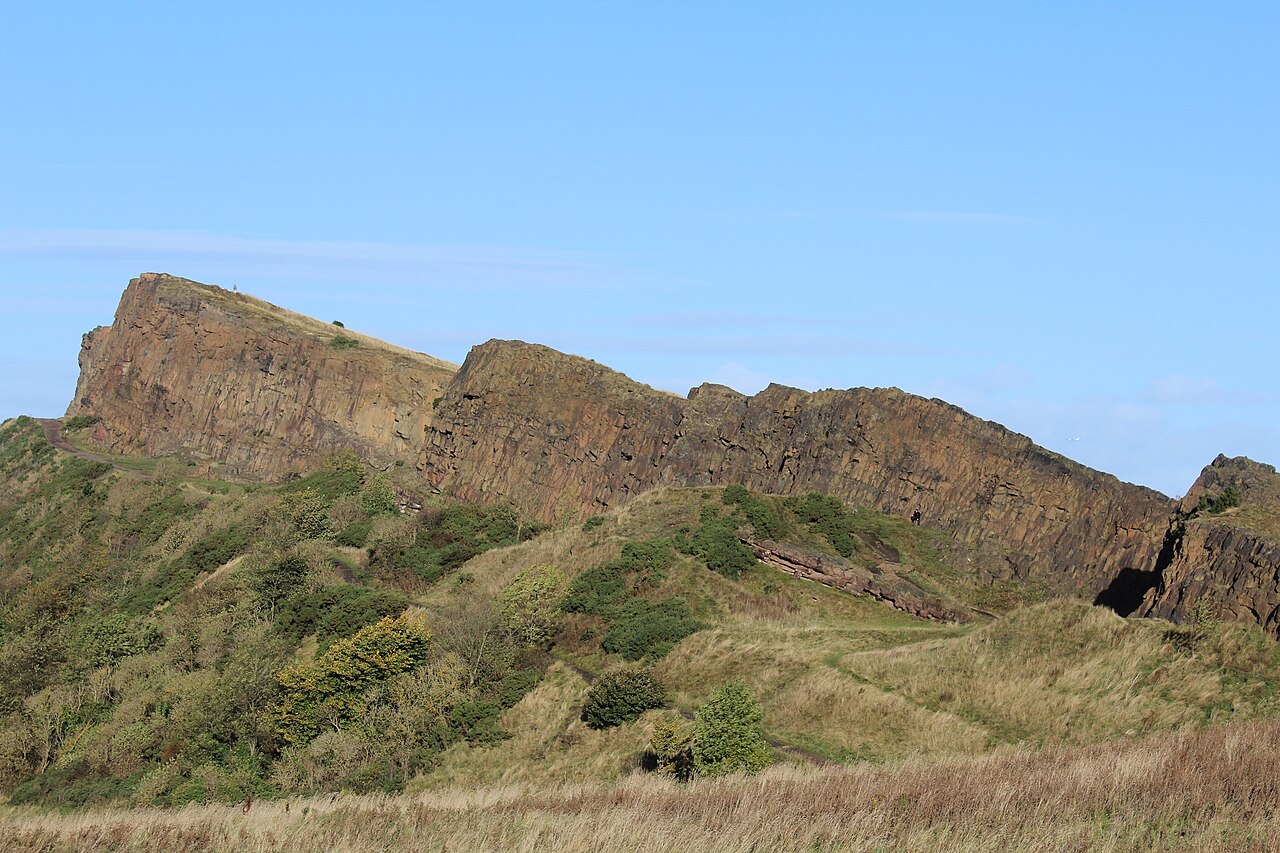
Hutton reasoned that the pieces must pile up on the sea floor, be buried and hardened into new rock, and then be lifted into new land by the heat inside Earth. Then the whole round would begin again. He found clues close to home. At Salisbury Crags in Edinburgh, a sheet of dark rock had once been molten and squeezed between layers of sandstone, so some rock had clearly come from fire.
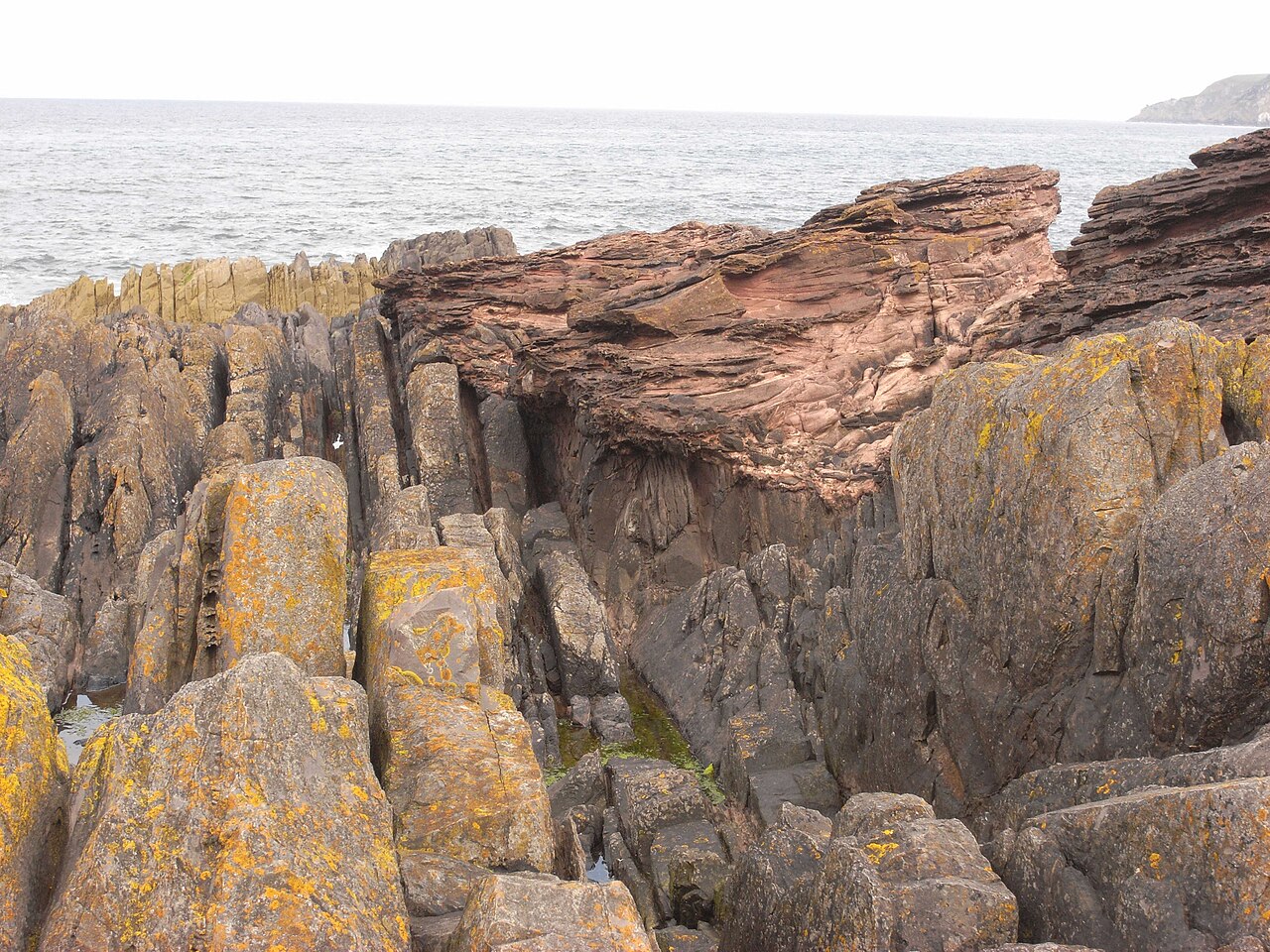
His best proof came in June 1788 at Siccar Point, on the Scottish coast east of Edinburgh. Hutton sailed there with his friend John Playfair and the geologist Sir James Hall. At the water's edge, almost upright layers of grey rock are topped by gently sloping red sandstone. Hutton saw what that meant. The grey layers had been laid down flat, buried, hardened, tipped on end and worn down. Only then did the red layers settle on top. That needed far more time than anyone had allowed. Playfair later wrote that his mind seemed to grow giddy by looking so far into the abyss of time.
Hutton set out his Theory of the Earth in a paper read in Edinburgh in 1785 and printed in 1788. It ends with a famous line: we find no vestige of a beginning, no prospect of an end. Between 1830 and 1833 the English geologist Charles Lyell spread the idea in his Principles of Geology, and the young Charles Darwin read it on HMS Beagle.
How does melted rock become stone?
Deep underground, rock can get hot enough to melt. Melted rock is called . It is lighter than the solid rock around it, so it tends to rise. When conditions change and it can no longer stay liquid, it cools and sets solid. The new rock is igneous.
Rock reaches those depths in several ways. Moving plates can drag it down. Mountain building can bury it. Any of the three main rock types can melt and cool into , so melting is a doorway back into the cycle for all of them.
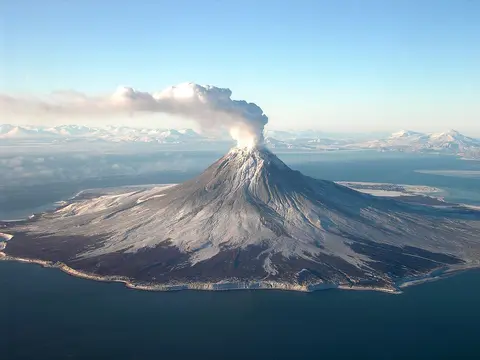
Magma that breaks out through a volcano gets a new name, . Lava cools in open air, so it sets fast. Magma that stays below ground cools slowly. Underground, it can fill cracks, push between layers of rock or gather in a huge chamber. A crack that cuts across the layers is called a dyke. A sheet that squeezes between them is called a sill. Salisbury Crags, the cliff above Edinburgh, is a famous sill.
Igneous rock does not stay fresh for long once it meets air and rain. Water slowly dissolves some of its minerals. Over time, the feldspar that makes up much of granite can break down into soft clay. That is one way hard rock begins its journey towards becoming soil and .
Why do some rocks have big crystals?

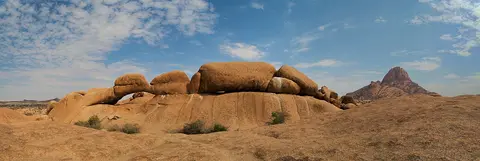
The speed of cooling decides what an looks like. Crystals need time to grow. When cools slowly deep underground, the crystals have thousands or even millions of years to grow big. The result is a coarse rock with grains you can see. Granite is the famous example. Rock that forms underground like this is called intrusive or plutonic.
that pours onto the surface meets cold air or water and cools very fast. Its crystals are tiny. These fine-grained rocks are called extrusive or volcanic. The most common one is basalt, which makes up much of the ocean floor.
Sometimes lava cools so quickly that no crystals can form at all. The result is a natural glass called obsidian. It breaks into sharp, shiny edges, and people have used it for cutting tools for thousands of years.
So a rock carries a clue about its own past. Big crystals tell a geologist that the rock cooled slowly and deep. Tiny crystals or glass tell the story of a quick chill at the surface. Reading these clues is one way we know how rocks formed, even though nobody was there to see it.
How does loose sand become solid stone?

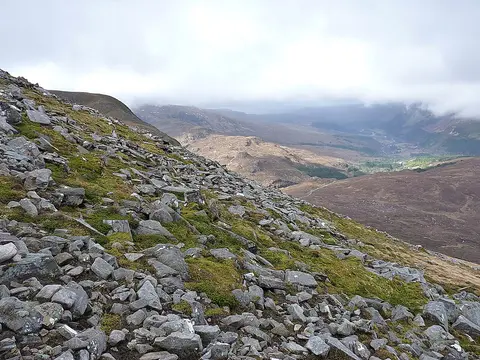
Any rock that sits at Earth's surface is under attack. breaks it into smaller pieces and dissolves some of it. Erosion carries those pieces and the dissolved material away. Rivers do most of the carrying, and they deliver vast amounts of to the sea and to low basins inland.
There the sediment settles in layers. New layers pile on top of the old ones. The deeper a layer is buried, the more it is squashed, and minerals in the water between the grains slowly glue them together. The turning of loose sediment into solid rock is called .
A single grain of sand is still the same kind of rock it came from. A rock made of many grains stuck together is sedimentary. Geologists name three main kinds.
Clastic rocks are made of broken fragments, such as sand or mud, or bits of plant material. Biogenic rocks are made from the remains of living things. Fossils are found in these. Precipitate rocks form when water carrying dissolved minerals evaporates and leaves the minerals behind as solid crystals.
Sandstone, mudstone and limestone are all common . Because they build up layer by layer, they often hold the best record of Earth's history, including the fossils that show what lived long ago.
What happens when rock is squeezed and baked?
Not every buried rock melts. If it gets very hot and is squeezed hard, but stays solid, it can change into a new rock. This is metamorphism, and the new rock is metamorphic. The word means change of shape.
The change can be physical or chemical. The minerals may grow into new crystals, or they may react to form different minerals. Any type of rock can be changed this way, including rock that was metamorphic already.
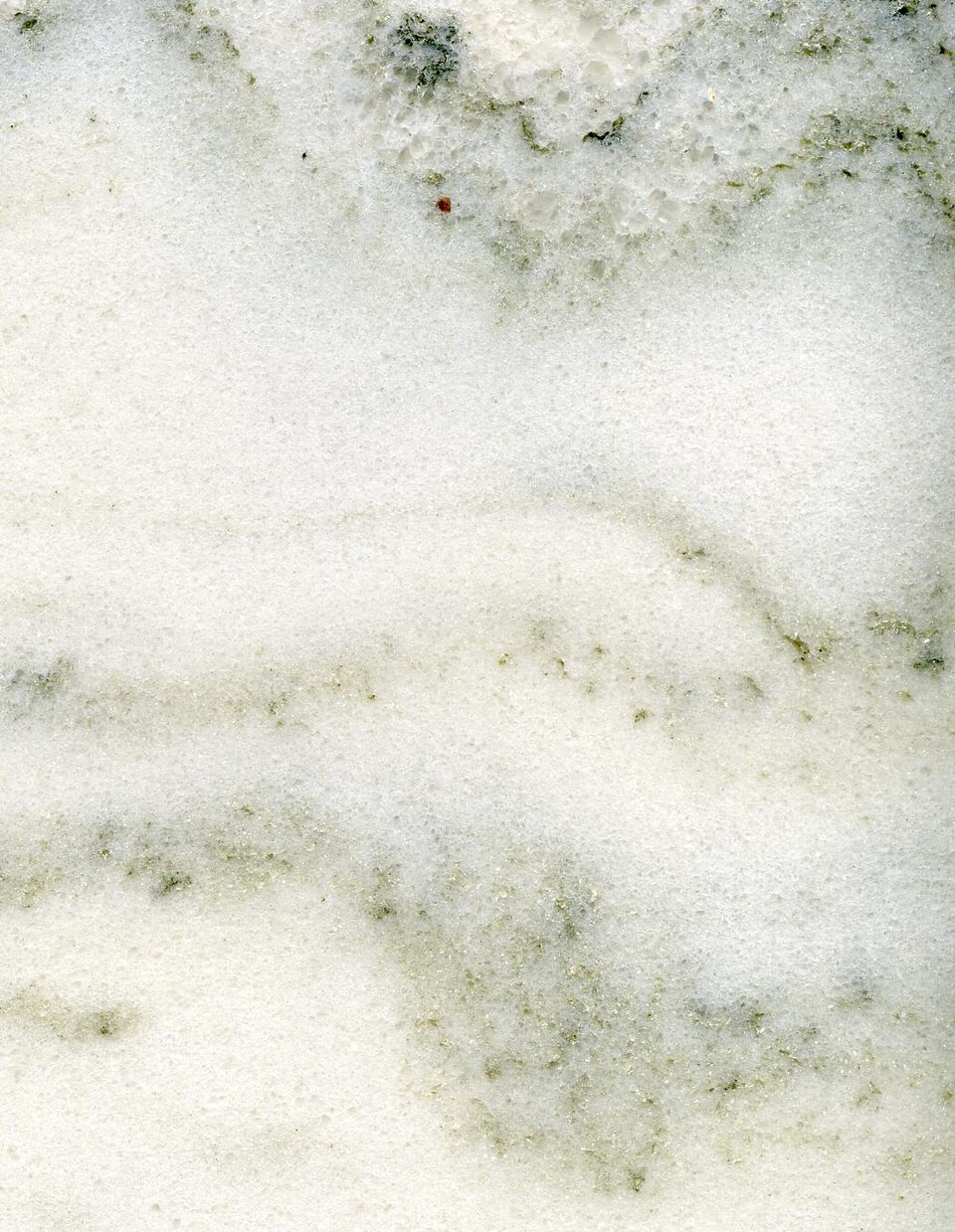
There are two main kinds. Regional metamorphism happens to huge masses of rock over a wide area. It is usually linked to mountain building. The rocks are pressed so hard that their minerals often line up in stripes of different colours and mineral types. These stripes are called .
Contact metamorphism is more local. It happens when a body of hot pushes into the rock around it. The heat bakes and re-crystallises the surrounding rock. Hot fluids from the magma can also soak in and add new chemicals to it. Geologists call that process metasomatism.
Marble, which forms from limestone, and slate, which forms from mud rock, are familiar . Their grain and stripes tell us that they were once somewhere much deeper and hotter than the place where we find them today.
Can any rock become any other?
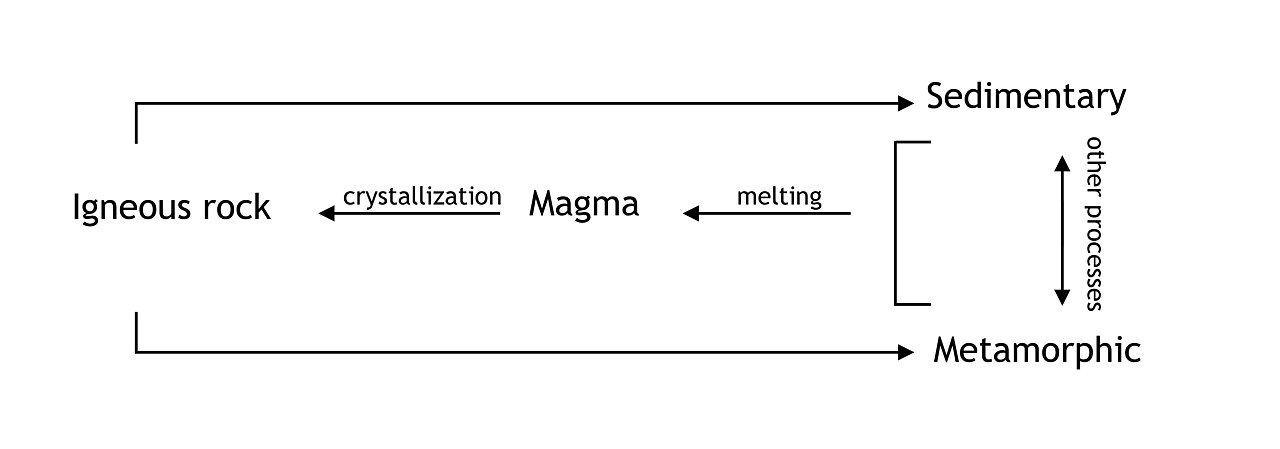
Yes, with one small catch. A rock can be pushed in many directions, so the cycle is more like a web than a circle.
Here are some of the routes. can be weathered into , then buried and made into . Sedimentary rock can be buried deeper, heated and squeezed into . Metamorphic rock can be dragged down until it melts, then cool as igneous rock. That is the classic loop.
But there are shortcuts. Igneous rock can be squeezed and heated into metamorphic rock without ever being worn into sand. Metamorphic rock can be eroded and turned into sedimentary rock. Any of the three can melt straight back into .
The catch is the time it takes. A grain of sand may lie buried for tens of millions of years before it becomes rock. A mountain may take longer still to wear away. Some rocks are recycled quickly in geological terms, and others sit unchanged for billions of years in the oldest, quietest parts of the continents.
So the cycle never runs on a timetable. What matters is where a rock ends up. Put it in the heat and pressure of a mountain root and it changes one way. Put it on a rainy hillside and it changes another.
What do moving plates have to do with it?
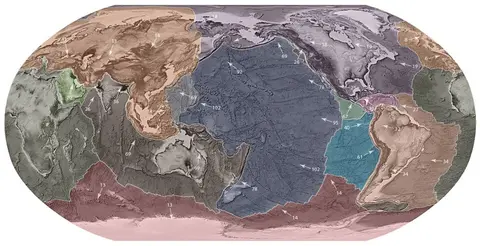
Earth's outer shell is broken into huge plates that move a few centimetres a year. Their movement is the main engine of the rock cycle, because it decides where rock is made, buried, heated and lifted.
Start at a spreading ridge in the middle of an ocean. Here two plates move apart and hot rock rises from below. It melts a little as the pressure drops, and the forms new basalt crust. As the plates carry the new rock away from the ridge, hot seawater seeps through cracks in it and starts to change it chemically.
The ocean crust keeps moving until it meets a , where it is pulled down into the mantle. As it sinks, the pressure and temperature rise, and its minerals rearrange into a dense called eclogite. The sinking slab also squeezes out water and other volatile materials. They rise into the hot rock above and make it melt more easily.
The new magma floats upwards and breaks out as volcanoes, either in a curve of islands or along the edge of a continent. So the same moving plate makes new at one end and destroys old rock at the other.
Some slabs are not pulled all the way down. Pieces get pushed up onto the edge of a continent, where we can walk on them and study deep rocks at the surface.
How are mountains built and worn away?
Eventually the ocean between two continents can close. The two continental masses meet, and neither one sinks. Continental rock is light and thick, so it floats too high to be pulled down. Instead the plates push hard against each other and the crust crumples, folds and cracks into a mountain range.
This squeezing changes all the rocks involved. Old igneous, volcanic, sedimentary and are all caught up in the same event, and they are metamorphosed together over a large area. The Himalayas are a famous range made when India collided with Asia.
The story does not end when the mountains stop growing. High mountains are attacked by erosion straight away. Steep slopes, ice and heavy rain wear them down fast. Huge piles of collect in nearby seas, basins and plains. As those piles get buried, they turn into . The rock of the mountain, whatever it was before, becomes the raw material for new layers.
There is a lasting result. Light, silica-rich melts out first and tends to stay in the crust, because it is too buoyant to sink back into the mantle. Over very long times, that process has helped the continents grow bigger. The ocean floor is recycled over and over, but the continents are mostly kept.
What part does water play?
Earth is unusual in having a lot of liquid water, and that matters hugely for the rock cycle. The most obvious job water does is wearing rock away. Rain, acidic soil water and groundwater dissolve minerals and loosen rocks. They work best on igneous and that formed deep down and are not stable at the surface. Rivers then carry the broken pieces and dissolved material back to the ocean.
A less obvious job happens on the sea floor. Seawater, sometimes heated, flows through cracks in fresh volcanic rock. It changes the minerals inside. Serpentinization is one example, where the mineral olivine turns into serpentine. These changes help to break down the volcanic rock.
Water also helps to make . When a slab of ocean crust sinks, it carries water down with it. Carbon dioxide and other carbon compounds from limestone in its go down too. These substances make the hot rock above the slab melt more easily. So the carbon cycle is part of the rock cycle.
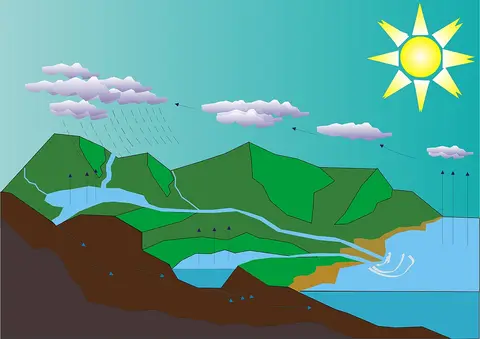
In short, the water cycle works at the surface and works deep inside. One lifts and breaks the rock, the other buries and melts it. Because of their teamwork, rocks never stay in balance for long.
The idea that opening and closing oceans drive these changes is called the Wilson cycle. J. Tuzo Wilson described it in the journal Nature in 1966, using the Atlantic Ocean as his example. The name Wilson cycle came later, in 1974.
Explore Next
Your audio story keeps playing while you look around.
Words to Know
- foliation
- Stripes of different minerals and colours in a metamorphic rock.
- igneous rock
- Rock that forms when magma or lava cools and hardens.
- lava
- Magma that has reached the surface.
- lithification
- The process that turns loose sediment into solid rock.
- magma
- Melted rock beneath Earth's surface.
- metamorphic rock
- Rock changed by heat and pressure while staying solid.
- plate tectonics
- The slow movement of the plates that make up Earth's outer shell.
- sediment
- Loose pieces of rock, sand, mud or shell carried and dropped by water, wind or ice.
- sedimentary rock
- Rock made from pieces of older rock or living things that are buried and pressed together.
- subduction zone
- A place where one plate sinks beneath another.
- unconformity
- A gap in the rock record, where older tilted layers lie buried under younger flat ones.
- weathering
- The breaking down of rock where it sits.