Lake
Hollows in the land that fill with water, from tiny pools to inland seas.
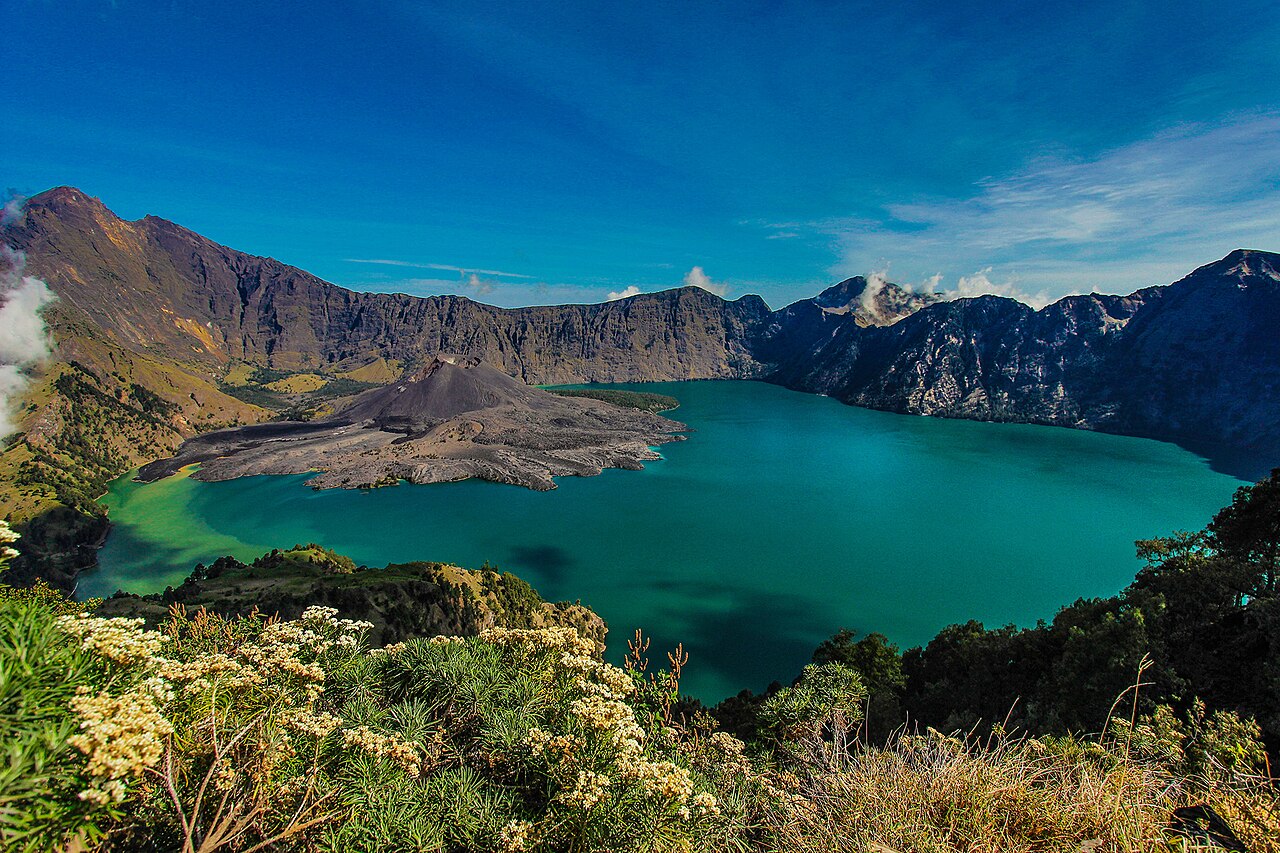
A lake is a large body of water that sits in a hollow on land, with dry ground all around it. Most lakes hold fresh water, and together they store almost all of the fresh water on Earth's surface. Some lakes are saltier than the sea. Lakes can begin with a volcano, a glacier, an earthquake, a river or even a falling asteroid, and every one of them is temporary in the long run. They fill with mud, spill away or dry up. Lakes are part of the water cycle and they are home to fish, birds and plants. Even Saturn's moon Titan has lakes, although they are not made of water.
Where does a pond end and a lake begin?
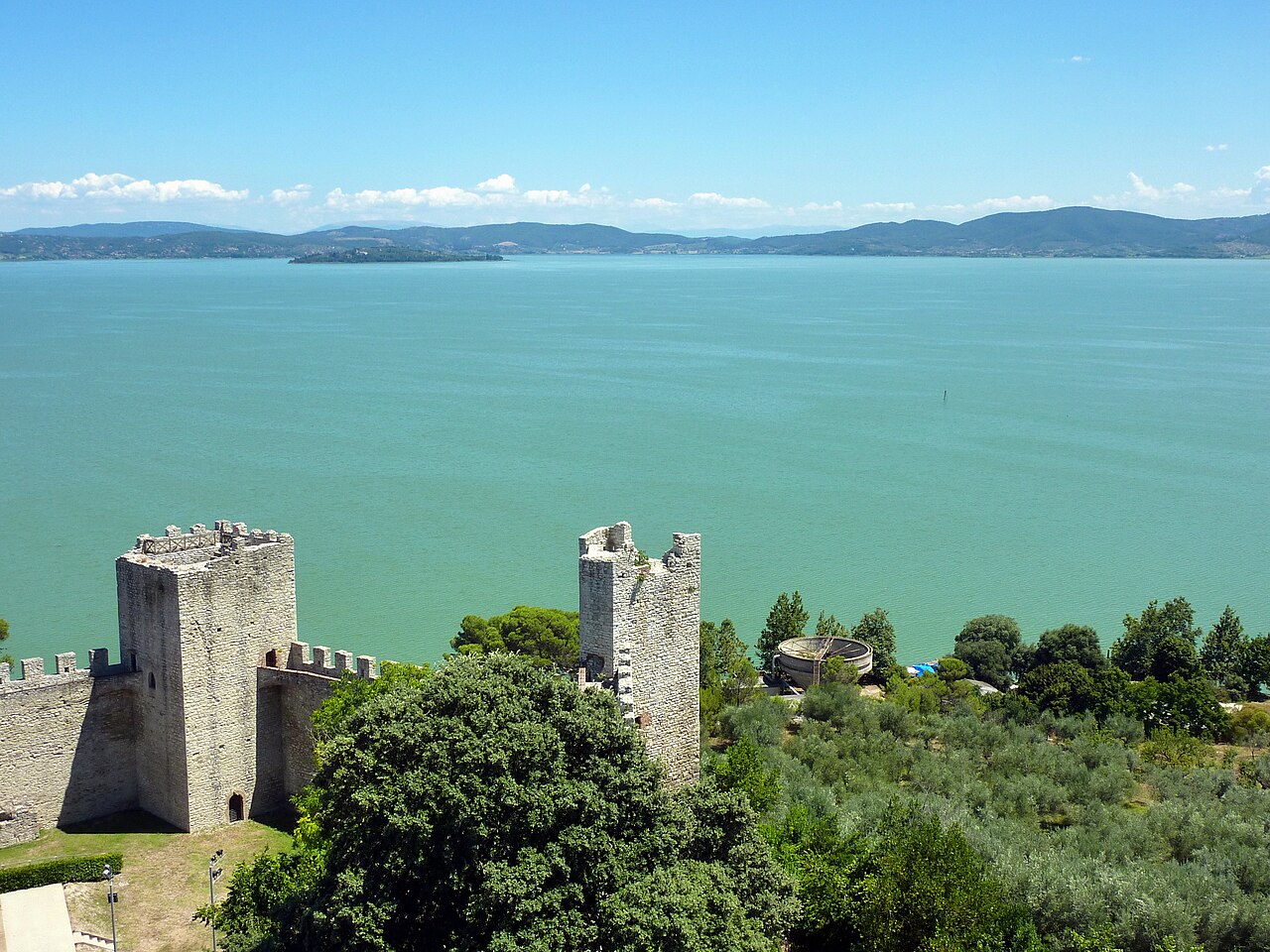
A lake is a body of water that sits in a on land. It is separate from the ocean, although a river may link the two. Most lakes are fed by streams, springs and rain, and most drain away through a river. A lake with no way out at all is called an . It loses water only by evaporation or by seeping into the ground.
So where does a pond end and a lake begin? Nobody agrees. Lakes are usually bigger and deeper than ponds, but there is no official rule. Scientists have suggested minimum sizes between 2 and 8 hectares. A hectare is about the size of a football pitch and a half. The ecologist Charles Elton preferred 40 hectares or more.
Names make the muddle worse. In Newfoundland almost every lake is called a pond, while in Wisconsin almost every pond is called a lake.
A lake is also different from a lagoon. A lagoon is a shallow pool of seawater on a coast, cut off from the ocean by a bar of sand. And some lakes come and go. Lake Eyre in Australia is a dry basin most of the time, but it fills when heavy rain arrives.
The word itself is very old. It comes from the Old English word lacu, which meant a pond or a stream. It is related to the English words leak and leach, which makes sense for water that collects and drains.
Which lakes are born from fire, earthquakes and asteroids?
In 1957 the scientist G. Evelyn Hutchinson sorted lakes by how they began. He found 11 main types. Many of the biggest and strangest lakes come from forces deep inside the Earth or from space.
Tectonic lakes form when the Earth's crust bends, tilts or splits. Where the crust stretches apart, the ground sinks to make a rift valley. Lake Baikal in Siberia and the great lakes of the African Rift fill valleys like this. Other tectonic have no river leaving them. The Dead Sea and the Great Salt Lake are examples. Water can only escape by evaporating, so the salt stays behind and builds up.
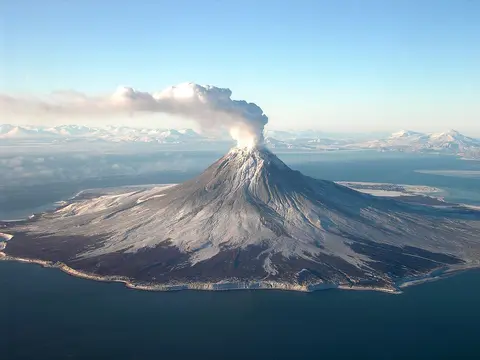
Volcanic lakes sit in craters and . A caldera is a huge bowl left when a volcano empties and collapses. Crater Lake in Oregon fills the caldera of Mount Mazama, which fell in a giant eruption about 7,700 years ago. Crater lakes are the roundest lakes of all. Lava can also block a river. That is how Malheur Lake in Oregon began.
Landslide lakes form when mud or rock blocks a valley. Quake Lake in the United States appeared after an earthquake in 1959. Most landslide lakes disappear within months. Sarez Lake in Tajikistan is different. It formed in 1911 behind a natural dam that still stands, and people downstream worry about what a future earthquake could do to it.
Some lakes are scars from space. Lonar Lake in India and the Pingualuit crater lake in Quebec fill craters made by meteorites.
How do ice, rivers and dissolving rock make lakes?
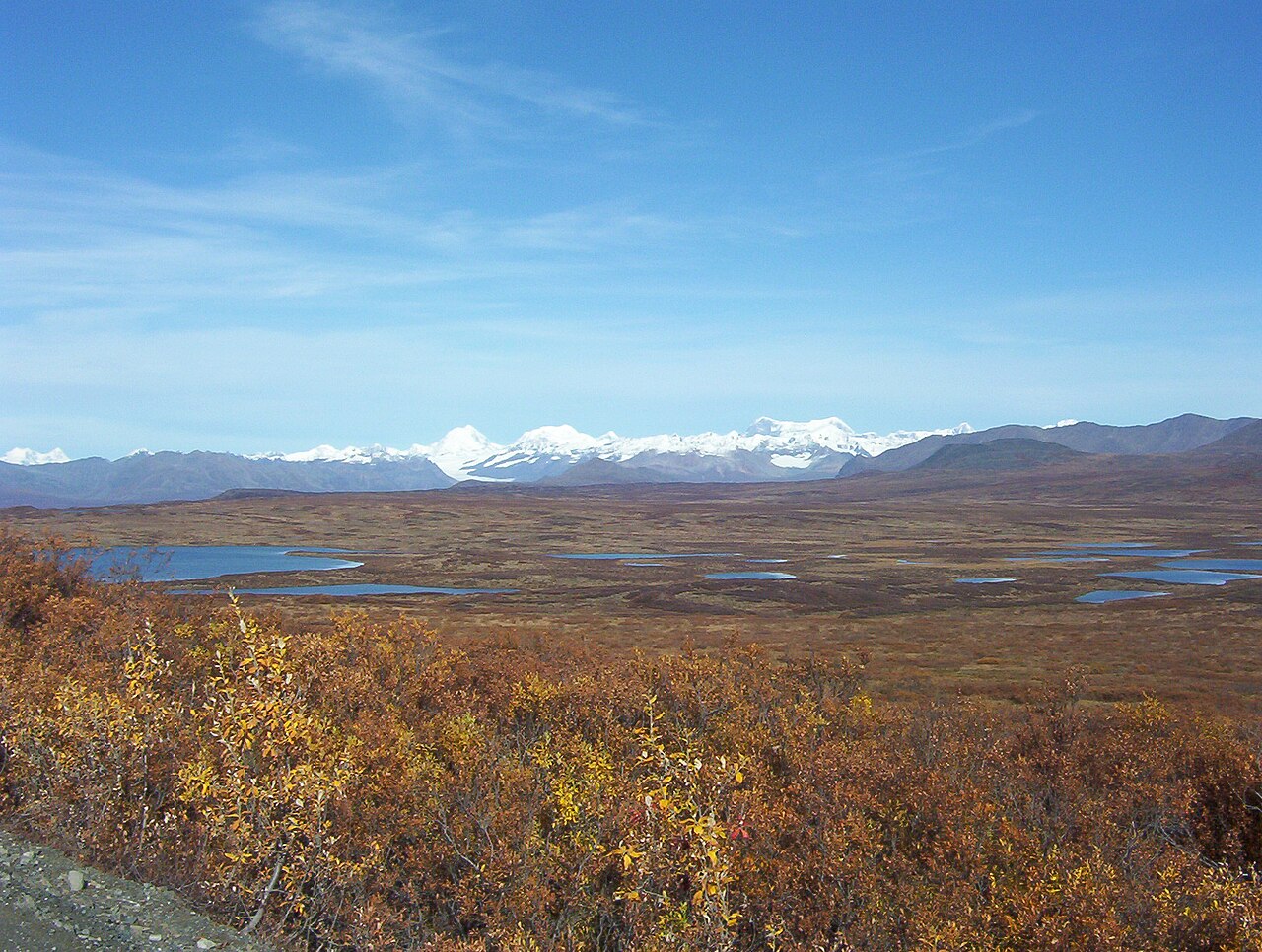
Glaciers have made more lakes than anything else. During the last ice age, ice sheets covered much of northern Europe and North America. They scraped out hollows and dumped heaps of rubble. When the ice melted, water filled the gaps. A kettle lake forms where a buried block of ice melts and leaves a pit behind. That is why Canada, Finland and the northern United States are so full of lakes. Canada has at least 2 million lakes, and Finland has about 188,000 of 500 square metres or more.
Rivers make lakes too. A slow river swings back and forth in loops. Its outer bank wears away faster than its inner bank, so each loop grows tighter until the river cuts straight through the narrow neck. Mud then seals off the old bend and leaves a crescent of still water called an .
Water can also dissolve rock. Rain seeping into limestone eats out caves. When a cave roof falls in, it leaves a hole called a . If groundwater is close to the surface, the sinkhole fills and becomes a solution lake. The coast of Croatia and the state of Florida have many.
Wind, plants and animals build lakes as well. Blowing sand can dam a valley, and beavers dam streams to make ponds. Peat lakes form where partly rotted plants pile up in wet ground.
People make large lakes too. A dam across a river creates a , and flooded mines fill with water. Southern Poland has more than 4,000 lakes and ponds made by human activity.
How many lakes are there on Earth?
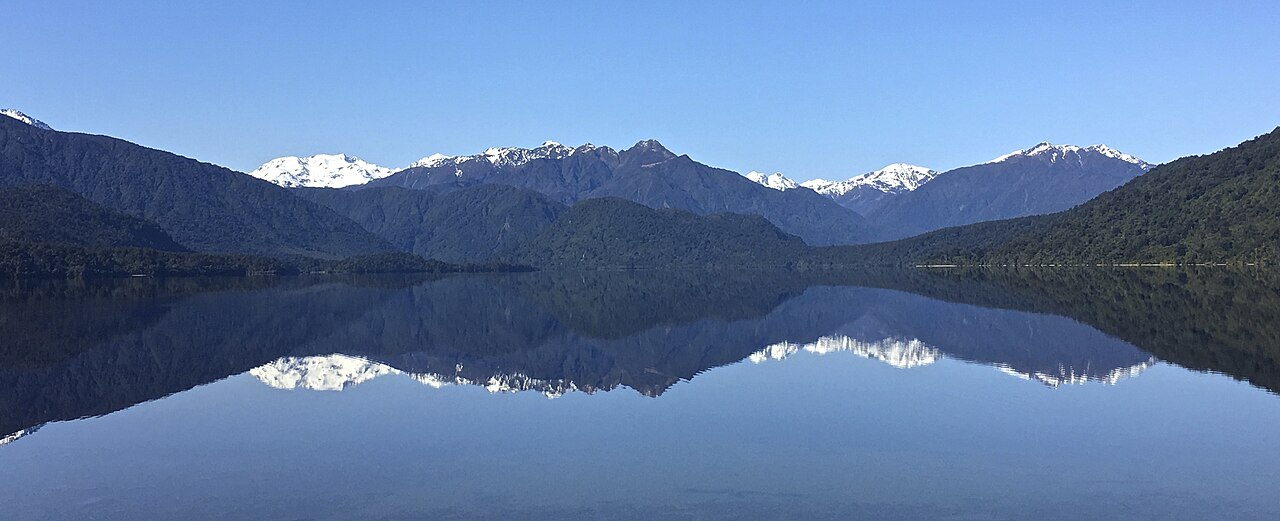
Nobody knows exactly, because most lakes are tiny. Many are too small to show on maps or in satellite pictures. One widely quoted study estimated that Earth has about 304 million lakes and ponds. Of these, 91 per cent cover 1 hectare or less.
Yet the small ones hold very little water. Almost all of the lake water on Earth sits in fewer than 100 big lakes. A large lake is usually deep as well as wide, so it holds far more than a small one.
Most of the world's lakes lie in the Northern Hemisphere, and most hold fresh water. Many sit in mountain valleys, in volcanic craters and in rift zones. Others lie where the ice age left a tangle of hollows and blocked streams. Some lakes form along old rivers, on floodplains and in wetlands. A few lie underground, in caves.
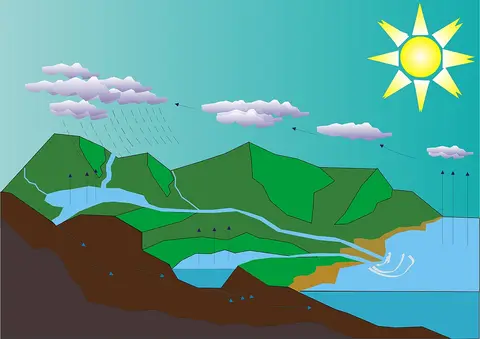
Every lake gains and loses water all the time. It gains from rain falling on its surface, from streams that run in off the surrounding land, and from groundwater. The land that drains into a lake is called its . A lake loses water through the river that flows out, by evaporation, by seeping into the ground, and when people pump it out. The level of a lake rises or falls depending on which side is winning. In a wet year the level climbs, and in a dry year it drops.
The scientific study of lakes and other inland waters is called .
What goes on beneath the surface of a lake?
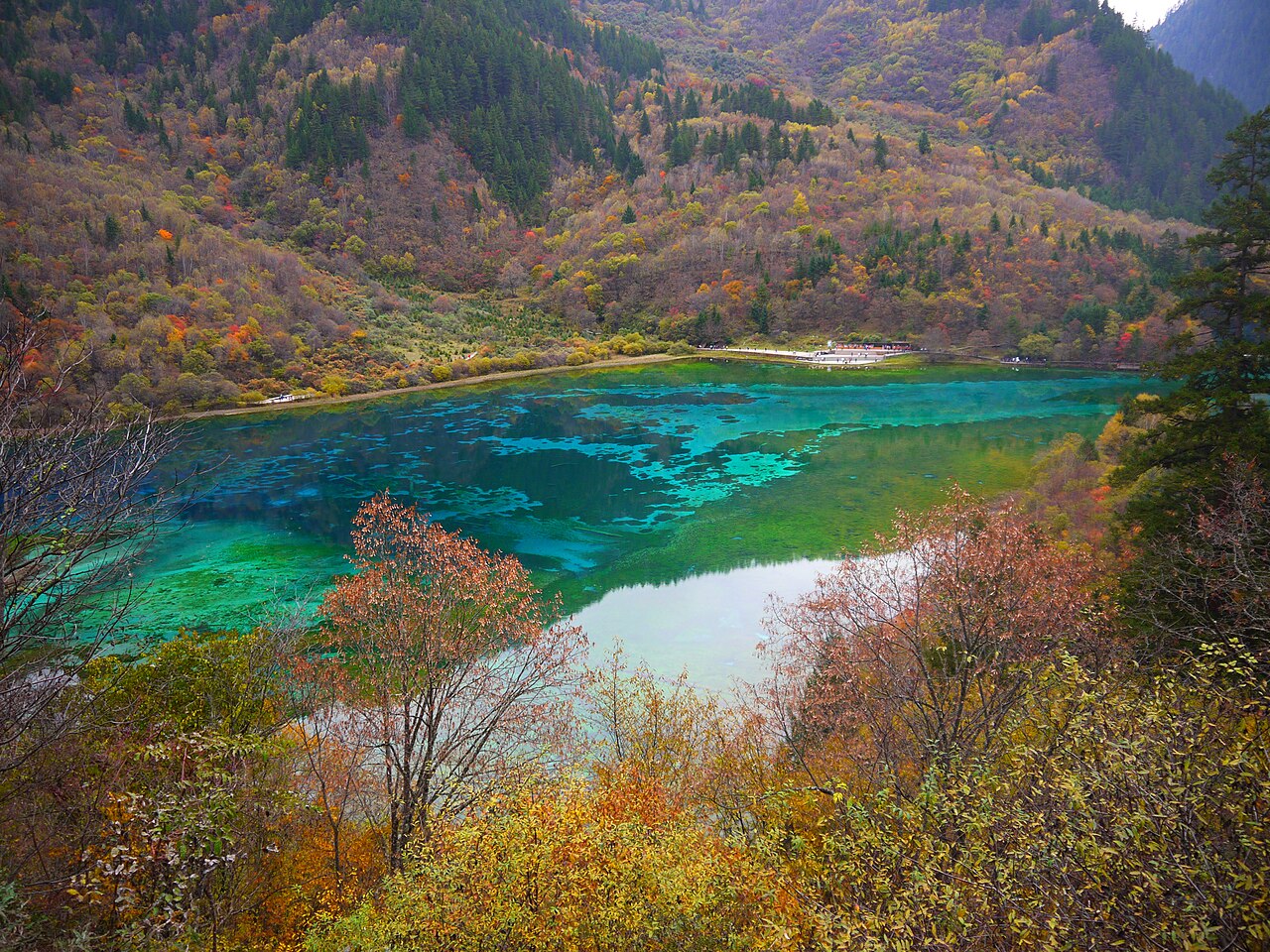
A lake is like a layer cake. Water is heaviest at about 4 degrees Celsius, so in a deep lake in summer the warm, lighter water floats on top and the cold, heavier water sinks to the bottom. A middle layer lies between them. The layers hardly mix, so the deep water can run low on oxygen.
In cool climates the pattern changes with the seasons. In autumn the surface water cools to the same temperature as the water below. The whole lake can then stir, which carries oxygen down to the bottom and lifts nutrients up. Deep tropical lakes never get this chance to mix.
Scientists divide a lake into zones. The shallow, sloping edge near the shore is the littoral zone. The open water, where sunlight reaches, is the photic zone. The deep water, where little light arrives, is the profundal zone.
The colour of a lake tells a story. Algae can turn the water green. Rotting plants can turn it yellow or brown. To measure how clear a lake is, scientists lower a Secchi disk. This is a 20 centimetre disk painted in black and white quarters. The depth at which it vanishes shows how much stuff is floating in the water.
Nutrients matter too. Clear lakes with few nutrients have little plant life. Lakes with too many nutrients, often from fertiliser washing in from farms, can fill with algae and run short of oxygen.
Mud on the lake floor also keeps records. In some lakes, one pale layer and one dark layer together make up a single year. Counting the layers lets scientists track events from the past.
Which lakes break records?
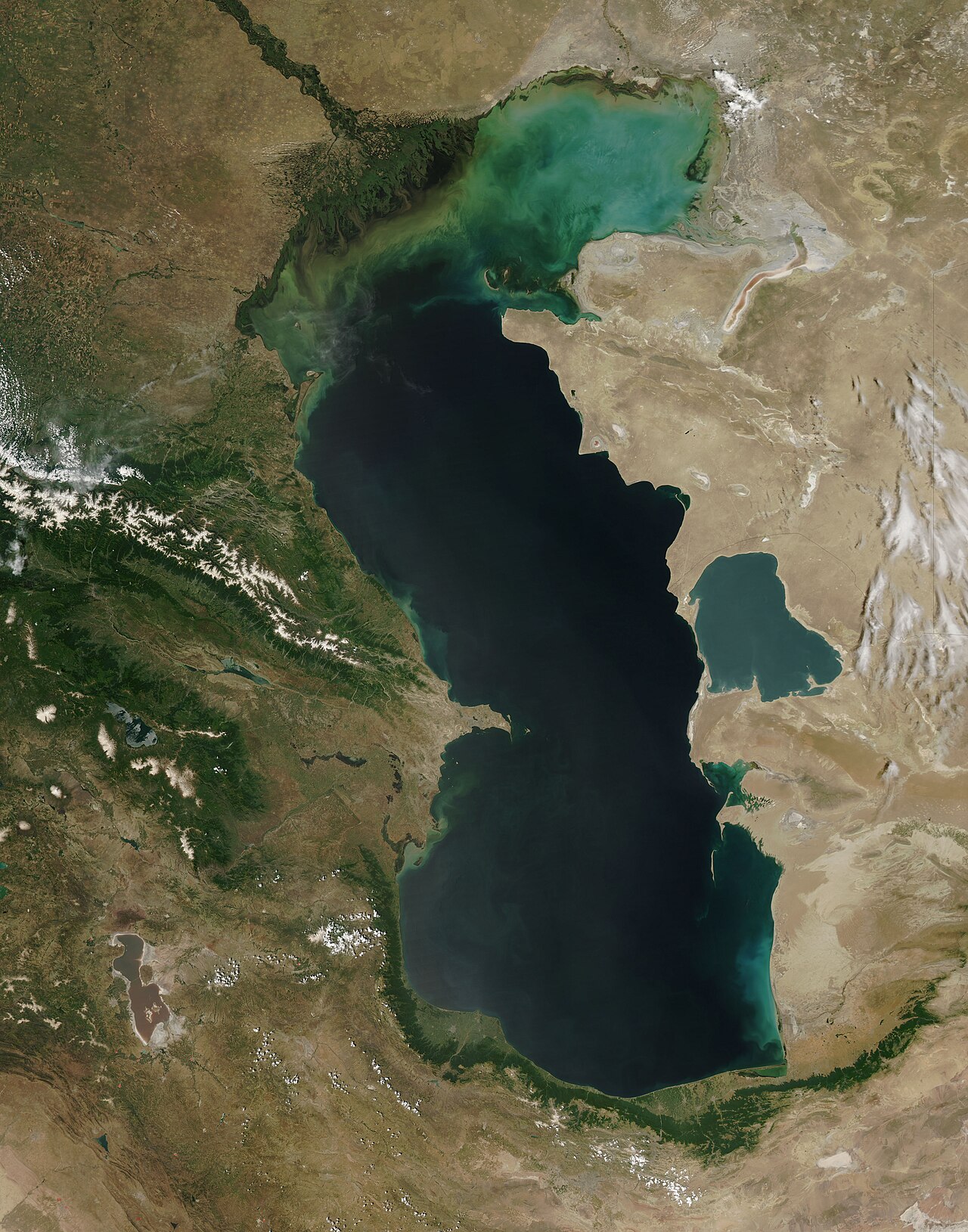
The biggest lake on Earth by area is the Caspian Sea. Despite its name, geographers count it as a lake because it lies on land and has no outlet to the ocean. It covers about 371,000 square kilometres, which is a little more than the whole of Germany. Its water is salty.
The largest freshwater lake by area is Lake Michigan-Huron in North America. The two lakes are joined by a wide channel, so scientists treat them as one. If you count them as two, Lake Superior is the biggest at about 82,100 square kilometres.
Lake Baikal in Siberia holds many records. It is the deepest lake, with a bottom 1,637 metres down. That is about five Eiffel Towers stacked on top of each other. It holds more fresh water than any other lake, about 23,600 cubic kilometres, and it is the oldest lake. Lake Tanganyika in Africa comes next in age. It is also the longest lake, at about 660 kilometres.
The highest big lake that boats use is Lake Titicaca on the border of Peru and Bolivia, at 3,812 metres above sea level. The lowest lake is the Dead Sea, which lies more than 430 metres below sea level and is one of the saltiest. Its surface was at about 441 metres below sea level in 2026. It is falling by about a metre a year, as less water flows in from the River Jordan.
Some records are odd. Lake Saimaa in Finland has a winding shore of nearly 15,000 kilometres. Only about 20 lakes in the world are older than a million years. Lake Enriquillo in the Dominican Republic is the only saltwater lake with crocodiles. The northernmost named lake, Upper Dumbell Lake, lies in Arctic Canada, close to the northernmost settlement on Earth.
Are there lakes on other worlds?
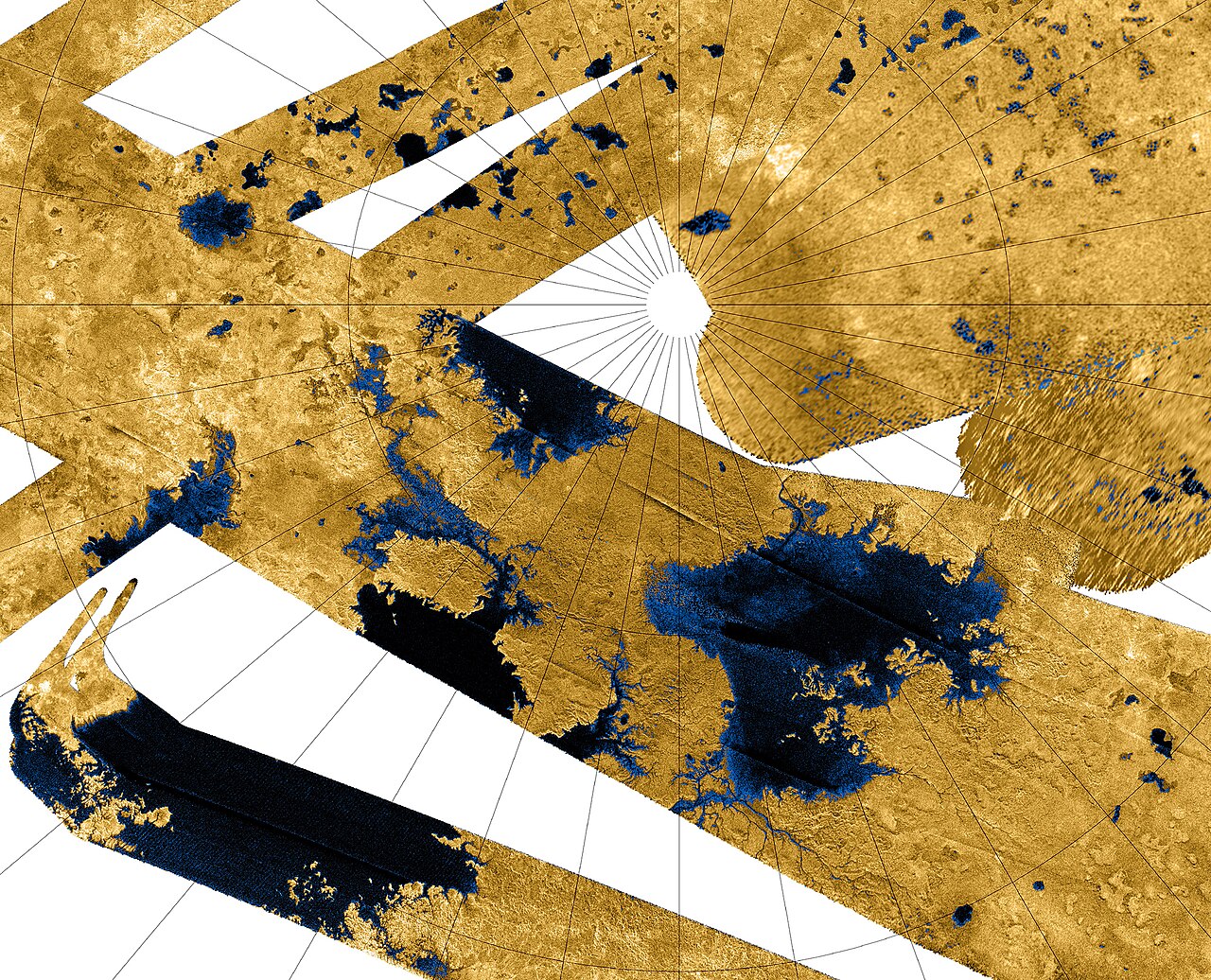
Only one other place is known to have large lakes, and it is Titan, the biggest moon of Saturn. The Cassini-Huygens spacecraft photographed them and measured what they hold. Titan is far too cold for water to be liquid. Instead its lakes are filled with liquid ethane mixed with methane, which are gases on Earth. Rain of methane falls on Titan, and streams and rivers feed the lakes.
Titan's lakes are huge. The largest, Kraken Mare, covers an estimated 400,000 square kilometres. That is about five times the area of Lake Superior. The second largest, Ligeia Mare, is almost twice the size of Lake Superior. Their shapes look much like lakes on Earth.
Mars once had lakes of water. Its surface today is too cold and its air too thin for water to stay liquid, but dry lake beds show where water once stood. Radar signals have also been read as showing liquid water far underground near the south pole. Scientists still debate this result.
Jupiter's moon Io is a volcanic world. Photographs from the Galileo spacecraft seem to show lakes of melted sulphur in its volcano craters. These are more like the lava lakes on Earth than any lake of water.
Even the Moon is named for lakes. Early astronomers looked at its dark plains through telescopes and thought they were water. They called the big ones maria, Latin for seas, and some smaller ones lacus, Latin for lakes. We now know they are plains of cooled lava.
Can a lake disappear?
Yes. Over long periods of time every lake is temporary. Streams carry in mud and sand, and the lake slowly fills. Reeds help by growing thickly in the shallows and rotting into peat, which fills the lake even faster. The lake turns into a marsh or a fen, and in the end trees can take over and make a forest.
Some lakes vanish every year. Lake Cerknica in Slovenia sits on limestone and drains away through underground channels in dry weather. Other lakes appear only after exceptional rain. Death Valley, one of the driest places on Earth, filled with a shallow lake called Lake Manly in 2005. In 2023 the remains of Hurricane Hilary, and storms later that winter, filled it again for several months before it shrank away.
A few lakes disappear almost at once. On 3 June 2005 Lake Beloye in Russia drained away in minutes. Officials suggested that the ground under the lake had shifted and let the water escape through channels towards the Oka river.
In the Arctic, thawing can swallow lakes. Permafrost is soil that stays frozen all year. As it warms, water can drain downwards into the ground. Hundreds of large lakes in western Siberia may have shrunk or vanished this way.
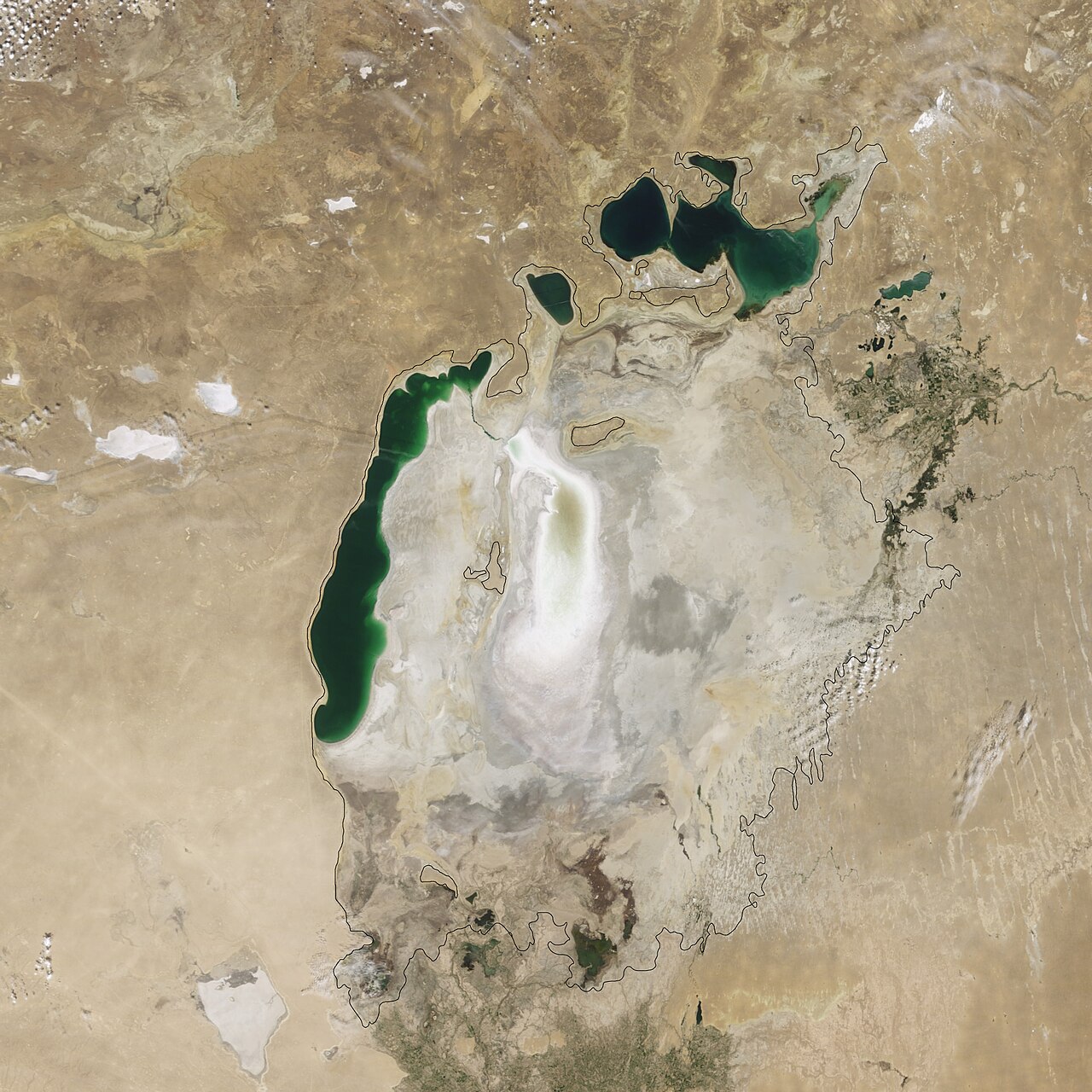
People can empty lakes too. The Aral Sea in Central Asia has been shrinking since the rivers that fed it were diverted to irrigate fields. Its water now lies in a few small pieces in the desert. Between 1990 and 2020, more than half of the world's large lakes got smaller, partly because of climate change.
How do people use lakes?
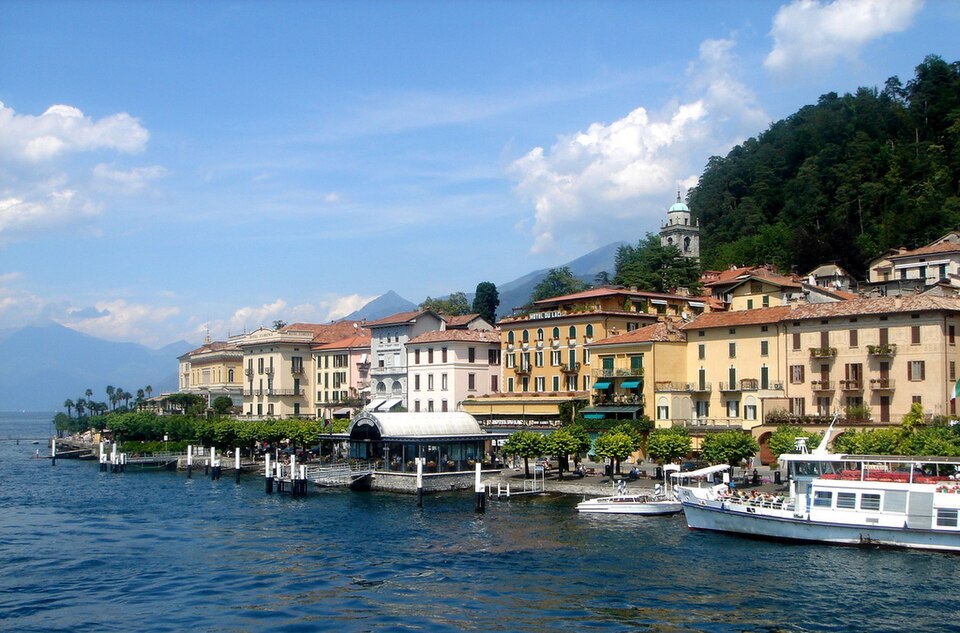
People have lived beside lakes for thousands of years. A lake gives fresh water to drink, fish to eat, flat water for boats and fields that can be watered. Towns such as Bellagio on Lake Como in Italy grew up around their lakes.
Many lakes are made by people for a purpose. A behind a dam can store drinking water for a city. It can supply farms, help control floods or turn turbines to make hydroelectric power. In India, the Sudarshana Lake in Gujarat is one of the oldest known human-made lakes. It was built when Chandragupta Maurya ruled, more than 2,000 years ago.
Deep lakes in cool climates keep cold water all year. Some cities pump this water through pipes to cool buildings, which is called deep lake water cooling.
Lakes also change the weather around them. Water takes a long time to heat up and cool down. By day a lake stays cooler than the land, so a breeze blows from the water to the shore. At night the lake is warmer than the land, and the breeze turns round. Lakes make nearby summers a little cooler and winters a little milder.
Lakes can be harmed by what people do. Fertiliser washing from fields can feed huge blooms of algae. When the algae die and rot, they use up the oxygen that fish need. Some lakes are drained for irrigation. Looking after the streams that feed a lake, and the land around it, helps to keep the water healthy.
Explore Next
Your audio story keeps playing while you look around.
Words to Know
- basin
- A hollow in the land where water can collect.
- caldera
- A huge bowl-shaped hollow left when a volcano collapses.
- catchment area
- All the land from which rain and streams drain into a lake.
- endorheic lake
- A lake with no outflow that loses water only by evaporation or seeping into the ground.
- limnology
- The scientific study of lakes and other inland waters.
- oxbow lake
- A crescent-shaped lake left when a river cuts off one of its bends.
- permafrost
- Ground that stays frozen all year round.
- reservoir
- An artificial lake made to store water.
- sediment
- Mud, sand and other bits of material that settle on the bottom of water.
- sinkhole
- A hole that forms when the roof of a cave in soluble rock collapses.