Food chain
Who eats whom, and how the Sun's energy travels through living things.
A food chain is a line that shows who eats whom, and where the energy for life comes from. It usually starts with a living thing that makes its own food, such as grass or algae. Next comes an animal that eats it, then an animal that eats that one. At the top may sit a hunter with no natural enemies, such as a killer whale. When living things die, fungi and bacteria break them down and return their nutrients to the soil. Food chains look simple, but they explain how a whole ecosystem works. Pull out one link and the effects can spread far beyond it.
What is a food chain?
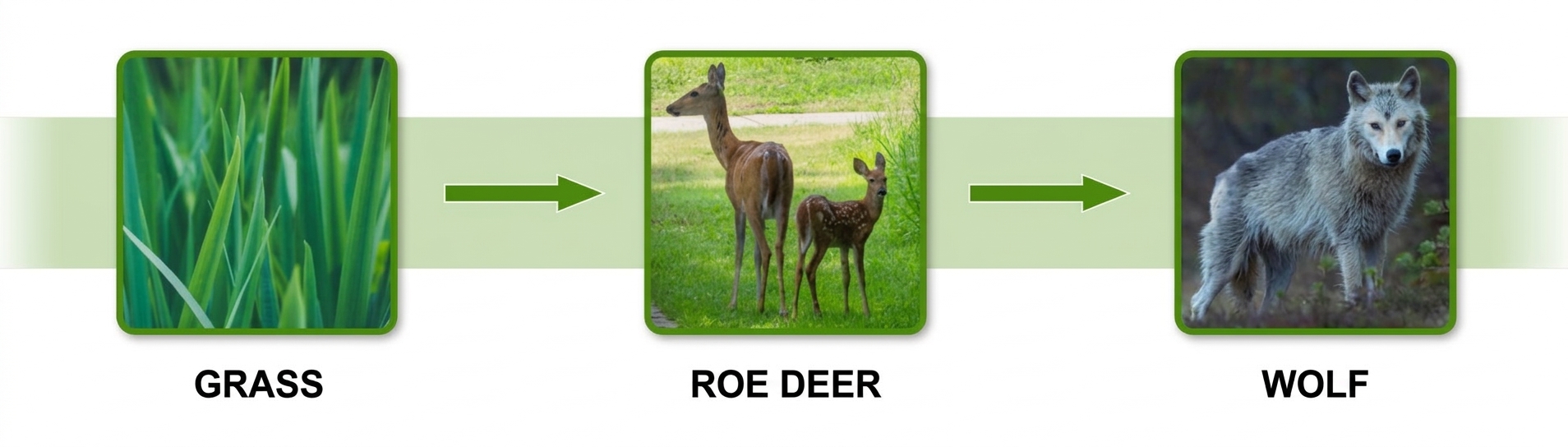
A food chain is a simple line of links. Each link is a kind of living thing, and each arrow means 'is eaten by'. A classic chain has three steps. Grass grows. A deer eats the grass. A wolf eats the deer. The arrows point in the direction the energy moves, from the grass to the deer to the wolf.
Every living thing needs energy to move, grow and stay alive. Food is the fuel. A food chain tracks that fuel as it passes from one living thing to the next. Scientists call each step a , from a Greek word for feeding. Ecologists often measure a chain by its length, which is the number of links between a top eater and the base of the chain.
A chain begins with a , a living thing that makes its own food. It usually ends with an , a hunter that has no natural predators in that chain. Examples are grizzly bears and killer whales. A chain can also end with a , such as an earthworm or a woodlouse. It can also end with a , such as a fungus or a bacterium.
Food chains matter because living things depend on each other. When only one link is removed, the species above it may starve and the species below it may grow out of control. Many species survive only because their chain stays steady.
Where does the energy in a food chain come from?
Almost all food chains begin with . Producers, also called autotrophs, make their own food from simple ingredients. Most use sunlight to do this, in a process called photosynthesis. A plant takes in light, water and carbon dioxide, and builds sugars and starch. Those sugars are the stored energy that the rest of the chain will use.
Because photosynthesis needs light, most life on Earth would not survive if the Sun went out. On land, producers are plants such as grass and trees. In oceans and lakes, they are mainly tiny algae and bacteria that float near the surface.
But sunlight is not the only starting point. In the deep sea, no light reaches the bottom. Yet scientists have found rich communities of life around hot-water cracks in the sea floor, called hydrothermal vents, and around cold seeps where gas leaks out of the rock. There, bacteria and archaea, a second group of tiny single-celled life, get their energy from chemicals such as hydrogen sulfide and methane. This is called . These microbes do the job that plants do in sunshine. They build food from chemicals, and they form the base of the food chain in places with little or no light.
Wherever the energy comes from, the rule is the same. A living thing that makes its own food sits at the base of the chain. It is a critically important part of its ecosystem, because everything above it depends on it.
Who eats whom, from bottom to top?
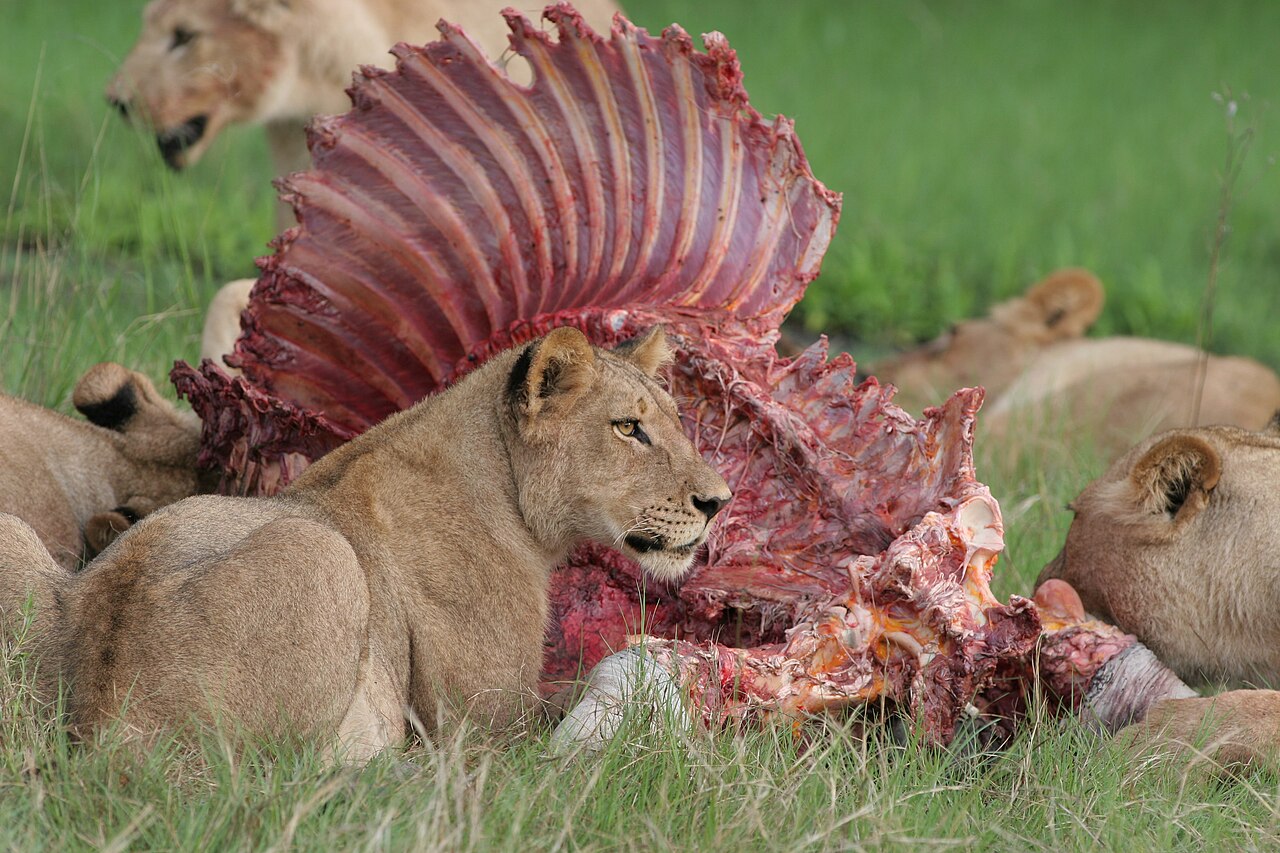
Above the are the , which cannot make food and must eat other living things. Every living thing in a food chain except the first is a consumer.
Primary consumers eat the producers. They are plant-eaters, such as rabbits, deer and many insects. Secondary consumers eat the primary consumers. Tertiary consumers eat the secondary consumers. Sometimes a chain has a fourth level, the quaternary consumers, which hunt the tertiary ones.
Here is one example. A green plant is the producer. A snail eats the plant, so the snail is the primary consumer. A frog eats the snail, so it is the secondary consumer. A snake eats the frog, and an eagle eats the snake. The eagle is at the top. At the highest level in a chain there is usually an , a consumer with no natural predators in that chain. A lion on the African grassland is a good example.
This tidy picture hides some mess. Many animals change what they eat as they grow. A young fish might eat tiny plankton, and the adult might hunt other fish. Insects such as dragonflies live in water as young and hunt in the air as adults. So the same species can sit at different levels at different times in its life.
A predator that is too successful will run out of prey. So predator and prey numbers tend to rise and fall together over time.
What happens when living things die?
A food chain would soon run out of ingredients if dead plants and animals piled up for ever. Something has to recycle them. That job belongs to the and the .
Detritivores, such as earthworms and woodlice, eat dead leaves, wood and other waste. They break it into smaller pieces. Decomposers, mainly fungi and bacteria, finish the job. They break the dead material into very simple chemicals. These chemicals are called nutrients, and they include forms of nitrogen and phosphorus that plants need to grow. Decomposers and detritivores can feed on any level of the chain, from fallen leaves to the body of a dead wolf. As they feed, they release nutrients in their waste, and those nutrients return to the soil.
Plants then take the nutrients up through their roots. use them to make new tissue, and the cycle starts again. This is why scientists talk about a cycle of nutrients, even though energy only flows one way through a chain.
Decomposers are enormously varied. It has been estimated that there are more than 100,000 different kinds. Without them, forests would be buried under fallen leaves, and soil would run out of the minerals that plants need. They are among the most important links in any food chain, even though they are the ones we notice least.
Why are food chains so short?
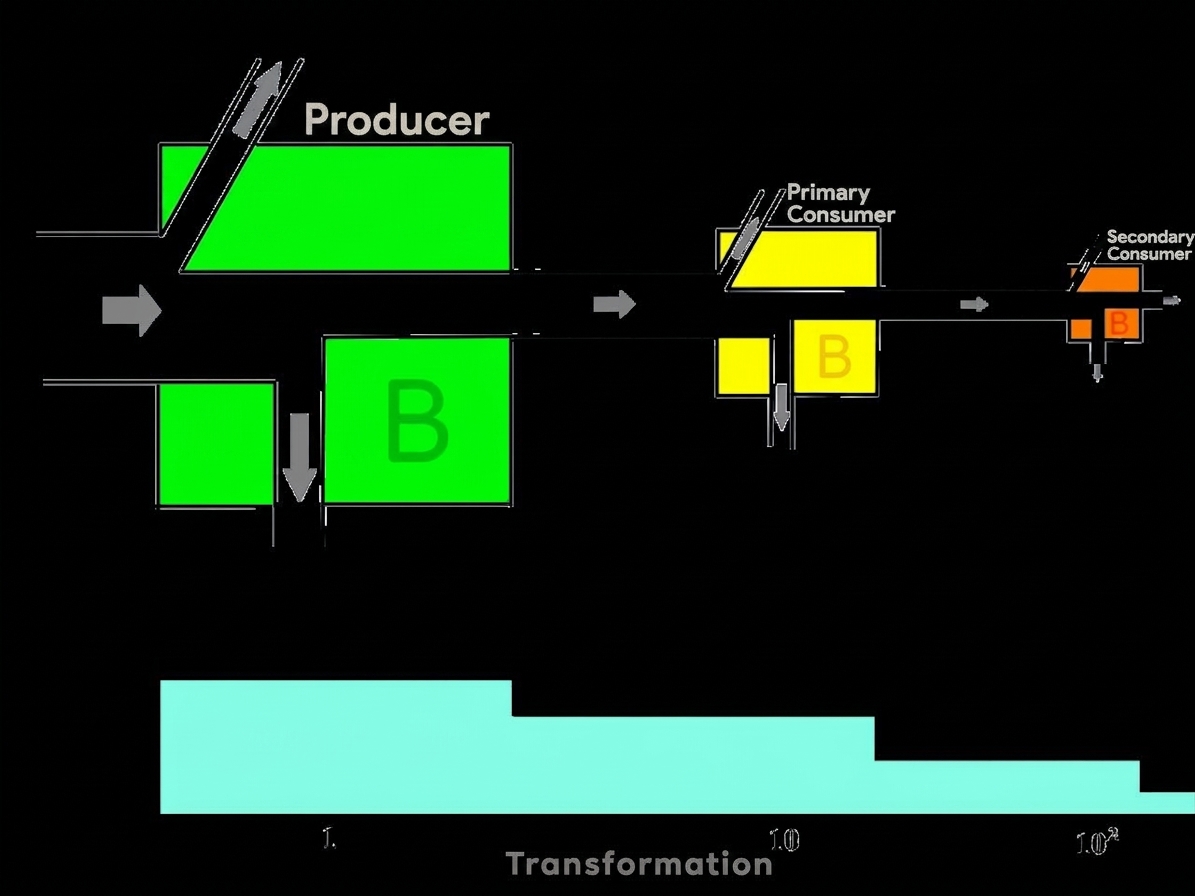
Few food chains have more than five levels. The reason is that energy is lost at each step.
When an animal eats, it does not store all the energy in its food as new body. It uses most of it to move, keep warm, breathe and grow. The rest is lost as heat or in waste. Generally, only about 10 per cent of the energy at one level passes to the next, although the real figure varies from 5 to 20 per cent. The rest is used up or lost.
Imagine a field of grass that holds 10,000 units of energy. The deer that eat it may store about 1,000 units. A wolf that eats the deer may store about 100. By the fourth or fifth level, there is very little left to support another hunter. That is why there are far fewer wolves than deer, and far more plants than deer.
This explains why top predators are rare. It also gives humans a choice. A person who eats a salad gets more of the original energy than a person who eats meat from an animal that ate the same plants. Going back a level in the chain means going back to a bigger store of energy. Scientists call the amount of energy at each stage the energy flow.
Chain length is also affected by the size of the ecosystem and the type of habitat. Larger ecosystems can support longer chains.
How is a food web different from a food chain?
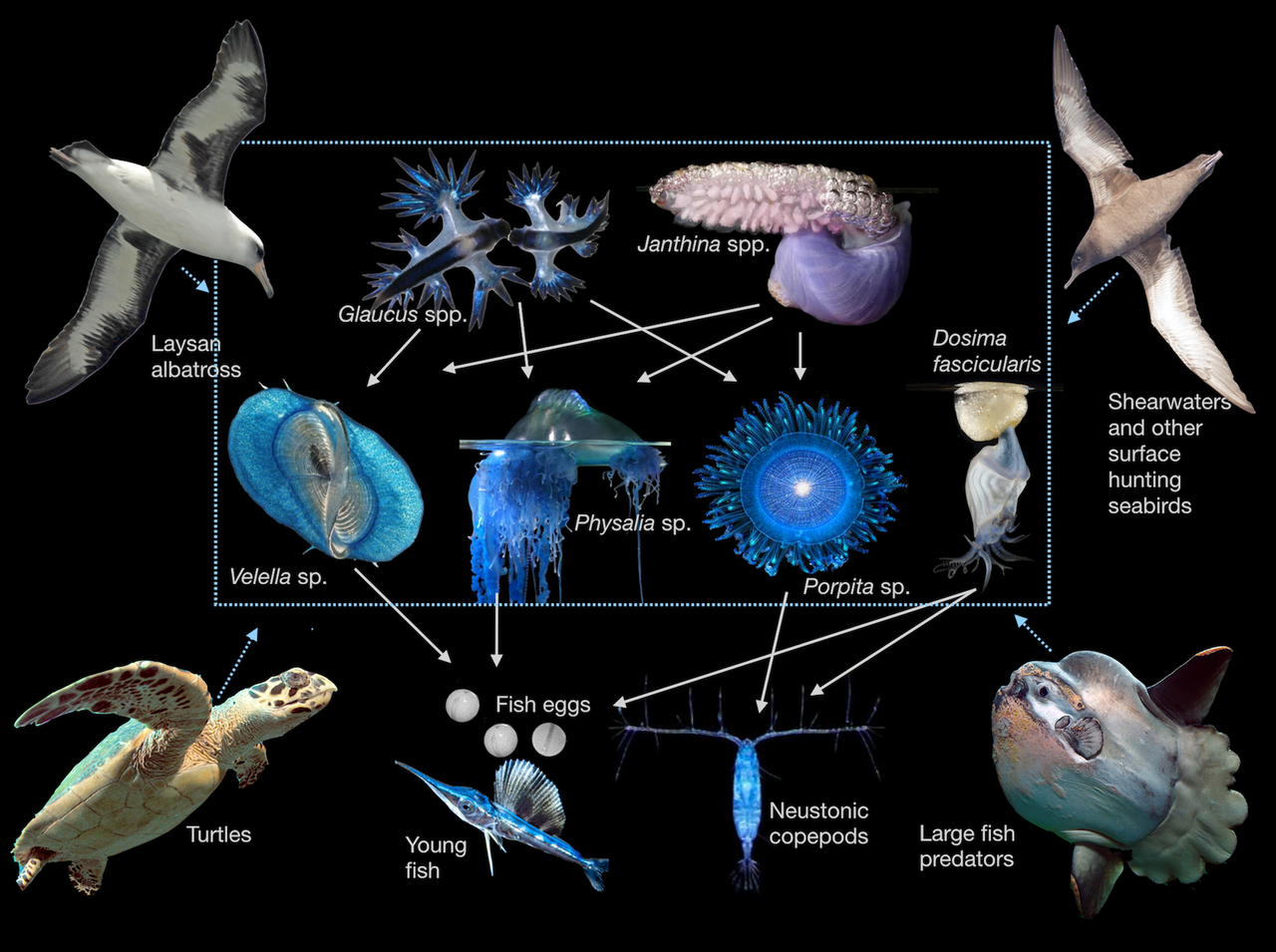
A food chain follows one straight path. Real nature is messier. Most animals eat more than one kind of food, and most are eaten by more than one kind of hunter. When the chains in an ecosystem cross and connect, they form a . A web is not a line. It is a tangle of pathways along which energy flows.
Look at the sea surface. Tiny plankton are eaten by small fish and by jellyfish. The fish are eaten by larger fish and by seabirds. The jellyfish may be eaten by turtles or fish too. In this web, every living thing is linked to many others. A food chain is one thread picked out from that web.
Webs are more stable than single chains. If one prey becomes rare, a predator may switch to another. In a bare chain, the predator would go hungry.
People have been thinking about food chains for a long time. The Arab thinker al-Jahiz wrote about them in the 9th century. The modern ideas of food chains and food webs were developed by the British ecologist Charles Elton in the 1920s. Today, scientists use chains as simple models, because they are easier to study and calculate than a full web. Ecologists also use them in ecotoxicology, which traces how poisons such as mercury pass up the chain and become more concentrated in top predators. This build-up is called .
Why can one species hold a whole ecosystem together?
In some one species has a much bigger effect than its numbers suggest. It is called a . The name comes from architecture. The keystone is the central stone at the top of an arch, and if it is removed, the whole arch can fall.
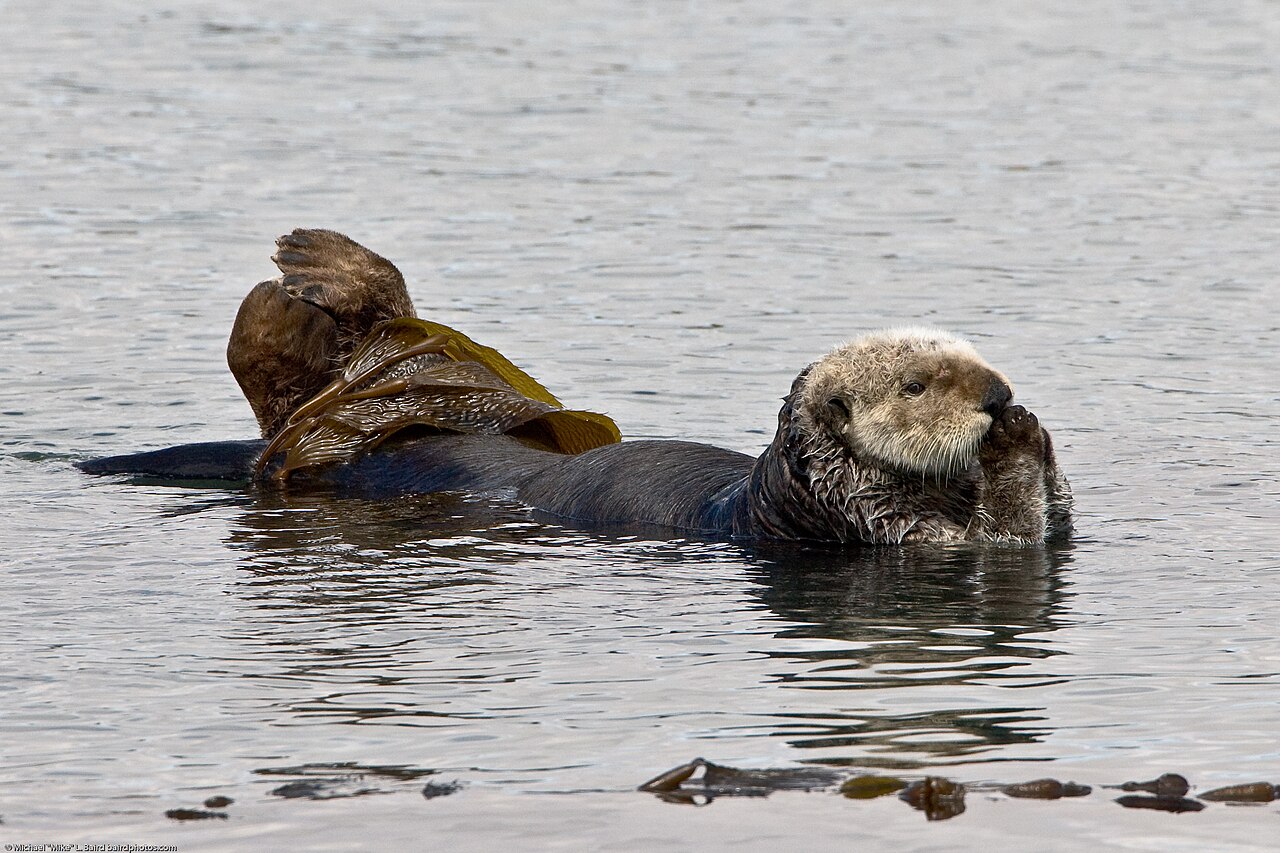
The sea otter is a famous example. Along the Pacific coast of North America, sea otters hunt sea urchins. Sea urchins eat kelp, the giant brown seaweed that grows in great underwater forests. Where otters are common, urchins are kept in check, and kelp forests thrive. Fish, crabs, seals and many other animals shelter in them.
But where otters have been hunted out, urchin numbers explode. The urchins graze the kelp down to the rocks, leaving a bare seabed that scientists call an urchin barren. With the kelp gone, the animals that depended on it disappear too. The otter's place in the chain protects a whole community.
Keystone species are not always big or fierce. What matters is the job they do. Some keep a plant eater under control. Others create a habitat, as beavers do when they dam rivers.
This is why food chain stability matters so much. When a keystone species is lost, the effects can run through the whole food web. The ecosystem may change into something very different, or stop working altogether.
What happens when a link is removed?
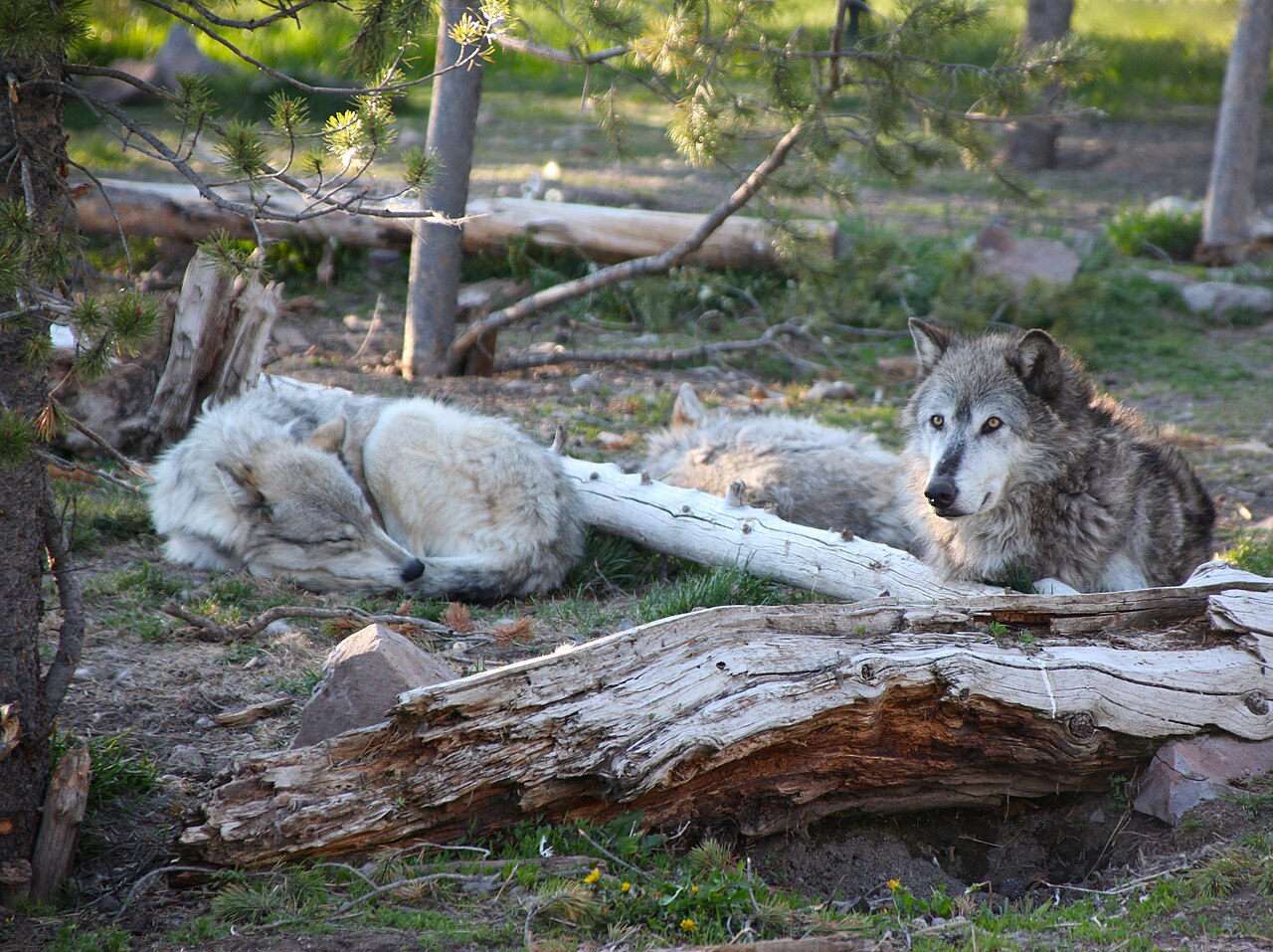
Removing one link can change a whole ecosystem, and sometimes the effect passes along in a ripple. Ecologists call this a trophic cascade, because the change cascades down the levels of the chain.
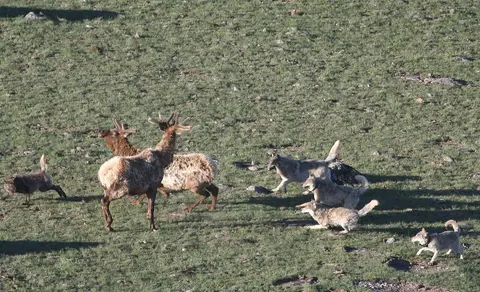
The best-known example comes from Yellowstone National Park in the United States. Wolves had been hunted out of the park by about the 1920s. Without them, the elk grew in number and ate young trees and bushes along the rivers. Then, in 1995, wolves were brought back. After about 70 years, the top predator was again part of the chain.
Researchers describe a chain of changes. The wolves killed some elk, and the elk avoided some open, risky places. Willows and young trees began to recover along the streams. More trees gave more food and wood to beavers, so beaver dams spread and made new wetlands. Birds and other animals moved in. Exactly how big each effect has been is still debated by scientists, but the story shows how food chains link far-off parts of an ecosystem.
The lesson is the same everywhere. Food chains are only stable while all the links are there. When a species is lost, through hunting, pollution, disease or the loss of its habitat, others can suffer. When a predator is brought back, an ecosystem can sometimes recover. Understanding food chains helps people protect nature and avoid mistakes that spread far beyond the first change.
Explore Next
Your audio story keeps playing while you look around.
Words to Know
- apex predator
- A hunter at the top of a food chain that has no natural predators.
- biomagnification
- The build-up of a poison as it passes up a food chain.
- chemosynthesis
- Making food from chemicals instead of sunlight.
- consumer
- A living thing that gets energy by eating other living things.
- decomposer
- A living thing, such as a fungus or bacterium, that breaks down dead material.
- detritivore
- An animal that eats dead leaves, wood and waste, such as an earthworm.
- food web
- Many food chains joined together in one ecosystem.
- keystone species
- A species that has a much larger effect on its ecosystem than its numbers suggest.
- producer
- A living thing that makes its own food, such as a plant or alga.
- trophic level
- A step in a food chain, based on what a living thing eats.