Taxonomy
The science of naming, describing and sorting everything alive.
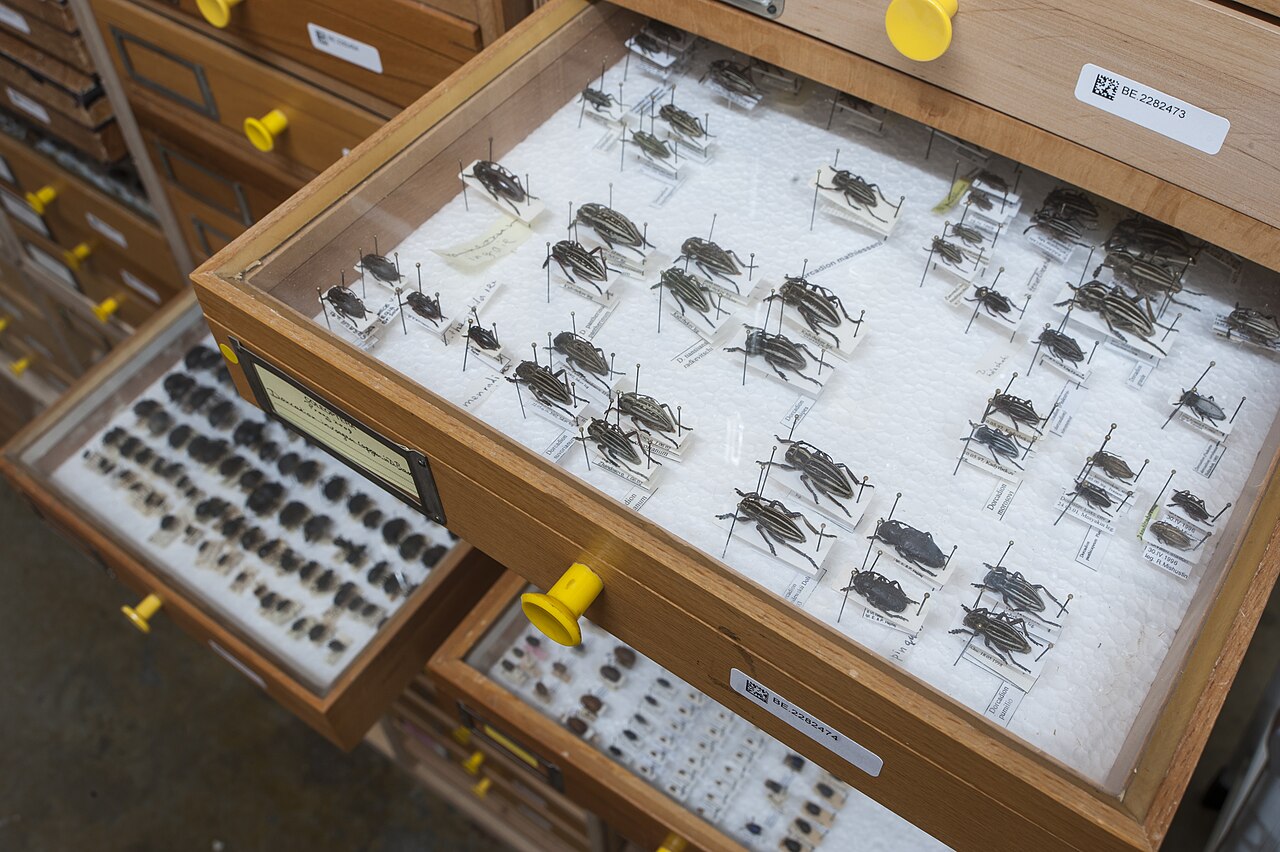
Imagine trying to find one book in a library where nothing is sorted. That is what studying life would be like without taxonomy. Taxonomy is the science of describing living things, giving each one a name and placing it in a group. Biologists use it to sort millions of species into a tidy hierarchy, from huge groups such as kingdoms right down to single species. The same idea works far beyond biology. Libraries, shops and websites all use taxonomies to help people find things. Behind the biology sits an amazing story of explorers, museum drawers, pressed flowers and DNA, all working to answer one question: what kind of living thing is this?
What is taxonomy?
is the practice of sorting things into groups. It has two parts. First, scientists build a scheme of groups, called classes. Second, they decide which group each thing belongs in. The second job is called .
The word first meant sorting living things by the features they share. In biology, taxonomy covers four jobs. Scientists describe a living thing, work out which one it is, give it a name and place it in a group.
Each group is called a . The plural is taxa. A taxon can be big, such as all the animals, or small, such as one species of beetle. Many taxonomies are hierarchies, which means that small groups sit inside bigger ones. A collie belongs to the dogs, dogs belong to the mammals and mammals belong to the animals.
Taxonomy has a very practical purpose. It helps us find things. If you know a creature is a beetle, you know where to look for its relatives. Scientists in different countries can also talk about the same species, even if they speak different languages. In a museum, a good taxonomy turns millions of into a collection that can be searched. Without it, each new discovery would be a pile of facts with nowhere to go.
Where did the word and the idea come from?
The word was made up in 1813 by a Swiss botanist named A. P. de Candolle. He built it from two Greek words, taxis, which means order, and nomos, which means law. So taxonomy means something like the law of order.
The idea is far older than the word. People everywhere have always named and sorted the plants and animals around them, deciding which are food, which are medicine and which are dangerous. Scientists call these systems folk taxonomies. Studies have found that folk taxonomies often agree closely with scientific ones, at least for large and obvious species. So people did not sort living things only by how useful they were.
Some of the earliest written science is sorting. In the 300s BC the Greek thinker Aristotle described many animals, and his student Theophrastus did the same for plants.
In the 1600s, clever thinkers such as Gottfried Leibniz dreamed of sorting all human ideas in an organised way. Leibniz wanted a kind of alphabet of thought. These dreams did not work out, but they show how powerful the idea of organising knowledge has always been.
For living things, the greatest step came from a Swedish naturalist in the 1700s. His name was Carl Linnaeus.
How did Linnaeus bring order to nature?
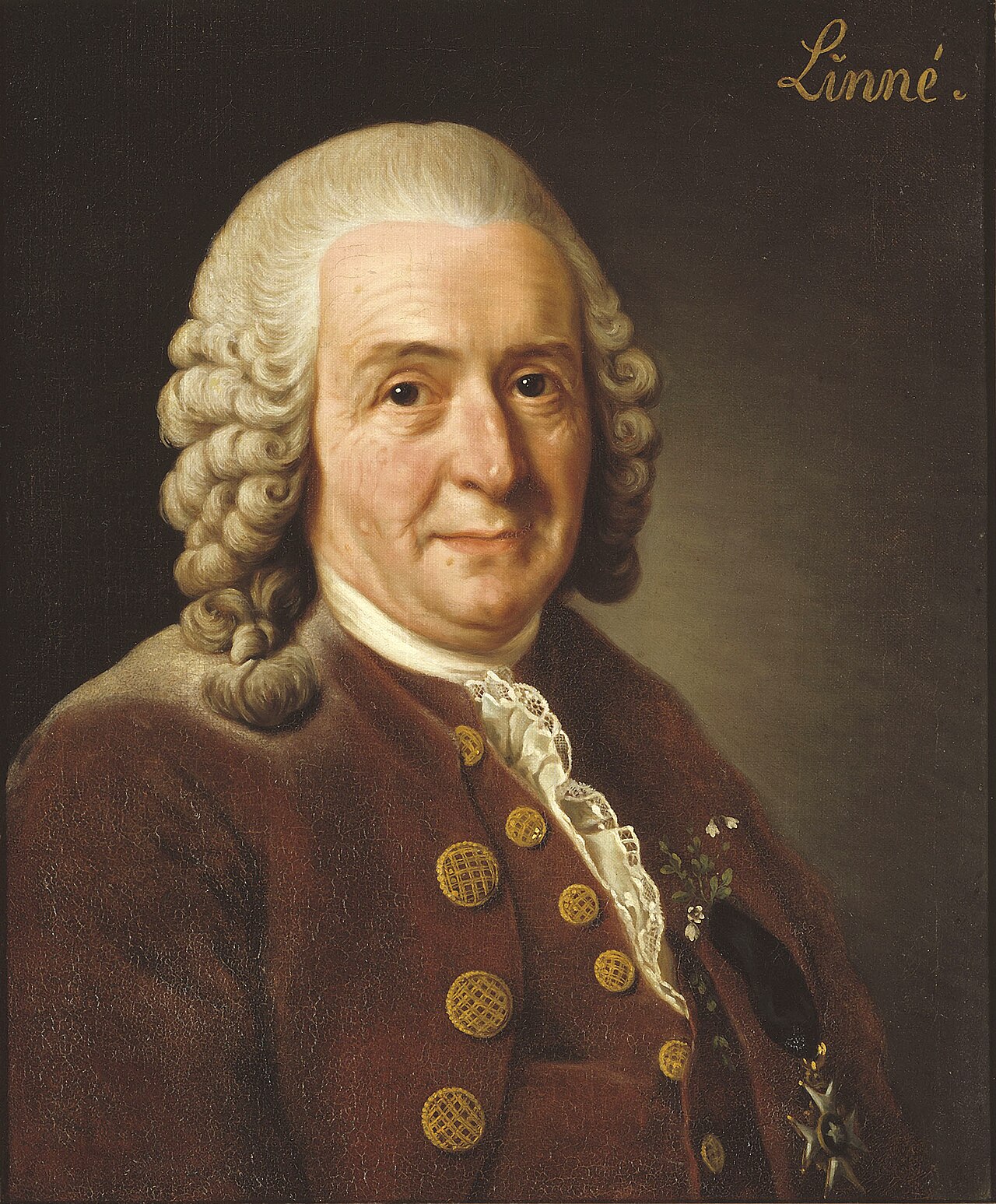
Carl Linnaeus lived from 1707 to 1778. He studied plants and travelled widely, and he was good at spotting patterns. He believed that nature could be arranged neatly, and he spent his life describing and sorting it.
In 1735 he published Systema Naturae. The book arranged nature in a ladder of ranks, with every living thing placed in the right group. This system is still called Linnaean . It also helped to start the modern way of naming species.
Linnaeus gave every species a two-part Latin name, for plants in 1753 and for animals in 1758. The first word is the , and the second picks out the species. People are Homo sapiens, and the grey wolf is Canis lupus. This is called binomial nomenclature, which means two-name naming. A name in Latin can be understood by scientists in every country, so everyone knows exactly which species is meant. In the past, people sometimes used several different names for the same animal.
Linnaeus grouped living things by shared physical features, such as the parts of a flower. Some of his groups turned out to be wrong, because features can look alike without a shared ancestor. Even so, his framework was so useful that scientists kept it and corrected it. Today, rules called the nomenclature codes control how new names are made. The International Code of Zoological Nomenclature, or ICZN, covers animals. The International Code of Nomenclature for algae, fungi and plants, or ICN, covers those groups.
What are the steps of the ranking ladder?
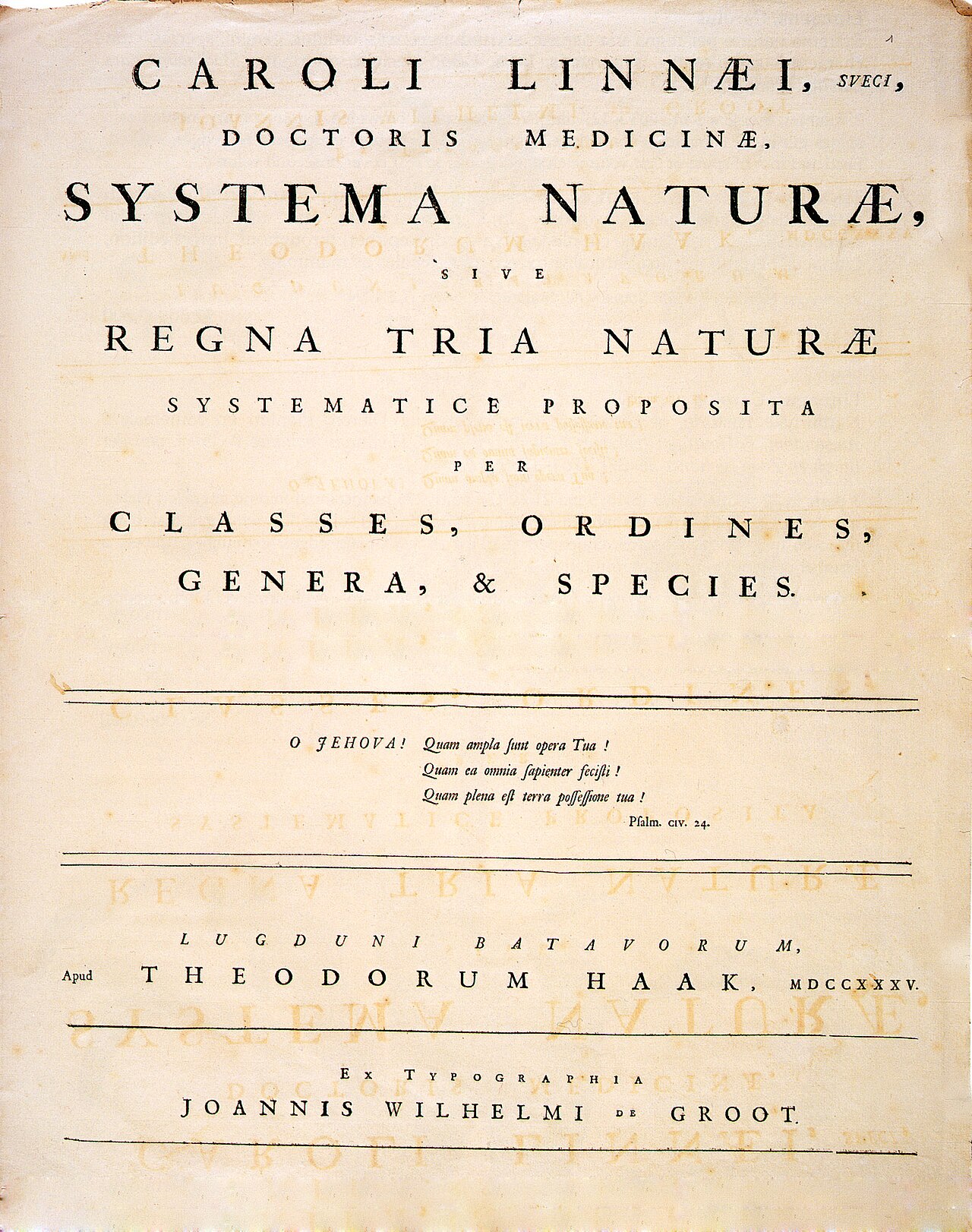
A of life works like a family tree turned upside down. At the top is a very wide group. Each step down gives a smaller and more specific group. The first edition of Systema Naturae in 1735 began this, with groups called classes, orders, genera and species.
Today, the main ranks run from domain, kingdom and phylum down to class, order, family, and species. Each rank sits inside the one above it. The ladder shows where a living thing fits.
Take an ordinary house cat. It belongs to the domain Eukaryota and the kingdom Animalia. Its phylum is Chordata, which holds the animals with a backbone and a few small relatives such as sea squirts, and its class is Mammalia, the mammals. Its order is Carnivora and its family is Felidae. Its genus is Felis, and its species is the domestic cat, Felis catus.
Mathematicians describe this shape as a tree. At the top is a single starting point, called the root. Under the root, each group splits into smaller groups. Thinking moves from general to specific as you go down.
Not every group in nature fits neatly. Some living things sit in grey areas, and scientists often move them as they learn more. The ladder is a tool, and it can be improved.
How do scientists describe a new species?
Most of the living things on Earth have still not been described. When a scientist finds one that looks new, the first job is called alpha . This means describing the species and giving it a basic .
The scientist compares the new animal or plant with those already known. Is it different from every close relative? Does it have unique features, such as a different wing pattern or a different number of legs? If it is truly new, the scientist writes a careful description and chooses a Latin name that follows the rules of the nomenclature codes.
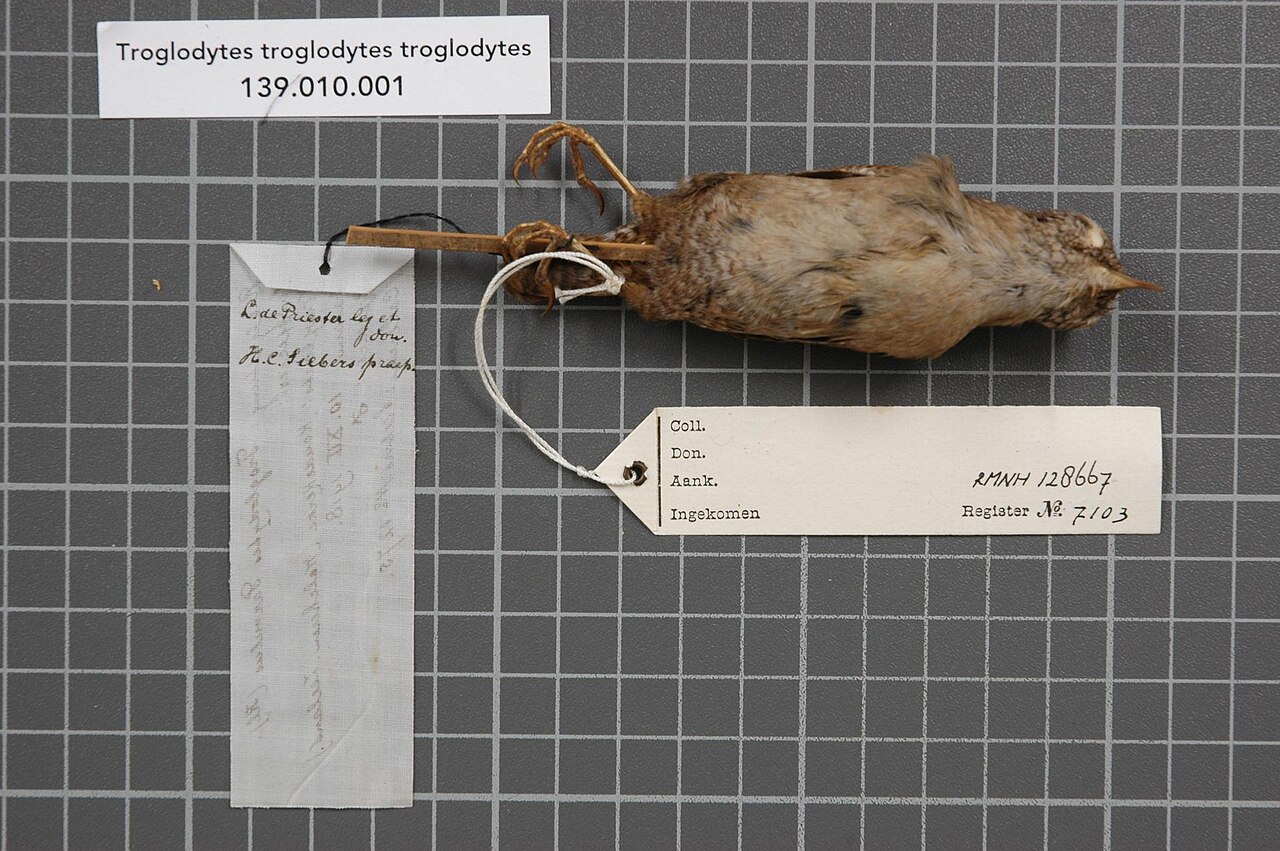
Names can honour a person, describe a feature or point to a place. The scientist must also keep at least one preserved example, which acts as a permanent reference for the name.
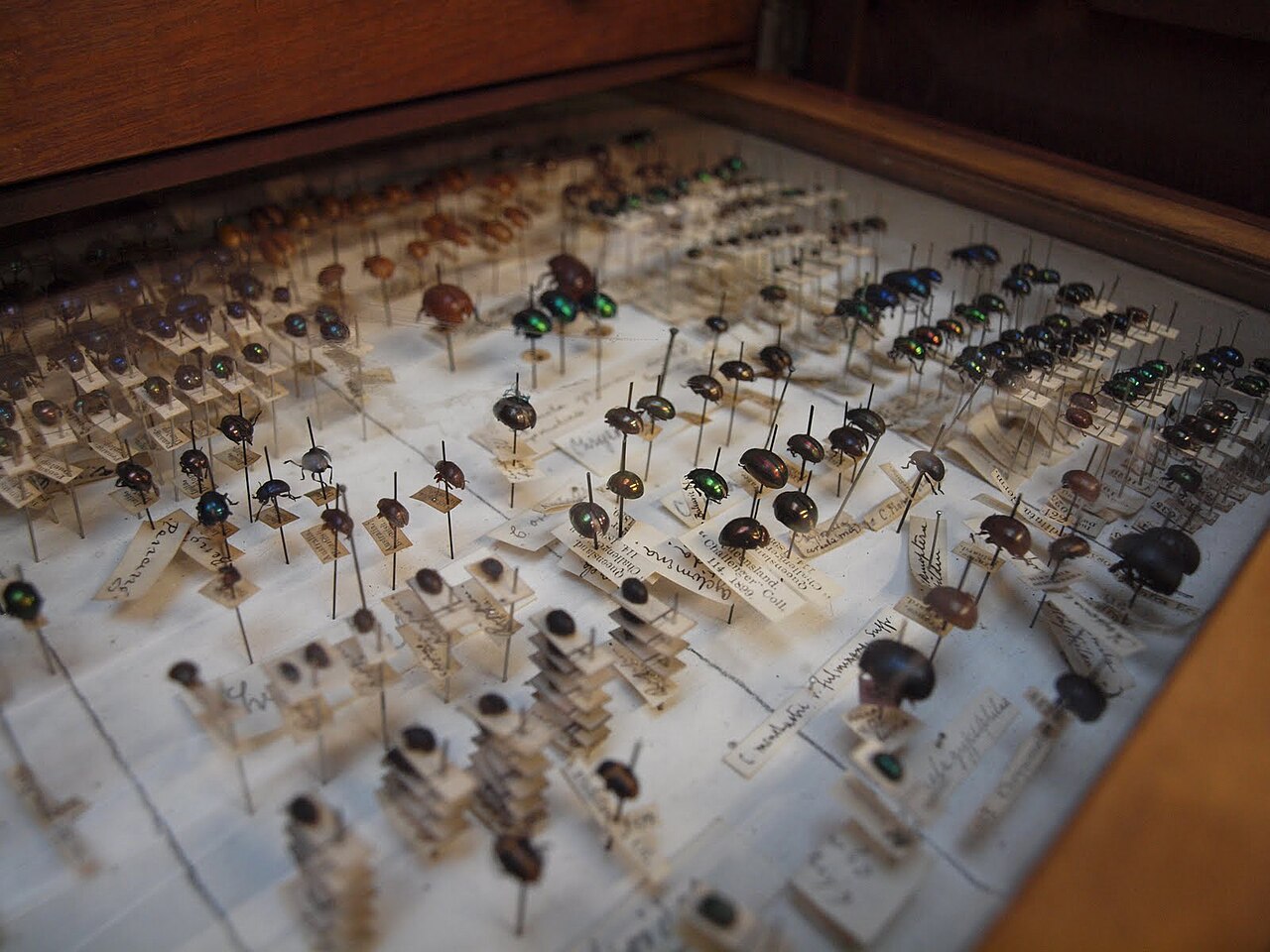
Today a short stretch of DNA from one gene can help too. Since 2003, when the biologist Paul Hebert showed how well it works, this DNA barcode has helped tell many animal species apart. Insects are the biggest challenge, because there are so many of them. Museums keep huge cabinets with drawers full of pinned beetles, butterflies and bees. Each one has a tiny handwritten or printed label saying where and when it was caught. Rows of nearly identical beetles can hide many different species, and an expert must look at tiny details to tell them apart.
Every pinned insect is a small piece of evidence. Taken together, the drawers show which species live where, and how that has changed over time.
Why do museums keep pressed plants?

A is a library of dried plants. A botanist collects a plant in the wild, presses it flat between sheets of paper and dries it. Then the plant is glued or stitched to a sheet of stiff card and given a label.
The label records the plant's name, where it was found, the date and the name of the collector. Some herbarium sheets are more than 200 years old, and they still look recognisable. One oak sheet was collected in Austin, Texas, in 1872.
A herbarium sheet is a permanent record. A scientist working today can pick up a sheet and check what a plant looked like long ago. This helps taxonomists to compare a new plant with older ones, and to see if a name was used correctly.
Pressed plants also reveal how the world has changed. By looking at sheets from many years, researchers can see where a species once grew and where it has gone. They can see how flowering dates have shifted and sometimes find species that were thought lost. Some modern scientists even take tiny pieces from old sheets to study the DNA.
This kind of collection is far more than storage. It is a tool that every new generation of taxonomists uses.
Should we sort by looks or by family?
The big debate in biological is what the groups should mean. There are two main answers.
One way is to sort by looks. This approach, called or numerical taxonomy, counts how many features two things share. Those that are alike in the most ways go together. Linnaeus sorted by shared features, and this method is still useful for a quick sort.
The other way is to sort by ancestry. This is called . It groups living things by who descended from whom, and it asks which species share a recent common ancestor. Charles Darwin's idea of evolution gave this approach its theory. If all life is related, then a good should show how.
The two ways can give different answers. Animals that look alike may not be close relatives, because similar environments can shape similar bodies. Modern scientists test the groups using DNA.
One famous example is the blackbirds. The Eurasian blackbird was once thought to be one species with many subspecies. DNA studies showed that some of those forms, such as the Chinese blackbird and the Indian blackbird, are separate species. They look alike because they are close relatives.
In 1950 the German entomologist Willi Hennig set out a strict form of the ancestry method, called cladistics. It groups living things only by features that came from a shared ancestor. His ideas reached English readers in 1966.
Because new evidence keeps coming, taxonomy is never finished. Groups are merged, split and renamed. This is not a failure. It is how a science improves.
Where else do we use taxonomies?
began with living things, but today the word covers any scheme for sorting things or ideas. You meet taxonomies every day.
A library sorts books by subject. A supermarket puts fruit in one aisle and tins in another. A website has menus that lead from big topics to smaller ones, which is a taxonomy that helps visitors find what they need. Experts who design websites say that categories should be clear and not overlap too much. They also say that menus should not be too long or too deep, or visitors give up.
The idea also appears in schools. Bloom's taxonomy is a way of sorting the kinds of thinking that students do. Businesses sort industries and jobs. Doctors sort diseases in a system called nosology, and soil scientists sort soils.
These schemes often use is-a links. A dog is a mammal, and a mammal is an animal, so each level is a more specific kind of the one above. There are also has-a links, which are different. An elephant has a trunk, but a trunk is not a kind of elephant. It is only a part.
Wherever people need to sort huge amounts of information, a taxonomy turns confusion into order.
Explore Next
Your audio story keeps playing while you look around.



Words to Know
- binomial name
- A two-part Latin name for a species, such as Homo sapiens.
- classification
- Placing things into the groups where they belong.
- genus
- A group of closely related species. The plural is genera.
- herbarium
- A collection of pressed and dried plants kept for study.
- hierarchy
- An arrangement where smaller groups sit inside bigger ones.
- phenetics
- Sorting living things by how many features they share.
- phylogenetics
- Sorting living things by their family history and common ancestors.
- specimen
- A preserved example of a plant or animal kept for study.
- taxon
- One group in a classification. The plural is taxa.
- taxonomy
- The science of describing, naming and sorting things into groups.