Friction
The hidden grip that lets us walk, stop cars and light matches.
Friction is the force that resists sliding. It acts whenever two surfaces rub against each other, and also when layers of a liquid or gas move past each other. It makes your shoes grip the ground, lets a car brake, and turns rubbing hands warm. It also wastes energy and wears machines out. About 20% of all the energy used in the world is lost to friction. The long story of friction runs from Leonardo da Vinci's notebooks to the atomic force microscope, and it explains why even a smooth surface is rougher than it looks.
What is friction, and why is it everywhere?
is a force that resists movement when two things slide against each other. Rubbing your hands together, you can feel it. A heavy box shoved across the floor shows it too. The box does not glide away because friction pushes back against the direction it is trying to slide.
Friction is not only about solid things. Scientists describe several types. Dry friction acts between two solid surfaces that touch. It has two forms. , sometimes called stiction, holds surfaces that are not moving. , also called sliding friction, acts between surfaces that are moving. Fluid friction acts between layers of a liquid or gas that move at different speeds. Lubricated friction is fluid friction with a thin layer of oil or grease keeping two solids apart. Skin friction is the drag of air or water along the outside of a moving body. Internal friction acts inside a material when it is bent or squashed.
Friction always works against sliding, or against the sliding that would happen without it. That is why it is so useful. Without friction, you could not walk, because your feet would slip backwards. Nails and screws would slide out of wood. Cars could not start, turn or stop.
The study of friction, wear and lubrication has a name, . People have studied it for more than 2,000 years.
Why do surfaces resist sliding?
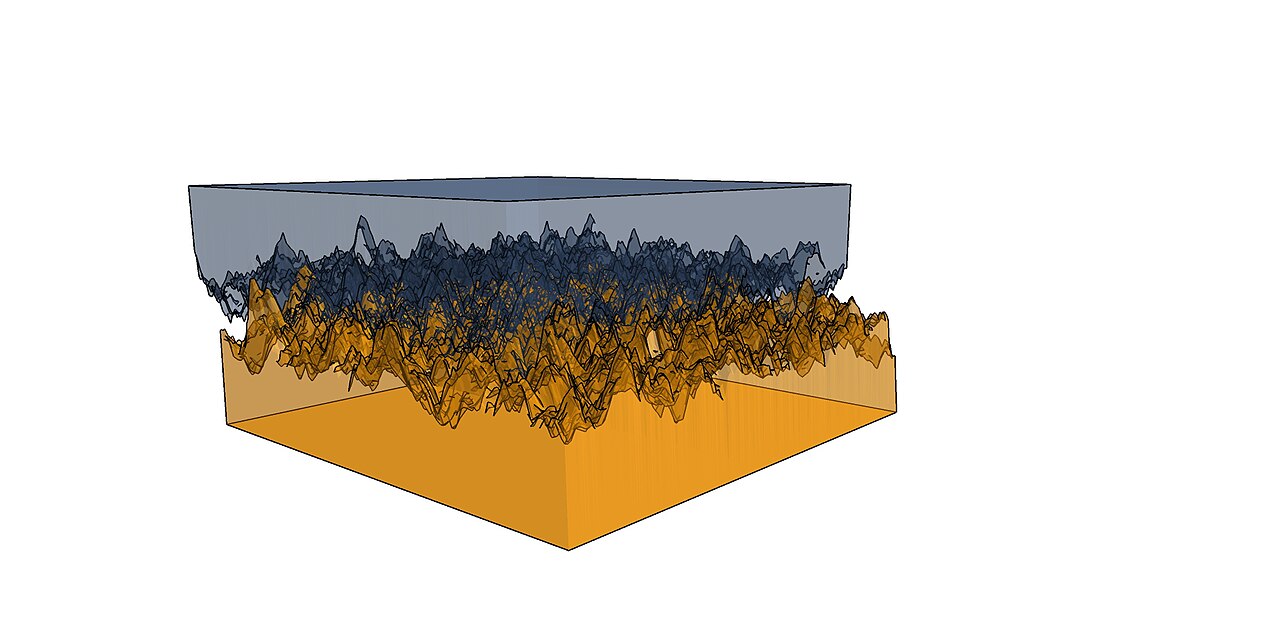
Even a polished surface is rough when seen close up. Under a powerful microscope, metal, wood and glass all have tiny bumps and dips. The bumps are called asperities. When two surfaces touch, only the tips of the bumps meet. The real area of contact is a very small fraction of the area that looks like it is touching. Two scientists, Frank Bowden and David Tabor, showed this in 1950.
When you press the surfaces together harder, the bumps squash against each other and the real contact area grows. That is why grows with the force pressing the surfaces together. In the 1980s, the atomic force microscope let scientists study friction at the scale of single atoms. They found that friction depends on how big the true contact area is and how hard it is to shear, or slide, the touching bits past each other.
Early thinkers had different ideas. Amontons pictured the bumps as small slopes that one surface has to be lifted over. In 1734, John Desaguliers suggested that tiny forces make surfaces stick together, and friction is the effort needed to pull them apart. Both ideas hold some truth. Modern science says that friction has many causes, including bumps, sticking and the changing of surface structure.
Because the causes are so tangled, scientists rarely calculate friction from first principles. They measure it in experiments and use simple rules that work well.
Why is it harder to start something moving than to keep it moving?
A heavy sofa shows the difference. At first it will not budge, then suddenly it starts to slide, and keeping it moving feels easier. This is the difference between static and .
is clever. It only pushes back as hard as it needs to. If you push gently, static friction pushes back gently. If you push harder, it pushes back harder, up to a limit. Push past that limit and the object starts to slide. From then on the friction is kinetic, and it is usually a little weaker. A Greek thinker named Themistius noticed this around 350 AD. He said it is easier to keep a moving body going than to move one at rest.
Three simple rules describe sliding . The first, named after Guillaume Amontons, says friction is proportional to the load, so doubling the weight on a box doubles the friction. The second says the size of the touching area does not matter much. The third, named after Charles-Augustin de Coulomb, says kinetic friction does not depend much on speed.
The size of the friction depends on the , a number that depends on the two materials. Most dry materials have values between 0.3 and 0.6. Teflon can be as low as 0.04. Rubber on other surfaces can reach 1 to 2.
These rules are approximations, but they are good enough for many jobs.
Why does rubbing make things hot?
Hands rubbed together quickly soon warm up. turns movement energy into heat. When two bodies slide past each other, some of their mechanical energy becomes heat and other small changes inside the materials.
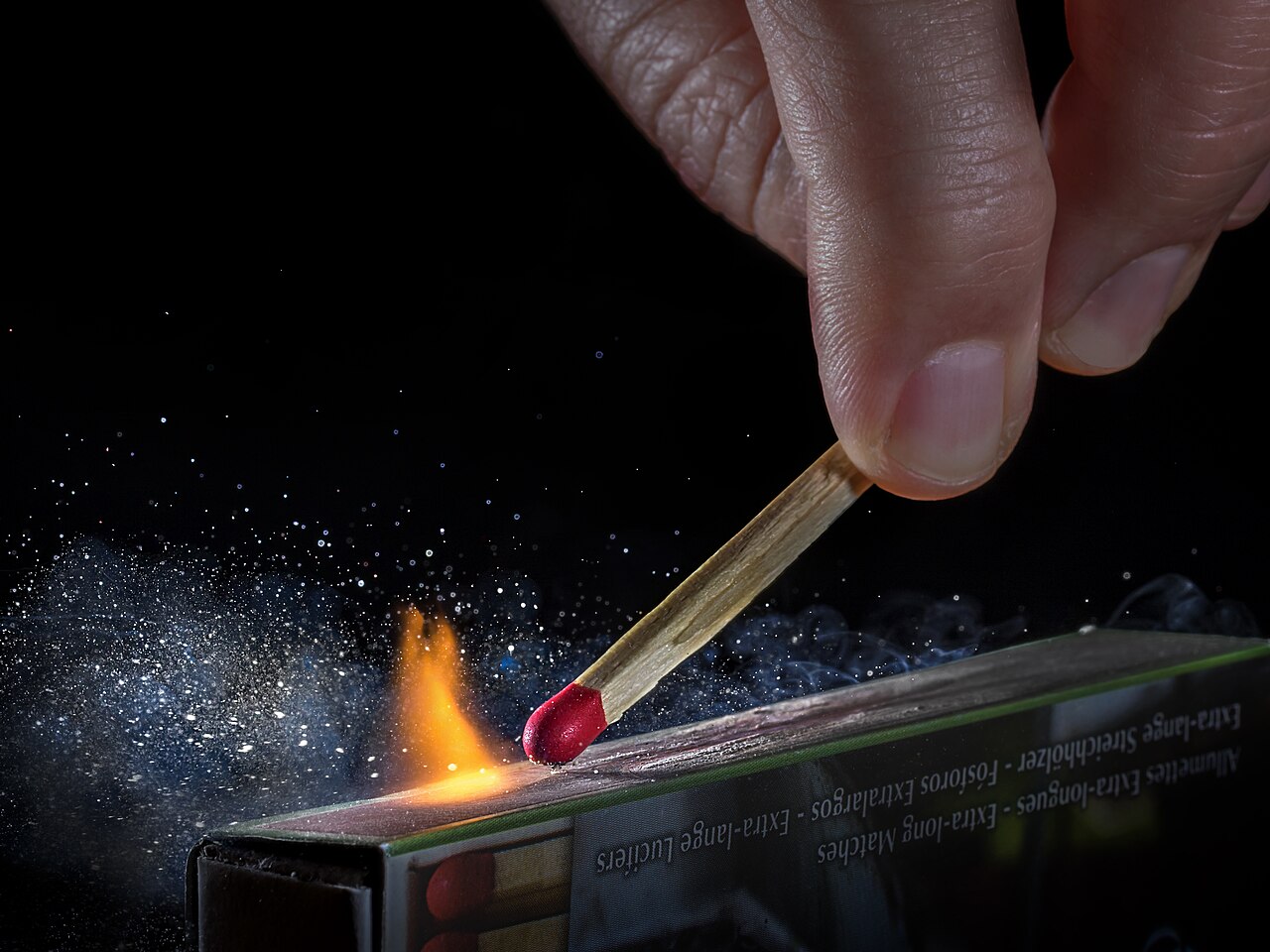
People have used this for a very long time. Rubbing pieces of wood together can start a fire. A matchstick works on the same idea, as the head is rubbed against the rough strip on the box and friction heats it until it ignites.
For centuries, scientists were not sure what heat was. Friction helped solve the puzzle. In 1798, Benjamin Thompson reported experiments with the boring of cannon barrels, where the metal became very hot as the drill rubbed against it. In 1842, Julius Robert Mayer made heat by rubbing paper pulp and measured the temperature rise. In 1845, James Joule published a famous paper, The Mechanical Equivalent of Heat. It gave a number for how much work produces a unit of heat. He used a paddle wheel turning in a tub of water. Together, these experiments helped lead to the law of conservation of energy, which says energy is never lost but only changed from one form to another.
This also explains why friction wastes energy. About 20% of all the energy used in the world is lost to friction. Every machine that rubs, from car engines to hinges, turns a bit of useful movement into heat that we do not want.
Who worked out how friction behaves?
Ancient writers such as Aristotle, Vitruvius and Pliny the Elder wondered about and how to reduce it. They knew that moving heavy loads was hard work.
The first person to write down the main laws of sliding friction was probably Leonardo da Vinci. In 1493 he recorded them in his notebooks. His notes were not published, so nobody knew. In 1699 the French scientist Guillaume Amontons found the same laws again, and they became known as Amontons' laws.
Over the 1700s, others added details. Leonhard Euler and Bernard Forest de Bélidor, around 1750, worked out how steep a slope can be before an object slides and were the first to separate static and clearly. Charles-Augustin de Coulomb studied friction in 1785 and tested many things that might change it, including the materials, the touching area, the load, the speed, the temperature and the humidity. His name is attached to the main model of dry friction that we still use.
Not everyone agreed. John Leslie pointed out a flaw in the bump-climbing theory. If a surface had to climb up bumps, it would gain energy coming down the other side, so the effect should cancel out.
In the 1800s, Arthur Morin separated sliding from rolling friction and introduced the term . In 1886, Osborne Reynolds published the first theory of lubrication, which explains how a thin film of oil carries the load in a bearing. It completed the classic set of rules for dry and fluid friction.
How does friction work in liquids and air?
happens inside fluids too. When one layer of a liquid or gas slides past another, they drag on each other. This resistance to flow is called . We often call it thickness. Water is thin and has low viscosity. Honey is thick and has high viscosity. A spoon moves easily through water and slowly through honey.
Real fluids all have some viscosity, except for rare superfluids. Because of it, anything that moves through air or water has to push the fluid aside, and the fluid drags back. The drag along the surface of a moving body is called skin friction. It grows quickly with speed, rising with the square of the velocity. Designers reduce it in two ways. They shape the body so the fluid can flow smoothly past, like the wing of an aeroplane. They can also make the body shorter and thinner.
Lubricated friction puts a fluid to good use. An oil, a grease or even water placed between two surfaces keeps them from touching. The surfaces then slide against a slippery layer rather than against each other. This can greatly reduce friction. Good lubrication lets machines run smoothly with little wear. When lubrication breaks down, metal parts can rub on each other, make heat and become damaged.
Some surprising exist. Powders such as graphite and talc work, and scientists have even tried sound waves as a lubricant.
How do brakes use friction to stop a car?

A moving car has a lot of kinetic energy. To stop, that energy must go somewhere. Brakes use to turn it into heat.
In a disc brake, a metal disc spins with the wheel. When the driver presses the pedal, pads are squeezed against the disc from both sides. Friction between the pads and the disc slows the wheel. In a drum brake, shoes press outwards against the inside of a spinning drum. Discs cool better than drums, so disc brakes usually stop a car better. Getting rid of the large amount of heat is one of the main challenges of brake design.
Brake pads are made from materials chosen to have a high . This is the opposite of what is wanted for a wheel rolling along a road. is much smaller than sliding friction. Its coefficient is about 0.001 for a steel train wheel on a rail and about 0.01 for a car tyre on a road. Brakes are designed to be rough on purpose.
Tyres matter as much as brakes. A wheel that rolls without slipping grips the road using . If the wheels lock and the tyre skids, the friction changes to , which is usually weaker, so the car takes longer to stop. An anti-lock braking system, or ABS, lets a locked wheel turn again so that the car keeps its static grip.
What does friction wear away, and how do we reduce it?
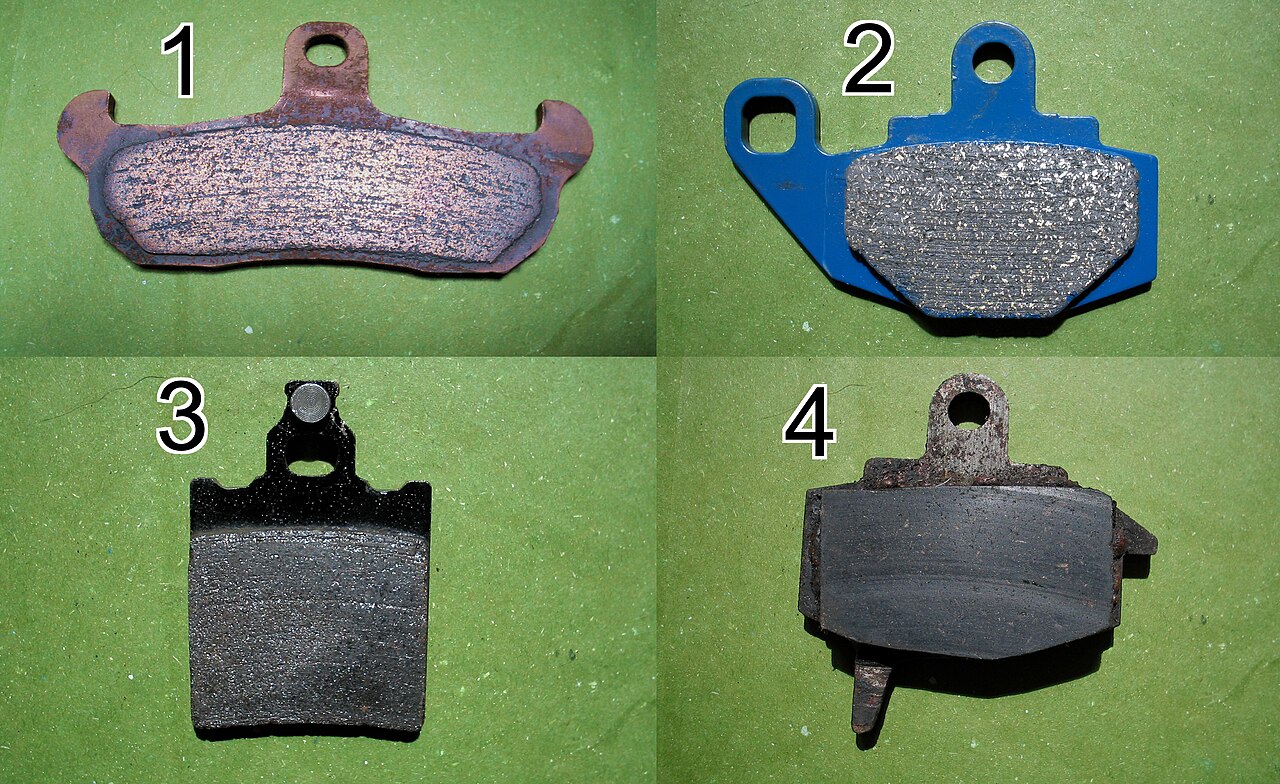
does not only make heat. It also wears surfaces away. Each time two parts rub, tiny bits of material can be torn off. Over time, parts become thinner, looser or damaged. Brake pads are designed to wear slowly, but they do wear out, and must be replaced.
Engineers have several ways to cut friction and wear. The first is to swap sliding for rolling. Wheels, ball bearings and roller bearings turn sliding friction into the much smaller rolling friction. Some bearings float on a cushion of air or liquid and barely touch at all. Plastics such as nylon and PTFE are used in low friction bearings because they are slippery and tough.
The second way is lubrication. Oil, grease or water between two surfaces can lower the dramatically.
Scientists keep finding new tricks. Superlubricity is a recently found effect in which friction between sliding surfaces, such as graphite, falls close to zero. Small vibrations added to a moving part can also cut friction.
At the very smallest scale, friction matters for tiny machines. In 2008, scientists used a modified atomic force microscope near absolute zero to drag a single cobalt atom across a metal surface and measure the force needed for the first time. The more we learn, the better we can design machines that waste less energy.
When is friction a helpful force?
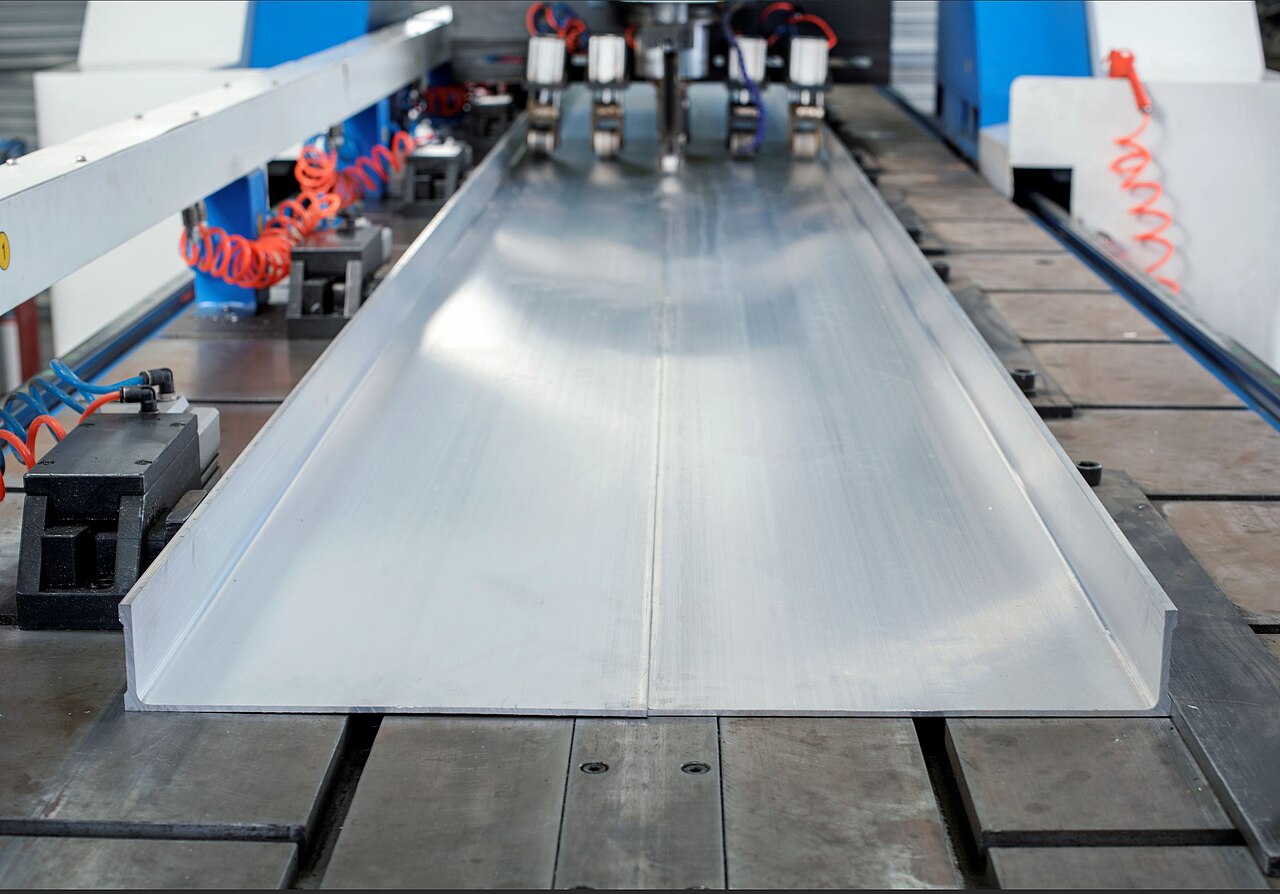
is often described as an enemy, but many things only work because of it.
Matches light by friction. Sticky pads stop objects from sliding off smooth surfaces, because they raise the . Mountain climbers and sailors wrap rope around a post or pulley so that friction holds it tight. The more turns of rope there are, the more grip they get. Engineers can work out how many turns are needed using the belt friction equation.
Friction even makes music. When a violinist draws a bow across a string, the string sticks to the bow, is carried along, then slips back and sticks again, thousands of times a second. This stick and slip motion makes the string vibrate and sing. The same effect makes a wet finger sing on the rim of a glass, and, less pleasantly, makes brakes squeal.
Engineers also use friction to join metal. In friction stir welding, a spinning tool is pushed into the join between two metal pieces. The rubbing makes heat that softens the metal without melting it, and the tool stirs the two sides together.
Friction can have a dangerous side as well. Rubbing can build up static electricity. If flammable gases are nearby, a spark when it discharges can start an explosion.
Explore Next
Your audio story keeps playing while you look around.
Words to Know
- asperity
- A tiny bump on a surface that is too small to see.
- coefficient of friction
- A number that shows how much friction there is between two materials.
- friction
- A force that resists the sliding of two surfaces or layers past each other.
- kinetic friction
- Friction between surfaces that are sliding past each other.
- lubricant
- A substance such as oil that reduces friction between surfaces.
- normal force
- The force that presses two surfaces together at right angles.
- rolling resistance
- The force that resists a wheel rolling along a surface.
- static friction
- Friction that holds two surfaces that are not moving relative to each other.
- tribology
- The science of friction, wear and lubrication.
- viscosity
- How thick a fluid is, or how strongly it resists flowing.