Heat
Energy on the move, flowing from hot things to cold ones.
Heat is the reason a hot drink warms your hands, ice melts on a sunny day, and a steam engine can pull a train. It is not a substance and it is not the same as temperature. Heat is energy on the move, flowing from hot things to colder things whenever they get the chance. People argued about what heat really was for hundreds of years. Some said it was a fluid and some said it was the jiggling of tiny particles. Careful experiments with melting ice, rubbed metal and paddles in water finally settled the question. That story leads to how heat moves, how we measure it, how it does work, and how it shapes our bodies and our planet.
What is heat, really?
Touch a hot mug and your hand warms up. Hold an ice cube and your hand cools down. In both cases something moves between your hand and the object. Scientists call that something . Heat is energy on the move, flowing from a hotter thing to a colder thing.
Heat is not a substance that sits inside an object like water in a bottle. It is the name for energy while it is travelling. Once the energy has arrived, it becomes part of the object's internal energy, which is the total energy of its moving and interacting particles. So we say a hot mug gives off heat, but a scientist would not say it contains heat.
This works because everything is made of tiny particles such as atoms and molecules, and they are always jiggling. In a hot object they jiggle faster. When a fast jiggler bumps into a slow one, it passes on some energy. Over time the energy spreads out until both objects match.
Heat always flows down a slope, from hot to cold, and never the other way on its own. That is why a cup of tea cools in a room and the room never makes the tea hotter. Scientists measure heat in , a unit named after the English physicist James Prescott Joule. Warming a small cup of water by a few degrees takes thousands of joules.
Is heat the same as temperature?
People use the two words as if they mean the same thing, but they do not. tells us how hot something is. is the energy that moves because of a difference in temperature. A tiny spark can be far hotter than a bath of warm water, yet the bath holds far more energy and can warm you much more.
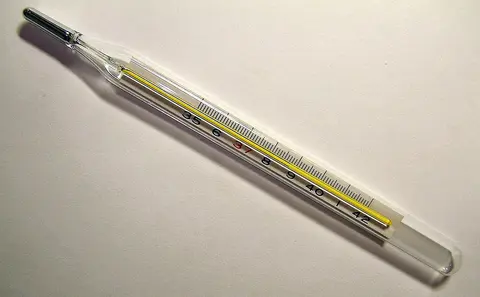
Scientists were slow to see this. Until the middle of the 1700s, nobody had clearly separated the two ideas. In 1723 the English mathematician Brook Taylor mixed hot and cold water and measured the results with a thermometer. His report hinted at the difference.
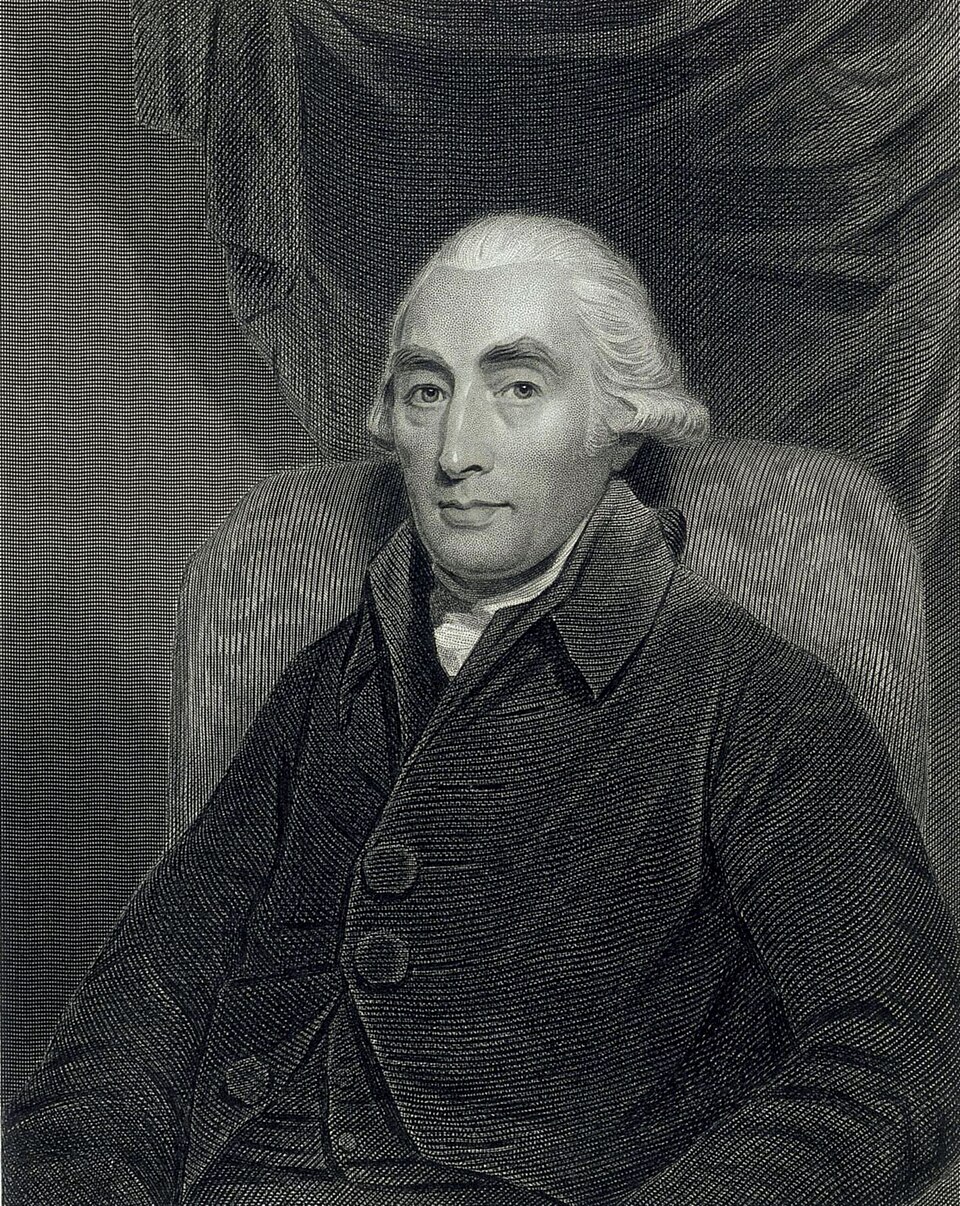
The big step came from the Scottish scientist Joseph Black around 1760. He studied what happens when two different liquids are mixed. In his example, equal masses of water and mercury ended at the same temperature. The water warmed by 20 degrees while the mercury cooled by 30 degrees. Yet the heat gained by one equalled the heat lost by the other.
So different materials need different amounts of heat for the same change in temperature. This is called . Water has a high one. That is why a swimming pool warms up slowly in the sun, while a metal spoon in a hot drink heats up in seconds.
How does heat travel from place to place?

moves in three main ways. The first is . When a hot object touches a cold one, their particles collide at the boundary and the energy passes along. A metal spoon left in a pan of soup gets hot at the handle because the energy travels through the metal from particle to particle. Metals are good conductors, while wood and air are poor ones.
The second is . In a liquid or gas, hot fluid can flow and carry its energy with it. Warm air rises above a radiator, cools near the ceiling and sinks again, making a slow loop. Strictly, physicists say the moving fluid carries internal energy, and heat transfer happens where the fluid meets other objects. In everyday life we still call the whole loop convection.
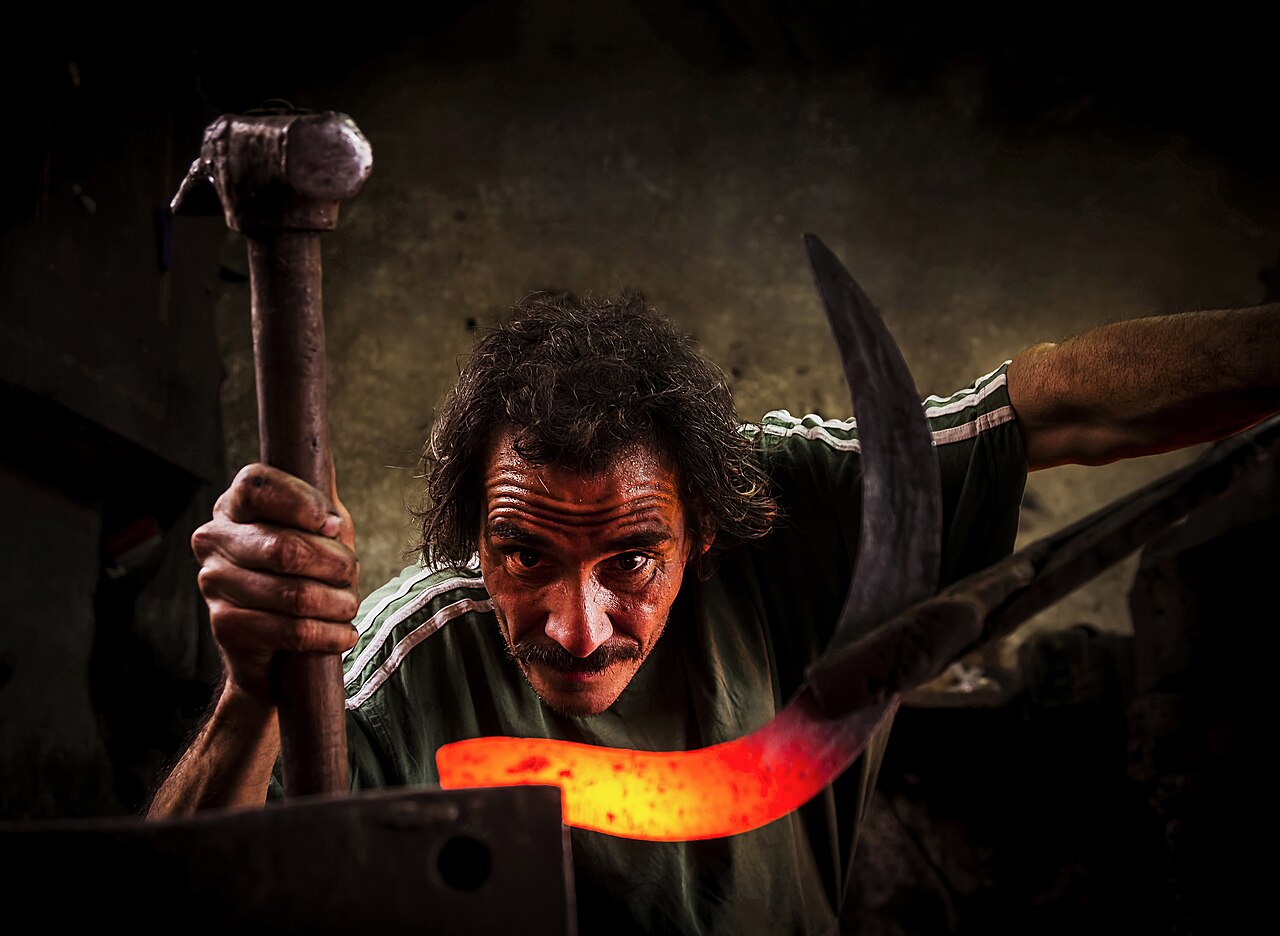
The third is . Hot objects send out electromagnetic waves, and these can cross empty space. This is how the Sun warms the Earth across about 150 million kilometres of nearly empty space. The physicist James Clerk Maxwell pointed out that in radiation the space in between does not itself become hot. Very hot objects, such as iron in a blacksmith's forge, give out so much radiation that some of it is visible light, which is why they glow red. Cooler warm things, such as animals, give out only invisible infrared, which a thermal camera can detect.
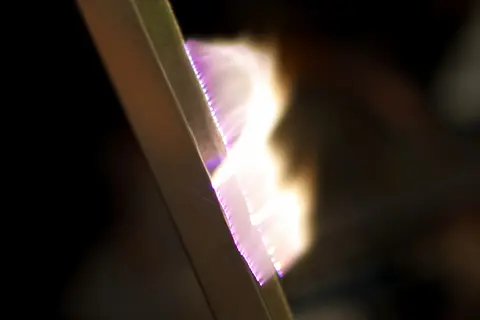
Most real situations use all three at once. A campfire warms your face by radiation, the air above it by convection, and a poker left in the flames by conduction.
Where does the heat go when ice melts?
Put ice in a warm room and it melts slowly. Here is the odd part. While the ice melts, its stays at 0 degrees Celsius, even though keeps flowing in. Where does that energy go?
Joseph Black asked the same question. In 1757 he began to test whether melting needs heat beyond what a rise in temperature explains. He placed ice and slightly warmer water in matching containers in a room and watched them warm. The ice took about 21 times longer to reach the same temperature. All that extra heat went into changing the ice into water, not into making it warmer. Black called it , from the Latin word for hidden. Heat that changes the temperature he called sensible heat, because you can feel and measure it.
Latent heat is energy used to pull particles apart so that they can move more freely. When water freezes, the same energy is given back. Boiling needs even more. Black found that turning water to steam takes several times the heat of melting ice.
Evaporation also takes heat. In 1758 Benjamin Franklin and John Hadley kept wetting a thermometer with ether and fanning it. The ether evaporated and the thermometer fell far below room temperature. Sweating cools you for the same reason.
Is heat a thing or a movement?
For centuries, people argued about what is. Some thought it was a kind of fluid. In the 1700s many scientists, including Antoine Lavoisier, favoured the theory. It said heat was an invisible, weightless fluid called caloric that flowed from hot things to cold things. The theory explained many careful experiments about warming and melting.
Others had a different idea. In 1620 the English philosopher Francis Bacon wrote that the essence of heat is motion of the small particles of a body. Galileo, Robert Hooke and Robert Boyle said much the same in the 1600s. The philosopher John Locke described heat in a similar way in 1720.
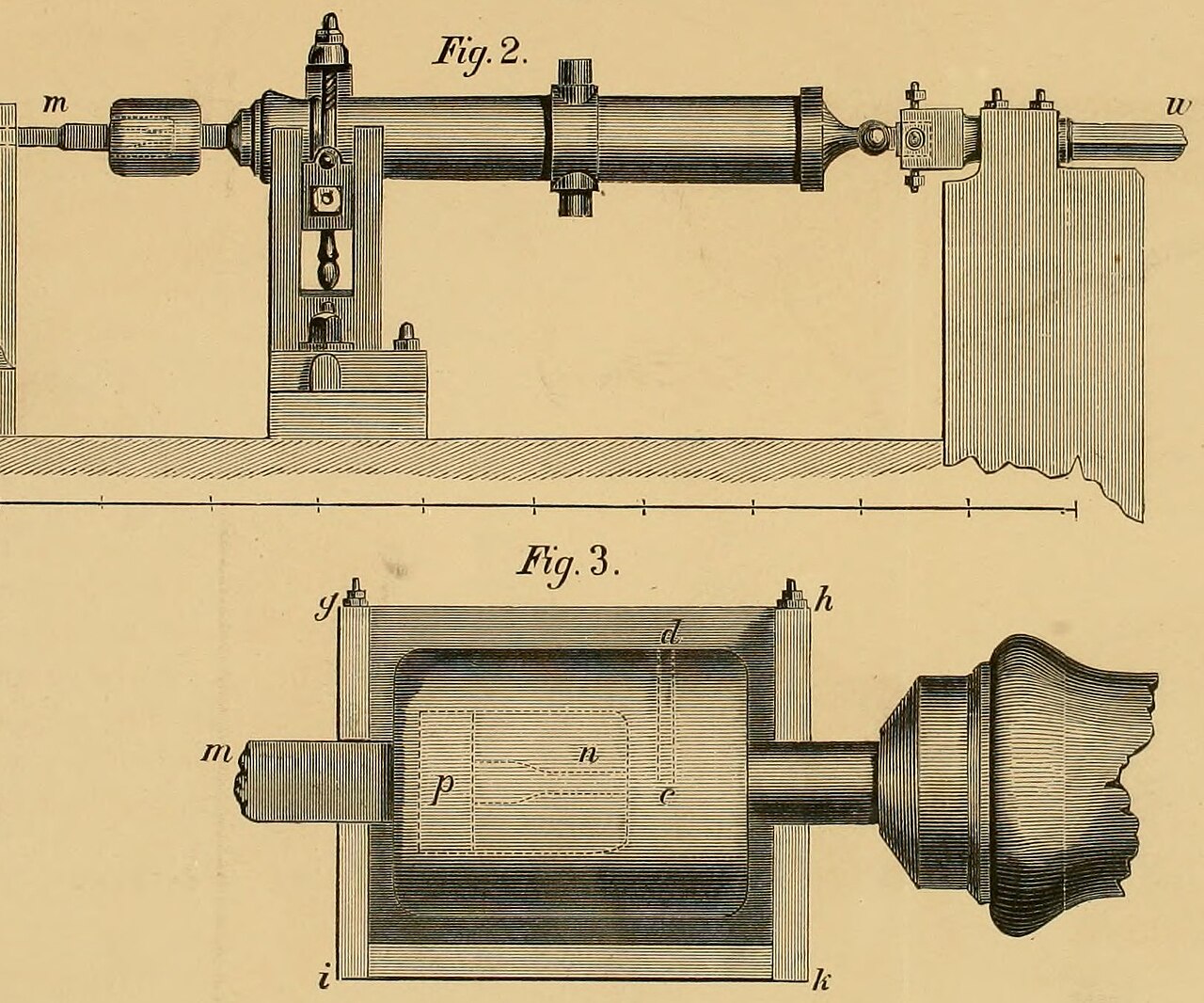
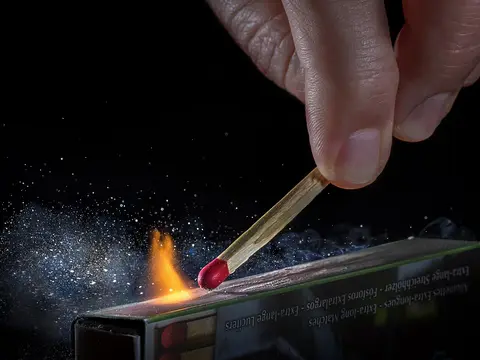
The caloric idea struggled with friction. If heat is a fluid that is only moved around, rubbing two things together should not make new heat. Yet it does. In 1798 Benjamin Thompson, also known as Count Rumford, argued that the heat made by friction seemed to have no limit, so it could not be a fluid. In 1845 James Prescott published careful measurements. He turned a paddle in water and showed that a set amount of work always gave the same amount of heat.
By the 1850s Rudolf Clausius and others had built the modern theory. Heat is energy in transfer, not a substance.
How do we measure heat?
You cannot see flowing, so scientists measure what it does. This method is called calorimetry. A is a device that catches the heat from a process and shows how much there was. It might use the rise of some water, or the amount of ice that melts.
The first one was built by Lavoisier in 1780. He wanted to know how much heat a living animal gives off. He surrounded his apparatus with snow and measured how much melted. Because the heat needed to melt a certain amount of ice was already known, the amount of melted snow gave the heat. In 1782 and 1783 he and Pierre-Simon Laplace used an ice calorimeter to measure the heat from chemical reactions.
Today the standard unit is the . Some fields still use older units, such as the calorie and the British thermal unit. The rate of heating is measured in watts, and one watt is one joule per second. A kettle rated at 2,000 watts delivers 2,000 joules every second.
High temperatures were once measured in a clever way. Josiah Wedgwood, the pottery maker, estimated the heat of a furnace by how much a piece of clay shrank in it. The hotter the furnace, the more the clay shrank, and the change could not be undone.
Why can energy never be lost, only spread out?
By the 1840s several scientists had reached the same big idea. Energy is never made or destroyed. It only changes form. The German doctor Julius Robert von Mayer said so in 1842, backed it up with his paddle measurements, and Hermann von Helmholtz set it out in full in 1847. Today it is called the first law of thermodynamics. When a falling weight turns Joule's paddle, the weight's energy does not vanish. It ends up as faster jiggling of the water's particles.
A second rule came from the study of engines. In 1824 a young French engineer, Sadi Carnot, worked out the best that any could ever do. In 1850 Rudolf Clausius built on Carnot's work to state the second law of thermodynamics. In plain words, heat never flows from a colder thing to a hotter one on its own.
In 1865 Clausius named the quantity behind this rule. He called it , from a Greek word for transformation. Entropy measures how spread out energy is. Whenever flows from hot to cold, the energy becomes more spread out and the total entropy goes up. A hot cup of tea in a cold room ends as a very slightly warmer room, and that energy never gathers itself back into the cup.
William Thomson, later Lord Kelvin, and Helmholtz wondered where this leads. If entropy always rises, the whole universe may one day reach the same everywhere, with no heat flowing at all. This idea is called the heat death of the universe.
How can heat do work?

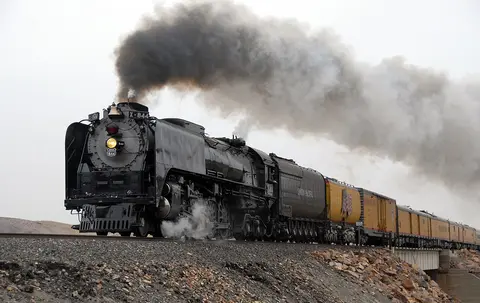
If flows from hot to cold, it can be made to push something on the way. A does exactly that. It takes in heat from a hot place, turns some of it into useful work and gives the rest to a cold place. A steam engine boils water in a boiler, uses the pushing power of the steam to move a piston, and then lets the steam cool down and condense.
The cold place is not optional. Carnot and the second law of thermodynamics show that some heat must always flow out to the cold side, so no engine can turn all its heat into work. Engines work better when the gap between the hot and cold is bigger. This is one reason power stations run at very high temperatures.
You can also run the idea in reverse. A heat pump or a refrigerator uses work, often from an electric motor, to move heat from a cold place to a hotter one. A fridge takes heat from the food inside and pushes it out into the kitchen, which is why the back of a fridge feels warm. No law is broken, because energy is being spent to do the moving.
Heat engines changed history. Steam engines powered factories and trains. Petrol and diesel engines followed. They all depend on the same rule that heat flowing downhill can do work.
How does heat shape our bodies and our planet?
Your body is a source. Your cells break down food for energy, and much of that energy ends up as heat. A resting adult gives off about 100 watts, roughly as much as an old-fashioned light bulb. To stay near 37 °C, the body must lose that heat at the right rate. On a hot day, blood vessels near the skin widen and sweat evaporates, carrying heat away. On a cold day, the vessels narrow and the muscles shiver to make extra heat.
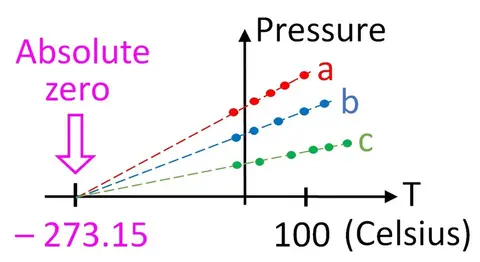
The whole planet runs on the same rules. Sunlight warms the land and the oceans, and the warm Earth sends energy back towards space as invisible infrared . Some gases in the air, such as water vapour and carbon dioxide, absorb part of that infrared and send some of it back down. This is the greenhouse effect. Without it, Earth's average would be about −18 °C instead of about 15 °C.
Scientists pieced this together in the 1800s. In 1824 the French mathematician Joseph Fourier argued that the air keeps the Earth warmer than it would otherwise be. In 1856 the American scientist Eunice Foote found that a glass jar of carbon dioxide grew hotter in sunlight than a jar of ordinary air. In 1859 the Irish physicist John Tyndall measured how strongly different gases absorb heat radiation.
Burning coal, oil and gas has raised the amount of carbon dioxide in the air, so more heat is now held in. More than 90% of that extra heat goes into the oceans. Water's high means the seas warm slowly, but they store enormous amounts of energy.
Explore Next
Your audio story keeps playing while you look around.
Words to Know
- caloric
- An old idea that heat was an invisible fluid.
- calorimeter
- A device that measures how much heat a process takes in or gives out.
- conduction
- Heat passing through a material or between things that touch.
- convection
- Heat carried along by a moving liquid or gas.
- entropy
- A measure of how spread out energy is, which always rises when heat flows from hot to cold.
- heat
- Energy that moves from a hotter thing to a colder thing.
- heat engine
- A machine that turns some of the heat flowing from hot to cold into work.
- joule
- The unit used to measure energy and heat.
- latent heat
- Heat taken in or given out when a material changes state without changing temperature.
- radiation
- Energy sent out as waves that can cross empty space.
- specific heat capacity
- The heat needed to warm a given mass of a material by one degree.
- temperature
- A measure of how hot or cold something is.