Gravity
The invisible pull that shapes apples, planets, stars and the whole Universe.
Gravity is the reason a dropped ball hits the floor and the Moon stays near the Earth. It is a pull between all objects that have mass, and it is gentle enough that you never notice it between two people. For planets, stars and galaxies it is the master force, drawing gas into stars and holding whole galaxies together. People have argued about how it works for over 2,000 years. Isaac Newton showed that one law covers apples and planets, and Albert Einstein later described it as the bending of space and time. Even now, gravity hides puzzles that scientists are still trying to solve.
What is gravity, and why does it pull?
Gravity is the pull that every object with has on every other object. Mass is the amount of matter in something. You pull on your pencil and your pencil pulls on you, but both pulls are far too small to notice. Gravity only becomes strong when one of the objects is enormous, like a planet or a star.
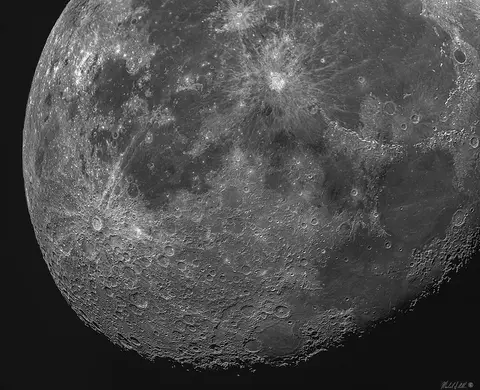
That is why the Earth seems to pull on us and we never seem to pull back. Our pull on the Earth is real, but the Earth has so much more mass that it barely moves. The same pull gives things their . Weight is the force with which a planet pulls on an object. Take the same bag to the Moon and it still has the same mass, but it weighs much less, because the Moon has less mass and so pulls more gently.
Gravity has two rules that matter most. The more mass the objects have, the stronger the pull. The farther apart they are, the weaker the pull.
Gravity is one of the four fundamental forces of nature. The others are electromagnetism and the strong and weak forces, which work inside atoms. Gravity is by far the weakest of the four. Yet because it only ever pulls and never pushes, its effects add up. For planets, stars and galaxies, gravity is the force in charge.
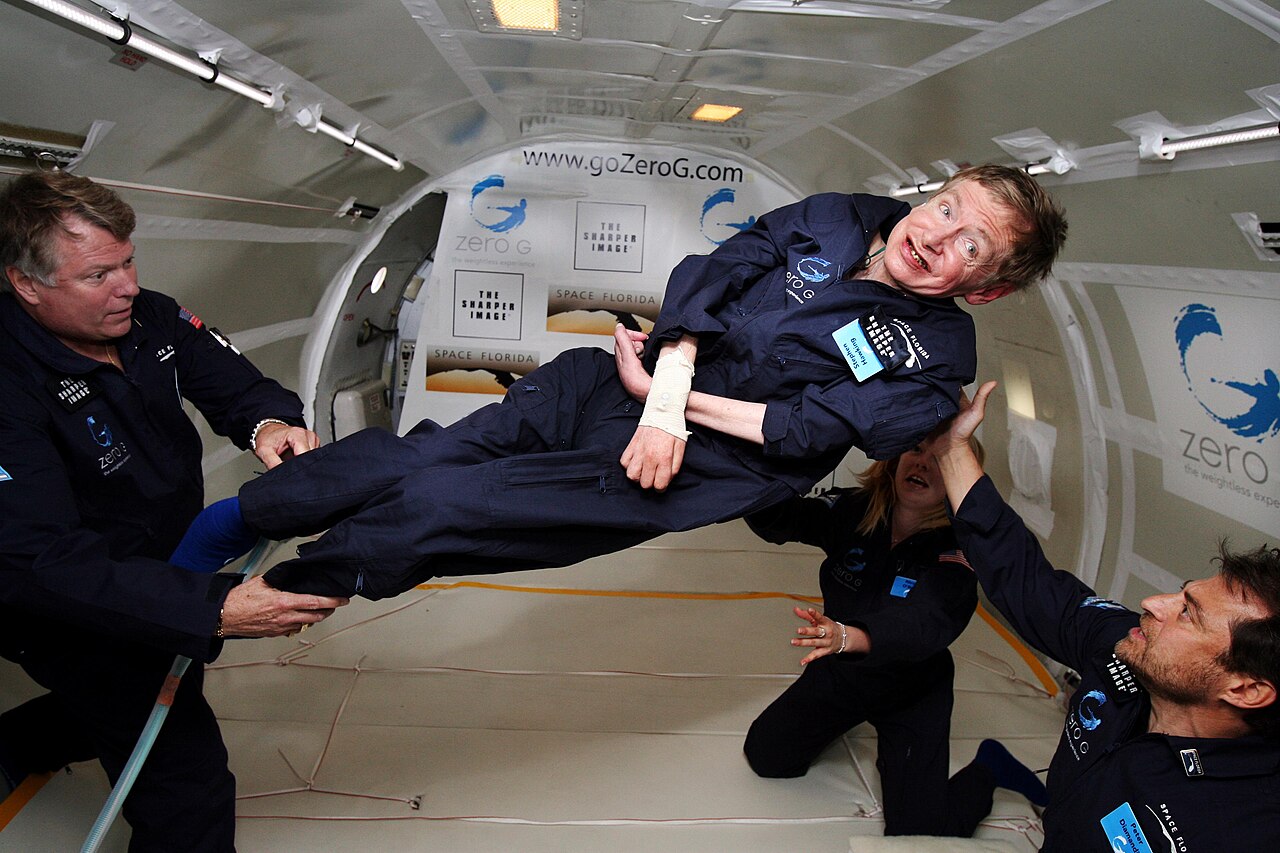
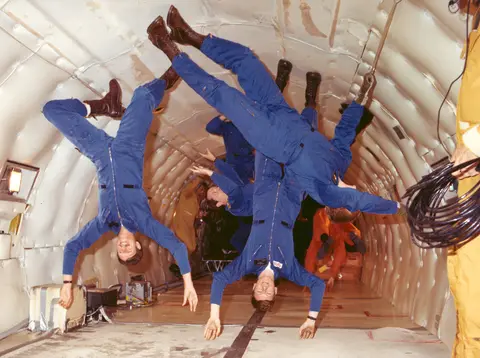
Even floating in a plane does not switch gravity off. A plane flying in a long curve falls freely, and so does everything inside it, so nothing seems to weigh anything. Gravity is still pulling the whole time.
Do heavy things really fall faster?
For about 2,000 years, many people believed they did. The Greek thinker Aristotle taught that heavier objects fall faster, and that things fall because the Earth is the centre of the Universe and pulls everything towards it.
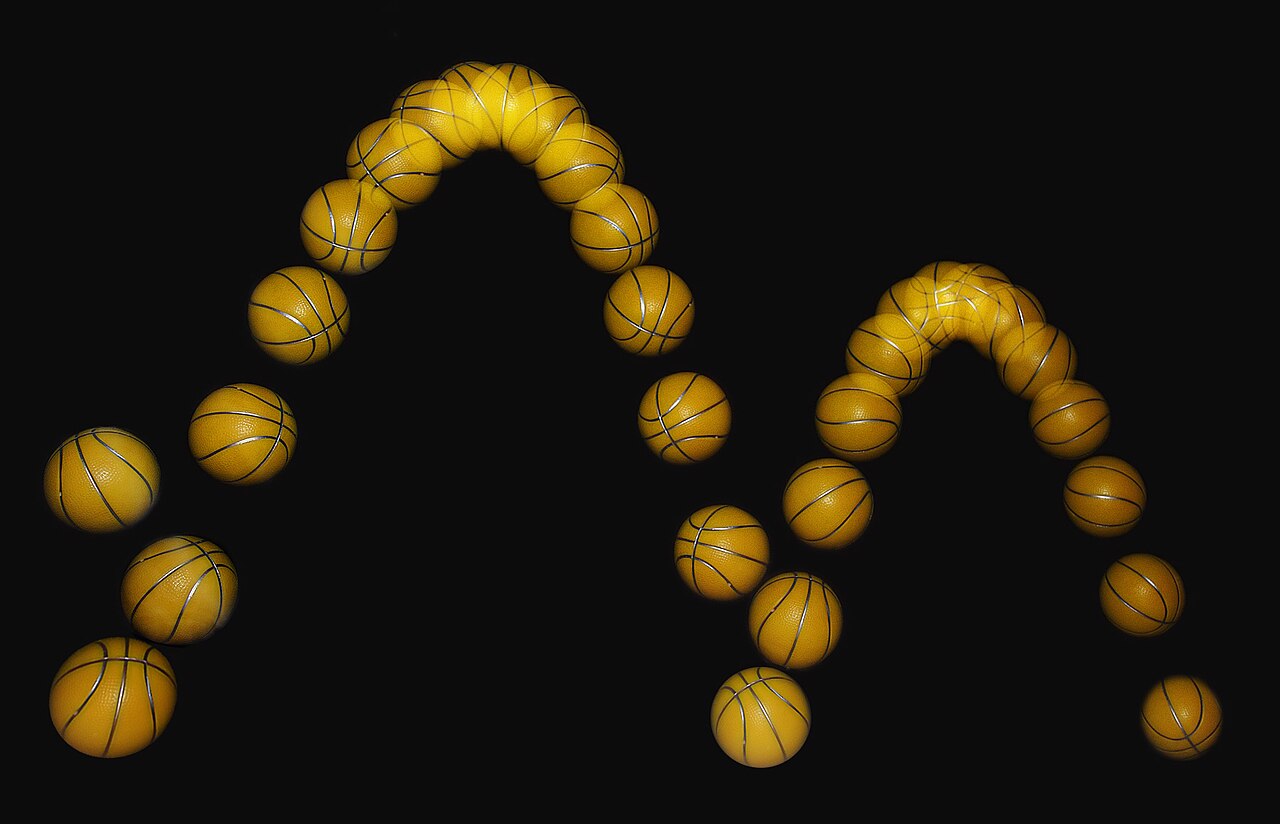
In the 1500s, scientists in Europe began testing it. In 1586 the Flemish scientist Simon Stevin dropped two cannonballs of different sizes and from a tower in Delft. They landed together. Soon afterwards the Italian scientist Galileo Galilei made careful measurements of balls rolling down slopes. Rolling slowly let him time the motion with the tools of the day. He showed that all objects speed up at the same rate when they fall.
So why does a feather drift down? Galileo worked out that is the reason. Light objects with a large surface, like feathers, are slowed more by the air. In a vacuum, with no air, a feather and a hammer fall side by side.
Falling objects do not move at a steady speed. They accelerate, which means they gain speed. Near the surface of the Earth, a falling object gains about 9.8 metres per second of speed every second. Galileo also found that the distance a falling object covers grows with the square of the time. Fall for twice as long and you fall four times as far.
The pull is not exactly the same everywhere. It is a little weaker at the equator than at the poles. The Earth spins, which slightly reduces the pull there, and the equator is also farther from the Earth's centre. The difference is small, about 9.78 metres per second every second at the equator against about 9.83 at the poles.
How did Newton link an apple to the Moon?
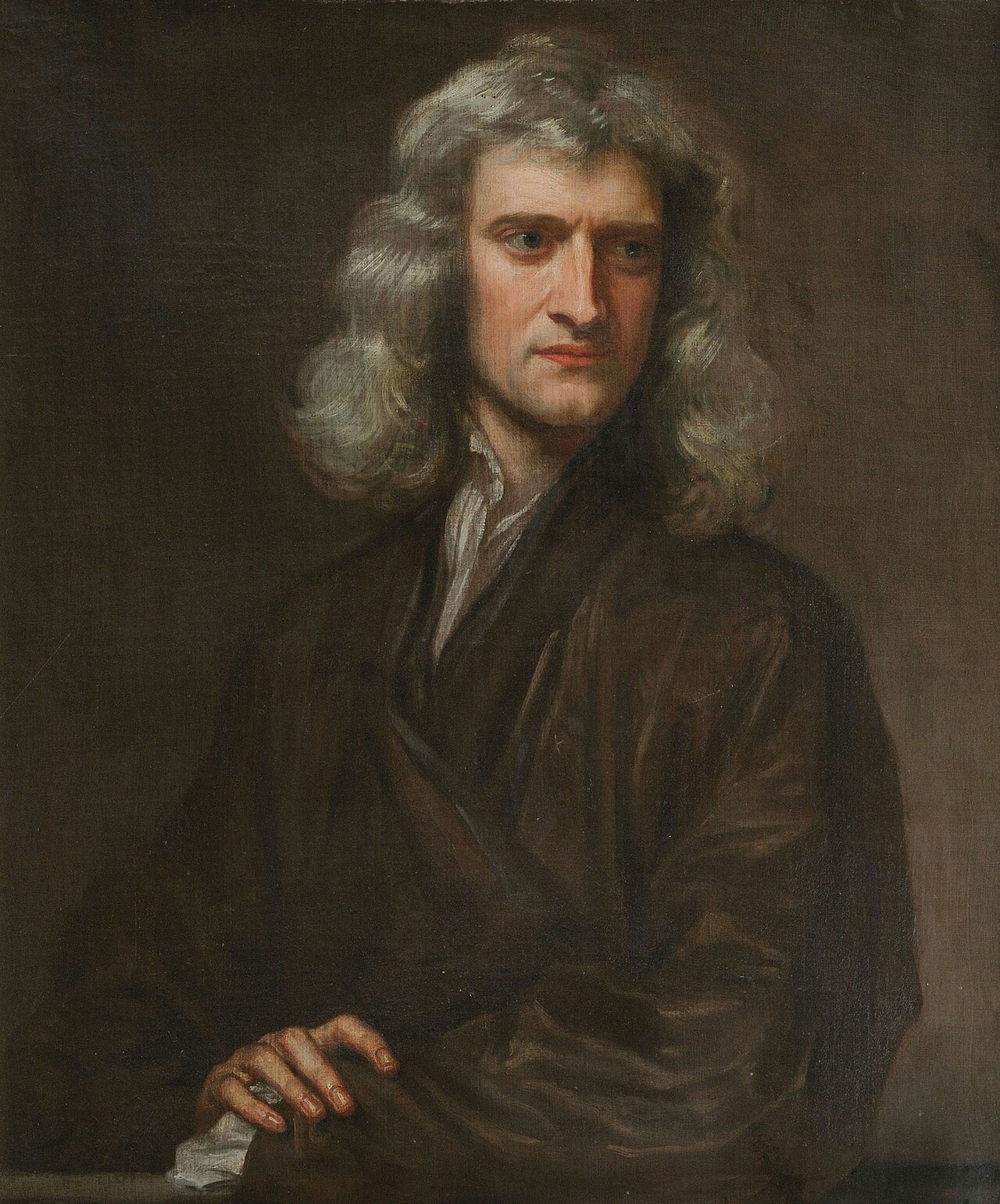
Before Isaac Newton, most people saw falling apples and the orbiting Moon as two different puzzles. Newton's big idea was that they are the same thing. The force that pulls an apple to the ground also holds the Moon near the Earth.
The ground was prepared by others. The German astronomer Johannes Kepler had used the careful planet observations of Tycho Brahe to find three laws describing how planets move. Scientists such as Robert Hooke and Edmond Halley suspected that the pull between the Sun and the planets weakens with the square of the distance. That means that at twice the distance, the pull is a quarter as strong. They could not prove it for the real, oval of the planets.
Newton could. Around 1665 he compared how the Moon moves with how objects fall on Earth, and the numbers fitted. He held back for years, because he could not yet prove that the whole Earth pulls as if all its were at its centre. That proof took him about twenty years. In 1684 he sent Halley a short paper on orbits. Halley urged him to write more, and in 1687 Newton published his famous book, the Principia.
Newton's law of universal gravitation says that every object attracts every other object. The pull grows with the masses and shrinks with the square of the distance. The word universal matters. The same law applies on Earth, to the planets and to the stars.
The strength of gravity in the law is set by a number called the gravitational constant. It was first measured in 1798 by the English scientist Henry Cavendish.
What keeps the planets in orbit?
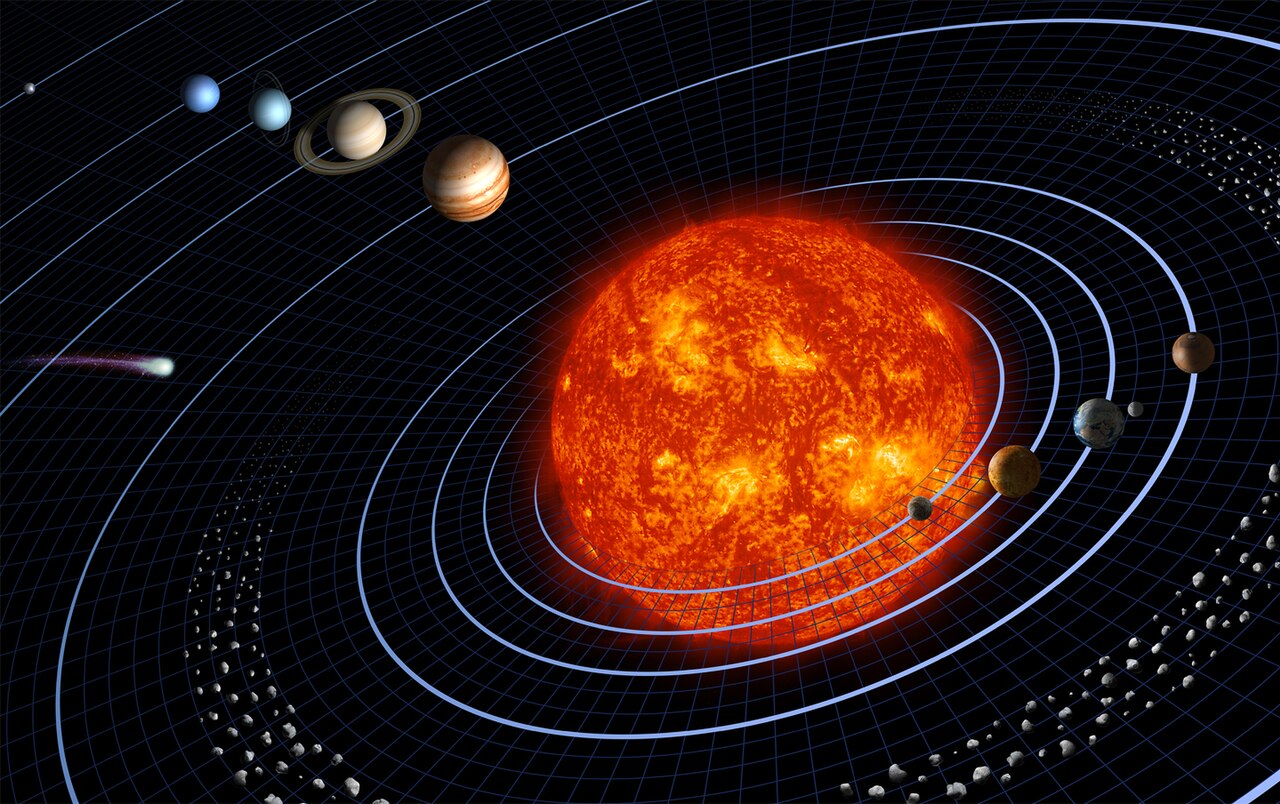
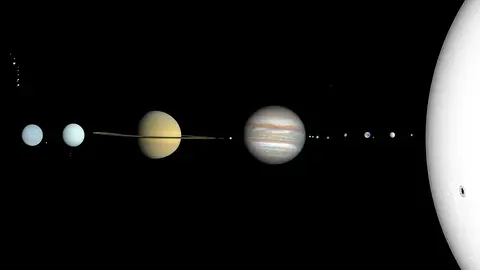
An is the path one object takes around another, held by gravity. The planets orbit the Sun, the Moon orbits the Earth, and satellites orbit the Earth too. Newton explained why none of them fly off or crash in.
Picture a cannon on a very tall mountain. Fire a ball and it curves down to the ground. Fire it faster and it lands farther away. Fire it fast enough and the ground curves away beneath it as quickly as the ball falls. The ball keeps falling but never lands. That is an orbit. Something in orbit is always falling around the object it circles, and the speed it already has stops it from falling in.
This also explains why astronauts on the International Space Station float. Gravity at that height is still strong, only slightly weaker than on the ground. They float because they and the station are falling around the Earth together.
Planet orbits are slightly stretched circles called ellipses. They are not perfect, because each planet also pulls on the others. The pulls are small, but they add up, and that has been put to good use.
By the 1800s, astronomers saw that Uranus was not following the path Newton's law predicted. Some guessed that an unseen planet was pulling on it. In 1846 John Couch Adams and Urbain Le Verrier each used the law to work out where that planet should be. Astronomers pointed their telescopes at the spot and found Neptune within a day. A planet had been found with a pencil and paper.
How does gravity build stars and galaxies?
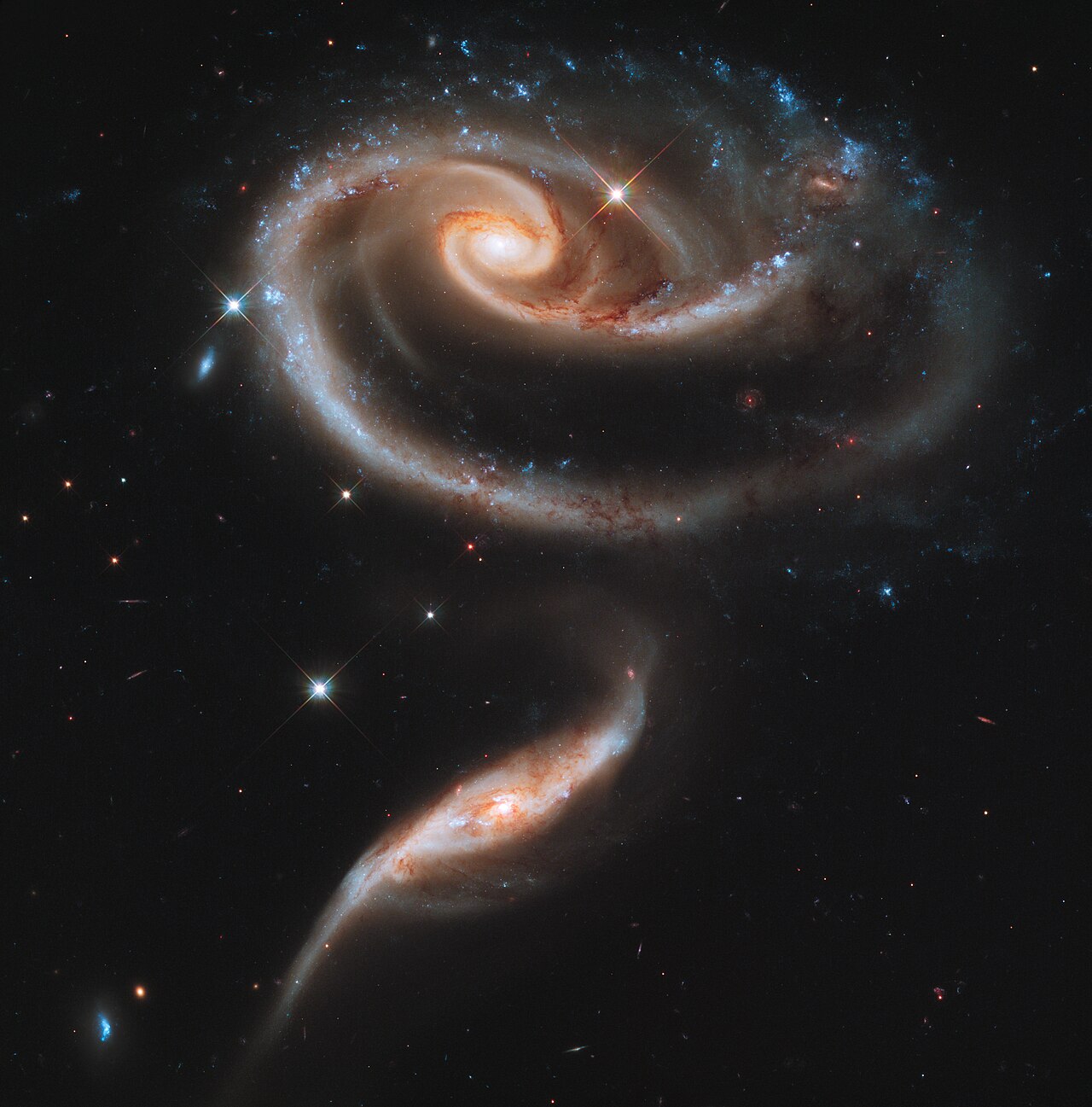
The early Universe was filled with thin clouds of hydrogen gas. Gravity pulled the gas together, little by little, into clumps. Scientists think that large clumps of an invisible material called helped, because their gravity drew in the gas. Over time these clumps became stars, then galaxies, then clusters of galaxies. Gravity built the large-scale structure of the Universe.
A star is born when a cloud of gas shrinks under its own . As the gas squashes together it heats up. If the cloud has only a little , it makes a brown dwarf or a giant planet. If it has more, the centre becomes hot and squeezed enough for nuclear fusion to begin, and a star is born. From then on, gravity pulling in is balanced by the pressure of hot gas pushing out.
Stars do not last for ever. When the fuel runs out, gravity wins again. A star like our Sun swells into a red giant and then shrinks to a white dwarf. Much heavier stars end in a huge explosion called a supernova. What is left may be a neutron star, which packs more mass than the Sun into a ball about 20 kilometres wide. If the leftover is heavy enough, gravity crushes it into a .
On the biggest scale gravity shapes whole galaxies. Dark matter is thought to make up about five sixths of all the mass in the Universe. We cannot see it, but we can measure its pull. Stars at the edges of galaxies move faster than the visible matter alone can explain, and dark matter would account for it.
What did Einstein change?
Newton's law worked brilliantly, but it left a puzzle. It said that gravity is a pull across empty space, and it did not say how the pull travels. There was also a small mistake in the of Mercury. The point where Mercury is closest to the Sun slowly shifts, by an amount that Newton's law could not fully explain.
In 1915 Albert Einstein published a new theory, called general relativity. It says that gravity is not really a pull at all. and energy bend , which is space and time joined together. Objects then move along the bends. A common picture is a heavy ball on a stretched rubber sheet. A marble rolled nearby curves around it. The Sun bends spacetime and the planets follow the curves.
The theory grew from what Einstein later called the happiest thought of his life, in 1907. A person falling freely would not feel their own . For them, gravity seems to vanish. That clue led him to link gravity with the shape of space and time.
Einstein's theory explained Mercury's orbit exactly. It also made a bold prediction. Light should bend when it passes a massive object, because the space it travels through is curved. Starlight passing close to the Sun should shift by a measurable amount.
In 1919 the British astronomer Arthur Eddington checked this during a total solar eclipse, when stars close to the Sun could be seen. The stars seemed shifted by about the amount Einstein predicted. Newspapers around the world reported it, and Einstein became famous almost overnight. Later scientists questioned parts of Eddington's analysis, but many later tests have supported the theory.
How can gravity bend light and trap it?
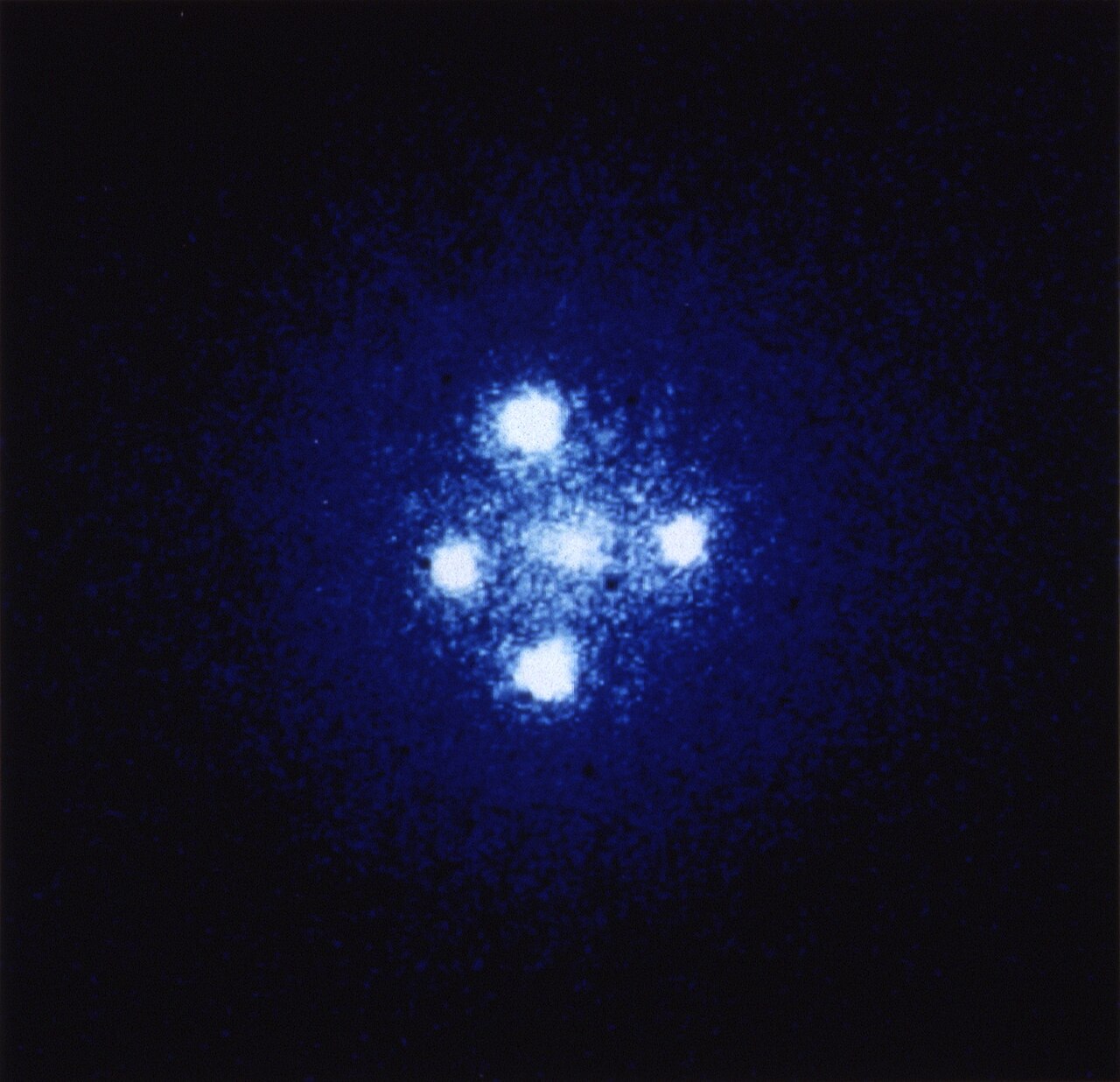
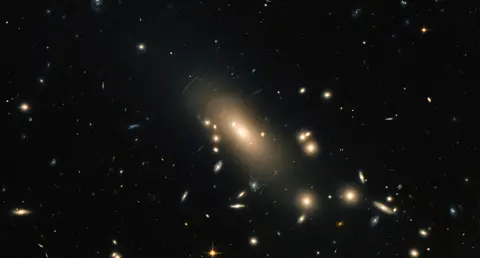
Gravity acts on light as well as on matter. A very massive object, such as a galaxy, can bend the light of something far behind it. Astronomers call this . It was first confirmed in 1979, when a telescope in Arizona saw two images of the same distant quasar, a very bright object powered by a . Its light had been bent around a galaxy in front of it.
Gravitational lenses do not focus light like a glass lens. They can smear a faint background object into a ring, called an Einstein ring, or split it into several copies. In a famous example called Einstein's Cross, one quasar appears four times around a galaxy. Lensing has become a major tool. It shows where is hiding, and it has given strong evidence for around galaxies.
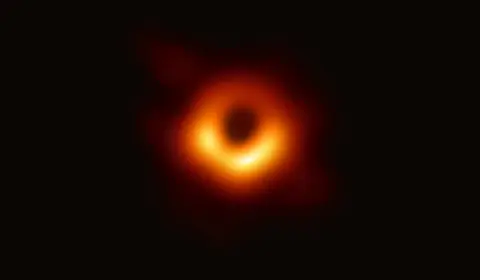
Where gravity is strongest, it can trap light itself. A black hole is a place where so much mass is squeezed into so little space that nothing can escape once it passes a boundary called the . Not even light gets out. The idea comes straight from Einstein's equations.
For decades black holes were only a prediction. In 1971 astronomers found a strong candidate in the constellation Cygnus. Called Cygnus X-1, it gave off bursts of X-rays as it pulled gas from a smaller star nearby.
Gravity also changes time. Near a massive object, time passes more slowly. In 1959 the American physicists Robert Pound and Glen Rebka tested this by sending gamma rays down a tower 74 feet tall, about 22 metres. The change in the rays matched the theory. Gravity was slowing the clocks.
What are gravitational waves?
Einstein's theory made another strange prediction. When massive objects move or collide, they should send ripples through . These are . They travel outwards at the speed of light, stretching and squeezing space as they pass.
The first evidence came from a pair of dense stars discovered in 1974, called the Hulse-Taylor binary. One is a pulsar, a neutron star that sends out regular pulses. The two stars each other, and over the years their orbit shrank in exactly the way that the loss of energy through gravitational waves would cause. Hulse and Taylor won the Nobel Prize in Physics in 1993.
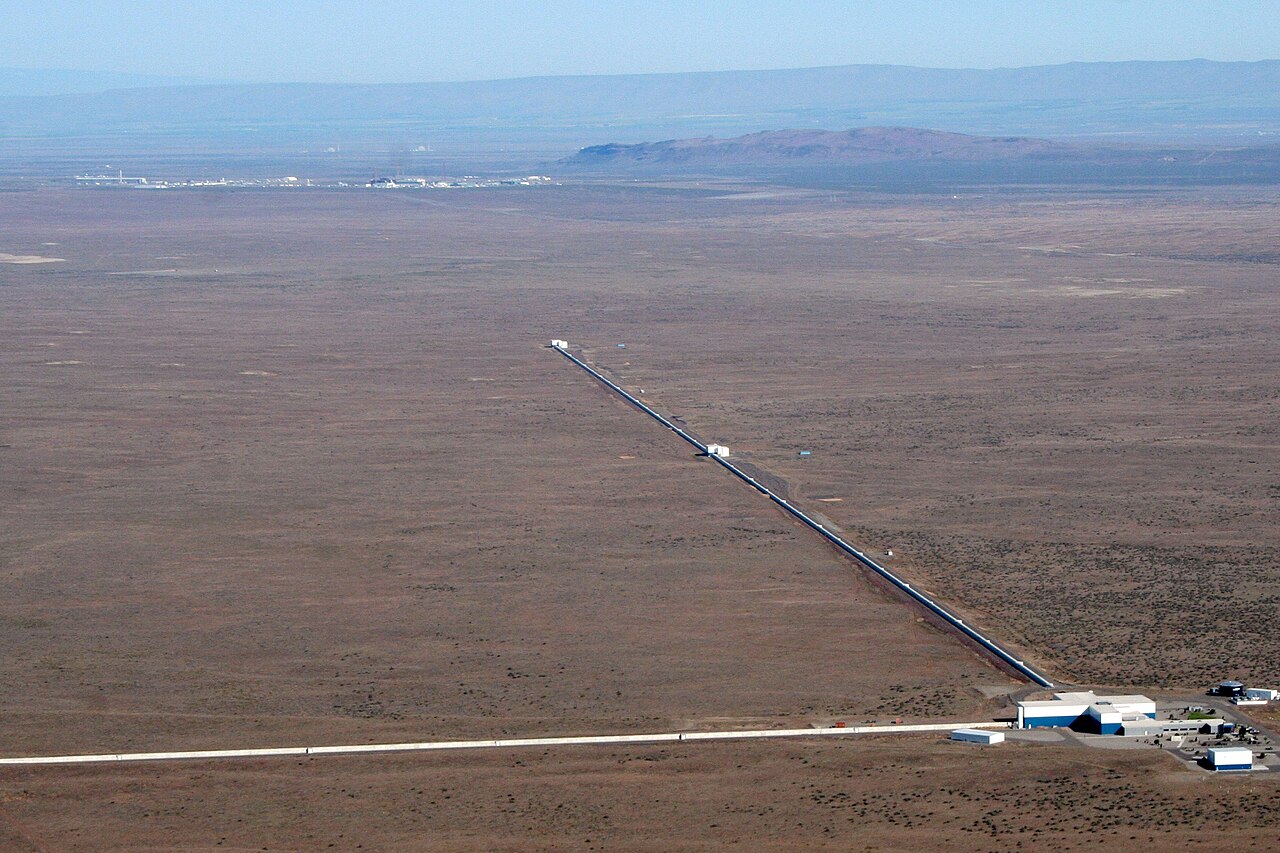
The waves themselves were detected on 14 September 2015 by the LIGO observatory in the United States. The waves came from two that crashed together more than a billion light years away. A light year is the distance light travels in a year, which is about 9.5 trillion kilometres.
LIGO has two long arms in the shape of an L. Laser beams run down each arm and bounce back. A passing gravitational wave changes the lengths of the arms by a tiny amount, far smaller than an atom. Instruments can still measure that. The discovery earned the Nobel Prize in Physics in 2017.
Gravitational waves give us a new way to look at the Universe. Light can be blocked, but these waves pass through almost anything. In 2017 detectors in the United States and Italy picked up waves from two neutron stars colliding about 130 million light years away. Telescopes saw light from the same crash two seconds later. That showed that gravity travels at the speed of light.
What do we still not know about gravity?
General relativity is the best theory of gravity we have. It has passed every test so far, and it is used when great precision is needed, such as in satellite navigation. For everyday jobs, Newton's law is still accurate enough. Engineers use it to plan a rocket trip to the Moon.
But some puzzles remain. The first is quantum gravity. Quantum mechanics describes the tiny world of atoms and says that forces work by exchanging small packets of energy. Three of the four fundamental forces fit this picture well. Gravity does not. General relativity treats as smooth, which clashes with quantum ideas, and attempts to join them break down at distances of about the Planck length, which is unimaginably tiny. Many physicists are searching for a theory that fits them together.
The second puzzle is . We see its effects through gravity, but we have never identified what it is made of. The third is dark energy. Measurements show that the expansion of the Universe is speeding up, and scientists use the name dark energy for whatever is causing it. Some physicists wonder if the answer is a better theory of gravity instead, and they are testing other ideas.
Gravity is the force we feel every moment, yet it holds some of the deepest mysteries in science. A tiny change in our understanding of it has led before to a new view of the whole Universe.
Explore Next
Your audio story keeps playing while you look around.

Words to Know
- acceleration
- A change in speed, such as a falling object going faster.
- air resistance
- The force of air pushing against a moving object and slowing it.
- black hole
- A region where gravity is so strong that nothing, not even light, can escape.
- dark matter
- Invisible matter that we detect only through its gravity.
- event horizon
- The edge of a black hole, beyond which nothing can return.
- gravitational lensing
- The bending of light by the gravity of a massive object.
- gravitational wave
- A ripple in spacetime made by moving massive objects.
- mass
- The amount of matter in an object.
- orbit
- The curved path an object takes around another because of gravity.
- spacetime
- Space and time joined together as one four-part fabric.
- weight
- The force with which a planet or moon pulls on an object.