Magnet
A stone or a bar of metal that pulls on iron without touching it.
A magnet is an object that makes a magnetic field, an invisible region around it where a pulling or pushing force can be felt. The force can pull iron towards the magnet, and it can pull or push another magnet. People first noticed it in a rock found in the ground more than 2,500 years ago. Today magnets sit inside speakers, motors, hospital scanners and the hard disks that store our files. Some hold notes to a fridge door and others lift scrap cars. So what makes a magnet, how are magnets made, and why do they have a north and a south pole?
What makes something a magnet?
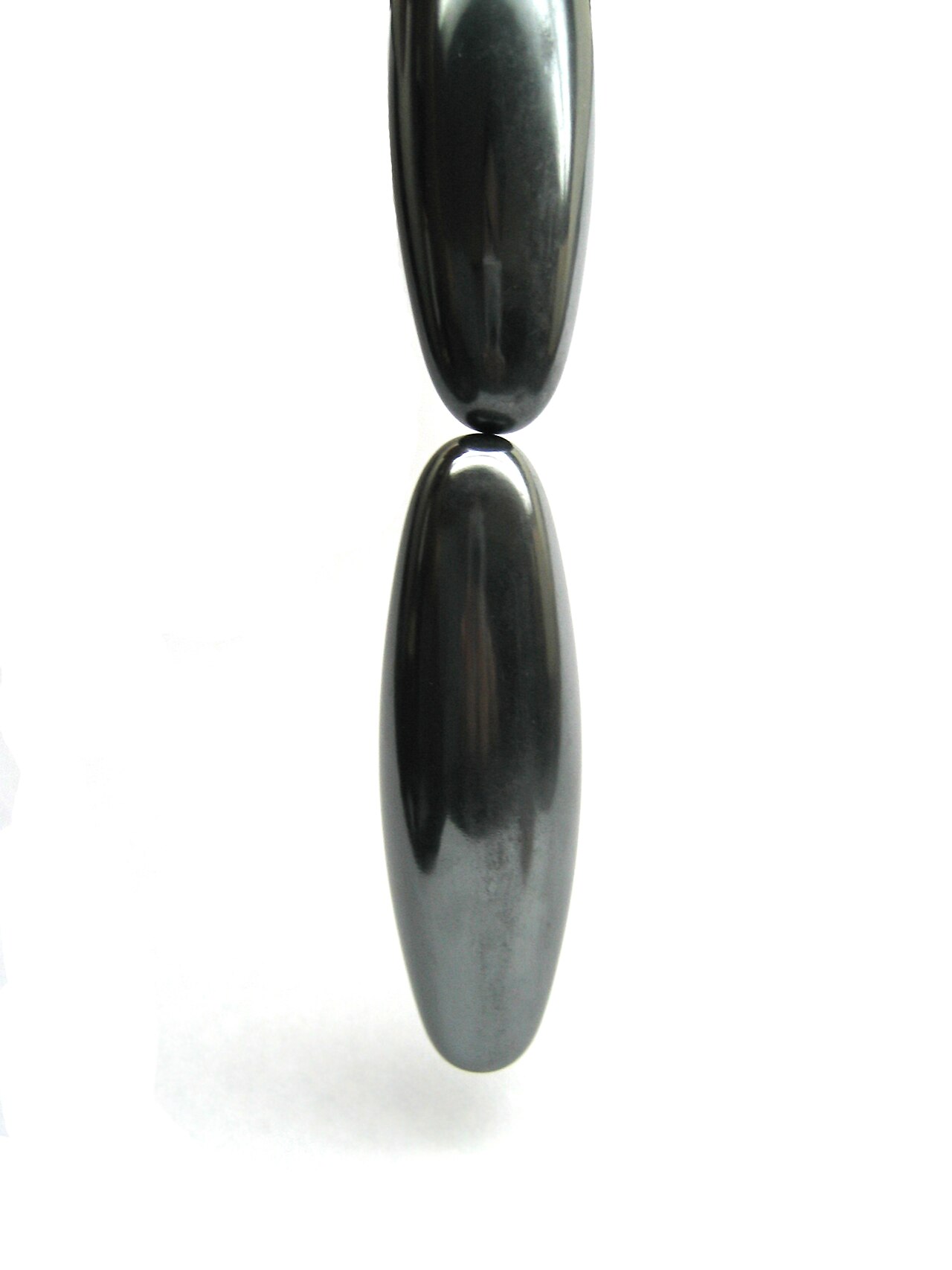
A magnet is a material or object that makes a . You cannot see the field, but you can feel its effect. It pulls on certain metals, mainly iron, steel, nickel and cobalt, and it can pull or push other magnets.
Most magnets you meet are . A permanent magnet is made from a material that has been magnetised, so it has a magnetic field of its own that stays. A fridge magnet is an everyday example.
Only some materials can become permanent magnets. They are called , and they include iron, nickel, cobalt and some of their mixtures, called . Ferromagnetic materials come in two kinds. Soft ones, such as pure iron, become magnetic when a magnet is near but lose it again soon after. Hard ones, such as the alloy alnico, keep their magnetism for years. Permanent magnets are made from hard materials. They are treated in a strong magnetic field while being made, and this fixes their magnetism so it is very hard to remove.
There is a second kind of magnet. An is a coil of wire that acts as a magnet only while electric current flows through it. Switch the current off and the magnetism stops. This makes electromagnets very useful, because they can be turned on and off, and made stronger or weaker.
Who discovered magnets?
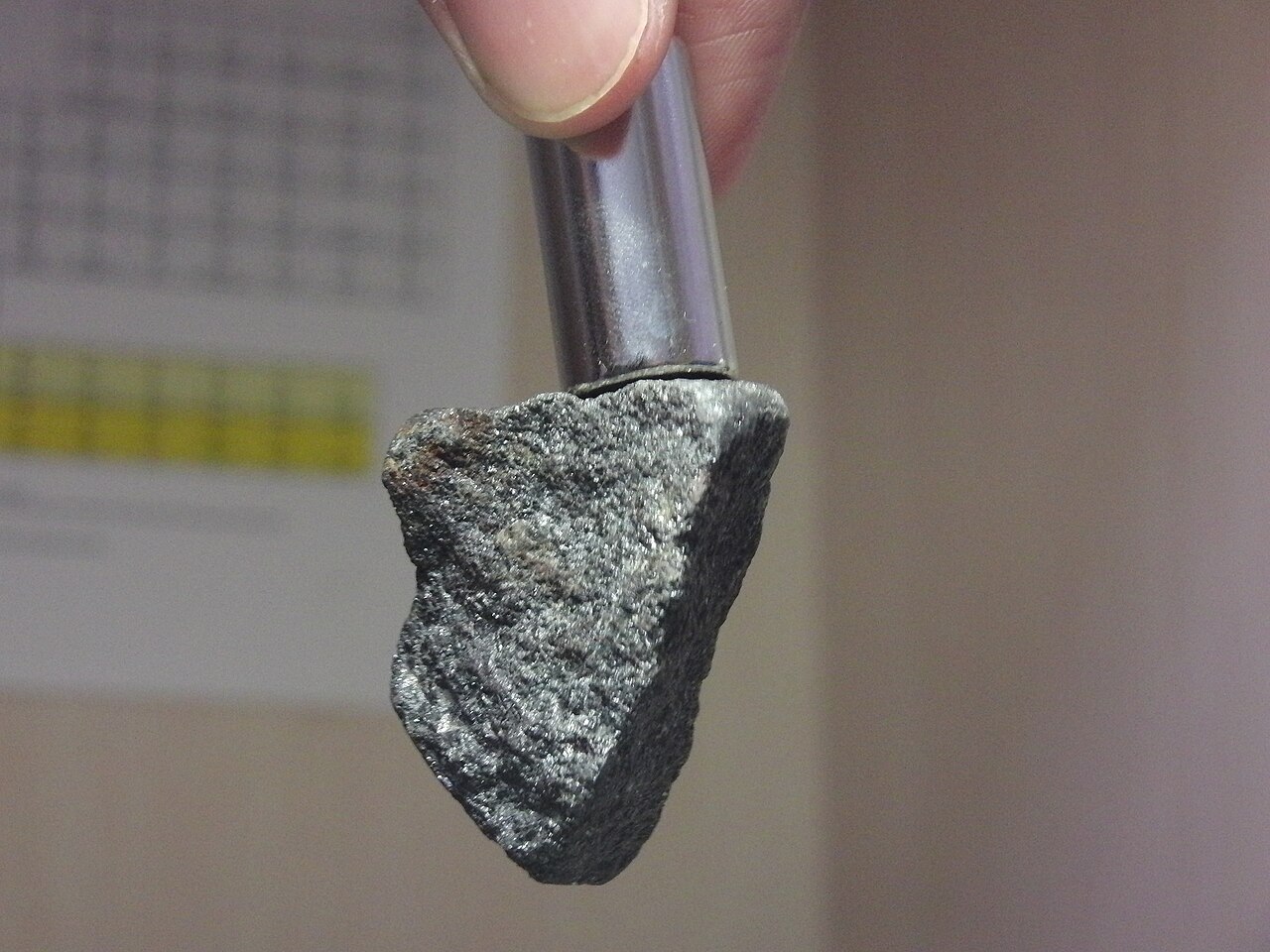
Nobody invented the first magnet. Ancient people found it. Some pieces of iron ore, called , are magnetised naturally. Lodestone is a form of the mineral magnetite, and it can pick up small bits of iron. Our word magnet comes from the Greek for stone from Magnesia, a place in what is now Turkey where lodestones were found.
The oldest surviving descriptions of magnets come from Anatolia, India and China about 2,500 years ago. A Roman writer called Pliny the Elder wrote about lodestone and its love of iron in the 1st century AD.
People soon found a use. If you hang a lodestone so that it can turn, it swings until it points north and south. That was the first magnetic . In 1088, the Chinese scientist Shen Kuo described the magnetic needle compass. He noted that the needle points a little away from true north, and allowing for this made navigation more accurate. Compasses were in use for navigation in China, Europe and Arabia by the 12th and 13th centuries.
In 1743, Daniel Bernoulli invented the horseshoe magnet. A straight magnet tends to weaken its own magnetism, but a horseshoe shape sends the field lines from one to the other and protects it.
In 1820, Hans Christian Ørsted found that electric current deflects a compass needle. In 1824, William Sturgeon made an with an iron core. Joseph Henry then made it stronger in 1830 and 1831, giving people strong for the first time.
Why does every magnet have two poles?
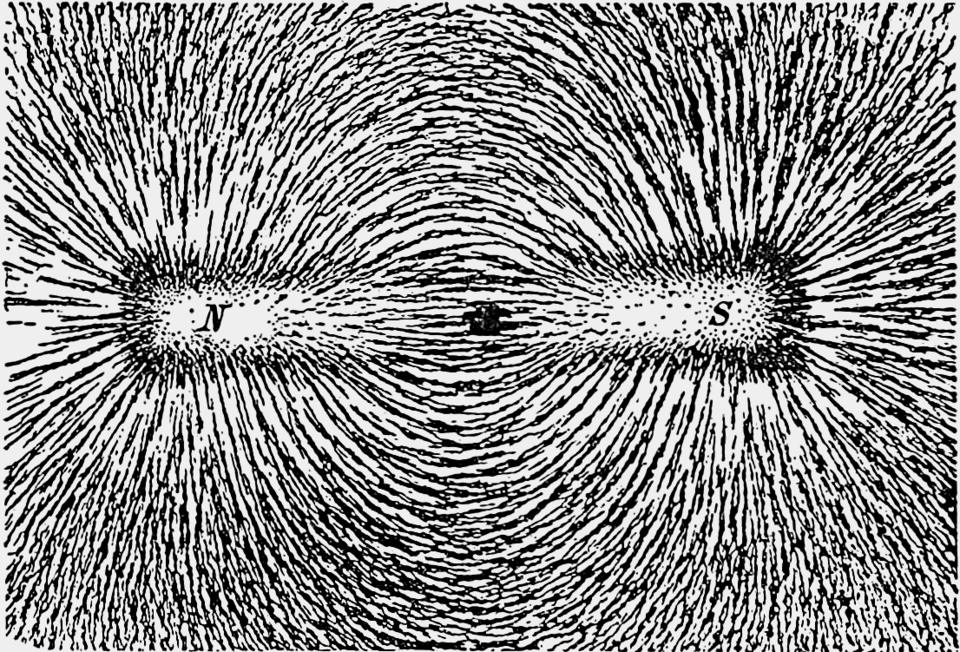
The strongest pull of a magnet comes from its ends. These are called . One is the north pole and the other is the south pole. Opposite poles attract each other, so north pulls south. Matching poles push apart, so north repels north.
The poles are named after the Earth. If you hang a magnet freely, its north pole swings towards the Earth's North Magnetic Pole in the Arctic. Since opposite poles attract, that magnetic pole is really the south pole of the Earth's own . This often surprises people.
Breaking a bar magnet in half does not separate its poles. Instead of a north piece and a south piece, you get two smaller magnets, and each one has a north and a south pole. The poles are not separate particles. They are two ends of the same field.
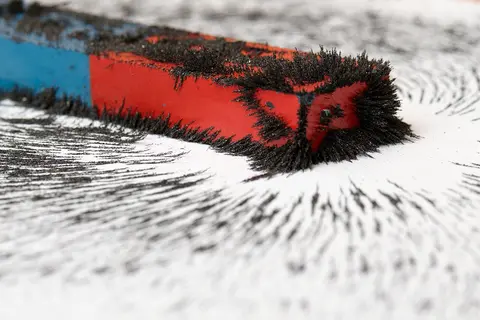
The field shows up if you scatter iron filings on paper over a bar magnet. The tiny pieces of iron line up in curved lines that loop from one pole to the other. These lines show the direction of the field. By convention, they leave the north pole and re-enter at the south pole. The lines are closest together near the poles, where the field is strongest.
The field gets weaker with distance, and it fades fast. A paper clip a hand's width from a small magnet feels almost no pull, yet a little closer it is tugged sharply and snaps across the gap.
Why do magnets pull only some things?
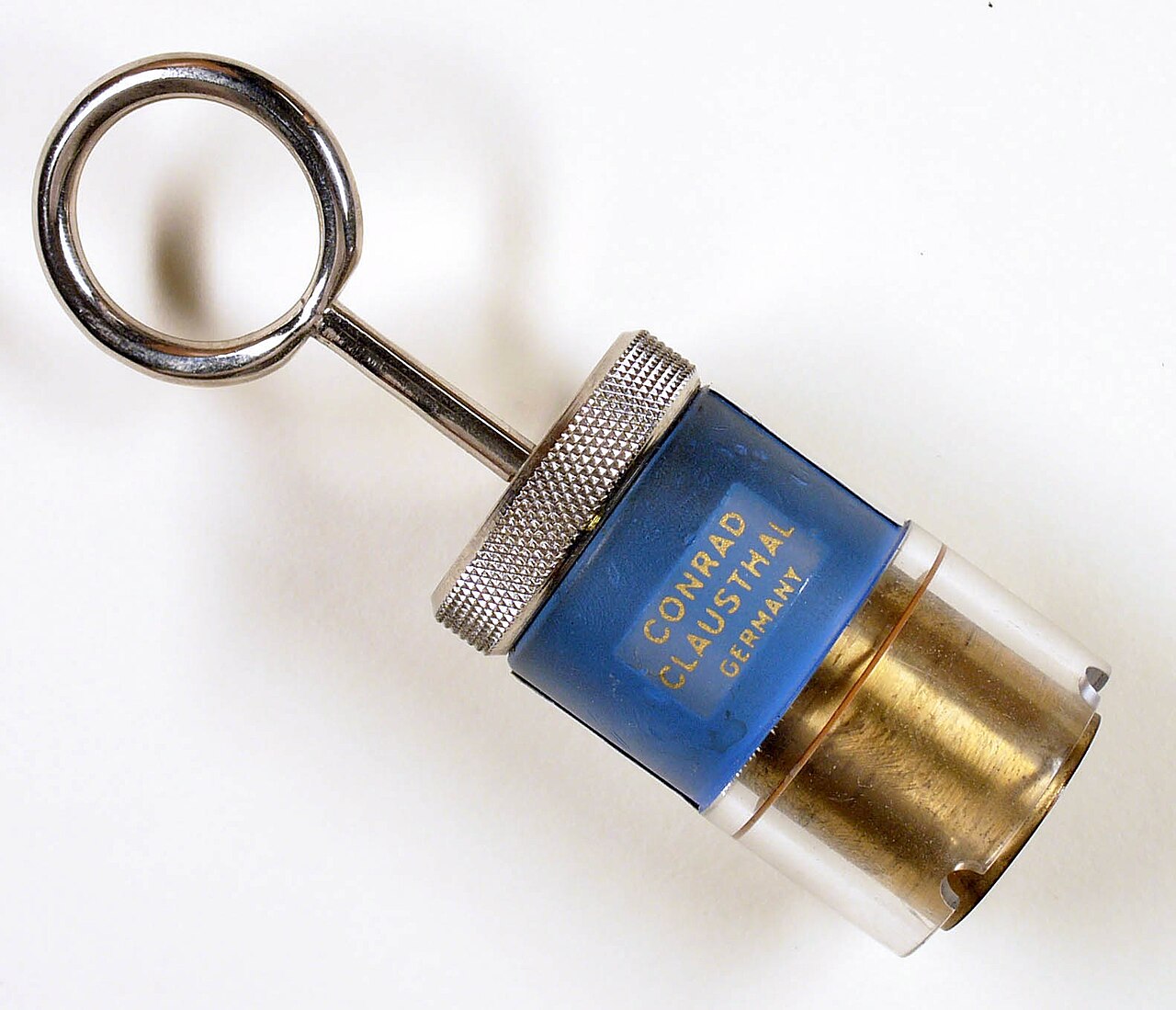
Magnets pull strongly on iron, nickel and cobalt, but not on wood, glass, plastic or most other metals. The reason is found inside the atoms. Electrons spin, and each spinning electron acts like a tiny magnet. In most materials, these tiny magnets point in all directions and cancel each other out.
In materials, the tiny magnets interact so that they line up with their neighbours. They form small regions called . In an unmagnetised piece of iron, the domains point in random directions. When a magnet is near, the domains turn to face the same way, and the iron is attracted. In a , most of the domains stay lined up.
Other materials respond so weakly that you cannot feel it. Paramagnetic materials, such as aluminium, platinum and oxygen, are very slightly attracted to a magnet. Diamagnetic materials, such as copper, carbon, water and plastic, are very slightly pushed away. Most substances are diamagnetic.
With a powerful enough magnet, the effect becomes visible. Scientists have used strong superconducting magnets to make small objects, and even live mice, float in mid-air.
Heat can destroy magnetism. Every magnet has a temperature called the . Above it, the motion of the atoms wrecks the alignment of the domains, and the magnet loses its magnetism. It can often be magnetised again afterwards.
How do you make a magnet, or take its power away?
You can turn a piece of iron or steel into a magnet in several ways, and each one works by lining up its .
One way is to place the object in a strong . Some magnetism stays when you take it out, and shaking it makes more stay. Another way is stroking. A magnet is dragged along a steel needle again and again in the same direction. After enough strokes, the needle becomes a weak magnet itself. Sailors long ago made needles this way.
Electric current works well too. A coil of wire carrying current makes a field that lines up the domains in iron placed inside it. Factories also heat steel above the and let it cool inside a magnetic field. This is the best method, and it is like the way industrial are made. In China in the 11th century, people found that red-hot iron quenched in water while lying north to south became a magnet.
Demagnetising works in reverse. Heating a magnet past the Curie point wipes out its magnetism. A rapidly changing magnetic field that fades slowly to nothing does the same, and this is how tools and old tapes are wiped clean. Hammering or dropping a magnet shakes the domains out of line and weakens it, though it may also damage the magnet.
This is why magnets that are overheated or knocked about slowly grow weaker.
Why are some magnets so much stronger than others?
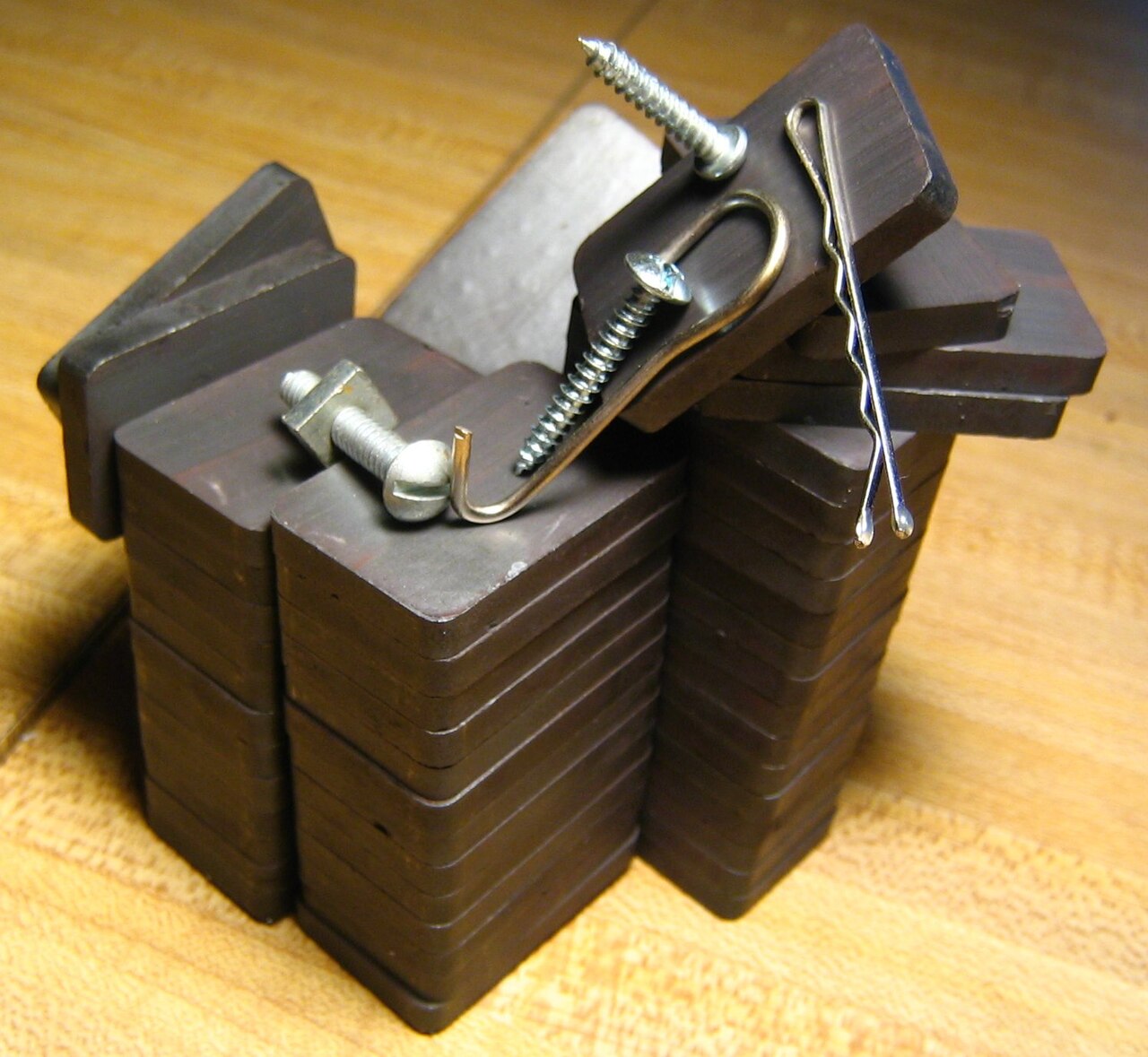
Not all are alike. Their strength depends on what they are made of.
Ceramic magnets, also called ferrite magnets, are the cheap black ones you often see in toys and speakers. They are made by baking a powder of iron oxide with barium or strontium compounds. They do not rust, but they are brittle like pottery, and they are fairly weak.
Alnico magnets are cast or sintered, which means pressed and heated, from aluminium, nickel and cobalt with iron. They resist corrosion and work well at high temperatures. Flexible magnets, like the ones on fridge adverts, are a powder of iron oxide mixed with plastic and made into sheets. They are weak but bendy. In the sheets, the alternate in stripes about 5 millimetres apart.
The strongest common magnets are rare-earth magnets. Rare-earth metals have electrons in a layer whose spins can be lined up to give very strong fields. The two main types are samarium-cobalt and neodymium-iron-boron. A small neodymium magnet can lift far more than its own weight. These cost more per kilogram, but because they are so strong, they are small, and small magnets are cheap in many uses.
Supplies of rare-earth metals are limited, so scientists are searching for magnets that do not need them. Iron nitrides look promising.
How can electricity make a magnet?
Every wire carrying a current has a around it. The field is weak around a straight wire. When the wire is wound into loops, the fields of all the loops add together. The result looks like the field of a bar magnet. A coil like this is called a solenoid.
The field gets stronger if you add more loops, push more current through or both. A big boost comes from putting an iron core inside the coil. A coil wound around a cardboard tube makes only a weak field. Wound around an iron nail, the same coil can make a field hundreds to thousands of times stronger. The iron's own line up and add their field to the coil's. Iron is a soft magnetic material, so the nail drops its magnetism when the current stops.
The idea came together in the 1820s and 1830s. Ørsted found the link, Ampère showed that a current-carrying coil can magnetise iron, and Sturgeon built the first iron-cored . Joseph Henry then turned it into something practical. In 1831 he built an ore separator that used an electromagnet to lift heavy iron.
Electromagnets power the cranes in scrapyards, which can pick up a car and drop it when the current is switched off. They are inside electric motors and in hospital MRI scanners. Giant ones steer beams of particles in particle accelerators.
Where do magnets work around us?
Magnets are hidden in hundreds of everyday things. A loudspeaker has a and a coil of wire. The changing current from a phone or music player makes the coil move in and out of the magnet's field. The coil pushes a cone, the cone pushes the air, and the air carries sound to your ears. A dynamic microphone does the opposite. Sound shakes a coil inside a magnet's field and this makes a small electric signal.
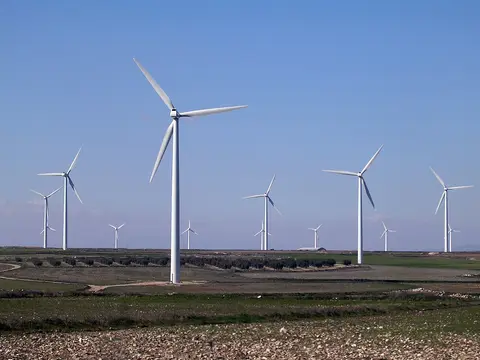
Electric motors and generators use magnets in the same way. A motor turns electricity into movement. A generator turns movement into electricity. Maglev trains use powerful to float above the track, which gets rid of rolling friction, so they can go very fast.
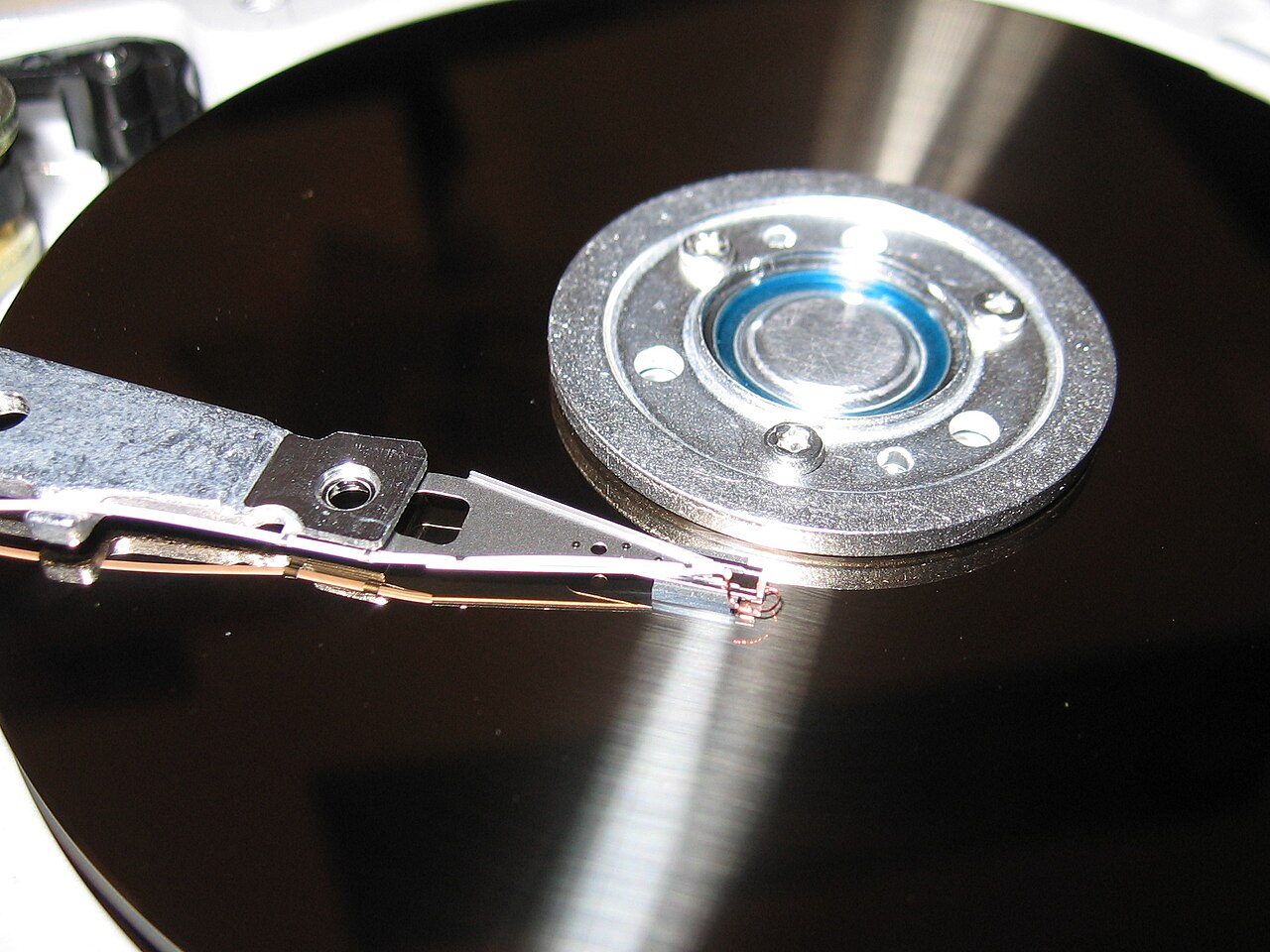
Magnets also store information. A hard disk records data on a thin magnetic coating, and a tiny read-write head on a moving arm reads the patterns back. Older audio cassettes, video tapes and the stripes on bank cards work in a similar way. In hospitals, MRI scanners use very strong magnets to make pictures of the inside of the body without surgery.
Magnets can also be a danger. Two small magnets swallowed by a child can pinch the gut from either side, so loose magnets must be kept away from small children. People with pacemakers must avoid strong magnets, and metal objects must never be taken into an MRI room, because the field can fling them around.
Explore Next
Your audio story keeps playing while you look around.
Words to Know
- alloy
- A material made by mixing metals together.
- compass
- A tool with a magnetised needle that points along the Earth's magnetic field.
- Curie point
- The temperature above which a magnet loses its magnetism.
- domain
- A small region of a material where the tiny magnets all point the same way.
- electromagnet
- A coil of wire that acts as a magnet when current flows through it.
- ferromagnetic
- Describes materials, such as iron, that are strongly attracted to magnets.
- lodestone
- A naturally magnetic rock, a form of the mineral magnetite.
- magnetic field
- The invisible region around a magnet where its force can be felt.
- permanent magnet
- A magnet that keeps its magnetism without needing electricity.
- pole
- One of the two ends of a magnet, called north and south.