Magnetism
The invisible force that steers compasses and works with electricity to run our world.
Magnetism is a force that acts at a distance. It can pull a nail towards a magnet across a gap of air, and it can push two magnets apart. Every material has some magnetism, although in most cases it is far too weak to feel. It comes from moving electric charge, which is why it is joined so closely to electricity. Together they make up electromagnetism, one of the basic forces of nature. The story of magnetism runs from lodestones in ancient Greece and China, through the compass and Gilbert's experiments, to the equations that explained light and radio.
What is magnetism?
Magnetism is a set of effects caused by a . A magnetic field is a region of space where a magnetic force can act. Objects in the field can be pulled towards each other or pushed apart.
Where does a magnetic field come from? There are two sources. One is an electric current, which is a flow of electric charge. When a current runs through a wire, a magnetic field forms around it. The other source is the tiny magnetism built into the particles that make up atoms. Electrons act like very small magnets, and so do some other particles.
Because both sources involve electric charge, magnetism and electricity are partners. Scientists call them two sides of one force, .
The magnetism we notice in daily life is called ferromagnetism. It is found in iron, cobalt, nickel and some mixtures of metals called . These materials are strongly attracted by magnetic fields. They can also be magnetised, which turns them into permanent magnets with fields of their own. A magnet can be demagnetised too.
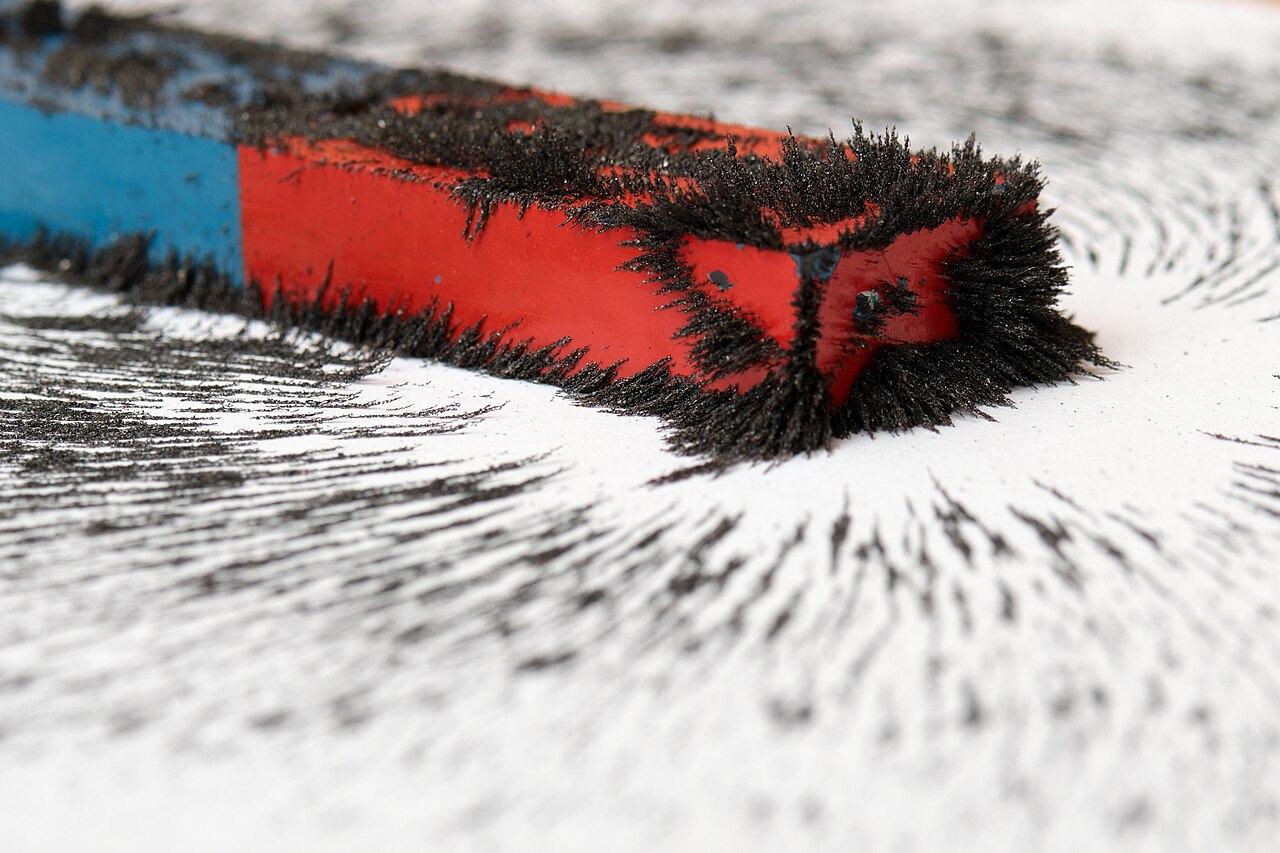
If you scatter iron filings around a bar magnet, they gather in curved lines. These lines trace the shape of the field. The field is strongest close to the magnet and always gets weaker as you move away from it.
Is everything magnetic?
In a way, yes. Every substance reacts to a , but in most cases the reaction is so weak that we cannot feel it. Scientists sort materials by how they respond.
materials are the ones we think of as magnetic. Iron, cobalt and nickel are strongly pulled by a magnet and can keep their magnetism. Almost every magnet you have used is made from one of them or from their .
materials, such as aluminium and oxygen, are weakly attracted to a magnetic field. The pull is far too small for your hand to feel. materials, such as copper and carbon, are weakly repelled. Antiferromagnetic materials, such as chromium, have a more complicated link with a field.
To detect the weak kinds, scientists need laboratory instruments. This is why everyday language calls such materials non-magnetic. Strictly speaking, they are only very weakly magnetic.
So why are iron, cobalt and nickel so different? Their atoms have electrons that act as small magnets. In these metals, the atoms influence each other. The small magnets then line up together. In most other materials, the tiny magnets point in many directions and cancel out. When they all agree, the effect adds up to something you can feel.
What makes a magnetic field stronger or weaker?
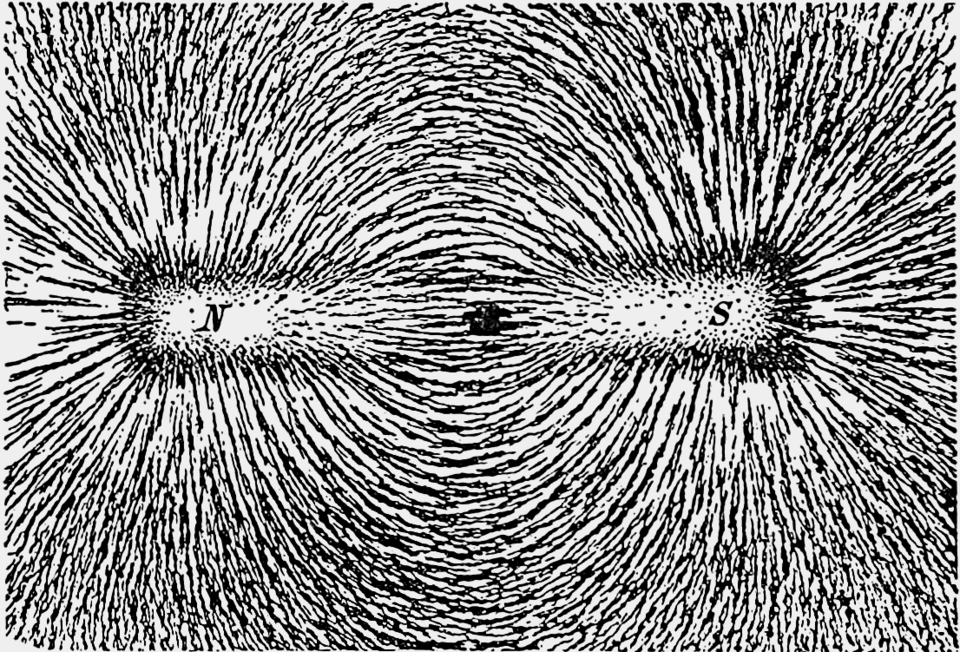
A is always strongest at its source, and it gets weaker as you move away. How quickly it fades depends on the source, so there is no single rule. A paper clip near a magnet shows this. At some distance the pull is too weak to move the clip. A few centimetres closer, it jumps across the gap.
Several other things change the field of an object. One is its magnetic moment, which is a measure of how strong a magnet it is as a whole. A larger magnetic moment means a stronger field.
Shape matters. A long bar and a round ball of the same material make different fields. The field spreads out differently around each one.
Electric current matters too. In an electromagnet, a bigger current gives a stronger field. The direction of the current decides which way the field points. Reverse the current and the field flips.
Finally, temperature matters. Heating a magnet makes its atoms move faster, and this scrambles the alignment that makes the field. If the magnet gets hot enough, it loses its magnetism altogether.
These ideas help engineers design everything from tiny sensors to huge hospital scanners. They choose the material, shape and temperature that will give them the field they need.
Who first noticed magnetism?
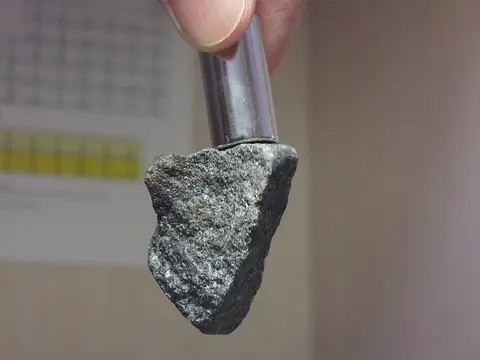
People found magnetism by accident. In the ancient world, someone noticed that a certain dark rock could pull on iron. The rock was a , which is a piece of the mineral magnetite that nature has magnetised. The word magnet comes from the Greek for stone from Magnesia.
The Greek philosopher Aristotle said Thales of Miletus held the first scientific talk about magnetism. Thales lived from about 625 to about 545 BCE. In India, an old medical text called the Sushruta Samhita describes using magnetite to take arrows out of the body.
Chinese writers noted the effect early too. A book called Guiguzi, from the 4th century BCE, mentions it. A book from the 2nd century BCE records that the lodestone makes iron approach. A book from the 1st century CE says that a lodestone attracts a needle.
The big step was the . In 1088, the Chinese scientist Shen Kuo described a magnetic needle compass in his book Dream Pool Essays. He also noted that the needle does not point exactly to true north, but a little to one side. This difference is now called . By the 12th century, Chinese sailors were using lodestone compasses. Some early ones were spoons carved from lodestone. The handle always turned to point south.
How do we know the Earth is a giant magnet?
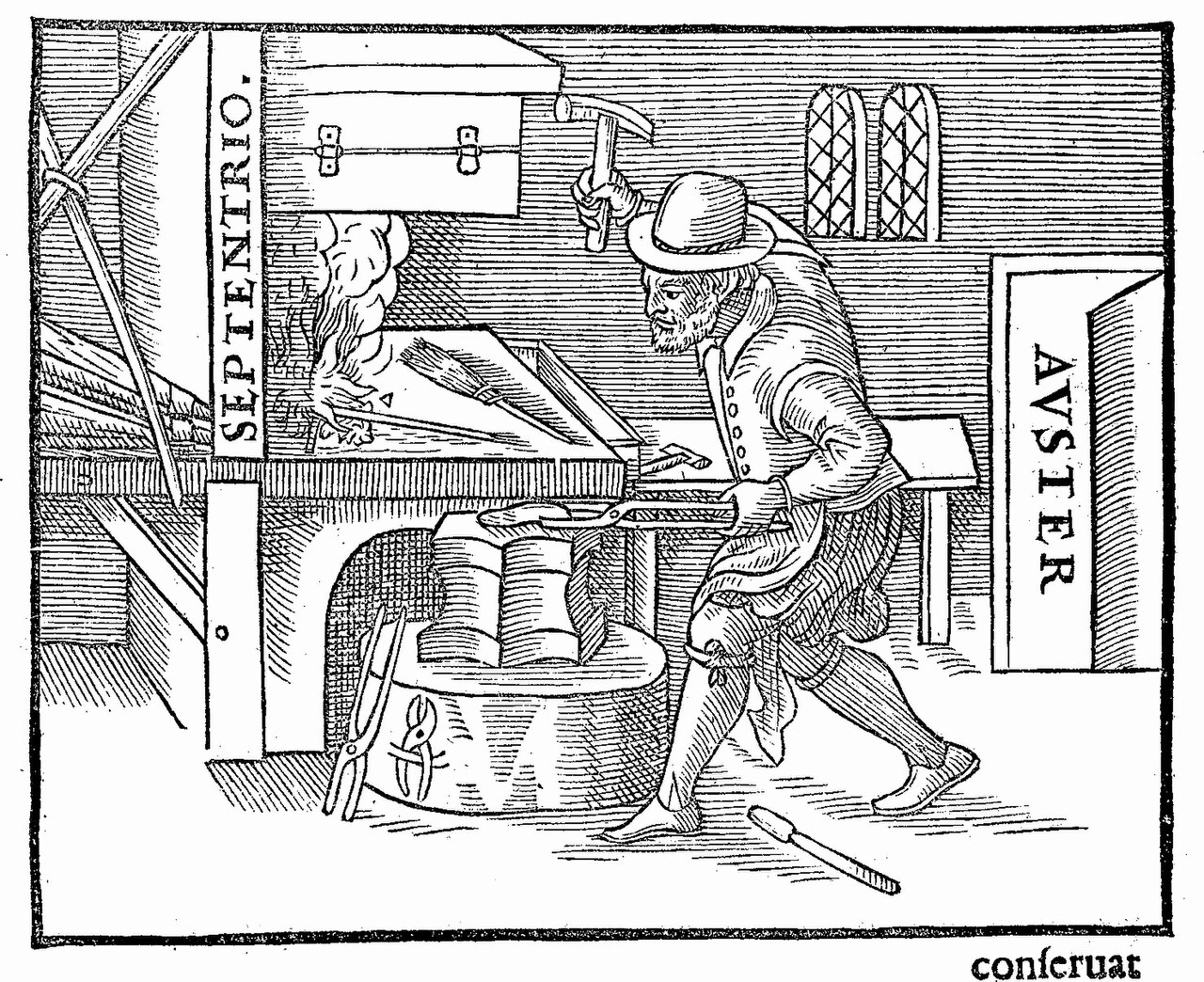
reached Europe in the 12th century. By 1187, Alexander Neckam had described the compass and its use at sea. In 1269, Peter Peregrinus de Maricourt wrote the oldest surviving book about the properties of magnets. In 1282, the Yemeni scientist Al-Ashraf Umar II wrote about magnets and dry compasses.
But why did a compass point north? Some people thought the Pole Star pulled the needle. Others thought a huge magnetic island sat at the North Pole.
The English scientist William Gilbert tested these ideas. In 1600 he published a book called De Magnete, which means On the Magnet. Gilbert shaped a into a ball and called it a , which means little Earth. He moved a small compass needle around it. The needle behaved as a compass does at different places on our planet. It even tilted down near the poles of the ball.
Gilbert concluded that the Earth itself is a giant magnet. That was why compasses pointed north. His work is often named as the start of the scientific study of magnetism.
We now know the Earth's field is made by flowing currents in its core. Gilbert's experiment with the terrella was an early example of using a model to test an idea about nature.
Why does the Earth's magnetism keep changing?
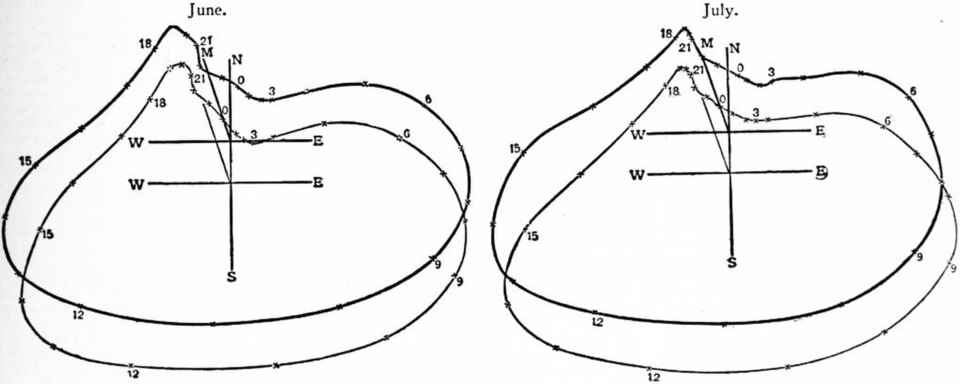
The Earth's never keeps still. Shen Kuo had already seen that a does not point exactly north. In 1722 the London instrument maker George Graham watched a long compass needle for months. He found that it swings very slightly back and forth every day. In 1741 Graham and the Swedish scientist Anders Celsius saw needles jump during displays of the northern lights. That was the first clue that the Sun can shake the Earth's field.
The magnetic poles wander too. The North Magnetic Pole, the spot that compass needles point towards, sat in the Canadian Arctic for centuries. In the 1990s it began to race towards Siberia, reaching about 50 kilometres a year in the early 2000s. Since then it has slowed to about 35 kilometres a year. Planes, ships and phones use a map of the field called the World Magnetic Model, and scientists update it every 5 years to keep up.
Over much longer times the whole field flips, so that north and south swap places. Rocks keep a record of these flips. When lava cools, tiny magnetic grains inside it freeze pointing along the field of that time. The last flip happened about 780,000 years ago.
The field also protects the planet. It turns aside much of the solar wind, a stream of charged particles from the Sun. Particles that leak in near the poles make the glowing curtains of the .
How did scientists link magnetism to electricity?
For hundreds of years, nobody thought electricity and magnetism were related. That changed by accident in 1820. Hans Christian Ørsted, a professor at the University of Copenhagen, saw a needle twitch near a wire. When the current in the wire was on, the needle moved. An electric current could make a . This became known as Ørsted's experiment.
The news raced through Europe. Within months, Jean-Baptiste Biot and Félix Savart worked out an equation that gives the magnetic field of a wire carrying current. Around the same time, André-Marie Ampère did many careful experiments. He showed that two wires carrying current attract or repel each other. The force can be worked out by adding up the pull of each small piece.
The discovery also worked the other way. In 1831, Michael Faraday found that a changing magnetic field makes a voltage in a loop of wire. We call this . It is the basis of the generators that make most of our electricity, and of transformers.
In 1835, the German mathematician Carl Friedrich Gauss suggested that all magnetism comes from electric charges moving relative to each other. Wilhelm Eduard Weber built on this idea. Their work was a step towards seeing electricity and magnetism as one.
How did electricity, magnetism and light become one idea?
The Scottish scientist James Clerk Maxwell took the work of Ørsted, Ampère, Faraday and others and brought it together. From about 1861, he wrote a set of equations, now called Maxwell's equations. They describe how electric fields, , electric charge and current all connect.
The equations did more than tidy things up. They showed that a changing electric field makes a magnetic field, and a changing magnetic field makes an electric field. Together, they can travel through space as a wave. Maxwell calculated how fast the wave moves, and the answer matched the speed of light. Light, he realised, is an electromagnetic wave. Electricity, magnetism and optics became a single subject, called .
In 1905, Albert Einstein used Maxwell's equations as the starting point for his theory of special relativity. He wanted the laws of physics to work the same way for everyone moving at a steady speed. The theory also revived Gauss's idea that magnetism is an effect of charges in motion.
Electromagnetism has kept growing into the 21st century. It is now part of quantum electrodynamics and the Standard Model. That is the best current theory of the basic particles and forces.
Can magnets cure illness?
When magnets were new and mysterious, many people thought they must have healing powers. Pliny the Elder and other ancient writers noted the 's pull on iron. The idea grew that a force so strange must affect the body.
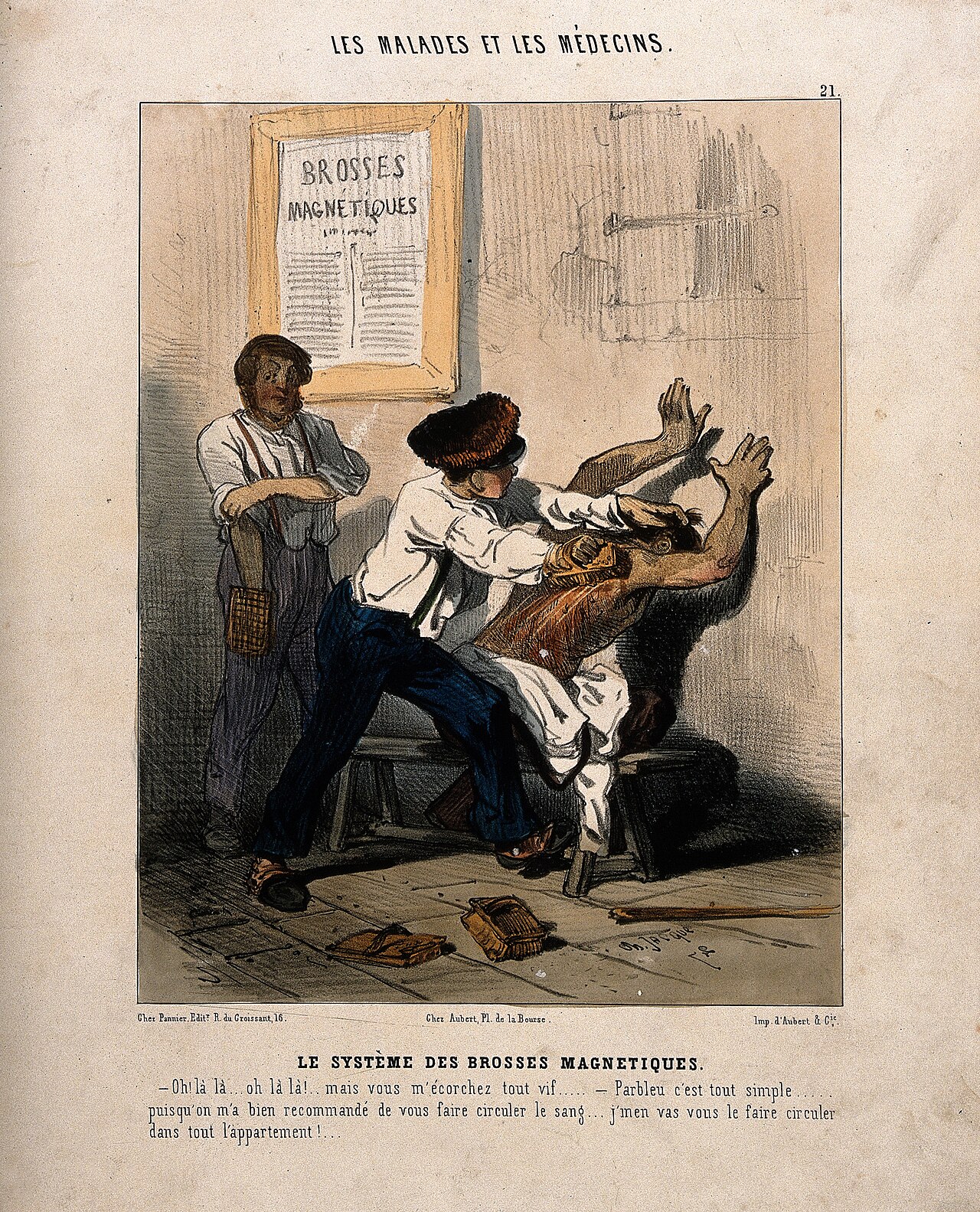
By the 1700s and 1800s, magnetic treatments were popular in Europe. People paid for magnetic belts, rings, brushes and baths. Doctors and showmen claimed they could cure pain and many other illnesses. In 1843, an artist made a satirical picture of a patient being rubbed with magnetic brushes. It poked fun at the craze.
Modern research does not support these claims. Human tissue reacts very weakly to steady . There is little mainstream scientific evidence of any health effect from them.
How do scientists check? They run fair tests. In 2013, researchers at the University of York gave people with rheumatoid arthritis magnetic wrist straps, copper bracelets and dummy straps that looked the same. Nobody knew which one they were wearing. The magnets worked no better than the dummies.
That does not mean magnets have no place in medicine. Hospitals use magnetic resonance imaging, or MRI, which uses powerful magnetic fields to make detailed pictures of organs without surgery. The strong field can be dangerous near metal objects, and it can interfere with devices such as pacemakers. Magnetism does have a real place in medicine, but as a way of seeing inside the body rather than as a cure.
Explore Next
Your audio story keeps playing while you look around.
Words to Know
- alloy
- A material made by mixing metals together.
- aurora
- Glowing light in the sky near the poles, made when particles from the Sun hit the air.
- compass
- A magnetised needle that points along the Earth's magnetic field.
- diamagnetic
- Weakly pushed away by a magnetic field.
- electromagnetic induction
- Making an electric voltage by changing a magnetic field.
- electromagnetism
- The single force that includes both electricity and magnetism.
- ferromagnetic
- Strongly attracted to magnets and able to become magnets.
- lodestone
- A naturally magnetised piece of the mineral magnetite.
- magnetic declination
- The angle between the direction a compass points and true north.
- magnetic field
- A region of space where a magnetic force can act.
- paramagnetic
- Weakly attracted to a magnetic field.
- terrella
- A magnetic ball used by Gilbert as a model of the Earth.