Optics
The science of light, from ancient crystal lenses to lasers and telescopes.
Optics is the science of light and everything we do with it. It explains why a mirror shows your face, why a lens can start a fire, and why oil on a road shows rainbow colours. It also explains how a telescope reaches distant stars and how a thin glass fibre can carry the internet. People have polished lenses for about 4,000 years, but the big questions took far longer. What is light made of, and how do we see? Greek thinkers, Arab and Persian scholars, Newton, Young, Maxwell and Einstein each added a piece. The answer turned out to be surprising, because light acts like a wave and like a stream of particles.
What does optics study?
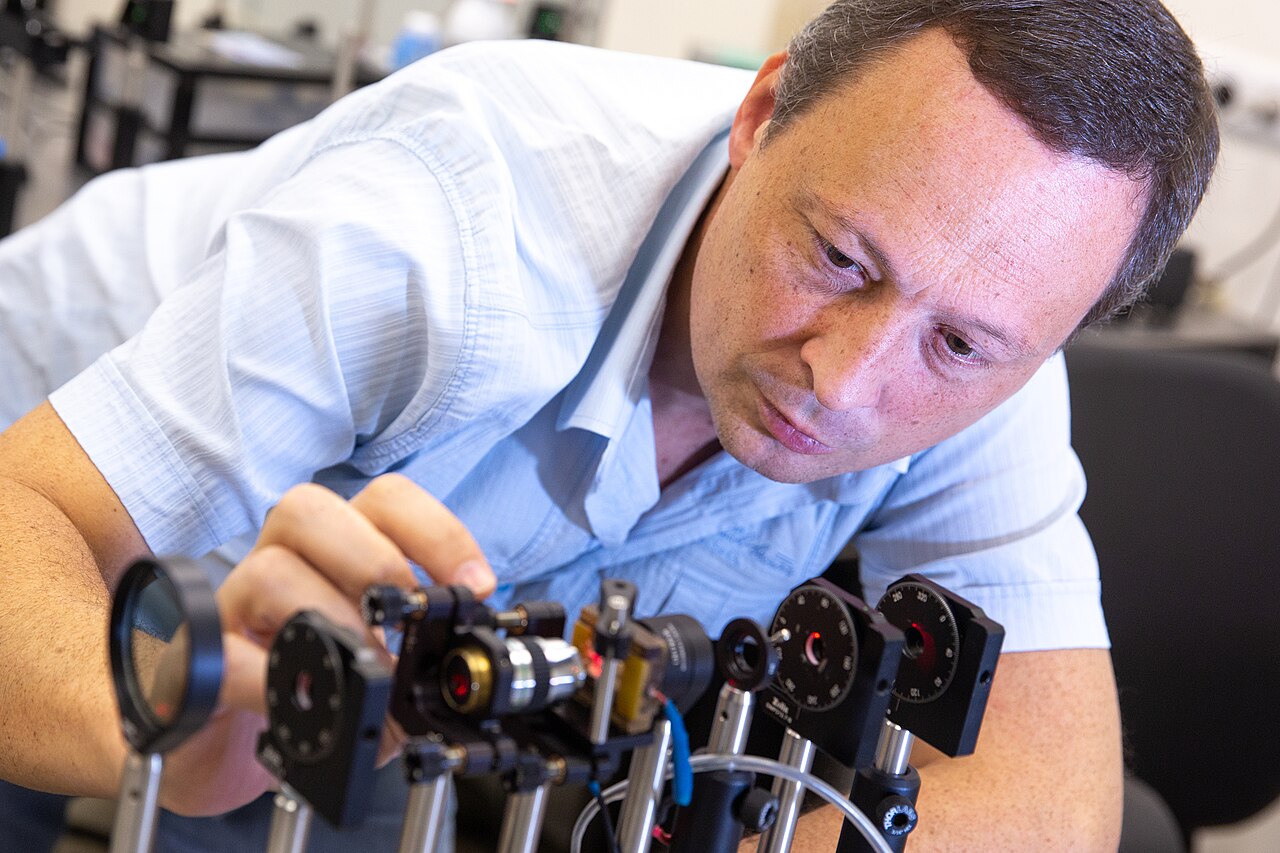
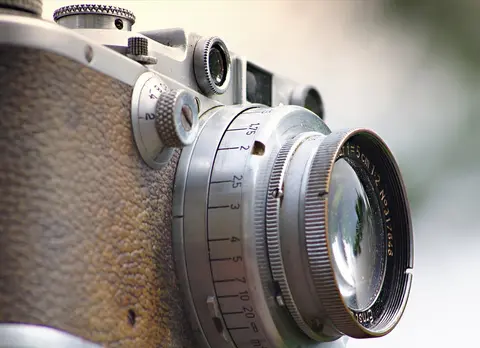
Optics is the branch of physics that studies light and how it behaves. It covers how light travels, how it bounces off a surface, how it bends as it passes through glass or water, and how we detect it. It also covers the tools that use light, such as mirrors, , telescopes, microscopes, and fibre optic cables.
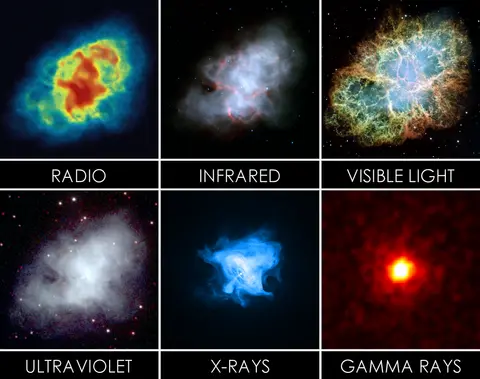
Light is one kind of electromagnetic radiation. The same family also includes radio waves, microwaves, infrared, ultraviolet and X-rays. We can see only a thin slice of it, with between about 400 and 700 nanometres. A nanometre is a billionth of a metre, so a wave of visible light is far thinner than a human hair. Optics usually deals with visible light, ultraviolet and infrared, but its ideas stretch to the rest of the family too.
Scientists use different models of light depending on the job. Geometric optics treats light as rays that travel in straight lines and change direction at surfaces. Physical optics treats light as a wave, which explains patterns that rays cannot. Quantum optics treats light as a stream of tiny packets called . None of these models is wrong. Each one works best in its own situation, and engineers choose the simplest one that gives the right answer.
Optics matters far beyond physics. It is part of astronomy, photography, medicine and engineering. Eye doctors use it to fit glasses, and hospital scanners use related ideas to look inside the body.
Who made the first lenses?
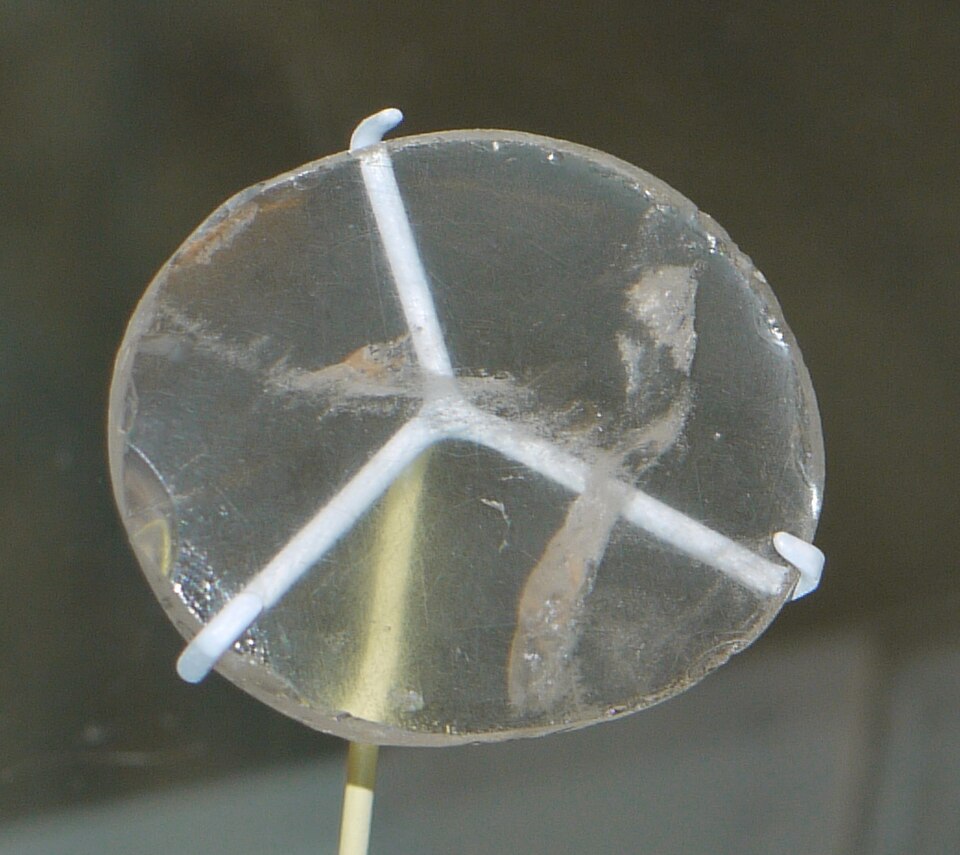
Optics began with objects, long before anyone could explain them. The oldest known were polished pieces of crystal, often quartz. Some from Crete date back to about 2000 BC. Others from Rhodes and Assyria are about 2,700 years old. The best known is the Nimrud lens, a polished disc of rock crystal from Assyria.
Nobody knows for sure what these lenses were used for. A curved piece of clear material bends light, so it can magnify small things or focus sunlight into a hot spot. The ancient Greeks and Romans also made lenses by filling glass balls with water.
The Greeks then asked a deeper question. How do we see at all? Some thinkers, such as Democritus and Aristotle, believed that objects send off thin copies of themselves that enter the eye. Plato argued the opposite. He said that rays shoot out of the eyes and touch things. Both ideas were guesses, because nobody had tested them.
Euclid, who lived around 300 BC, took a mathematical approach. He treated the rays of sight as straight lines and used geometry to explain perspective and mirrors. This was the start of geometric optics. He also noticed a problem with rays leaving the eye. If they did, a single blink would light up the stars at once. Ptolemy later added more measurements of bending light, though he missed the rule that links the angles.
The word optics itself comes from an ancient Greek word connected with sight.
How did scholars discover how we see?
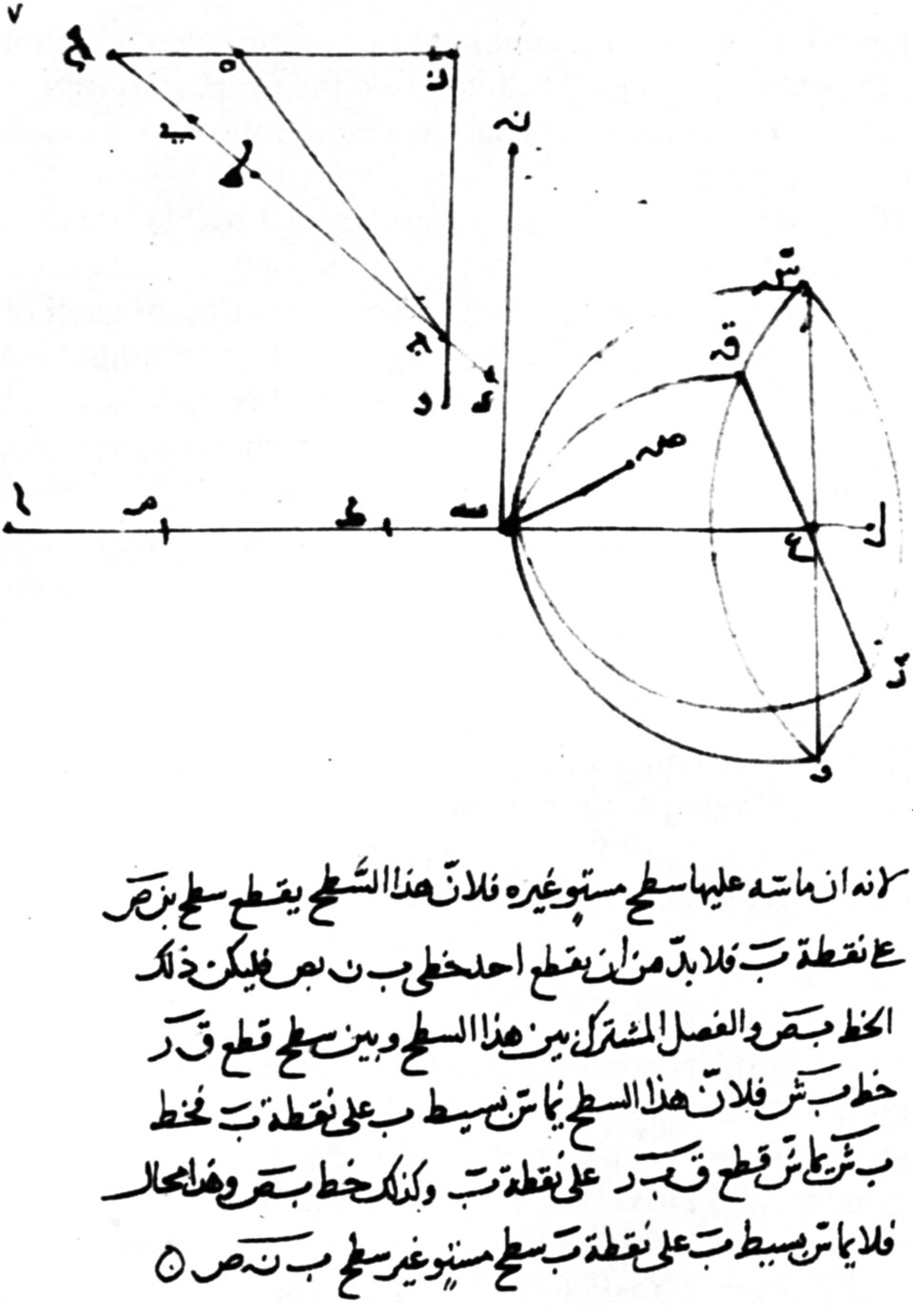
The next big steps came in the Muslim world, from the 9th to the 11th century. Scholars there studied Greek books and tested their ideas. In 984 the Persian mathematician Ibn Sahl wrote a treatise on burning mirrors and . In it he described a law of , the rule for how much light bends when it passes from one material into another. He used it to work out the best curved shapes for lenses and mirrors. The same rule was found again in Europe and is now called Snell's law.
Then came Ibn al-Haytham, known in Europe as Alhazen. In the early 11th century he wrote the Book of Optics. He did not only argue. He based his ideas on observation and experiment. He rejected the old idea of rays leaving the eye. Instead, he said, light bounces off every point of an object in straight lines, and some of it enters the eye. He could not yet explain how the eye turns that light into a picture.
His book was translated into Latin around 1200 and became a standard text across Europe for about 400 years. In the 13th century, the English bishop Robert Grosseteste wrote about light, and his student Roger Bacon built on the translated books. Bacon used part of a glass ball as a magnifying glass. He showed that light reflects from objects instead of being released by them.
The missing piece arrived in the early 1600s. Johannes Kepler worked out that the retina, at the back of the eye, is the part that records the image. At last the effects of lenses could be explained with science.
How did glasses lead to telescopes?
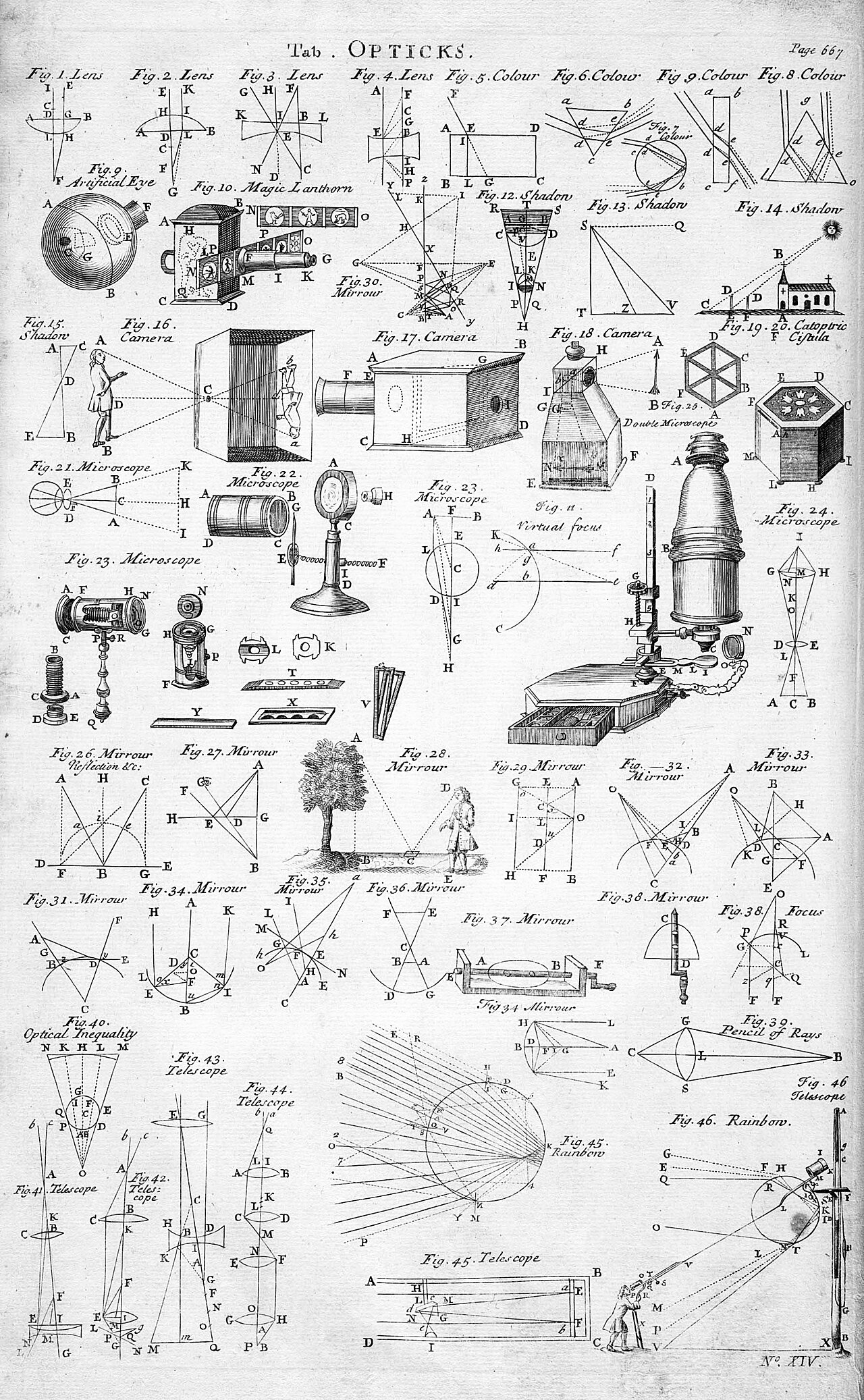
The first wearable glasses appeared in Italy around 1286. Craftsmen in Venice and Florence ground and polished to help people see better. Later, workshops in the Netherlands and Germany did the same. These makers had no good theory of why their lenses worked. They learned by trying shapes and watching what happened.
That hands-on skill led to two huge inventions. The compound microscope, which uses more than one lens to magnify tiny things, appeared around 1595. The refracting telescope, which uses lenses to bring distant things closer, appeared in 1608. Both came from spectacle-making towns in the Netherlands.
Theory then caught up with practice. Kepler explained how telescopes work and described a better design with two convex lenses, which gave a higher magnification. It is still called the Keplerian telescope. He also explained pinhole cameras and showed that light gets weaker with distance in a regular way. His optics also explained solar and lunar eclipses.
Isaac Newton, in the late 1660s and early 1670s, used a glass to show that white light is a mixture of colours that can be separated. He thought light was made of tiny particles. In 1690 Christiaan Huygens argued that light is a wave, building on ideas from Robert Hooke. The arguments were fierce, and Hooke criticised Newton in public until Hooke died. Newton published his book Opticks in 1704. Because he was so successful in other areas of physics, most people sided with him in the debate for the next hundred years.
How do mirrors and lenses bend light?
Geometric optics explains much of what we see every day. It follows two basic rules. The first is the law of . When a ray hits a smooth surface, it bounces off at the same angle at which it arrived. Both angles are measured from the normal, an imaginary line standing at right angles to the surface.
A flat mirror gives a sharp picture because every ray bounces in a predictable way. Your reflection appears as far behind the glass as you stand in front of it. It looks flipped left to right, but really it is reversed front to back. A rough surface such as paper or rock scatters light in many directions instead. That is called diffuse reflection, and it is why you can see a page from any angle but cannot see your face in it.
The second rule is . Light changes direction when it moves from one material into another. A material's tells you how much it slows light down. Glass slows light more than air does. Refraction is what makes a straw look broken in a glass of water.
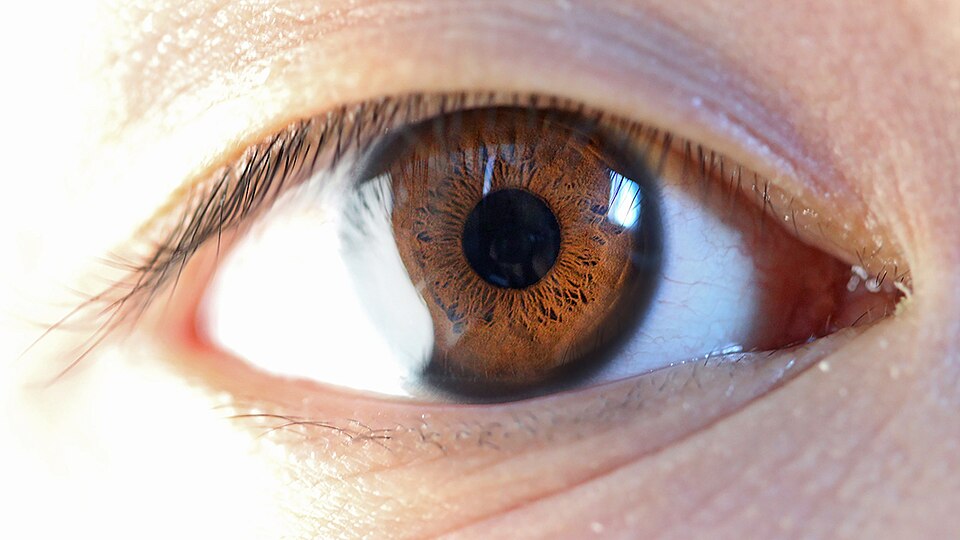
A is a shaped piece of clear material that uses refraction on purpose. A converging lens bends rays together to a focus. A diverging lens spreads them out. Your own eye has a lens that focuses light onto the retina.
Sometimes light cannot get out of a material at all. When light inside glass hits the edge at a steep angle, all of it bounces back. This is total internal reflection, and it keeps light trapped inside a glass fibre. Gradual bending in layers of hot air explains mirages on hot days, where the road ahead seems to shimmer like water.
How do we know light is a wave?
For a century after Newton, many people thought light was a stream of particles. Then, in the early 1800s, Thomas Young ran a famous experiment. He shone light through two very narrow slits close together. If light were made of particles, he should have seen two bright lines on a screen. Instead he saw a pattern of many bright and dark stripes. That only makes sense if light spreads out as waves and the waves from the two slits overlap.
This overlapping is called . Where two wave crests meet, they add up and the light gets brighter. This is constructive interference. Where a crest meets a trough, they cancel and the light fades. This is destructive interference. Augustin-Jean Fresnel built the mathematics for it in 1815 and 1818. The spreading of waves around edges has a name too. It is , and Francesco Grimaldi first described it in 1665.
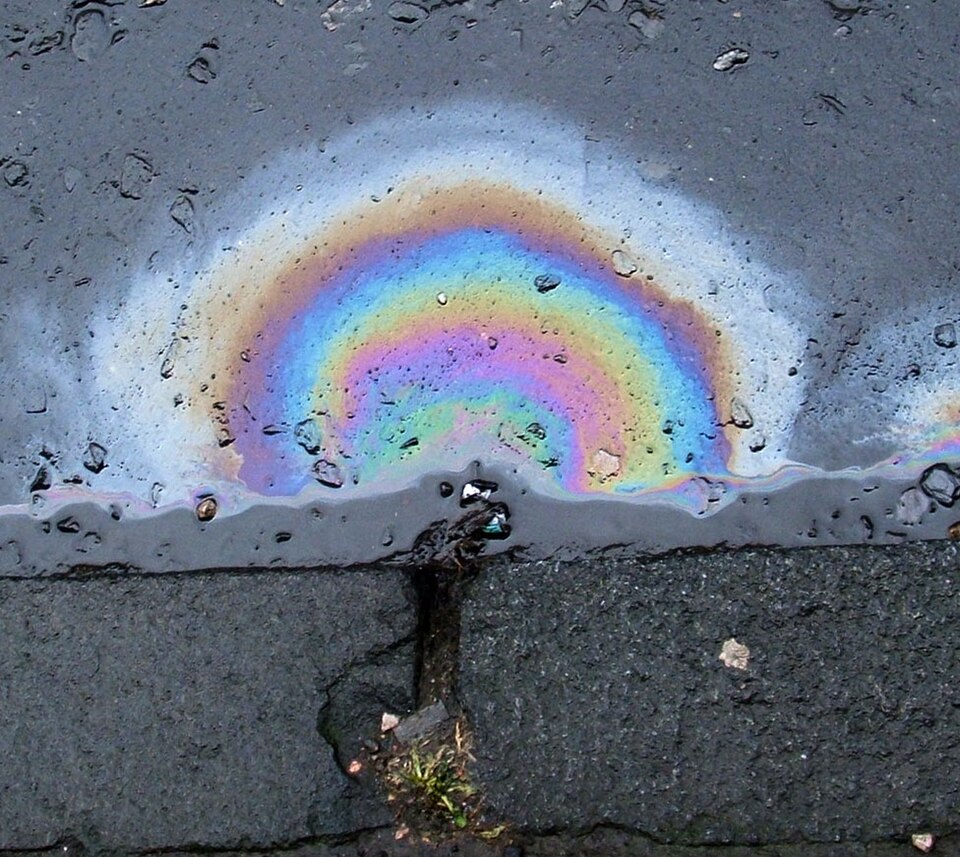
Interference explains the swirling rainbow colours on an oil slick. Light reflects from the top and the bottom of the thin film. The two interfere, and different colours are strengthened or cancelled depending on the film's thickness.
Engineers use the same trick on purpose. An antireflective coating is a thin layer, a quarter of a thick, that makes the two reflections cancel out. The result is less glare.
In the 1860s James Clerk Maxwell showed that light is an electromagnetic wave. It travels at 299,792,458 metres every second in empty space. That is fast enough to circle the Earth about 7 times in one second.
What is polarised light?
Light waves wiggle as they travel, and the direction of the wiggle is called . Think of shaking a rope. You can shake it up and down, side to side, or in a circle. Light from most sources, such as the Sun or a bulb, wiggles in many directions at once. We call that unpolarised.
A polarising filter blocks nearly all the light that wiggles in one direction and lets the rest through. Only about half of the light from an ordinary source gets through a perfect one, and real filters pass somewhat less. Photographers fit these filters to cameras.
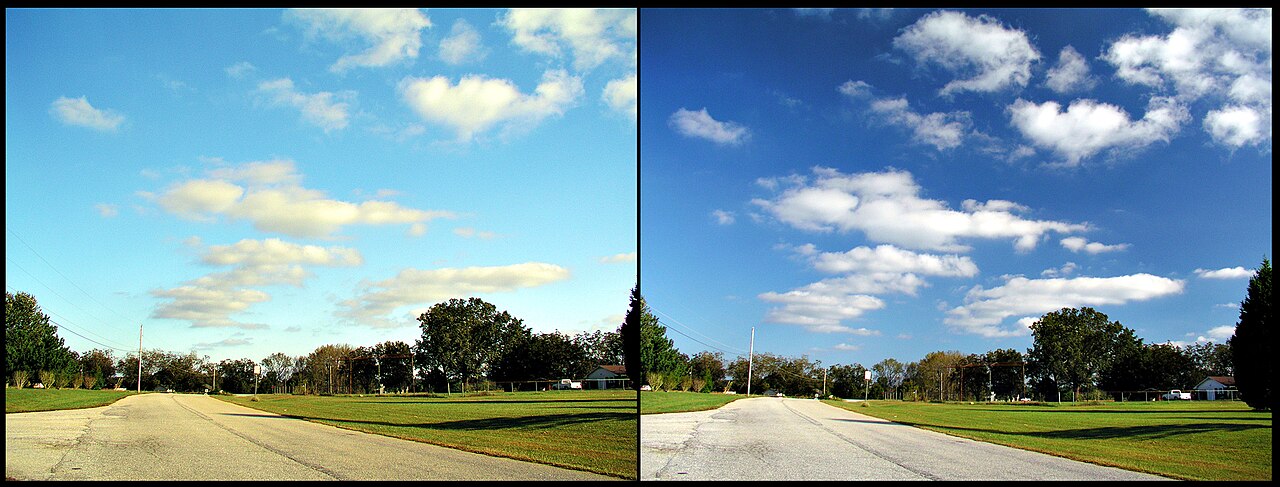
Polarised light turns up in nature. Light scattered by the air is partly polarised, and so is light that reflects off shiny surfaces such as water or glass. A camera filter can block some of that light. It cuts out glare and makes a blue sky look deeper and darker.
Some crystals, such as calcite, split a beam in two. If you look at a word through a clear piece of calcite, you see it twice. This double image led Erasmus Bartholinus to discover polarisation in 1669. Later, the French scientist Étienne-Louis Malus studied light reflected from shiny surfaces. His measurements led to the first mathematical models of polarised light.
Polarisation has many uses. Mineral experts use it to identify minerals under a microscope. Engineers use it to see stress in clear plastic, which shows up as coloured patterns. Chemists use it to study molecules that twist light in a particular direction.
Why is light also a particle?
The wave story did not end the debate. By 1900 scientists met problems that waves alone could not solve. One was the glow of hot objects. In 1900 Max Planck found that the maths worked only if light and matter swapped energy in tiny fixed chunks, which he called quanta.
In 1905 Albert Einstein explained the photoelectric effect, where light knocks electrons out of a material. His answer was that light itself comes in packets of energy. We now call them . In 1913 Niels Bohr showed that atoms give out energy only in set amounts. That explained the thin, bright lines of colour seen in the light from different elements.
So light behaves like a wave in some experiments and like a stream of particles in others. This surprising fact helped found quantum mechanics, the science of the very small. The study of light with quantum mechanics is called quantum optics. A later theory, quantum electrodynamics, explains all light and electric and magnetic effects as exchanges of photons.
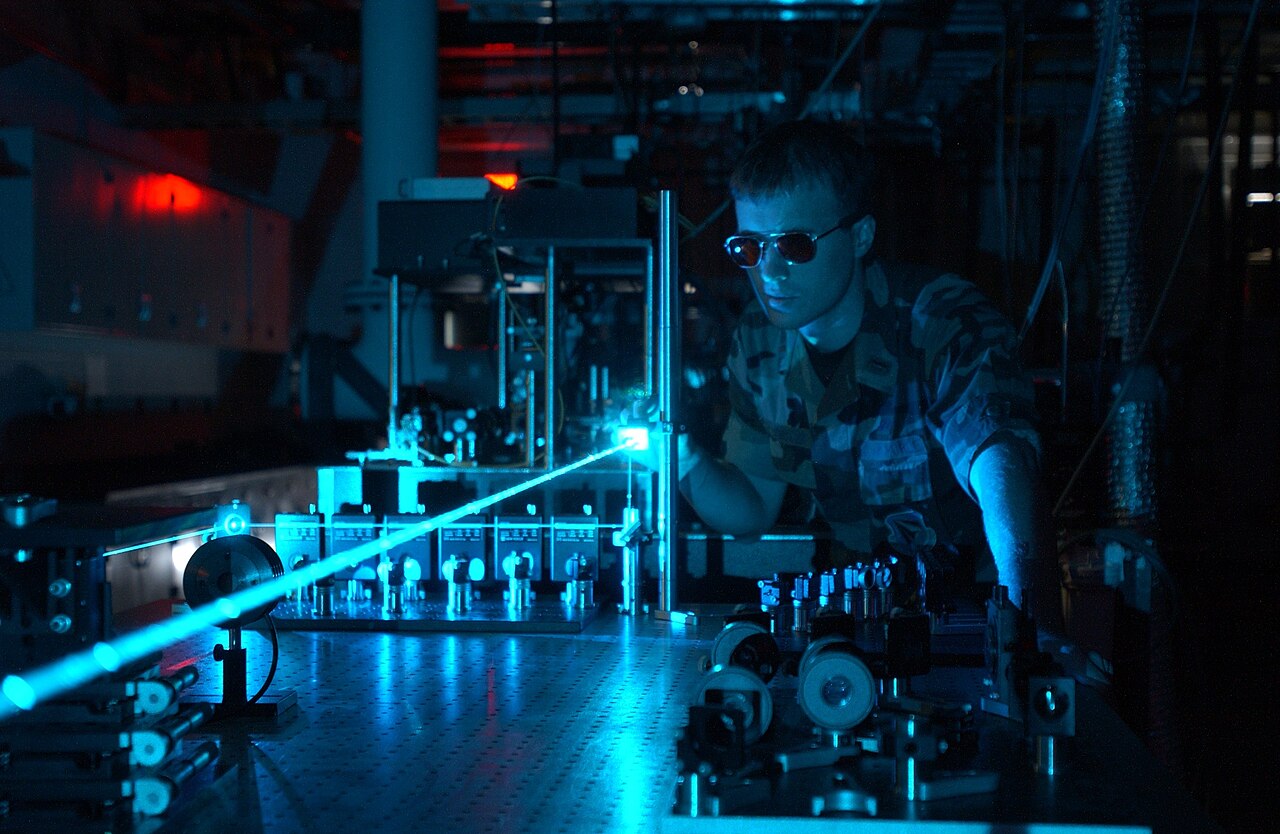
Quantum optics is not only theory. It gave us practical machines. The maser, which makes a beam of microwaves, was invented in 1953. The followed in 1960. A laser produces a very narrow, pure beam of light. Lasers now read barcodes, cut metal, and carry phone calls and internet traffic across the world.
Light sensors also depend on quantum ideas. Photomultipliers respond to single photons. Camera sensors, LEDs and solar cells cannot be understood without quantum mechanics.
How does optics help us today?
Modern optics mixes physics and engineering. Optical science studies how light works. Optical engineering uses that knowledge to build things, such as , sensors and image processing software. Fields such as photonics and optoelectronics use light the way electronics uses electricity.
Fibre optics is one of the biggest successes. Thin strands of glass carry pulses of light by total internal . Because almost no light is lost, signals can travel long distances. Engineers must still manage dispersion, which is the way different colours travel at slightly different speeds and make pulses spread out and blur together.
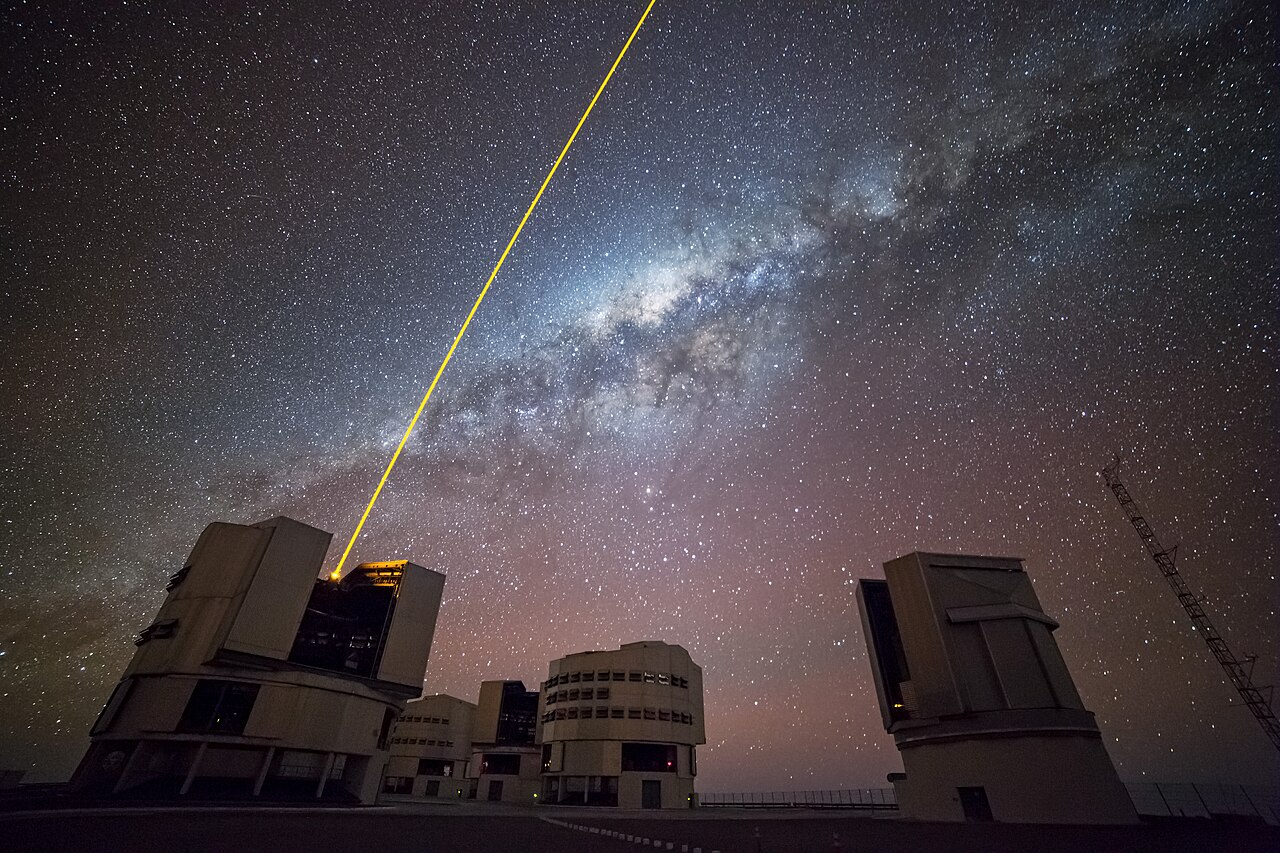
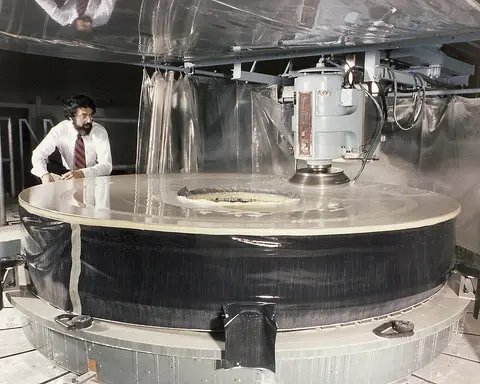
Optics also solves problems in astronomy. A bigger telescope mirror can see finer detail, because blurs every image a little. But the air above a telescope is always moving. It makes stars twinkle and smears the picture. fights this. Some observatories fire a beam up to make an artificial star. A sensor watches how the air distorts that star, and a flexible mirror changes shape to correct it, many times each second. The Very Large Telescope in Chile uses this method.
Optics is also entering computing. Researchers study photonic computers that use light, not electricity, to carry information. Other teams study metamaterials, which are materials built to interact with light in unusual ways.
From ancient crystal discs to laser guide stars, optics has always grown from one question. What is light, and what can we do with it?
Explore Next
Your audio story keeps playing while you look around.


Words to Know
- adaptive optics
- A system that changes the shape of a mirror many times a second to cancel blur caused by air.
- diffraction
- The spreading of waves as they pass an edge or a narrow gap.
- interference
- What happens when waves overlap and add up or cancel out.
- laser
- A device that makes a very narrow, pure beam of light.
- lens
- A shaped piece of clear material that bends light to a focus or spreads it out.
- photon
- A tiny packet of light energy.
- polarisation
- The direction in which a light wave wiggles.
- prism
- A block of glass that splits white light into a spectrum of colours.
- reflection
- The bouncing of light off a surface.
- refraction
- The bending of light when it passes from one material into another.
- refractive index
- A number that shows how much a material slows down light.
- wavelength
- The distance from one crest of a wave to the next.