Light
The fastest thing in the universe, and the reason you can see anything at all.
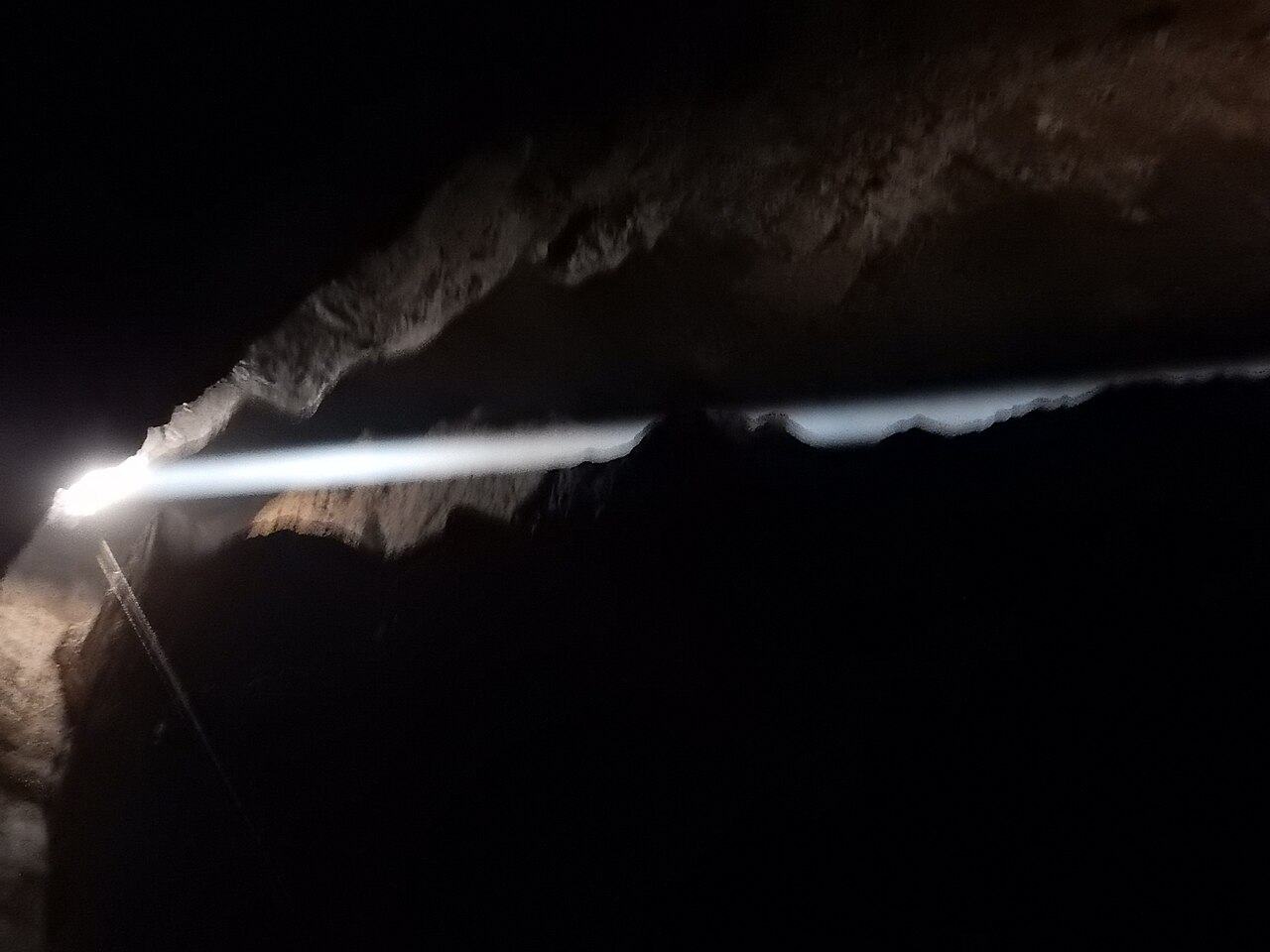
Light is a kind of energy that travels through space as an electromagnetic wave. Our eyes can detect a small slice of it, and that slice lets us see faces, colours, clouds and stars. Light comes mostly from the Sun, and plants use it to make the food that almost every living thing depends on. It moves at about 300,000 kilometres every second, faster than anything else we know. For thousands of years, thinkers argued about what light really is. Was it a stream of tiny particles, a ripple in something invisible, or something stranger? The answer took a string of clever experiments, and it still surprises scientists today.
What is light?
Light is energy that moves through space as a wave of electricity and magnetism. Scientists call it . The light we can see is called visible light, and it is only a tiny part of a much bigger family.
Every kind of light has a , which is the distance from one wave crest to the next. Visible light has wavelengths of roughly 400 to 700 . A nanometre is one billionth of a metre, so these waves are far thinner than a human hair. Next to each end of the visible band sit kinds of light that our eyes cannot detect. In physics, the word light is often used for the whole family, so radio waves, X-rays and gamma rays count as light too.
On Earth, the main natural source of light is the Sun. For most of human history, fire was the other big source, from ancient campfires to oil lamps. Electric lighting has now replaced firelight almost everywhere.
Light is also the power supply for life. Green plants use sunlight to make sugars and starches in a process called photosynthesis. Animals that eat plants, and the animals that eat those animals, get their energy from the same source. Some living things make their own light instead. Fireflies flash to find mates, and vampire squid glow to hide themselves from prey.
Why do we see colours, and what can't we see?
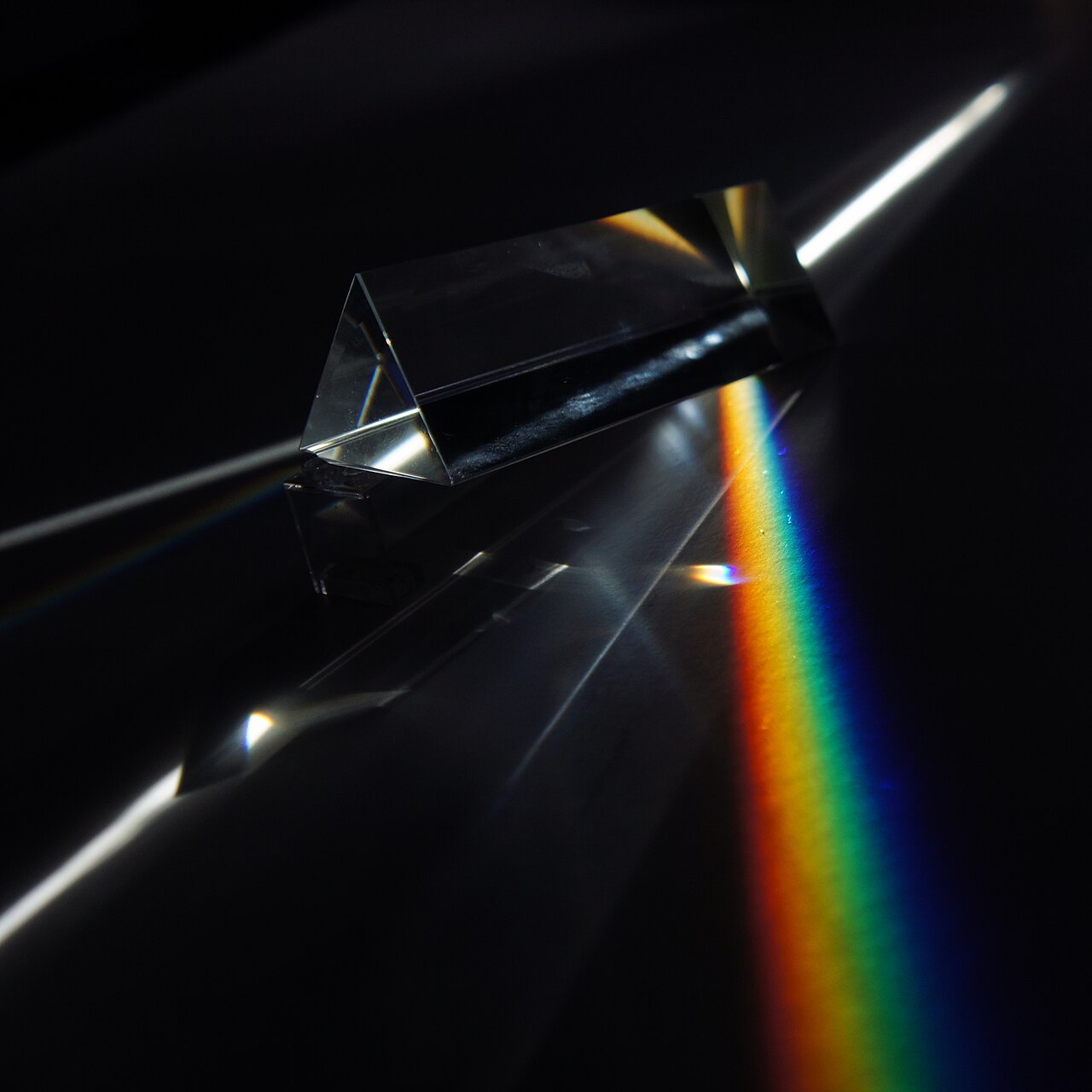
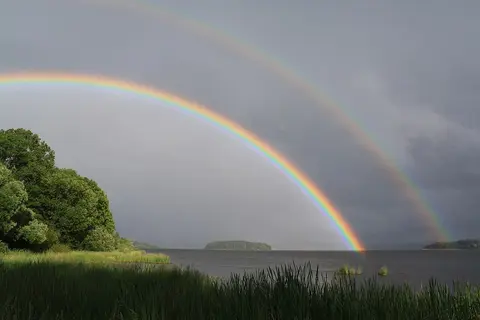
Light of different looks like different colours. Red light has the longest visible wavelengths, near 700 . Violet has the shortest, near 400. Between them come orange, yellow, green and blue. Sunlight looks white because it mixes all of these together. A glass prism can pull them apart, because each wavelength bends by a slightly different amount.
The full range of light is called the electromagnetic . From longest waves to shortest, it runs through radio waves, microwaves, infrared, visible light, ultraviolet, X-rays and gamma rays. Each kind behaves differently, but all of them are the same sort of wave.
We cannot see infrared because its carry too little energy to trigger the chemical change in the eye that makes us sense light. Ultraviolet is blocked by the front of the eye, and it can damage the light-sensing cells at the back. Other animals do better. Some snakes sense infrared as heat. Insects and shrimp can detect ultraviolet.
The edges of visible light are fuzzy. Different books place them anywhere from 380 to 800 nanometres. Plants respond to colour too, and the mix of colours in the light around them affects how they grow.
How fast does light travel?
In a , which is completely empty space, light travels at 299,792,458 metres every second. That is about 300,000 kilometres per second. In one second, a beam of light could circle the Earth more than 7 times. Light from the Sun takes about 8 minutes to reach us. Moonlight takes about a second and a bit.
This speed is so fundamental that scientists now use it to define the metre. All electromagnetic waves travel at exactly this speed in a vacuum, whether they are radio waves or gamma rays. In materials, light slows down. In water it moves at about three quarters of its vacuum speed.
People once thought light arrived instantly. Galileo tried to measure its speed in the seventeenth century, but it was too fast for his methods. In 1676, the Danish scientist Ole Rømer found a clue in the moons of Jupiter. The moon Io seemed to run late when Earth was far from Jupiter. He realised that light needs extra time to cross the extra distance.
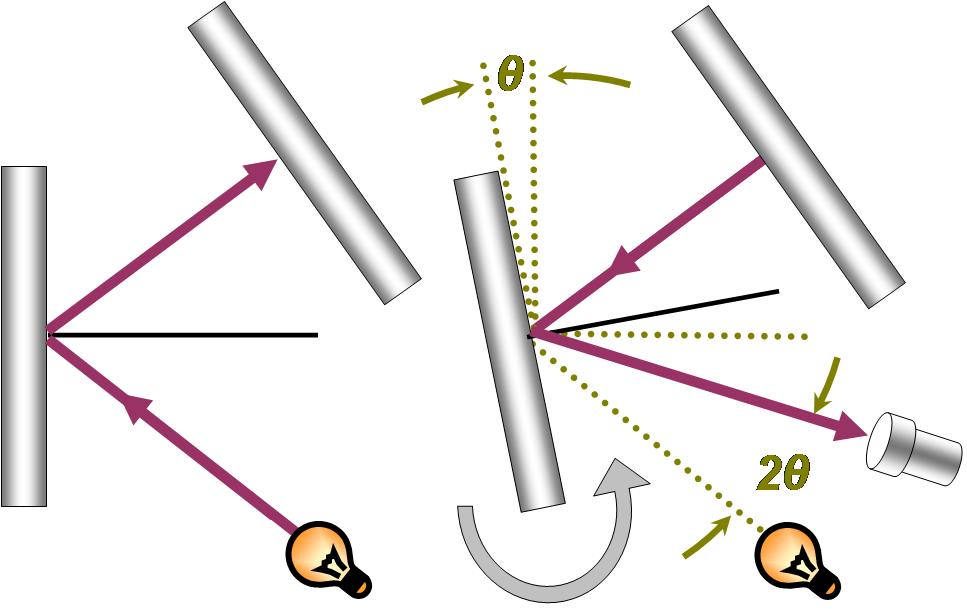
Better measurements followed. In 1849, Hippolyte Fizeau sent light through a spinning toothed wheel to a mirror several kilometres away and back. Léon Foucault used spinning mirrors in 1862. Albert Michelson refined that method and, in 1926, timed light on a round trip between two California mountains.
What happens when light hits something?
The study of light and how it interacts with matter is called optics. Light that meets an object can pass through it, bounce off it or be soaked up by it.
A transparent object, such as clear glass, lets light pass through. An object, such as wood, blocks it by reflecting or absorbing it. A translucent object, such as frosted glass, lets light through but scatters it, so you cannot see a clear picture behind it. Most surfaces are rough at a tiny scale, so they scatter the light that hits them in all directions. That is why you can see a wall from any side, while a smooth mirror sends light back in one neat direction.
Light also bends when it moves from one clear material into another, such as from air into water. This bending is called . It happens because light changes speed in the new material. If the light arrives at a slant, the change of speed turns the beam. Scientists describe the amount of bending with a rule called Snell's law.
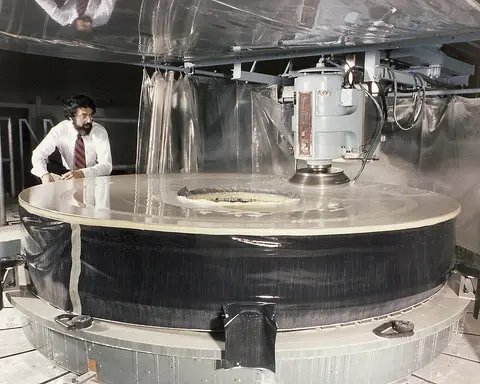
Lenses use refraction on purpose. Spectacles, contact lenses, magnifying glasses, microscopes and refracting telescopes all bend light to change how big things appear. Cameras and our own eyes also rely on lenses to form a sharp picture.
Where does light come from?
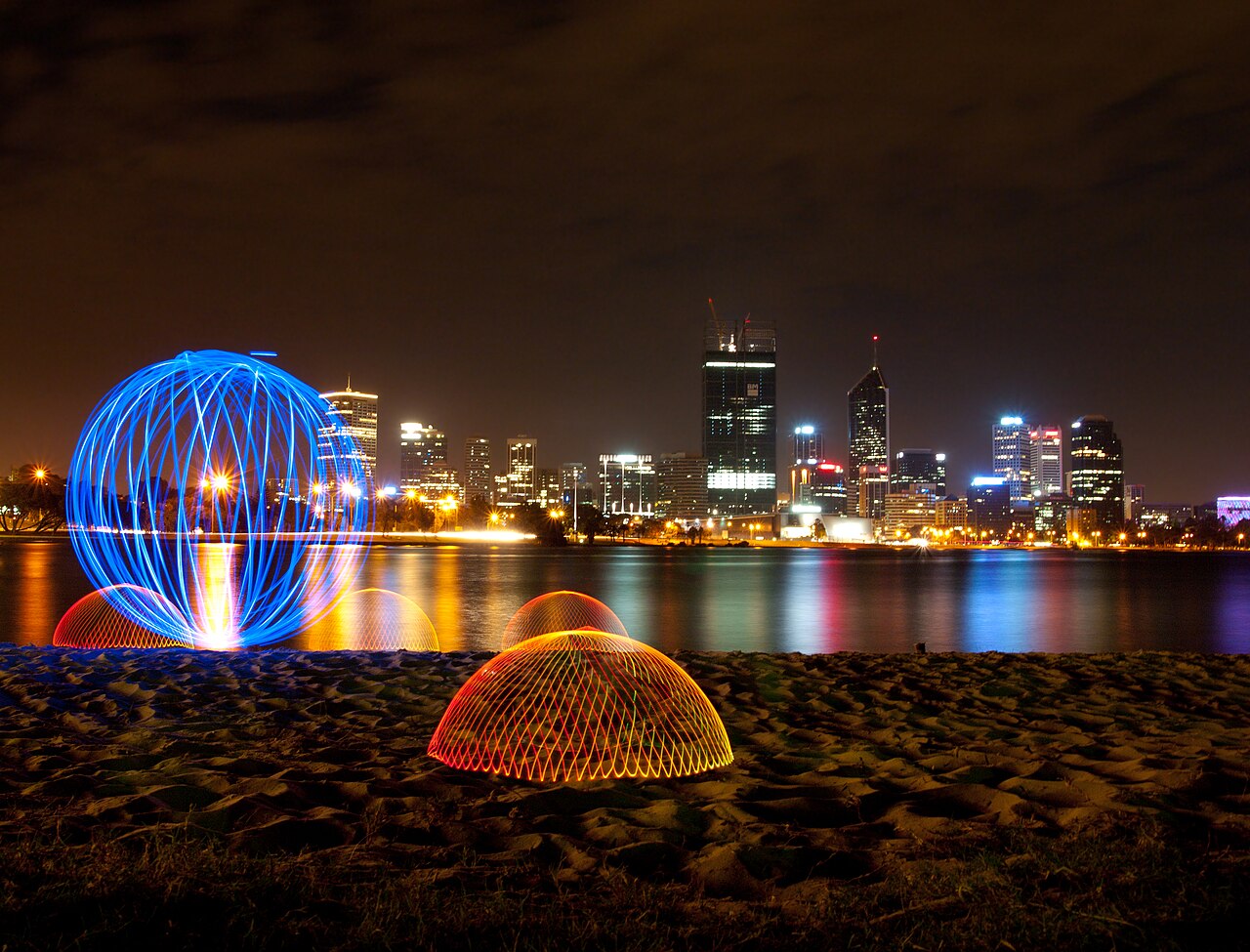
Anything that is hot enough glows. A hot object gives off light across a range of , and the hotter it gets, the shorter the wavelengths it favours. Metal heated in a forge glows red, then white, then blue-white. Even people give off light, but at infrared wavelengths we cannot see.
The Sun is the best example. About 44 percent of the sunlight that reaches the ground is visible. An old-fashioned filament bulb is far less efficient. Only around 10 percent of its energy becomes visible light and the rest is infrared heat. Fire is similar, because most of the radiation from a flame is infrared.
Atoms can also make light directly. Each kind of atom gives out light at its own particular colours. That is why sodium in a flame glows yellow, and why neon signs and other gas lamps glow in their own colours. Light-emitting diodes, or LEDs, work in a similar way. Lasers make light in a special controlled way, so all the waves march in step.
Chemistry can make light too. Fireflies and glowing plankton use chemical reactions, which is called . Some materials, such as the paint on glow-in-the-dark stars, soak up energy and then release it slowly as light.
Did ancient thinkers think light shot out of our eyes?
Many ancient thinkers believed that seeing worked by something leaving the eye. In the fifth century BC, the Greek philosopher Empedocles taught that a fire inside the eye sent out rays. He also saw that this could not be the whole story. If eyes made all the light, we would see as well in the dark as in the day. So he suggested that rays from the eye met rays from a source such as the Sun.
Around 300 BC, Euclid wrote a book called Optica. He said that light travels in straight lines, and he studied reflection using geometry. He also asked a sharp question. When you open your eyes at night, you see the stars at once. A beam from the eye would have to cross the sky faster than anything.
In 55 BC, the Roman writer Lucretius suggested that light was made of tiny atoms shooting through the air. Ptolemy, in the second century, wrote about . In India, early schools of thought listed light as one of the basic elements of the world.
In 1637, the French thinker René Descartes published a theory of refraction. He treated light as a mechanical effect that moves through a medium, like sound. He got one key detail wrong, because he thought light speeds up in denser materials. Even so, many historians count his work as the start of modern physical optics.
Is light a stream of particles or a wave?
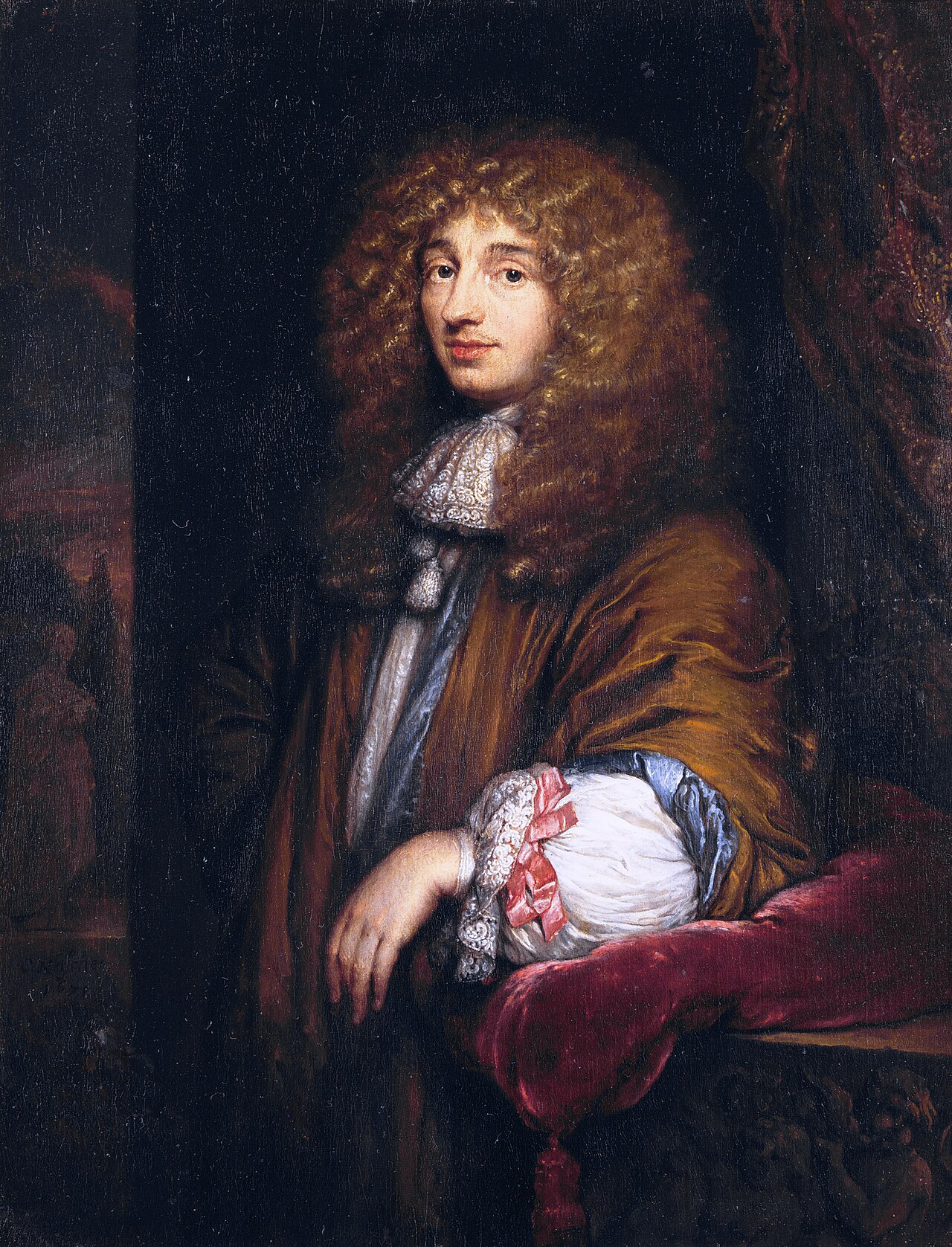
By the 1600s, two rival ideas were competing. Pierre Gassendi suggested that light was made of particles. Isaac Newton liked that idea and described light as tiny particles, which he called corpuscles, flying out from a source in all directions. He had a strong argument. Waves such as water ripples spread around corners, but light seemed to travel only in straight lines. Newton published his full theory in his book Opticks in 1704, and his fame kept the particle idea popular for a hundred years.
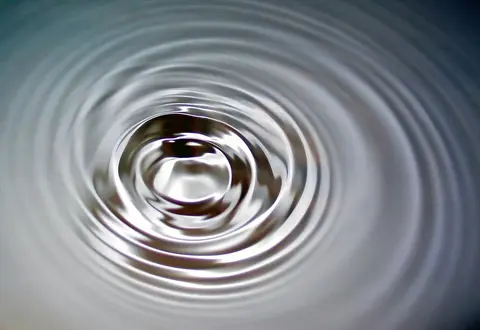
The rival idea was the wave theory. Robert Hooke compared light to ripples on water in 1665. Christiaan Huygens, a Dutch scientist, built a full mathematical wave theory in 1678 and published it in 1690. He imagined light as waves moving through an invisible substance called the luminiferous .
The two theories made opposite predictions. Newton's particles should move faster in glass or water than in air. Huygens's waves should move slower. For a long time nobody could measure light well enough to decide.
The particle idea had other consequences. It led Pierre-Simon Laplace to suggest that a body could be so massive that light could not escape from it, an early idea of a black hole.
How did waves win, and what did Maxwell discover?
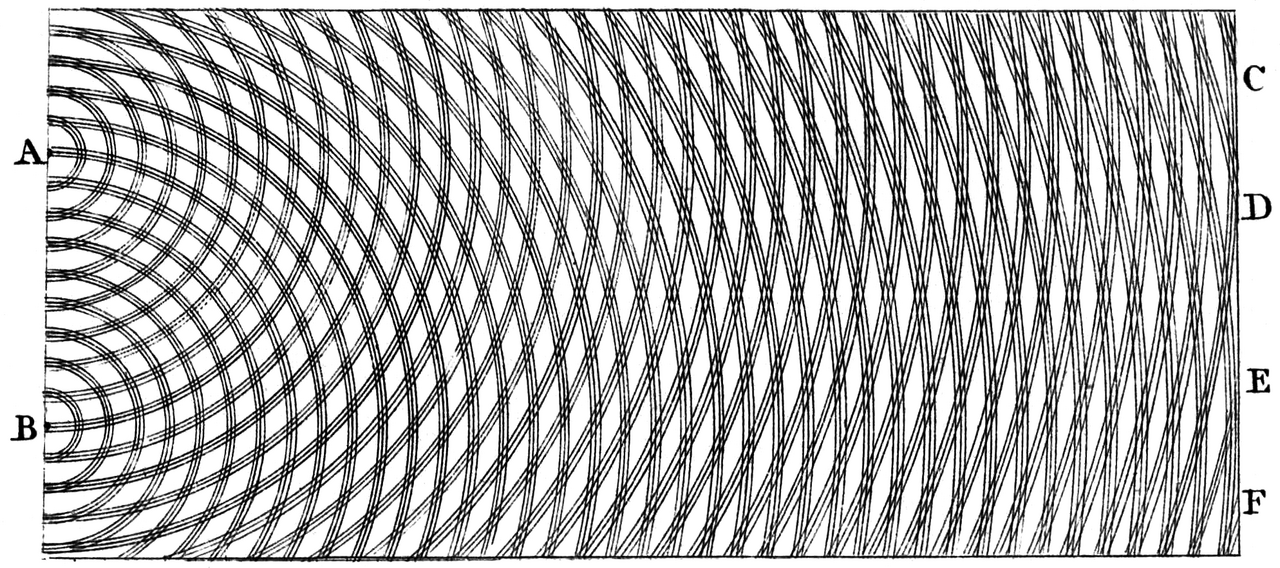
Around 1800, Thomas Young showed that light behaves like waves. Waves can interfere, which means two sets of waves add together or cancel each other out, as ripples do on a pond. In 1802, Young described this as a general law, and he linked colour to . Augustin-Jean Fresnel then showed that the wave theory could explain polarisation, which is the way light waves can vibrate in one direction only. He proved this works if light waves wobble sideways to the direction they travel.
The deciding test came from Léon Foucault in 1850. He measured light in water and found it travels slower than in air. That matched the wave theory and ruled out Newton's version.
The next step came from electricity and magnetism. In 1845, Michael Faraday found that a magnetic field could twist the direction in which light vibrates. This was the first sign that light is linked to electromagnetism. James Clerk Maxwell then worked out that electric and magnetic waves would travel through space at a fixed speed. That speed matched the measured speed of light. In 1862, he concluded that light is an electromagnetic wave.
Heinrich Hertz later made radio waves in a laboratory and showed that they reflect, bend and interfere like light. Radio, television and radar all grew from this work.
Is light really both a wave and a particle?
Waves were not the end of the story. In 1900, Max Planck found that light energy comes in lumps of a certain size. He called these lumps quanta. In 1905, Albert Einstein used the idea to explain the photoelectric effect, in which light knocks electrons out of a metal surface. He suggested that quanta of light are real. In 1923, Arthur Compton showed that X-rays bounce off electrons like tiny particles. In 1926, the chemist Gilbert Lewis gave these particles the name .
Today, scientists say light has both wave and particle properties. A photon has no mass. and bending around corners show the wave side. Detecting single photons shows the particle side. In 1977, a team led by H. Jeff Kimble showed a single atom giving out one photon at a time. Light acts more like a wave at low frequencies and more like a particle at high frequencies. Visible light sits in the middle, so experiments can describe it either way.
Light can even push. A beam carries a tiny force, so a laser pointer pushes with only about 3.3 piconewtons. Even so, sunlight can drive solar sails. In 2010 Japan's IKAROS spacecraft unfurled a thin sail and became the first to travel between planets pushed by sunlight. Focused lasers called optical tweezers can hold tiny cells in place.
Explore Next
Your audio story keeps playing while you look around.
Words to Know
- aether
- An invisible substance that scientists once thought light waves moved through.
- bioluminescence
- Light made by a living thing, as in fireflies.
- electromagnetic radiation
- Energy that travels as waves of electric and magnetic fields, including light and radio waves.
- interference
- What happens when two waves meet and add together or cancel each other out.
- nanometre
- One billionth of a metre, used to measure wavelengths of light.
- opaque
- Not letting any light pass through.
- photon
- A single packet of light energy that has no mass.
- refraction
- The bending of light as it passes from one clear material into another.
- spectrum
- The range of colours or wavelengths that light is spread into.
- vacuum
- A space with nothing in it, not even air.
- wavelength
- The distance from one crest of a wave to the next.