Rock
The solid stuff of Earth, made in fire, water and under pressure.
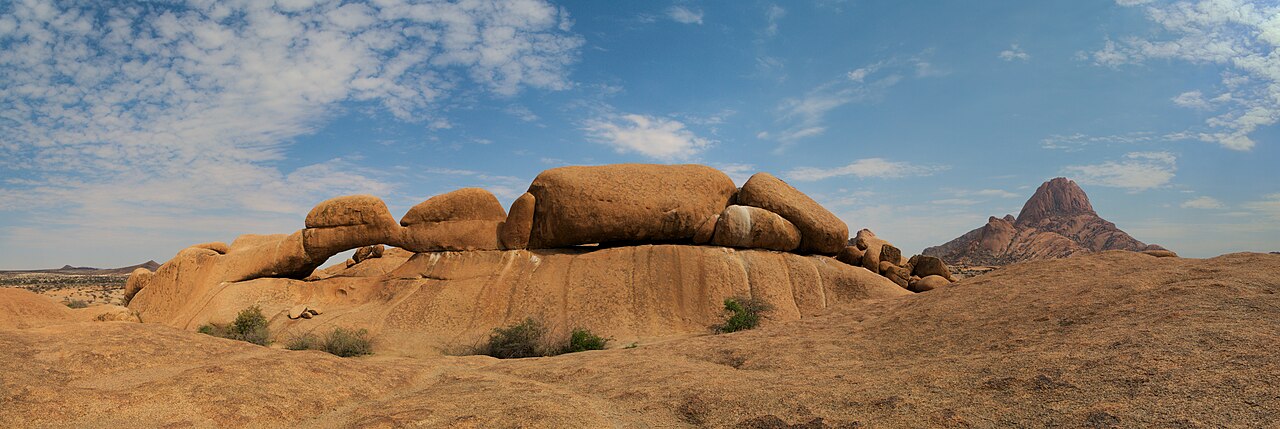
Rocks make up the ground beneath you, the mountains on the horizon and the floor of the deepest ocean. A rock is a natural solid made of minerals, and it can be hard as granite or crumbly as chalk. Geologists sort rocks into three families according to how they formed. Igneous rocks cool from melted rock, sedimentary rocks build up from layers of pieces, and metamorphic rocks are changed by heat and pressure. Over millions of years, any rock can turn into another kind. Rocks also hold the history of our planet, and people have used them for tools, buildings and metals for millions of years.
What is a rock, really?
A rock is a natural solid made of minerals. Some rocks hold dozens of different minerals. Others are made almost entirely of one. A few contain , which are mineral-like materials such as volcanic glass that have no orderly crystal pattern.
Rocks form the whole outer shell of Earth, called the crust, and most of what lies beneath it. Only the liquid outer core and pockets of molten rock are different. If you could dig down far enough, nearly all of it would be rock. The ground under a city, a desert or a sea floor is all rock, even when soil, sand or water covers it.
The word stone means the same thing in everyday speech. Geologists use the word rock for the natural material and often use stone when talking about rock that people cut or shape for building.
Rocks are not all alike. Some are hard enough to resist a steel blade. Others are so soft that they crumble in your fingers. Some are pale and some are black, some are full of tiny holes and some are as smooth as glass.
These differences come from how a rock formed. Geologists sort rocks by what minerals they contain, by their chemistry, by the size and shape of their grains, and by how easily water can pass through them. The most important question is how the rock was made. The answer sorts almost every rock on Earth into one of three families.
What are rocks made from?
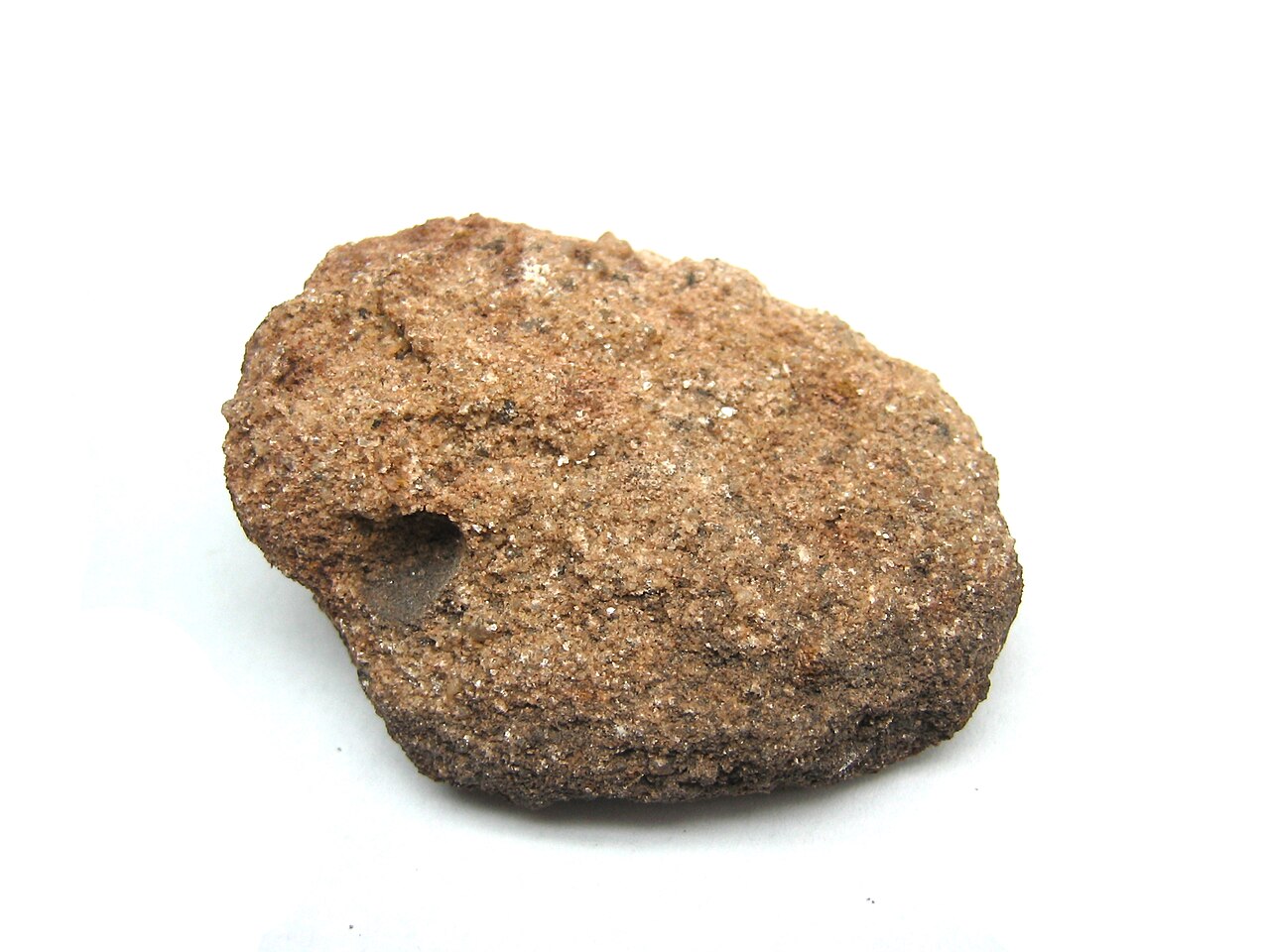
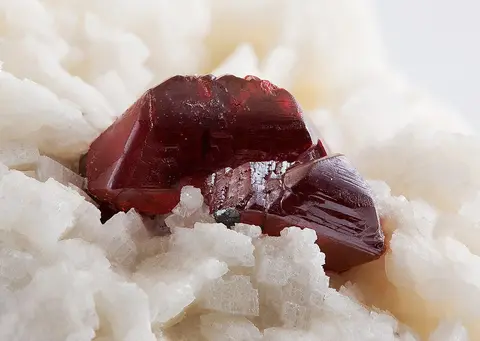
Most rocks are made of grains of minerals. Minerals are crystalline solids, which means their atoms are chemically bonded in an orderly pattern. Look closely at a piece of granite and you can see the separate grains. Some will be glassy, some pink or white, and some black and shiny.
The kinds of minerals in a rock, and how much of each, depend on how the rock formed. This is why geologists often learn a rock's story from its minerals.
The most common minerals in the crust are the silicates. They contain silica, a building block made of silicon and oxygen. Silicate minerals account for about one-third of all known mineral species, and they make up about 90% of the crust. The amount of silica in a rock is a major clue to its name and its properties.
Rocks can also be sorted by texture and grain size. The smallest grains are clay, then silt, then sand and then gravel. Bigger pieces are called cobbles and boulders. Whether a rock lets water seep through its tiny gaps is another useful property.
The groups are not sharp. One kind of rock can fade gradually into the next as the mix of minerals changes. Geologists draw the lines for convenience, in the same way that we say where blue becomes green on a rainbow.
Over time, any rock can turn into another type. A model called the rock cycle describes how.
How is rock made from fire?
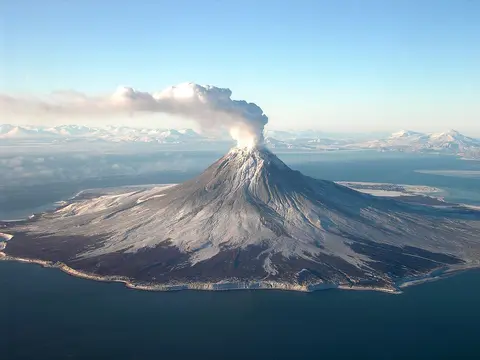
forms when melted rock cools and turns solid. The word comes from the Latin word for fire. Melted rock below the surface is called . When it pours out onto the land or the sea floor, it is called .
Rock melts in three ways. It can get hotter, the pressure on it can drop, or its chemical mix can change. All three happen inside Earth, in the mantle and the crust.
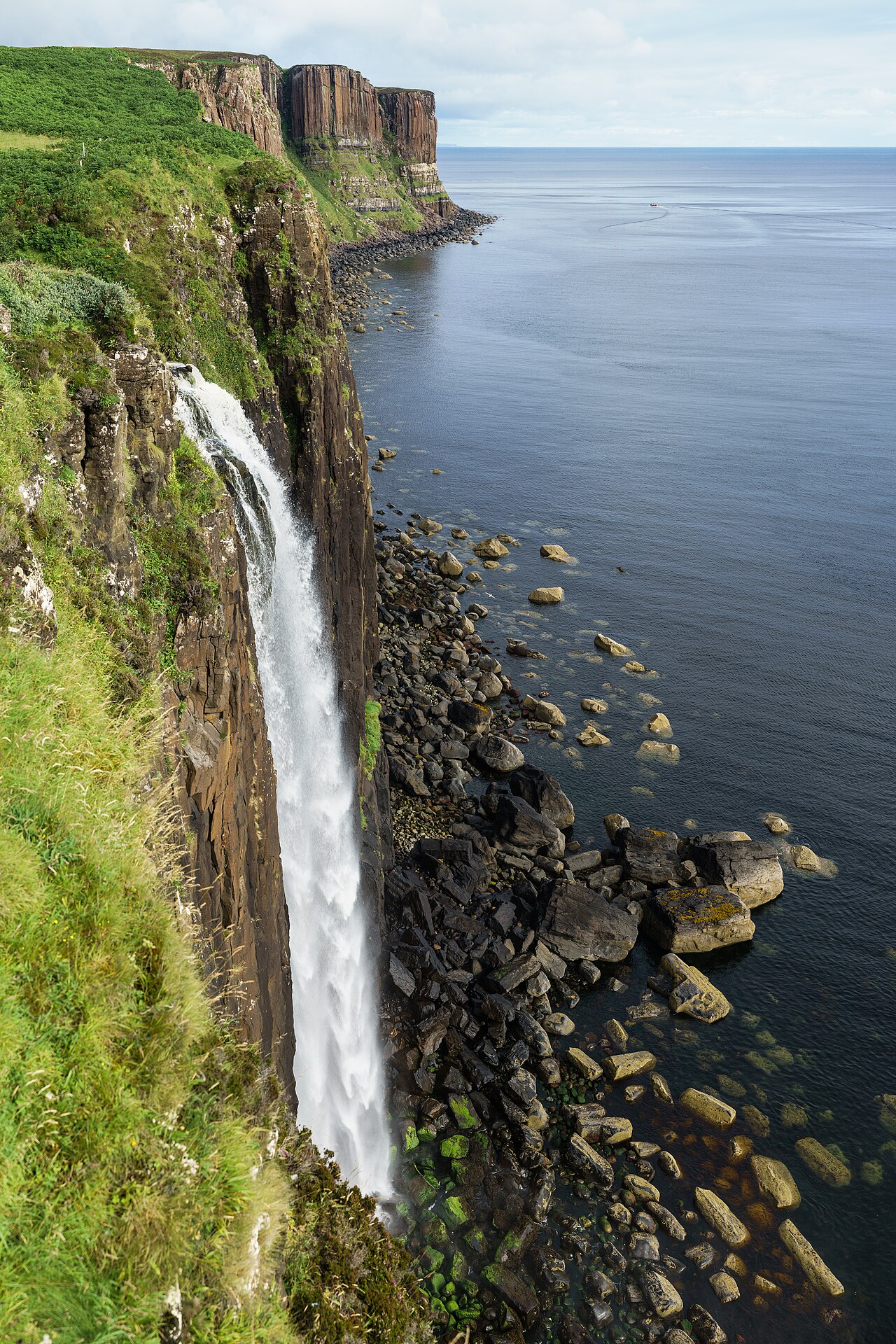
There are two main kinds of igneous rock. Plutonic rocks, also called intrusive, form when magma cools slowly deep underground. Granite is the best-known example. Volcanic rocks, also called extrusive, form when magma reaches the surface. Basalt is a common one. Pumice, a light rock full of bubbles, is another. In general, slow cooling lets mineral crystals grow large, and fast cooling leaves them small or makes glass.
Basalt sometimes cools into tall, many-sided columns. You can see them on the Isle of Skye in Scotland, beside Kilt Rock.
Igneous rock is the most common kind in the crust. By volume, about 65% of the crust is igneous, and most of it is basalt, gabbro or granite. The oceanic crust is about 99% basalt. Granite and rocks like it dominate the continents.
As magma rises, it tends to get richer in silica. It melts the crust it passes through, and crust is rich in silica. Low-silica minerals also crystallise first and drop out. So silica content is the main way geologists classify igneous rock.
How do layers of sand become stone?
are made at Earth's surface from pieces of older rock, minerals and the remains of living things. The first step is , when rock is broken down by weather, water, ice and plant roots. Next, carries the pieces away. Rivers, wind, ice, glaciers and landslides can all move them. Finally the pieces settle in a new place and build up as .
Over time, the lower layers are squashed by the weight above. Minerals dissolved in the water between the grains glue them together. This squeezing and gluing is called compaction and cementation, and it turns loose sediment into solid rock. Some sedimentary rocks form another way. When water evaporates or cools, minerals can come out of it as crystals. Rock salt formed in this way.
Sedimentary rocks usually lie in flat layers, called strata, because gravity pulls sediment down to settle evenly. Fossils are often found in them, because dead plants and animals get buried in the sediment.
Sedimentary rocks are only about 7.9% of the crust by volume, but they cover much of the surface. Shale makes up most of that, followed by sandstone and limestone. Sandstone is made of sand grains. Limestone is mostly calcite and often comes from the shells of sea creatures. Shale is made of tiny clay particles.
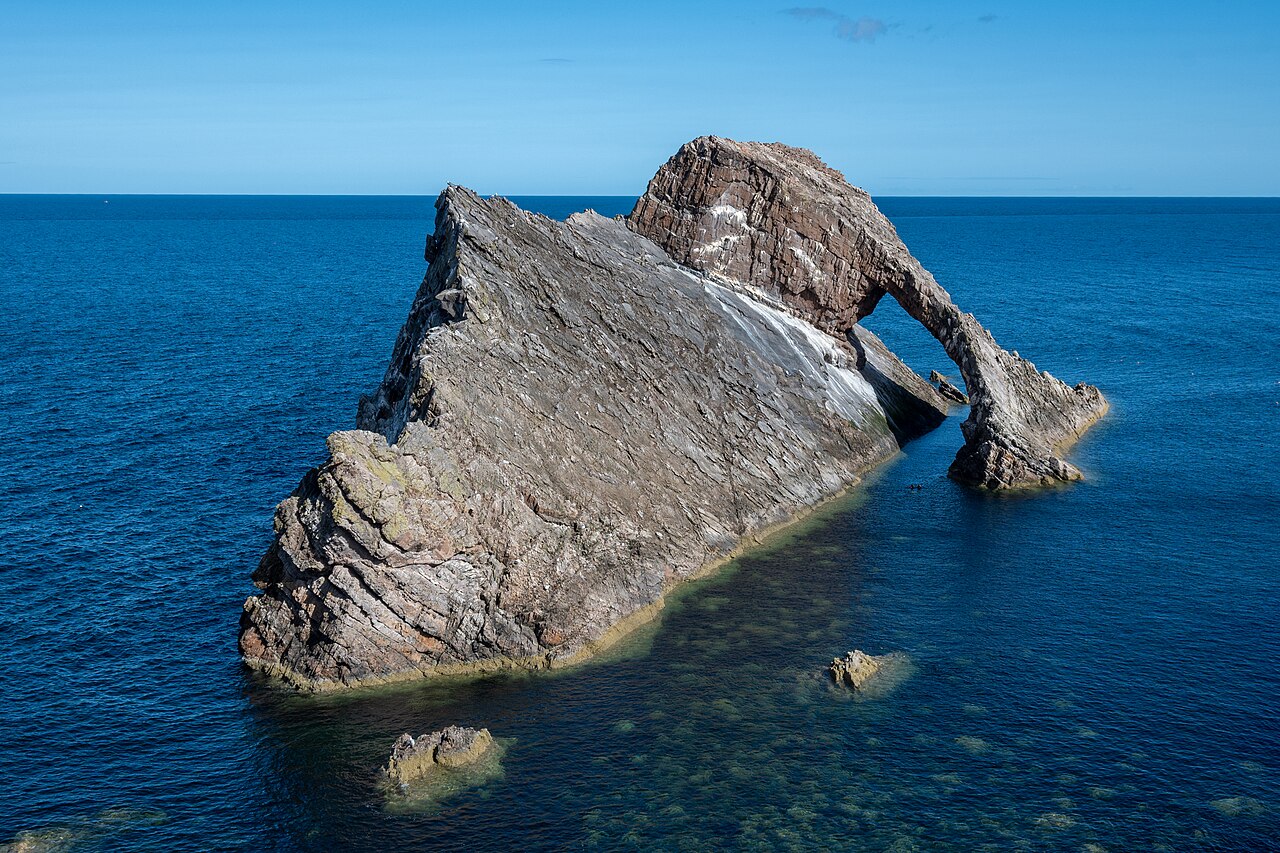
Sea waves also shape stone. At Bow Fiddle Rock in Scotland, the sea has worn away the softer parts of the cliff and left a sea stack with an arch.
What happens when rock is squeezed and baked?
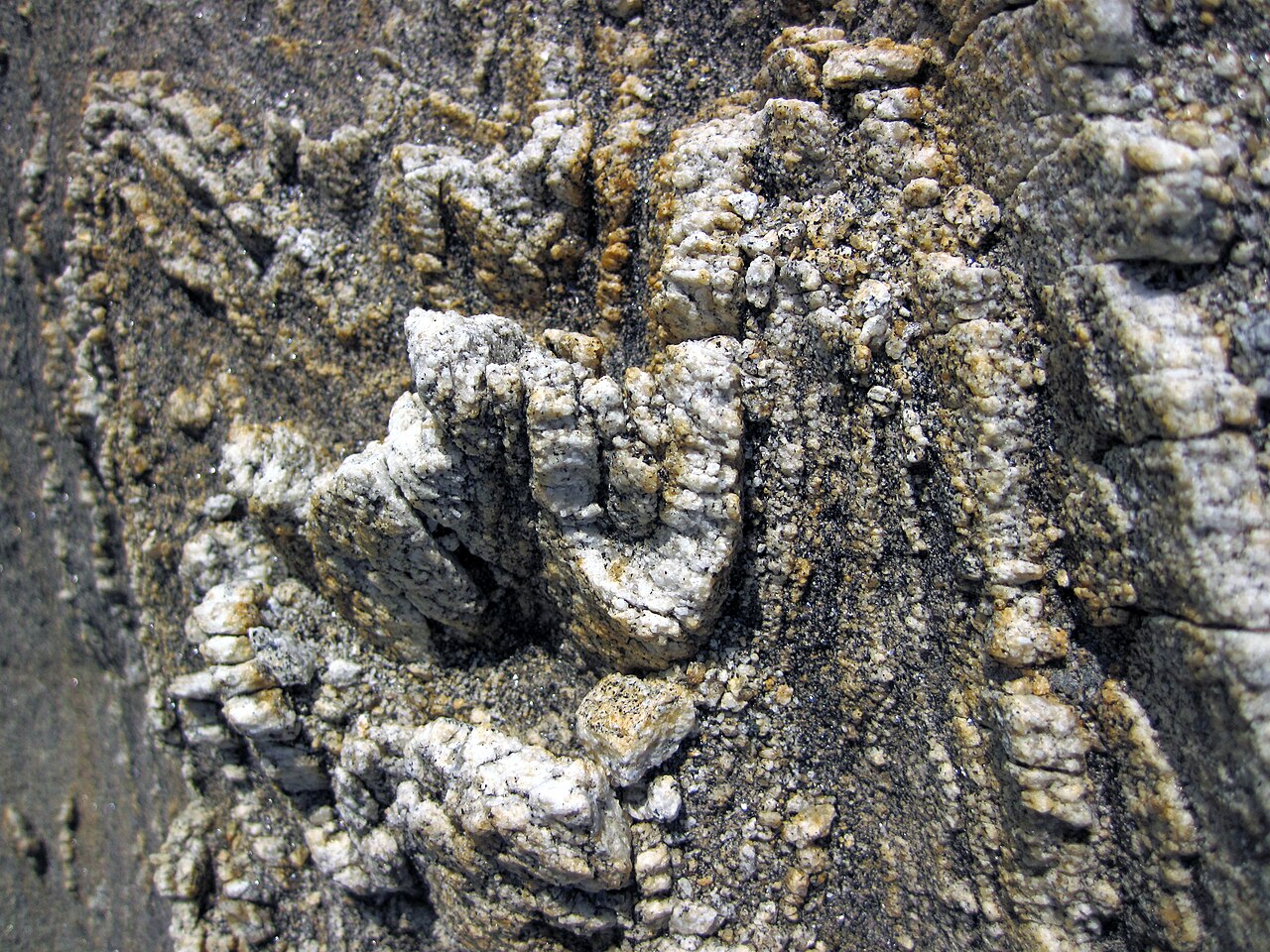
is rock that has been changed. The word means change of form. Any rock can become a metamorphic rock if it ends up in a place with different heat and pressure from where it formed. The original rock is called the protolith.
The changes are big. Minerals regrow as new minerals or as new forms of the same mineral. This happens without the rock melting. The conditions needed are always more extreme than at the surface. The temperature must pass about 150 to 200 °C, and the pressure must be more than 1,500 times the air pressure at sea level. This happens when continents collide and push mountains up.
There are three main ways it happens. When hot pushes into the rock around it, the heat bakes it. This is contact metamorphism. When is buried deep, pressure does most of the work, and this can create rocks such as jade. When both heat and pressure act together, as in mountain-building areas, it is called regional metamorphism.
Metamorphic rocks are often sorted by texture. Foliated rocks have a layered or banded look. Schist is rich in flaky minerals called micas and shines when it catches the light. Gneiss has bands of lighter and darker colour, and can twist into folds. Slate is another foliated rock. Non-foliated rocks have no layers. Marble, soapstone and serpentine are examples. Quartzite is sandstone that has been changed by heat and pressure.
By volume, about 27.4% of the crust is metamorphic.
How do rocks wear away?
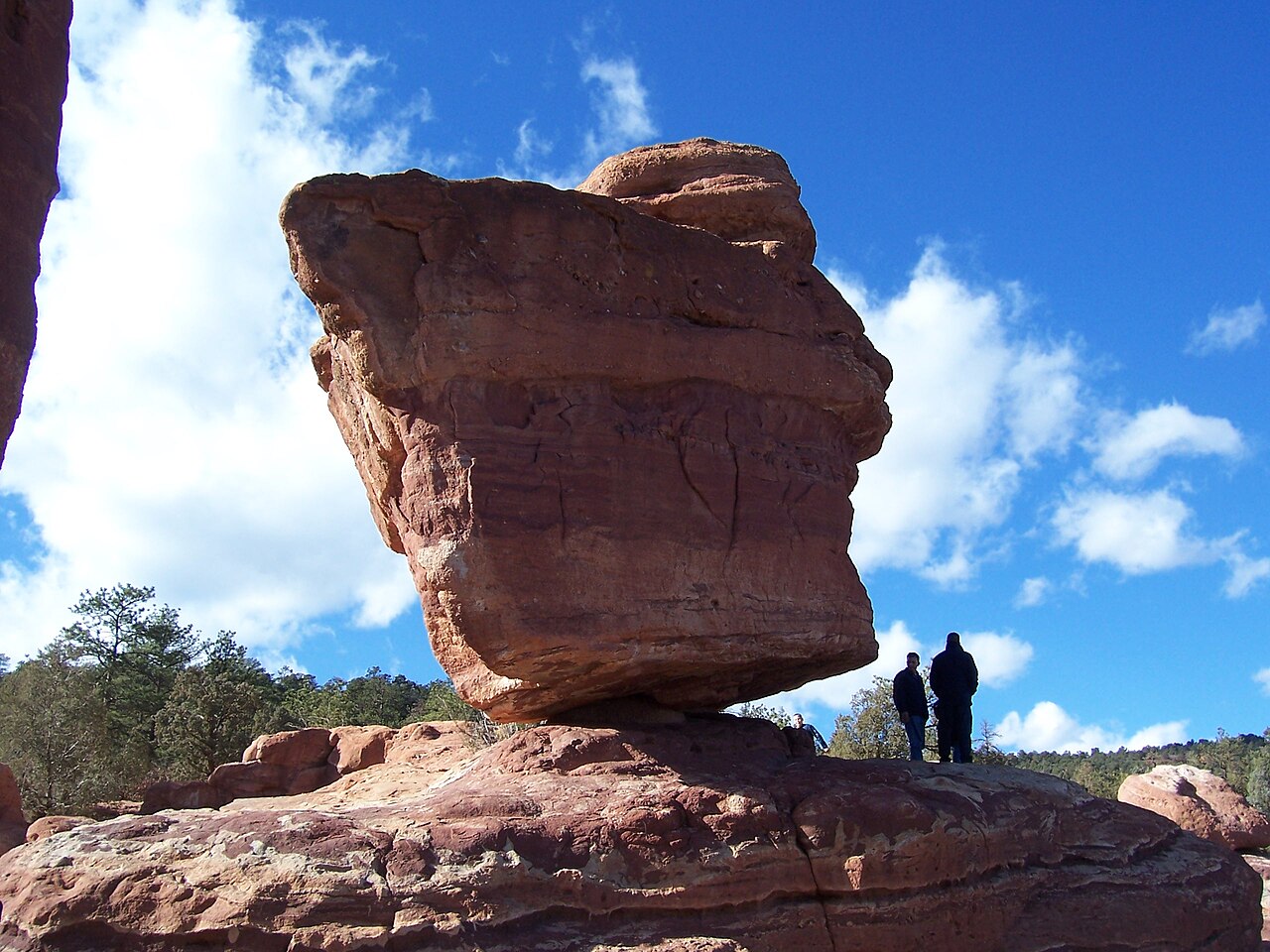
No rock lasts for ever. Once it reaches the surface, weather begins to break it down. Water seeps into cracks and freezes. Ice takes up more room than water, so it pushes the cracks wider. Roots grow into gaps. Rain slowly reacts with some minerals and changes them into new ones, such as clay. Wind carries sand that scours the surface.
breaks rock down. carries the pieces away. Together they carve some of the most striking shapes in the landscape. Arches, pillars and perched boulders appear when softer or weaker parts wear away faster than harder parts. In Colorado, one huge rock at Garden of the Gods stands balanced on a narrow base.
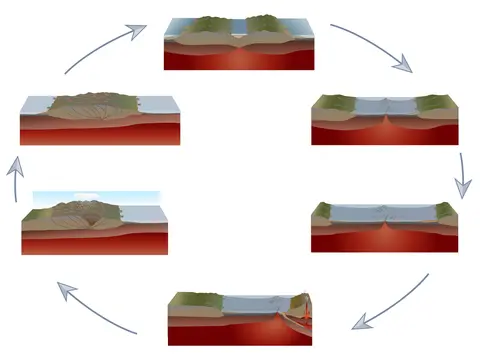
The pieces that are carried away do not vanish. They become , which settles somewhere new and can later be buried and turned back into stone. Geologists call the whole round trip the rock cycle. No two rocks follow exactly the same path, and the rock cycle has its own entry, with the engines that drive it.
How do rocks tell us Earth's history?
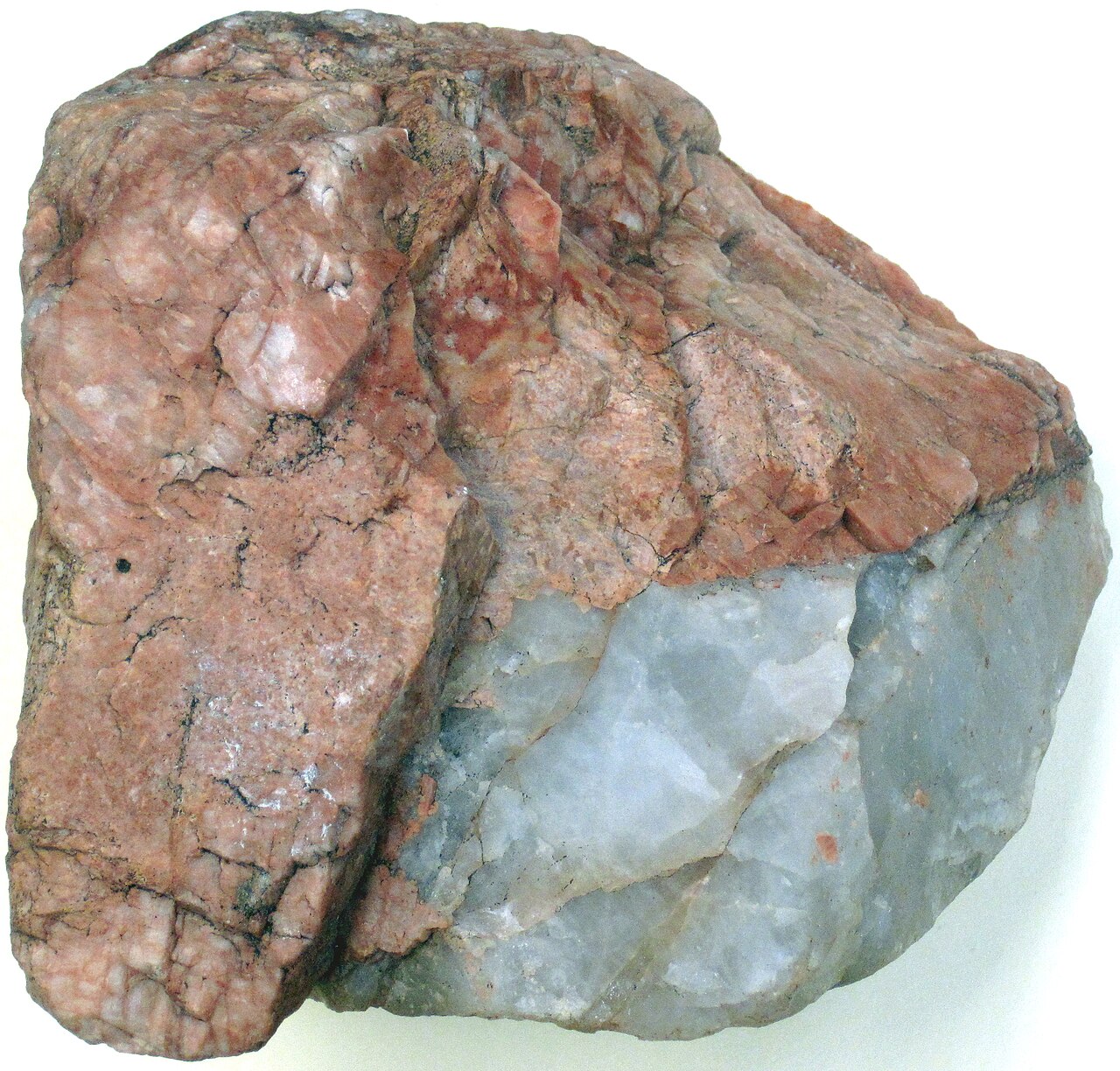
Rocks are the records of Earth's past. Geology is the study of Earth and what it is made of. Within it, studies the character and origin of rocks, and mineralogy studies the minerals that make them up. Together they help scientists work out what happened long ago, from ancient seas to old volcanoes.
The idea that rocks have a history developed as a formal science over the 1700s and 1800s. In 1669, the Danish scientist Nicolas Steno worked out that in an undisturbed pile of layers, the oldest lie at the bottom. In the 1780s, the Scottish naturalist James Hutton argued that rocks such as granite formed from heat and that Earth was shaped by slow change over very long times. In 1815, the English surveyor William Smith published the first geological map of a whole country. He used the fossils in each layer to match rocks from place to place.
A major step came in 1896, when radioactivity was discovered. It led to radiometric dating, a method that uses the steady decay of radioactive atoms in a rock to work out how old it is. In 1911, the young English geologist Arthur Holmes used it to date a rock at about 370 million years old. In 1913 he published a book on the age of the Earth. The best estimate today is that Earth is about 4.5 billion years old.
Layers of help too. Fossils in the layers show what lived at the time. show where mountains have been squeezed up. show where volcanoes once erupted.
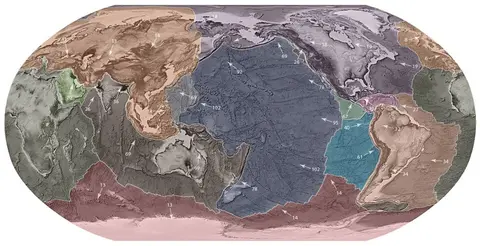
Rocks also help us understand the movement of the continents. The understanding of plate tectonics grew in the second half of the 1900s. Matching rocks on far-apart continents, for example, were part of the evidence that the lands were once joined.
How have people used rock?
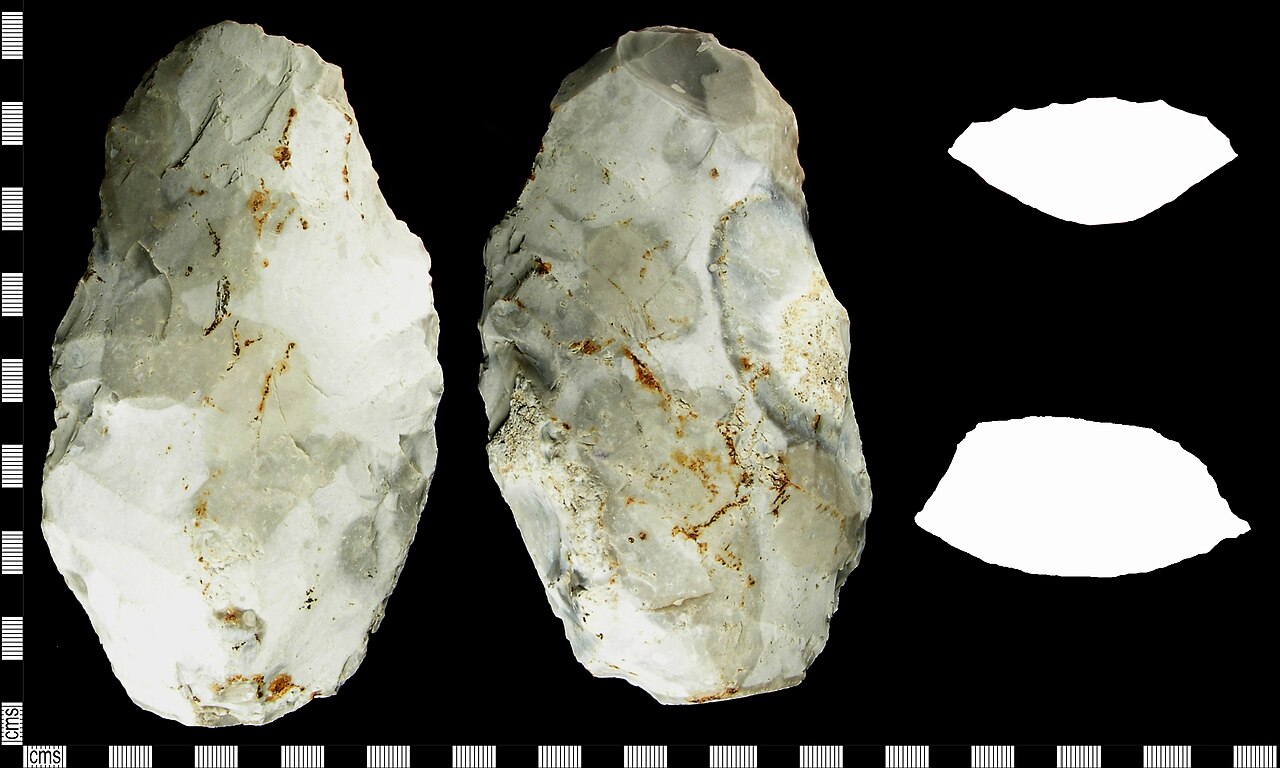
Rock has been useful to humans and their relatives for at least 2.5 million years. The Stone Age is named after its tools. Early Stone Age people made hammerstones and sharp flakes. Later toolmakers made sharpened points for spears, as well as scrapers and awls. Late Stone Age tools show skill and different styles from place to place. Stone tools were gradually replaced by copper and bronze once people learned to make metals from rock.
Stone has also been a main building material. Soft, easy-to-cut was being quarried in Egypt by about 4000 BCE. Builders in Inner Mongolia used stone for fortifications as early as 2800 BCE. The Romans used a soft rock called tuff for many buildings and bridges. Limestone was widely used in medieval Europe, and it stayed popular into the 1900s. Some rocks are very strong. Quartzite can resist a pulling force of more than 300 megapascals, close to the strength of structural steel.
Mining takes rock out of the ground to get the minerals inside, including metals, coal, salt and diamonds. Modern mining involves finding deposits, judging whether a mine will pay, digging, and finally repairing the land afterwards. Mining can harm the environment, so most countries have laws to limit it.
People now make rock too. Concrete is a human-made rock that has been used since Roman times. One geologist, James R. Underwood, has suggested calling such materials a fourth class of rock, called anthropic rock.
Are there rocks on other worlds?
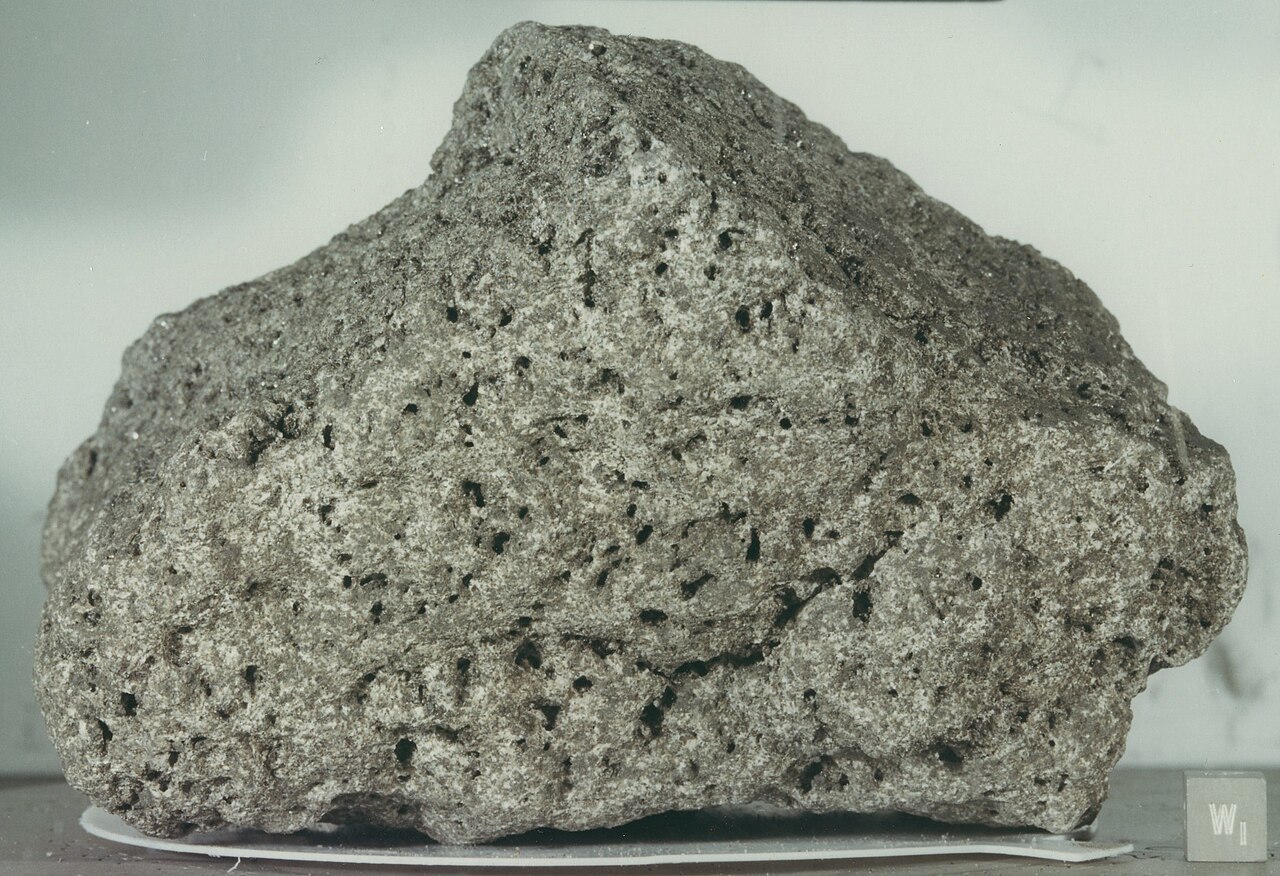
Rock is not unique to Earth. Mercury, Venus and Mars are all rocky planets, and so are many moons, asteroids and meteoroids in the Solar System. Their surfaces are formed of minerals in the same way, although the details differ.
We can study rocks from space without leaving home. A meteorite is a piece of space rock that has fallen to Earth. Many meteorites are denser than Earth rocks, because they contain iron. They carry information about how the Solar System formed, because many are leftovers from the early days.
Scientists have also brought samples back on purpose. The Apollo astronauts carried Moon rocks home between 1969 and 1972. China's Chang'e 5 returned Moon rock in 2020, and Chang'e 6 brought back the first samples from the far side of the Moon in 2024. Japan's Hayabusa2 returned grains from the asteroid Ryugu in 2020, and NASA's OSIRIS-REx delivered material from the asteroid Bennu in 2023. Robots on Mars have studied Martian rocks where they lie, and this is how we have learned about the planet's past.
These rocks help answer big questions. Is a rock on Mars igneous or sedimentary? If it is sedimentary, there may once have been water. If it is volcanic, there were once eruptions. Rocks from the Moon tell us how old it is and how it formed.
As far as we know, Earth is special in one way. It has active plate tectonics, which recycles rock more than on any other planet we know. That makes the rock cycle on Earth unusually busy.
Explore Next
Your audio story keeps playing while you look around.
Words to Know
- erosion
- The carrying away of broken rock by water, wind or ice.
- igneous rock
- Rock formed when magma or lava cools and hardens.
- lava
- Melted rock that has reached the surface.
- magma
- Melted rock beneath Earth's surface.
- metamorphic rock
- Rock changed by heat and pressure without melting.
- mineraloid
- A mineral-like material with no orderly crystal pattern.
- petrology
- The study of the origin and character of rocks.
- sediment
- Loose pieces of rock, minerals and living remains that settle in layers.
- sedimentary rock
- Rock formed when pieces of older rock and other material are pressed and cemented together.
- weathering
- The breaking down of rock by weather, water, ice and living things.