Dinosaur
Giants, hunters and feathered flyers that ruled the land for over 150 million years.

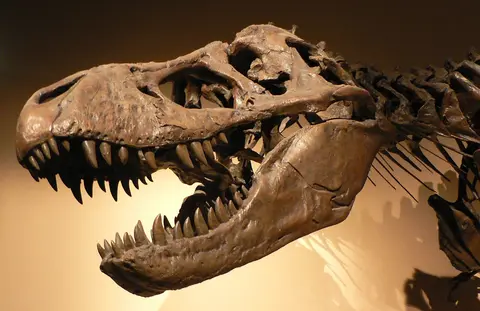
Dinosaurs were reptiles that appeared about 230 million years ago, and for the next 165 million years or so they ruled life on land. Some were bigger than any land animal before or since, while others were no heavier than a pigeon. Their fossils turn up on every continent, including Antarctica. Most died out 66 million years ago, when a huge asteroid hit the Earth, but one branch survived. Birds are living dinosaurs, so a sparrow in the garden shares a family tree with Tyrannosaurus. Scientists learn about dinosaurs from bones, footprints, eggs, skin and even traces of colour.
What makes a dinosaur a dinosaur?
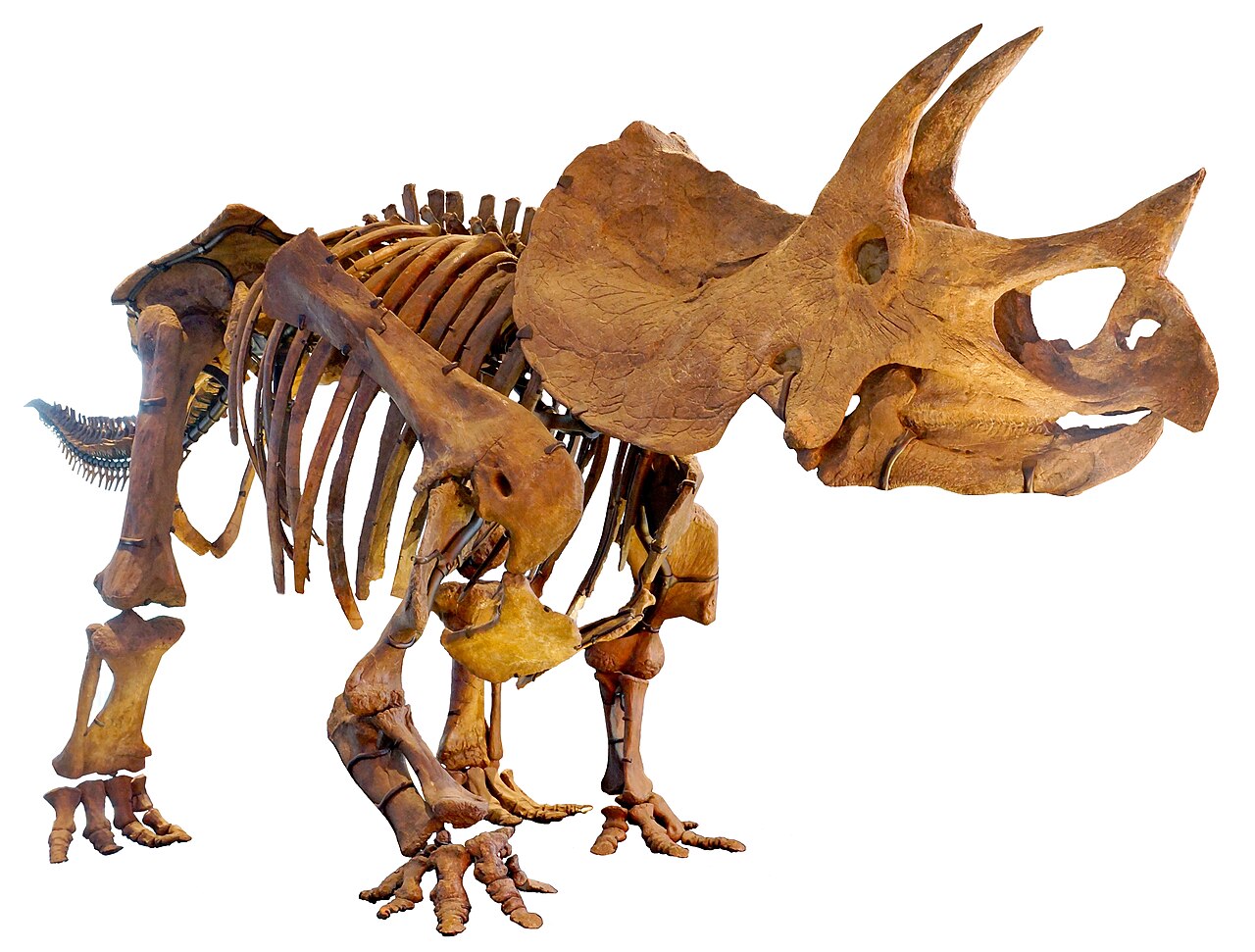
Many prehistoric animals are called dinosaurs by mistake. Flying pterosaurs, sea reptiles such as ichthyosaurs, and the sail-backed Dimetrodon were all something else. The key difference is the legs. A dinosaur's legs stood straight under its body, like a horse's, while a lizard or a crocodile has legs that stick out to the sides.
This upright stance came from a special hip socket. It let early dinosaurs breathe easily while running, and it helped later ones to carry huge weight.
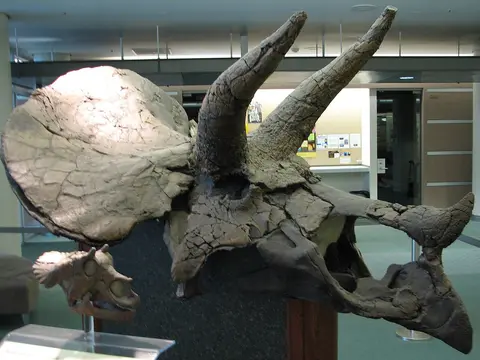
Scientists sort dinosaurs into two big branches by the shape of the hip bones. The lizard-hipped group is called Saurischia, and it holds the long-necked giants and the meat-eating . The bird-hipped group is called Ornithischia, and it holds plant eaters such as Triceratops, armoured ankylosaurs and plated stegosaurs.
The names are confusing. Birds did not come from the bird-hipped branch. They grew out of the lizard-hipped theropods.
Dinosaurs also share a family with crocodiles. Both belong to a group called the , or ruling reptiles. Dinosaurs were not slow, dragging creatures. Most were active animals that walked and ran on strong legs, and many had busy social lives.
When did the first dinosaurs appear?
The story starts after the worst mass in Earth's history. About 252 million years ago, more than 80 per cent of sea species and about 70 per cent of land vertebrate species died out. Life took millions of years to recover.
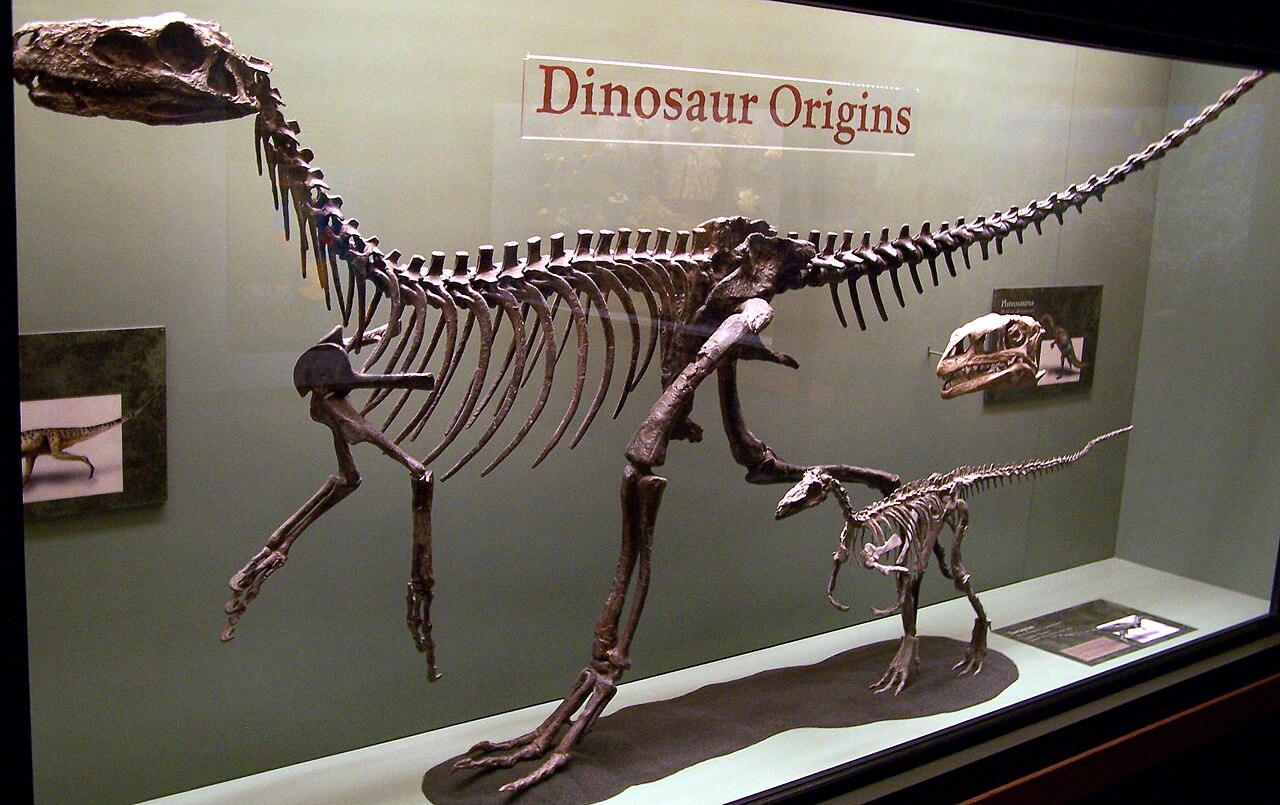
The first dinosaurs appear in the Period, around 230 million years ago. The oldest well-known come from Argentina, Brazil and Zimbabwe. Eoraptor and Herrerasaurus from Argentina were small, light hunters that ran on two legs. A broken fossil called Nyasasaurus, from Tanzania, may be older at about 243 million years. It is too incomplete to be sure.
At first, dinosaurs were not in charge. Crocodile relatives such as aetosaurs and rauisuchians were bigger and more successful. Dinosaurs shared the land with early mammals, turtles and flying pterosaurs.
Then, about 201 million years ago, another extinction wiped out most of those rivals. Dinosaurs survived and moved into the empty living spaces, and within a few million years they were the biggest animals on land.
That set the stage for the Jurassic Period. Plant-eating giants evolved from small early relatives. Meat-eaters grew with them. Coelophysis, a slim hunter from the Late Triassic, shows how light and fast the early were.
How did dinosaurs take over the world?
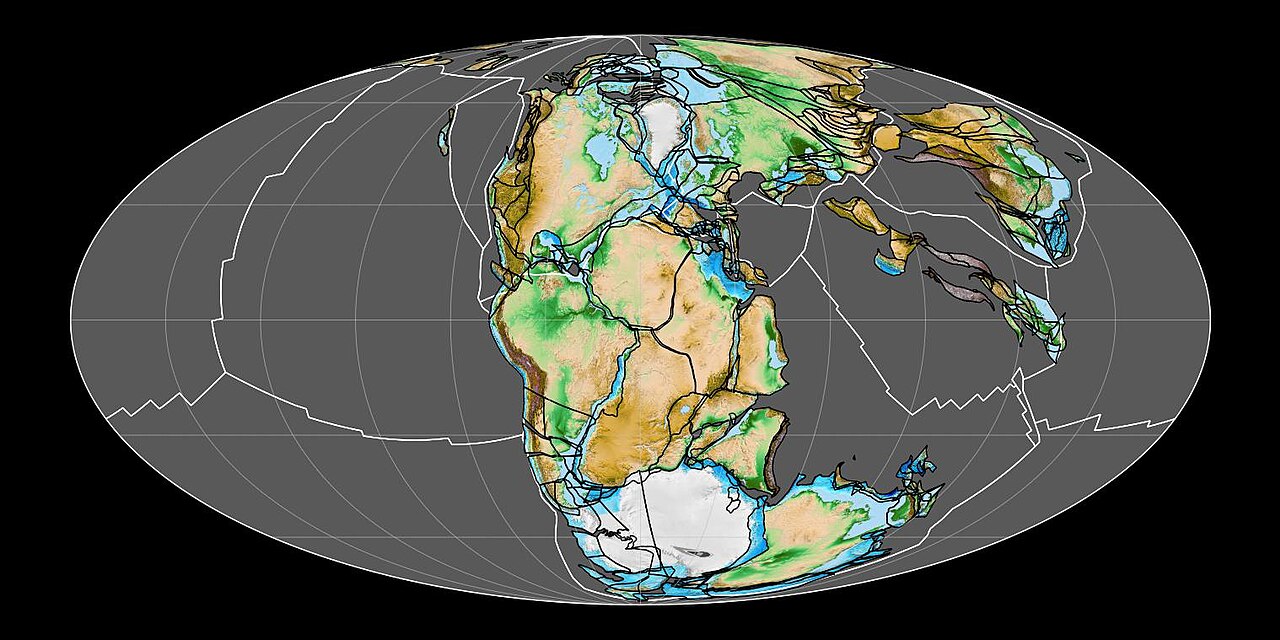
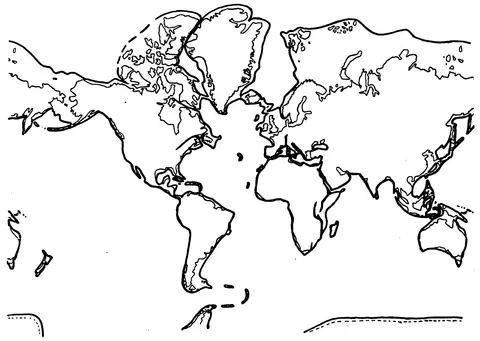
Early in the Jurassic, all the land on Earth was joined in one huge supercontinent called . Dinosaurs could walk almost anywhere, so similar kinds lived in very distant places. Long-necked plant eaters and fierce hunters lived in both North America and East Africa.
Then Pangaea began to split, and over millions of years the pieces drifted apart. This is called continental drift. Groups of dinosaurs became cut off and evolved in different ways. In the Period, tyrannosaurs and horned dinosaurs lived in North America and Asia. In the southern continents, short-armed hunters called abelisaurids preyed on enormous titanosaurs.
Plants changed too. Early on, conifers, ferns and cycads were the main food. In the Cretaceous, flowering plants appeared and spread. Grasses came along near the very end.
Plant eaters evolved new ways to chew. Hadrosaurs, or duck-billed dinosaurs, had hundreds of teeth packed into grinding batteries. Horned dinosaurs had teeth that sliced like scissors.
Dinosaurs lived in deserts, forests and coasts. Some, such as Spinosaurus, hunted in rivers. They ruled for about 165 million years. For comparison, our own species is only around 300,000 years old.
How big did dinosaurs grow?
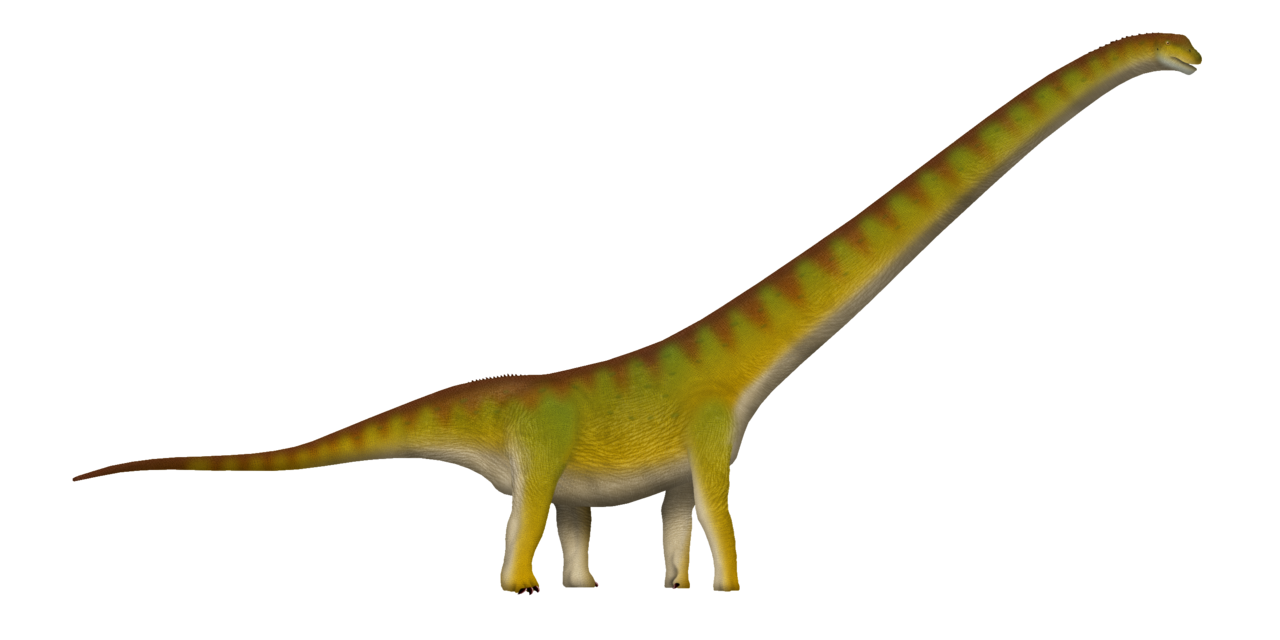
The , the long-necked plant eaters, were the biggest land animals of all time. Patagotitan, from Argentina, is known from good , and it is estimated at about 31 to 37 metres long. That is about as long as three double-decker buses. Argentinosaurus may have weighed 70 tonnes or more. Some broken fossils hint at even larger animals, but without full skeletons nobody can be sure.
Why could they grow so huge? Big animals digest food slowly and get more out of poor plants. Many sauropods lived in dry places where food was tough. Size also kept hunters away. Air sacs like those of birds probably made their huge skeletons lighter.
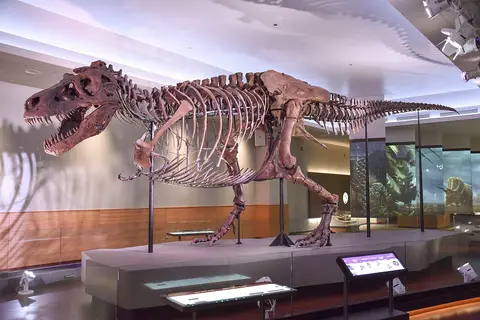
The largest meat-eater was probably Spinosaurus, at about 14 metres or more. Tyrannosaurus rex, Giganotosaurus and Carcharodontosaurus were also giants.
But many dinosaurs were small. Anchiornis was about the size of a pigeon. Today's smallest dinosaur is a bird, the bee hummingbird. It is about 5 centimetres long and weighs less than 2 grams.
We may never know the true record holders. Only a tiny share of animals ever became fossils. Few skeletons are complete. Scientists fill the gaps by comparing with better-known relatives. So every size is an estimate, and a new find can change it.
How do we know what dinosaurs were like?
Nobody has seen a living non-bird dinosaur. So scientists work like detectives. The main clues are , which form when bones or other remains are buried and slowly turn to stone. Bones show an animal's size, muscles and growth, and teeth show its diet. Fossil footprints, called trackways, show how fast an animal moved and whether it travelled in herds. Fossil droppings reveal what was eaten, and fossil eggs and nests show how young were raised.
Sometimes more than bone survives. Skin marks show that many dinosaurs had scales. In the rocks of Liaoning in China, exceptional fossils keep feather-like coverings on hundreds of animals. A small Italian fossil called Scipionyx even kept traces of its gut and liver.
Tiny parts called can survive inside fossil feathers. They carry pigment, and their shape hints at colour. Researchers used them to suggest that Sinosauropteryx had a striped tail.
In 2005, Mary Schweitzer's team found soft, stretchy tissue inside a Tyrannosaurus thigh bone. Later work found traces of proteins such as collagen in other dinosaur bones. These finds are still debated. Even so, the proteins look like those of birds, as expected for close cousins.
New tools such as CT scans let scientists see inside skulls without breaking them. So even old fossils keep giving up secrets.
Who found the first dinosaurs?
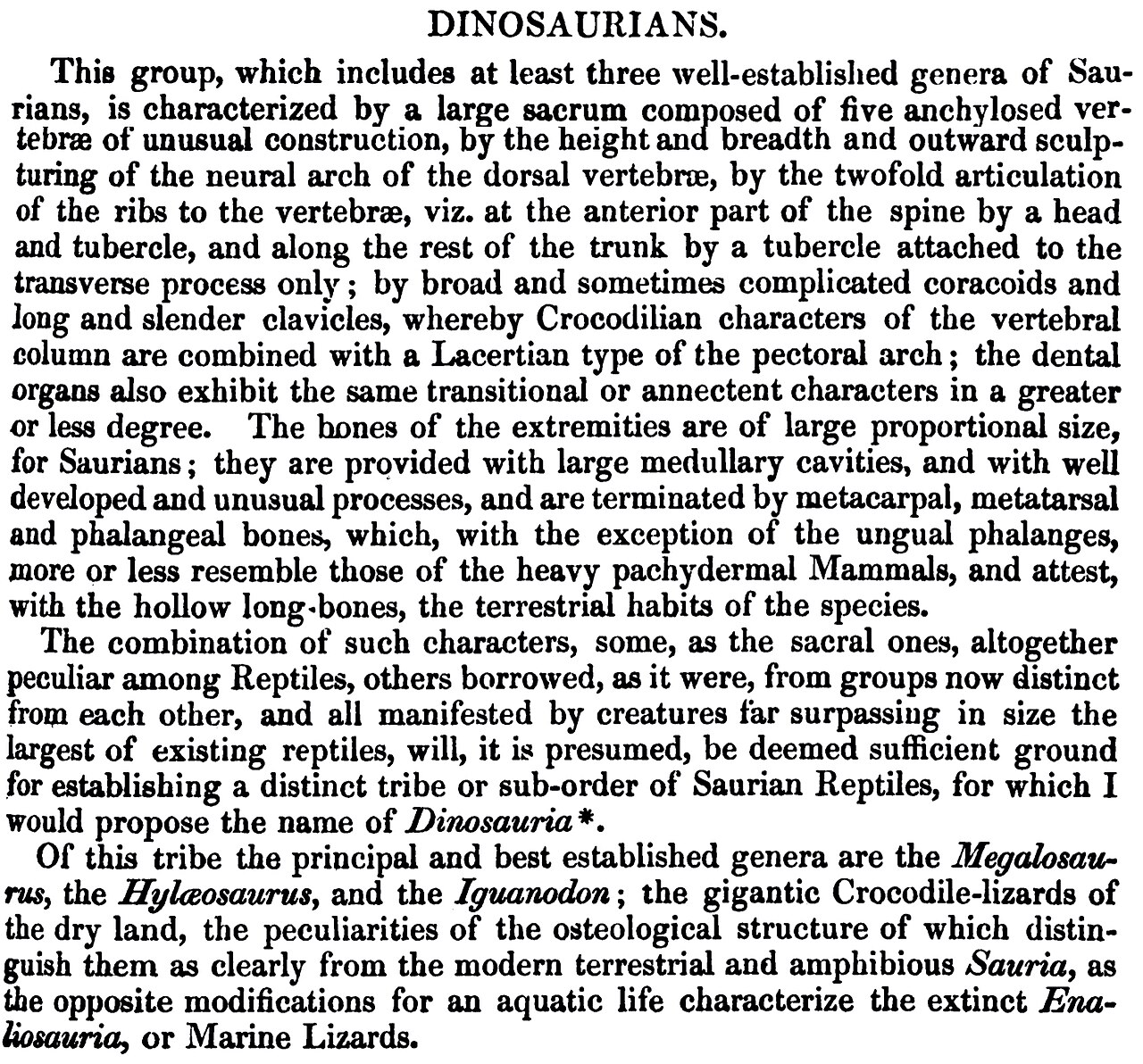
People have dug up dinosaur bones for thousands of years without knowing what they were. In China, ancient writers described "dragon bones". In Europe, big bones were often thought to belong to giants. In 1676, a huge thigh bone was found in an Oxfordshire quarry. It was later shown to be from a Megalosaurus, and it was among the first dinosaur bones ever described in print.
In the 1820s, the English scientists William Buckland and Gideon Mantell described Megalosaurus and Iguanodon. Mantell saw that the teeth of Iguanodon looked like an iguana's, only far bigger. In 1842, the anatomist Richard Owen saw that these giants shared special features. He gave the group a name, Dinosauria, meaning "terrible lizards". He later helped to found the Natural History Museum in London.
The next big wave began in America. In 1858, William Foulke found Hadrosaurus in New Jersey. The skeleton was nearly complete. It showed that dinosaurs walked on two legs, not four like lizards.
Then came the Bone Wars. From the 1870s, two rich rivals, Edward Cope and Othniel Marsh, raced to find new species in the American West. Together they named about 140. Their rush was sloppy, and some were broken. Cope died in 1897 after spending his fortune on the hunt.
Were dinosaurs slow, scaly and cold-blooded?
For much of the 20th century, scientists pictured dinosaurs as sluggish, swamp-bound lizards. Then, in 1969, John Ostrom described Deinonychus. It was a bird-like hunter with a stiff tail and a huge claw. It looked built for speed. Ostrom and his student Robert Bakker argued that dinosaurs were active. This began what is called the dinosaur renaissance.
Since then, finds have backed them up. Many dinosaurs show fast bone growth and upright legs. Some had feathers that would hold in warmth. Exactly how their bodies made heat is still debated. Some may have been fully warm-blooded like birds. Others may have been somewhere in between.
also show behaviour. Huge bone beds hold hundreds of animals of one kind, so some species lived in herds. Nesting sites show that dinosaurs laid eggs, and some adults guarded them. Oviraptorids have been found sitting on nests like brooding birds.
Many groups had showy crests, horns, frills or plates. These were probably used to spot each other, to attract mates or to scare rivals. They worked a bit like a peacock's tail.
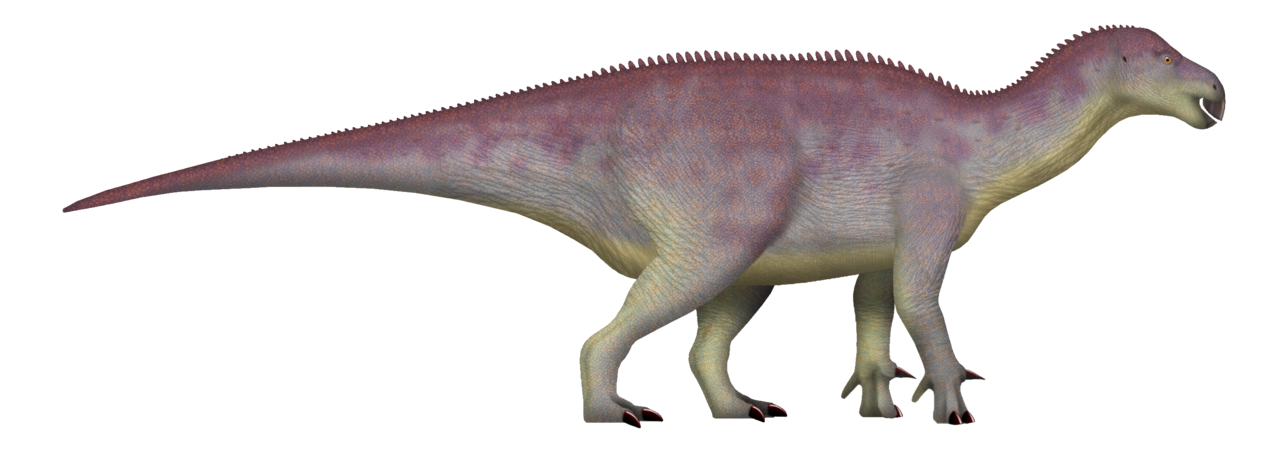
Some dinosaurs, such as Iguanodon, could walk on two legs or four. The old picture of a lumbering lizard has gone for good. A lively, bird-like animal has taken its place.
Are dinosaurs still alive today?
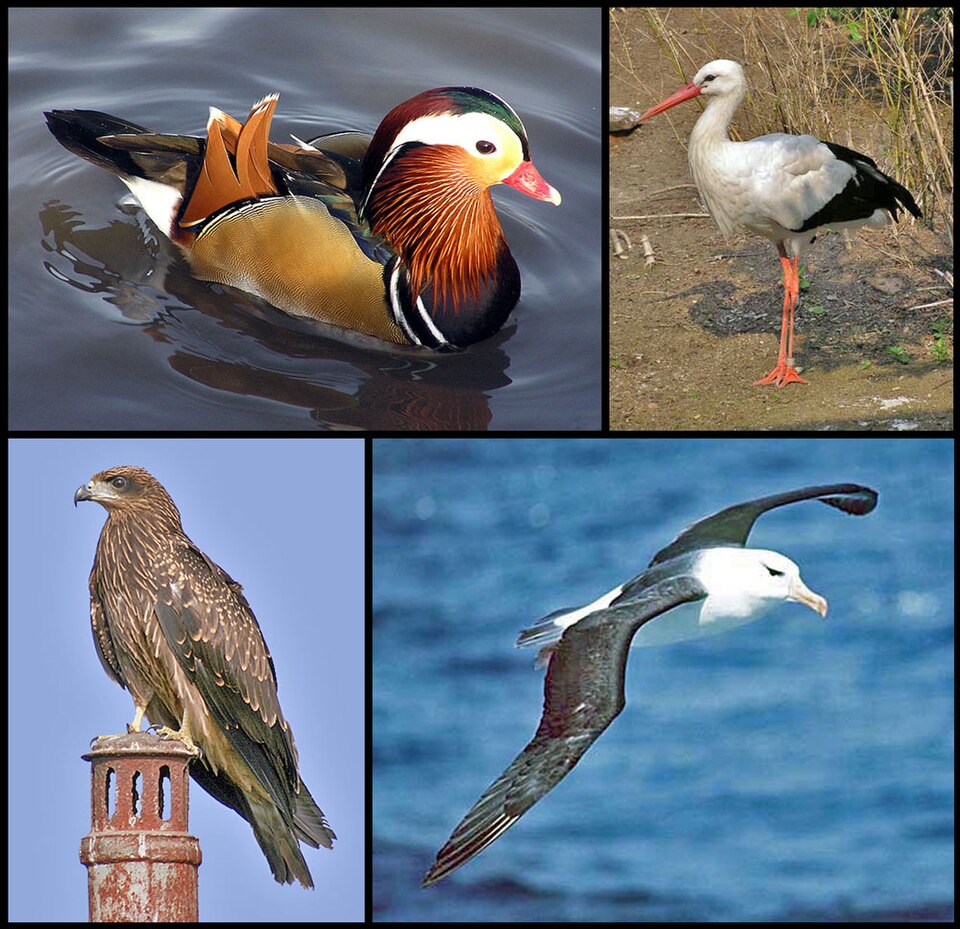
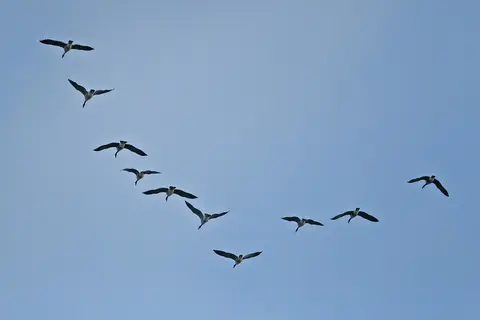
Yes, in the form of birds. Almost all scientists agree that birds are a branch of the dinosaurs. This is the group that also holds Velociraptor and Tyrannosaurus. It is not a loose family likeness. Birds sit inside the dinosaur family tree, the way people sit inside the mammals.
The evidence is strong. Many theropods had feathers, and birds and their dinosaur cousins share a wishbone, hollow bones and three-fingered hands. They also lay eggs in nests. from Liaoning show many steps between a ground-running dinosaur and a flying bird. Small animals such as Microraptor had feathers on both arms and legs. They could probably glide.
The first true birds appeared in the Late Jurassic. The best-known early one is Archaeopteryx, from Germany, about 150 million years old. Many early bird groups died with the other dinosaurs. One line of modern birds survived the . Today there are over 10,000 bird species.
When you look at a pigeon, a duck or an ostrich, you are looking at a dinosaur. So when people say dinosaurs died out, scientists usually mean the non-bird dinosaurs. The giants of the are gone, but the family line has carried on for around 230 million years.
What killed the dinosaurs?
About 66 million years ago, at the end of the Period, around three-quarters of all species on Earth vanished. In geological terms, it happened fast. All the non-bird dinosaurs were among them.
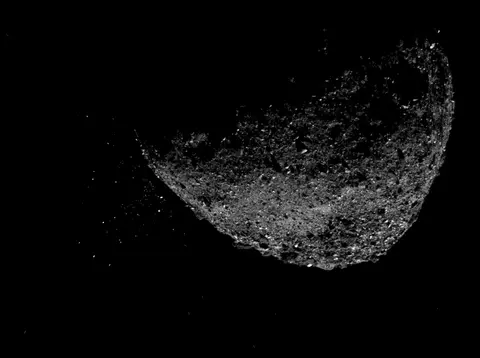
The main cause was an asteroid about 10 kilometres wide. It hit what is now the Yucatán Peninsula in Mexico. It left a crater called Chicxulub, about 180 kilometres across. The impact threw dust, rock and sulphur into the air. The sky darkened and plants struggled, and temperatures fell for months or years. Food chains collapsed from the bottom up. Large animals that needed lots of food were hit hardest.
How do we know? Rocks all over the world hold a thin layer of clay rich in a metal called iridium. It is rare on the Earth's surface but common in asteroids. Walter and Luis Alvarez suggested the asteroid idea in 1980. The buried crater was identified about ten years later.
At about the same time, huge volcanoes in India, called the Deccan Traps, were pouring out lava and gases. Scientists still discuss how much they added to the crisis. Most agree the impact was the decisive blow.
Survivors included small animals that could shelter or find seeds and insects. They were early mammals, crocodiles, turtles and a few kinds of bird. Their survival cleared the way for mammals to grow larger and more varied.
Explore Next
Your audio story keeps playing while you look around.
Words to Know
- archosaur
- A group of reptiles that includes dinosaurs, crocodiles and their relatives.
- Cretaceous
- The last period of the Mesozoic, ending 66 million years ago.
- extinction
- When a whole species or group of living things dies out completely.
- fossil
- The remains or traces of a living thing that have turned to stone in rock.
- melanosome
- A tiny pigment-carrying part of a cell that can give clues to fossil colour.
- Mesozoic
- The era of dinosaurs, from about 252 to 66 million years ago.
- palaeontologist
- A scientist who studies ancient life, mostly through fossils.
- Pangaea
- The supercontinent that held all the land on Earth before it split apart.
- sauropod
- A giant, long-necked, plant-eating dinosaur with a long tail and four thick legs.
- theropod
- A member of the mostly meat-eating, two-legged dinosaur group that includes birds.
- Triassic
- The first period of the Mesozoic, when the first dinosaurs appeared.