Asteroid
Rocky leftovers from the birth of the Solar System, still circling the Sun.
Asteroids are rocky and metal worlds that orbit the Sun but are too small to count as planets. Most of them travel in a wide ring between Mars and Jupiter. Some are tiny piles of rubble, and one, Ceres, is almost 1,000 kilometres across. Together they weigh far less than our Moon. Yet they matter a great deal. They are leftover building blocks from the time the planets formed, so they tell us how our own world began. They may have delivered water to Earth. One huge asteroid is widely blamed for ending the age of the dinosaurs. Today, scientists land spacecraft on them, bring home samples and even practise pushing them off course.
What exactly is an asteroid?
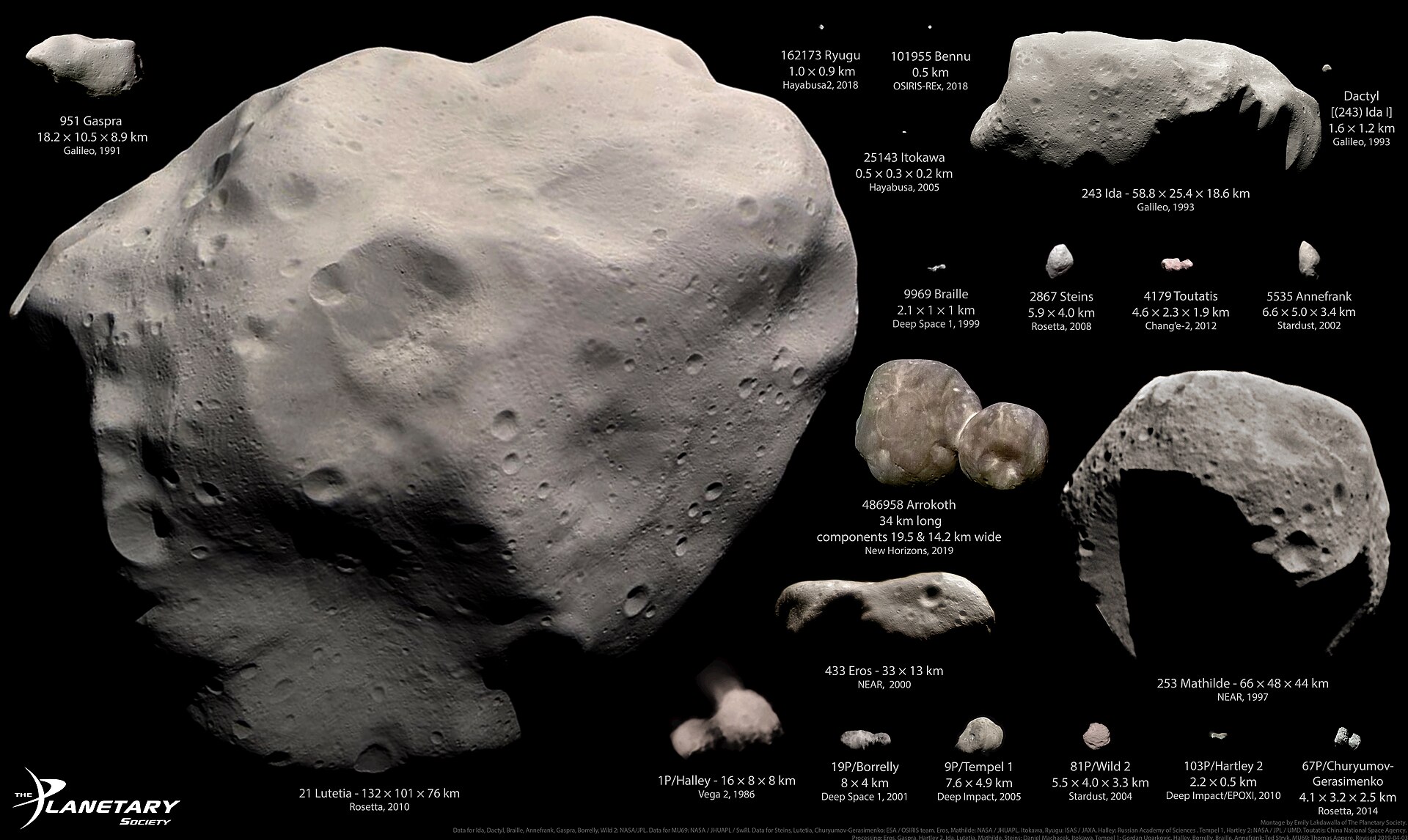
An is a rocky, metallic or icy body that orbits the Sun. It is bigger than a , which is a rock smaller than about a metre across. It is not a planet, and it is not a . Asteroids have no atmosphere, and most are shaped like lumpy potatoes. Their size varies hugely. Some are piles of rubble under a kilometre wide. Ceres, the largest, is a that measures almost 1,000 kilometres across.
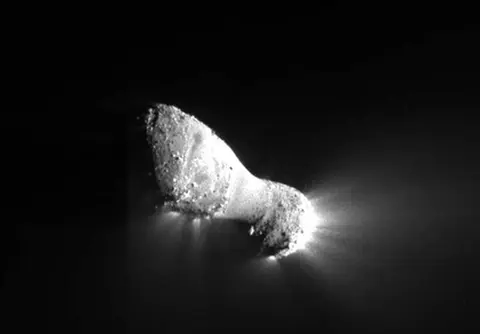
How can you tell an asteroid from a comet? A comet warms up when it nears the Sun, and its ices turn to gas. The gas and dust stream out as a glowing coma and tail. An asteroid normally shows no tail. Comets also tend to follow long, stretched orbits, while most asteroids travel on rounder paths.
The line between them is blurry, though. Some objects that looked like asteroids later grew tails. Some old comets have probably lost all their ice and now look like ordinary asteroids. Many scientists now think there is a gradual scale from asteroid to comet rather than a sharp border.
Astronomers sort asteroids by what they are made of. C-types are dark and rich in carbon. S-types are stony. M-types are mostly metal. The combined weight of every asteroid is only about 3% of the Moon's mass.
Who found the first asteroid?
On 1 January 1801, an Italian priest and astronomer called Giuseppe Piazzi was mapping stars from Palermo in Sicily. He spotted a faint point of light that moved a little each night. Stars do not do that. Piazzi first thought it was a . He named it after Ceres, the Roman goddess of farming and patron goddess of Sicily.
Astronomers had been hoping for something like this. A pattern called the Titius-Bode law seemed to predict the distances of the planets, but it left a gap between Mars and Jupiter. A group of 24 astronomers, nicknamed the celestial police, had even started a search to fill it. Piazzi found Ceres before he joined them.
Then Ceres slipped into the Sun's glare, and nobody could say where to look. A 24-year-old mathematician, Carl Friedrich Gauss, invented a quick way to work out an orbit from a few observations. His sums pointed the way, and Ceres was found again on 31 December 1801.
More followed. Pallas, Juno and Vesta turned up by 1807. Through the 1800s amateurs and professionals found many more. Around 1891, Max Wolf began using photographs, where show up as short streaks. Today the Minor Planet Center in the USA records every find. Sir William Herschel suggested the name asteroid, from Greek words meaning star-like, because through a telescope they looked like stars.
Where in the Solar System are asteroids?
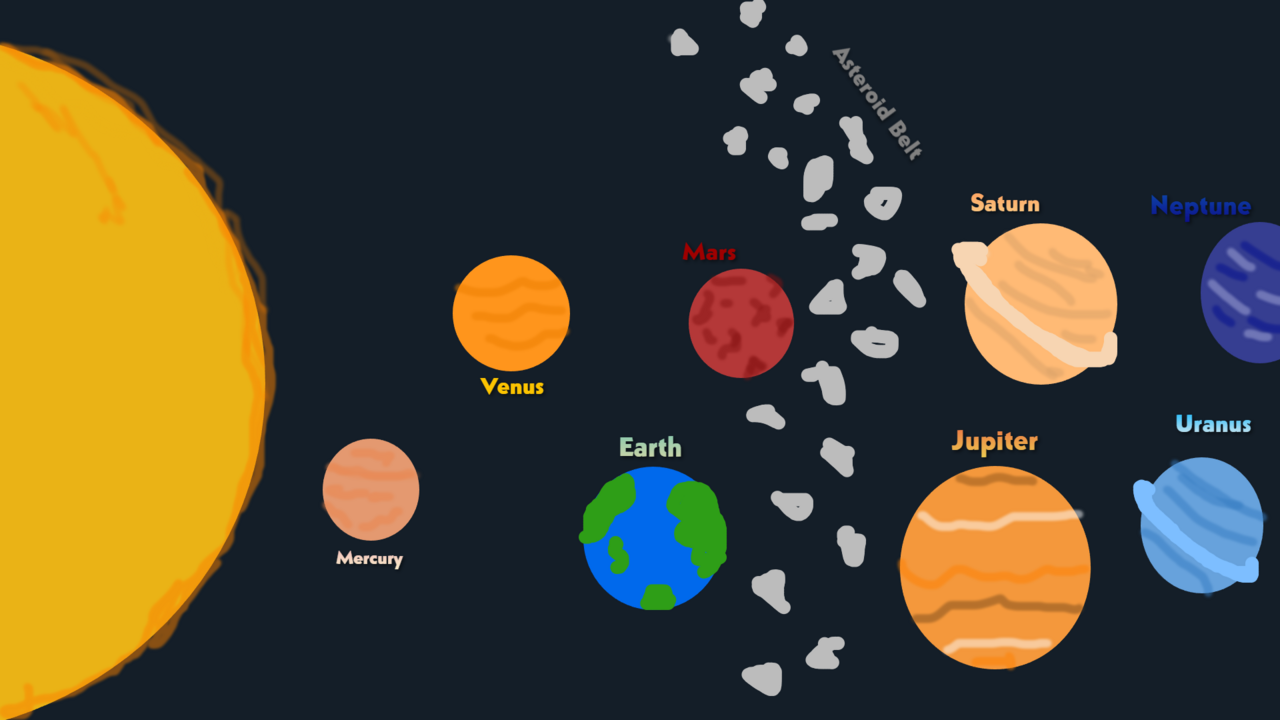
Most of the roughly one million known live in the main . This ring of rocks lies between the orbits of Mars and Jupiter, about 2 to 4 times as far from the Sun as Earth is. A belt asteroid takes three to six years to go once round the Sun, and it travels in the same direction as Earth.
Films often show the belt as a crowded field of tumbling rocks. In truth it is mostly empty space. The asteroids are spread over such an enormous region that a spacecraft could cross it without coming close to any of them. Spacecraft only reach an asteroid when they aim carefully.
Other asteroids live elsewhere. Jupiter share Jupiter's orbit. They gather in two stable spots, one ahead of the planet and one behind it. More than 7,000 are catalogued, and there may be over a million bigger than one kilometre.
have orbits that come close to ours. More than 37,000 are known, and about 850 of them are a kilometre wide or more. Some were nudged out of the belt by Jupiter's gravity. A few are probably worn-out .
Many asteroids even have moons. More than 80 near-Earth asteroids are known to have at least one. Mars's two small moons, Phobos and Deimos, look a little like asteroids. Scientists still argue about whether Mars captured them or whether they formed from rock thrown up by an impact.
How were asteroids born?
About 4.6 billion years ago, the Sun was surrounded by a spinning cloud of gas and dust. Dust stuck together into pebbles, pebbles into rocks, and rocks into larger bodies called . Some planetesimals kept growing and became planets.
In the region between Mars and Jupiter, that growth was stopped. Jupiter became enormous, and its gravity stirred the neighbouring rocks. Bodies there began to crash into each other at high speed instead of merging. Computer simulations suggest that more than 99% of the material in the belt was thrown out. The belt probably once held about 200 times more rock than it does now.
So are the survivors. The biggest ones, perhaps over 100 kilometres wide, are thought to be original planetesimals that grew early on. Most of the smaller ones are fragments from later collisions.
The largest planetesimals melted inside, and this is called . Heavy metals sank to form a core, and lighter rock floated up to form a crust, as in a planet. Ceres and Vesta did this.
Some asteroids belong to families. A family is a group of asteroids whose orbits match, because they are pieces of one larger asteroid that broke apart in a collision long ago. A Japanese astronomer, Kiyotsugu Hirayama, spotted the first families in 1918. About a third of belt asteroids belong to one.
What are asteroids made of?
Scientists work out what an is made of by studying its light. Rock, metal and carbon reflect sunlight in different ways. Measuring how bright the surface is and which colours it reflects gives clues. Density gives more, and it can be measured when an asteroid has a moon, because the moon's orbit reveals the asteroid's mass.
These measurements show that many asteroids are . They are loose heaps of rock and metal held together by their own weak gravity, and they may be half empty space inside. A collision shattered the original body, and the pieces slowly drifted back together. Spinning also gives a clue. Very few asteroids wider than 100 metres turn faster than once every 2.2 hours. Spin any faster and loose rock would fly off the surface.
Asteroids also hold ingredients for life and water. In 2009, astronomers found water ice on the surface of the asteroid Themis. , which are pieces of asteroids that fell to Earth, contain amino acids, the building blocks of proteins. In 2019 scientists reported finding sugars, including ribose, in meteorites. Ribose is part of RNA, a chemical that cells use to carry instructions.
Many scientists think asteroid impacts delivered some of Earth's early water and chemicals. That idea is still being tested.
Which asteroids are the giants?
The has a few giants and an enormous crowd of small rocks. The four biggest, Ceres, Vesta, Pallas and Hygiea, hold about half of the belt's total mass. Ceres alone holds about two-fifths of it.
Ceres is the only that is also a . It is massive enough that its own gravity pulled it into a ball. It has a rocky core, probably covered by a layer rich in ice. The Dawn spacecraft visited in 2015 and found a heavily cratered surface. Ceres has fewer huge craters than scientists expected. The likely reason is that its crust is slightly soft, so it slowly flattens large dents over time.
Vesta is the brightest asteroid. On a dark night with a good view, it can be seen without a telescope. It has a metal core and a rocky crust, and a giant crater near its south pole called Rheasilvia. Rock blasted from Vesta has fallen to Earth as . About 5% of all meteorites that reach us came from there.
Pallas is odd because it spins on its side, like Uranus. Hygiea is the largest dark, carbon-rich asteroid. It is close to round, and it may have been smashed apart and then pulled back together.
Below these giants the numbers grow quickly. Over 200 asteroids are more than 100 kilometres wide. Hundreds of thousands are smaller, and no one has counted the tiniest.
How do we study asteroids from Earth?
Until the space age, even the best telescopes showed as dots of light. Today, astronomers use many tricks to learn about them without leaving Earth.
One trick is the light curve. As an asteroid spins, its brightness rises and falls, because a lumpy rock reflects different amounts of sunlight from different sides. The pattern reveals how fast it spins and roughly what shape it has.
Another trick is the . Sometimes an asteroid passes in front of a star. Observers in different places time how long the star disappears, and the lengths give the asteroid's size.
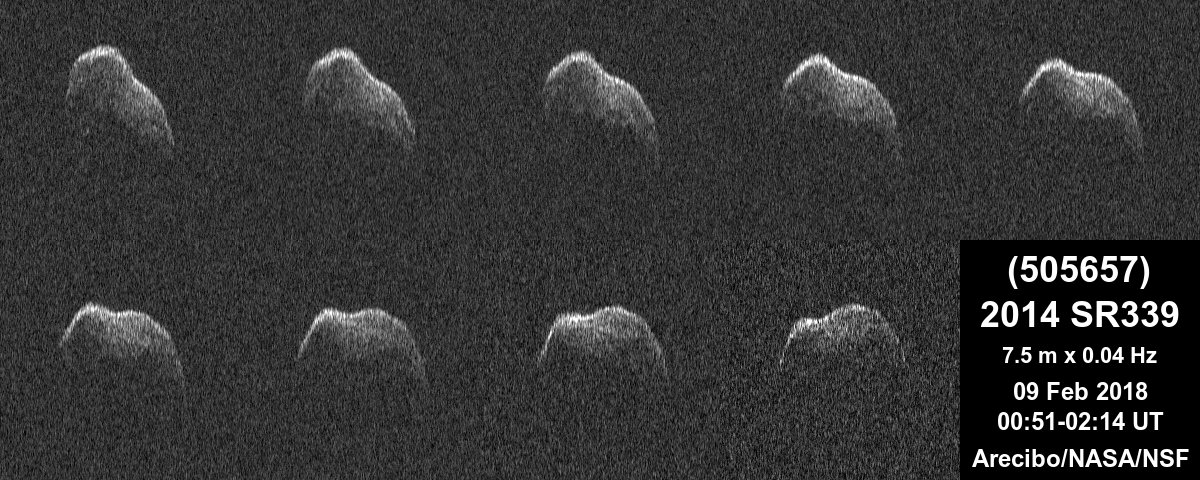
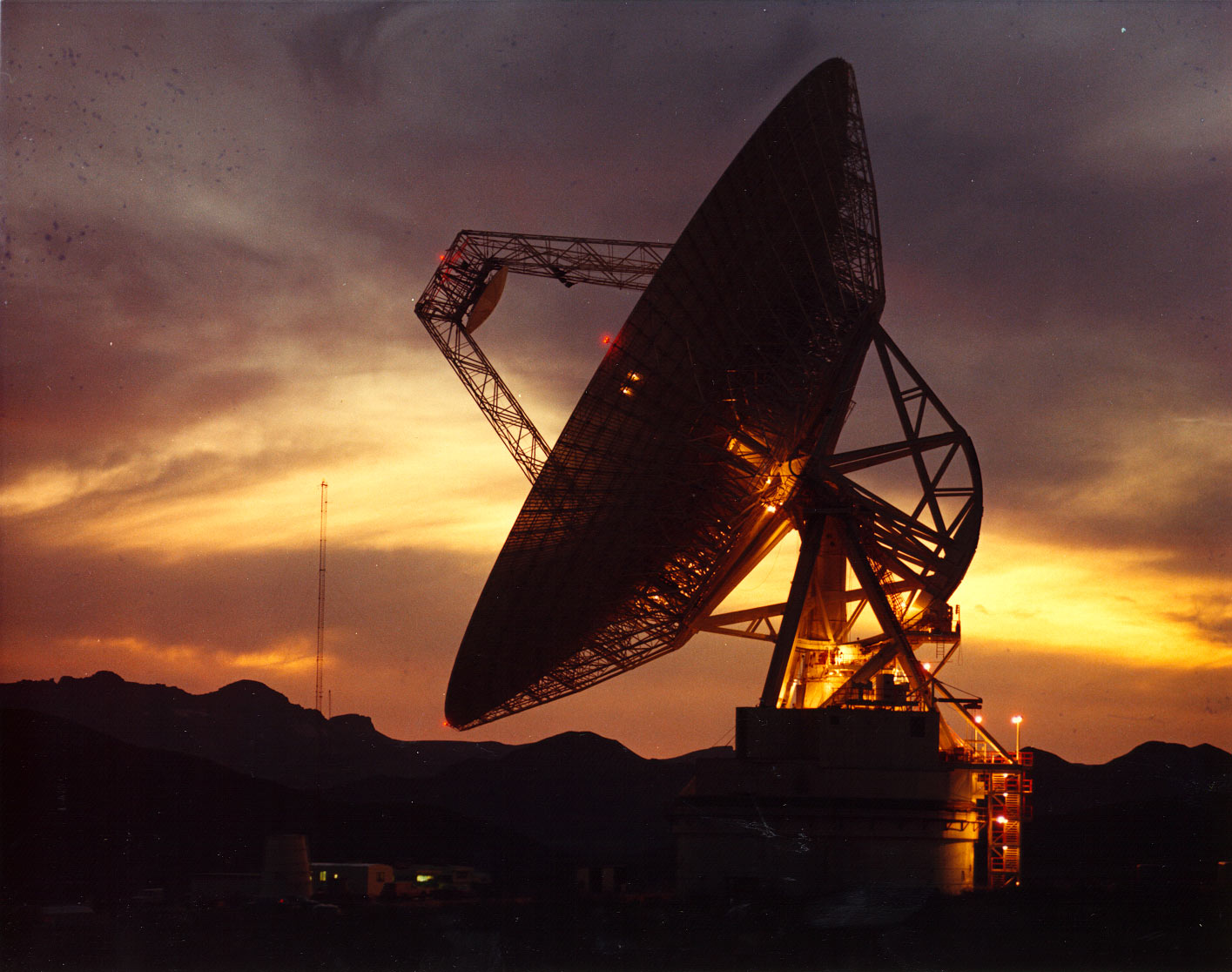
Radar is another. Giant dishes, such as the 70-metre antenna at Goldstone in California, beam radio waves at nearby asteroids and catch the echoes. The echoes can build up pictures of shape and spin, and even reveal moons. The asteroid Florence has two moons, which were found this way in 2017.
Space telescopes help too. NASA's infrared telescope WISE searched the sky for warm objects, and warm rocks glow in infrared light even when they are too dark to see otherwise. Surveys like this find new every year.
Finally, every new find must be reported to the Minor Planet Center. Computers check whether it matches earlier sightings. If its orbit is confirmed, the asteroid gets a number, and its discoverer may suggest a name.
Which spacecraft have visited asteroids?
Spacecraft can show what telescopes cannot. The first close look at an came from NASA's Galileo probe, which passed asteroids on its way to Jupiter. Since then, dedicated missions have followed.
NASA's NEAR Shoemaker orbited and studied the asteroid Eros. The Dawn spacecraft became the first to orbit two bodies beyond Earth, visiting Vesta and then Ceres. Japan's Hayabusa mission studied Itokawa, and Hayabusa2 went to Ryugu. Both brought samples back to Earth.
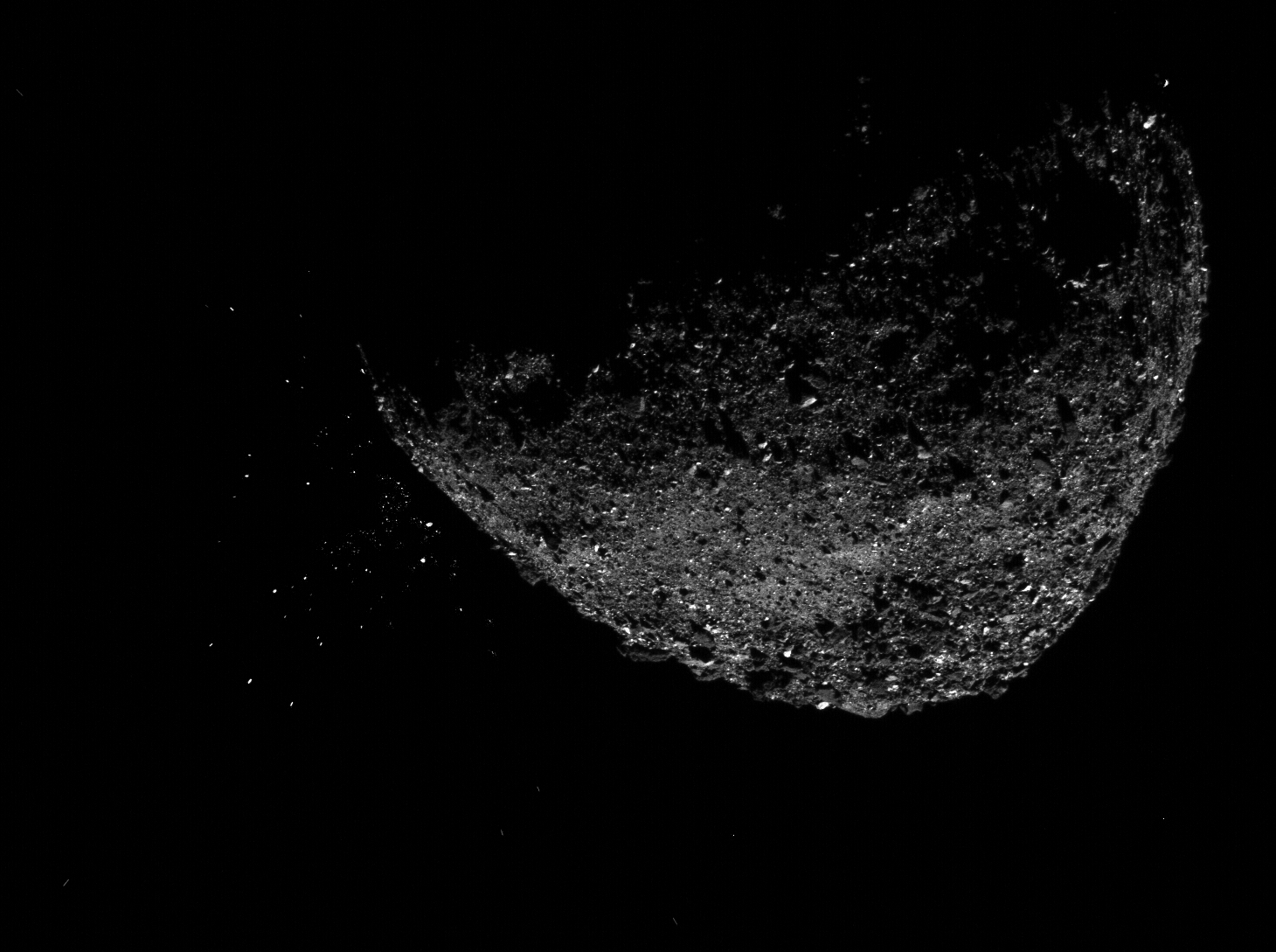
NASA's OSIRIS-REx studied the asteroid Bennu. Photos in 2019 showed Bennu throwing off pebbles from its surface, which surprised the team. In 2020 the spacecraft scooped up a sample, and the capsule landed on Earth in 2023.
Samples are valuable. Scientists can test them in laboratories with instruments too big for any spacecraft. The rock is also very old, so it is like a time capsule from the early Solar System.
More missions are on the way. NASA's Lucy, launched in 2021, will visit ten asteroids, including eight Jupiter . Psyche, launched in October 2023, is heading to a metal-rich asteroid of the same name. China's Tianwen-2, launched in May 2025, reached the asteroid Kamoʻoalewa in July 2026 and plans to collect a sample from it. Europe's Hera, launched in October 2024, is now closing in on the target of an experiment you can read about next, to check the results.
Could an asteroid hit Earth, and can we stop one?
have hit Earth many times. About 66 million years ago, an asteroid struck what is now Mexico, at a place called Chicxulub. It is widely thought to have set off the mass extinction that ended the dinosaurs. Dust and debris blocked sunlight, plants struggled, and about three quarters of species died out.
A strike like that is extremely rare. Small rocks, though, enter our atmosphere all the time, and nearly all burn up as bright streaks of light. Astronomers watch the sky carefully, and none of the large asteroids found so far is known to be heading for us.
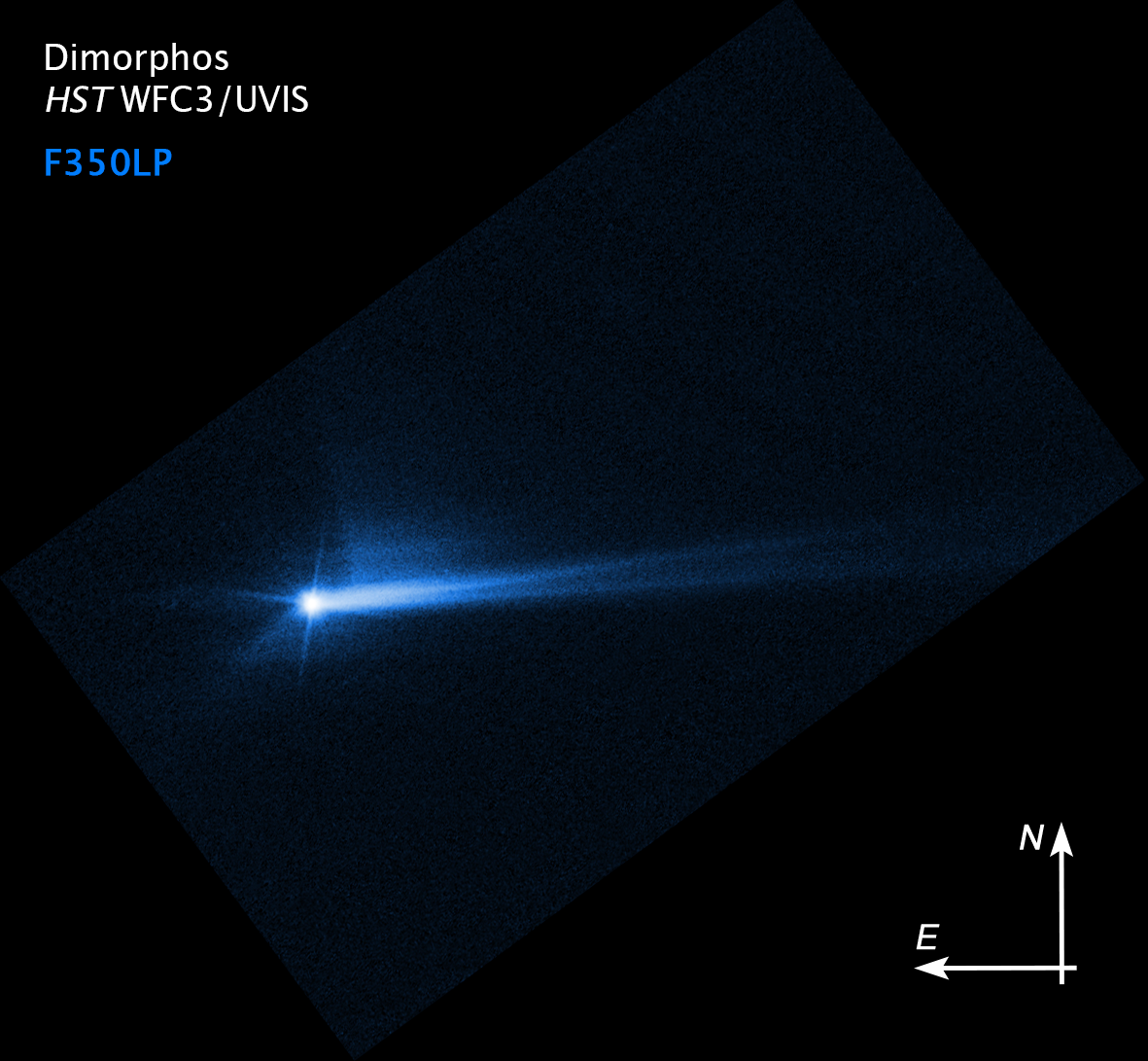
The real question is what we would do if we found one. In September 2022, NASA tested an answer. Its Double Asteroid Redirection Test, or DART, crashed a spacecraft into Dimorphos, a small moon circling a larger asteroid called Didymos. Dimorphos was never a danger. It was chosen as a safe target.
The impact changed Dimorphos's orbit, which proved that a collision can nudge an asteroid. It also blasted away about 1 million kilograms of rock and dust. Hubble Space Telescope photos showed a tail that lasted for months. That made Dimorphos the first asteroid known to have grown a -like tail because of a deliberate impact. Europe's Hera spacecraft is now approaching the pair and will measure the crater and the changes.
Explore Next
Your audio story keeps playing while you look around.
Words to Know
- asteroid
- A rocky, metallic or icy body that orbits the Sun and is not a planet or comet.
- asteroid belt
- The ring of asteroids between the orbits of Mars and Jupiter.
- comet
- An icy body that grows a glowing tail of gas and dust when it nears the Sun.
- differentiation
- When a body melts and its heavy metals sink to the middle and lighter rock rises.
- dwarf planet
- A round world that orbits the Sun but has not cleared its path of other objects.
- meteorite
- A piece of space rock that survives the fall through the air and lands on Earth.
- meteoroid
- A small piece of rock or metal in space, smaller than an asteroid.
- near-Earth asteroid
- An asteroid whose orbit brings it close to Earth's path.
- occultation
- When an object passes in front of a star and briefly hides its light.
- planetesimal
- A small body in the young Solar System that could grow into a planet.
- rubble pile
- An asteroid made of loose rocks held together by gravity.
- Trojan
- An asteroid that shares a planet's orbit, staying ahead of it or behind it.