Fish
Gills, fins and scales: the most varied backboned animals on Earth.
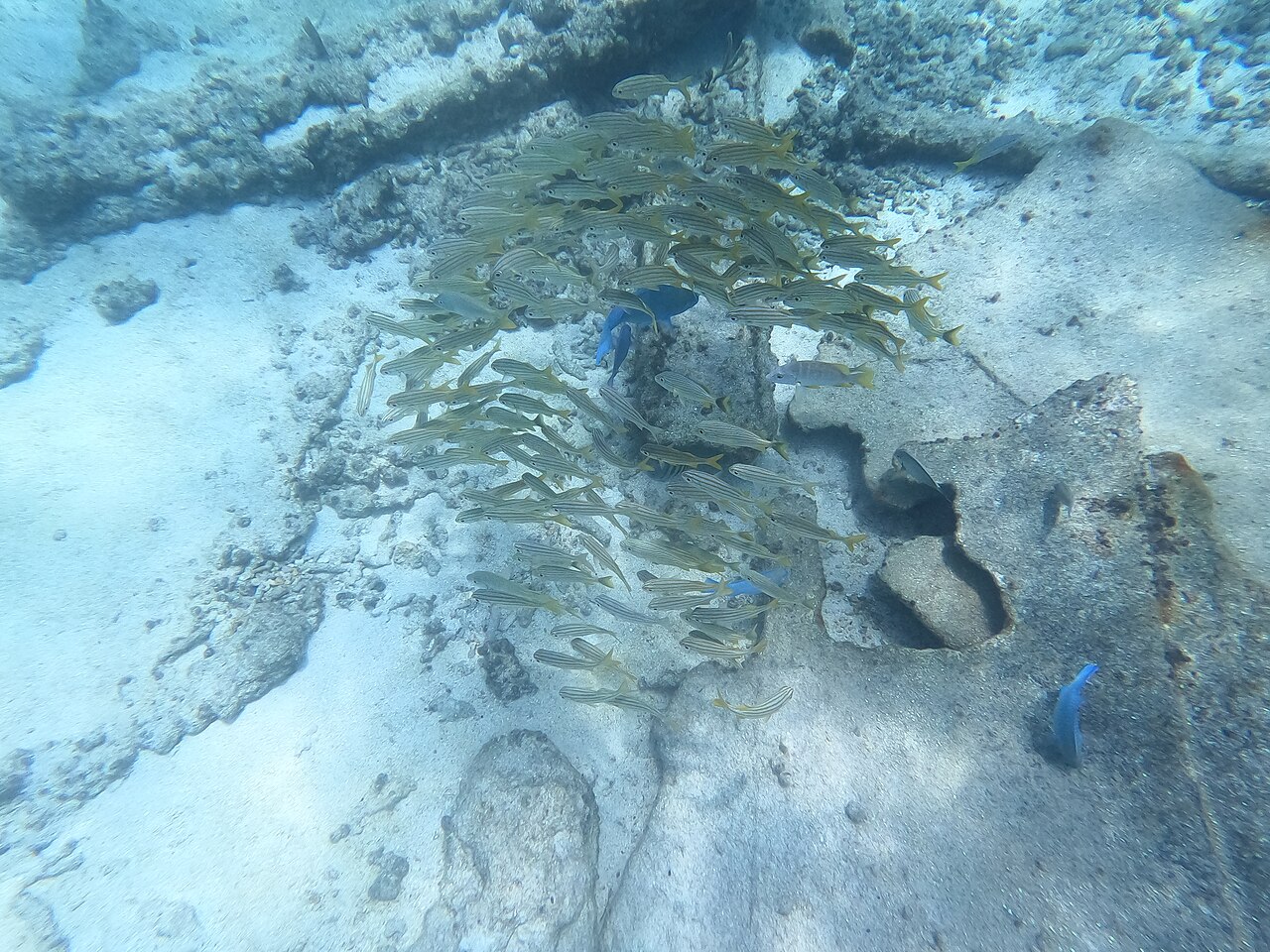
Fish were the first animals with backbones, and they are still the most varied. More than 36,000 species swim in the sea, in rivers, in lakes and even in desert springs. They range from the whale shark, which is as long as a bus and sometimes much longer, to tiny fish smaller than a fingernail. Most breathe underwater with gills and steer with fins. Fish are not one tidy family, because land animals, including us, grew from one branch of the fish family tree. Fish also feed billions of people, which has pushed many species to the edge, so understanding them matters.
What is a fish?
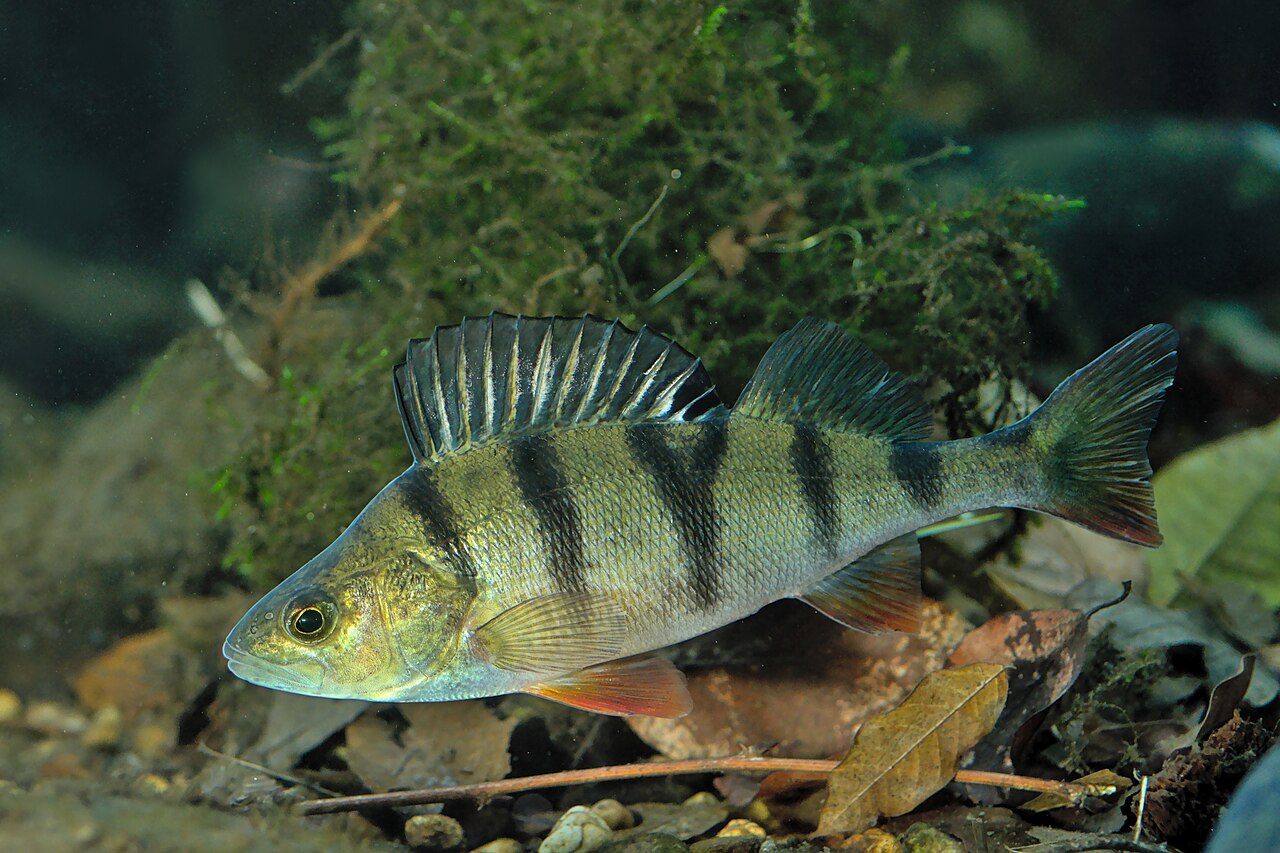
A fish is a water animal with a backbone, a hard skull, , and instead of limbs with fingers or toes. A typical fish has a streamlined body that cuts through water. It breathes with gills, has paired fins and skin covered in scales, and it also has jaws, lays eggs and is . Almost every one of those rules has exceptions, though. Eels lack the hind pair of fins, and some tuna and sharks are warm-blooded.
There are three main kinds. Jawless fish, such as lampreys and hagfish, have a round sucking mouth. Cartilaginous fish, including sharks and rays, have skeletons of , the bendy stuff in your nose. Bony fish have skeletons of bone and make up nearly all species. Among the bony fish, most belong to a group called the ray-finned fish, which have thin spines supporting their fins. The within them make up about 96 per cent of all living fish.
Scientists have now found more than 36,000 kinds of fish. The whale shark is usually up to about 12 m long and can reach about 18 m. The tiniest minnows are only about 8 mm long.
Fish are not a single branch of the family tree. Our ancestors were lobe-finned fish, so a group that contains all the fish also contains every land vertebrate. For that reason scientists call fish a group. We usually leave land animals out of the word "fish" anyway.
In biology, "fish" can be singular or can mean many of one kind. "Fishes" means several different kinds.
Where did fish come from?
Fish-like animals appear in the fossil record about 518 million years ago, in the early Cambrian. One example is Haikouichthys from China, which had a notochord, a stiff rod along the back, and eyes at the front of its head. It had no jaws. Later in the Cambrian, small eel-like creatures called conodonts appeared as well.
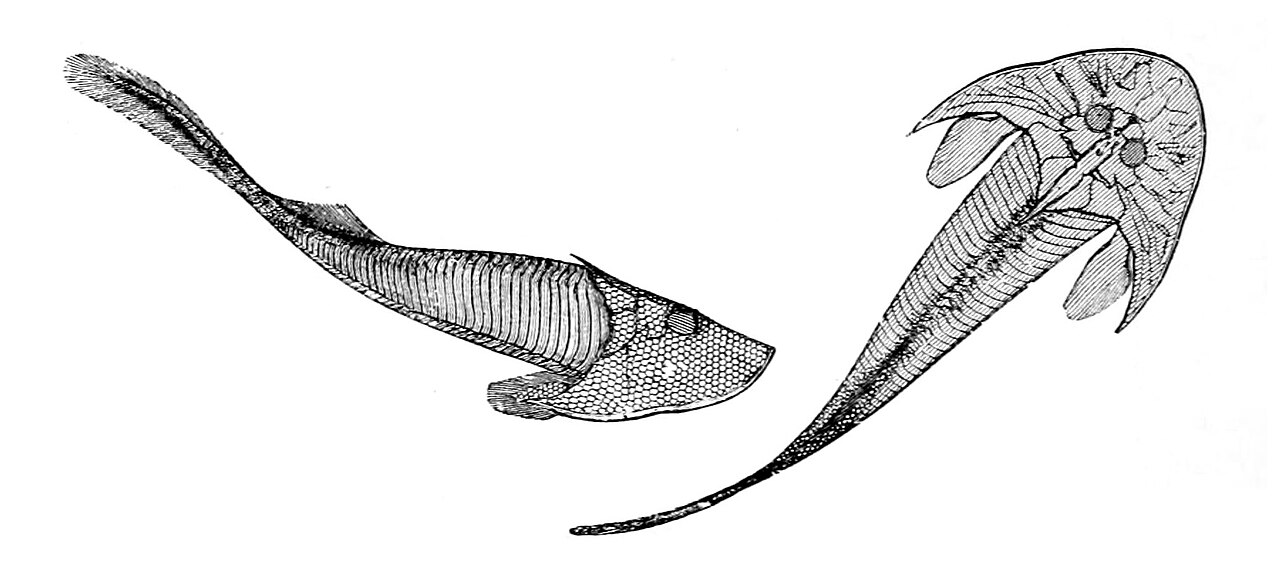
The first fish with proper and paired were the ostracoderms, which means "shell-skinned". They wore heavy plates of bone, which protected them against invertebrate hunters such as sea scorpions. Cephalaspis was one of these. Its head was a solid shield and its mouth was a slit with no jaws, so it probably sucked up food from the seabed.
These early fish were small filter feeders that sieved tiny food out of the water or mud. Having no jaws, they could not bite chunks off bigger prey.
Jawless fish did not all die out. Lampreys and hagfish carry on today, with about 130 species between them. Hagfish were long thought to have no vertebrae, but in 2011 scientists found tiny vertebra-like pieces of along their spinal cord. Lampreys often attach to other fish and rasp at their flesh.
The story of the fish is the story of bodies changing to take advantage of new ways to eat, move and breathe.
What was the Age of Fishes?
Jaws changed everything. Animals with jaws can grab, bite and crush, so they can eat a much wider menu. The first jawed fish appeared by the Silurian period, about 440 million years ago. They included the armoured placoderms, the sharks and their cartilaginous cousins, and the first bony fish.
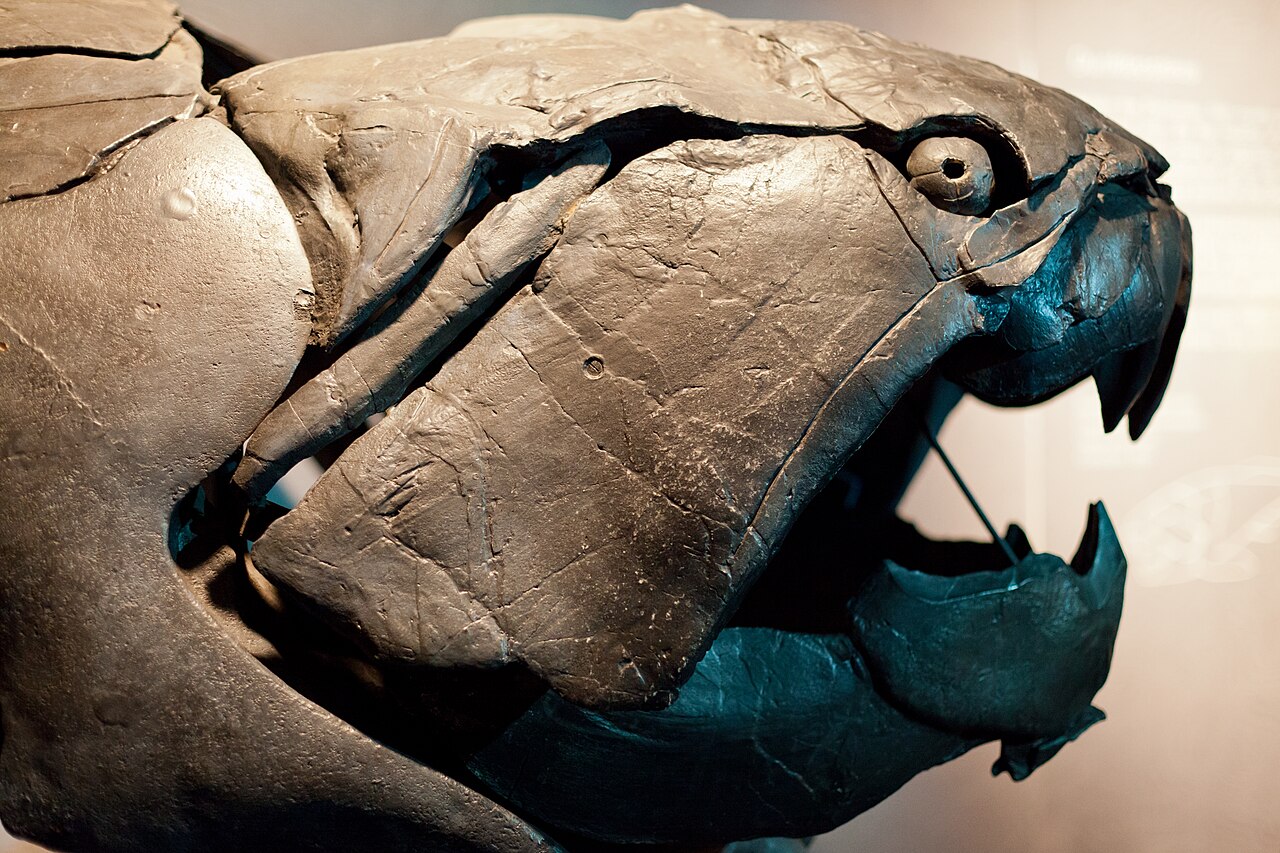
The next period, the Devonian, is called the "Age of Fishes" because fish became so varied. Placoderms grew huge. Dunkleosteus was a giant armoured hunter several metres long, with no true teeth but with sharp plates of bone along its jaw edges. Early sharks swam beside it, and so did spiny fish called acanthodians, which had stiff spines in front of their . Plenty of bony fish lived there too.
The end of the Devonian brought a mass extinction that killed off the top hunters, the placoderms. Bony fish took over, and they have stayed on top ever since.
Bony fish split into two big groups. Ray-finned fish became the most successful of all fish, while lobe-finned fish have fleshy fins with bones inside. Some of these developed lungs and sturdy fins in shallow, swampy water, and their descendants were the first four-legged land animals, called tetrapods. That event happened in the Devonian and the Carboniferous periods. The lungs of tetrapods and the of ray-finned fish both grew from the simple lungs of early bony fish.
How does a fish swim, breathe and stay afloat?
A fish swims by squeezing muscles on each side of its backbone in turn. That makes S-shaped waves that run down the body, and when each wave reaches the tail, the tail pushes against the water and the fish shoots forward. The other work like an aircraft's control surfaces, for steering, braking and staying upright. Tuna and jacks can swim 10 to 20 body lengths in a second, while eels and rays swim at less than one body length per second.
Body tissue is heavier than water, so a fish would sink. Many bony fish have a , a gas-filled bag, and the fish adds or removes gas to float at any depth. Sharks have no swim bladder, but they have oily livers, and many of them must keep swimming. Silvery scales act as camouflage in open water, because they reflect the colour of the water around.
Fish breathe with . A fish gulps water in through its mouth and passes it over the gills, which have comb-like filaments packed with tiny blood vessels. Blood flows through them in the opposite direction to the water, which lets the fish take out more oxygen. This trick is called countercurrent exchange. Sharks have five to seven gill slits on each side, while bony fish have one opening, covered by a flap called the operculum.
Fish have a heart with one loop. It pumps blood to the gills first, and from there the blood runs on to the body.
Where do fish live, and can they breathe air?
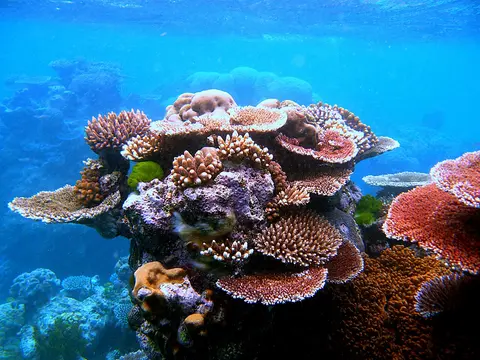
Fish live almost everywhere there is water. About half of all fish species, roughly 18,000, live in fresh water, even though rivers and lakes hold only a tiny fraction of Earth's water. The rest live in the sea. Coral reefs of the Indian and Pacific oceans hold the most sea species, and the Amazon, Congo and Mekong river basins hold the most freshwater species.
Fish live in mountain streams and in the deepest trenches. In 2022 a snailfish was filmed at 8,336 m in the Izu-Ogasawara Trench off Japan, the deepest fish ever filmed. Jonah's icefish lives in the freezing Southern Ocean, as far south as 79 degrees. Desert pupfish live in hot desert springs, where the water can reach 36 degrees Celsius. Devil's Hole pupfish live in a single pool about 3 by 6 m.
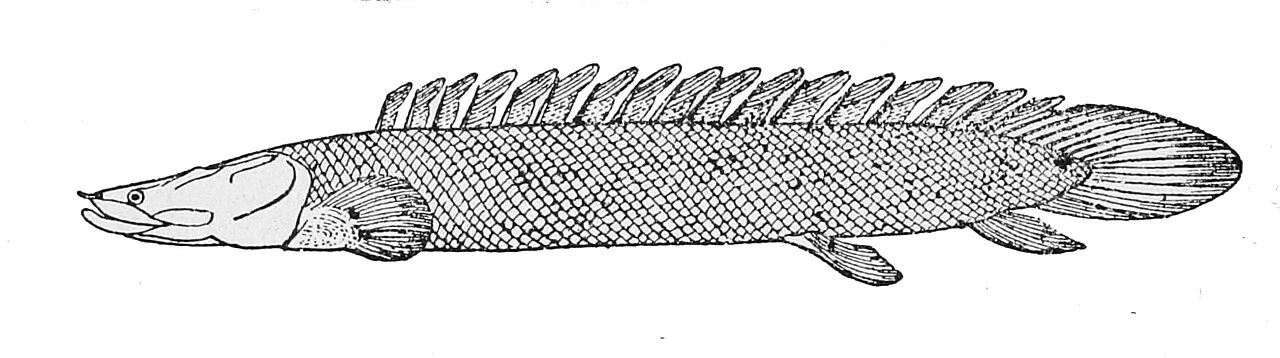
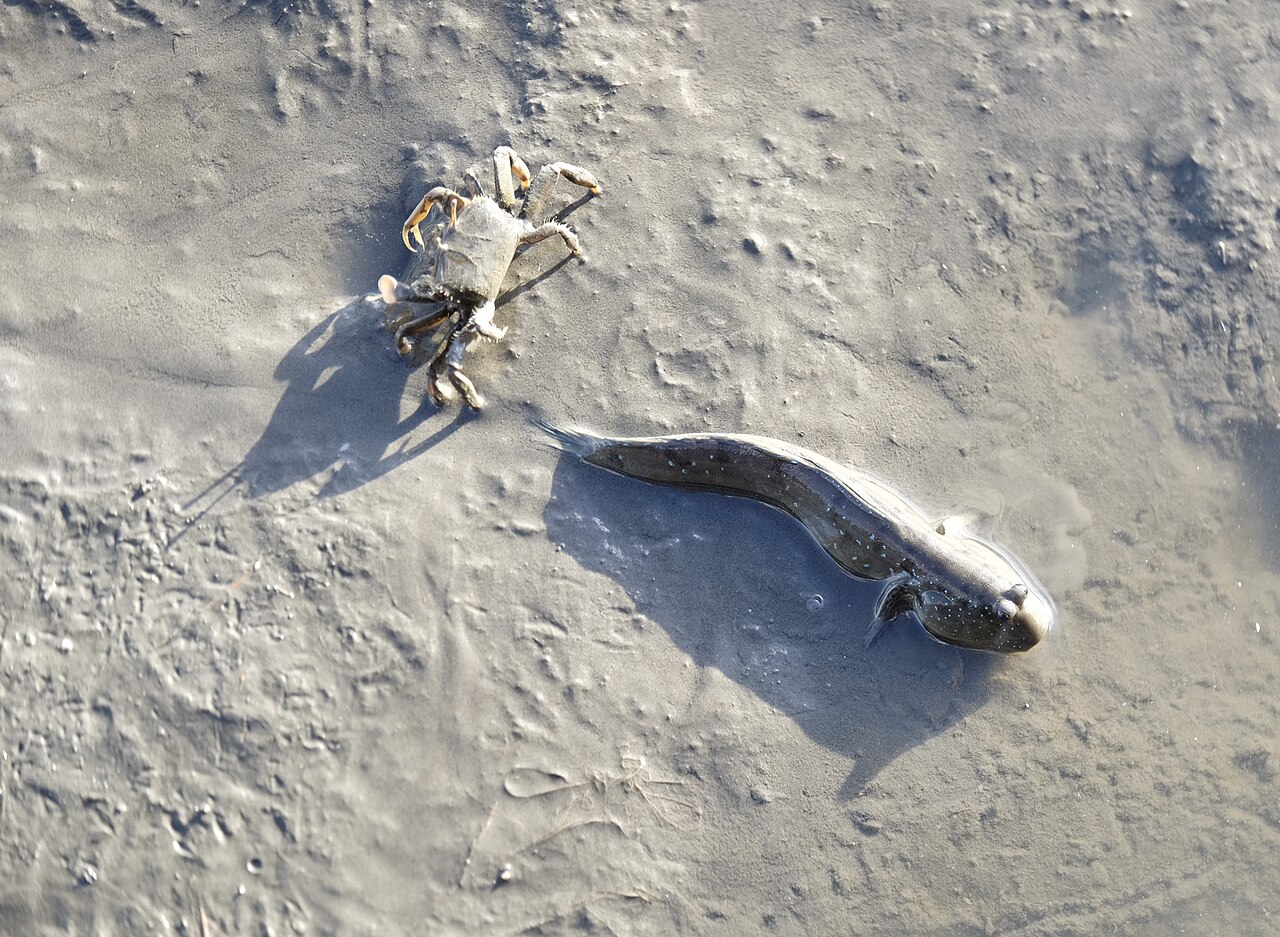
Some fish breathe air, and about 400 species can do it. They can live in water with little oxygen, or even crawl out onto land. Lungfish and bichirs have true lungs, and they must come to the surface to gulp air. Mudskippers feed on mudflats and use their strong front like little arms. Some catfish absorb air through their guts. Cavefish live in underground rivers and lakes, and many have no eyes.
The lungfish is a special case. It is a living relative of the fish that gave rise to land animals.
How do fish sense the world, and how smart are they?
Fish have senses we lack. The is a row of sensors along each side that feels gentle water movements and vibrations. It lets a fish sense a nearby predator or the shape of a rock in the dark. Blind cave fish find their way by it. Sharks and catfish can also detect the weak electric fields of living things, using special pits. In sharks they are called ampullae of Lorenzini.
Fish eyes are like ours, but with a round lens. Many fish see colour, and some, such as carp and their relatives, can see ultraviolet light. Fish hear with their inner ears and sometimes with their . Salmon seem to sense the direction of the Earth's magnetic field, though nobody is sure how.
Electric fish go further. Elephantfishes, knifefish and electric eels have muscles that make electric fields. Most use weak fields to find prey in muddy water, but the electric eel can also give a shock strong enough to stun prey.
Fish brains are small, about one-fifteenth of the mass of a bird's or a mammal's of the same size. Some, like sharks and elephantfishes, have much bigger brains for their body weight.
They are cleverer than people once thought. Fish can learn mazes, remember places and recognise others. Archerfish and some wrasses solve problems and even use tools, and scientists now think that fish can feel pain.
How do fish live together and raise their young?
Many fish live in groups. A shoal is a loose gathering, where each fish swims on its own but stays close to the others. A is tighter, with every fish moving at the same speed and in the same direction. Groups help in several ways. There are more eyes to spot danger, and a predator finds it hard to pick out one target. Fish also hunt and spawn in groups, and capelin travel in huge schools each year between feeding and spawning grounds.
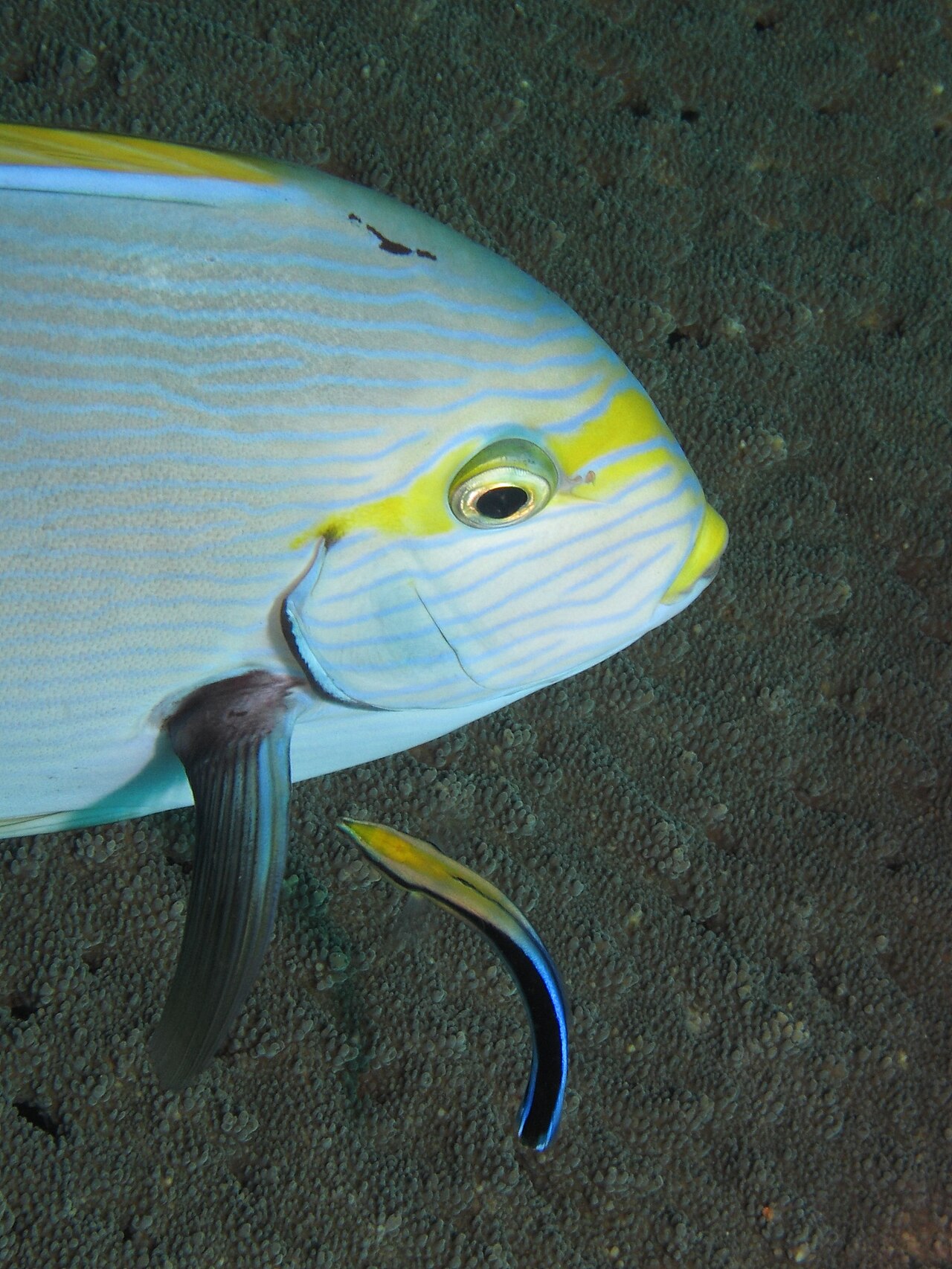
Fish make sounds. Grunts and drums can be made by rubbing teeth or bones together, or by drumming on the with special muscles. Male oyster toadfish make a loud "boat whistle" call to attract mates, and seahorses click and growl. Some fish use cleaners. Bluestreak cleaner wrasses run cleaning stations on reefs, where larger fish stop to have their parasites eaten.
More than 97 per cent of fish lay eggs. Most scatter eggs and sperm into the water, and the eggs are fertilised outside the mother. A few, such as skates, sharks and rays, fertilise eggs inside the mother, and some, like guppies and lemon sharks, give birth to live young.
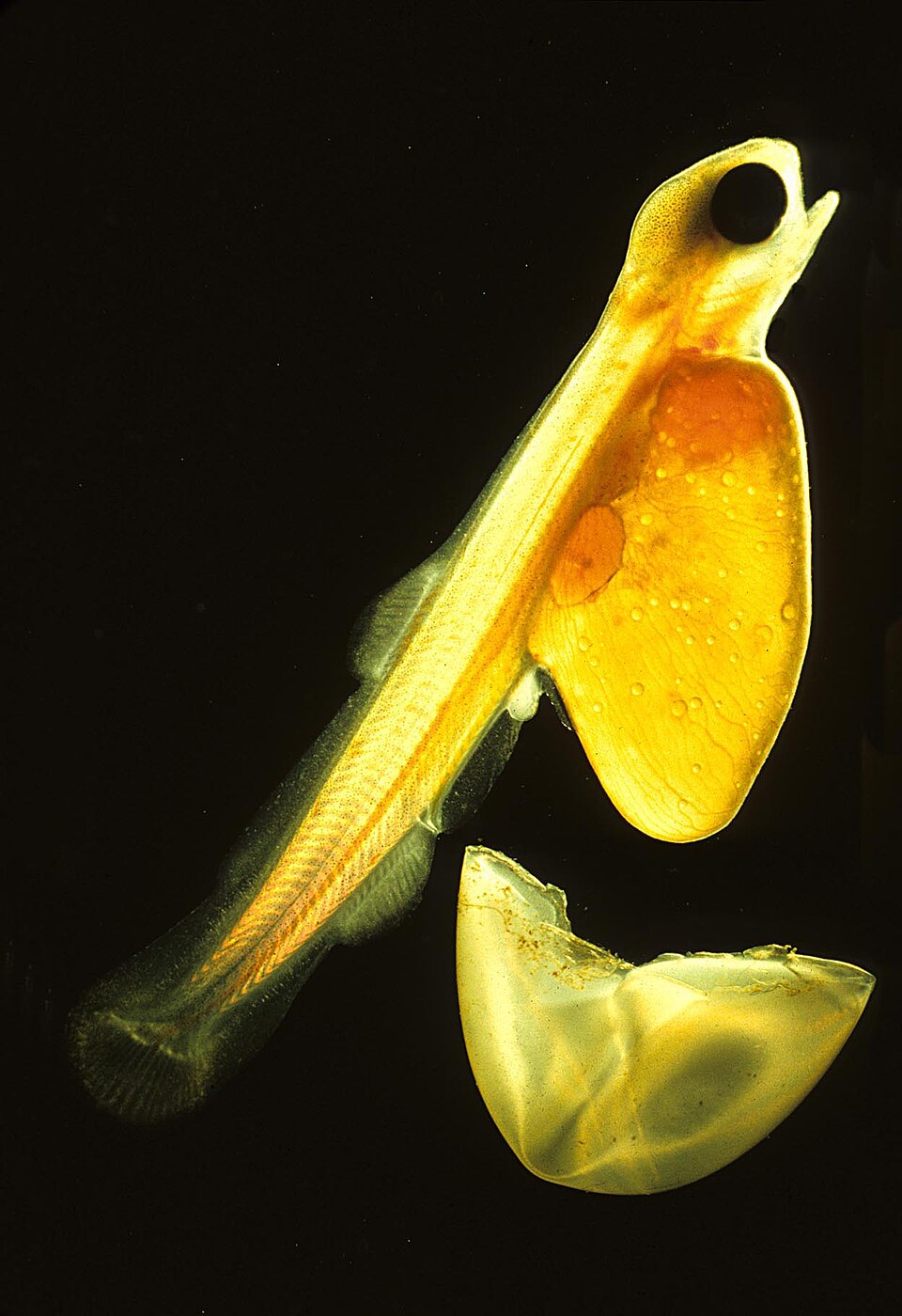
Newly hatched fish are tiny larvae with a big yolk sac that feeds them. They look nothing like adults. After a few weeks they must switch to catching tiny animals called zooplankton, and they change shape to become young fish.
How do people use and value fish?
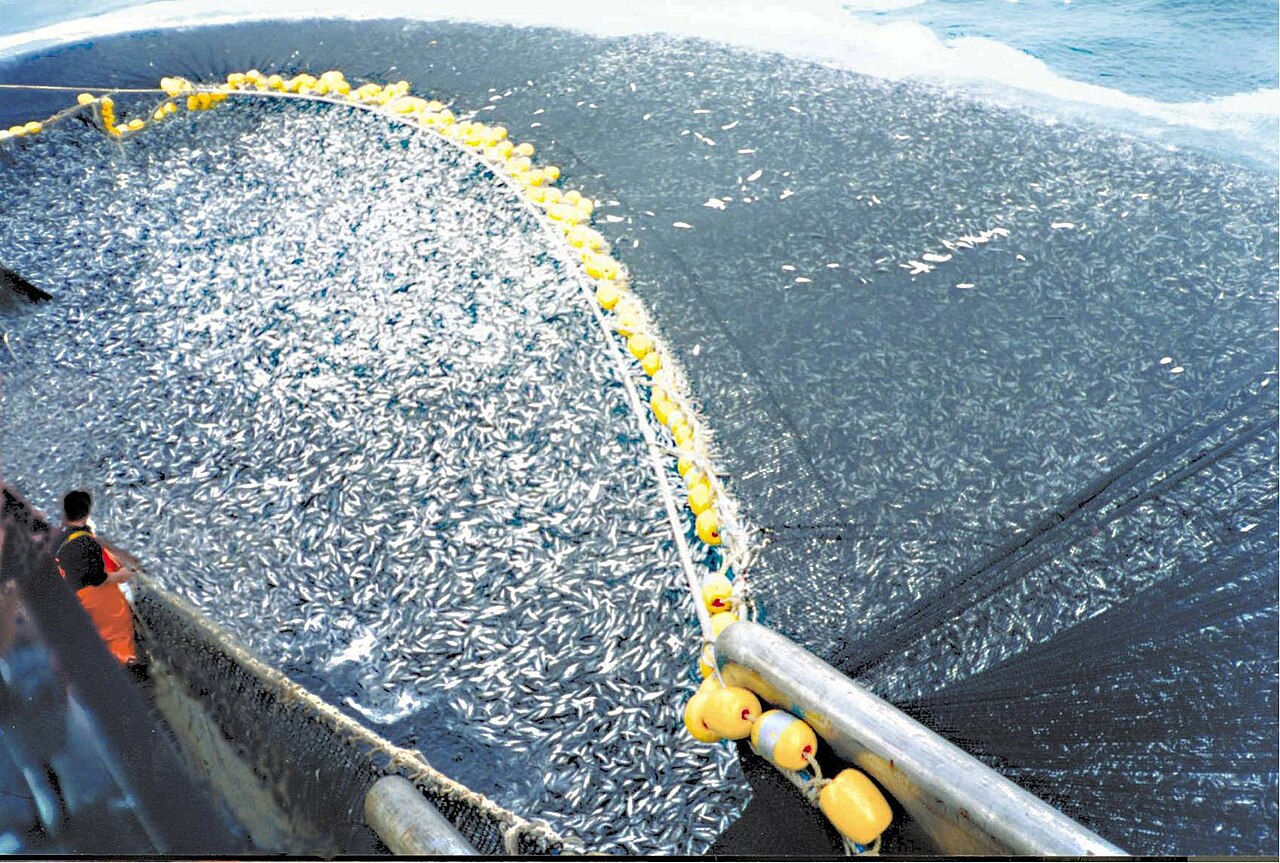
People have eaten fish since prehistoric times. Fish and other seafood give about 15 per cent of all the animal protein that people eat. Fish farming has been practised for thousands of years, especially in China, and it has grown fast. In 2022, for the first time, fish farms produced more fish and other water animals than were caught in the wild. Farms made about 94 million tonnes and the wild catch about 91 million. The most caught sea fish that year was the anchoveta, followed by Alaska pollock and skipjack tuna.
Fishing gives jobs to millions. Many people also fish for fun, which is common in North America and Europe, and others keep fish in aquariums and garden ponds.
Fish have a place in human stories. In ancient Mesopotamia, people made fish offerings to the gods, and the water god Enki was linked to fish. Priests dressed in fish costumes. The Syrian goddess Atargatis was served by priests who alone could eat her sacred fish. In the Book of Jonah, a prophet is swallowed by a giant fish. Early Christians used the fish symbol ichthys, the Hindu god Vishnu appears in the form of the fish Matsya, and the constellation Pisces is named for two fishes.
Fish feature in art, such as in the film Finding Nemo and the novel The Old Man and the Sea, and sharks star in thrillers like Jaws.
Why are so many fish in trouble?
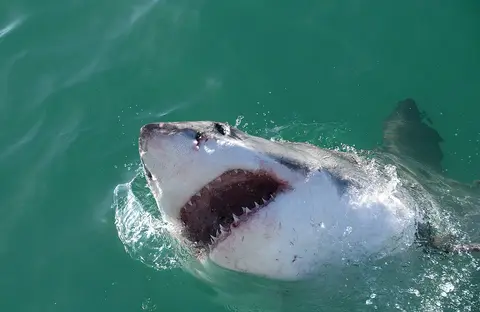
Fish are hard to count because they live underwater. Even so, the IUCN Red List lists thousands of species as threatened, and the Atlantic cod, coelacanths and great white sharks are among them.
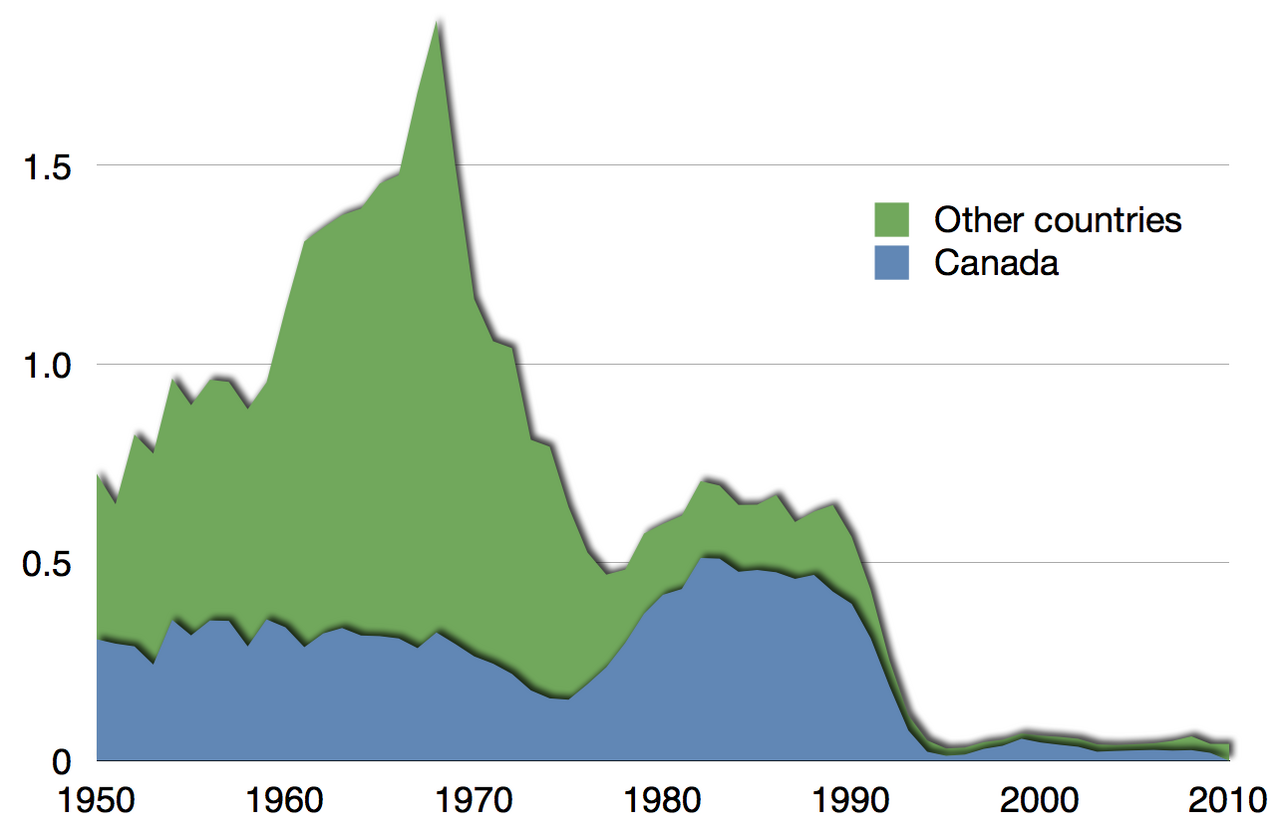
The biggest threat is , which means catching fish faster than they can breed. In 2025 the UN Food and Agriculture Organization studied about 2,570 sea fish stocks and found that about 35 per cent were overfished. If this goes on, stocks collapse, and the few survivors cannot make enough young. This is called commercial extinction. The species is not gone, but it can no longer support a fishery. The catch of Pacific sardines off California fell from 800,000 tonnes in 1937 to 24,000 tonnes in 1968, and the cod fishery of the northwest Atlantic collapsed too. By 1992 its fish were only a small fraction of the number there had been.
Other threats add up. Dams block rivers and cut catches, as with Kariba on the Zambezi and Aswan on the Nile. Pollution, drained rivers and heavy bottom trawling harm habitats. Invasive species have also done damage. The Nile perch, put into Lake Victoria in the 1960s, helped wipe out many of its roughly 500 kinds of cichlid fish. A comb jelly harmed anchovy fisheries in the Black Sea.
In 2006 a study led by Boris Worm warned that many stocks could be lost within fifty years, a forecast that other scientists thought too gloomy. Where catches are limited and areas are protected, stocks can recover.
Explore Next
Your audio story keeps playing while you look around.


Words to Know
- cartilage
- A strong, bendy material that makes up a shark's skeleton.
- cold-blooded
- Having a body temperature that follows the surroundings.
- fin
- A flat body part used for swimming, steering and balance.
- gill
- A feathery body part that takes oxygen from water.
- lateral line
- A row of sensors along a fish that feels movement in the water.
- overfishing
- Catching fish faster than they can breed.
- paraphyletic
- A group that leaves out some of its own descendants.
- school
- A tight group of fish swimming together in step.
- swim bladder
- A gas-filled bag that helps a bony fish float.
- teleost
- A member of the biggest group of bony fish, which can push out their jaws to catch food.