Mimicry
How living things survive by looking, sounding or smelling like something else.
A harmless fly wears the stripes of a stinging wasp. A fish copies a helpful cleaner so it can take a bite. An orchid takes the shape of a female bee. All of them use mimicry, which is an evolved resemblance between one living thing and another. Nobody plans it. Over many generations, individuals that look a little more like something else survive more often, so the copy gets better and better. Mimicry helps animals escape enemies, catch food and find mates. It also helps plants get pollinated. It is one of the cleverest ways that life fools other life.
Who is fooling whom?
Every case of mimicry has three roles. The is the living thing that does the copying. The is the thing it resembles. The is the one that gets fooled, and it changes its behaviour in a way that helps the mimic.
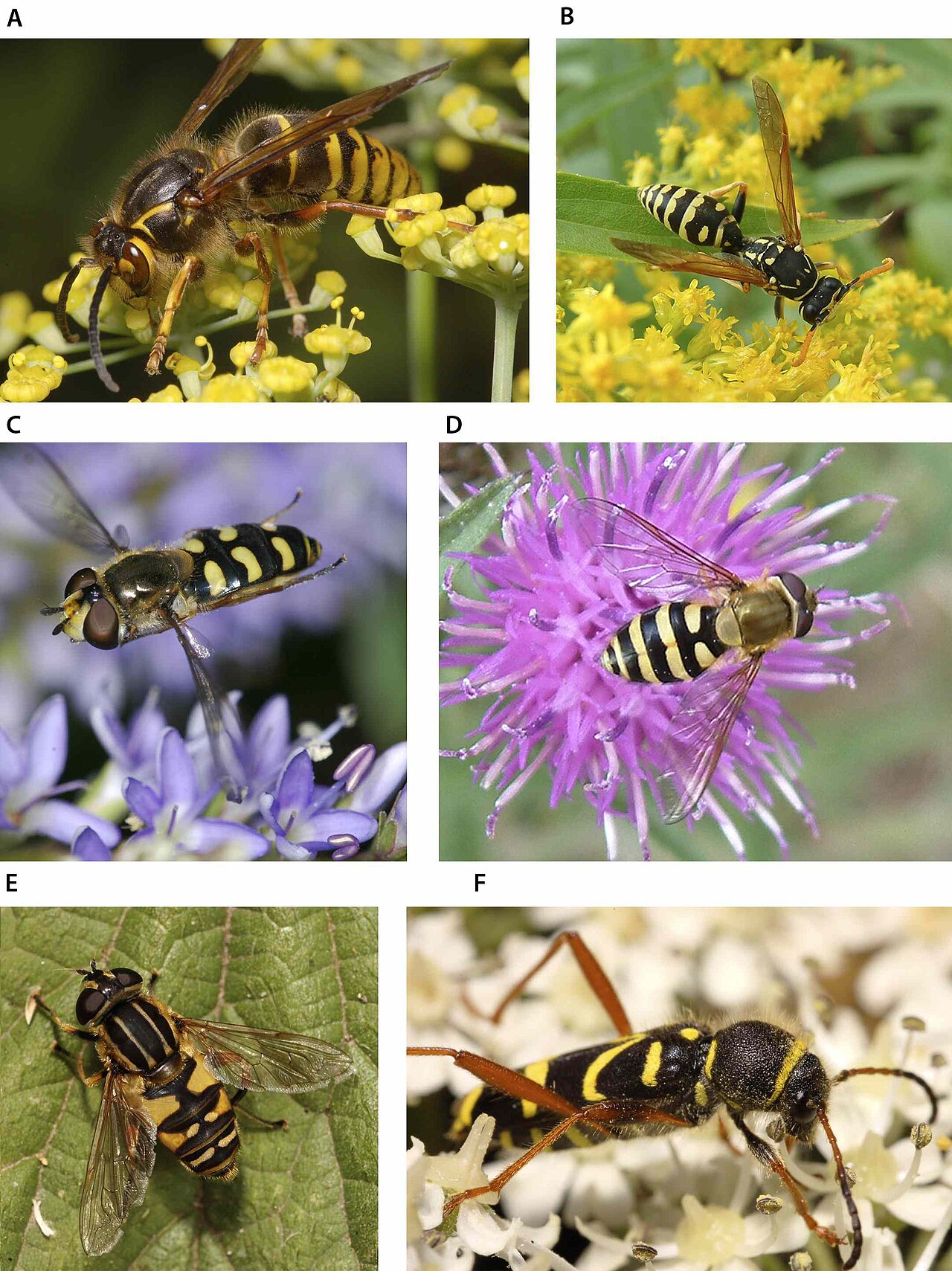
Take a hoverfly. It has no sting, but its yellow and black stripes look like those of a wasp. A bird that hunts insects by sight is the dupe. It has learned that wasps sting, so it leaves the hoverfly alone.
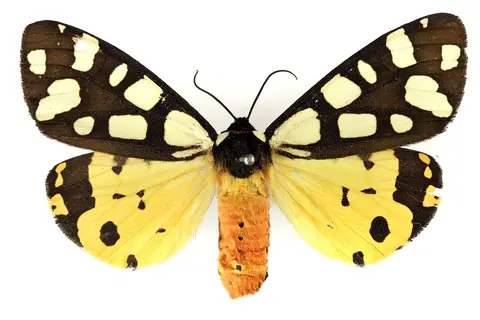
Birds hunt with their eyes, so this trick is visual. But mimicry can fool any sense. Some moths make ultrasonic clicks that copy the calls of foul-tasting tiger moths. Some animals copy smells or touch, and some copy electric signals. Mimicry can be harmful to one side, helpful to both, or something in between.
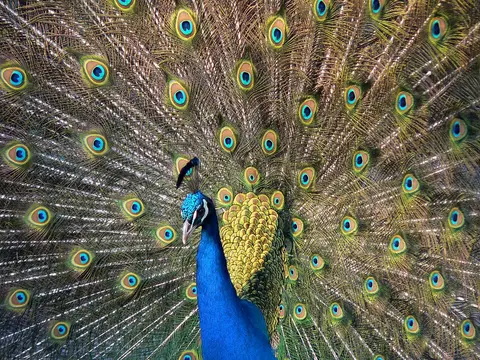
The model does not have to be another animal. Some caterpillars look like twigs, and some insects look like leaves, bark or bird droppings. Scientists often call this masquerade, because the model is not alive. Many animals also wear eyespots, which may look like the eyes of a bigger creature, although it is not always clear whether other animals read them as eyes.
Most mimics we know about are insects. Even so, mimicry has also been found in spiders, snakes, fish, birds, plants and fungi.
How did people first spot it?
Ancient writers noticed clever animal tricks. The Greek thinker Aristotle described partridges that put on a show to lure away from young birds that cannot yet fly. Biologists today count that as a form of mimicry.
The word itself arrived in zoology in 1823. Two English insect experts, William Kirby and William Spence, used it to describe insects that look like twigs and leaves.
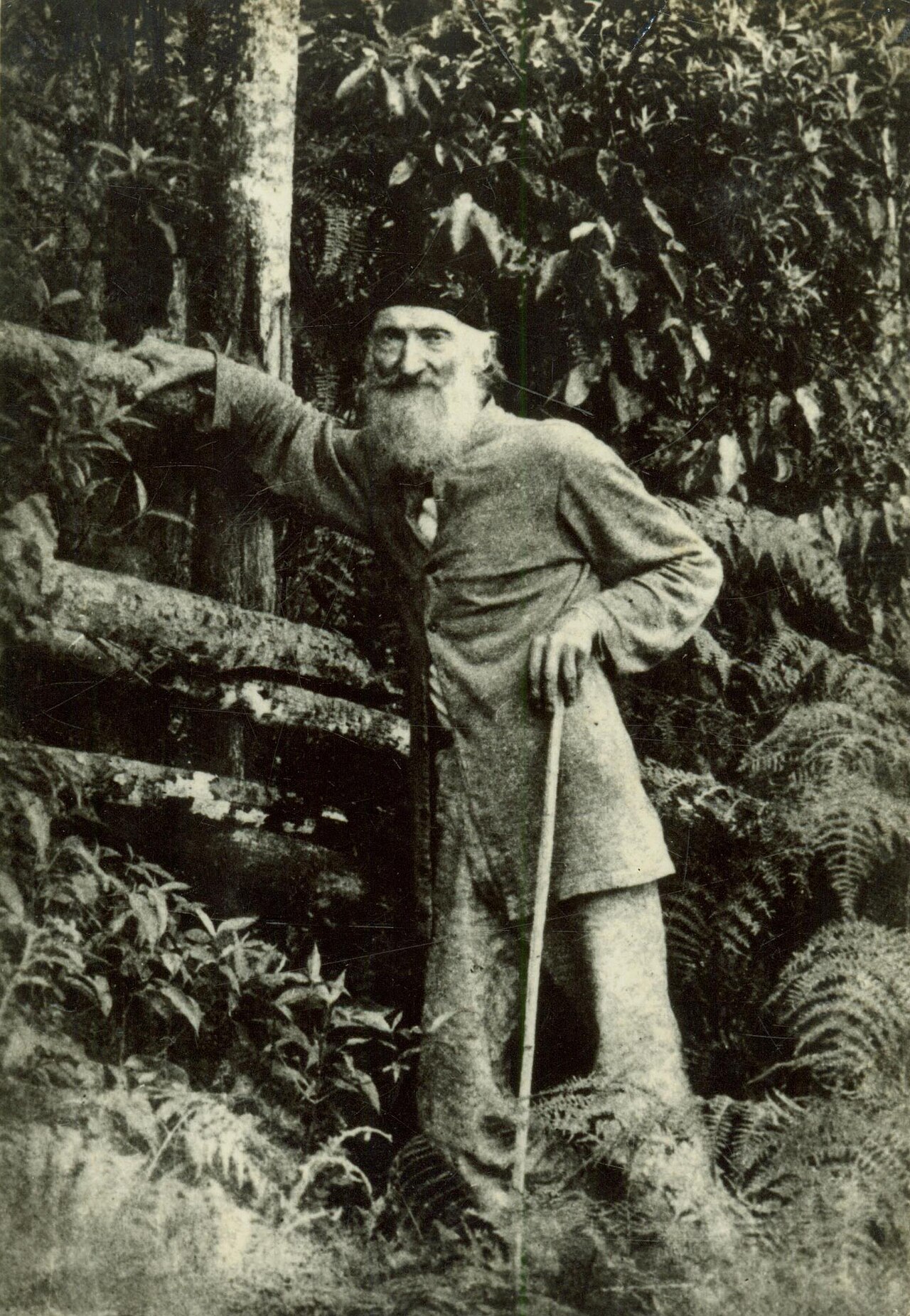
The real breakthrough came from the Amazon rainforest. The English naturalist Henry Walter Bates spent several years there collecting butterflies. He noticed that some harmless species looked almost exactly like species that predators avoid. He described this in a paper in 1862 and in his 1863 book The Naturalist on the River Amazons. Today we call it in his honour.
The German naturalist Fritz Müller, who lived in southern Brazil, also studied its butterflies. He found something that Bates could not explain. Some species were all bad to eat, yet they still looked alike. Why copy each other if each could warn predators alone?
Müller answered with one of the first mathematical in biology, published in 1878 and presented in English in 1879. If a predator mixes up two species, it learns its lesson from fewer victims of each. Both species lose fewer individuals. We call this .
Why copy a creature that stings?
In , the looks like a dangerous or foul-tasting but has no defence of its own. It is a sheep in wolf's clothing. Hoverflies that copy wasps are one example. Some harmless butterflies copy poisonous ones, such as the pipevine swallowtail.
There is a catch. A that tastes a foul model learns to avoid anything that looks similar and does not often try again. This works only while mimics are fewer than models. If mimics became common, young predators would meet them first, find them tasty and learn that the pattern is safe. So Batesian mimicry is most stable when the model is more abundant.
is different, and it is honest. Two or more species are all genuinely harmful and share one warning pattern. Wasps and bees are a good example. Each species gains because the predator has fewer patterns to learn. Even the predator gains, because it learns quickly which animals to avoid.
There is also a rarer, odd case called Emsleyan or Mertensian mimicry. A deadly coral snake may copy a less dangerous snake. A predator that attacks a deadly snake dies before it can learn. So it helps if the predator has already learned to avoid a milder snake with the same pattern.
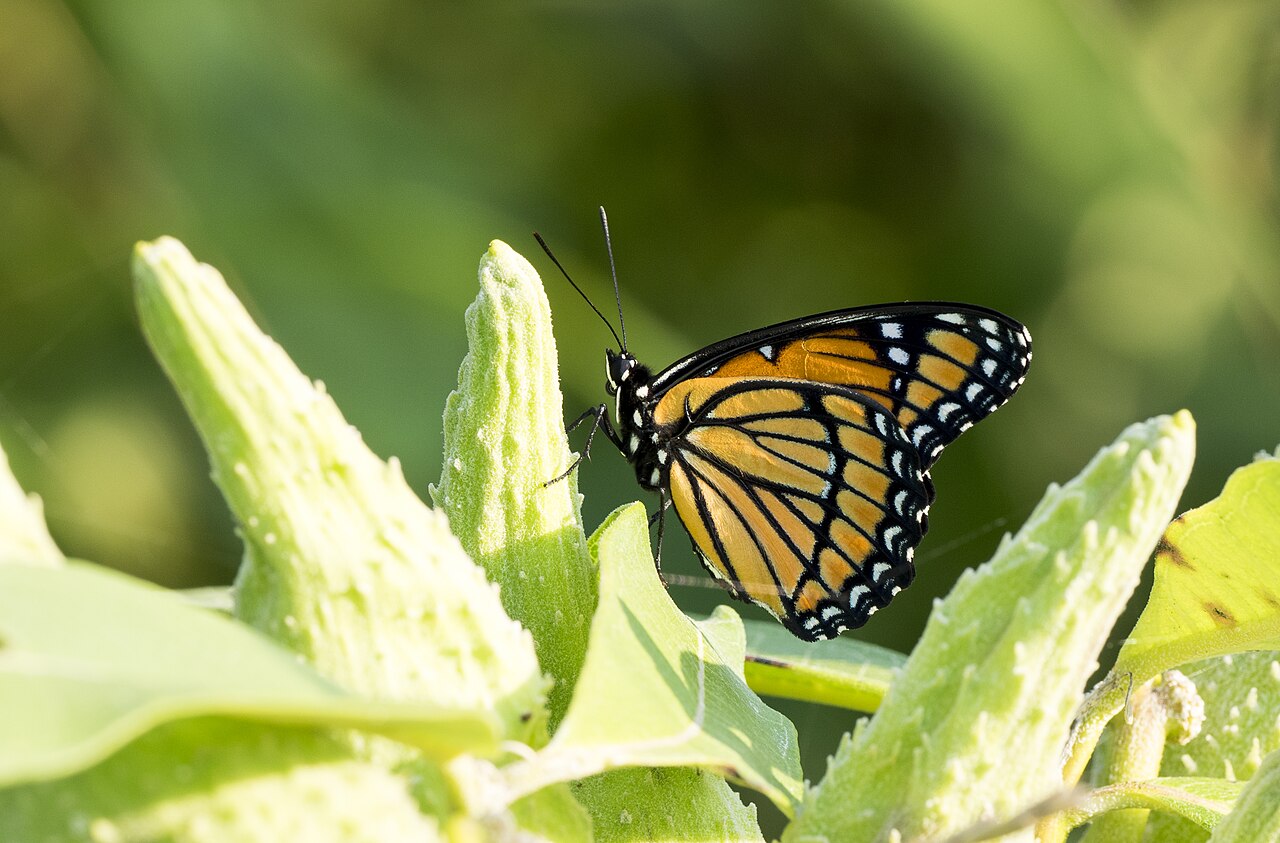
Nature does not always fit the neat boxes. For a century the viceroy butterfly was the textbook Batesian copy of the monarch. Then in 1991 Ritland and Brower tested wild birds and found that viceroys taste bad too. The two butterflies may share a warning, which would make them Müllerian partners.
How does a copy get so good?
Nobody designs a . Mimicry builds up through . In a population, individuals vary a little. If a mistakes the ones that look closest to a for the real thing, those individuals survive and pass on their genes. Over many generations, the resemblance grows.
For butterflies, scientists favour a two-step idea. First, a change in genes that control a whole group of linked genes causes a big change in colour pattern. Second, many smaller changes polish the resemblance. These linked genes can act together as a supergene. In one swallowtail butterfly, a gene called doublesex controls the mimic pattern.
Some mimicry is imperfect, and that is fine. Selection pushes a copy only as far as it needs to fool the predator. A snake that looks a bit like a coral snake may be safe enough if predators avoid it.
Mimicry can also start an arms race. If the copy harms the model, for example by making its warning less reliable, the model can evolve a new look. Some butterflies are polymorphic, which means different individuals copy different models. Models are usually fairly closely related to the mimics, but not always. Some spiders look like ants.
Scientists also warn that similar looks can have another cause. Different reef fish may look alike through convergent evolution, when different living things are shaped by the same pressures.
Which hunters wear a disguise?
Mimicry is not only for hiding from enemies. Some and parasites use it to get close to their food. This is called . No animal plans a trick, but the effect is the same.
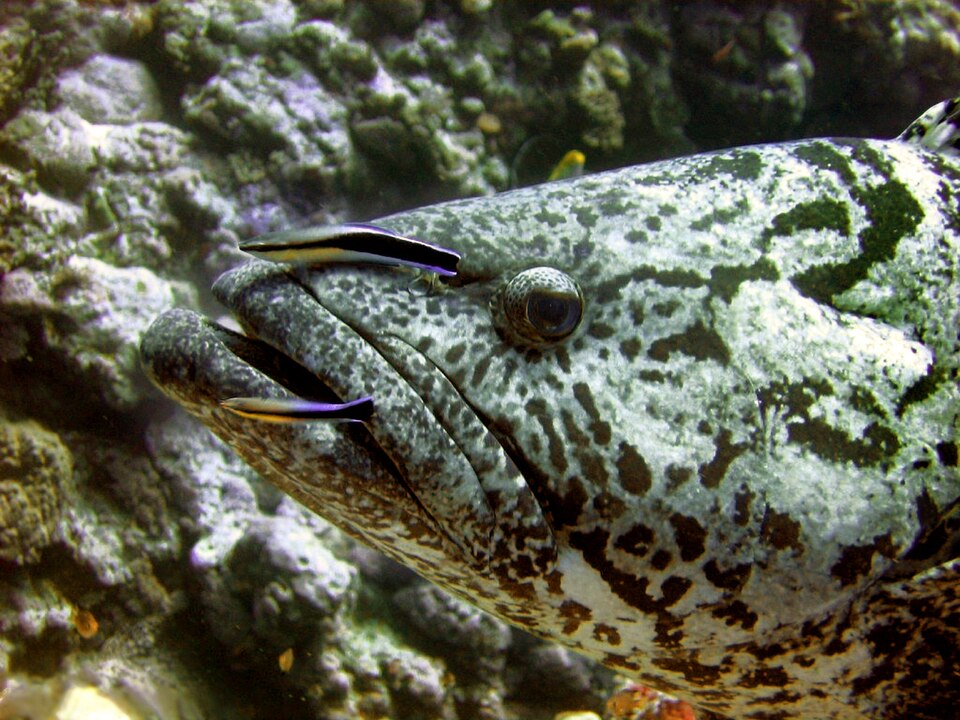
The false cleanerfish, also called the sabre-toothed blenny, copies the bluestreak cleaner wrasse. Many reef fish allow cleaner wrasse to pick parasites from their skin and even inside their mouths. The blenny copies the look and the dance of the cleaner. Once it is close, it bites off a piece of fin and flees. Wounded fish soon learn to tell the two apart, but they also become more wary of the real cleaner.
Some spiders weave bright zigzags into their webs. These may reflect ultraviolet light and look like the nectar guides on flowers that lead bees to nectar. Female Photuris fireflies copy the flashing signals of females of another genus. Males of that genus come looking for a mate and get eaten. The zone-tailed hawk flies among turkey vultures, which do not threaten the prey below. Then it breaks away and ambushes a victim.
Parasites do it too. A flatworm called Leucochloridium makes a pulsing, brightly coloured sac in the eye stalk of a snail. A songbird mistakes it for a tasty grub, and eats the snail. That is how the worm reaches the bird it needs.
Why do orchids pretend to be bees?
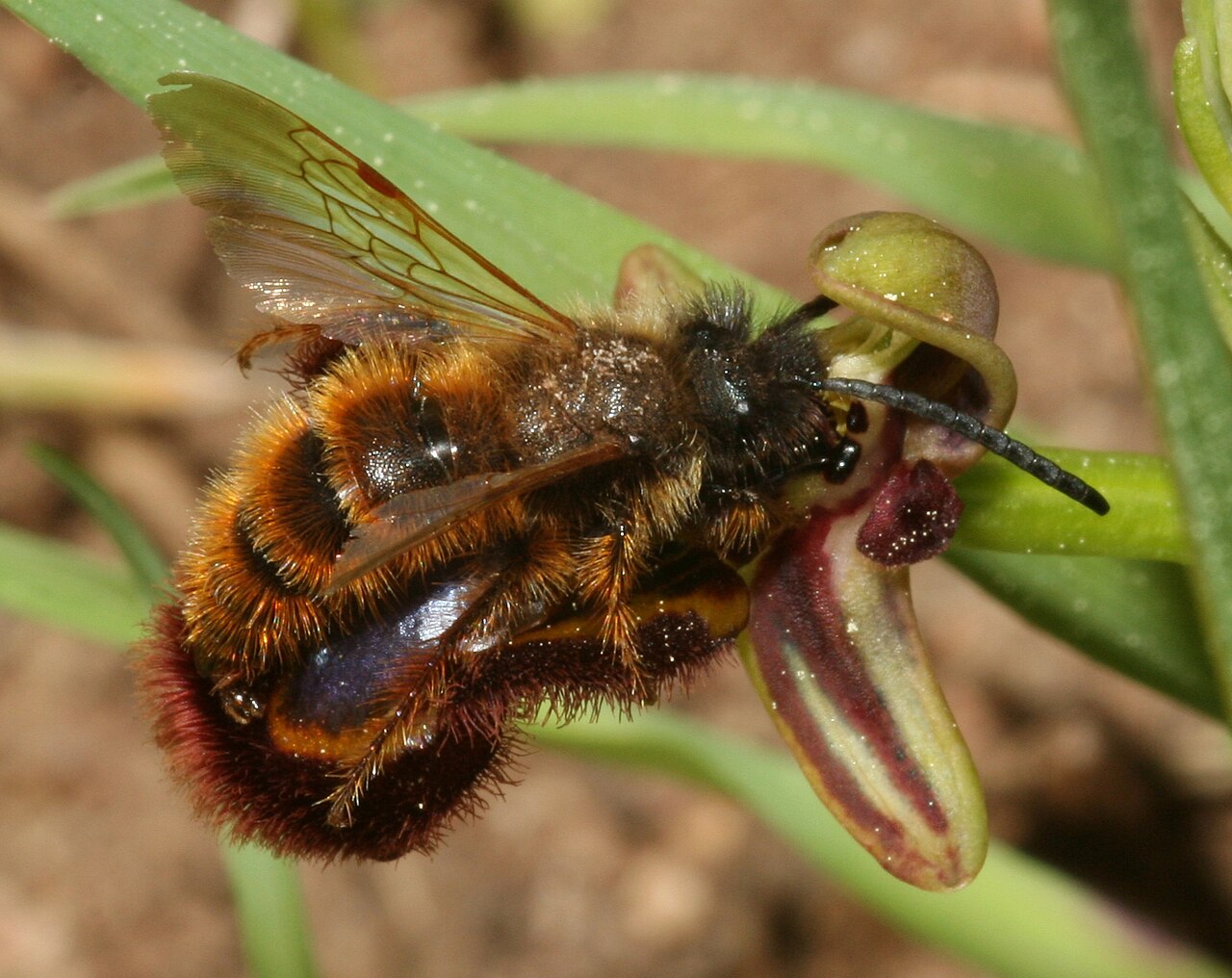
Plants cannot move to find a partner, so many rely on animals to carry pollen. Some flowers cheat. They look like something the wants, but they give no reward. This is reproductive mimicry, because the helps the have young or spread its genes.
In Pouyannian mimicry, named after Maurice-Alexandre Pouyanne, a flower copies a female insect. Many orchids copy female bees or wasps. The shape, the scent and even the feel of the flower fool a male of that species. He tries to mate with the flower. A sticky packet of pollen called a pollinium attaches to his head or body. When he visits the next flower, the pollen is delivered. The orchid is pollinated, and the male is not harmed.
In Dodsonian mimicry, a flower copies other flowers, so pollinators arrive but find no nectar. One orchid, Epidendrum ibaguense, copies the flowers of two other plants and is visited by monarch butterflies.
Birds use reproductive mimicry too. A female cuckoo lays her eggs in another species' nest. Her eggs copy the colour and shape of the host's eggs, so the host does not throw them out. The ability to match a host is passed down through the mother's line. The result is that a different bird raises the cuckoo chick.
The butterfly Phengaris rebeli goes further. Its caterpillars give off chemicals that fool ants into carrying them into the ant nest.
Which end is the head?
Sometimes the and the are the same species, or even the same animal. This is called . It is one of the sneakiest forms.
One trick is to make the wrong end look like the head. Many hairstreak butterflies have small tails and spots on their back wings that look like antennae and eyes. When they perch, they shift their rear wings, so the tails seem to wave like feelers. Birds and jumping spiders attack the wrong end, and the butterfly flies off with a torn wing. Studies of wing damage support this idea. Some snakes present their tails to a , and some fish carry eyespots near the tail and swim slowly backwards when alarmed. Some pygmy owls have false eyes on the back of the head, which may make an enemy feel stared at.
Another kind of automimicry is about toxins. Monarch and queen butterflies take poison from the milkweed they eat as caterpillars. Some plants are more poisonous than others, so some butterflies carry more toxin. The less poisonous ones may gain protection from the strongly poisonous ones. This idea is called Browerian mimicry.
When one sex copies the other, the trick lets a male sneak a chance to mate. Scientists call it mimicry between the sexes. Among the sea-living isopod Paracerceis sculpta, some males copy females and slip past a large male that guards a group of females. Side-blotched lizards have males that copy the yellow throats and the behaviour of females.
Can a weed copy a crop?
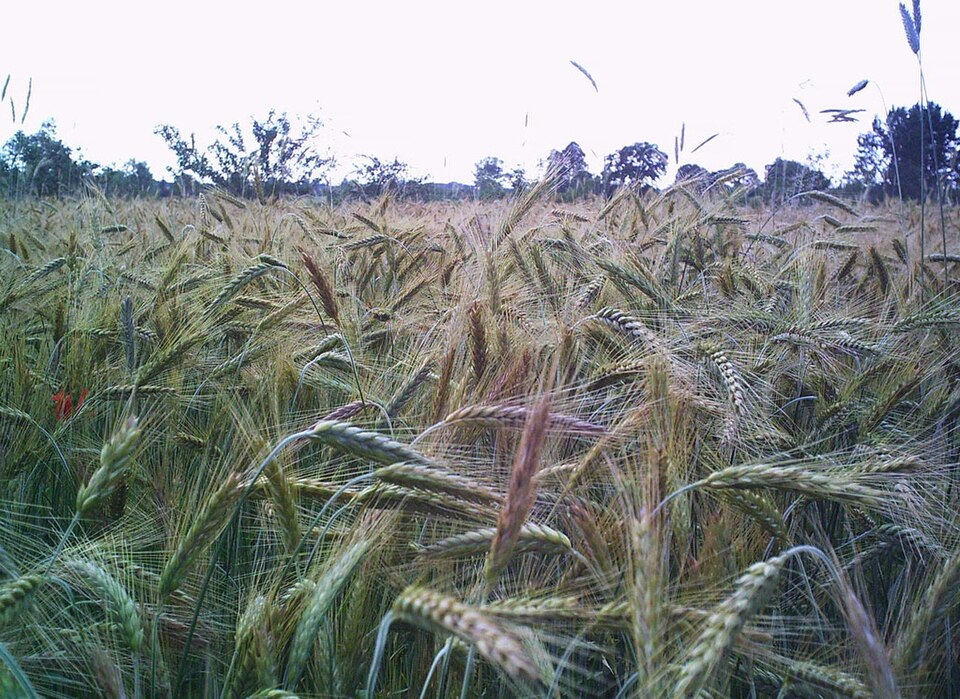
It can, and farmers cause it without meaning to. This is Vavilovian mimicry, named after the Russian botanist and geneticist Nikolai Vavilov. It is a case of unintentional selection by people.
Imagine a weed that grows among a crop. Farmers pull out the weeds that look different. They also sort the seeds and separate the weed seeds from the grain. The weeds that look most like the crop escape. Their seeds get mixed in with the harvest and are planted again. Over many years, the weed looks more and more like the crop.
A clear example is early barnyard grass, a weed of rice fields. It looks so much like rice that its seeds are hard to separate from rice seeds.
Sometimes the story ends in a surprise. A weed can get so good at looking like a crop that people end up growing it on purpose. Vavilov called these secondary crops. Rye is the classic case. It began as a weed mimicking wheat and is now a crop in its own right.
This shows something important about mimicry. The does not have to be an animal with a brain. It can be a farmer. Whoever does the choosing, the same rule applies. The copies that fool the chooser are the ones that survive.
Explore Next
Your audio story keeps playing while you look around.
Words to Know
- aggressive mimicry
- A hunter or parasite copies something harmless to get close.
- aposematic
- Having bright colours or patterns that warn predators of danger.
- automimicry
- When an animal copies its own species or its own body parts.
- Batesian mimicry
- A harmless species copies a harmful one to avoid being eaten.
- brood parasite
- A bird that leaves its eggs for another species to raise.
- dupe
- The animal that gets fooled by the copy.
- mimic
- The living thing that looks, sounds or smells like something else.
- model
- The thing that the mimic copies.
- Müllerian mimicry
- Several harmful species share the same warning look.
- natural selection
- The process by which helpful features become more common over generations.
- pollinator
- An animal that carries pollen from one flower to another.
- predator
- An animal that hunts and eats other animals.