Adaptation
How living things come to fit the places where they live.
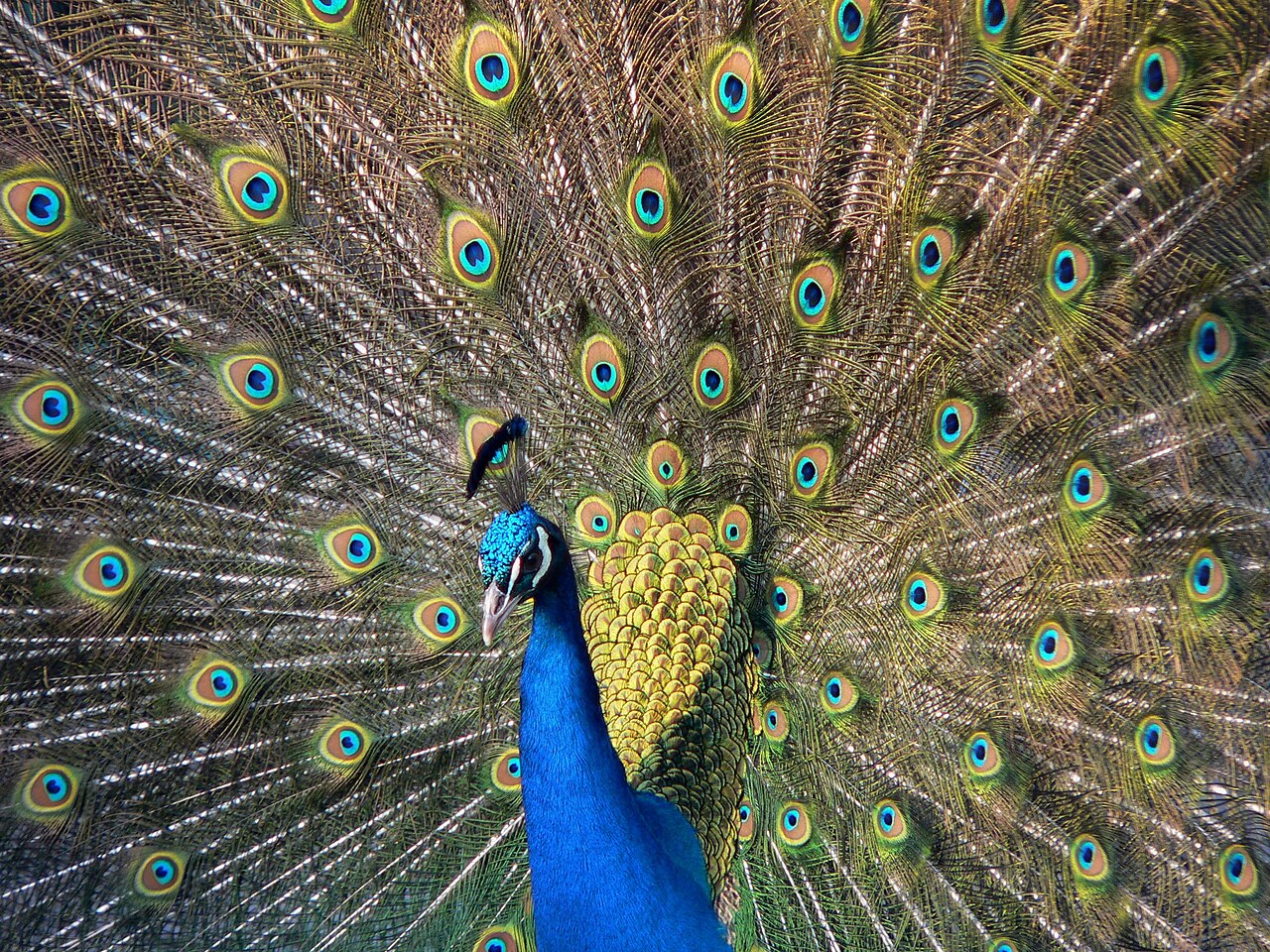
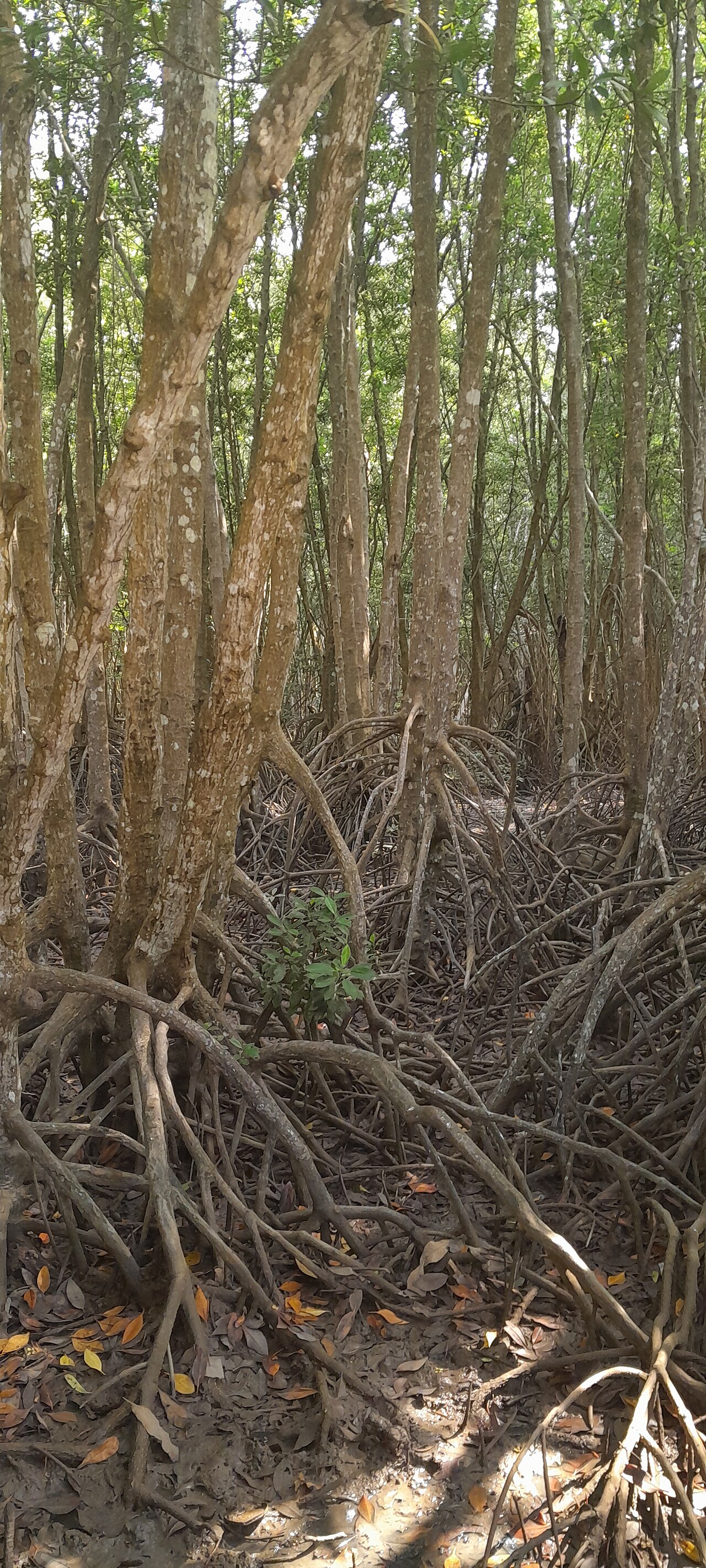
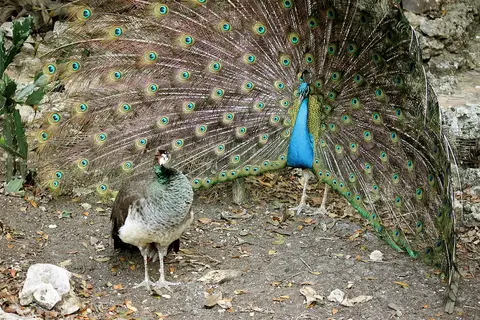
A mangrove tree stands in salty mud with its roots arching into the air. A peacock drags a heavy tail behind him. A kestrel hunts over a busy road. Each of these living things has features that help it survive and have young in the place where it lives. Biologists call these features adaptations. The word also names the slow process that produces them, which is natural selection working over many generations. Adaptation explains why so many different kinds of living things exist, why they fit their homes so well, and why none of them is ever perfect.
What makes something an adaptation?
In everyday speech, people say that someone has adapted when they get used to something new. In biology the word means something more specific. An is a feature that helps a kind of living thing survive and reproduce in its environment, and that has been shaped by over many generations.
The word has three linked meanings. It can mean the slow process that fits living things to their surroundings. It can mean the state a population reaches as a result. And it can mean a single trait that did the job, such as a bird's beak or a plant's root.
Biologists sort adaptive traits into three groups. Structural adaptations are physical features, such as shape, body covering and weapons. The arching prop roots of mangrove trees, which hold them steady in soft mud and tides, are structural. Behavioural adaptations are inherited ways of acting, such as how an animal hunts, finds a mate or calls. Physiological adaptations are changes in how the body works, such as making venom, controlling temperature or balancing salts.
Adaptation is mainly a process, not a shape. A parasitic worm inside a liver may have a very simple body. Yet it is highly adapted, because its complicated life cycle is perfectly suited to its way of life.
How does adaptation actually happen?
No animal decides to adapt. comes from three steps that repeat over generations. First, individuals in a population differ from each other, because of small changes in their genes called . Without mutations there would be nothing new for nature to work with. Second, some of these differences help an individual survive or have young. Third, those individuals leave more offspring, so the helpful gene becomes more common. This is .
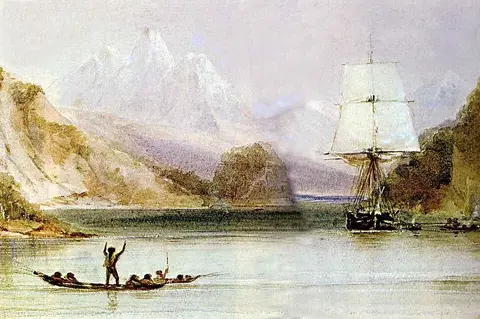
Charles Darwin and Alfred Russel Wallace both put forward this idea in the 19th century. Before them, many people thought adaptation showed that living things had been designed to fit their homes. Darwin and Wallace gave a natural explanation instead.
Scientists can now see the genes at work. The beaks of Darwin's finches on the Galapagos Islands differ in shape because of changes in a gene called ALX1. Wild mice that live on black lava rock have dark coats, and mice on pale sand have light coats, because of changes in genes that control pigment. In both cases, the animals whose bodies suited the place were more likely to survive.
Selection works on variation that already exists. That is why adaptation takes many generations and why it is never finished.
What happens when a habitat changes?

never stay the same for long. Climates warm and cool. New species arrive from elsewhere. Rivers shift and forests burn. When this happens to a population, one of three things can happen, and sometimes all three happen one after another.
The first is habitat tracking. The living things move to a place that suits them better. Flying insects and ocean animals often do this, because they can travel far. The second is genetic change. The population slowly adapts through . The third is extinction, when the population cannot move or change fast enough and dies out. Only genetic change counts as .
Sometimes a population gets a second chance. If enough helpful genetic variation is already present, adaptation can bring a population back from the edge of extinction. Biologists call this evolutionary rescue.
Because habitats keep changing, adaptation is never complete. The scientist Leigh Van Valen argued that species must keep adapting just to hold their place, because their rivals, predators and parasites are evolving too. This is known as the Red Queen hypothesis, named after a character in a children's book who has to run to stay still.
Some animals adapt to human changes. The common kestrel, a small falcon, now hunts in towns and beside motorways.
Is getting used to something the same as adapting?
No. This is one of the most important ideas about . Changes that happen during one animal's life are not adaptations, because they are not passed on to its young.
Take humans moving up a high mountain. The air has less oxygen, so at first it is hard to breathe and to move. After a few weeks the body copes better, partly by making more red blood cells. This is called . The ability to acclimatise is an adaptation, but the change itself is not. Learning is similar. A dog that learns a trick has changed its behaviour, but its puppies will not be born knowing it.
Over many generations, real adaptation can happen too. In places where people have lived at high altitude for a long time, some people are better at having healthy children there than others. They pass on more genes, and gradually the whole population becomes adapted. Long-term mountain communities do better at altitude than newcomers, even when the newcomers have had time to acclimatise.
Animals also differ in how flexible they are. A specialist can live only in a narrow . Koalas depend on eucalyptus leaves, and giant pandas depend on bamboo. A generalist can cope with many conditions and foods. Humans, rats and crabs are generalists. Even the tendency to be a specialist or a generalist is inherited, so it is an adaptation itself.
How do living things adapt to each other?

Many are shaped by other living things. When two species depend closely on each other, a change in one often leads to a matching change in the other. This is . Flowering plants and the insects that pollinate them have been doing this for millions of years. Flowers evolve shapes and scents that attract insects, and the insects evolve bodies that reach the nectar.
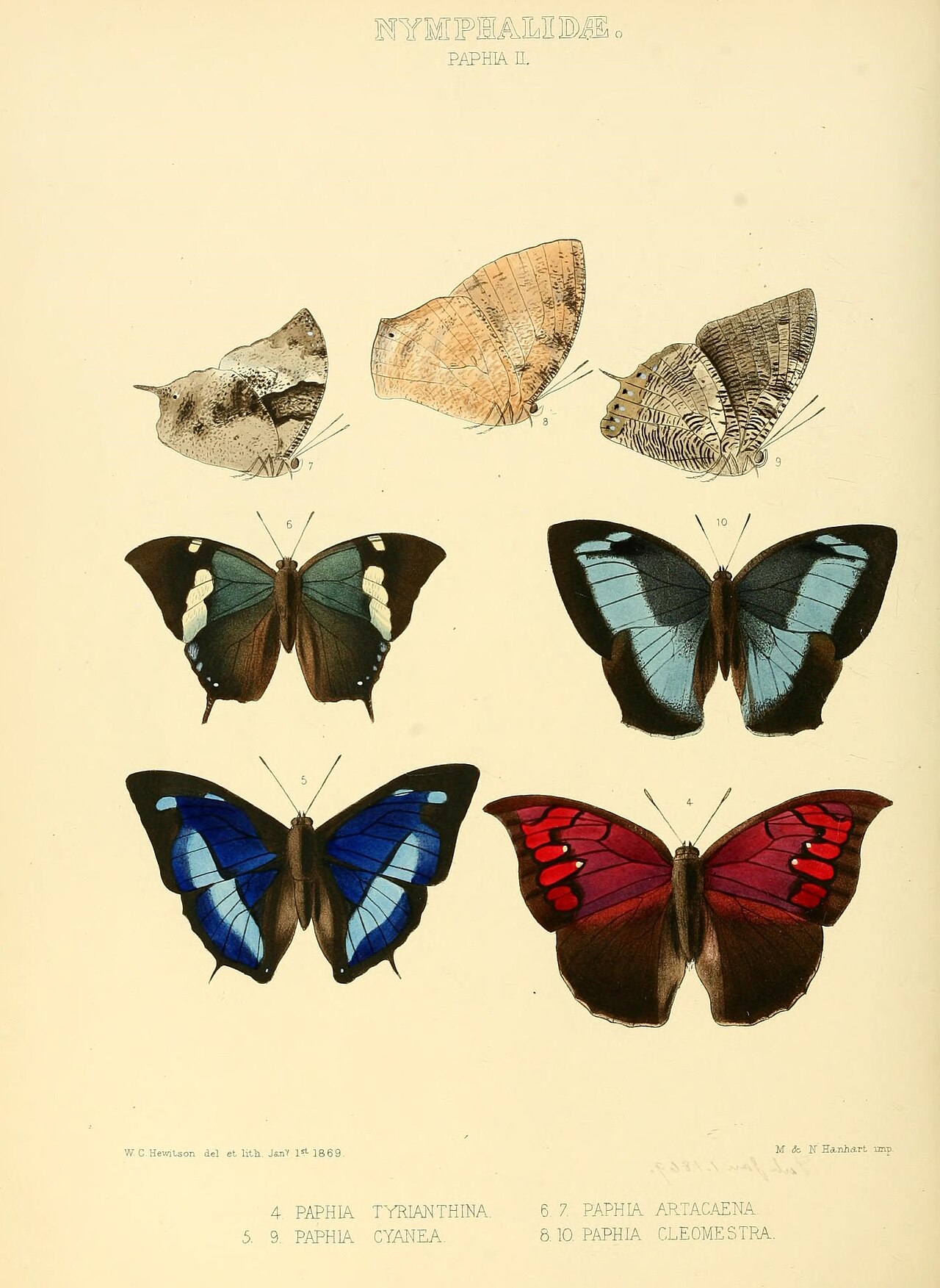
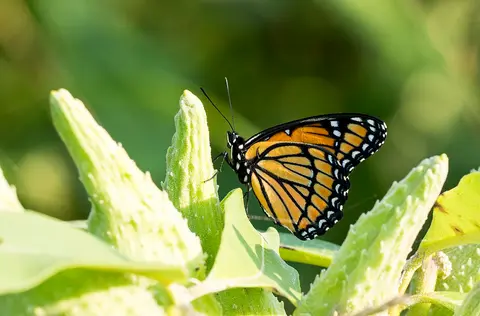
Another result is , where one species comes to look like another. The English naturalist Henry Walter Bates studied butterflies in the Amazon rainforest and gave the first scientific account of it. In what we now call Batesian mimicry, a harmless species looks like a harmful or bad-tasting one, which is called the model. Predators learn to avoid the model, so they leave the mimic alone too.
A familiar example lives in many gardens. Hoverflies cannot sting, but many have the black and yellow stripes of wasps and bees. The copy does not have to be perfect to help. Some predators will hesitate and look elsewhere.
In Müllerian mimicry, named after Fritz Müller, several species that really are harmful come to share the same warning colours. Predators then need to learn only one pattern. Bates, Wallace and Müller all saw mimicry as strong evidence for , and biologists still agree.
Why is no adaptation perfect?
Every has a cost. Horses have legs that are great for running on grass, but they cannot scratch their own backs. Mammal fur keeps animals warm, but it also gives parasites a place to live. Penguins fly only under water. Selection pulls in different directions, so the result is always a compromise.
The peacock is the best-known case. His huge, colourful train is grown again for each mating season. It makes him easy for predators to see, makes flying harder and costs a lot of food to grow. Yet peahens prefer males with impressive trains, so these males leave more young. Darwin called this . A feature can be a risk to survival and still spread, if it helps in finding a mate.
The giraffe's neck, which can be up to 2 metres long, lets it reach leaves that shorter animals cannot. But a long neck is heavy, and it takes extra energy to build and carry.
Humans have a compromise too. A baby's head must fit through its mother's pelvis. A newborn's brain is about 400 cubic centimetres, while an adult's is about 1,400. Babies are born with brains that are still very immature, so skills such as walking and speaking have to wait. Walking upright limits how wide the pelvis can be, which makes the squeeze tighter.
Can an old feature be given a new job?
Yes, and it happens often. Evolution does not design from scratch. It changes what is already there. When a feature that evolved for one purpose ends up serving another, biologists call it .
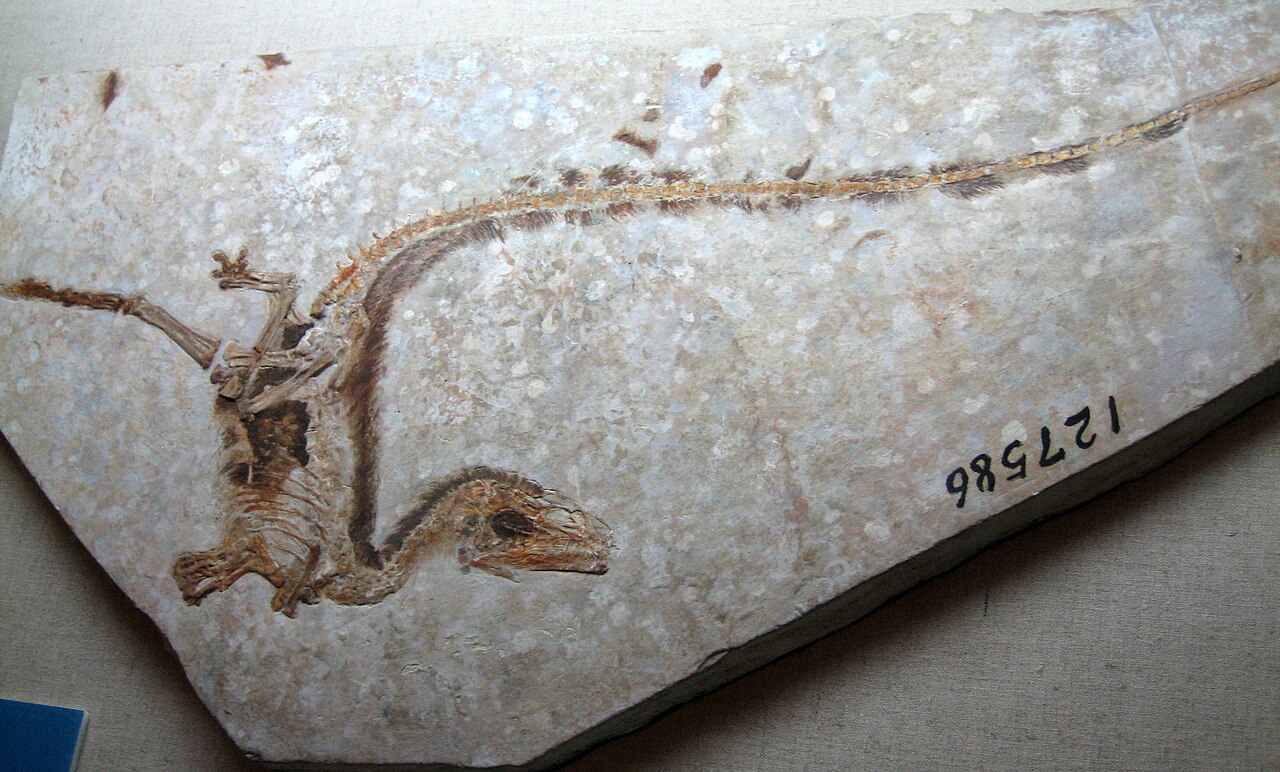
The flight feathers of birds are a famous example. Many dinosaurs had feathers long before any animal flew, and they probably used them for keeping warm or for display. Later, in the ancestors of birds, feathers were put to use for flying. Fossils from China, such as Sinosauropteryx, show that feathered dinosaurs really existed.
Another example is in your ears. Two of the three tiny bones in a mammal's middle ear, the hammer and the anvil, began as parts of the jaw in distant ancestors. The third, the stirrup, came from a bone that braced the jaw and gills of early fish. Fossils and the way embryos grow give the evidence for this.
Some features lose their job. Humans have wisdom teeth, cave animals often lose their eyes and pigment, and some parasites have lost whole organs. Such leftovers are called . Because every body part costs energy, losing a part that is no longer used can be an advantage.
Some animals also change their surroundings to suit themselves. Beavers build dams, earthworms improve the soil, and humans build cities in places from the Arctic to hot deserts. This is called construction.
Who worked out how adaptation works?
People noticed long before they understood it. Ancient Greek thinkers such as Empedocles and Aristotle saw how well living things fit their lives. Empedocles thought that creatures that happened to fit simply survived. Aristotle thought that nature had purposes, though he believed that species stayed fixed.
In the 18th and early 19th centuries, many people saw adaptation as proof of a designer. In 1802 William Paley argued in his book Natural Theology that living things were perfectly suited to their lives. In 1809 Jean-Baptiste Lamarck suggested a natural explanation, in which use and disuse changed a body during life and these changes were then passed on. Scientists later showed this was wrong.
The real mechanism was found by Charles Darwin and Alfred Russel Wallace. They presented it together in London in 1858, and Darwin's book On the Origin of Species followed in 1859. Darwin broke with tradition by pointing out flaws and limits, not perfection. In 1862 Henry Walter Bates helped to prove the case through his studies of butterflies in the Amazon, and in 1878 Fritz Müller added a second kind of .
About a century later, field studies and breeding experiments by scientists such as E. B. Ford and Theodosius Dobzhansky showed that was an even stronger force than people had thought.
Modern biologists still discuss one tricky point. Adaptations seem to have a purpose, but natural selection has no goal in mind. It simply keeps what works. Biologists use the language of purpose, such as the heart is for pumping blood, as a convenient shorthand for this history.
Explore Next
Your audio story keeps playing while you look around.
Words to Know
- acclimatisation
- Changes in a body during one lifetime that help it cope with new conditions, such as high altitude.
- adaptation
- A trait, or the process that creates it, that helps living things survive and reproduce in their habitat.
- coevolution
- When two species change over time in response to each other.
- exaptation
- When a feature that evolved for one job is used for a different one.
- habitat
- The place where a living thing makes its home.
- mimicry
- When one species evolves to look like another.
- mutation
- A random change in a gene that can create a new trait.
- natural selection
- The process in which individuals with helpful traits leave more young, so those traits spread.
- niche
- The role and place of a species in its ecosystem.
- sexual selection
- Selection for traits that help an animal win a mate.
- vestigial
- Describes a body part that has lost most or all of its original use.