Reptile
Scaly, cold-blooded survivors that once ruled the land, sea and sky.
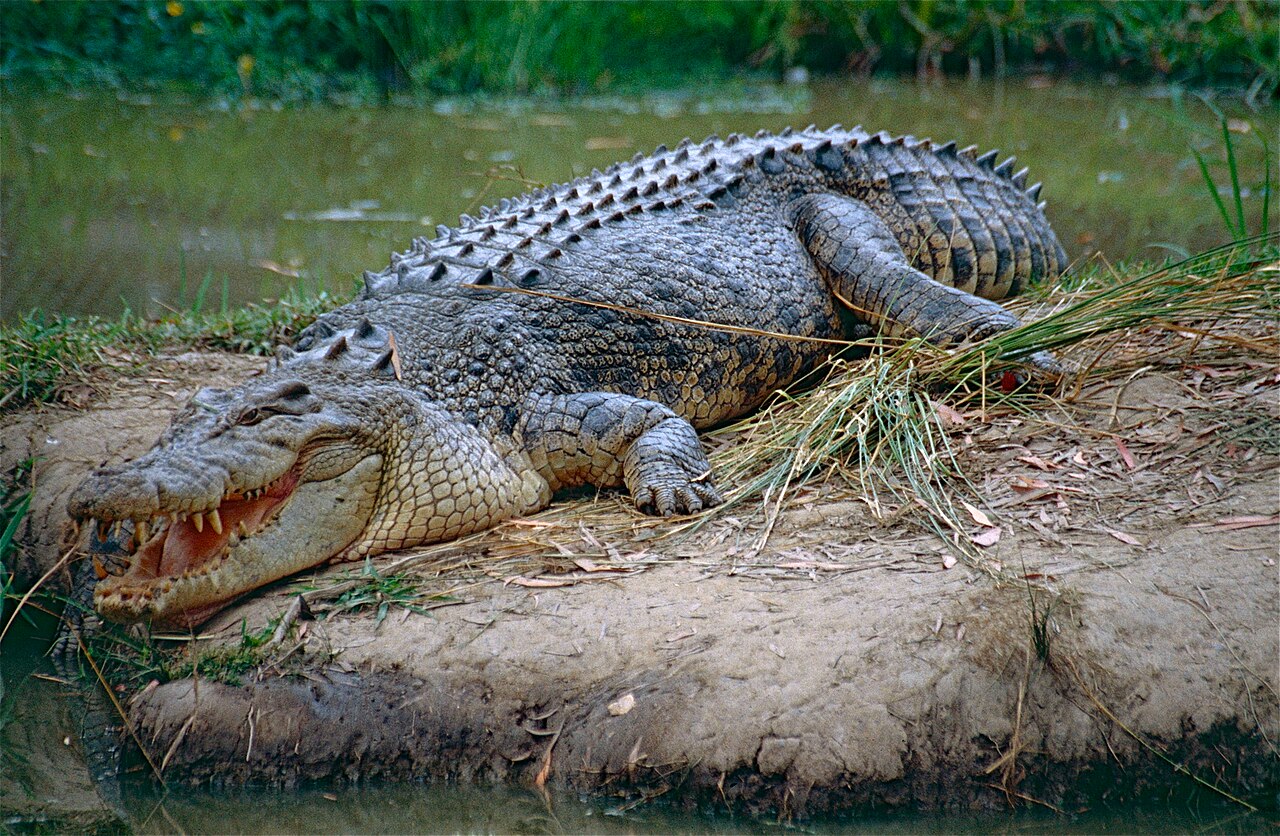
Reptiles are animals with dry, scaly skin that breathe air and lay eggs with leathery or hard shells. They include snakes, lizards, turtles, tortoises, crocodiles and the tuatara of New Zealand. There are more than 12,000 living species, found on every continent except Antarctica. Long ago, reptiles ruled the planet. Dinosaurs, flying pterosaurs and sea hunters such as mosasaurs were all reptiles. Today's reptiles are survivors of that great age. They live mostly in warm places, because they cannot make much body heat and rely on the Sun to warm up.
What is a reptile?
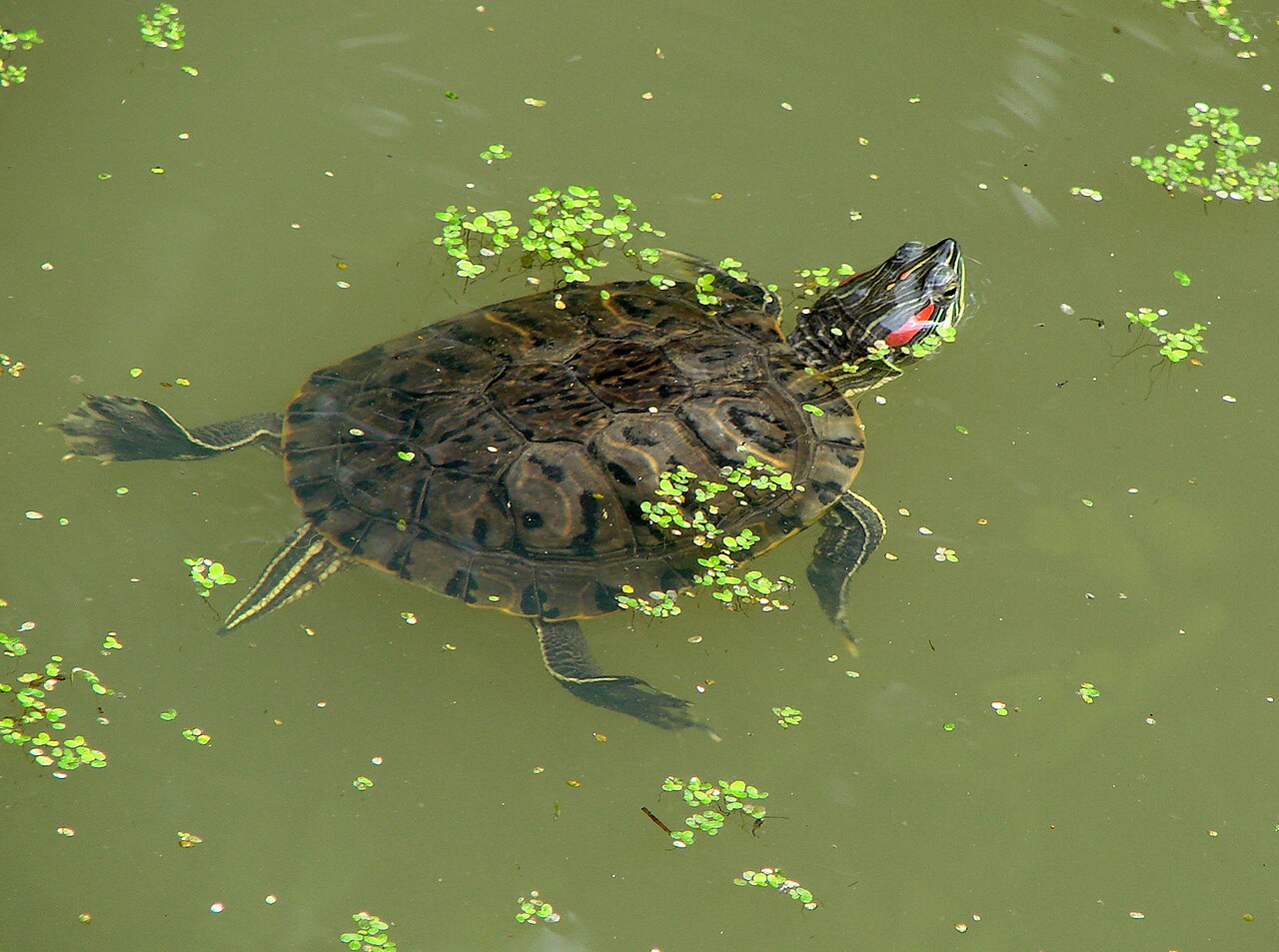
A is a four-limbed animal with a backbone, or the descendant of one, such as a snake. It breathes air with lungs, has dry skin covered in scales or plates, and is cold-blooded. That means its body temperature changes with its surroundings. Most reptiles lay eggs, but some lizards and snakes give birth to live young.
The word reptile comes from the Latin repere, which means to creep. In the 1200s it was used for a mixed bunch of egg-laying creatures, including snakes, lizards, worms and "fantastic monsters". Even the Swedish naturalist Carl Linnaeus lumped reptiles and amphibians together in the 1700s. Some scientists still study both groups under the name . Only in the early 1800s did people see that they are very different.
The big difference is the egg. A reptile egg has membranes and a shell that keep the embryo moist, so it can be laid on dry land. Amphibian eggs dry out, so most amphibians must lay theirs in water. Reptile babies have no tadpole stage either. They hatch looking like small adults. This was a huge step forward for life on land.
There is a twist. Studies of family trees show that birds are close cousins of crocodiles. So the old group "reptiles" leaves out its own descendants, the birds. Many scientists now treat birds as a living branch of the reptile family. In everyday use, though, "reptile" still means the animals described here.
Which animals are reptiles today?
There are four living groups.
Turtles and tortoises, called Testudines, have a shell made of bone covered in horny plates. The shell grows from their ribs and backbone, so a turtle cannot leave it. Sea turtles live in the ocean and come ashore to lay eggs, while tortoises live on land and are mostly plant-eaters. Turtles have no teeth and use a sharp beak instead. Scientists once thought turtles were very ancient and primitive, but DNA studies now place them in the same large branch as crocodiles and birds.
Crocodilians, called Crocodilia, include crocodiles, alligators, caimans and gharials. They are large, strong hunters that live in water. The saltwater crocodile can grow more than 6 m long and weigh over 1,000 kg, which makes it the largest living . Crocodilians have a four-chambered heart like a bird's, and they care for their eggs and young.
The scaly reptiles, called Squamata, are the largest group. They include lizards and snakes, and they make up most of the 12,000 species. Snakes evolved from lizards and lost their legs. Their relatives range from huge pythons and monitor lizards to tiny geckos and chameleons. The Jaragua dwarf gecko grows up to 17 mm, and the male of the Madagascan chameleon Brookesia nana is only about 13.5 mm long.
The fourth group, Rhynchocephalia, has just one living member, the tuatara of New Zealand. It looks like a lizard, but it belongs to a separate ancient line.
When did the first reptiles appear?
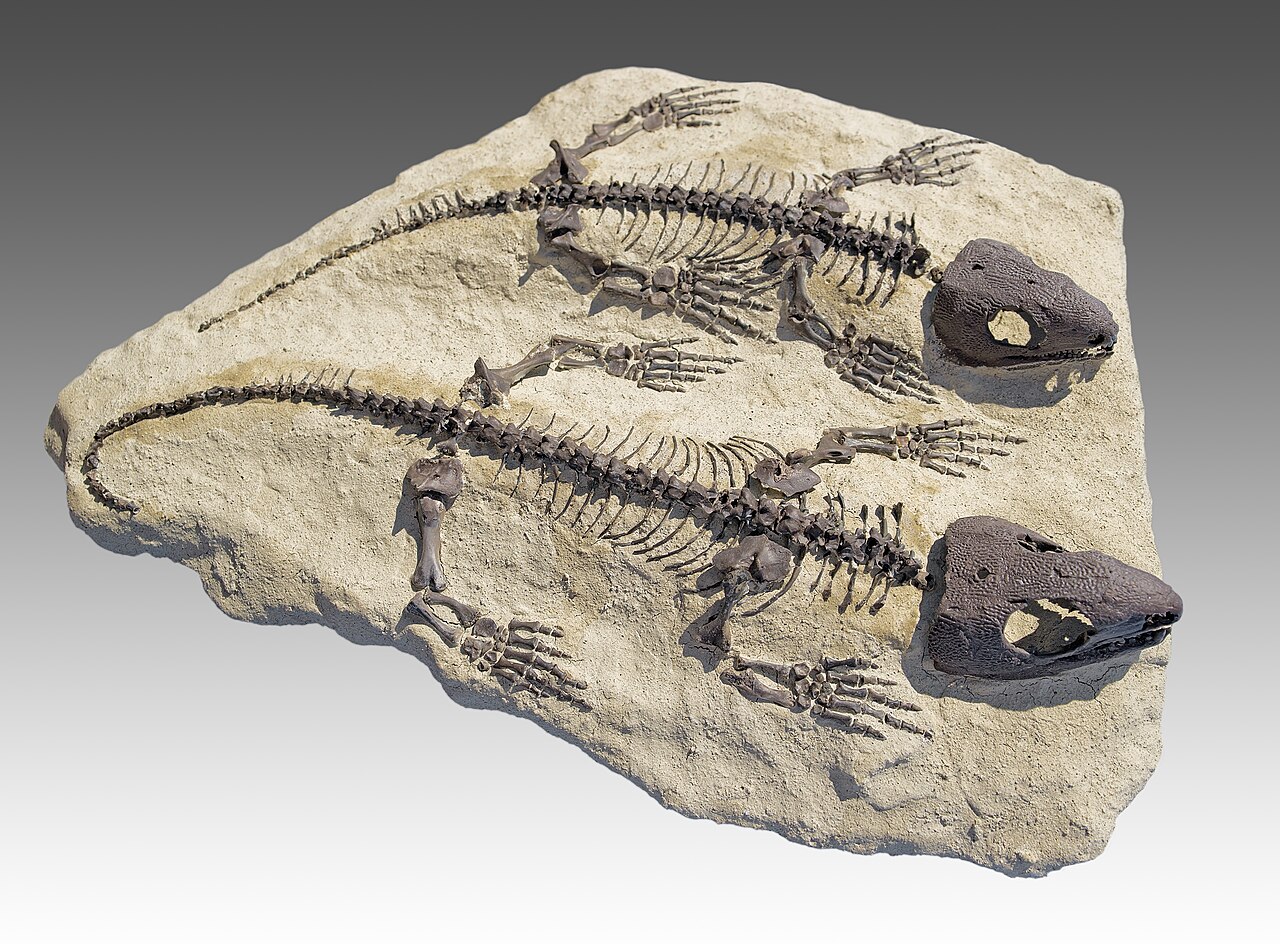
The first evolved about 310 to 320 million years ago, in the steamy swamps of the Late Carboniferous. They came from amphibian-like animals that had grown used to life on land. Their big advantage was the , which could be laid away from water.
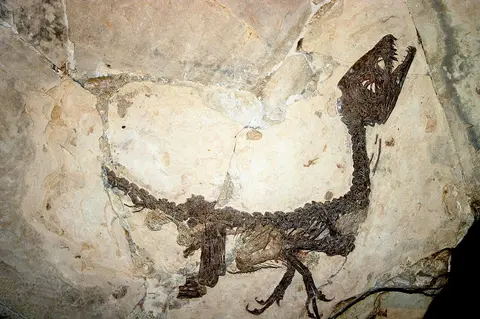
One of the oldest known candidates is Hylonomus. Fossil footprints in Nova Scotia, about 315 million years old, show clawed toes and scaly skin. Hylonomus was a small, lizard-like animal only 20 to 30 cm long, with many sharp teeth for catching insects. In 1860 the Canadian geologist William Dawson found its first fossils inside the stumps of ancient trees at Joggins in Nova Scotia. Small animals had probably fallen into the hollow stumps and could not climb out. Scientists now debate whether it was a true reptile. Captorhinus, an early reptile with many teeth, lived later, in the Permian period.
For millions of years these early reptiles stayed small. Big amphibians ruled the swamps. Then, near the end of the Carboniferous, the climate turned drier and the great tropical rainforests collapsed. This hit amphibians hard, because they must lay their eggs in water. Reptiles, with their shelled eggs, could cope with drier land. They spread into new homes faster than before.
By the Permian, reptiles and their cousins the , which later led to mammals, ruled the land. In the Late Permian the modern reptiles split into two big branches. One led to crocodiles, dinosaurs and birds. The other led to lizards, snakes and tuataras. At first both were small and lizard-like.
Who ruled before the dinosaurs?
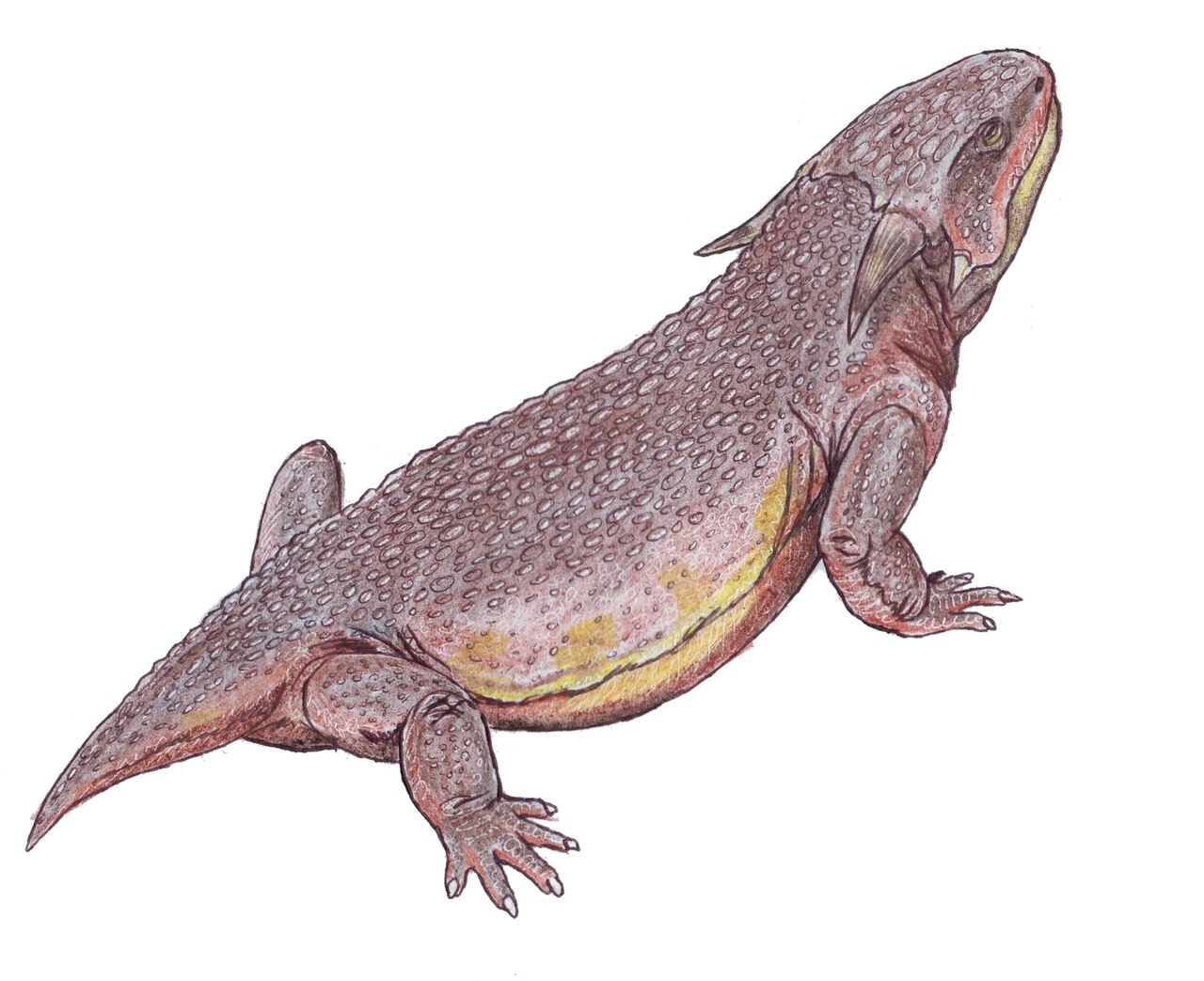
The Permian world was full of strange animals, and many were not at all. They were , the mammal side of the amniote family tree. Dimetrodon, with its huge sail on its back, was a fierce hunter, and Edaphosaurus was a plant-eater. They were among the first large land animals. Old books call them "mammal-like reptiles", but they were never part of the reptile line.
True reptiles flourished too. Pareiasaurs were heavy, slow plant-eaters, and mesosaurs lived in water. Some, like Sclerosaurus, wore bony armour. There were small lizard-like hunters as well.
Then, about 252 million years ago, came the greatest ever known. It came in several pulses and killed most of the old reptile and synapsid giants. The archosaurs took their place. This is the branch of reptiles that includes crocodiles, pterosaurs and dinosaurs.
Scientists are still rewriting the story. A 2021 study of fossils suggests that reptiles in the Carboniferous and Permian were as varied as the synapsids, or more so. Some call this the "First Age of Reptiles".
Skull holes are one clue to family trees. Diapsids have two holes behind each eye and synapsids have one, while some early groups had none. Turtles were once thought to have no holes, but DNA now places them with the diapsids.
What was the Age of Reptiles?
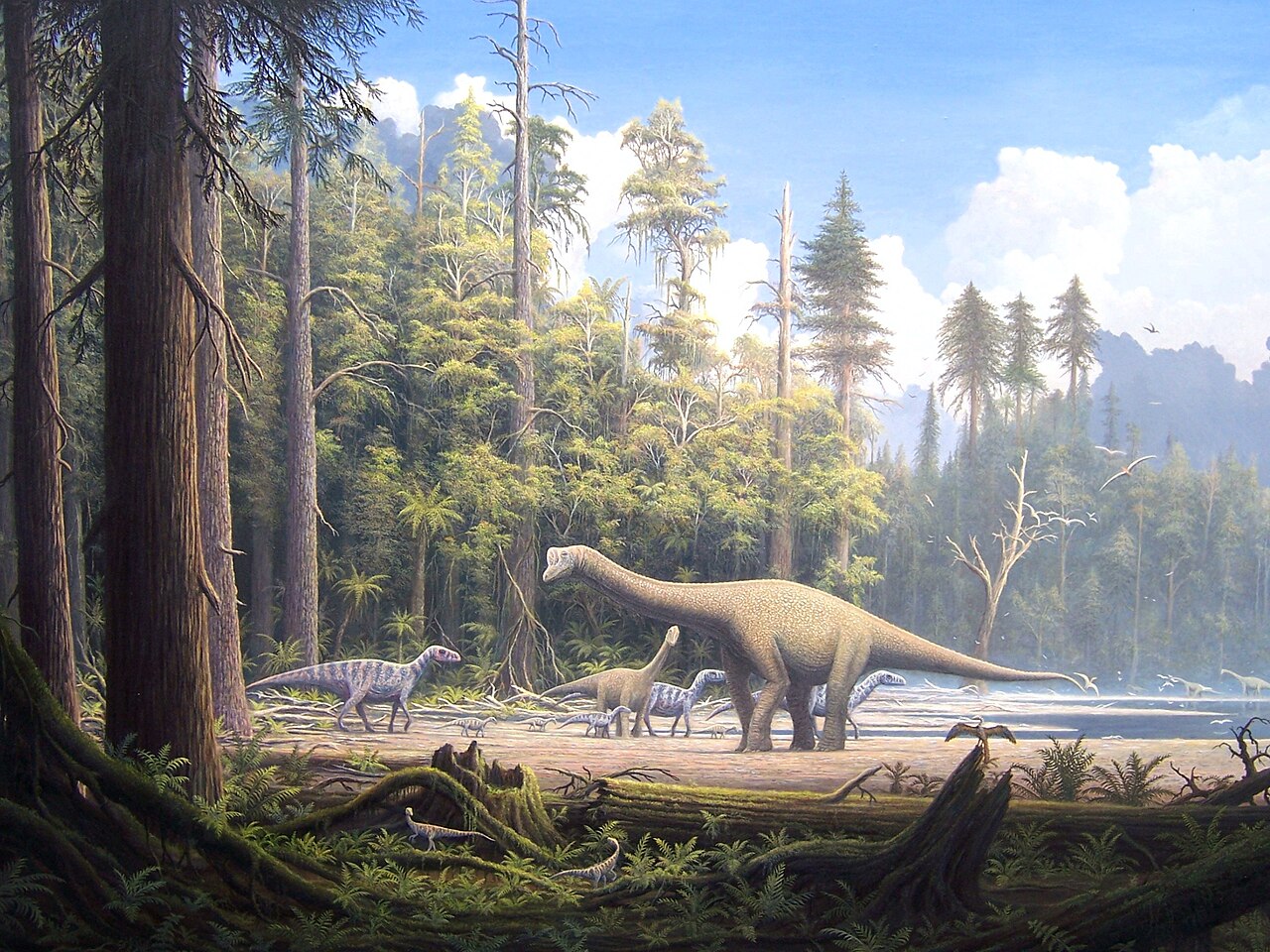
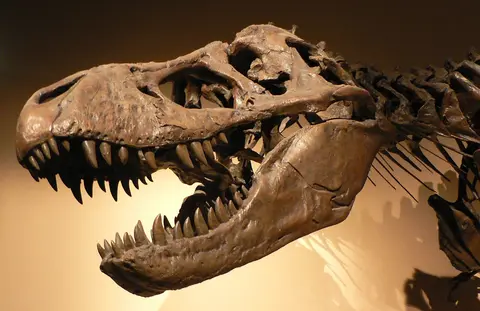
The Mesozoic era, from about 252 to 66 million years ago, is called the Age of . Reptiles lived in every habitat. On land, dinosaurs became the main large animals. Some were small and fast. Others, such as the sauropods, grew to enormous lengths. Europasaurus, a sauropod of the Late Jurassic, lived on an island in what is now Germany. It grew only about 6 m long, probably because an island has little food.
In the air, pterosaurs flew on wings of skin. They were not dinosaurs, but close cousins. Birds grew out of small feathered dinosaurs later in the Mesozoic.
In the sea, many groups of reptiles took to the water. Ichthyosaurs looked like dolphins. Long-necked plesiosaurs swam with four flippers. Mosasaurs were huge sea lizards of the Cretaceous, related to today's monitor lizards. Fossil hunters first studied a mosasaur in a Dutch quarry near Maastricht in the 1700s. That was long before dinosaurs were named.
Turtles, crocodile relatives and early lizards and snakes also lived through this age.
In the 1800s scientists began to make sense of these fossil monsters. The British scientists Richard Owen and Thomas Henry Huxley grouped them with the reptiles, because their skeletons looked reptilian. Today we know that dinosaurs were a special branch, and that some of them still live as birds.
Which reptiles survived the great extinction?
About 66 million years ago the Cretaceous period ended with a . All dinosaurs except the birds died out. So did the pterosaurs, plesiosaurs and mosasaurs, and many crocodile relatives and lizards. Of the large sea , only sea turtles were left. Of the large land reptiles, only crocodilians and a few similar water-loving kinds survived.
Why did these live on? Scientists think that water-living and small animals had an advantage. Water gave some protection. Small animals that need little food could survive a long time of hardship. Cold-blooded reptiles need much less food than warm-blooded animals of the same size.
After the extinction, reptiles kept changing. Lizards and snakes suffered badly and did not recover for ten million years. Then they spread into thousands of species. Today they are by far the most numerous reptiles.
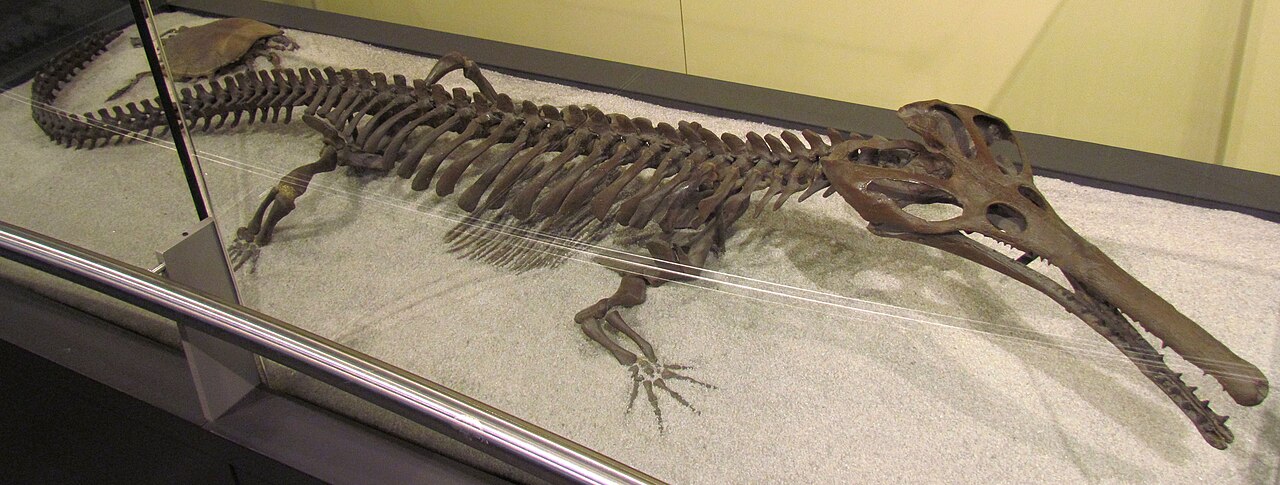
Some strange reptiles lived in the age of mammals. Champsosaurus was a long-snouted, crocodile-like reptile that swam in the rivers and swamps of North America. It survived the extinction and lived on for many millions of years. Fossils like this help scientists to see which groups made it through.
The reptiles of today are only a small part of a once huge family. But they are still very successful. They live in deserts, forests, rivers and oceans.
How does a cold-blooded animal live?
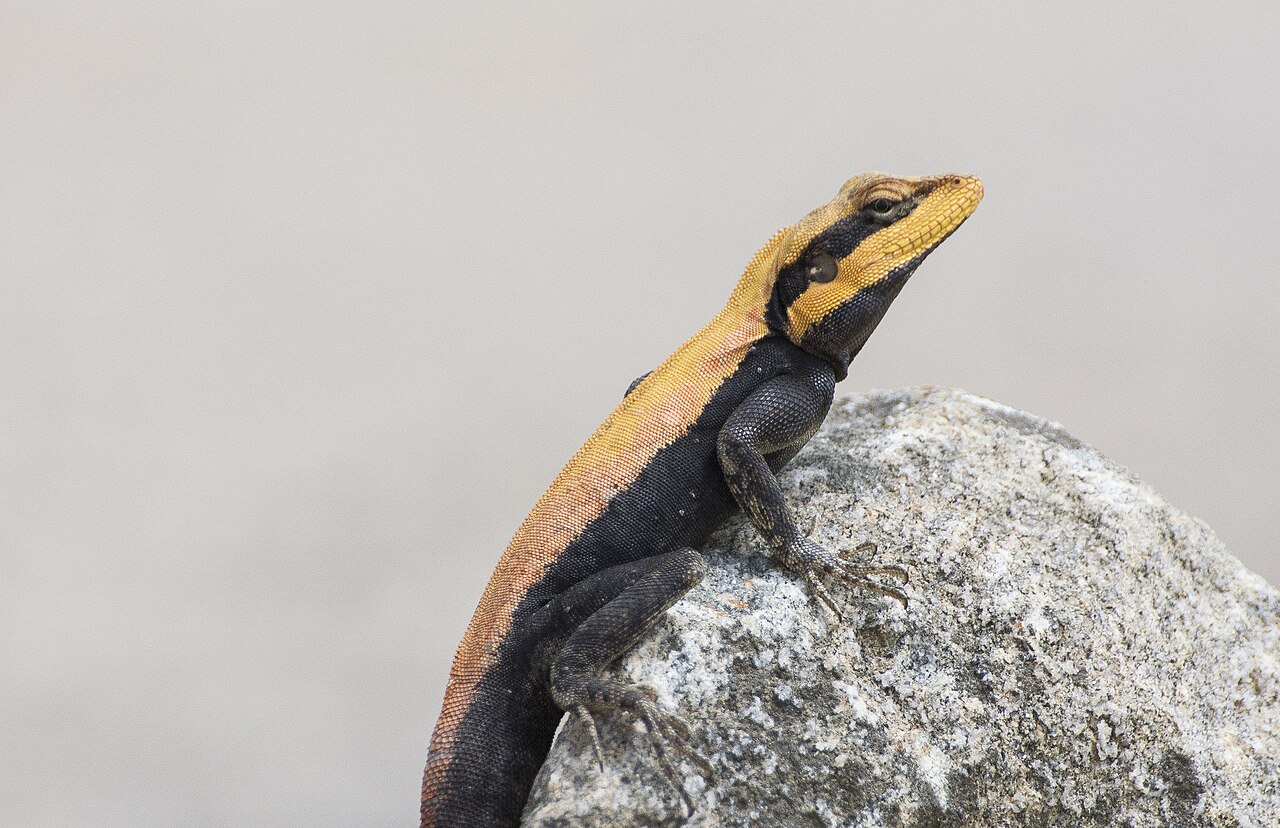
A makes very little body heat and uses the Sun instead. A lizard on a cold morning crawls onto a rock and basks until its body is warm enough to hunt. When it gets too hot, it moves into the shade or a burrow. This way of life is called ectothermy, or being cold-blooded.
The big advantage is saving fuel. A mammal needs a lot of food just to stay warm, but a reptile can go a long time without eating. A crocodile needs only a tenth to a fifth of the food that a lion of the same weight needs. It can live for about half a year without eating. The drawback is that reptiles are slow in the cold and live mostly in warm parts of the world, and they rarely keep up long, fast chases.
Some large reptiles can hold heat in their bodies. The leatherback turtle is so big that the heat made by its muscles stays in, so it can swim in cold seas. This is called gigantothermy.
Reptiles breathe only with lungs. Turtles face a puzzle, because their shells are stiff, so some use muscles inside the shell to push air in and out. Most reptiles cannot breathe while swallowing, but crocodiles have a bony roof in the mouth, so they can breathe with their jaws full, even while underwater.
The heart is also different. Most reptiles have three heart chambers. Crocodilians have four, though they can still send blood past the lungs when diving.
What do scales and senses do for a reptile?
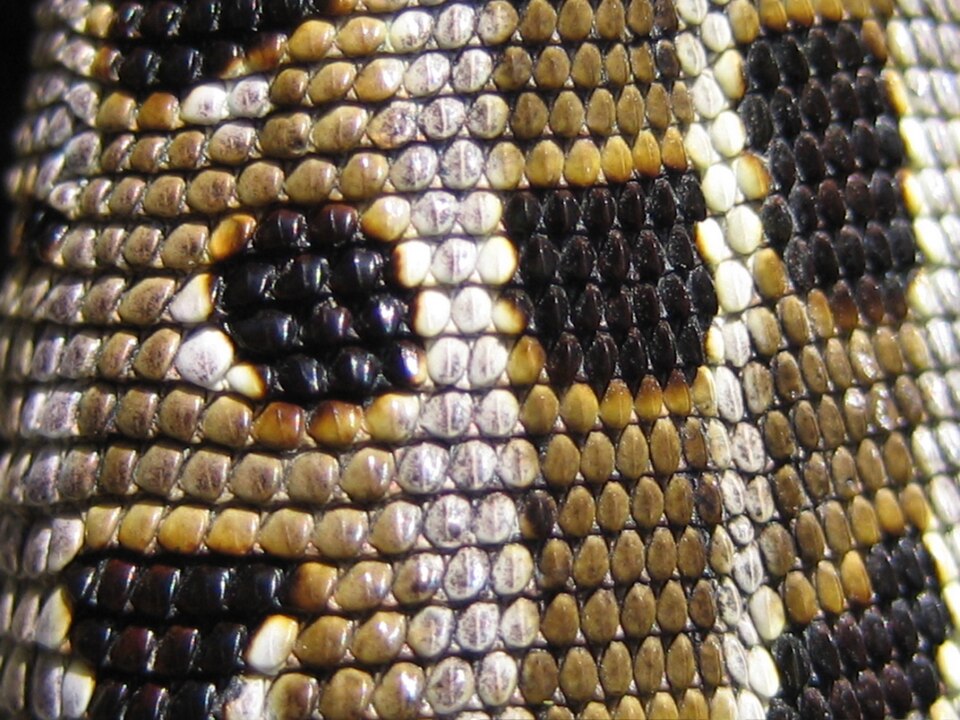
A 's skin is covered with a tough, horny outer layer. It makes the skin waterproof, which is what lets reptiles live in deserts. Lizards and snakes are covered in overlapping scales. Turtles have large plates called , and crocodilians have scutes with bone underneath. The skins of crocodiles, snakes and some lizards are made into leather for shoes, belts and bags, which is one reason these animals are hunted.
Reptiles shed their skins in a process called . A snake often sheds the whole skin in one piece. Young reptiles shed every five to six weeks, because they grow fast. Adults shed three or four times a year.
Most reptiles hunt in daylight and have excellent eyesight, with good colour vision. Some can see ultraviolet light. Many lizards have a "third eye" on top of the head, called the parietal eye. It cannot see shapes, but it senses light and shade and helps the animal to track the seasons.
Snakes have no ears on the outside, but they feel vibrations through the ground. Some, such as pit vipers, boas and pythons, have heat-sensing pits on their faces. These detect the body heat of birds and mammals, so the snake can find prey even in darkness.
Reptiles are quieter than birds or mammals. Most just hiss, though crocodilians bellow and some geckos chirp.
What do reptiles eat, and how do they have young?
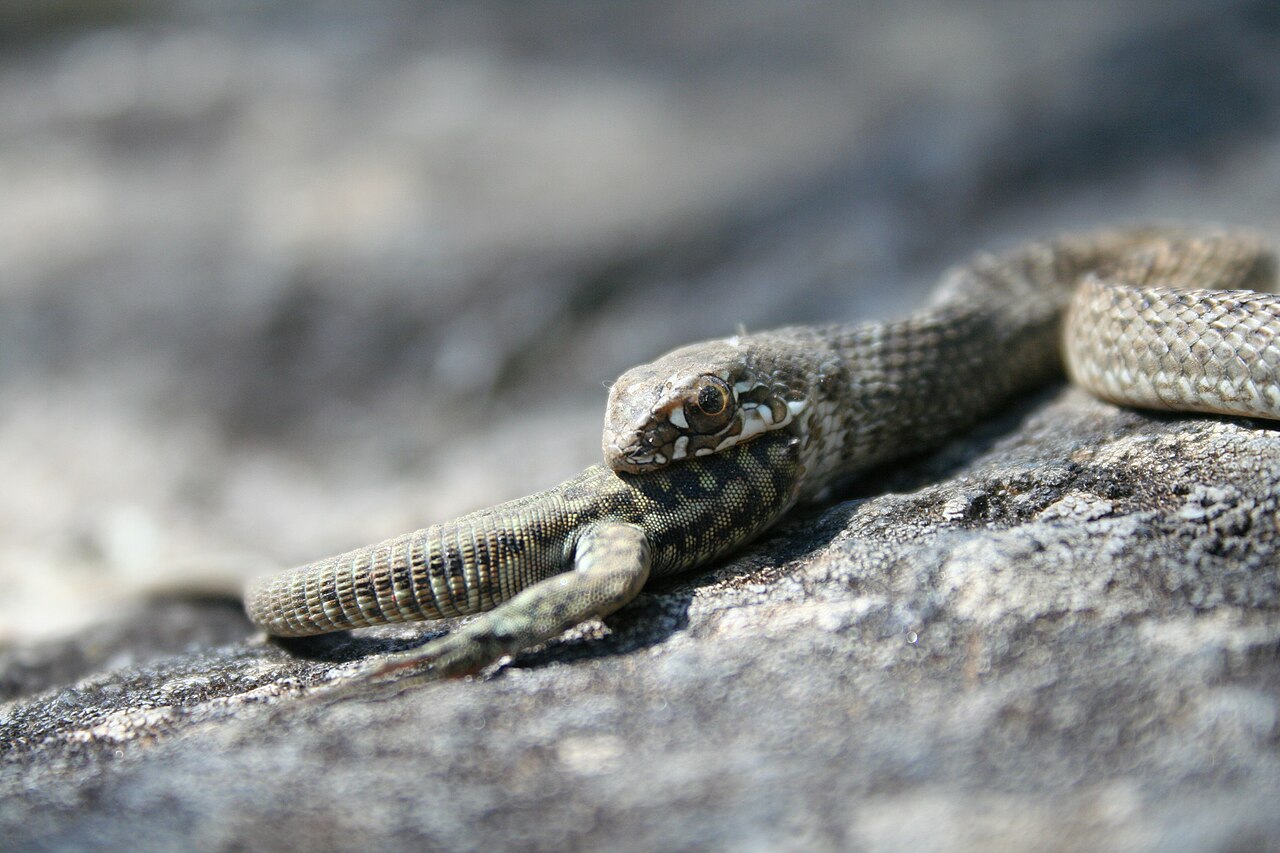
Most today eat meat. Many eat insects, and larger ones hunt fish, birds and mammals. Their slow, low-energy bodies digest food slowly. Many snakes swallow prey whole, and a big meal can feed them for weeks. Turtles are the only mostly plant-eating reptile group. Some iguanas and agamas eat leaves as well. Plant-eaters often swallow stones, called , which grind the food in the stomach. Fossil stones have been found with some dinosaur skeletons too.
Water is precious to desert reptiles. They lose little through their skin, and their kidneys make waste as a paste of uric acid. Some turtles and lizards have huge bladders. Charles Darwin noted that a Galápagos tortoise could store water equal to 20 per cent of its body weight.
Most reptiles lay eggs with leathery or hard shells. The mother usually buries them and leaves. Crocodilians guard their nests. In some reptiles the temperature of the nest decides whether the babies are male or female. This is called temperature-dependent sex determination. Some lizards and snakes give birth to live young, and some even feed them through a kind of placenta.
A few lizards, such as some geckos, can reproduce with no male at all. Whole groups are female, and each mother produces clones of herself. This is called .
Are reptiles dangerous, or in danger?
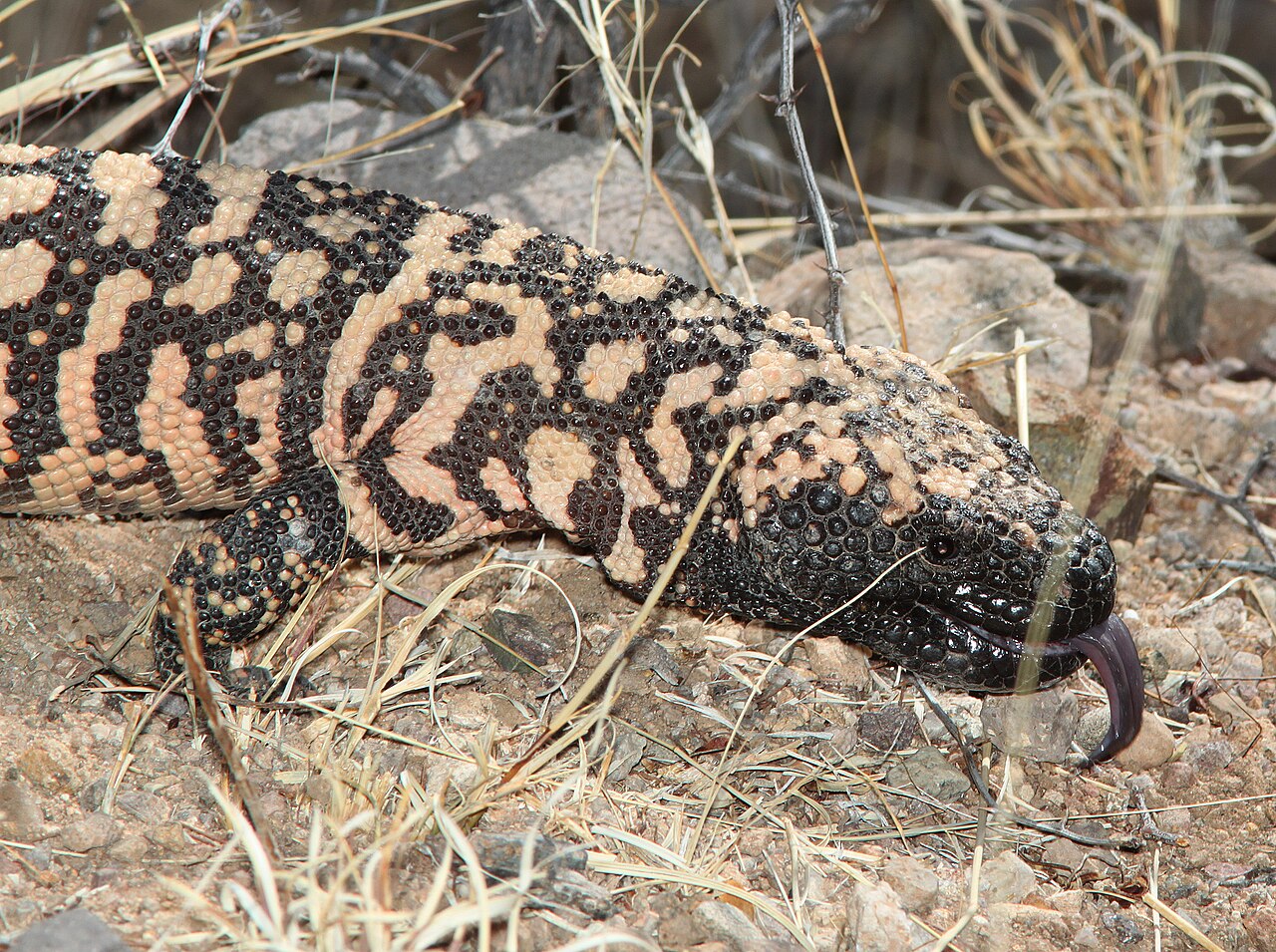
Some are venomous. is a mix of poisons made in special glands, and many snakes inject it through hollow fangs. Two lizards do the same, the Gila monster of the south-western United States and the beaded lizard of Mexico. In 2009 scientists found venom glands in the lower jaw of the Komodo dragon too. It may use venom as well as its teeth when it attacks prey.
Snakebite is a serious problem in parts of Africa, Asia and Latin America. The World Health Organization estimates that snakebites kill about 81,000 to 138,000 people a year and leave many more with lasting injuries. Most snake species are harmless to people.
Reptiles themselves are in trouble. A 2022 study in the journal Nature assessed 10,196 species and found that at least 21 per cent are threatened with extinction. Farming, logging, new towns and invasive animals are the main causes, and turtles and crocodilians are among the most threatened groups.
Warming adds a danger of its own. In sea turtles, the temperature of the sand decides whether the eggs hatch as males or females, and warmer sand gives females. On the warm northern beaches of the Great Barrier Reef, more than 99 per cent of the young green turtles tested in 2018 were female. If beaches keep warming, there may be too few males left to breed.
Explore Next
Your audio story keeps playing while you look around.
Words to Know
- amniotic egg
- An egg with membranes and a shell that keep the embryo moist on land.
- ecdysis
- The shedding of skin.
- ectothermic
- Getting body heat from the surroundings rather than making it, also called cold-blooded.
- gastrolith
- A stone swallowed by an animal to help grind up food.
- herpetology
- The study of reptiles and amphibians.
- mass extinction
- A short period when many kinds of life die out.
- parthenogenesis
- Reproduction by a female without a male.
- reptile
- A cold-blooded vertebrate with scaly skin that breathes air and lays shelled eggs on land.
- scute
- A large horny plate on the skin of turtles and crocodilians.
- squamate
- A scaly reptile, meaning a lizard or a snake.
- synapsid
- A member of the group that includes mammals and their extinct relatives.
- venom
- A poison that an animal injects with a bite or sting.