Weightlessness
Why astronauts float, even though gravity never switches off.
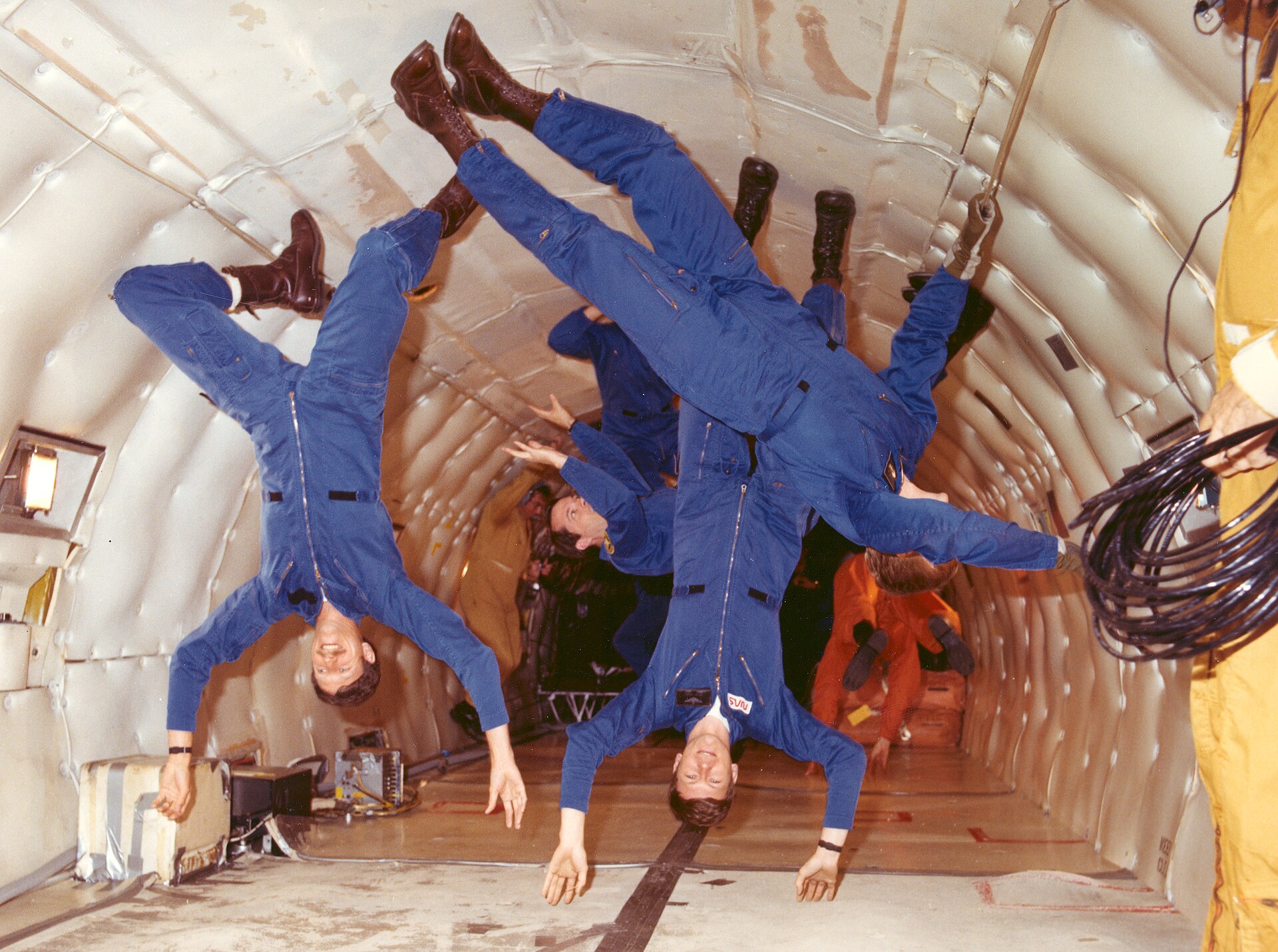
Weightlessness is the feeling of having no weight at all. On the International Space Station, astronauts drift through the air and a pencil let go in mid-cabin stays exactly where it is. Yet gravity has not vanished up there. Earth's pull is still strong at the height of the station. The secret is that the station and everything inside it are falling together around the planet, so nothing pushes on anything else. Why does that feel like floating? How do scientists create it on Earth for a few precious seconds, and what do months of it do to a human body? And why do water drops form balls and flames turn round?
What does weightlessness feel like?
On Earth you feel your weight all the time. The floor pushes up on your feet, a chair pushes up on your back and a bed pushes up on your whole body. Those pushes are what you sense as weight. Bathroom scales work the same way. They measure how hard you press down on them.
is what you feel when nothing pushes on you like that. Scientists call it zero apparent weight, or zero g. People often say zero gravity, but that name is wrong, and the next sections explain why.
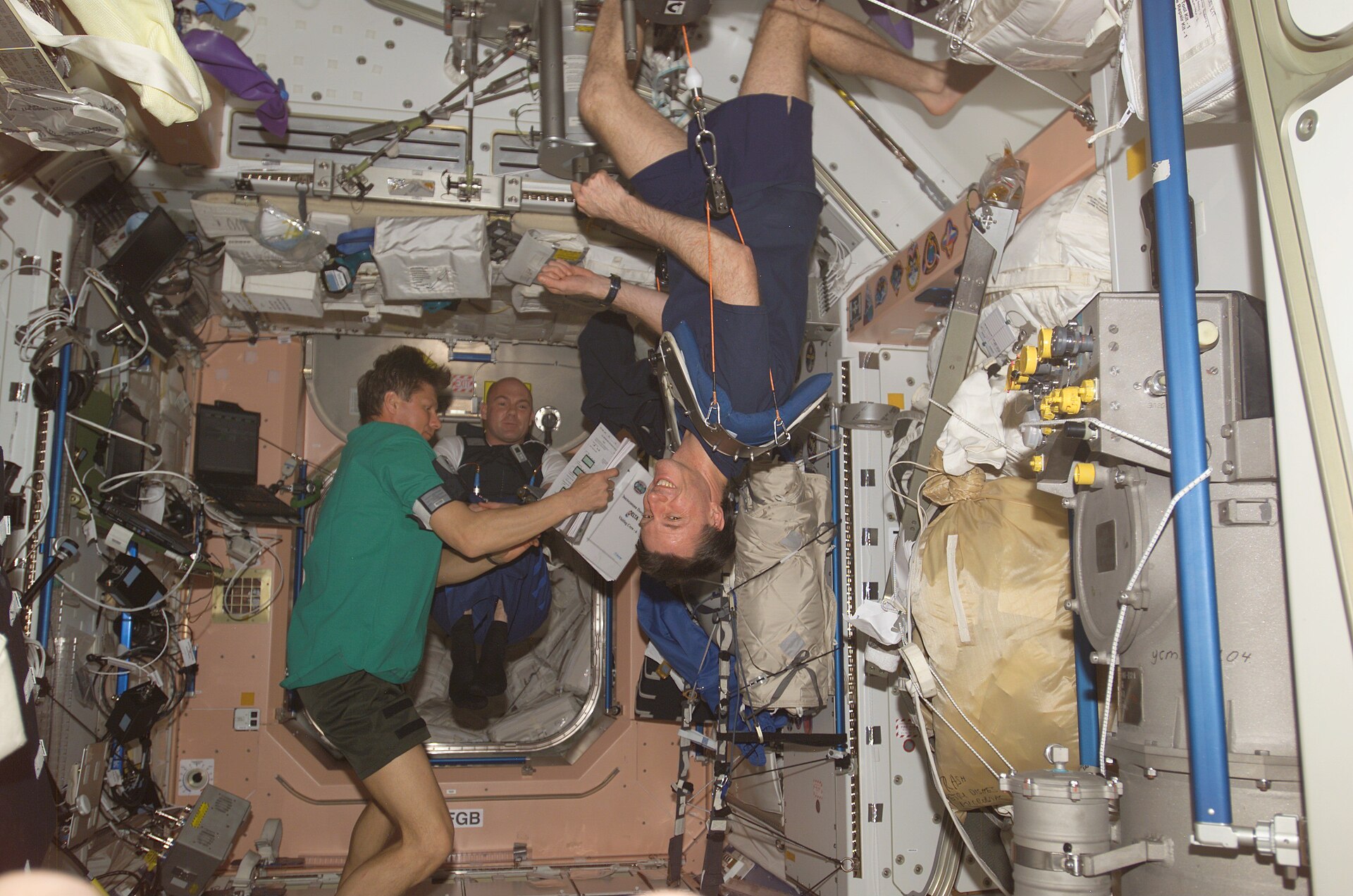
Astronauts on the International Space Station live like this every day. They sleep in bags fixed to the wall, because a loose sleeper would drift about. They move by pushing gently off a surface and gliding across the cabin. A heavy toolbox still has the same mass as on the ground, so it is equally hard to start and to stop moving. It only stops pressing on anything.
Weight can also be felt where there is no gravity at all. When a car speeds up, the seat pushes you forwards and you feel pressed into it. In a , a machine that spins people in a circle, the wall pushes you and you feel heavy. A rotating space station could do the same. So weight is really about forces pushing on your body, and weightlessness is the lack of them.
If gravity is still there, why do astronauts float?
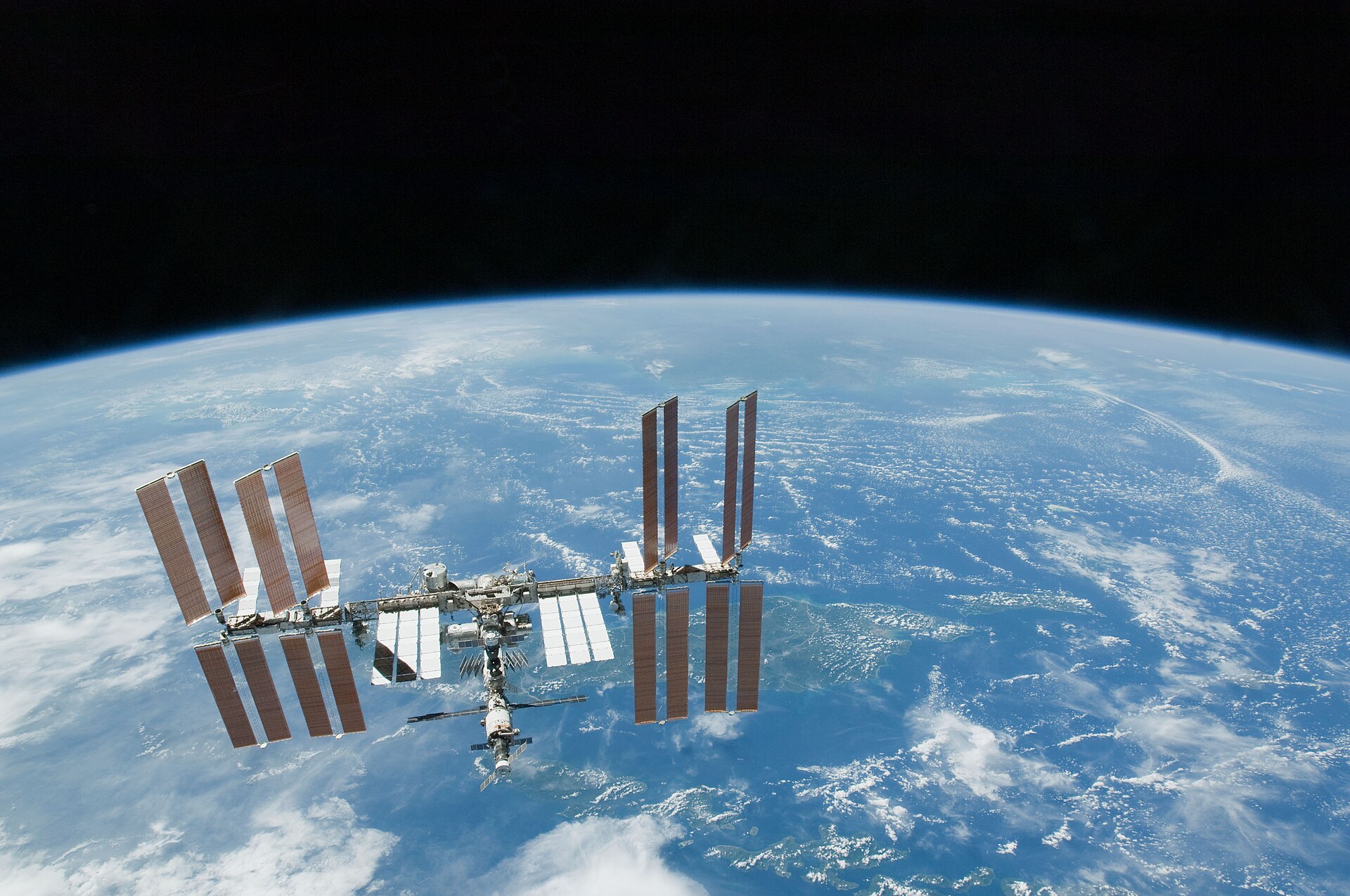
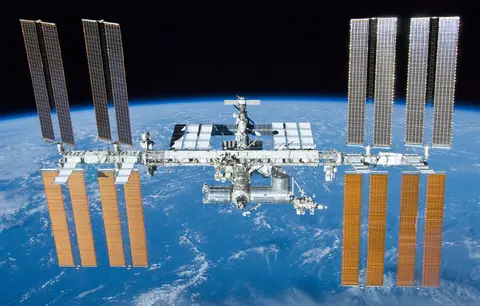
The International Space Station circles Earth about 400 km above the surface. At that height gravity is still about 90% as strong as it is on the ground. A person standing on a tower that tall would weigh almost the same as at home. So why do astronauts float?
The answer is . Picture an elevator whose cable has snapped. The car and everyone in it drop at the same rate, gaining 9.81 metres per second of speed every second. The floor cannot push up on your feet, because it is falling away as fast as you are. You would seem to float inside the car, even though gravity pulls on you the whole time.
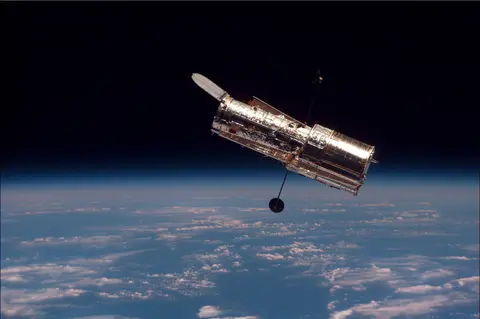
The space station is also falling, but it never crashes. It moves sideways at about 7.7 km every second, which is roughly 28,000 km an hour. As the station drops toward Earth, the curved planet drops away beneath it. The station keeps falling and keeps missing the ground. This endless fall around a planet is called an . One lap takes about 90 minutes.
Astronauts, tools and food all follow the same path at the same pace, so none of them presses on anything else. That is why they seem to hang in the air. Scientists say that things in orbit are in free fall, not in zero gravity. Gravity is the very thing that keeps them circling.
Could you ever get away from gravity completely?
Gravity never switches off. It gets weaker with distance, but it reaches out a very long way. To cut Earth's pull to one thousandth of its strength at the surface, you would need to be about 200,000 km away. To cut it to one millionth, you would need to be about 6 million km away.
Earth is not the only thing pulling. The Sun pulls too. To weaken its gravity to one millionth you would need to be about 3.7 billion km from it. Only five spacecraft have travelled that far: Voyager 1, Voyager 2, Pioneer 10, Pioneer 11 and New Horizons. Light would take about three and a half hours to cross that distance. Hiding from gravity is possible in theory and hopeless in practice.
There is one odd place where the pulls cancel out. If you could fall to the exact centre of a planet, the rock around you would pull equally in every direction. You would feel no net pull at all. Nobody can travel there.
Even in , is never perfect. That is why scientists often use the word , which means extremely small . Gravity is a little stronger at the end of the station nearest Earth. Thin air still exists at that height and drags on the station slightly. When an astronaut pushes off a wall, the whole station moves a tiny amount the other way. Two space shuttle missions, STS-87 and STS-107, were devoted to microgravity research, and the symbol for it, μg, appeared on their badges.
How do aeroplanes make weightlessness on purpose?

Aeroplanes have been used to give people short spells of since 1959. The trick is to make the plane itself fall freely, exactly like the elevator with the cut cable.
The pilot flies a long curve called a . First the plane climbs steeply. Then it enters a powered dive. Along the way, the engines and controls are adjusted to cancel the drag, which is the air resistance that would normally slow the plane. With drag cancelled, the plane behaves as if it were falling through empty space, and so does everybody inside. Each arc gives about 20 seconds of floating before the pilot pulls out of the dive and everyone feels heavy again.
NASA's Reduced Gravity Research Program has flown such planes since 1973. Their nickname is the Vomit Comet, because many passengers feel sick. NASA prefers Weightless Wonder. The last one, Weightless Wonder VI, was a McDonnell Douglas C-9 based at Ellington Field near the Johnson Space Center in Texas. NASA retired it in the mid-2010s and now books flights with a private company.
In Europe, the European Space Agency flies a modified Airbus A310 from Bordeaux in France. A campaign has three flights on three days, each with about 30 parabolas and about 10 minutes of weightlessness in total. Scientists use these flights to test experiments. They also study the human heart and blood vessels, because parabolic flights are one of the few ways to study a body in true weightlessness without going into space. Since 2012, members of the public have also flown on the A310, and a Boeing 727 gives paying passengers 25 to 30 seconds per arc.
How can you fall for a few seconds on purpose?
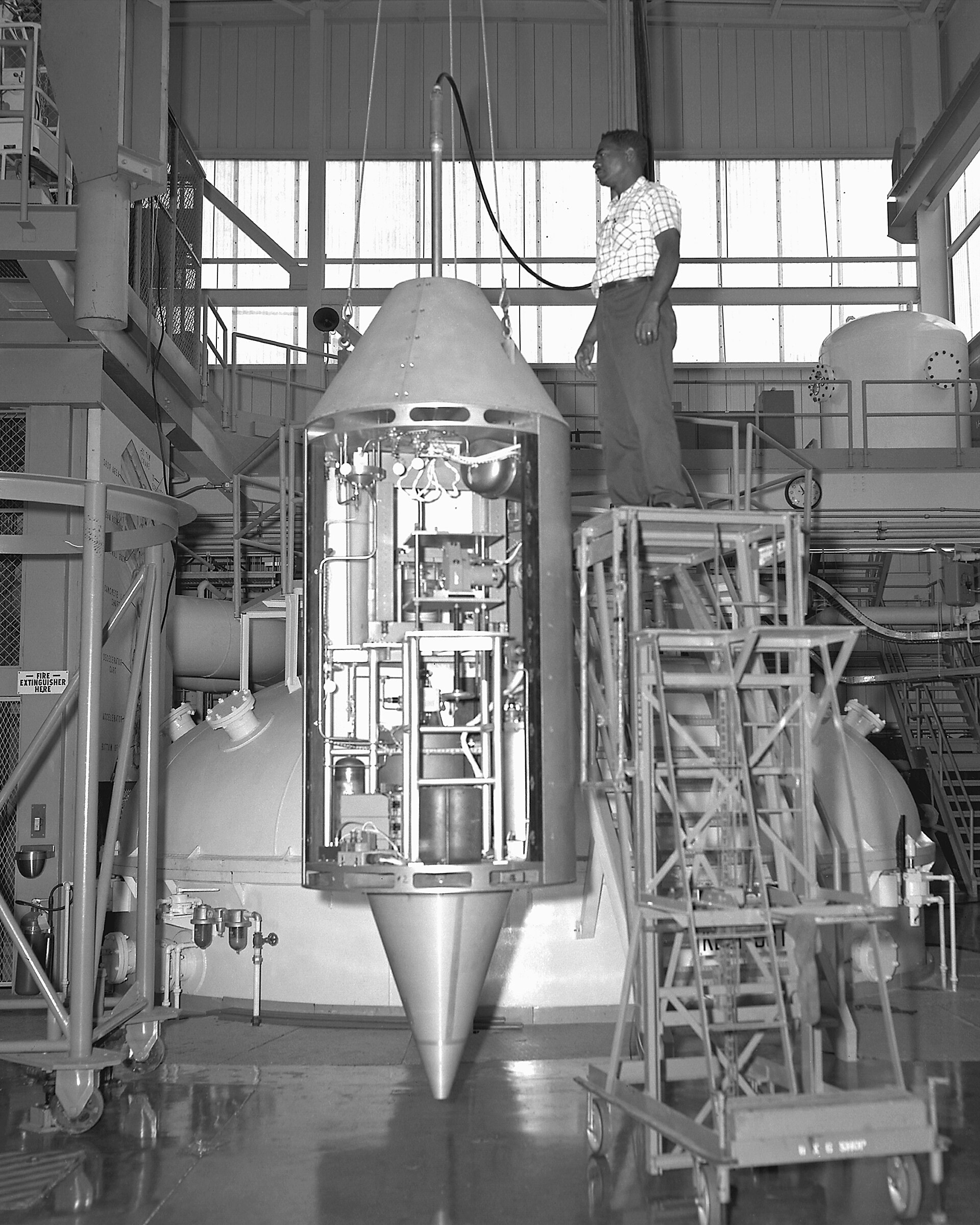
A plane gives about 20 seconds of . For shorter experiments, scientists use , which are tall shafts where an experiment falls freely. While it falls, it is weightless, like the passengers in the cut elevator.
NASA's Zero Gravity Research Facility at the Glenn Research Center in Cleveland, Ohio, has a shaft 145 m deep, mostly underground. Air is pumped out of the chamber, because air resistance would slow the falling experiment. The package drops 132 m in 5.18 seconds. Then it is caught in about 4.5 m of foam pellets, which slow it with a force 65 times the pull of Earth's gravity. That is far too harsh for people, so only machines and experiments ride in it. This facility does one or two drops a day. A smaller tower at Glenn drops 24.1 m in 2.2 seconds and can manage up to twelve drops a day.
Other drop towers stand at NASA's Marshall Space Flight Center in Alabama, in Bremen in Germany, in Japan and in several other countries. Each gives between 2 and 5 seconds of .
Living cells and plants need a different trick. A random positioning machine, also called a 3D clinostat, spins a sample around two axes at once. Gravity pulls on it from every direction in turn, so on average the pulls cancel out. For longer spells of near-weightlessness, scientists launch experiments on rockets that climb high and then fall, such as the TEXUS, MAXUS and MASER programmes.
Why do flames and water behave so strangely?
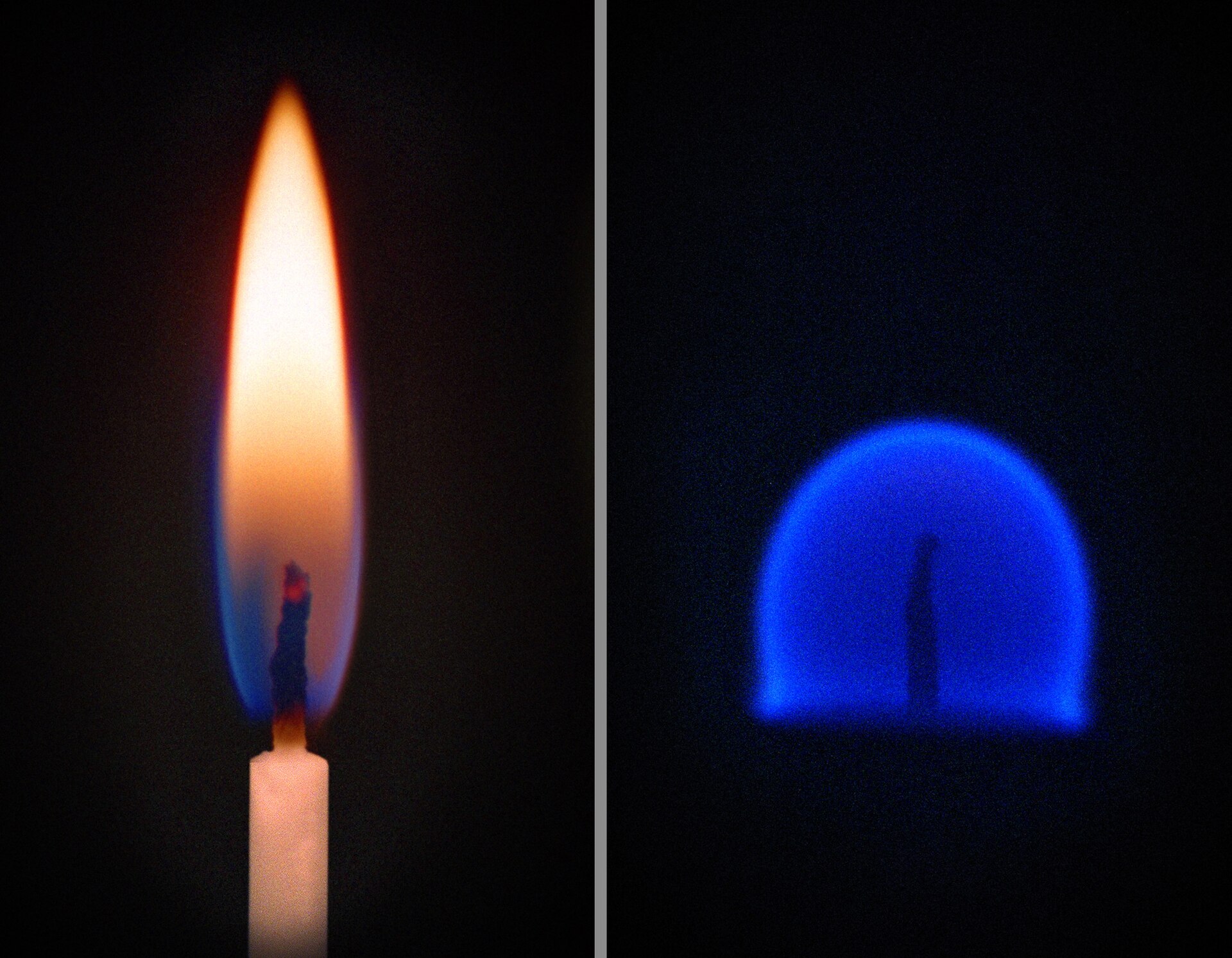
Gravity does more than pull things down. It also makes hot air rise. A candle flame warms the air around it. Hot air is lighter than cool air, so it floats upwards and fresh air flows in underneath. This steady flow stretches the flame into its familiar slim, teardrop shape.
In there is no up for hot air to float towards. The flame spreads out evenly in all directions and forms a small ball. NASA photographs show a candle flame on Earth beside one in , and the difference is easy to see. Scientists study these flames to understand how fires start and spread on spacecraft.
Water changes too. On Earth, gravity drags water down into a puddle or the bottom of a glass. In orbit it floats free. The molecules in water cling to each other, a pull called . With no gravity to overpower it, cohesion has a bigger say, and a blob of water pulls itself into a ball. Astronaut Clayton Anderson once watched a floating water bubble aboard the space shuttle Discovery. His own face appeared upside down inside it, because the curved water bends light like a lens.
For this reason astronauts cannot pour a drink into an open cup. Liquids stay in pouches and bags, and drinks are sipped through straws. Anything that depends on gravity to sort or settle things, from boiling water to mixing paint, needs a rethink in space.
Why does floating make some astronauts feel sick?
The most common problem in the first hours of is , usually called space sickness. Symptoms include nausea, vomiting, dizziness, headaches and tiredness. The first reported case was cosmonaut Gherman Titov in 1961, during his flight aboard Vostok 2. Since then, roughly 45% of all people who have flown in space have felt it. It has never lasted longer than 72 hours, because the body adjusts.
Even experienced pilots and astronauts can be affected. NASA jokingly measures it on the Garn scale, named after Senator Jake Garn, whose sickness on the shuttle mission STS-51-D was the worst on record. One Garn means the most severe case possible. The sickness can come back for a short while when astronauts return to Earth.
Why does it happen? One idea is the neural mismatch theory, first suggested in 1975. Your balance depends on your eyes, your body position sense and tiny organs in your inner ear that feel gravity and movement. In weightlessness, the inner ear reports something very different from what your eyes and muscles expect. The brain gets confused signals, much as it does on a rocking boat.
Another idea is the fluid shift hypothesis. Without gravity pulling fluids downwards, liquid moves towards the head. That may raise pressure in the head and inner ear and cause headaches and balance trouble.
No perfect cure exists. Training has helped little, and the usual medicines, such as promethazine and scopolamine, often make people drowsy.
What do months of weightlessness do to a body?
Human bodies are built for life under gravity. Take that away for months and many systems change.
Muscles and bones are the biggest worry. On Earth, your legs and back work all day to hold you up. In they have almost no work to do, so they weaken and shrink, a process called . Loss of muscle strength has been seen after only 2 to 5 days in space. Bones lose minerals too, and extra calcium ends up in the urine. To fight this, astronauts exercise hard, often for about two hours a day on bikes, treadmills and resistance machines. Some also wear a penguin suit, a garment with elastic bands that keeps a load on the muscles.
Fluids shift as well. On Earth gravity pulls blood and other fluids towards the legs. In orbit they flow towards the chest and head, which makes faces look puffy, the so-called moon face. The body decides it has too much fluid and gets rid of some, and it makes fewer red blood cells. The heart has less work to do and can weaken.
This causes trouble on return. Back under gravity, fluid drops towards the feet again, and there is less blood than before. When astronauts stand up they may feel faint, a problem called orthostatic intolerance. Drinking salty water before landing helps. After long flights, vision can also change, which is a worry for future trips to Mars. Most effects begin to reverse quickly once astronauts are home.
What is weightlessness good for?
is not only a challenge. It is also a tool, because many things behave differently when gravity cannot drag them around.
Crystals are one example. Growing crystals in can leave fewer flaws in their structure. Perfect crystals may help in electronics, and scientists also use crystals of proteins to work out their shapes with X-rays. In 2017, an experiment on the International Space Station grew crystals of the cancer drug pembrolizumab, an antibody medicine. The crystals came out more even than those grown on the ground. Such even crystals could let the drug be packed in a smaller volume. That could make it possible to give by a small injection under the skin instead of through a drip. This remains research, not yet a product.
Living things react too. Russian scientists found that cockroaches conceived in space grew faster than ground-born ones, and became faster and tougher. Chicken eggs placed in microgravity two days after fertilisation did not develop properly, but eggs placed there after a week developed normally. In a 2006 shuttle experiment, the food-poisoning bacterium Salmonella became more harmful when grown in space. Such results warn scientists that germs may behave differently in a spacecraft.
All this helps explain how life works with gravity, and how to keep people healthy on the long journeys that may take them to Mars.
Explore Next
Your audio story keeps playing while you look around.
Words to Know
- atrophy
- The shrinking and weakening of muscle or bone that is not being used.
- centrifuge
- A machine that spins in a circle to create a pushing force.
- cohesion
- The way particles of the same substance, such as water, cling together.
- drop tower
- A tall shaft in which an experiment falls to give a few seconds of weightlessness.
- free fall
- Falling with nothing but gravity acting on you, which feels like floating.
- g-force
- A push or pull measured against the pull of Earth's gravity at the surface.
- microgravity
- A condition with extremely small g-forces, as in a spacecraft in orbit.
- orbit
- The curved path an object follows as it falls around a planet or star.
- parabola
- A smooth arch-shaped curve, like the path of a thrown ball.
- space adaptation syndrome
- Space sickness, which brings nausea and dizziness in the first days of flight.
- weightlessness
- The feeling that nothing is pressing on you, so you seem to have no weight.